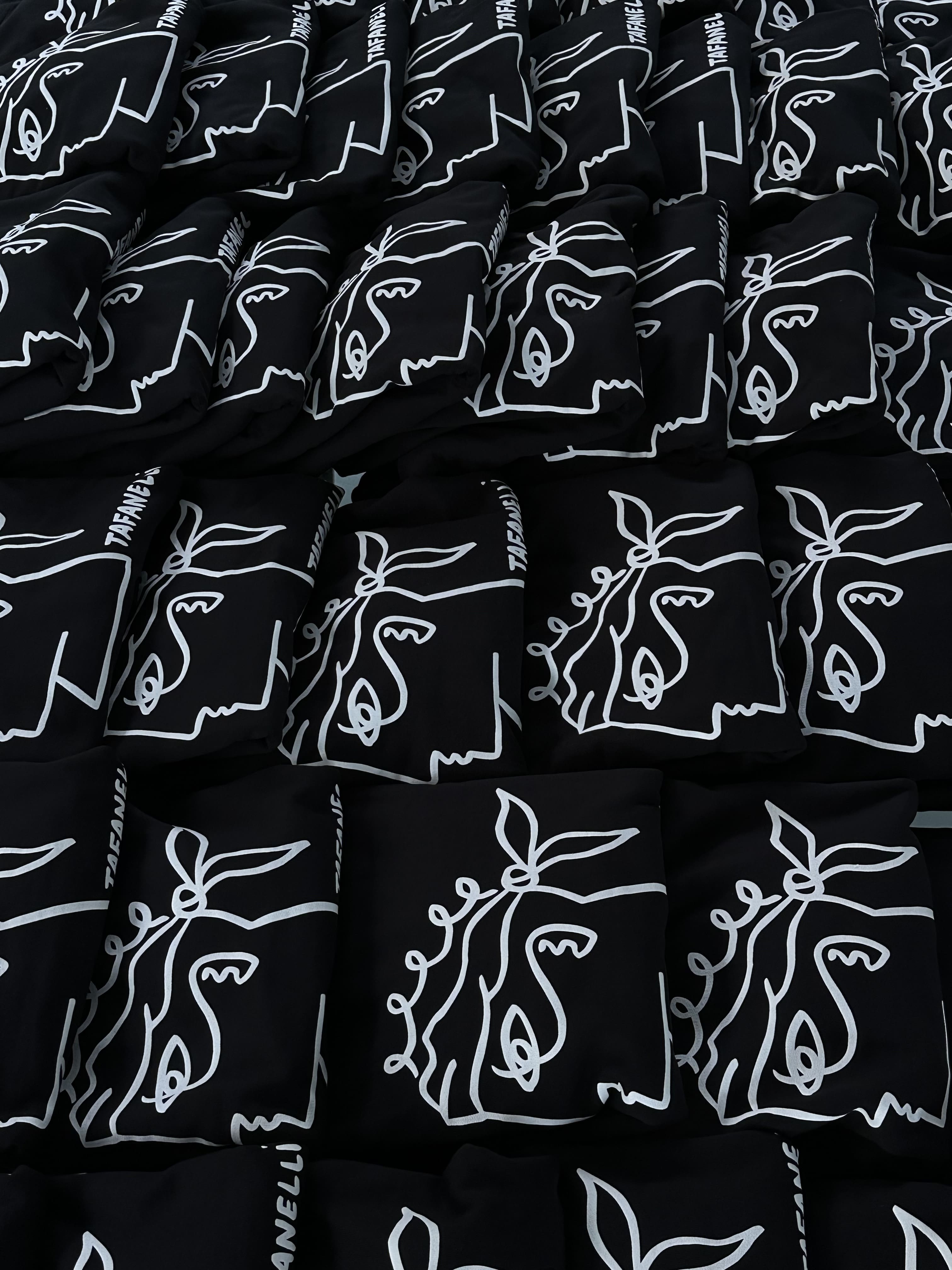
How to fold your t-shirts to avoid wrinkles
Storing a t-shirt is no trivial act. It is the final step in care, the one that determines the garment's fit, shape, and longevity. At Tafanelli, we see storage as a continuation of craftsmanship: a way to honor the material, respect the fold, and let the fiber breathe. Folding well is the first step toward preservation.

The fold as an extension of the craft
A well-made t-shirt deserves to be stored with the same attention given to its creation. Folding is not a mechanical gesture, but a balance between tension and rest. Too tight, and it breaks the knit; too loose, and it wrinkles. The secret lies in the precision of the movement: folding by guiding the fiber, not forcing it.
Tafanelli workshops fold each piece by hand, one by one. This moment concludes the manufacturing process—it is a sign of respect for the garment and for the person who will wear it. At home, this gesture can become a ritual as simple as it is essential.
Preparing the t-shirt
Before folding, ensure the t-shirt is perfectly dry. Even when slightly damp, it retains the creases imposed upon it. Lay it on a flat surface and smooth it out gently with your fingertips to remove any unwanted wrinkles. If necessary, a light touch with an iron at a low temperature—on the inside—will restore the knit's natural suppleness.
Never fold a t-shirt while it is still warm from ironing: heat sets the fold and can mark it permanently. Let it breathe for a few minutes before putting it away.
The perfect fold
Place the t-shirt flat, face down. Fold each side toward the center, following the line of the sleeves. Then, fold the bottom up to the shoulders, without pressing down. The cotton should settle naturally. This simple gesture avoids tension in the seams and preserves the garment's original shape.
If the t-shirt is thick, make a wider fold: a dense garment should never be compressed. Give it some air. This breathability prevents creases and maintains the fabric's volume.
Storing flat
The best way to store a cotton t-shirt is flat, on a clean, dry shelf. Stack no more than three pieces at a time. Beyond that, the weight of the garments on top creates pressure marks. For heavy cotton or dense jersey, the ideal is a low, aligned, and spaced-out stack.
In our workshops, garments are always stored flat before shipping. This is not for aesthetics, but to preserve the structure of the weave. This principle applies to your wardrobe as well.
The hanger: handle with care
Hangers are not forbidden, but they must be chosen with care. Use only wide wooden or velvet hangers that support the shoulder without marking it. Never use thin metal: it pulls the knit and leaves a trace. If you hang your t-shirt, rotate its position in your closet to avoid long-term deformation.
Cotton is a living material. Hung for too long, it stretches. Stored too tightly, it wrinkles. Finding the balance is the true art of proper storage.
The closet as a workshop
Your closet can become an extension of the workshop: a place where the garment rests, not where it piles up. Avoid plastic bags or closed boxes: cotton needs air. A slightly ventilated closet, away from sunlight and humidity, extends the life of the fabric. The scent of wood or linen adds a touch of sincerity that no chemical product can replace.
Every time you fold a Tafanelli t-shirt, remember: you are continuing the work of the person who made it. This act of care is the most beautiful form of loyalty.
The Mediterranean fold
In Corsica, they say that a well-stored garment brings good luck. It is a poetic way of saying that order and care prolong beauty. The fold, the light, the breath of the fabric—all of these are part of the same art. Storing a Tafanelli t-shirt means giving it the rest it deserves, before it returns to the sea, the wind, or the road.