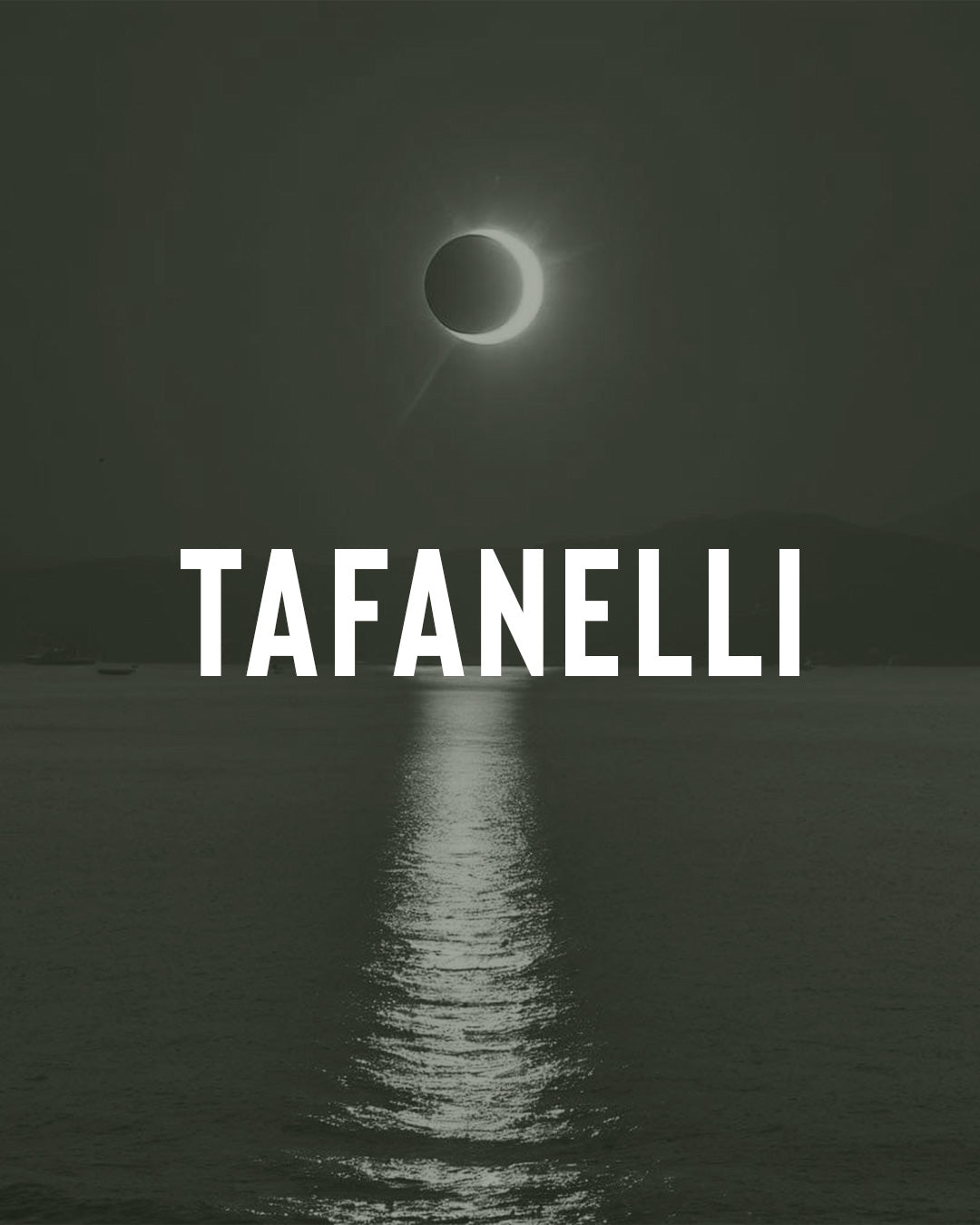
The eclipse of August 12, 2026 in Corsica: 97% of the sun obscured, and the next one in 2081
On August 12, 2026, the Moon covered 97% of the solar disk over Corsica, at the precise moment the sun was setting over the sea horizon. Two minutes of maximum occlusion, a drop in temperature, a blazing sky. Such a percentage will not occur here again until 2081. A story and explanations of a phenomenon that the island experienced from the front row.
What happened on August 12, 2026
A solar eclipse occurs when the Moon passes between the Earth and the Sun and casts its shadow on us. The phenomenon is frequent on a global scale, but it is extremely localized.
The shadow cast by the Moon on the Earth's surface is only about 300 kilometers wide. In other words, the show only ever takes place in a narrow band, and you have to be in it.
On August 12, 2026, Corsica was in a remarkable position. From the island, 97% of the solar disk was masked by the Moon. The maximum occlusion lasted about two minutes.
Two effects accompanied the phenomenon:
- A clear drop in brightness, distinct from the onset of dusk.
- A drop in temperature of two to four degrees, noticeable in the middle of August.
It is a physical experience as much as a visual one. The light changes in quality before changing in intensity, the colors dull, and the skin perceives the cooling before the eye understands what is happening.
Why 97% changes everything
The figure seems abstract. It is not, and the comparison shows it well.
- 1999: the famous eclipse of August 11 only reached 80% occlusion from Ajaccio.
- March 20, 2015: about 70%.
- August 12, 2026: 97%.
"Eclipses are rare and very localized," explained Lucien Luciani, president of the Ajaccio Amateur Astronomy Club, before the event. "But reaching 97% occlusion is truly something absolutely exceptional."
Such an occlusion rate will not happen again over Corsica before 2081.
Fifty-five years. Which is to say that for the vast majority of those who saw it, it was their only time.
A happy coincidence: the Ajaccio Observatory and the astronomy club were both celebrating their fortieth anniversary in 2026. "Since we are celebrating 40 years, we ordered an eclipse," joked Lucien Luciani.
The Corsican specialty: an eclipse at sunset
This is what made August 12, 2026, unique in Corsica, and not just rare.
The maximum of the eclipse occurred at the very moment the sun was setting on the sea horizon, on the western side of the island.
Two light-reduction phenomena were therefore superimposed: that of the occlusion, and that of the twilight. A scenario so unusual that even the astronomers themselves did not know exactly what to expect.
"There is going to be a drop in brightness due to the occlusion, and another because the sun is going to set. The sky should blaze with red. What will that look like? I have no idea," Lucien Luciani confided before the event.
It was this constraint that dictated everything else. To see the eclipse, you absolutely needed an unobstructed view of the sea horizon, facing west-northwest. A mountain, a hill, or a poorly oriented village was enough to miss everything.
For once, Corsican geography, with its west coast open to the open sea, offered exactly what was needed.
Where the island watched it
Two free, no-reservation observation sites were opened to the public by the Ajaccio Amateur Astronomy Club.
- La Parata, at the foot of the restaurant, facing the Sanguinaires Islands. The club set up a telescope equipped with a solar filter allowing the observation of prominences, as well as a live broadcast on a giant screen. Two electric vehicles facilitated access for people with reduced mobility.
- Tiuccia, on the Liamone straight road, near the bunker.
A third option, even rarer: observation from the sea. The Nave Va company organized a special sunset and eclipse cruise departing from Ajaccio.
"Imagine, in the open sea with the Sanguinaires Islands in the background, observing the sunset and the eclipse, it's going to be grandiose," enthused the club president.
Other parts of the island, from Cap Corse to Balagne, including the Teghime pass, saw curious people flocking to find the right angle.
The Moor's head glasses
One detail touched us particularly, and it deserves to be told.
For the occasion, the club had 5,000 pairs of protective glasses manufactured, sold for three euros, with part of the proceeds funding the social works of the Rotary Ajaccio Parata.
These glasses were screen-printed, and the motif printed on them was the Moor's head, accompanied by the Rotary and Ajaccio Observatory logos.
Five thousand people therefore watched the sun disappear through an object bearing the island's emblem. For a brand that screen-prints by hand and has worked with this symbol since its beginnings, it's the kind of coincidence you cannot invent.
Technically, these glasses met European standards: they filter one hundred-thousandth of solar radiation and block both ultraviolet and infrared rays. A particularity: they rendered the sun in orange tones rather than black and white.
The real danger, and the myths
This is the point on which one must never compromise, and it applies to all future eclipses.
It is extremely dangerous to look at the sun without certified protection. The mechanism is simple and formidable.
The lens of the eye acts like a magnifying glass. It focuses solar rays on the retina, and more precisely on the macula, the area responsible for precise vision. "It's exactly the same thing as when you take a magnifying glass to set fire to a piece of paper in the sun," explained Lucien Luciani.
The trap lies in this: the retina is totally insensitive to pain. Unlike the hand you pull back from a hot stove, nothing alerts the eye that it is being burned.
The lesions are irreversible. They result in a permanent black circle in the center of the field of vision.
What does not protect: sunglasses, even very dark ones. X-rays. Smoked glass. CDs. Photographic film. Observation through a cloud or mist.
What protects: only eclipse glasses certified to European standards, in good condition, not scratched and not punctured.
On the other hand, we must put an end to legends. "There are a whole bunch of myths that accompany the observation of an eclipse. The eclipse itself presents no particular danger, apart from the direct observation of the sun." The club president remembered schools having confined their students to classrooms during previous eclipses. There is nothing to fear from the phenomenon itself: not for health, nor for pregnant women, nor for food, nor for animals.
And after: Perseids and upcoming events
The evening of August 12 did not end at sunset.
Around 9:30 PM, the observation continued with the Perseids, the August meteor shower whose peak falls precisely at this time. Two celestial shows in the same evening.
The Perseids return every year around August 12. It is the most accessible astronomical event on the island: no equipment, no protection, just lie down away from lights and wait. The Agriates desert, interior passes, and unlit beaches offer remarkably dark skies.
For eclipses, however, patience will be required. An occlusion rate comparable to that of 2026 is not expected over Corsica before 2081.
Frequently asked questions
What percentage of the sun was masked in Corsica on August 12, 2026?
97% of the solar disk, which is exceptional. For comparison, the 1999 eclipse reached 80% from Ajaccio, and the March 2015 eclipse about 70%.
When will the next comparable eclipse take place in Corsica?
An occlusion rate of this magnitude is not expected over the island before 2081, fifty-five years later.
How long did the eclipse last?
The maximum occlusion lasted about two minutes. The entire phenomenon, from entry to exit, spans much longer, but this peak is where the spectacle is concentrated.
Why was this eclipse special in Corsica?
Because its maximum coincided with the sunset over the sea horizon. Two drops in brightness were superimposed, that of the occlusion and that of the twilight, with a sky that blazed. A scenario that even astronomers themselves had never observed on site.
Can you look at an eclipse with sunglasses?
No, never. No sunglasses, even very dark ones, provide protection. Only eclipse glasses certified to European standards, intact and unscratched, allow for direct observation.
Why can an eclipse make you blind?
The lens focuses rays on the macula, like a magnifying glass lighting paper. Since the retina feels no pain, nothing warns that a burn is in progress. The lesions are irreversible and leave a permanent black circle in the field of vision.
Is an eclipse dangerous for health or animals?
No. Aside from the direct observation of the sun, the phenomenon presents no particular danger. Contrary beliefs stem from myths that have always accompanied eclipses.
Where did you have to be in Corsica to see it?
On the western side of the island, with a completely clear view of the sea horizon in the west-northwest direction. The two official public sites were La Parata, facing the Sanguinaires, and Tiuccia on the Liamone straight road.
What we take away
At TAFANELLI, we design what makes up the memory of the island. Some things are inscribed slowly, over centuries. Others fit into two minutes.
On August 12, 2026, thousands of people found themselves in the same place, at La Parata, at Tiuccia, on a pass, or on a boat, to watch the same thing together. Without screens, without programs, for no other reason than to be there at the right moment.
And what they had on their noses, for the most part, bore a screen-printed Moor's head.
There is something right about that. An island watching the sun disappear through its own emblem, in a sky that blazes above the sea.
Those who were there will remember it all their lives. The others will have to wait until 2081.
Passing through Corsica, the client becomes a friend.
A DOPU, TAFA