Portuguese cotton: why it's the European benchmark, and why we chose it
Within a fifty-kilometer triangle between Porto, Braga, and Guimarães lies one of the most concentrated hubs of textile expertise in Europe. Major French fashion houses have been sourcing there for years without always admitting it. We, however, do. Here is what makes Portuguese cotton quality what it is, and what the term truly entails.
A clarification first: Portugal does not grow cotton
Let's start with what no one writes, because it's the kind of detail that undermines a narrative once the customer discovers it on their own.
Portugal does not produce raw cotton. The climate isn't suited for it. The fiber is imported, generally from Greece, Turkey, Egypt, or Central Asia, depending on the desired quality.
When we talk about "Portuguese cotton," we are talking about something else: what Portugal does with that fiber. The spinning, twisting, knitting, dyeing, and finishing. That is to say, everything that transforms a raw material into a fabric.
Anyone can buy cotton. Very few people still know how to process it correctly.
That is exactly where the Portuguese value lies, and that is why discerning brands go there.
The Ave Valley, heart of the European textile industry
The Portuguese textile hub is concentrated in the north of the country, in the Ave Valley, within the triangle formed by Porto, Braga, and Guimarães.
To this, we can add Barcelos, Famalicão, and Paços de Ferreira. In this small area lies one of the densest textile clusters in Europe.
This is nothing new. The tradition of thread, weaving, and garment making has been established there for generations, and some sources trace Portuguese cotton expertise back to the 18th century.
What has changed is the trajectory. Over the last twenty years, the Portuguese industry has made a clear shift:
- An assertive move upmarket, rather than a race to the bottom on price that it would have lost.
- Heavy technological investment in spinning and knitting machinery.
- Environmental and social standards aligned with European regulations, with traceability and certifications.
The result: most premium European brands and a good portion of French luxury houses source their materials there today. Many do not mention it anywhere.
What makes good cotton: fiber length
Everything starts there, and it is a physical criterion, not a marketing one.
A cotton fiber measures between 20 and 40 millimeters depending on the variety. The longer the fiber, the more resistant, uniform, and soft the resulting thread will be.
- Short fibers: the thread is uneven, the ends stick out of the yarn and create that fuzz that becomes pilling after a few washes.
- Long fibers: the thread is smooth, it catches less, it sheds less, and it resists friction much better.
This is the initial difference between a t-shirt that lasts three years and one that looks tired after six washes. And this is decided before the machine even starts turning.
Combed cotton, and why it changes everything
After carding, which detangles the fibers, an additional step can be applied: combing.
Combing consists of mechanically removing the shortest fibers and residual vegetable impurities. Only the longest and most parallel fibers are kept.
This step is expensive. It causes a loss of fifteen to twenty percent of the material and requires extra time and machinery. That is precisely why most entry-level t-shirts do not include it.
Yet what it brings is considerable:
- A noticeably softer and more uniform feel.
- Much less pilling over time.
- A smoother surface, allowing for sharper printing. With hand-screen printing, the difference is obvious: the contours are crisp, and the ink does not bleed into the weave.
- Better dye absorption, resulting in deeper and more stable colors.
If you were to remember only one word from this entire article, it should be this one: combed.
Spinning: where the real difference is made
Spinning is the process of transforming a mass of fibers into a continuous thread. Two major methods coexist, and they are completely different.
Open-end spinning is fast and economical. It produces an acceptable thread, but one that is coarser, less resistant, and less uniform.
Ring spinning subjects the thread to a continuous twist that durably aligns the fibers. The resulting thread is finer, stronger, and incomparably softer. It is slower and more costly.
Portuguese spinning mills work extensively with ring-spun techniques for qualities intended for the high-end market. It is one of the reasons why Portuguese jersey can be recognized by touch, even before looking at the label.
A complete ecosystem within an hour's reach
Here is the Portuguese advantage that is never discussed, and which is perhaps the most decisive factor.
In the north of the country, all textile trades are within an hour's drive of each other: spinning, knitting, dyeing, washing, printing, embroidery, tailoring, and finishing.
In practical terms, this means:
- Rapid back-and-forth on samples. A color adjustment is settled in days, not months.
- Real quality control, because we can travel there and see the material ourselves.
- Small-batch production is possible, which is vital for a brand that does not produce in tens of thousands of units.
- An entirely European supply chain, subject to the European Union’s labor laws and environmental standards.
This last point is not a detail. In an equivalent Asian supply chain, traceability relies on documents. Here, it relies on the fact that you can actually go there.
What it changes when you wear it
All this technique is only worth it if it can be felt. And it can.
- At first contact: density. The fabric has body; it doesn't crush between your fingers and doesn't let light through.
- When putting it on: the garment drapes instead of clinging. The shoulders hold their shape.
- After five washes: no pilling under the arms or on the sides, where friction is greatest.
- After a year: the collar hasn't loosened, the color hasn't faded to gray, and the fit hasn't changed.
- After three years: it has simply become your favorite t-shirt. That is the entire goal.
Good cotton is not judged in the store. It is judged after two years.
Why it costs more
Let's be clear about this, since it's the question everyone asks.
A combed Portuguese ring-spun jersey made from certified organic cotton costs several times the price of a standard jersey. The difference comes from very concrete factors:
- Long fiber cotton costs more than short fiber.
- Combing destroys a portion of the purchased material.
- Ring spinning is slower, thus tying up expensive machinery for longer.
- European wages and standards are not those of an Asian workshop.
- Certifications and traceability have real compliance costs.
- Small batches do not benefit from any economies of scale.
The honest calculation isn't the purchase price, but the price per year of wear. A €20 t-shirt replaced every summer costs more, both in money and resources, than one kept for five years.
We have already explained in detail why our pieces are priced this way, and the material is the first reason.
How to recognize good cotton in a store
Five gestures, thirty seconds, no need to be a professional.
- Look through it. Hold the fabric up to a light. If you can see clearly through it, the material is lightweight and the weave is loose.
- Crush it in your fist then release. Good cotton recovers its shape almost immediately.
- Run your hand flat over it. The surface should be uniform, without small irregularities or fuzz.
- Gently pull on the collar sideways. It should snap back without staying stretched out.
- Read the label. Look for the terms combed, ring-spun, and the weight (gsm). A brand that doesn't mention them rarely has a good reason for keeping quiet about it.
Frequently asked questions
Is Portuguese cotton really grown in Portugal?
No. Portugal doesn't have the climate to grow cotton in quantity. The fiber is imported, then spun, knitted, dyed, and finished locally. The term "Portuguese cotton" refers to this transformation, which is precisely where the quality lies.
Why do French brands turn to Portugal?
For three reasons: spinning and knitting expertise that France has largely lost, a complete ecosystem concentrated in a small area, and an entirely European supply chain in terms of labor laws and environmental standards.
What is combed cotton?
Cotton from which the shortest fibers and impurities have been mechanically removed to keep only the long, parallel fibers. It is softer, pills much less, and takes dye better. The process results in a significant loss of material, hence its cost.
Ring-spun or open-end, what’s the difference?
Open-end is a fast, economical spinning method that produces a coarser thread. Ring spinning applies a continuous twist that aligns the fibers: the thread is finer, stronger, and softer. High-end Portuguese qualities are ring-spun.
How can you tell if a t-shirt will pill?
Look at the fiber length and whether it is combed. Long-fiber combed cotton pills very little. Pilling comes from the ends of short fibers working their way to the surface due to friction.
Is organic cotton better quality?
The organic label refers to the cultivation method, not directly to the quality of the fiber. Cotton can be organic and still be mediocre. In practice, certified organic supply chains often select higher-performing fibers, but it is ultimately the fiber length, the combing, and the spinning that determine final quality.
Where is the Portuguese textile industry located?
Mainly in the north of the country, in the Ave Valley, within the triangle of Porto, Braga, and Guimarães, along with Barcelos, Famalicão, and Paços de Ferreira. It is one of the densest textile clusters in Europe.
Our choice
At TAFANELLI, our cotton comes from Portugal.
This is not a cost-saving choice; it is quite the opposite. We could have bought cheaper elsewhere and no one would have noticed, at least not in the first year.
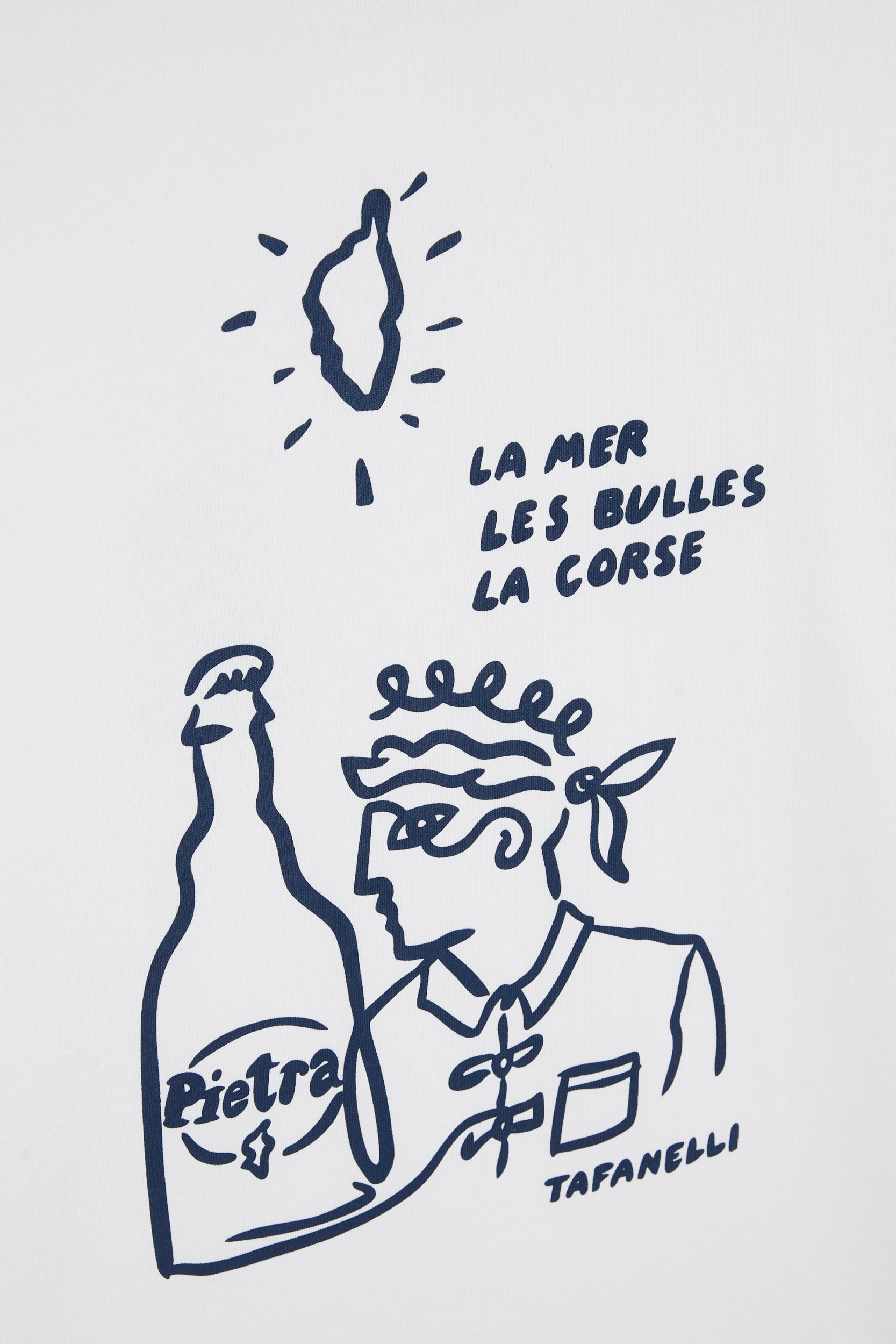
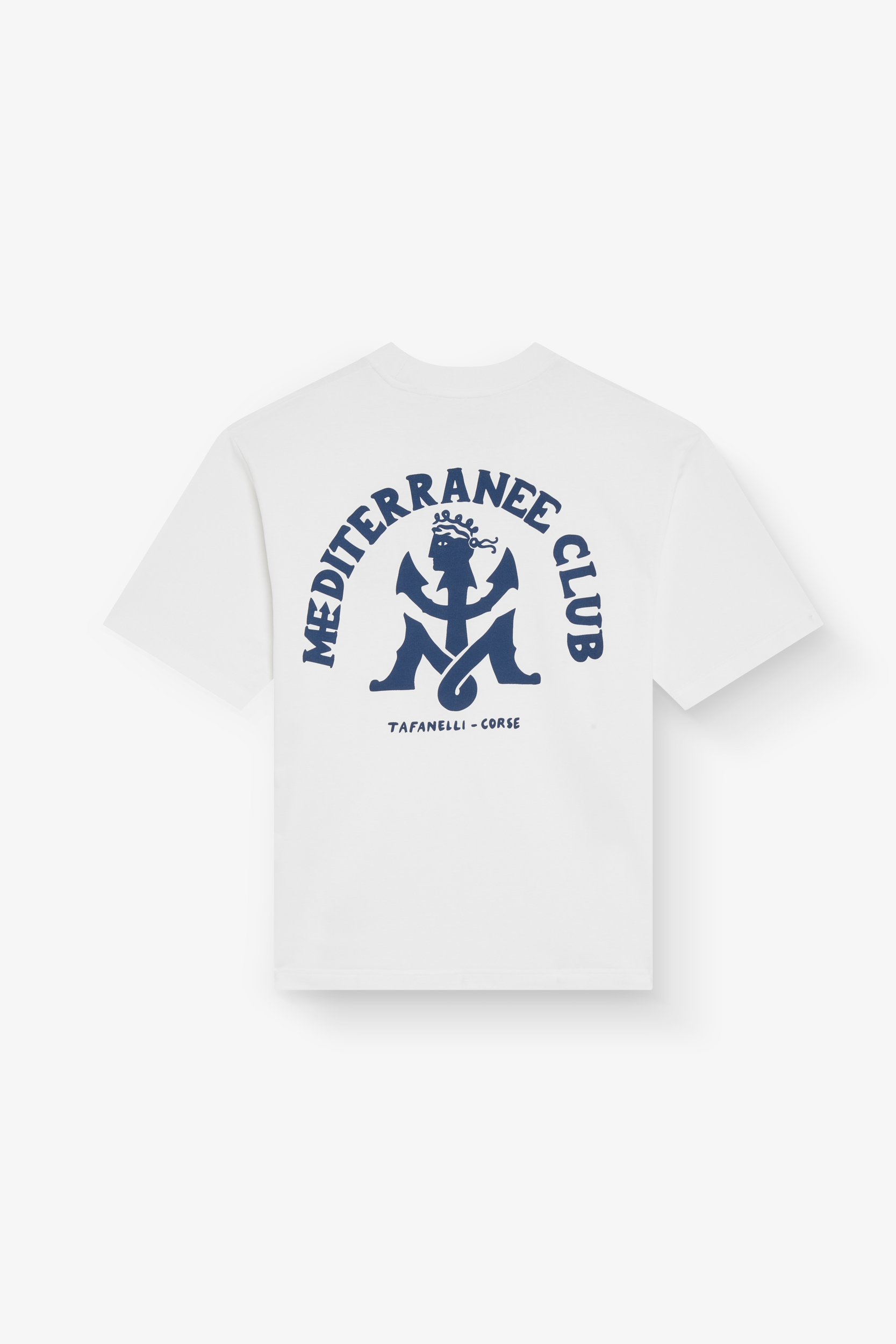
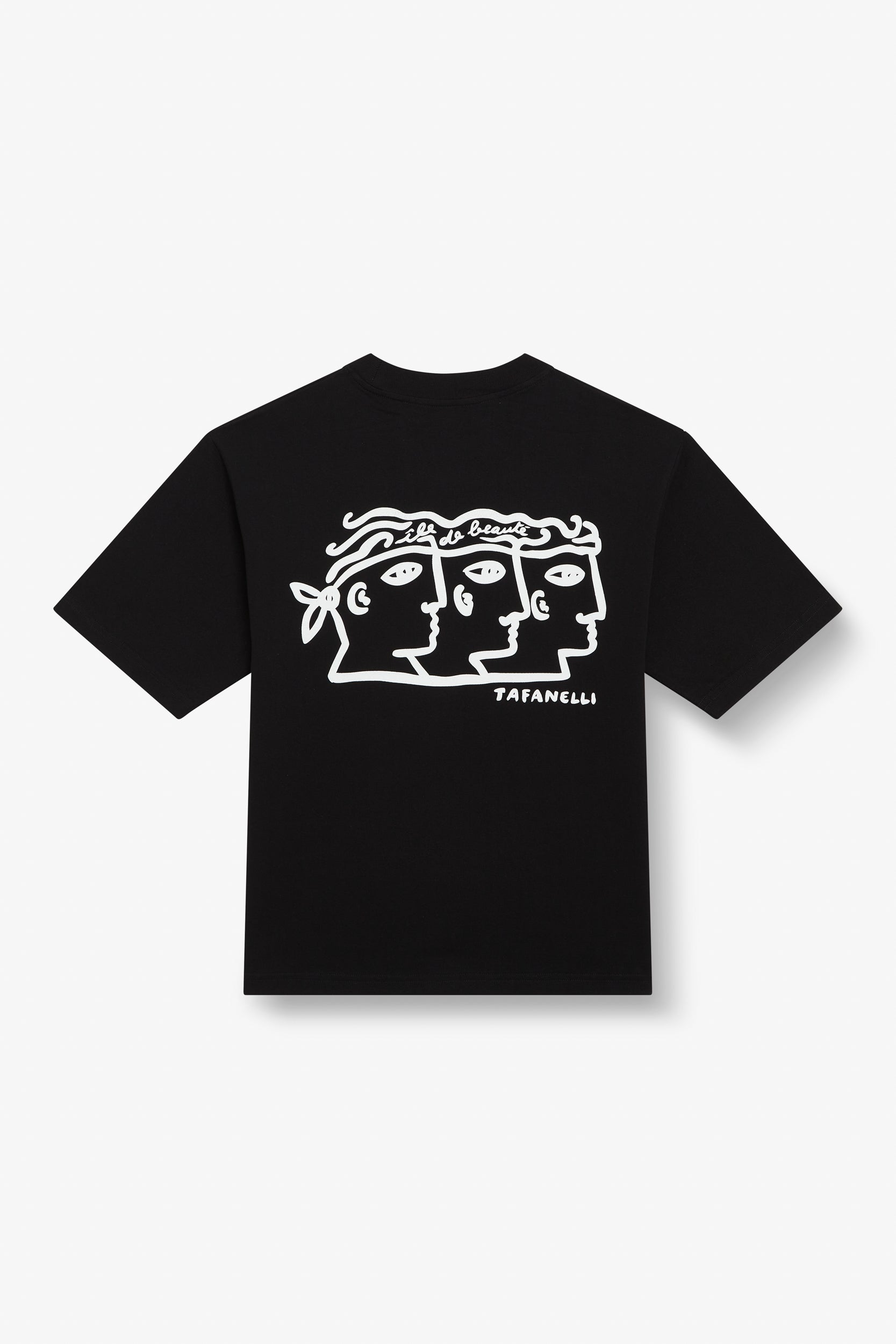
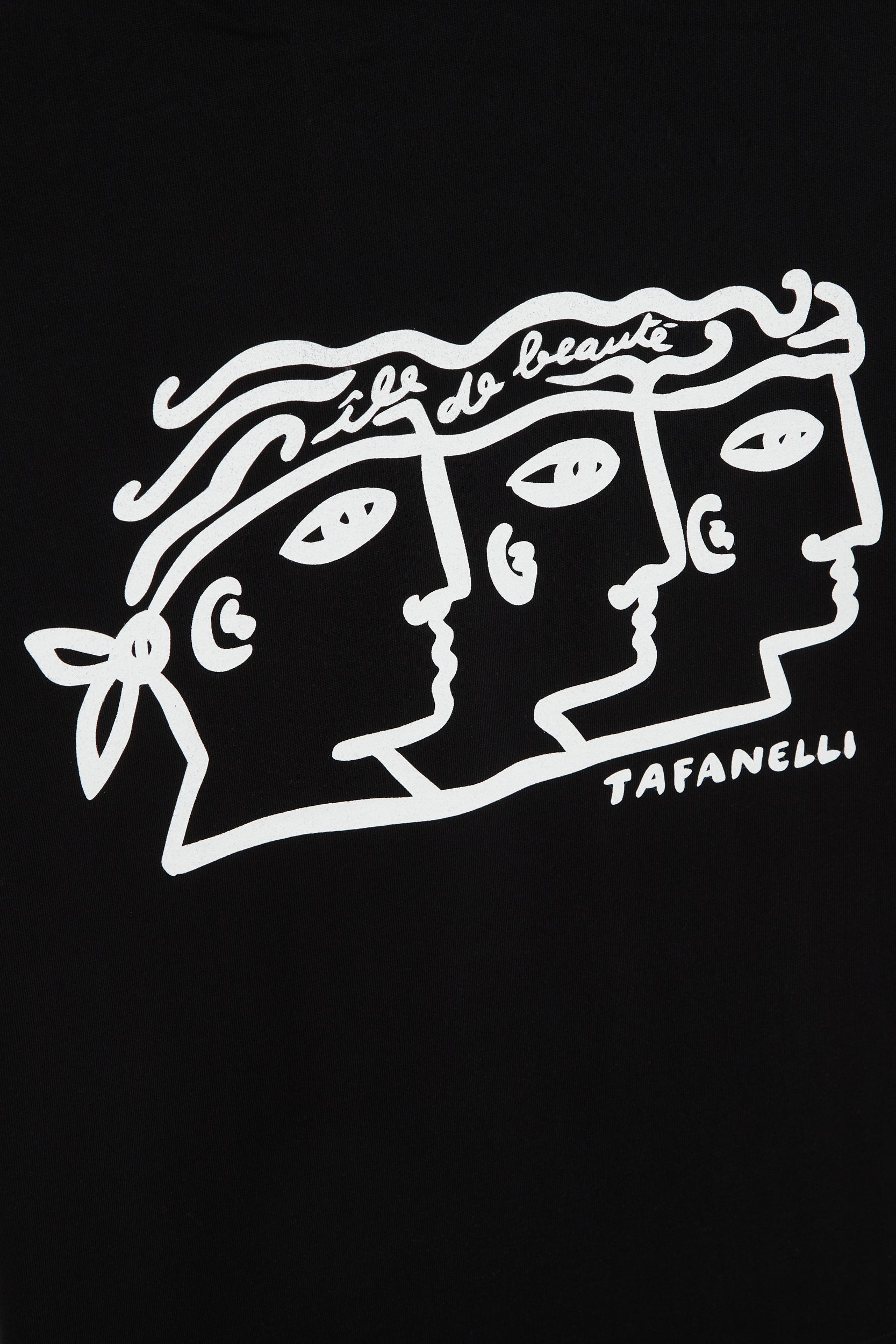
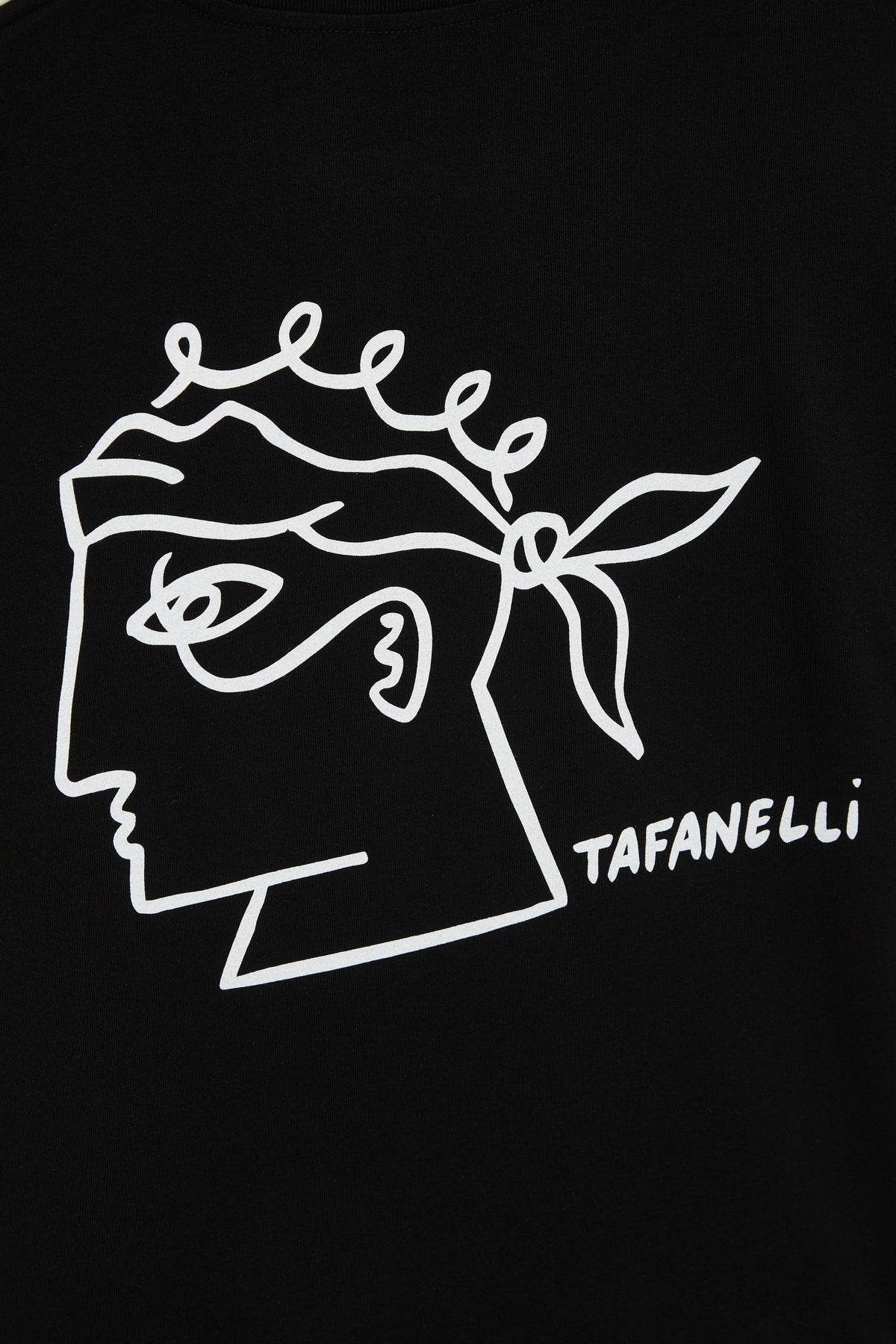
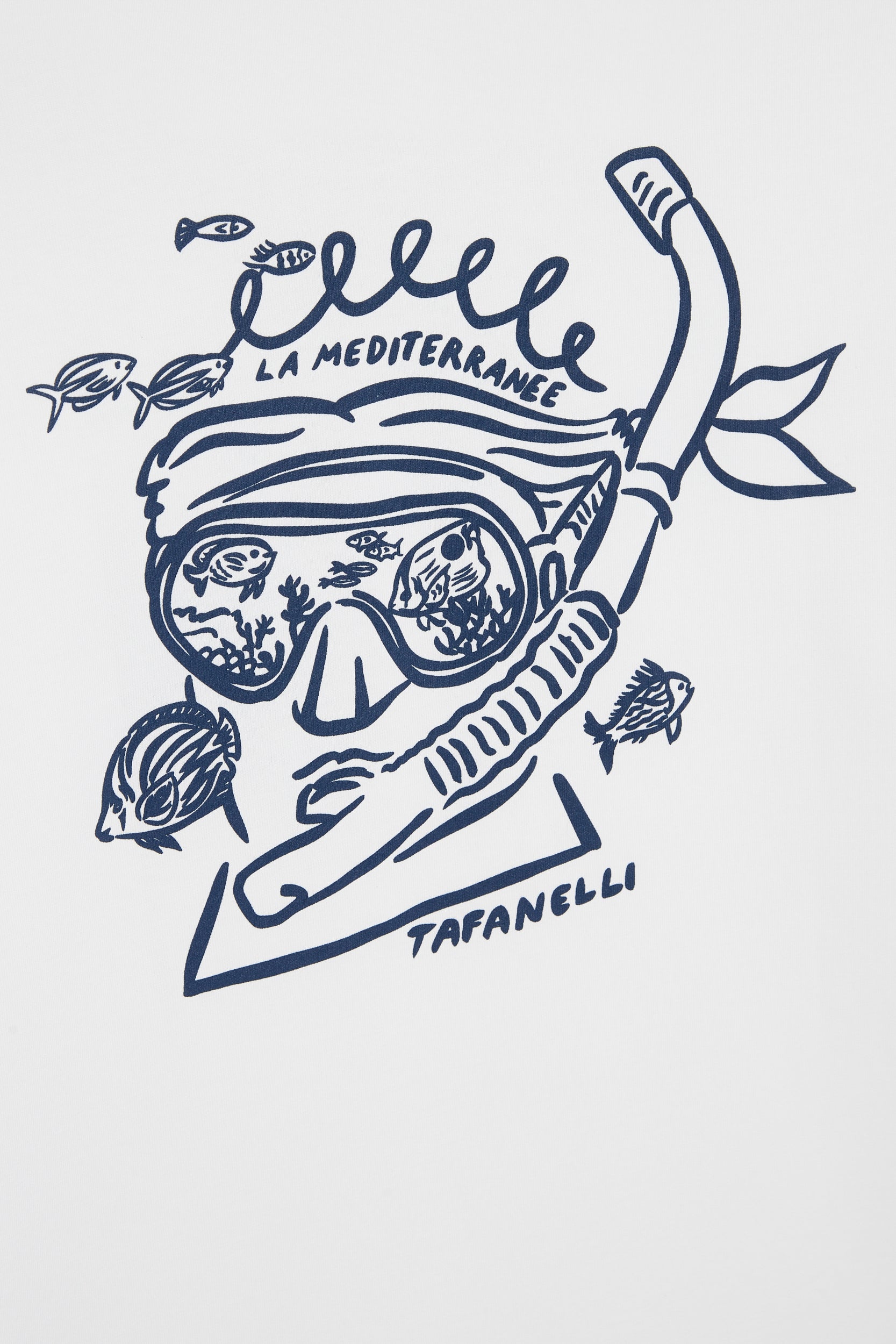
We work with a 280 g/m² organic cotton, pre-washed. The weight gives the garment its density and structure. Pre-washing stabilizes the material before it reaches you, which significantly limits shrinkage during the first wash. And the consistency of the jersey is what allows our hand-screen printing to come out sharp, frame after frame.
A hand-drawn design on a poor-quality base remains a poor-quality garment. We prefer to start with the right material and build from there.
That is also why we explain how to care for it. A beautiful material deserves to be washed at thirty degrees and kept away from the tumble dryer.
As for the rest, only time will tell. Ask us about your t-shirt in three years.
Passing through Corsica, the customer becomes a friend.
A DOPU, TAFA