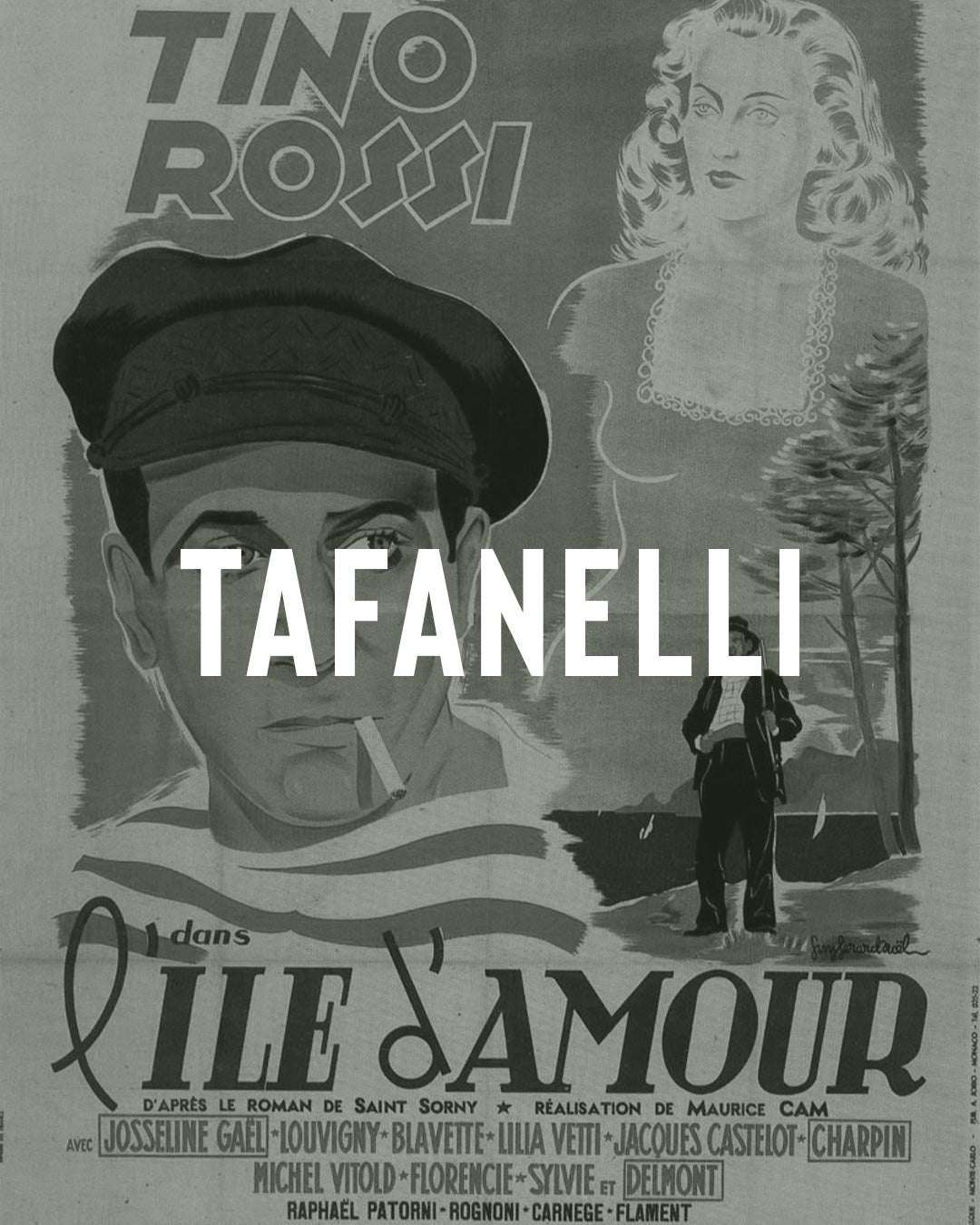
Films shot in Corsica: the island that played every role but its own
In 1962, a beach in the Agriates Desert became Omaha Beach. A year earlier, the cliffs of Bonifacio portrayed an imaginary Greek island. For sixty years, Corsica served as a backdrop for the whole world without ever playing its own role. Then something changed. Here is the map of filming locations, and the story of a turnaround.
Saleccia, the Corsican beach that played the D-Day landings
It is the most astonishing fact in the entire history of cinema in Corsica, and almost no one knows it.
In 1962, The Longest Day was released, an American super-production about the Normandy landings. Forty-eight stars in the credits, four directors, a colossal budget.
Part of the landing scenes was not shot in Normandy. It was filmed on Saleccia beach, in the heart of the Agriates Desert.
The reason is simple: in the early 1960s, the Normandy beaches were already too developed to represent June 6, 1944. They needed a virgin coast, with no buildings, no roads, no power lines. In Western Europe, few remained. Saleccia was one of them.
One of the most beautiful beaches in the Mediterranean played the role of a beach in the English Channel under machine-gun fire. It's quite an acting career.
Even today, Saleccia can only be reached by 4x4, by boat, or on foot via the customs officer's path. It has remained exactly in the state that allowed for that filming.
Bonifacio, a cinematic Greek island
A year earlier, in 1961, The Guns of Navarone brought together Gregory Peck, David Niven, and Anthony Quinn in a war film that became a classic.
The action takes place on Navarone, an imaginary Greek island in the Aegean Sea, dominated by impregnable cliffs. These cliffs are those of Bonifacio.
The city has a long filmography. L'Œil du Monocle by Georges Lautner in 1962, OSS 117 se déchaîne in 1963, Manina, the Girl in the Bikini as early as 1952, Our Women by Richard Berry in 2015. The Lavezzi Islands have also been used several times.
The reason is always the same: a white limestone cliff seventy meters high, a citadel clinging to it, and nothing equivalent elsewhere in the Mediterranean.
When Corsica played everything except itself
The phenomenon was repeated for decades.
- A beach in the English Channel in 1962, with The Longest Day at Saleccia.
- A Greek island in 1961, with The Guns of Navarone in Bonifacio.
- India in 2015, when the Indian film Tamasha by Imtiaz Ali filmed in Bastia and Bonifacio for an audience of several hundred million spectators.
- A Hungarian film noir setting in 2007, with The Man from London by Béla Tarr, filmed in Bastia based on Simenon.
- An indeterminate port city in 1955, when Luis Buñuel filmed Cela s'appelle l'aurore in Bastia.
- Brittany and the trenches of 1914-1918 in 2004, with A Very Long Engagement by Jean-Pierre Jeunet, some scenes of which were filmed in Calvi.
Buñuel, Preminger, Béla Tarr, Jeunet, Bollywood. The island has hosted major filmmakers from all over the world. And almost every time, it was playing someone else.
It is a fate well known to beautiful and poorly documented territories. They are filmed for what they resemble, never for what they are.
The Corsican File, the film that solidified the clichés
In 2004, The Corsican File by Alain Berbérian, starring Christian Clavier and Jean Reno, became a significant popular success. Adapted from Pétillon's comic book, it was filmed all over the island.
The list of municipalities is impressive: Ajaccio, Bastia, L'Île-Rousse, Sartène, Sant'Antonino, Erbalunga, Propriano, Porto-Vecchio, Sainte-Lucie-de-Tallano, Cervione, Fozzano, Palasca, the Alesani dam, and Figari airport.
A delightful detail: several scenes supposed to be set in Ajaccio were actually filmed in L'Île-Rousse.
The film left a lasting mark on the image of Corsica in the French imagination, for better or for worse. It made all of France laugh, including many Corsicans. It also consolidated a series of clichés that the island is taking time to shed.
This is the paradox of regional comedy: it provides massive visibility and a simplified image in the same motion.
Les Randonneurs, or how the GR20 entered people's homes
In 1997, Philippe Harel filmed Les Randonneurs on the GR20, with segments in Calvi, Corte, and Ajaccio.
The effect on the path's foot traffic was considerable. Before the film, the GR20 was the concern of a small circle of seasoned hikers. Afterwards, it became a holiday goal for a much wider public.
Few films have had such a direct impact on a territory. Even today, the GR20 is presented as the most difficult long-distance hiking trail in Europe, and some of those who set out on it discovered it thanks to a 1997 comedy.
Forza Bastia, when Jacques Tati filmed the Sporting
It is the strangest and most precious object in this filmography.
In 1978, Jacques Tati and his daughter Sophie Tatischeff filmed Bastia in the days leading up to the UEFA Cup final. The documentary is called Forza Bastia.
Tati, the filmmaker of Mon Oncle and Playtime, at Furiani, filming a Corsican city holding its breath. He is actually barely interested in the match: he films the people, the waiting, the rain, the stands.
The film remained unfinished during his lifetime and was only edited and released much later. It now stands as the most delicate witness to what the Sporting represented for the island.
The turning point: Corsica finally tells its own story
Over the last twenty years, something has shifted. The island is no longer just a backdrop; it is becoming a subject, and above all, it is producing its own authors.
- Thierry de Peretti, with Les Apaches in 2013, filmed in Porto-Vecchio. A frontal look at island youth, far from any postcard.
- Robin Renucci, with Sempre vivu! in 2007, filmed in Olmi-Cappella, in the Corsican language.
- Mafiosa, a series aired from 2006 to 2014, filmed in Ajaccio. A considerable success and an endless debate on the island regarding the image it projects.
- Éric Fraticelli, with Le Permis de construire in 2021, filmed in Balagne.
- Borgo, in 2024, a film starring Hafsia Herzi and critically acclaimed.
- Plaine Orientale, the second season of which was filmed in Bastia in 2026.
A territory ceases to be a backdrop the day it produces its own narratives. Corsica has reached that point.
Filming location itinerary
For those who want to see these places with their own eyes.
- Saleccia, Agriates. Access by 4x4, boat from Saint-Florent, or on foot via the customs officer's path. The 1962 landing.
- Bonifacio and the Lavezzi. The cliffs of Navarone, and half a dozen other films.
- The GR20. Sixteen stages, the path from Les Randonneurs.
- Erbalunga and Cap Corse. Setting of The Corsican File, and one of the most beautiful ports on the island.
- Sant'Antonino, Balagne. The perched village from the same film.
- Girolata. Accessible only by sea or on foot, setting for Adieu Philippine in 1962 and La Loi du survivant in 1967.
- Piana. The Les Roches Rouges hotel, setting for Joueuse, above the calanques.
- Nonza. The first Colomba, in 1947, based on Mérimée.
Frequently Asked Questions
What famous film was shot in Corsica?
Several. The Longest Day (1962) filmed landing scenes on Saleccia beach, The Guns of Navarone (1961) in Bonifacio, Les Randonneurs (1997) on the GR20, and The Corsican File (2004) in about fifteen municipalities.
Was The Longest Day really shot in Corsica?
Part of the landing scenes, yes, on Saleccia beach in the Agriates Desert. The Normandy beaches were already too developed in 1961 to represent June 6, 1944.
Where was The Corsican File filmed?
All over the island: Ajaccio, Bastia, L'Île-Rousse, Sartène, Sant'Antonino, Erbalunga, Propriano, Porto-Vecchio, Sainte-Lucie-de-Tallano, Cervione, Fozzano, Palasca, the Alesani dam, and Figari airport. Several scenes supposed to be set in Ajaccio were filmed in L'Île-Rousse.
Are there films in the Corsican language?
Yes. Sempre vivu! by Robin Renucci, filmed in 2007 in Olmi-Cappella, is entirely in the Corsican language.
Why does Corsica attract film crews?
For the density of its landscapes within a few kilometers—sea, mountains, cliffs, stone villages, and virgin beaches—and for its light. For a long time, the island mainly served to represent other territories.
Setting or subject
This shift from setting to subject is one we know well, because it is exactly our own.
For a long time, Corsica served as a motif. A Moor's head printed on a T-shirt made on the other side of the world, a village name on a roadside cap, a map of the island on a magnet. The island as a setting, yet again.
Creating a real Corsican brand means refusing this position. It is not about decorating a garment with Corsica; it is about making a garment that Corsica demands: heavy cotton because it needs to last for years, a straight cut because we walk and it gets hot, designs that tell real stories rather than recycled symbols.
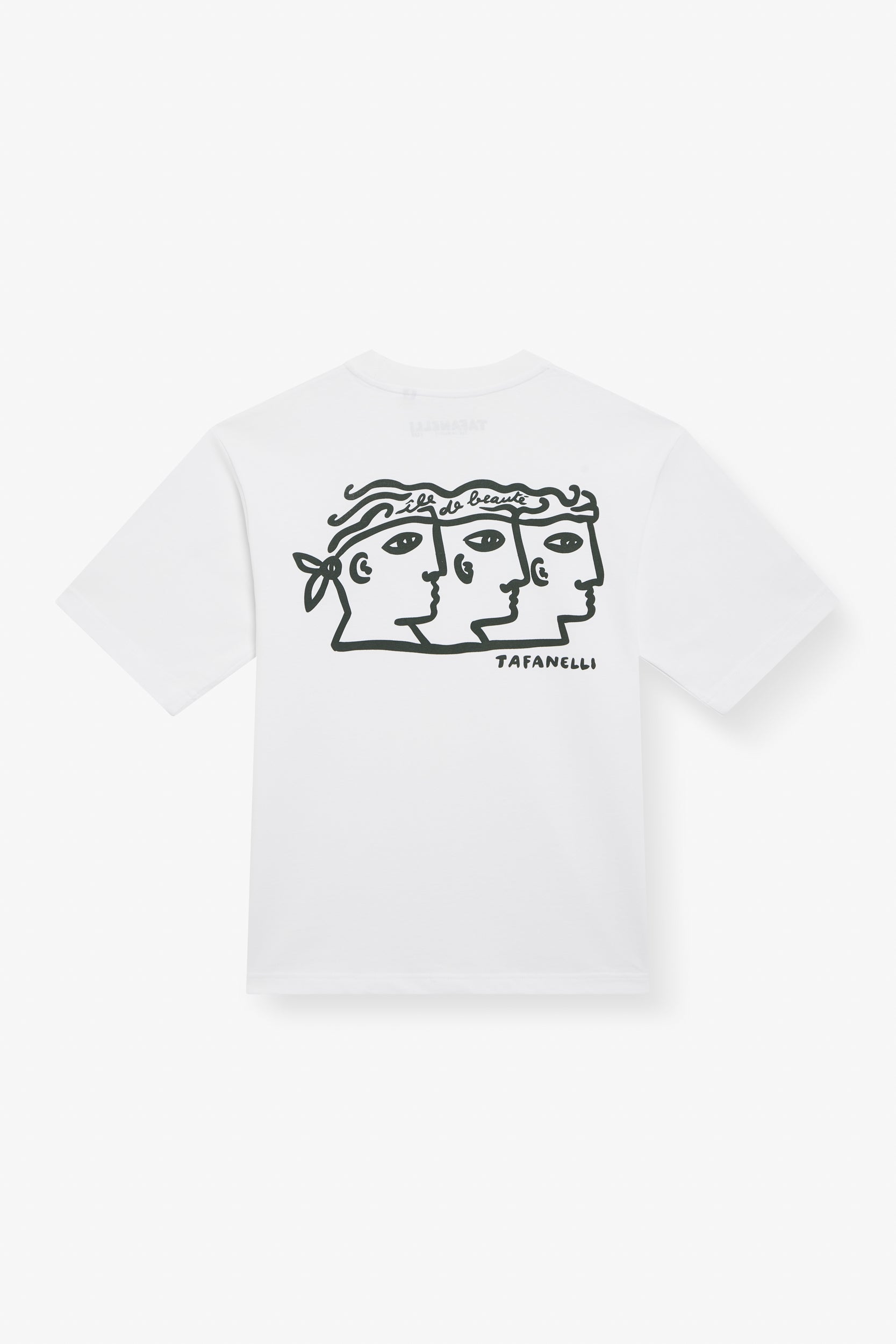
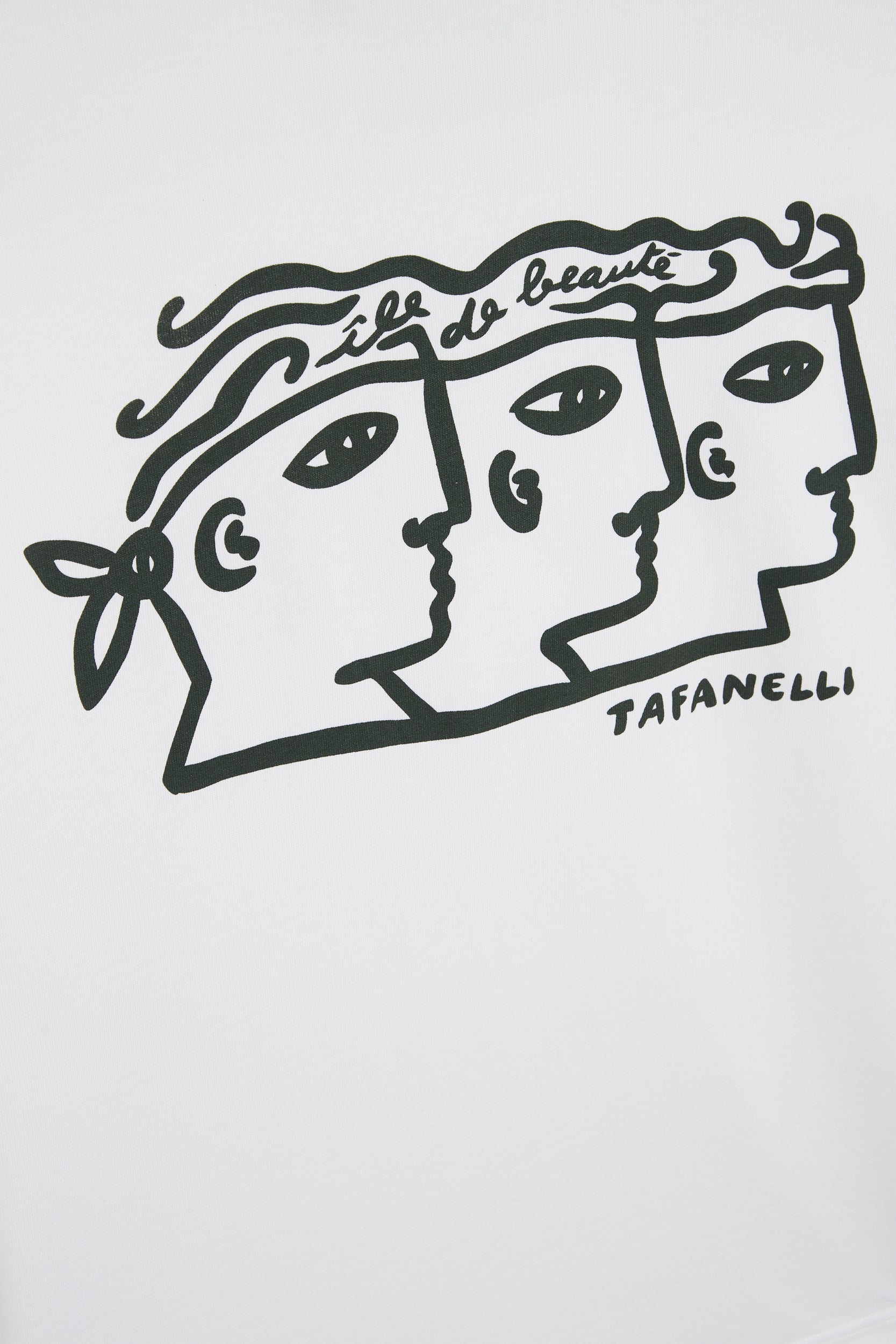
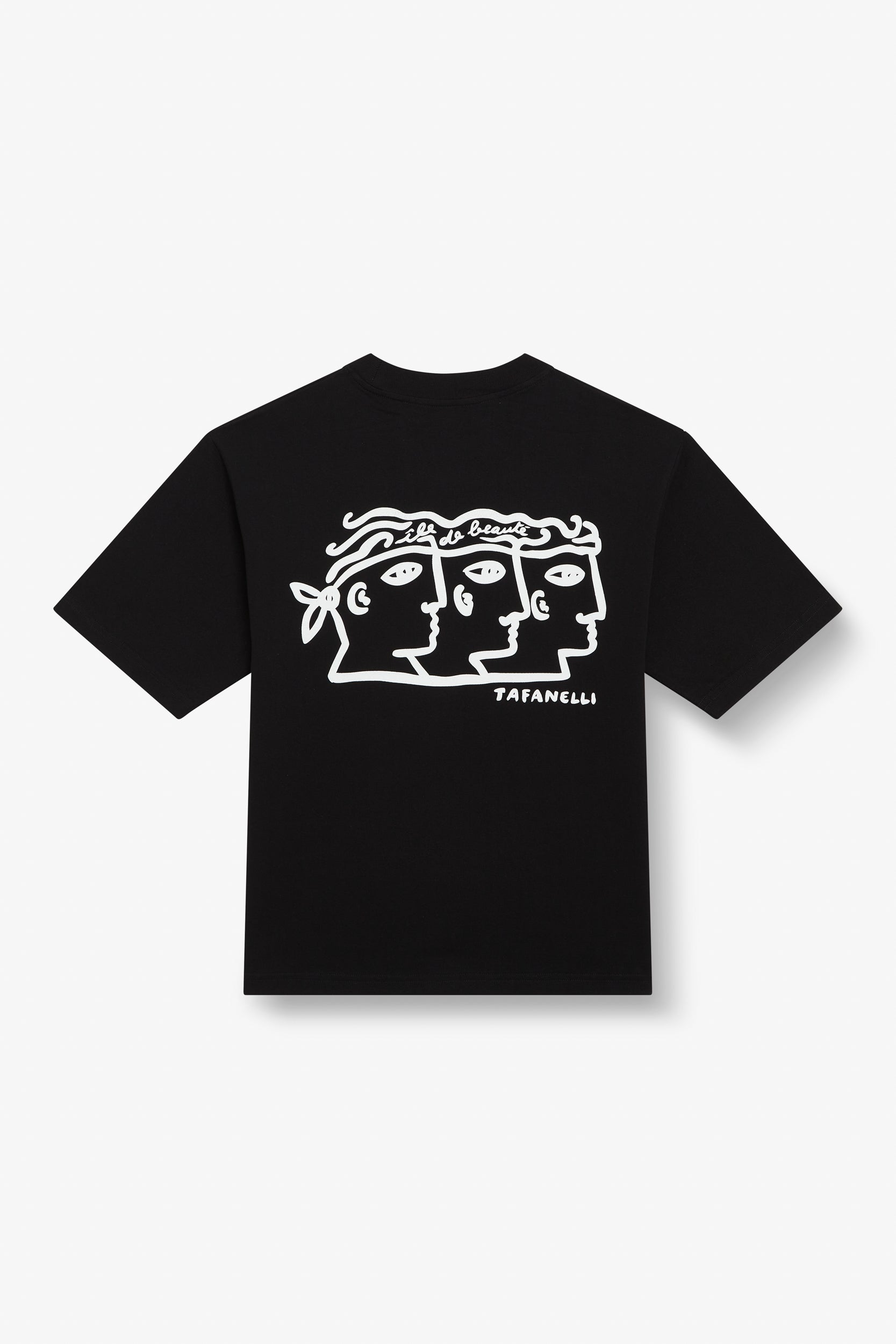
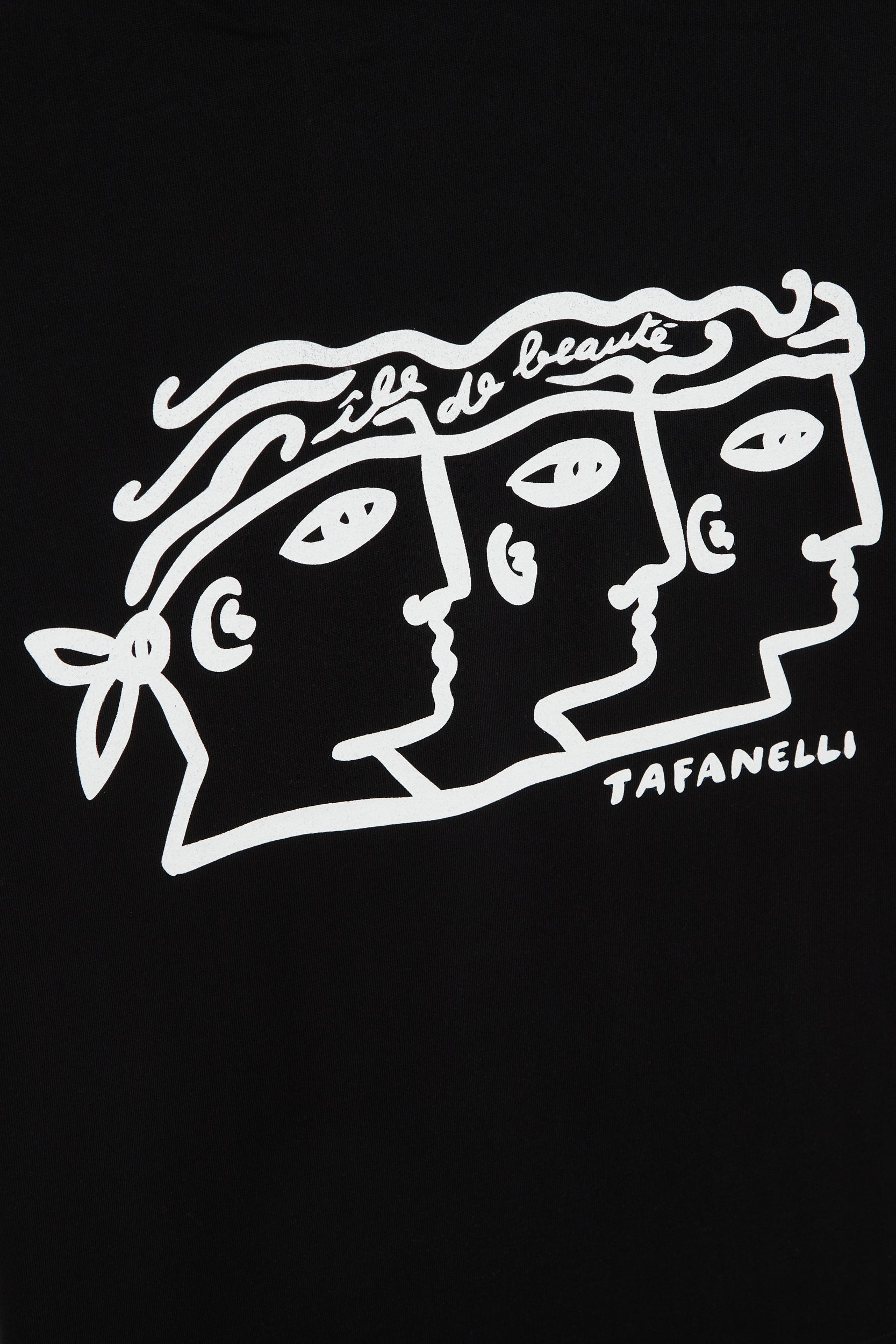
Our latest piece, La Trinità, took four years. Three profiles turned towards the same horizon, under the historical name of the island: mare, muntagna, machja. 280 g/m² cotton, hand-screenprinted.
This is not a setting. This is the subject.
To learn more:
- The Agriates Desert and Saleccia beach
- Bonifacio, the complete guide
- The GR20, the sixteen stages
- The blue of the Bastia Sporting
- JUL and Corsica: Cargèse, I Muvrini, and Calvi
- Corsican brand: how to recognize the real thing
Passing through Corsica, the customer becomes a friend.
A DOPU,
TAFA