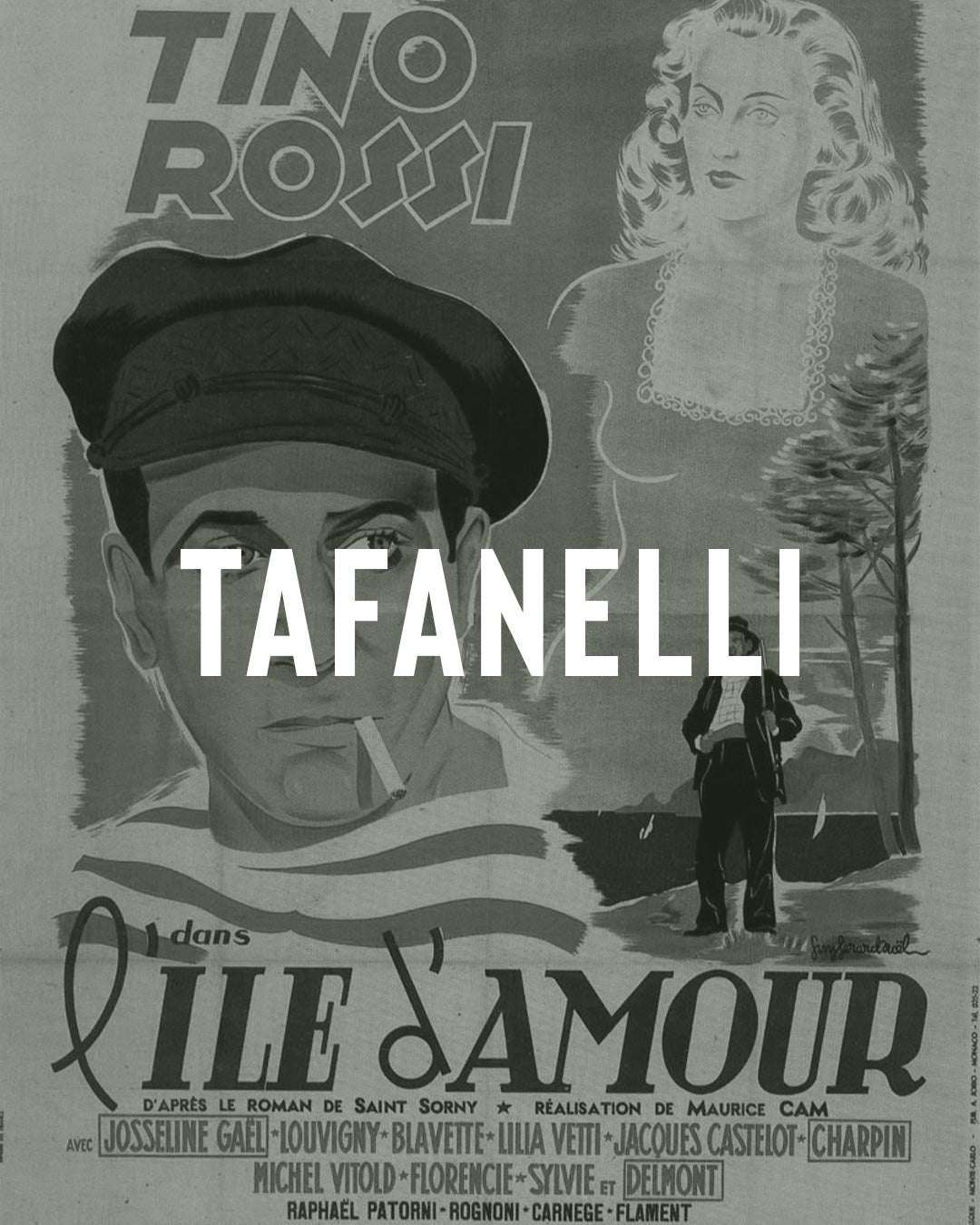
The tailor's son: Tino Rossi, Alizée, and the voices of Ajaccio
At 37 Rue du Cardinal Fesch, in Ajaccio, a master tailor named Laurent Rossi was cutting clothes at the beginning of the 20th century. His third son, Constantin, would go on to sell more than three hundred million records under the name Tino Rossi. Seventy-seven years after his birth, another voice was born in the same city. Ajaccio has never ceased to produce voices, and the story begins in a workshop.
The workshop at 37 Rue du Cardinal Fesch
Let's begin with the detail that no one tells.
Before being known as Tino Rossi's city, Rue du Cardinal Fesch housed a tailoring workshop. Laurent Rossi was a master tailor. His wife, Eugénie, divided her time between the family workshop and their nine children.
The third son was named Constantin. Born on April 29, 1907, he grew up surrounded by fabrics, measurements, and fittings. He began singing at the local church.
The best-selling Corsican singer of all time grew up in a tailor's workshop, amidst fabric swatches and pressing irons.
You have to imagine what a tailor's workshop represented in a Corsican city at the turn of the century. Not a fashion boutique, but an essential service. People didn't change wardrobes; they had a suit made that had to last ten years; they mended it, they turned it inside out when it was worn on the right side.
Clothing was an object of patience and precision. Constantin Rossi spent his childhood in that setting.
Tino Rossi, the Ajaccio native who conquered the world
The figures are hard to grasp today.
- 1,014 songs recorded.
- 24 films shot.
- 4 operettas.
- More than 300 million records sold worldwide.
In the 1930s and 1940s, he became the first major French crooner, a figure with a level of popularity few artists have known since. His light tenor voice, his preserved accent, his Mediterranean phrasing: nothing was erased, everything came from his roots.
This is an important point. At a time when artists smoothed out their origins to break through in Paris, he built a career with his name, his city, and his way of pronouncing words. He died on September 26, 1983, at the age of seventy-six.
The song everyone knows
Petit Papa Noël, recorded in 1946, has become one of the best-selling titles in the history of French music.
There is something dizzying about that. Every December, in every French home, in supermarkets, on the radio, the voice of an Ajaccio tailor's son born in 1907 rings out. Most people who hum it are completely unaware that they are singing Ajaccio Corsican.
Perhaps this is the island's greatest contribution to French popular culture, and it goes completely unnoticed.
Alizée, the same city, seventy-seven years later
Alizée Jacotey was born in Ajaccio on August 21, 1984.
She was sixteen when a cover of Ma prière caught the attention of Mylène Farmer and Laurent Boutonnat, who were looking for an interpreter for a track already written. That would become Moi... Lolita in 2000, one of the biggest successes in French music of the early 2000s, exported throughout Europe.
As with Tino Rossi, it all starts in Ajaccio. As with him, she was discovered very young. And as with him, she remains attached to the island, where she lives.
Two artists, two centuries, two repertoires that have nothing in common. The same city of fewer than seventy thousand inhabitants.
Why this island produces so many voices
This is not a coincidence, and the explanation is cultural.
Corsica is one of the few territories in Western Europe where collective singing has never ceased to be practiced in daily life. Not on stage: in church, at vigils, at village festivals, in brotherhoods, in processions.
The paghjella, a three-part polyphony listed as UNESCO intangible heritage, is learned by ear, without a score, by listening to the elders. A Corsican child grows up in an environment where singing in tune, as part of a group, without a microphone, is a common skill.
Add to that an extremely melodic language, rich in open vowels, and a religious tradition that maintained choirs for centuries. The foundation is there.
In many places, you learn how to sing. In Corsica, you grow up singing. It is not the same thing.
The other voices of the island
Ajaccio obviously does not have a monopoly.
Petru Guelfucci
Born in 1955 in Sermano, passed away in 2021. Member of Canta u Populu Corsu, one of the driving groups of the riacquistu, before a solo career. His track Corsica, released in 1991, became the island's musical symbol. Few songs have done as much for the recognition of the Corsican language beyond its borders.
I Muvrini
The Bernardini brothers' group has taken polyphony to international stages since the 1980s. In December 2025, they signed an unexpected duet with the most-listened-to rapper in France, sparking a lively debate on the island.
Canta u Populu Corsu
Founded in the 1970s, the collective played a central role in the reappropriation of the language and traditional repertoire. Without them, a part of the sung heritage would have disappeared.
In the footsteps of Tino Rossi in Ajaccio
The city has not forgotten its child.
- The Tino-Rossi marina, in the heart of Ajaccio, bears his name.
- Rue du Cardinal Fesch, one of the oldest thoroughfares in the old town, where the family workshop was located. It also houses the Fesch Palace, one of the most important museums of Italian painting in France.
- Old Ajaccio, its narrow streets, its cathedral, the Bonaparte house just a few steps away.
The city can be visited on foot. Between the port that bears his name and the street where his father worked, it is less than a ten-minute walk.
Frequently asked questions
Where was Tino Rossi born?
In Ajaccio, on April 29, 1907. His father, Laurent Rossi, was a master tailor, with a workshop at 37 Rue du Cardinal Fesch. He was the third of nine children.
How many records did Tino Rossi sell?
More than 300 million worldwide, with 1,014 songs recorded, 24 films, and 4 operettas.
Is Alizée Corsican?
Yes, she was born in Ajaccio on August 21, 1984, and grew up there. She was revealed in 2000 with Moi... Lolita, written and composed by Laurent Boutonnat and Mylène Farmer.
Why does Corsica have such a singing tradition?
Because collective singing has remained a daily practice there, in church, at vigils, and at village festivals, rather than a stage activity. The paghjella, a three-part polyphony, is learned by ear from childhood. It is listed as UNESCO intangible heritage.
Who was Petru Guelfucci?
A Corsican singer born in 1955 in Sermano who passed away in 2021, member of Canta u Populu Corsu and then a soloist. His 1991 track Corsica became one of the island's musical symbols.
The tailor's thread
There is a reason why this story is particularly dear to us.
Everything starts in a workshop. A man cutting, assembling, adjusting, in a street in Ajaccio, for clients who will keep the clothing for years. Without that workshop, no family of nine children, no childhood spent listening and singing, no Petit Papa Noël.
This trade has almost disappeared from the island. There has never been a textile industry in Corsica, only domestic expertise and village tailors, who worked with rare and expensive material with a level of rigor that ready-to-wear has rendered useless.
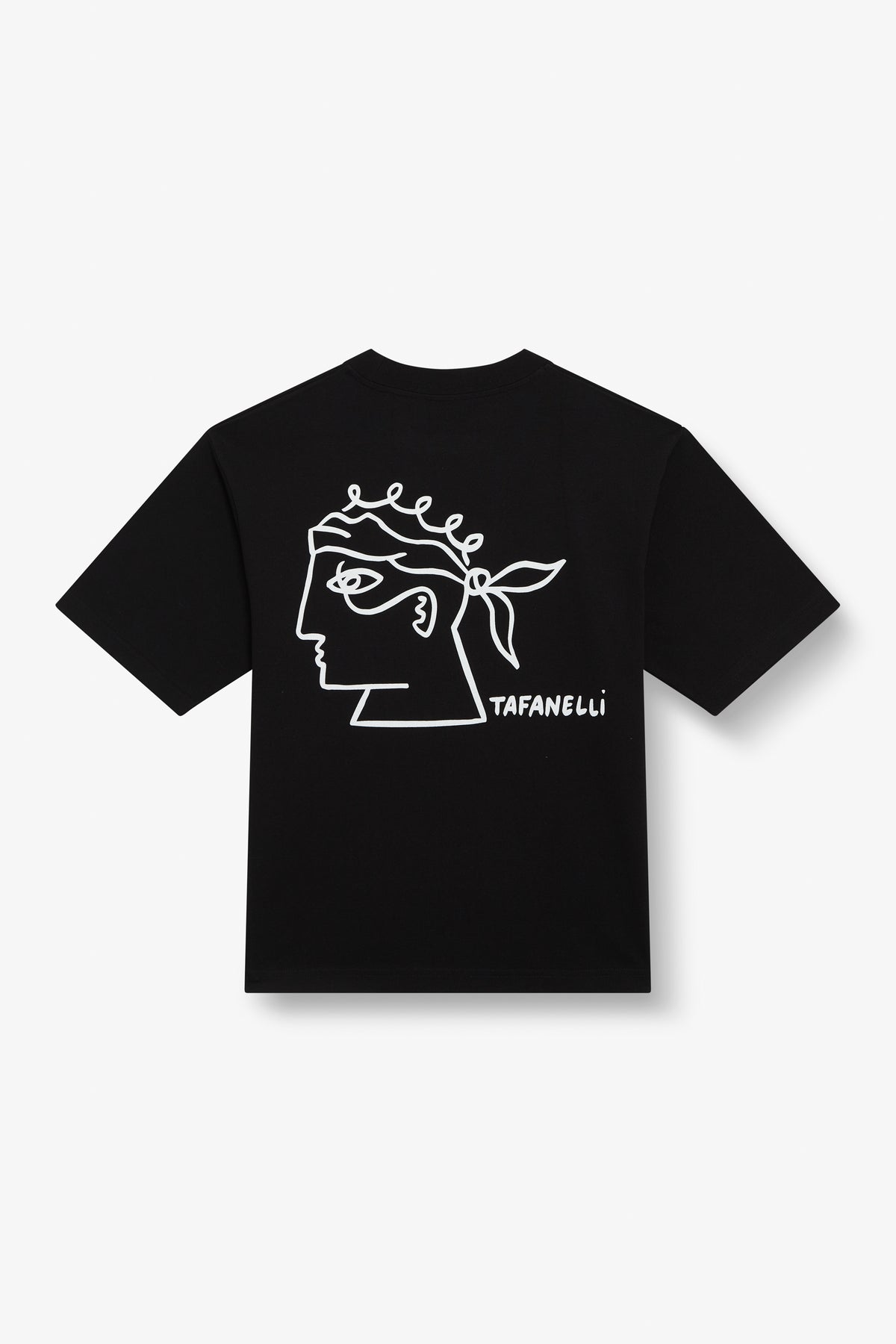
We do not claim to replace them. But we start from the same principle: few pieces, material chosen to last, manual labor at every stage. 280 g/m² organic cotton, hand-screen printing, manufacture in France.
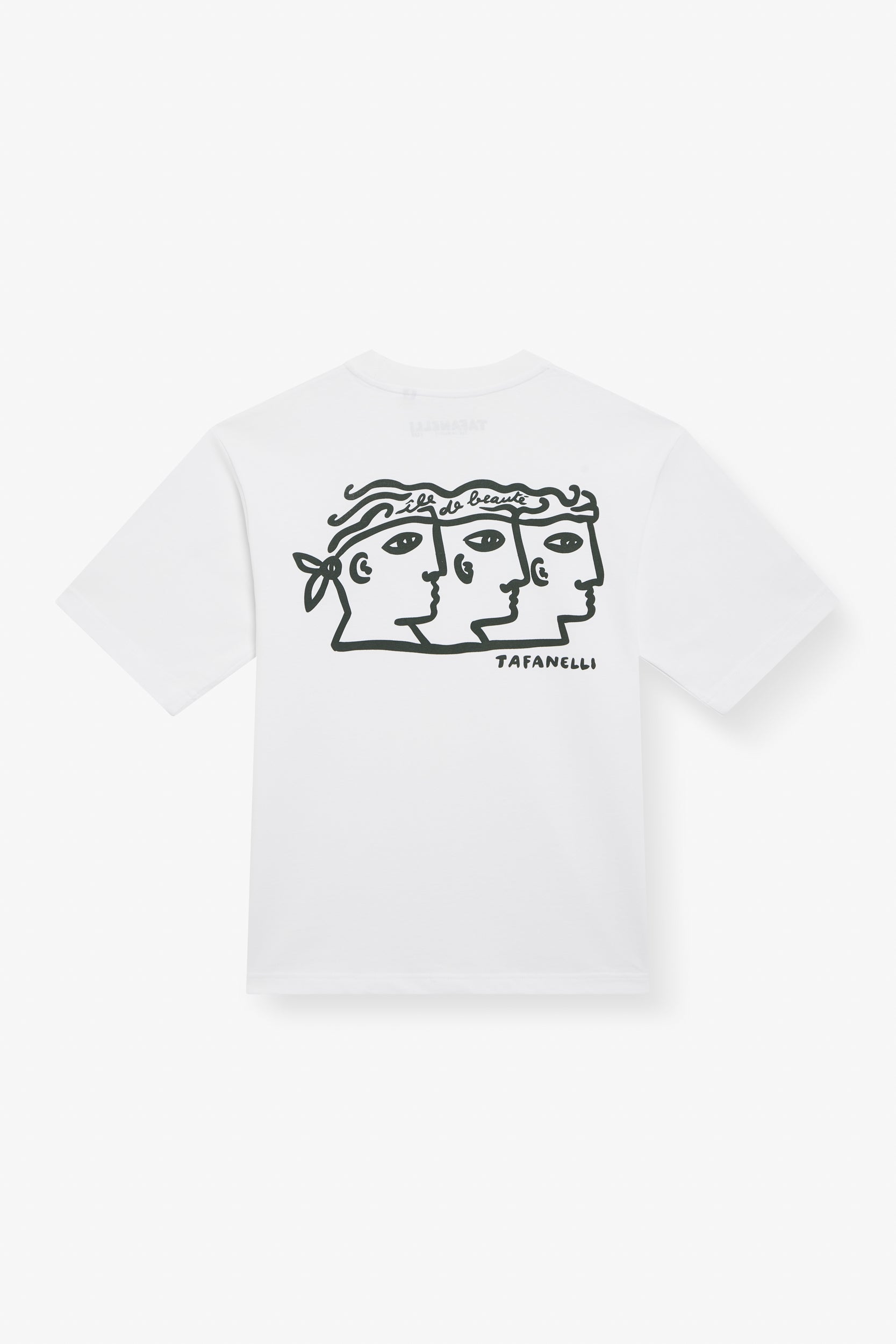
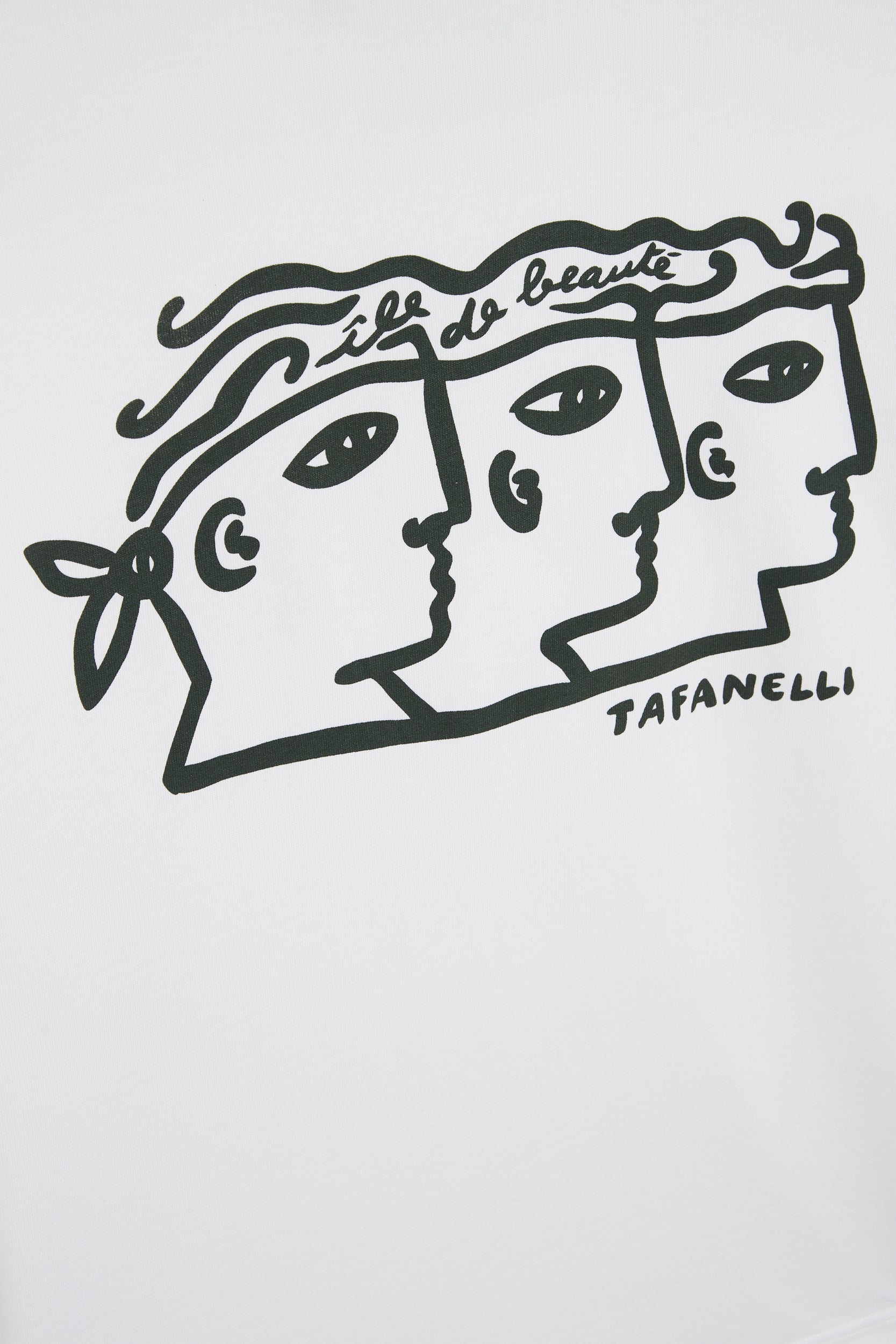
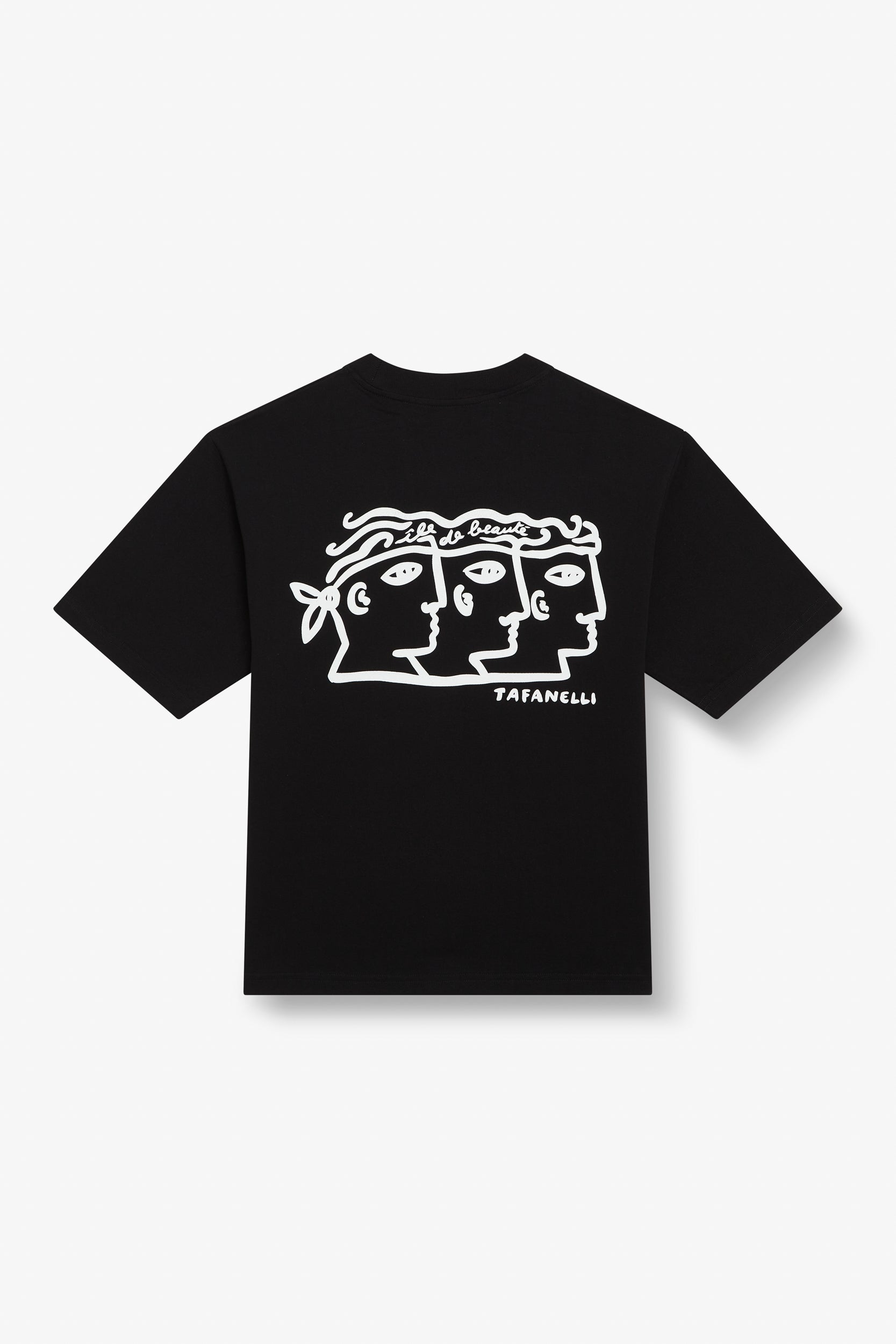
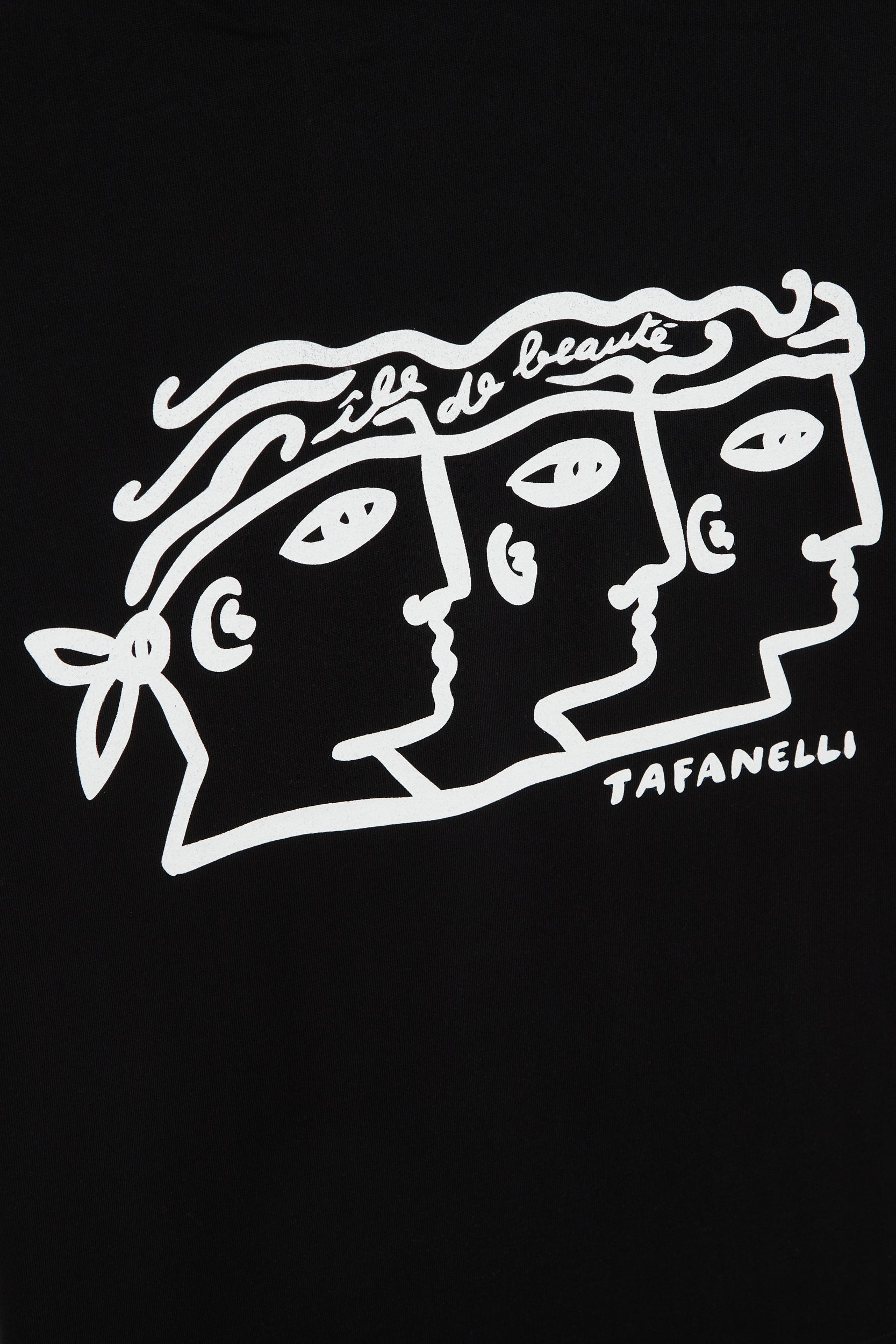
Our latest piece, La Trinità, took four years to be finalized. Three profiles turned toward the same horizon, under the island's historic designation: mare, muntagna, machja.
An Ajaccio workshop from the turn of the century and a Corsican brand from today do not have much in common. Except for the idea that a garment is made slowly, and that it must last.
To learn more:
- Ajaccio, the 2026 complete guide
- The paghjella, Corsican polyphony on the UNESCO list
- Traditional Corsican costume
- The Corsican language, history and renaissance
- JUL and Corsica: Cargèse, I Muvrini and Calvi
- Corsican brand: how to recognize the real thing
While passing through Corsica, the customer becomes a friend.
A DOPU,
TAFA