Lasting actions: rethinking sustainability
We often speak of sustainability as an innovation. But for us, it starts elsewhere: in the craft. At Tafanelli, every stitch, every fold, every press is an act of slow resistance—a way to make what matters last.

Gestures pass, clothes remain.
Sustainability before the discourse
The word “sustainability” wears thin from being repeated. Yet, it only has meaning when it is embodied. In our workshops, it is not claimed—it is practiced. Sustainability is the time taken to do things well. It is a checked stitch, a chosen fabric, a respected movement. Nothing spectacular, just a series of silent acts that ensure a Tafanelli garment traverses the years without losing its truth.
Sustainability is not declared: it is crafted.
Gestures as a foundation
Before the labels, before the slogans, there is the gesture. The one that cuts straight, that adjusts, that mends. These daily actions, repeated without haste, carry within them a form of simple ecology: wasting nothing, rushing nothing, respecting the material. That is craftsmanship. A set of ancient gestures, passed down, perfected—always current, never hurried.
True sustainability is that of the gesture, not that of marketing.
Sustainability of the garment, sustainability of meaning
A garment that lasts is not just sturdy. It retains meaning. It was designed to be worn for a long time, to age with you, to develop a patina without losing its shape. At Tafanelli, we work on sustainability as a relationship: the one between the garment, the hand, and time. It is not a promise of duration, it is a promise of honesty.
A garment does not need to survive fashion: it must simply resist it.
The hand as a guardian of time
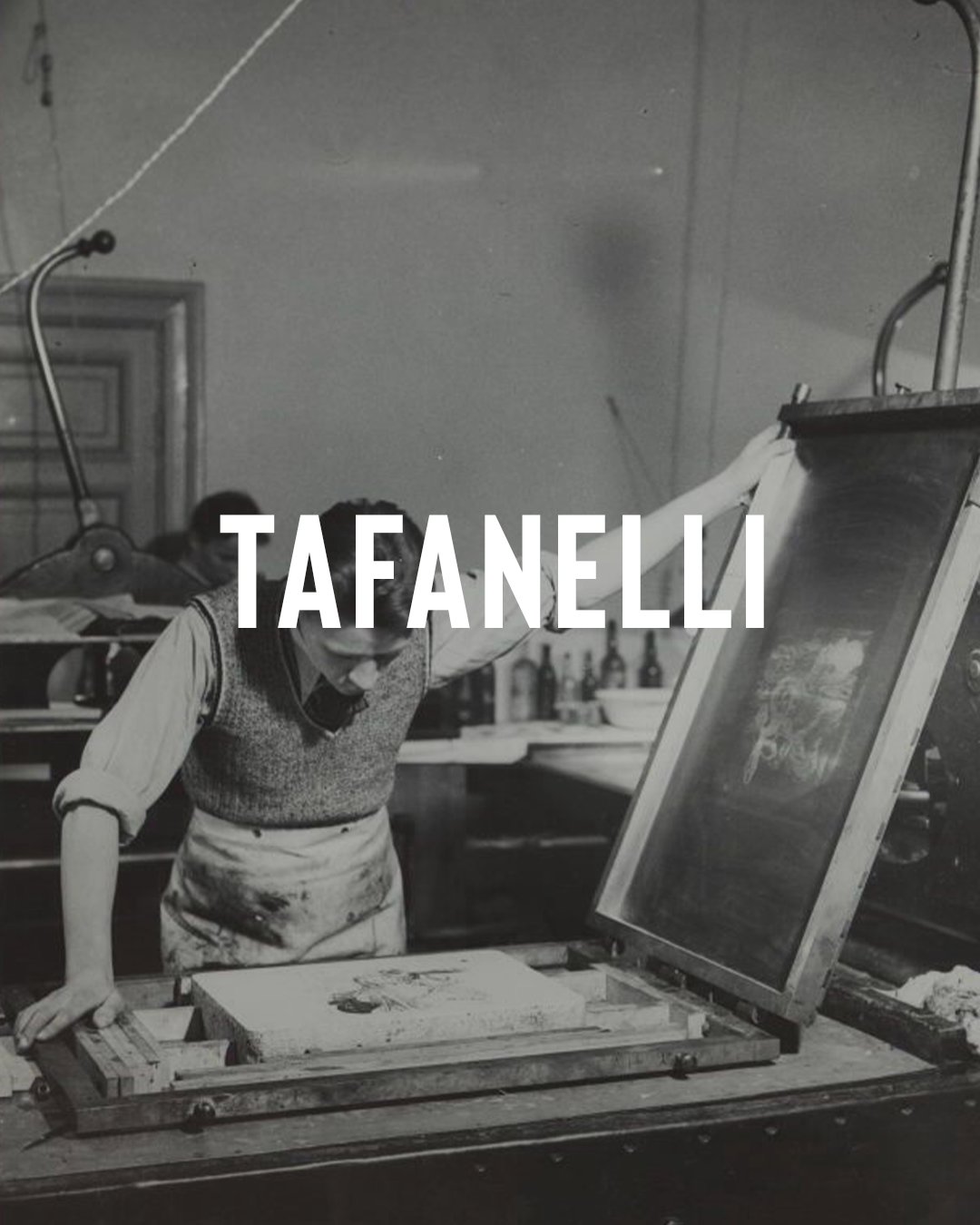
In a workshop, sustainability is read in the patience of an artisan. Every stitch is proof of fidelity: to the material, to the trade, to the precise movement. Where machines accelerate, the hand balances. Where industry standardizes, it adds nuance. This slowness, this precision, this attention make the garment an object that is sustainable by nature.
The human gesture cannot be programmed: it is passed on. And that is what lasts.
Repairing rather than replacing
Sustainability is also the ability to repair. A well-made garment can be mended, restitched, and readjusted. It is a bond that does not break at the first snag. Manufacturing locally means keeping this proximity: knowing where your garment comes from, knowing who can breathe new life into it.
At Tafanelli, we believe that a sustainable garment is not the one we throw away last—it is the one we keep the longest.
Sustainability of the gesture, sustainability of the world
To rethink sustainability is to put the gesture back at the center. In the sea, in the sewing, in life: everything that lasts is made with measure. A slow garment, crafted with care, is already a form of gentle resistance. Because it values what the world forgets: time, precision, the hand.
Lasting gestures build lasting clothes. And perhaps, a fairer world.