Jellyfish in Corsica: understanding the mauve stinger, avoiding it, and what to do
Every summer, the same scene. A scream on the beach, a child coming out of the water crying, a crowd forming, and ten contradictory pieces of advice given by ten different people. Here is what you really need to know about jellyfish in Corsica: which species they are, why they arrive, how to avoid them, and above all, what to do and what not to do in case of a sting.
The mauve stinger, the one you'll encounter
In Corsica, in more than nine out of ten cases, the jellyfish responsible is called Pelagia noctiluca, the mauve stinger (or purple-striped jelly).
Learn to recognize it; this will save you a lot of unnecessary panic over perfectly harmless species.
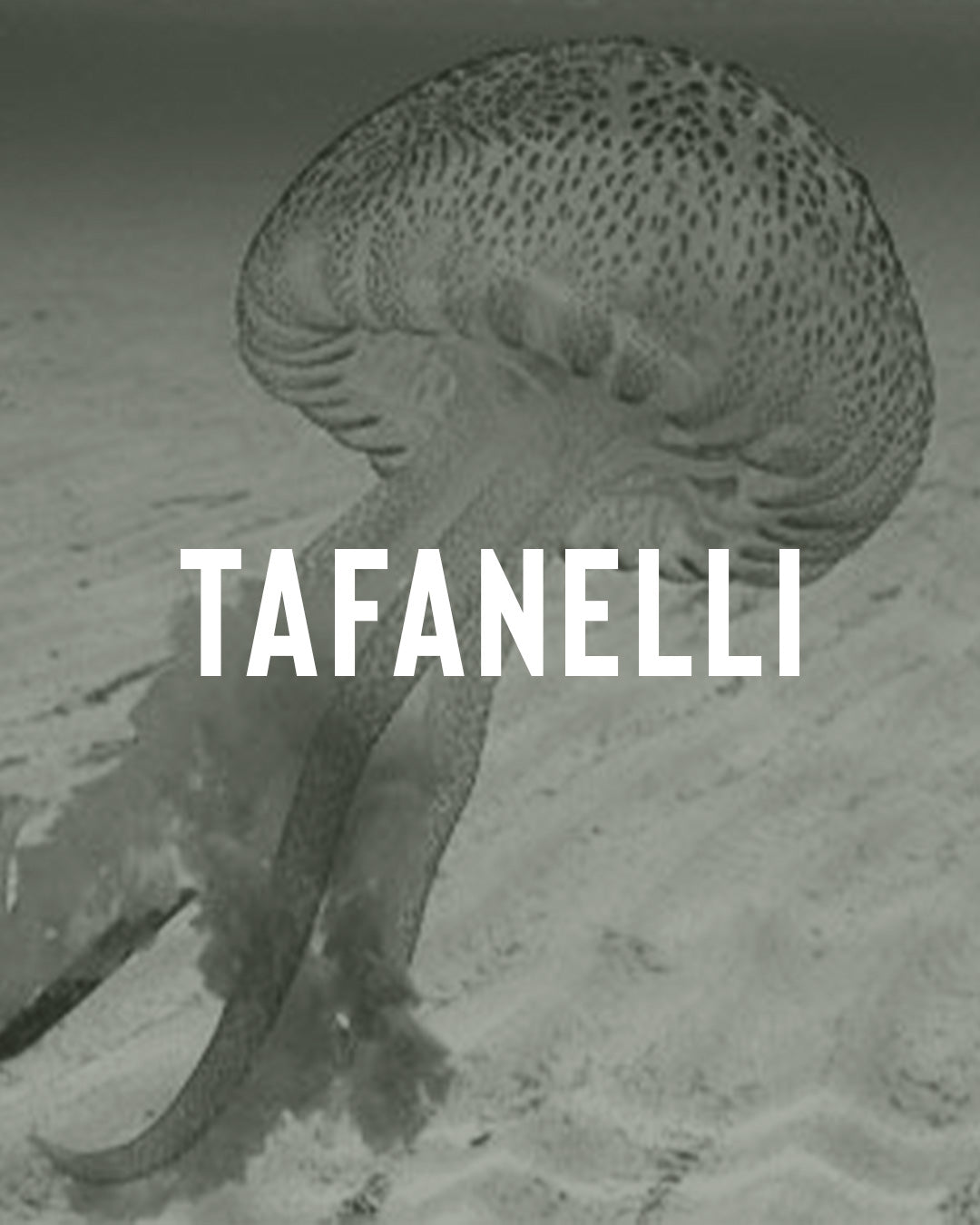
- Size: small. The bell generally measures 5 to 10 cm in diameter. It is not a monster.
- Color: violet, mauve, sometimes pinkish, often speckled with darker spots.
- Shape: a mushroom-shaped bell, four folded oral arms in the center, and eight long, thin tentacles that can stretch out for several dozen centimeters.
- Name: noctiluca means "shining at night." It is bioluminescent and can emit a glow when agitated in the dark.
- Characteristic: it is stinging over its entire surface, including the bell, and not just the tentacles.
One point to remember above all others: the mauve stinger is highly stinging but not dangerous for the vast majority of people. The pain is sharp, it leaves a mark, and it ruins a day. It is not life-threatening unless an allergic reaction occurs, which remains rare.
It is blind. It is not attacking you; it doesn't even see you. It stings everything it touches, by reflex, to feed.
Why they arrive near the coast
Contrary to what is often heard, jellyfish do not "invade." They are there all year round.
The mauve stinger is an open-sea species. It lives in the open water, far from the beaches, and has almost no control over its horizontal movements. It moves up and down in the water column, but otherwise, it drifts.
Therefore, it is the currents and the wind that bring it to the coast. A sustained sea breeze for two or three days, and an entire swarm finds itself pushed against the shoreline. If the wind shifts, the beach clears within twenty-four hours.
This is why a beach infested on Monday can be perfectly swimmable on Wednesday. And this is also why no long-term forecast is reliable.
Three factors influence general abundance:
- Water temperature. A warmer Mediterranean favors their development and lengthens the season. Recent summers have broken surface temperature records.
- Decline of predators. Sea turtles, tuna, sunfish: the fewer there are, the less the jellyfish populations are regulated.
- Multi-year cycles. Mauve stinger populations experience spikes every few years, a phenomenon documented for over a century.
When and where in Corsica
The period. Their presence begins to be felt from mid-June and generally lasts until September, with a peak in July and August.
The areas. A report published by Le Figaro in August 2022, based on reports from the Méduséo platform, placed ten Corsican municipalities in the national top 30. For the single month of July that year, the municipalities most affected were Bonifacio, Sartène, and Borgo, with fourteen days of reported presence, followed by Ajaccio and Biguglia, then San Nicolao, Bastia, Pietracorbara, and Furiani.
These figures are dated and do not apply to the current season. However, they do indicate something stable: the eastern coast and the extreme south are the most exposed areas, while the western coasts, which are more sheltered from certain wind patterns, are generally less so.
The right reflex before heading to the beach:
- Check a real-time reporting platform like Méduséo, updated by swimmers' reports.
- Look at the flag on patrolled beaches. A purple flag signals a risk related to marine life.
- Ask the lifeguard station. Lifeguards know what happened that very morning; no app can do better.
- Observe the wrack line. Jellyfish washed up on the sand mean there are some in the water.
How to avoid being stung
You cannot sanitize the sea. However, you can significantly reduce the risk.
- Mask and snorkel. This is by far the best protection, because it protects the most sensitive part: the face. And it allows you to see them coming.
- A wetsuit or rash guard. Covering swimwear eliminates almost all exposed skin. For children, this is the most effective solution.
- Beaches equipped with nets. Some Corsican municipalities install them. Inquire locally.
- Swim very early in the morning, before the sea breeze picks up, when the land breeze dominates.
- Never touch a stranded jellyfish, even if it is dead or dried out. The stinging cells remain active for several hours after the animal dies. This is the most frequent accident involving children.
- Get out of the water at the first sign rather than trying your luck. A swarm rarely arrives alone.
In case of a sting: what to do
Follow these steps, in order. It is simple, and half the benefit lies in what you do not do.
- 1. Get out of the water calmly. The pain is sharp but panic is the real danger, especially far from shore.
- 2. Do not rub. Neither with your hand nor with a towel. Rubbing causes the remaining intact stinging cells on the skin to burst, immediately worsening the burn.
- 3. Rinse abundantly with seawater. Never use fresh water: the osmotic shock triggers the cells that had not yet reacted.
- 4. Remove the remaining filaments without touching them with bare hands. Use tweezers or scrape gently with a rigid edge, such as a credit card or piece of cardboard.
- 5. Go to the lifeguard station if there is one. Lifeguards have the appropriate equipment and field experience.
- 6. Relieve the area afterward with an appropriate cream, on the advice of a pharmacist or doctor. An oral antihistamine may be indicated in case of a strong local reaction.
- 7. Monitor the area for 24 to 48 hours. A sting that swells, oozes, becomes abnormally red, or feels hot should be shown to a doctor.
- 8. Protect the mark from the sun for several weeks. Jellyfish lesions pigment easily, and the scar can remain visible for months.
Regarding vinegar and heat, let's be honest: recommendations vary by source and species. Vinegar is beneficial for some jellyfish but strictly advised against for others, notably the Portuguese man o' war, where it worsens envenomation. Heat inactivates some toxins but can intensify the burning sensation. Ask the lifeguard station or a pharmacist rather than applying a trick heard on the beach.
The six mistakes you must absolutely avoid
- Urinate on the sting. This is the most persistent myth and one of the worst pieces of advice. Urine is essentially fresh water: it triggers the remaining stinging cells and worsens the pain.
- Rinse with fresh water or beach shower water. Same effect, same mistake.
- Rub with sand. You hear it often, even from well-meaning people. Gentle scraping with a rigid object is better than abrasive rubbing, which crushes the remaining loaded cells.
- Apply ice directly to the skin. Melted ice is fresh water, and direct cold damages tissue. If you use cold, use a sealed bag.
- Pop or scratch blisters. This risks infection on skin already damaged, in summer, in the sand.
- Pick up a stranded jellyfish to show children. It still stings.
When to call for help
The vast majority of stings are handled on the beach. Certain situations require an immediate call to 15 or 112 (emergency services), or 196 for emergencies at sea.
- Respiratory distress, tightness in the chest, wheezing.
- Dizziness, vertigo, nausea, heart palpitations.
- Swelling of the face, lips, tongue, or throat.
- Rash spreading across the body, outside the stung area.
- Sting on the face, in the eye, or in the mouth.
- Very large surface area stung, particularly in a child.
- Elderly person, young child, pregnant woman, or person known to have heart conditions or allergies.
- Any sting occurring in the open sea, far from the shore.
When in doubt, call. This article provides general guidelines and in no way replaces the advice of a doctor or lifeguard on-site.
Other Mediterranean species
Not all the transparent jellies you encounter are mauve stingers, and most pose no danger.
- Moon jelly (Aurelia aurita). Transparent, with four clearly visible purplish rings in the shape of a clover. Very mildly stinging, often harmless to the touch.
- Fried egg jellyfish (Cotylorhiza tuberculata). Yellow-orange, with a central dome that resembles an egg yolk. Almost non-stinging; it sometimes shelters small fish between its arms.
- Barrel jellyfish (Rhizostoma pulmo). Large, whitish to bluish, impressive in size. Mildly stinging.
- Portuguese man o' war (Physalia physalis). It is not a jellyfish but a colony of organisms. It has a translucent blue-violet crest-shaped float, very recognizable. Extremely dangerous; it is extremely rare in the Mediterranean but if you see one, you must leave the water, alert the authorities, and above all, do not touch it, even if it is stranded.
A simple rule for a peaceful summer: the purple-mauve speckled one is stinging, the transparent clover-shaped one is almost harmless, and the translucent blue float means you must get out of the water and call for help.
Their role in the ecosystem
A word to restore balance, since we talk so much about them being a nuisance.
The mauve stinger is not an invasive species from elsewhere. It is an indigenous Mediterranean species, present here long before us, and it plays a role in the food chain: it consumes plankton and, in turn, feeds sea turtles, sunfish, and certain pelagic fish.
Its proliferation is not an isolated accident; it is an indicator. A warming sea, a sea from which predators are being removed, mechanically produces more jellyfish. The animal that ruins your vacation is also a thermometer.
And if you encounter one, report it. Participatory platforms work thanks to bathers, and your report might just save someone else from a sting tomorrow morning.
Frequently asked questions
Are there many jellyfish in Corsica?
Corsica is among the most affected areas in France. A 2022 survey placed ten island municipalities in the national top 30. Their presence varies greatly from one day to the next and depends primarily on winds and currents.
Which jellyfish are found in Corsica?
Mainly the mauve stinger, Pelagia noctiluca: a small violet jellyfish 5 to 10 cm in size, highly stinging but not dangerous for most people. You may also encounter the moon jelly and the fried egg jellyfish, both of which are almost harmless.
Should you urinate on a jellyfish sting?
No, never. It is a myth. Urine is essentially fresh water and it triggers the remaining intact stinging cells, which worsens the pain. Rinse with seawater.
How long does a jellyfish sting last?
The sharp pain usually lasts from twenty minutes to a few hours. The redness and itching can persist for several days, and the mark for several weeks. Protect the area from the sun to limit pigmentation.
Does a stranded jellyfish on the sand still sting?
Yes. The stinging cells remain active for several hours after the animal dies, sometimes longer. Do not touch it and do not let children near it.
When is there the most jellyfish in Corsica?
From mid-June to September, with a peak in July and August. But the actual presence on a specific beach depends on the wind of the previous two or three days.
How to know if there are jellyfish before going to the beach?
Check a real-time reporting platform like Méduséo, check the flag on patrolled beaches, and above all, ask the lifeguard station, which has the most up-to-date information.
A word about the sea
At TAFANELLI, the sea is not just scenery. It is the subject of half of our work: the diver bringing up sea urchins, the seabed, and the practices of those who spend their lives there.
And a real sea is not a postcard. It is also water that stings on some August days, a wind that changes everything in one night, and animals that were here before us.
We prefer to write about it honestly rather than selling a brochure-style Mediterranean. A mauve stinger sting hurts, but it doesn't deserve to ruin a summer, and knowing what to do is enough to turn it into a ten-minute bad memory.
So keep swimming. Take a mask, watch where you step, and trust the lifeguards rather than the advice from the umbrella next door.
Passing through Corsica, the customer becomes a friend.
A DOPU, TAFA