Offshore in Saint-Tropez: The story of a timeless Mediterranean culture
Between the late 1960s and the mid-1990s, Saint-Tropez became the unofficial capital of a movement blending speed, elegance, engineering, and the Mediterranean. Offshore. These motorboats capable of reaching speeds over 200 km/h left such a mark on the French Riviera that they reshaped its maritime culture. Here is the story of this discreet epic, which continues to inspire those who love the Mediterranean for its inherent sense of freedom.
What is offshore and why Saint-Tropez?
Offshore, a term literally meaning "out at sea," refers to the practice of high-speed navigation in open water, outside of port zones. More specifically, it refers to a category of motorboats designed to cross the high seas at extreme speeds, often exceeding 100 knots (185 km/h), sometimes much higher.
Unlike classic sailboats or yachts, these boats have one mission: to go fast, very fast, over long distances. Their architecture is dictated by this obsession: a deep-V hull profile to slice through waves, high-powered engines, a limited crew, and specific safety equipment.
Saint-Tropez became the unofficial capital of this culture for four converging reasons. Ideal geography, first: the Bay of Saint-Tropez offers deep waters, sheltered from high winds, and direct access to open navigation zones toward Cannes, Monaco, or Corsica. A global elite, second: since the 60s, the village has hosted the wealthiest figures from Europe and the Americas, owners of exceptional boats. A mild climate that allows for navigation eight to nine months a year. Finally, an Italian and French culture that bridges the art of engineering (Pininfarina, Riva, Magnum, Cigarette) and a sense of maritime elegance.
These four conditions made Saint-Tropez the epicenter of a movement that is still alive today, however discreetly.
The golden age of Tropézien offshore (1960-1990)
The modern history of offshore began in the United States in the 50s, but it quickly crossed the Atlantic to take root in the Mediterranean. Between 1960 and 1990, Saint-Tropez gradually became one of the three world epicenters of offshore culture, alongside Miami and Monaco.
In the 60s, the port of Saint-Tropez saw the arrival of the first American-inspired high-speed boats. Don Aronow, a visionary engineer, introduced the Magnum Marine brand to the world. His boats became the favorite tools of Italian and French owners based on the French Riviera. The Magnum 53, Magnum 35, and Magnum 27 marked an entire generation.
In the 70s and 80s, the movement intensified. Offshore races multiplied. The famous Powerboat World Championship frequently passed through Tropézien waters. Owners ordered their boats directly from American (Cigarette Racing Team, Magnum, Donzi), Italian (Riva, Pirelli, Fabio Buzzi), and British (Sunseeker, Fairline) shipyards.
The Saint-Tropez of that era was also the era of the Olivero Mascheroni brothers, the Pininfarina brothers, evenings at Régine’s, trips down to Pampelonne, and dinners at Sénéquier. An entire culture was built around these boats, blending top-tier engineering, Mediterranean glamour, and a certain art of living that never shows off, but is recognized at first glance.
"In Saint-Tropez, the boat wasn't a conspicuous sign of wealth. It was a way of life. We would leave at dawn for Cannes, have lunch in Porto-Cervo, and return by sunset. All in a single day."
— A witness to the golden age of Tropézien offshore
This rare equation—made of speed, elegance, and the Mediterranean—became one of the most iconic signatures of the French coast.
The boat brands that wrote this history
The history of offshore in Saint-Tropez cannot be understood without naming the shipyards that produced the machines of this epic.
Magnum Marine
Founded by Don Aronow in Florida in 1966, Magnum Marine became the world benchmark for luxury offshore in just a few years. The Magnum 53, 27, and 35 crossed the Atlantic and landed in the ports of Southern France. Recognizable by their deep hulls and minimalist visual signature, they embody the classic offshore style.
Cigarette Racing Team
Also founded by Don Aronow in 1969, Cigarette Racing Team quickly became the most iconic brand in offshore racing. The Cigarette 30 and 41 Top Gun (popularized notably by the show Miami Vice) became objects of global cult status. In Saint-Tropez, several owners ordered their Cigarettes directly from Miami to be shipped by cargo.
Riva
While Riva is better known for its pleasure boats (notably the Aquarama), the Italian shipyard also produced higher-speed models in the 80s. Riva's presence in Saint-Tropez has been massive since 1960, and the Aquaramas moored in the old port remain an iconic visual symbol of the town today.
Fabio Buzzi (FB Design)
Fabio Buzzi is one of the greatest Italian offshore builders. His boats have won dozens of world championships. In Saint-Tropez, several Italian owners ordered them in the 80s and 90s, bringing the port into the world elite of racing.
Sunseeker, Fairline, Pershing
Later, in the 90s and 2000s, British (Sunseeker) and Italian (Pershing, Wally Tender) shipyards enriched the Tropézien fleet with more modern models, capable of reconciling speed and comfort. The Pershing 64, 72, and 88 became the new standards of French-style offshore culture.
Emblematic pilots and figures
Offshore in Saint-Tropez would be nothing without the people who brought it to life. Here are a few of the most significant.
Stefano Casiraghi (1960-1990)
The husband of Caroline of Monaco, Stefano Casiraghi was likely the most iconic figure of 80s European offshore. A formidable pilot and winner of several offshore world championships, he was based in part in Monaco but regularly crossed the Tropézien bay during training or races. He died tragically in 1990, off the coast of Monaco, during the world championship. His passing marked a turning point in Mediterranean offshore culture. His son, Pierre Casiraghi, would later pick up the torch at sea.
Carlo Bonomi
The Italian industrialist Carlo Bonomi was one of the greatest offshore champions of the 20th century, with several world titles to his name in the 70s. His regular presence in Saint-Tropez during his heyday contributed to the Italian aura of the Tropézien port.
Don Aronow (1927-1987)
Without Don Aronow, there would be no Magnum Marine, no Cigarette Racing Team, and none of the offshore aesthetics we know today. Aronow lived in Miami but traveled regularly to Saint-Tropez to deliver his boats to European owners and participate in races. His tragic death in 1987, shot outside his workshop in North Miami Beach, remains one of the mysteries of American maritime history.
The anonymous owners
Beyond the public figures, Tropézien offshore was primarily driven by a multitude of discreet owners—Italian industrialists, Monégasque heirs, American and Asian businessmen—who kept racing boats in the port of Saint-Tropez and took them to sea several times a month. Their anonymity was part of the offshore culture's code: you don't show off, you just ride.
The legendary spots of Tropézien offshore culture
Tropézien geography has shaped the offshore culture just as much as the boats themselves. Here are the locations inseparable from this epic.
The Old Port of Saint-Tropez
The historical heart of French offshore culture, the old port sees the most beautiful boats in the world pass through every summer. The most coveted moorings—those facing Quai Suffren and Place aux Herbes—have been reserved for the same families for decades. It is on these quays that the crews meet in the morning before heading out to sea.
Pampelonne Bay
On the other side of the peninsula, Pampelonne Bay is the preferred playground for offshore boats. Vast, deep, and clear, it allows high-speed boats to maneuver with total freedom. Pampelonne beach, with its legendary beach clubs (Club 55, Tahiti Beach, Pomme de Pin Ramatuelle), remains the favorite destination for lunch with your toes in the sand before heading back toward Cannes or Cavalaire.
Cap Lardier and Cap Taillat
To the east of Pampelonne, Cap Lardier and Cap Taillat mark the beginning of wilder zones where offshore boats love to test their top speed on long runs. Morning trips are often made in this direction to escape the summer crowds of the port.
The Gulf of Cavalaire and the Giens Peninsula
Further west, the Gulf of Cavalaire and the Giens Peninsula offer long, technical navigation. This is where several vintage boat and cigarette boat raids still take place today.
The Saint-Tropez / Cannes / Monaco route
The Saint-Tropez to Cannes axis (50 km by sea) and on to Monaco (130 km) is the symbolic highway of Mediterranean offshore. This route, covered in 30 minutes by the fastest boats, geographically structures the entire French and Monégasque offshore culture.
The contemporary renaissance and vintage raids
After a more discreet period in the 2000s and 2010s, offshore culture has been experiencing a true contemporary renaissance since about 2015, driven by several converging phenomena.
The return of vintage
80s Cigarette Racings and vintage Magnum 53s have become cult objects once again. European collectors are buying these vintage boats, restoring them to their original versions, and putting them back to sea. In Saint-Tropez, one can regularly see restored Cigarette Top Guns cruising the bay just like in their glory days. These boats now fetch high prices in the collector's market.
Mediterranean raids
Several annual raids organized since 2018 celebrate this culture: the Saint-Tropez Cigarette Run, the vintage Cannes-Saint-Tropez raid, and Riva rallies. These events, often private, gather owners of historical boats for days of sailing between the legendary ports of the French Riviera.
A new generation
A new generation of enthusiasts, often from the worlds of yachting or car collecting (Ferrari Classiche, Mercedes 300SL, etc.), is rediscovering offshore culture. These new enthusiasts blend vintage aesthetics with contemporary requirements. They are the natural heirs to the Tropézien golden age.
A recognized aesthetic culture
The worlds of fashion, design, and premium media are rediscovering offshore aesthetics: colors, dress codes, and graphic references. Magazines like Boat International, Robb Report, Yachting France, and The Rake regularly publish features on this returning trend.
Offshore aesthetics: A maritime dress code
Beyond the boats themselves, Tropézien offshore generated its own dress code, which established itself as one of the most iconic grammars of the French Riviera. Here are the codes.
Colors: navy blue, white, ecru
The offshore palette is limited but immutable. Deep navy blue evokes the sea in the middle of the day. White, omnipresent, structures silhouettes and reflects the light. Ecru and sand bring the warmth of Mediterranean beaches. Reds and oranges (recalling race cockades or flags) occasionally punctuate the palette but remain rare. No busy patterns: solid colors dominate.
Materials: cotton, linen, piqué knit
Natural materials are king. Heavy cotton (220-280 g/m²) for t-shirts. Linen for shirts. Piqué knit for polos. Marine jersey for end-of-day sweaters. No synthetic materials, no shiny nylon. The sobriety of the fabric counts as much as its quality.
Signature pieces
A few pieces define the Tropézien offshore silhouette:
- The white or navy t-shirt in heavy cotton, straight cut, without a visible logo
- The piqué polo in sober tones (white, navy, beige) for evenings at the port
- The linen shirt, white or sky blue, open at the collar, sleeves rolled up
- Light linen pants or sand-colored chinos
- Patinated leather loafers or canvas espadrilles
- The navy cap, a discreet but signature element
- Classic-shaped sunglasses (Persol, Ray-Ban Aviator, vintage Carrera)
- The diving or marine watch, on an aged leather strap
The attitude: effortless elegance
Tropézien offshore does not like visible effort. The silhouette must appear spontaneous, as if the person had simply just stepped off a day at sea. No sharp creases, no ostentatious jewelry, no oversized logos. A sun-kissed tan, the slight fading of fabric from salt and sun—this is what signals authenticity. It is the exact opposite of the ostentatious elegance seen in other Mediterranean ports.
Why TAFANELLI pays tribute to this culture
At TAFANELLI, we have worked from the beginning to honor the great Mediterranean maritime cultures: sea urchin fishing in Corsica, free-diving in the coves of Calvi, the tradition of the Cap Corse shepherds. Tropézien offshore is one of those living heritages that deserves a place in our sartorial vocabulary.
This culture doesn't belong only to the French Riviera. It belongs to the entire Mediterranean: to the Italians who piloted their Magnums toward Porto-Cervo, the Monégasques who sped toward Corsica, the Tropéziens who crossed the gulf toward Cannes, and even the Corsicans who watched these boats pass off their coast on calm days.
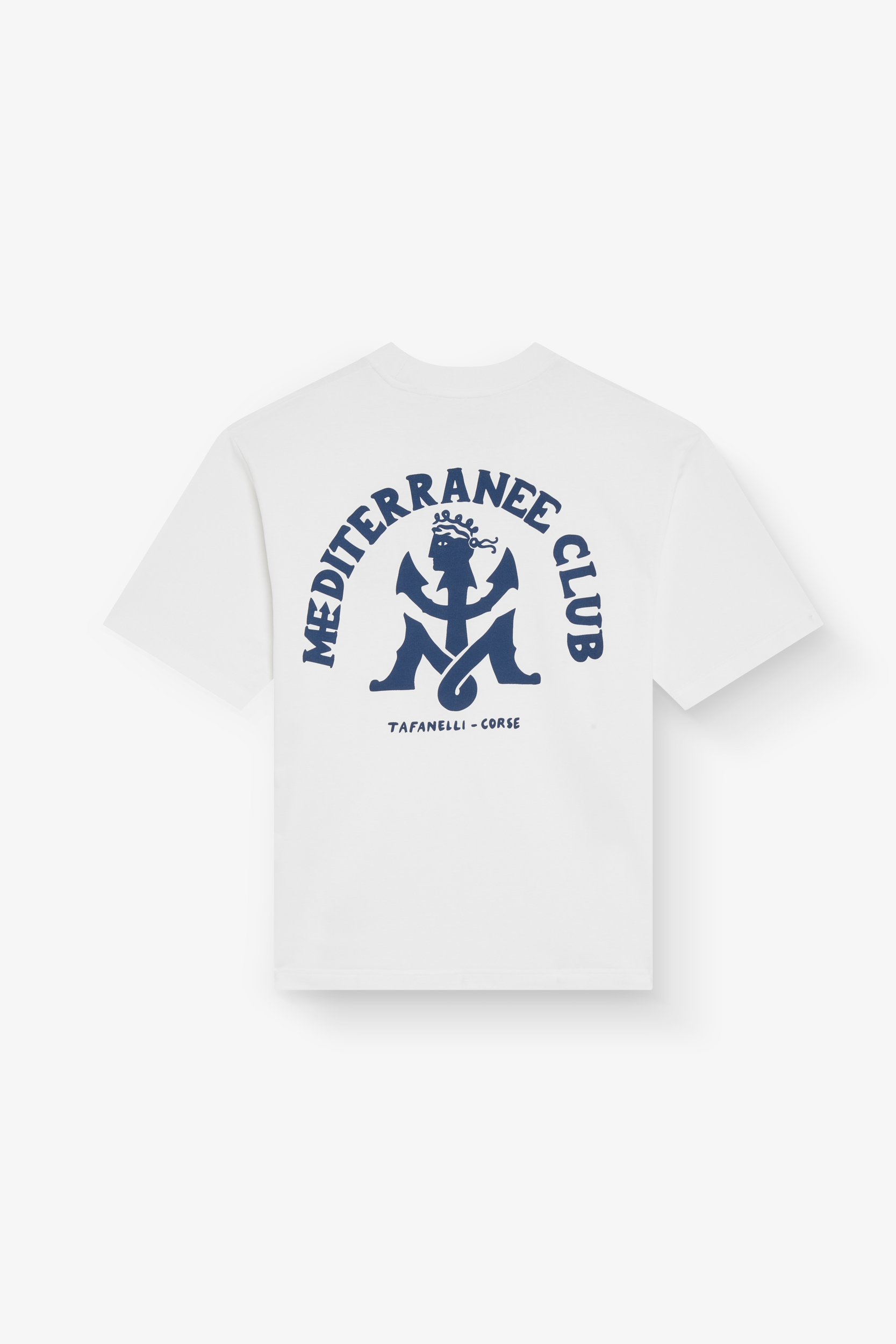
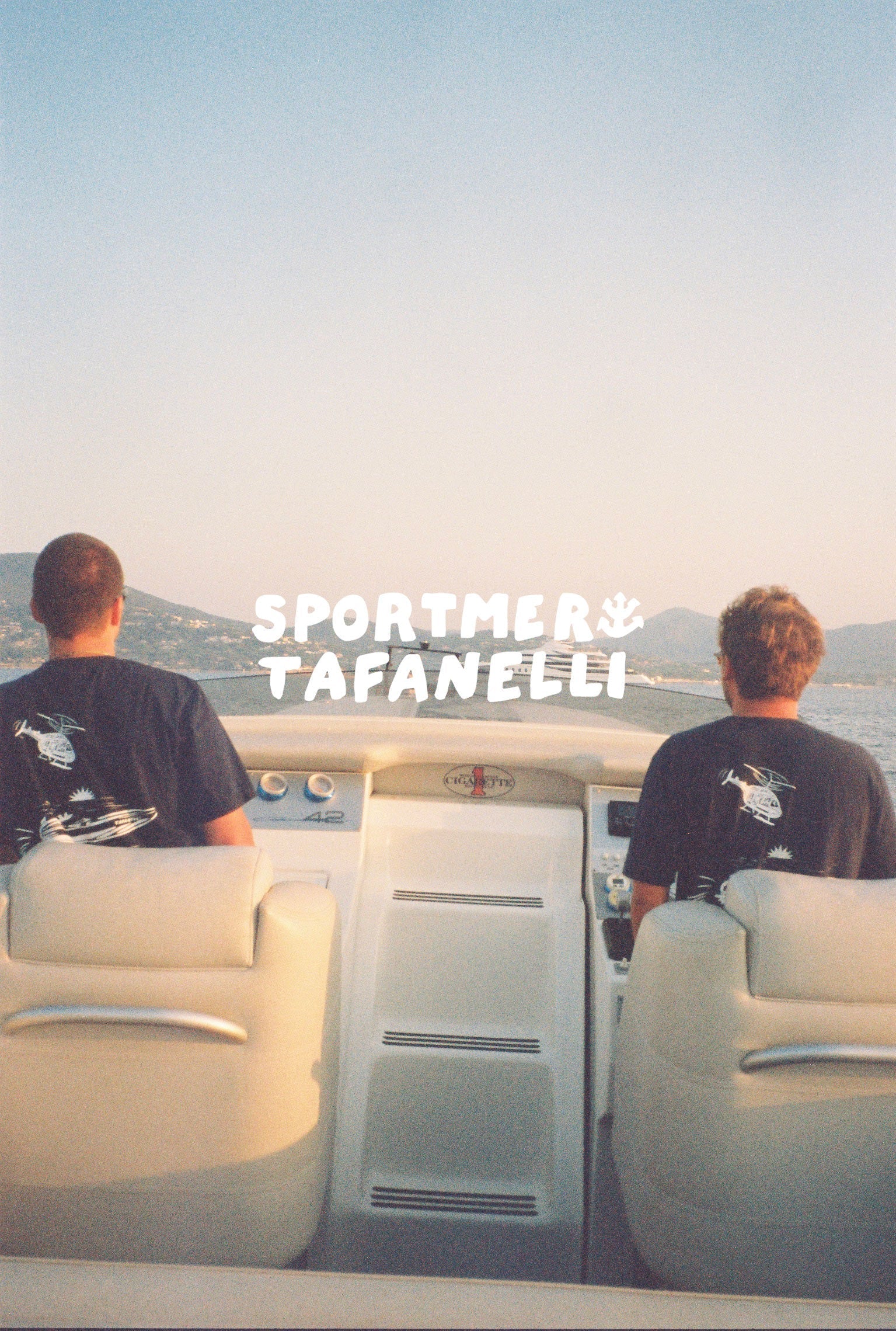
It is in this spirit that we have designed our tribute piece to this culture: The Sportmer Navy. A 280 g/m² cotton t-shirt made in France, in a deep navy hue that recalls exactly the color of a Cigarette Top Gun hull at twilight, or that of a Magnum 53 moored at Quai Suffren.
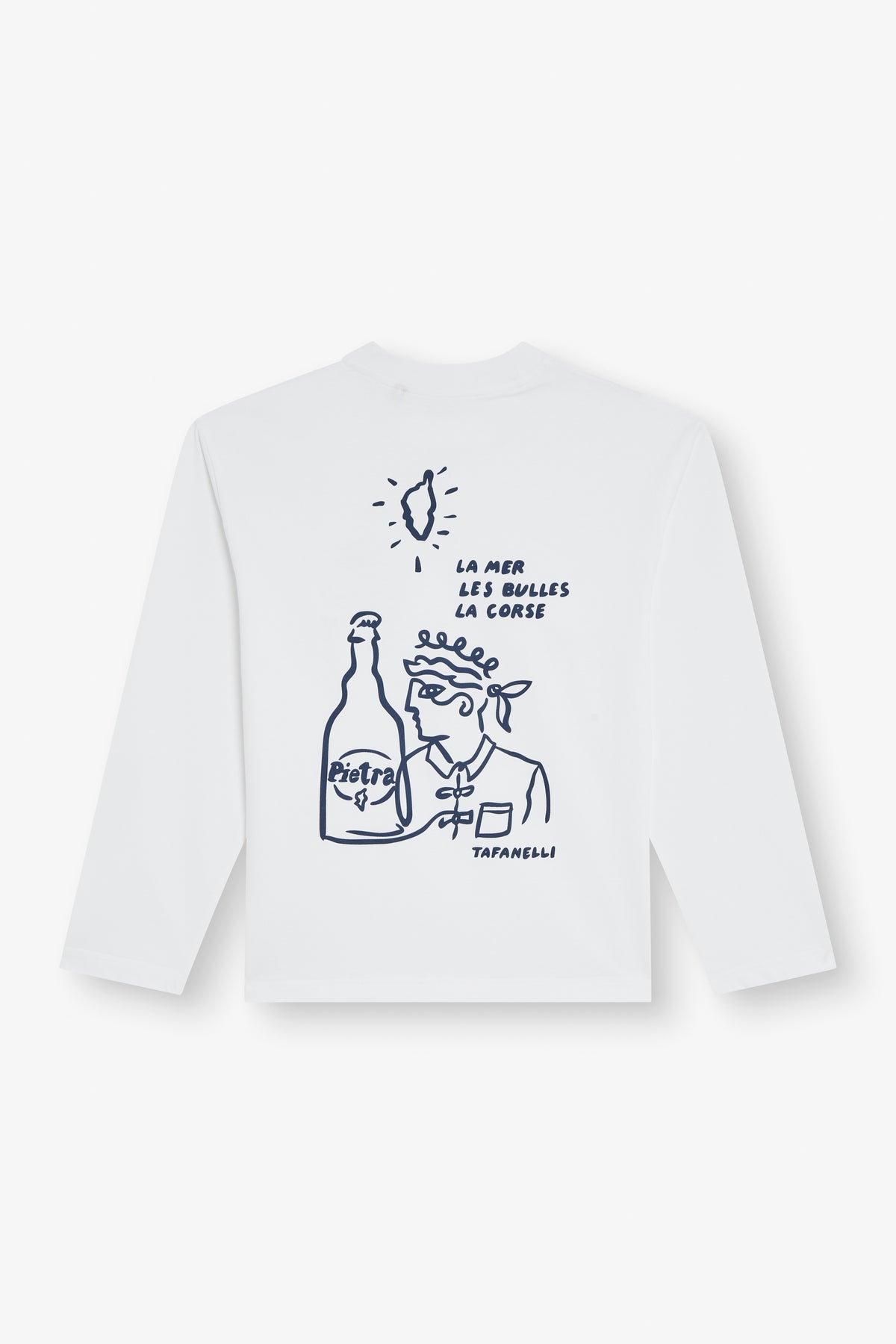
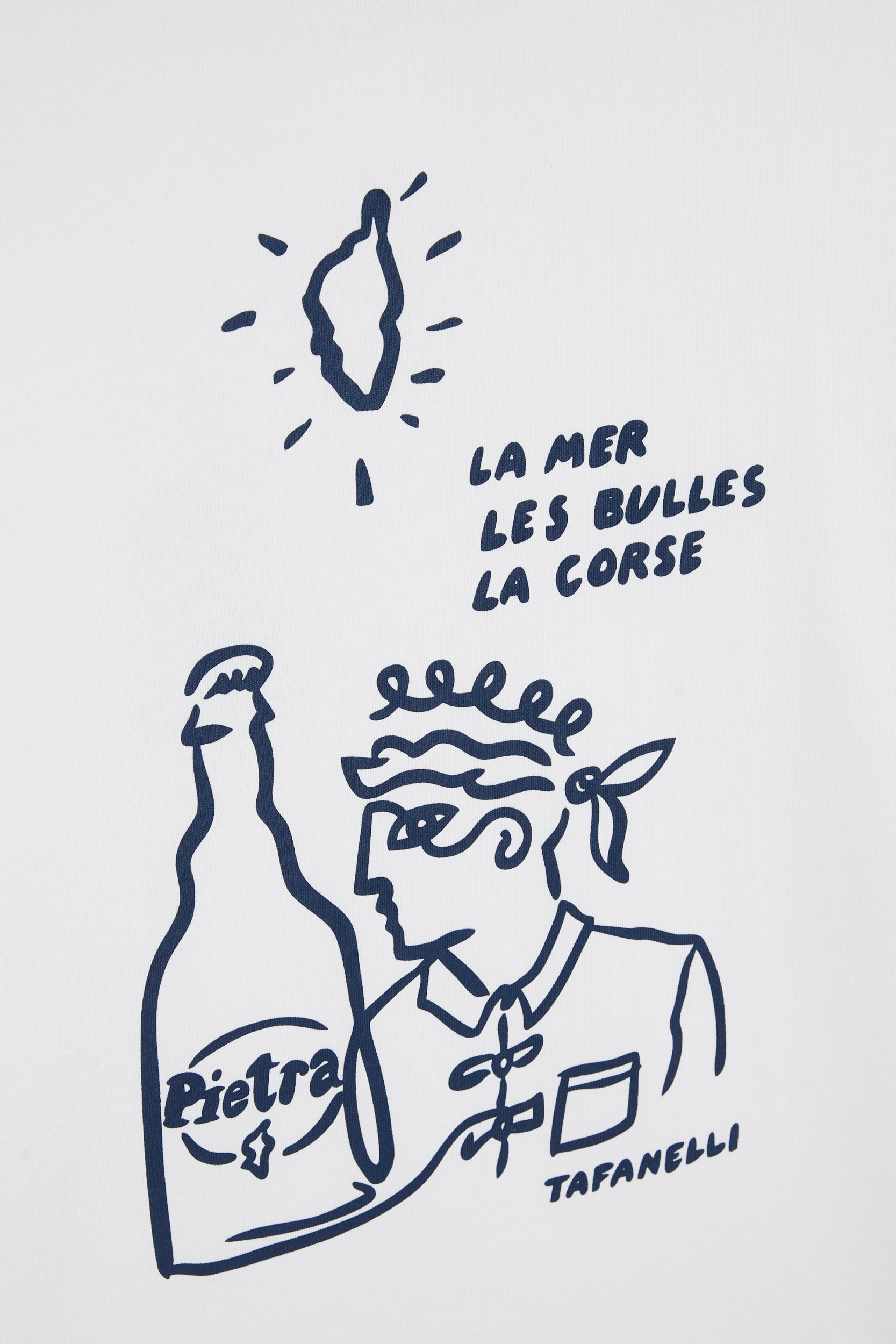
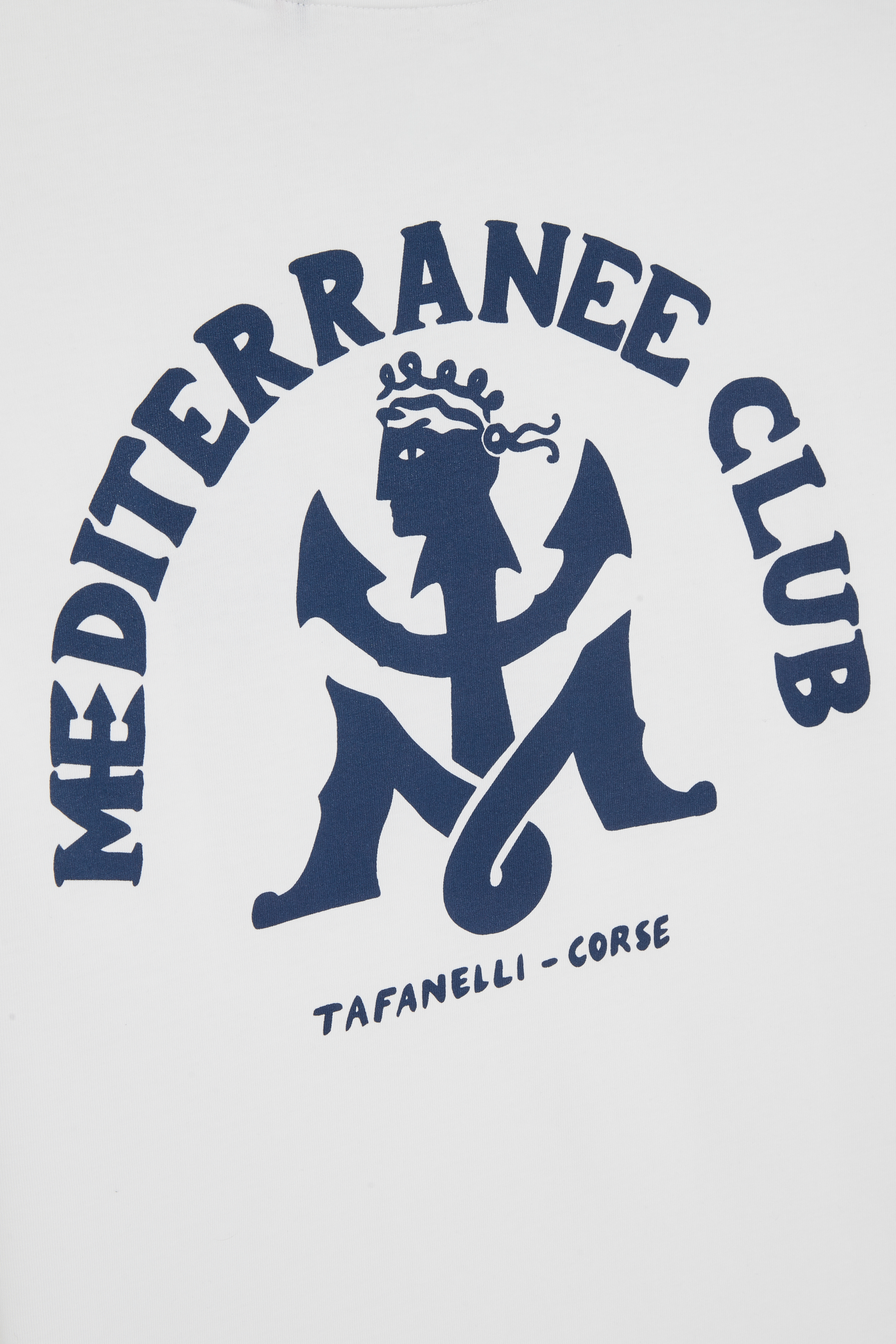
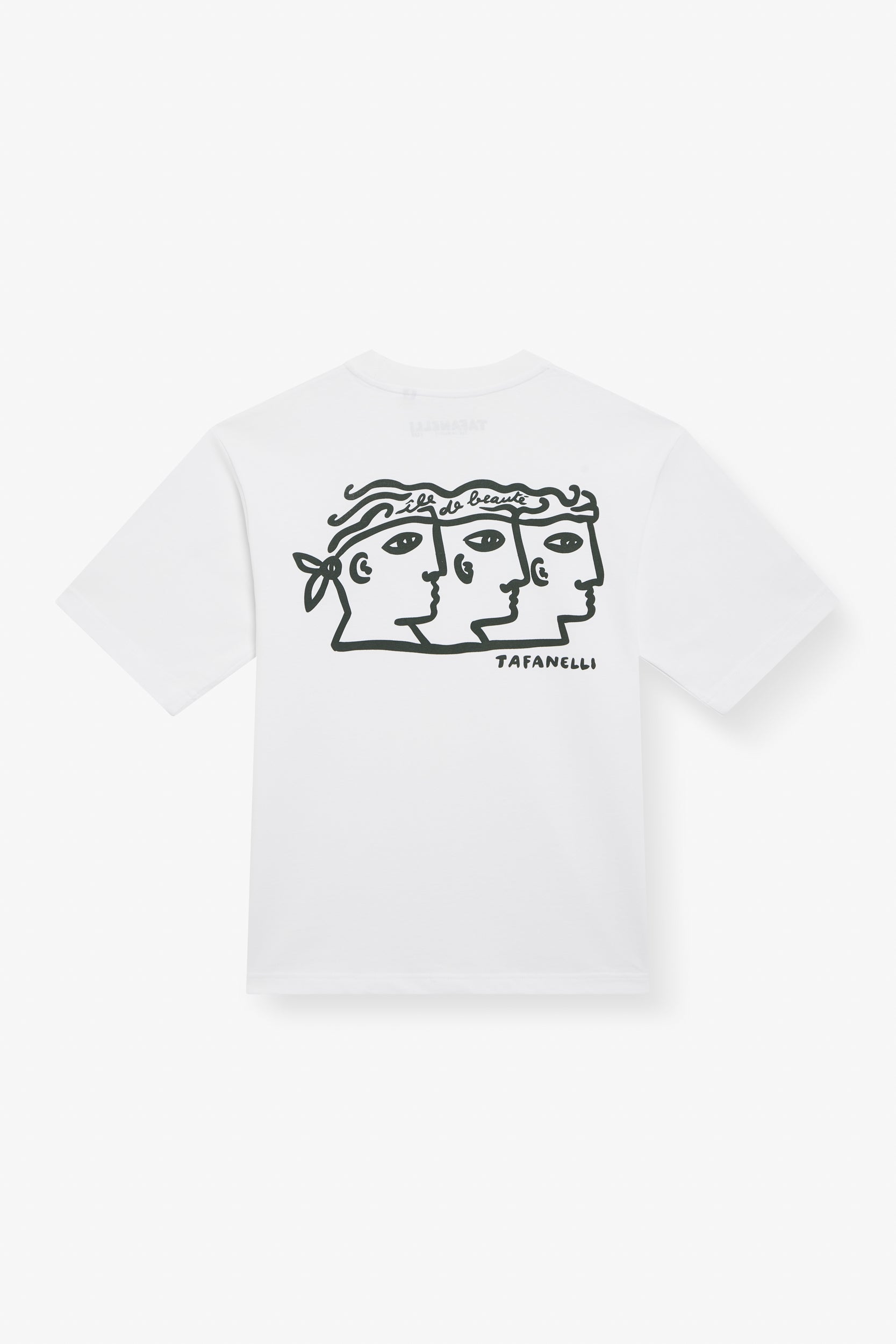
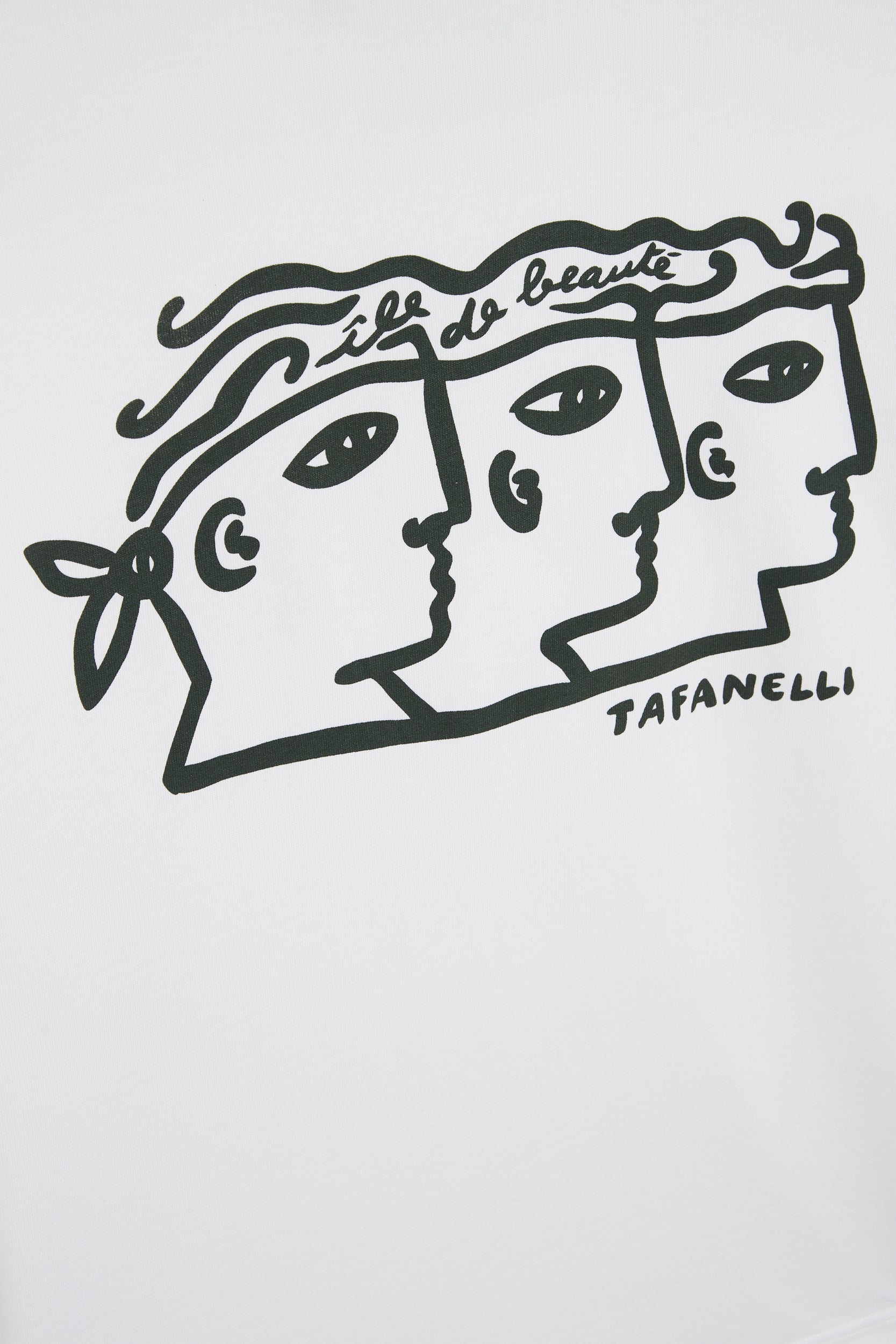
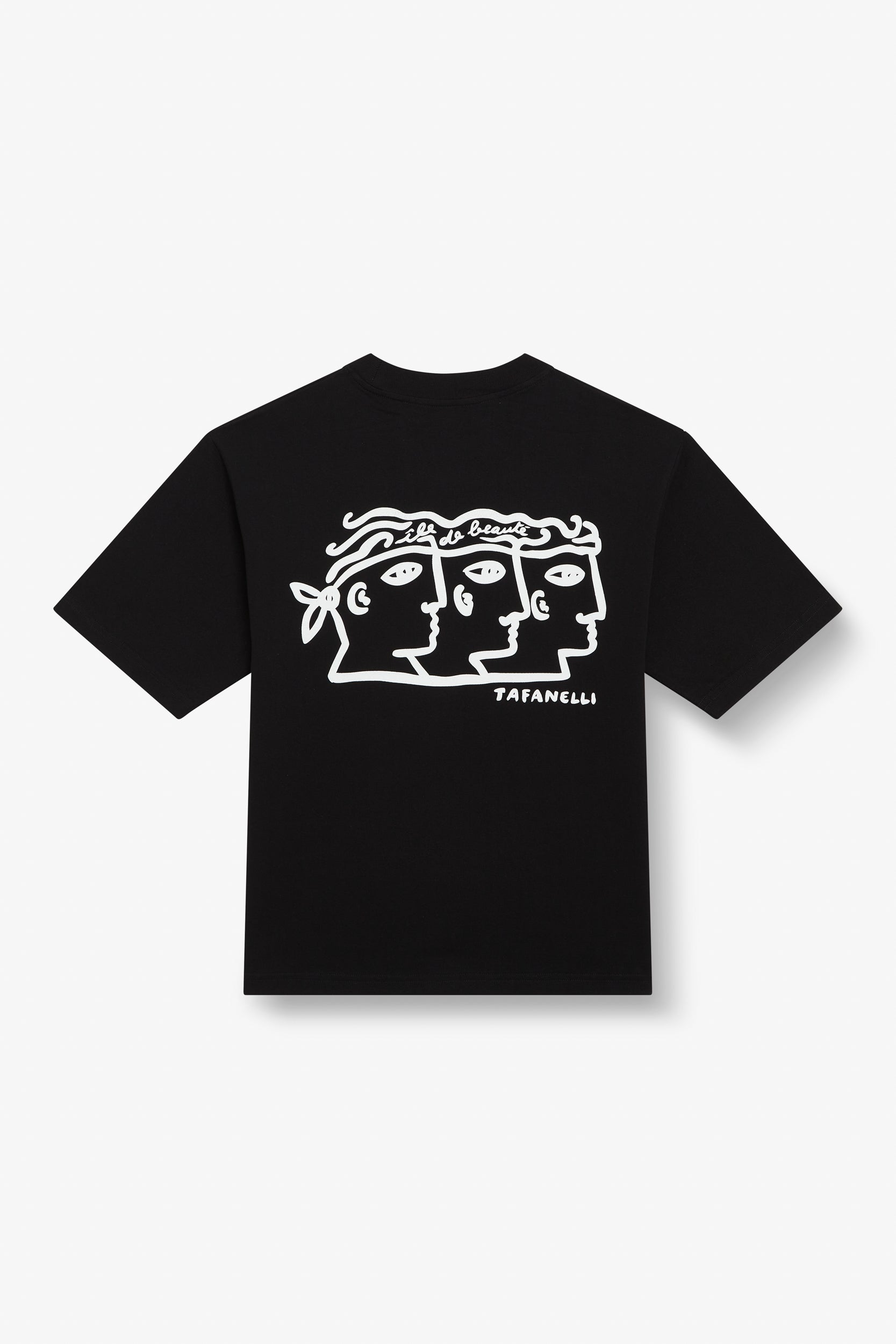
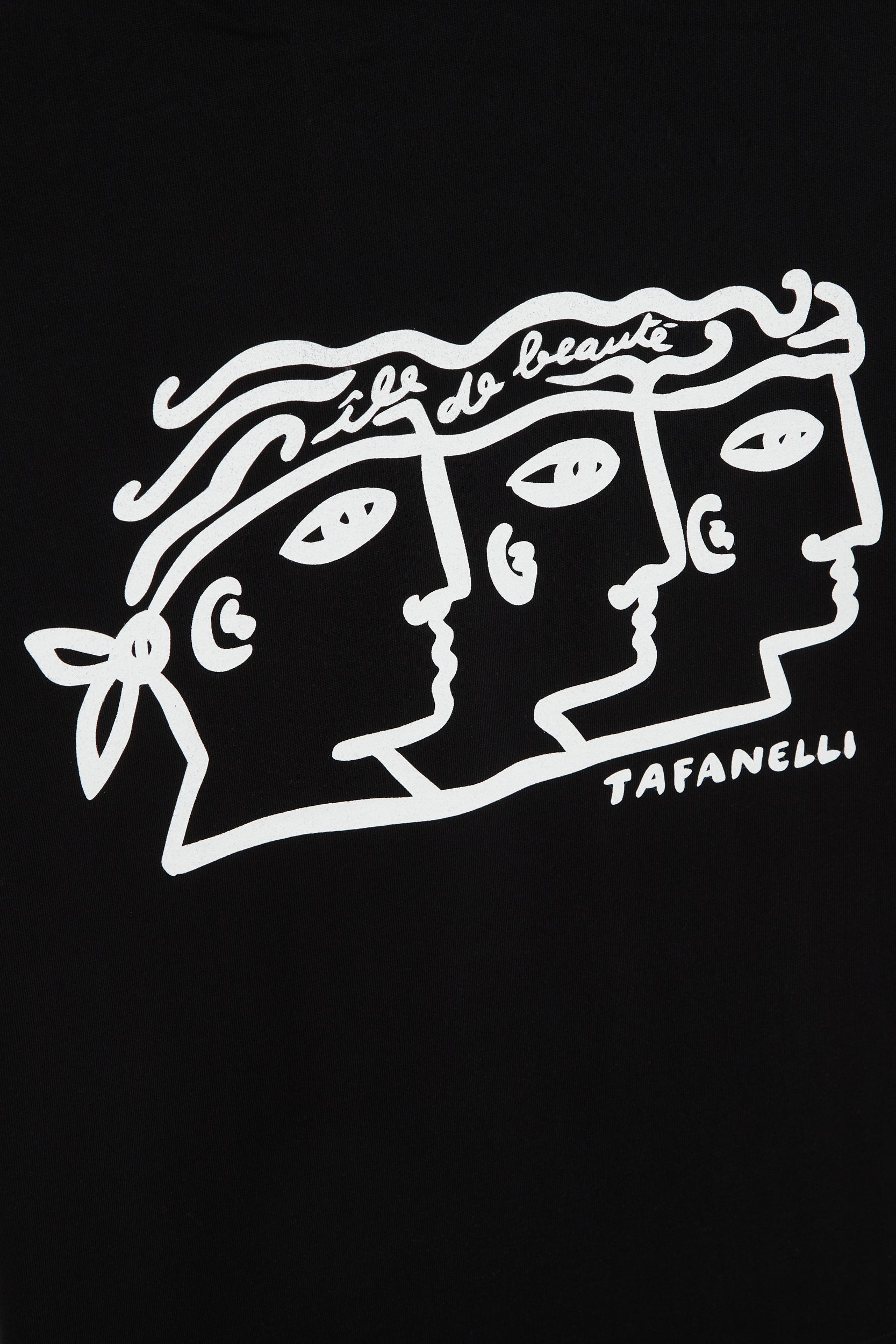
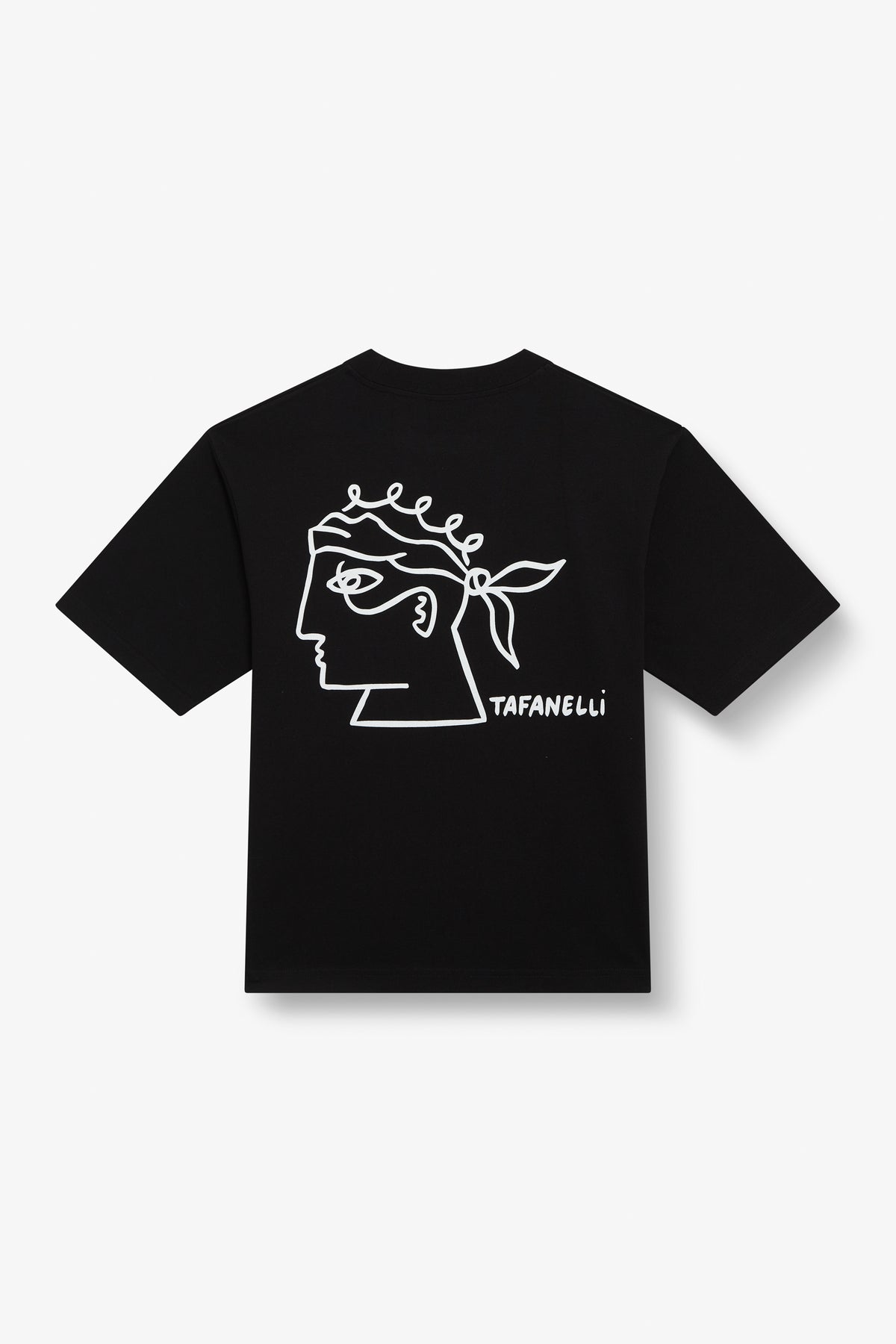
The screen print on the back evokes the world of maritime racing, without ostentation, in the spirit that distinguishes true connoisseurs. It is a piece that can be worn just as well on a boat off Pampelonne as at lunch on a terrace in Sant'Antonino. A timeless piece that develops a patina and needs no explanation for those who know how to read it.
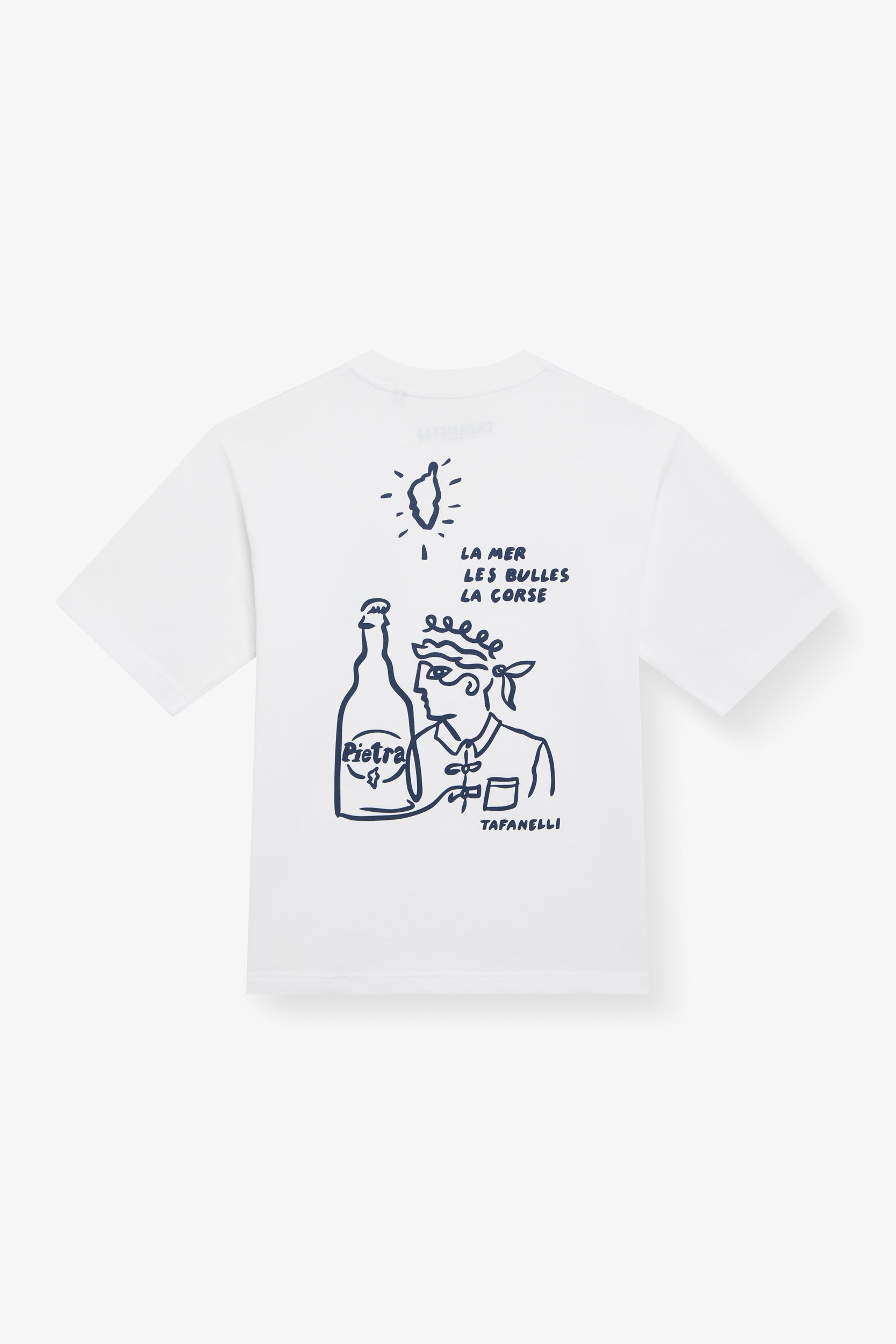
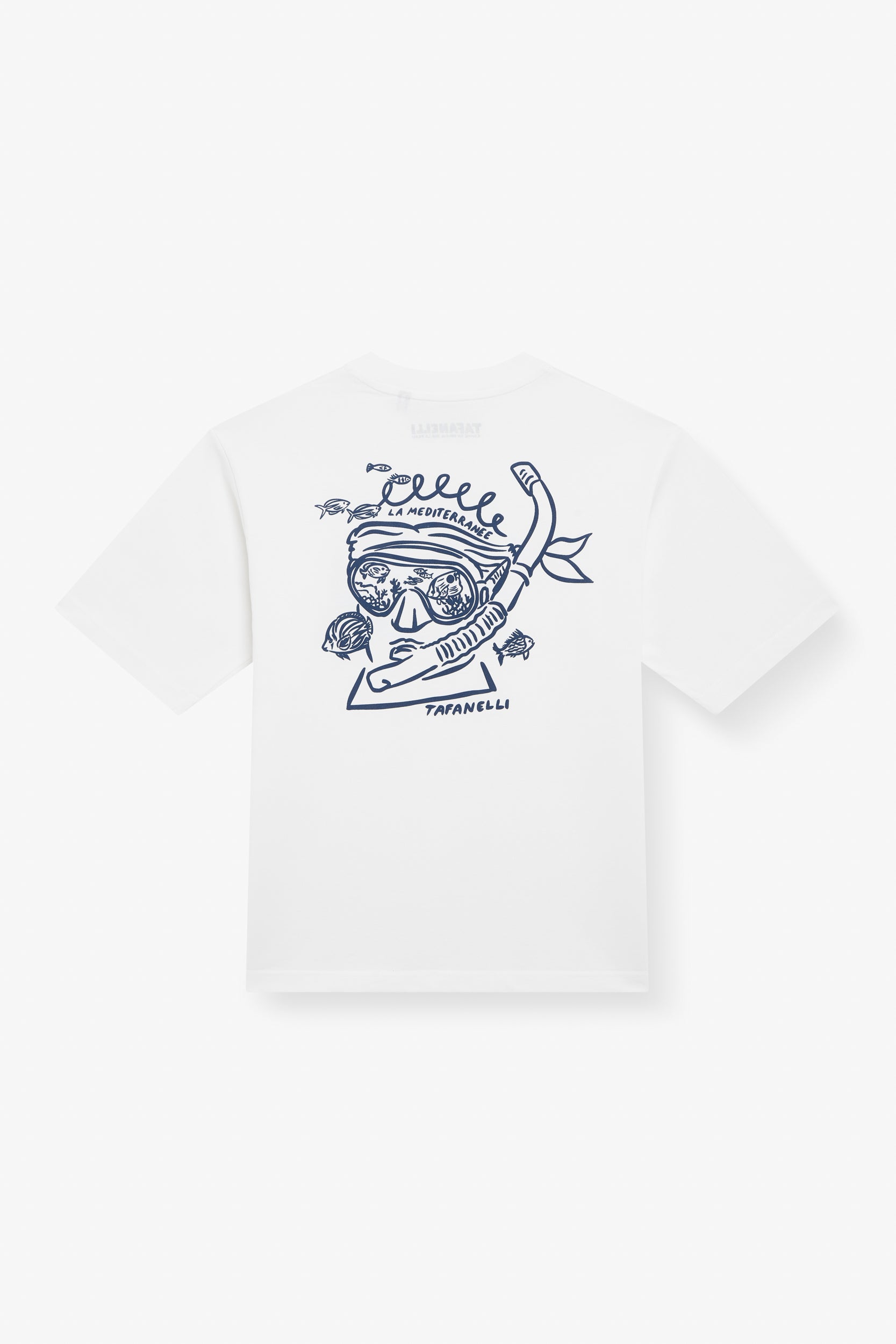
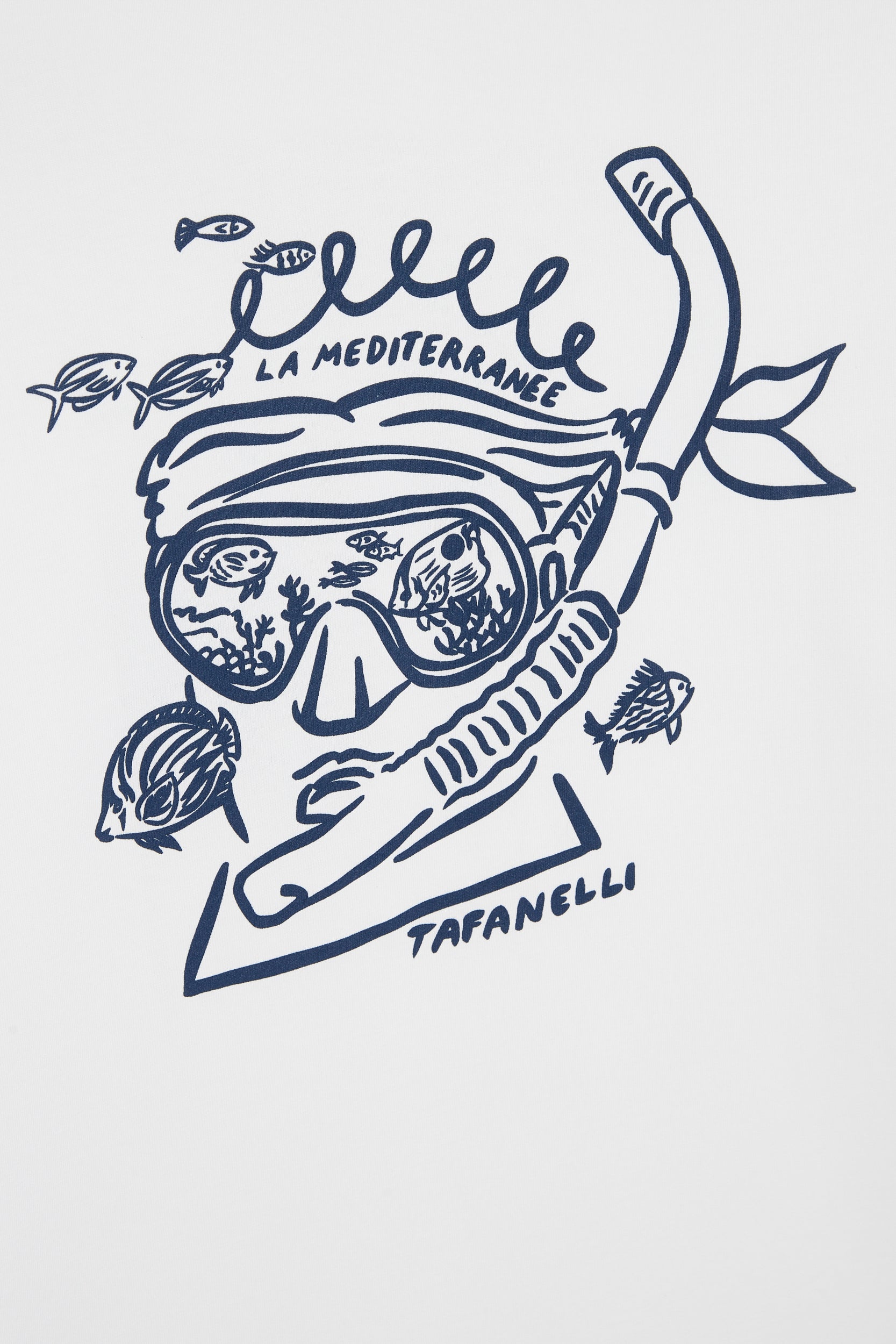
To discover our complete maritime universe, browse our other pieces centered around the sea: Le Sportmer Saint-Tropez, Le Plongeur de Calvi, La Pêche aux Oursins. Together, they make up what we call the island art of living.
Frequently Asked Questions
What is the difference between an offshore boat and a classic yacht?
An offshore boat is designed for pure speed and high-seas navigation. It prioritizes aerodynamics, engine power, and agility at the expense of comfort. A classic yacht, by contrast, prioritizes comfort, living spaces, range, and the ability to undertake long cruises. An offshore boat generally measures between 9 and 18 meters with two or three supercharged outboard or inboard engines, while a classic yacht can reach 50 meters or more with a modest cruising speed.
Why did Saint-Tropez become the French capital of offshore racing?
Four reasons: its ideal geography (deep waters, sheltered bay), its proximity to other nautical capitals (Monaco, Cannes, Porto-Cervo), the presence of a global elite residing in the town during the summer since the 1960s, and the Italian and French culture that combined the art of nautical engineering with a certain sense of maritime elegance. This equation turned the Tropézien port into a rare epicenter of global offshore culture.
What are the most iconic offshore boat brands?
Five brands dominate modern and historical offshore culture: Magnum Marine (founded by Don Aronow in 1966), Cigarette Racing Team (also founded by Aronow in 1969), Donzi, Fabio Buzzi (FB Design) on the Italian side, and more recently Pershing, Wally Tender, and Sunseeker for contemporary luxury versions. Each embodies a different era and philosophy of offshore boating.
Is offshore racing still practiced today in Saint-Tropez?
Yes, but in an evolved form. Pure high-speed racing has become rarer due to regulations and safety. However, the practice of fast navigation between Mediterranean ports remains very active, and the collection of vintage offshore boats has been experiencing a real renaissance since 2015. Several annual raids (Saint-Tropez Cigarette Run, Riva rallies) celebrate this culture.
What are the dress codes of offshore culture?
The Tropézien offshore aesthetic relies on a restricted palette (navy blue, white, ecru), natural materials (heavy cotton, linen, piqué knit), and sober signature pieces (white or navy t-shirt, polo, linen shirt, sand-colored chinos, distressed leather loafers, navy cap, Persol or Ray-Ban sunglasses). The general attitude is one of effortless elegance, the enemy of ostentation.
Which t-shirt to wear to embody the offshore spirit?
The ideal offshore t-shirt is made of heavy cotton (220 to 280 g/m²), in a deep navy blue or snow white color, with a straight or slightly oversized cut, without any flashy logos, and potentially featuring a discreet detail on the back. The Sportmer Navy by TAFANELLI is our proposal to embody this spirit, with premium French craftsmanship that patinas elegantly with time and sea winds.
Who was Stefano Casiraghi and why is he important to this culture?
Stefano Casiraghi (1960–1990) was the husband of Princess Caroline of Monaco and one of the greatest offshore champions of his time, winner of several world championships. His regular presence in the waters between Monaco, Saint-Tropez, and Sardinia in the 80s, his admitted glamour, and his tragic end during a race make him a tutelary figure of Mediterranean offshore culture.
To go further into the TAFANELLI maritime universe
Offshore boating in Saint-Tropez is part of a broader maritime universe that we celebrate at TAFANELLI through several articles and pieces. To continue reading:
- Le Sportmer Saint-Tropez: the story of a Mediterranean t-shirt
- Pampelonne and Île-Rousse: Mediterranean fashion between two poles
- La Pomme de Pin in Ramatuelle: guide to a legendary spot
- Le Plongeur de Calvi: the story of a Corsican t-shirt
- Sky, sea, and Corsica: the essence of an art of living
And to discover the Sportmer Navy t-shirt, TAFANELLI's tribute to this timeless maritime culture, visit its dedicated product page or browse our entire full collection. Free shipping in mainland France, same-day dispatch for all orders placed before 2 p.m.
Tropézien offshore boating is no longer just a culture. It is a way of looking at the Mediterranean. And we hope to have honored it a little better with these lines.
A PRESTU,
TAFA