The Paghjella: Corsican polyphony as UNESCO heritage
Three male voices. Three pitches. A single melody that rises, intertwines, and responds. For likely more than a thousand years, Corsicans have been singing the paghjella, this vocal polyphony that rises up in perched villages, baroque churches, shepherds' vigils, and summer fairs. Inscribed in 2009 on the UNESCO Representative List of the Intangible Cultural Heritage of Humanity, the paghjella is not just music. It is a sonic architecture that embodies Corsican identity in its deepest form: brotherhood, spirituality, and memory transmitted by word of mouth. Here is our complete guide to the paghjella and Corsican polyphonies in 2026.
Three voices, one soul
There is an experience in Corsica that no photograph, no video, and no recording can ever perfectly convey. It is the experience of the paghjella sung live, with three bare voices, without instruments, in a space—whether enclosed or open, it matters not. One voice begins, a second joins it, a third rises, and suddenly the entire space is transformed. It is no longer just singing. It is a sonic architecture that literally fills the void and moves those who hear it.
The paghjella is likely the oldest Corsican musical tradition still alive today. It has survived more than a thousand years, from Barbary invasions to Pisan, Genoese, and French occupations, without ever breaking the thread of its transmission. It has survived modernization, rural exodus, and entertainment industries. Today, it is more alive than ever, carried forward by internationally recognized groups and dozens of young singers taking up the torch.
To listen to a paghjella for the first time is to understand that music does not need an orchestra to be immense. Three voices are enough. Three well-tuned voices, carried by men who know what they are singing and why, can fill a cathedral or a mountain pass as effectively as a symphony.
In 2009, UNESCO inscribed the paghjella on the List of Intangible Cultural Heritage in Need of Urgent Safeguarding. This international recognition marked a turning point: it brought Corsican polyphony into world heritage and mobilized new resources for its transmission. This article takes you on a journey to discover this unique tradition in the Mediterranean.
What is the paghjella
The paghjella (sometimes spelled pagliella) is a traditional Corsican polyphonic song, sung a cappella (without instruments) by three male voices. It belongs to a broader family of Corsican musical traditions that also includes the terzettu, the madrigale, and various secular or sacred forms.
Its main characteristics
- Three voices only, each with a distinct vocal role.
- A cappella, without instrumental accompaniment.
- Male voices traditionally (the entry of women is a recent, debated but increasingly accepted evolution).
- Lyrics in Corsican, often in octosyllables or decasyllables.
- Partial improvisation: the basic melody is known, but each singer embellishes, ornaments, and adds passages according to their style and knowledge.
- Unified singing: the three voices respond to each other but form a single musical gesture.
Where and when the paghjella is sung
Traditionally, the paghjella was sung in various contexts of Corsican social life:
- In churches during religious services (Good Friday, Assumption, patronal festivals).
- In fairs and markets to gather the community.
- In shepherds' vigils during transhumance.
- At weddings, baptisms, and funerals.
- At political gatherings and moments of resistance.
- In cafés and village squares, spontaneously, among friends or compatriots.
The paghjella has never been a spectacle. It is a communal practice. It is sung among people who know each other, who share the same heritage, and who know what each word means. You don't "go to see" a paghjella. You live it with those who sing it.
The three voices: siconda, bassu, terza
This is the fundamental structure of the paghjella. Three voices, three roles, three positions in the harmony. Here are their detailed functions.
A siconda: the leading voice
The siconda is arguably the most important voice, the one that carries the main melody. It always starts the song, sets the tone, and establishes the tempo. Its pitch is intermediate, neither too low nor too high. It is traditionally the role of the most experienced or recognized singer in the group, the one who knows the greatest number of melodies and texts.
The siconda is also the voice that guides the other two. It can slow down, speed up, or modulate according to its inspiration. The other two voices must listen to it and adapt in real time.
U bassu: the founding voice
The bassu is the lowest voice. It provides the harmonic foundation of the song, the continuous bass that supports the others. Its function is comparable to that of a double bass in an instrumental ensemble: without it, the whole thing collapses.
The bassu must have a deep, steady, and consistent voice. It often sings longer, more stable notes, over which the siconda and terza embellish. It is a demanding role physically (requiring the holding of long notes) and musically (requiring perfect knowledge of harmonic progressions).
A terza: the rising voice
The terza is the highest voice. It rises above the siconda and weaves in ornamentations, vocalizations, and virtuosic passages. It is the voice that adorns, decorates, and sparkles.
The terza requires a particularly flexible and wide-ranging voice. The best terza singers are capable of holding very long, very high notes with complex ornamentations. This is often the voice that most impresses the listener, creating the effect of elevation characteristic of the paghjella.
The tuning of the three voices
What makes the paghjella so unique is the way the three voices are tuned. This is not tempered harmony (as in European classical music). It involves chords that are sometimes dissonant, with pure intervals that create unique vibrations.
When the three voices sing together, they often create a fourth sound, a harmonic overtone that seems to come from elsewhere, giving the paghjella its near-sacred dimension. Some call it a voce di l'anghjuli, the voice of the angels. It is particularly audible in churches, where the acoustics reveal it fully.
When you hear a paghjella for the first time in a Pisan Romanesque church, you understand why Corsicans speak of the voice of the angels. It is not just a poetic image. There is indeed a fourth sound that appears, without any of the singers producing it directly. It is one of the most unsettling acoustic experiences one can have.
The millenary history of Corsican polyphonies
The exact origin of the paghjella remains debated by musicologists. Here is what we know.
Ancient roots
Some researchers trace Corsican polyphonies back to pre-Christian traditions. One finds elements reminiscent of ancient Greek chant, Roman music, or even older traditions of the Western Mediterranean. The fact that Corsica was isolated for centuries allowed for the preservation of musical structures that disappeared elsewhere.
Pisan and Gregorian influence
From the 11th century, with Pisan domination, Corsica was in close contact with the Western sacred musical tradition. Gregorian chant, ecclesiastical modes, and monastic traditions took root in Corsican churches and interacted with local traditions. The paghjella as we know it today is likely the result of this fusion between ancient pre-Christian traditions and medieval religious music.
To learn more about the Pisan legacy, check out our guide to the 10 most beautiful Pisan chapels in Corsica.
Oral transmission
For centuries, the paghjella was passed down exclusively orally, from generation to generation. Singers learned within their family, their village, and their brotherhood. There were no scores, no written notation. The memory of the melodies, lyrics, and ornamentations resided in the voices of the elders.
This oral transmission allowed the paghjella to maintain its authenticity, but also made it fragile: the slightest demographic weakening of a village or the slightest generational break could lead to the loss of an entire repertoire.
The decline of the 20th century
In the 20th century, massive rural exodus, modernization, the spread of commercial music, and the weakening of religious practices caused a rapid decline in the paghjella. In the 1970s, experts were concerned about a possible extinction of the tradition within a single generation.
The revival of the 1970s
Faced with this risk, several revitalization movements emerged starting in the 1970s:
- The Riacquistu (a Corsican cultural reappropriation movement) which placed language and traditions back at the center.
- The creation of vocal groups that modernized the repertoire while respecting its foundations (Canta u Populu Corsu starting in 1973, then I Muvrini, A Filetta, etc.).
- The organization of dedicated festivals (Rencontres Polyphoniques de Calvi since 1989).
- The opening of singing schools and the Casa Musicale de Pigna.
This movement allowed the paghjella to be reborn, with hundreds of singers now active in Corsica and growing international recognition.
UNESCO heritage inscription in 2009
On October 1, 2009, UNESCO officially inscribed the Corsican polyphonic chant "a cumpagnie" (the official name of the file) on the List of Intangible Cultural Heritage in Need of Urgent Safeguarding.
What this inscription means
This UNESCO list, created in 2003, distinguishes living traditions that possess universal cultural value and are threatened with disappearance. The inscription implies:
- International recognition of the heritage value of the tradition.
- A safeguarding plan validated by UNESCO and implemented by the French State and Corsican local authorities.
- Additional financial resources for transmission (schools, festivals, publications).
- International attention that has made the paghjella known throughout the world.
A dossier led by Corsicans
The application was spearheaded by several Corsican cultural associations (E Voce di u Cumune, the Association for the Teaching of Traditional Corsican Chant), in collaboration with the Council for Culture, Education and Quality of Life of Corsica. It was not a "top-down" initiative from the French government: it was a movement carried by the Corsican cultural grassroots themselves.
The 2009 UNESCO inscription was a founding moment. Not because it changed what the paghjella is (which existed long before), but because it validated at a global level that this tradition had universal value. It is a signal sent to the youth: what your grandparents sang deserves to be transmitted.
The repertoire: secular, sacred, funereal
The repertoire of the paghjella and Corsican polyphonies is immense and divided into several large categories.
The secular repertoire
Love songs, work songs, drinking songs, political songs. The secular repertoire is the most varied. It includes diverse themes:
- Love, separation, longing.
- Transhumance, shepherd and fisherman professions.
- Resistance to occupation, exile.
- Banquets, weddings, births.
- Corsican landscapes, the sea, the mountains, the maquis.
The sacred repertoire
Religious, liturgical, or paraliturgical chants. These songs accompany:
- Regular religious services (Mass, Vespers).
- Patronal festivals (every village has its festival, with specific songs).
- Holy Week (especially Good Friday, with the Miserere and the Perdono mio Dio).
- Processions and pilgrimages.
- Major Marian feasts (Assumption, Immaculate Conception).
Holy Week is arguably the most intense time to listen to sacred polyphonies. The Catenacciu procession in Sartène (Good Friday) is one of the most beautiful examples of sacred paghjella in a ceremonial context.
The funereal repertoire
This is the most moving and intimate repertoire. The voceri (funereal laments) and the lamenti were sung by women during wake vigils. These improvised songs, often extremely heartbreaking, accompanied the community's grief.
This repertoire has almost disappeared in its traditional form today, but it is preserved by contemporary vocal groups who sing it in concerts and commemorations.
Major contemporary groups
Several groups have brought Corsican polyphony to the international stage over the last fifty years. Here are the main ones.
Canta u Populu Corsu
Founded in 1973, Canta u Populu Corsu is the founding group of the Corsican cultural revival. It carried Corsican identity and political demands through song, as part of the Riacquistu movement. Its historic albums (Eri, oghje, dumane, 1975) are landmarks.
I Muvrini
Founded in 1979 by Jean-François and Alain Bernardini, I Muvrini is likely the most internationally renowned Corsican group. They have exported Corsican polyphony worldwide by modernizing it and collaborating with international artists (Sting, Stephan Eicher, Placido Domingo). They have sold over 2 million albums and sold out the Zéniths of France.
A Filetta
Founded in 1978 in Balagne, A Filetta is arguably the most respected group in the world of Corsican polyphony. With a repertoire that is both traditional and contemporary, collaborations with conductors, and performances in major international venues, their a cappella concerts in cathedrals or castles are truly exceptional moments.
Voce Ventu
Voce Ventu is a group from Balagne, renowned for their technical mastery and their ability to modernize the repertoire while preserving the traditional spirit. They perform frequently in Corsica and on the mainland.
Barbara Furtuna
Barbara Furtuna is a more recent contemporary vocal quartet that has developed a personal style blending traditional polyphony with original compositions. They perform internationally and appear at major sacred music festivals.
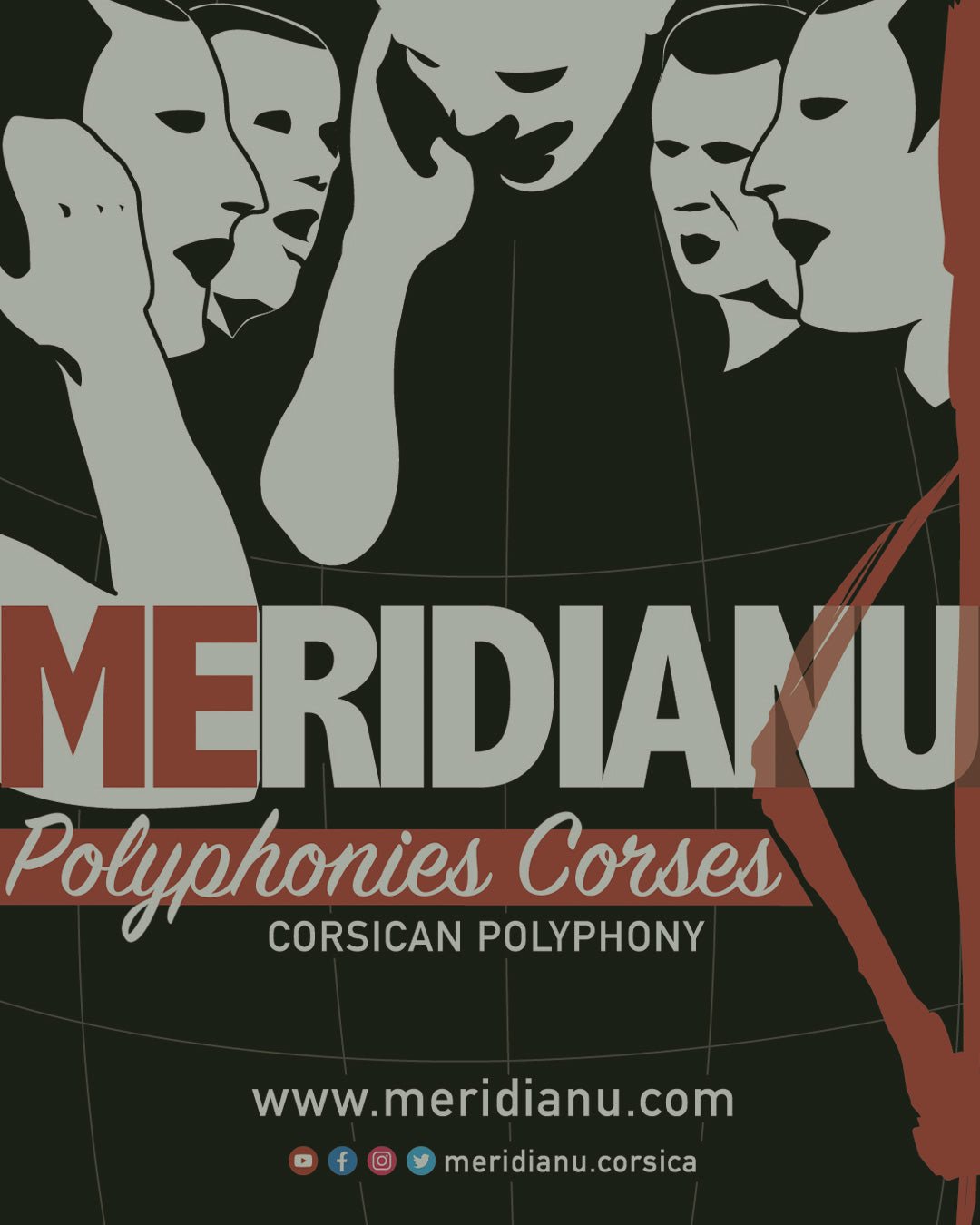
Meridianu, the group from Santa Reparata di Balagna
Meridianu is likely one of the most endearing Corsican polyphonic groups in the contemporary landscape. Based in Santa Reparata di Balagna, they celebrate their twenty-fifth anniversary in 2026, with an artistic rigor and territorial loyalty that form their strength. At TAFANELLI, we are lucky to count Meridianu among our close friends, and we share with them the same connection to the land, to transmission, and to the beauty of the well-executed gesture.
A quarter-century of loyalty
For a quarter of a century, Meridianu has walked that invisible thread connecting memory to the voice. Twenty-five years of loyalty to a land, a language, and a way of inhabiting silence even before the first note rises. Since their formation, the group has chosen not to freeze the Corsican polyphonic tradition in memory, but to turn it into a living word that breathes in the present while scrupulously respecting the heritage received.
Meridianu's repertoire spans traditional Corsican chants (sacred and profane) and also includes their own creations, inspired by the history, spirituality, and light of their island. Each performance is an act of respect toward those who sang before, and a commitment to those who will listen tomorrow.
Two formations, one standard
Meridianu performs in two complementary formats:
- The Trio: this is the historic formation, where polyphony unfolds in all its classical depth. The three voices intertwine, answer, and support one another with strength and profundity. The tradition finds its full resonance here, in the balance of harmonies and the collective power of shared song.
- The "Alma di quì" Duo: led by Jean-Antoine Orticoni and Marc De Lanfranchi, this duo offers a more refined expression. The voice is at the center—bare, essential. Guitars accompany with delicacy, like a discreet breath beneath the vibration of the timbres. A more interior, almost meditative experience where silence becomes presence and each harmony carries memory.
A reference discography
Meridianu's discography is anchored by two major albums:
- Alma di quì (2012): "the soul from here." The group's first professional album marks an essential milestone. This soul can be glimpsed in the eyes of the elders, felt in the silent strength of the stones that built the villages, and heard vibrating in the Corsican language and its secular chants. An assumed, rooted, and open identity manifesto.
- Amore à suminera (2023): the group's new opus, which further deepens their artistic approach and confirms the vocal maturity of its members. An album to be listened to in its entirety to understand where contemporary Corsican polyphony stands today.
The encounter with Georgia
Throughout their international tours, Meridianu has made wonderful artistic encounters. The exchange with Georgian groups has been particularly significant. Georgia, also a land deeply rooted in polyphonic tradition, shares with Corsica a unique way of intertwining voices, of creating a dialogue between tension and harmony, power and interiority. This unexpected proximity between two distant cultures confirms that polyphony is a universal language capable of connecting peoples beyond borders.
Where to listen to Meridianu in 2026
Meridianu is continuing a busy summer 2026 season, with several concerts in iconic Corsican venues. Here are some dates not to be missed:
- July 20 in Calvi, Saint-Jean-Baptiste Cathedral (Citadel)
- July 21 in Cervione, Saint-Érasme Pro-Cathedral (Duo)
- July 22 in Algajola, Saint-Georges Church
- July 26 in Monticello, Saint-Charles Confraternity (Duo)
- July 28 in Porto-Vecchio, Saint-Jean-Baptiste Church
The full schedule is available on their website meridianu.com. Tickets are sold online directly from their site.
Listening to Meridianu in a Corsican church on a summer evening is to experience the *paghjella* in its most accurate form. No staging, no artifice. Three voices (or two, with guitars) that take up space, inhabit it, and transform it. You leave different. It is a gift they give to those who listen, and it is a privilege to be able to call them our friends.
Other essential groups to discover
- Diana di l'Alba: a female trio, proving that women also have their place in contemporary polyphony.
- L'Alba: a contemporary quartet from Bastia.
- Isulatine: a female group exploring the repertoire of *voceri*.
- Chjami Aghjalesi: a group from Balagne, deeply rooted in the oral tradition.
Festivals and listening venues
To listen to Corsican polyphony live, there are several essential events and locations.
The Polyphonic Chant Encounters of Calvi
The essential international gathering. Founded in 1989, the Encounters take place every year in Calvi during the third week of September. They bring together polyphonic groups from all over the world (Corsica, Sardinia, Georgia, Greece, Bulgaria, Spain, Portugal, South Africa) for a cappella concerts in the churches and squares of the citadel.
It is arguably the best place in the world to understand the place of the *paghjella* in the global polyphonic landscape. To learn more about Calvi, check out our complete guide to Calvi.
The Casa Musicale in Pigna
The Casa Musicale in Pigna (Balagne) is a unique venue. This music house programs polyphonic concerts all year round in an intimate setting, with on-site dining. Concerts are often followed by exchanges with the artists. One of the most authentic settings to discover the *paghjella* in an immersive way.
To learn more, check out our complete guide to Balagne which mentions the Casa Musicale.
Holy Week in Sartène
The Catenacciu procession on Good Friday in Sartène is one of the most impressive religious ceremonies in Corsica. It is accompanied by sacred polyphonic chants (*Miserere*, *Perdono mio Dio*). A moment of rare spiritual intensity.
Summer concerts in churches
During the summer, numerous polyphonic concerts are organized in Corsican Baroque churches: Bastia (Sainte-Marie), Ajaccio (Cathedral), Cervione, La Porta, Piedicroce, Corbara. These concerts are often free or moderately priced. Inquire at the local tourist office.
Village patronal festivals
The most authentic way to listen to the *paghjella* remains the patronal festivals. Almost every Corsican village has its annual festival, with polyphonic singing in the church and sometimes outdoors. Inquire locally.
To complete your cultural agenda, check out our Corsican cultural agenda for summer 2026.
How to appreciate the paghjella
Listening to the *paghjella* for the first time can be surprising. Here are a few keys to enjoying it fully.
Listen live rather than in recordings
No audio or video capture faithfully renders the experience of the *paghjella*. The fourth harmonic sound, the spatialization, the acoustics of the venue, the physical presence of the singers: none of this is transmitted through a speaker. If you have the opportunity, always go listen live.
Choose the venue
The *paghjella* is particularly revealed in acoustically rich spaces: Pisan Romanesque chapels, Baroque churches, cathedrals, but also mountain passes or large village squares with nearby walls. Avoid amplified halls if possible.
Let yourself be carried without seeking to understand
The Corsican text can be difficult to grasp. That is okay. The *paghjella* is felt before it is understood. Focus on the physical sensation of the voices, on the agreement of the three voices, on the moments when the fourth sound appears. The meaning of the words will come later.
Learn some basics
If you want to go further, learn to distinguish between the *siconda*, *bassu*, and *terza*. Listen to several versions of the same song by different groups (e.g., *U Fiadone* or *Sò eiu*) and notice the differences. This ear training profoundly transforms the experience.
Respect the silence after the song
Unlike a classical concert where one applauds immediately, it is traditional in the *paghjella* to let silence settle after the end of the song. This silence is part of the listening experience. Let it come before applauding.
A *paghjella* listened to in a Romanesque chapel, with a few friends, without a massive audience, without amplification, without flashy lights, is probably one of the purest experiences Corsica can offer. It is a moment one never forgets.
Paghjella and the TAFANELLI wardrobe
At TAFANELLI, we pay particular attention to the living traditions of Corsica. The *paghjella* is probably the most iconic of them: it embodies respect for transmission, the refusal of standardization, and the power of the authentic. Three values that also structure our approach to clothing.
Three voices, three pieces
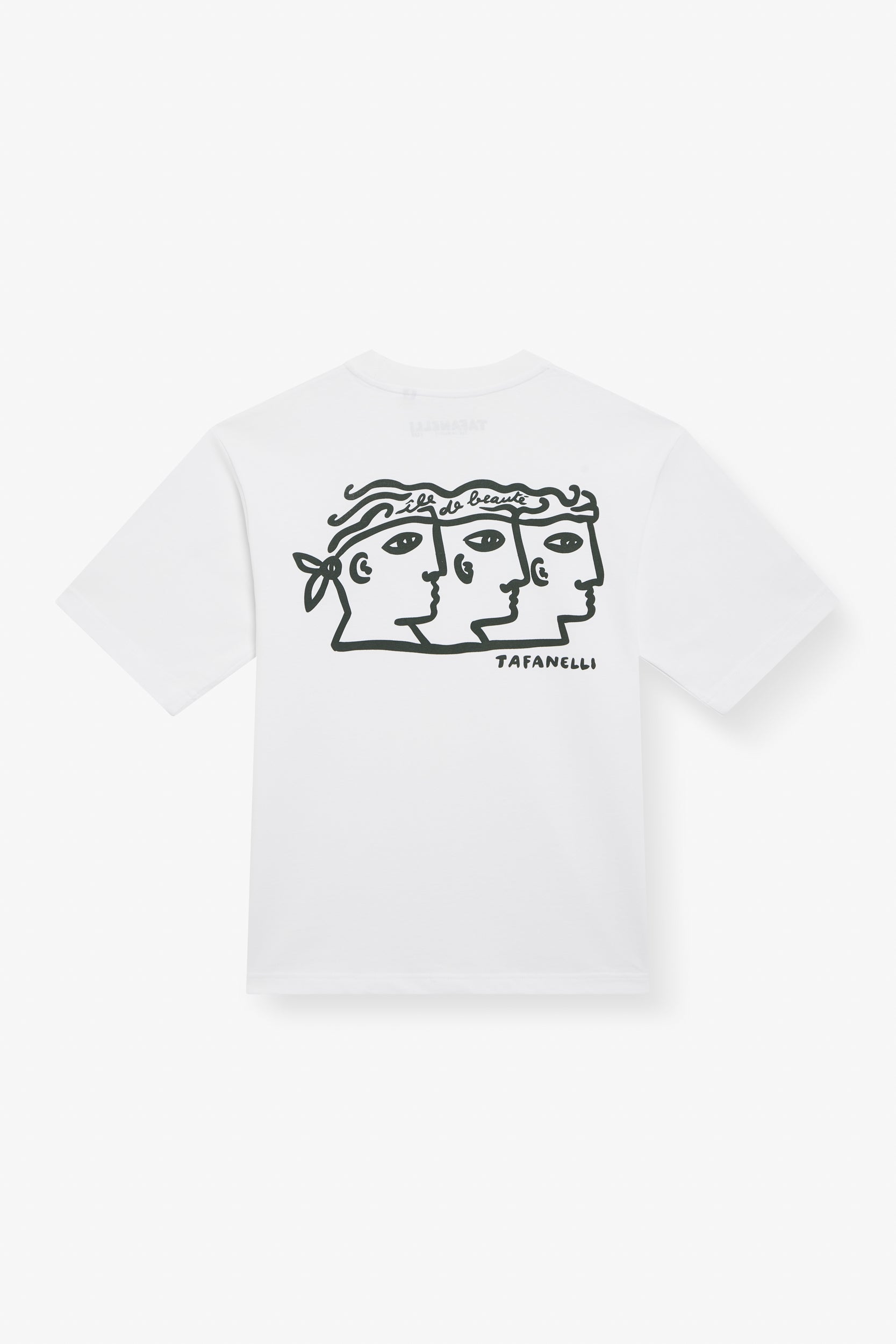
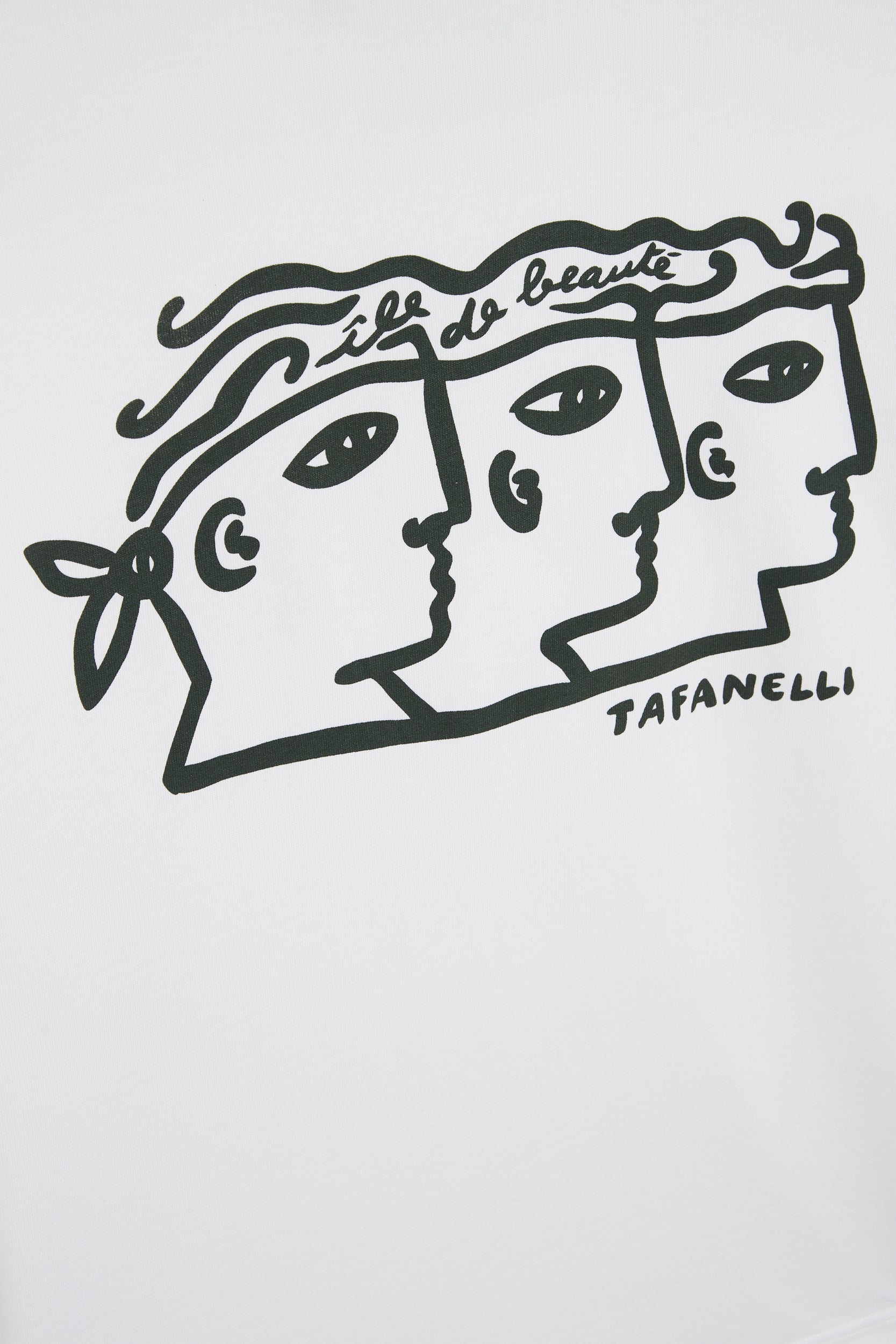
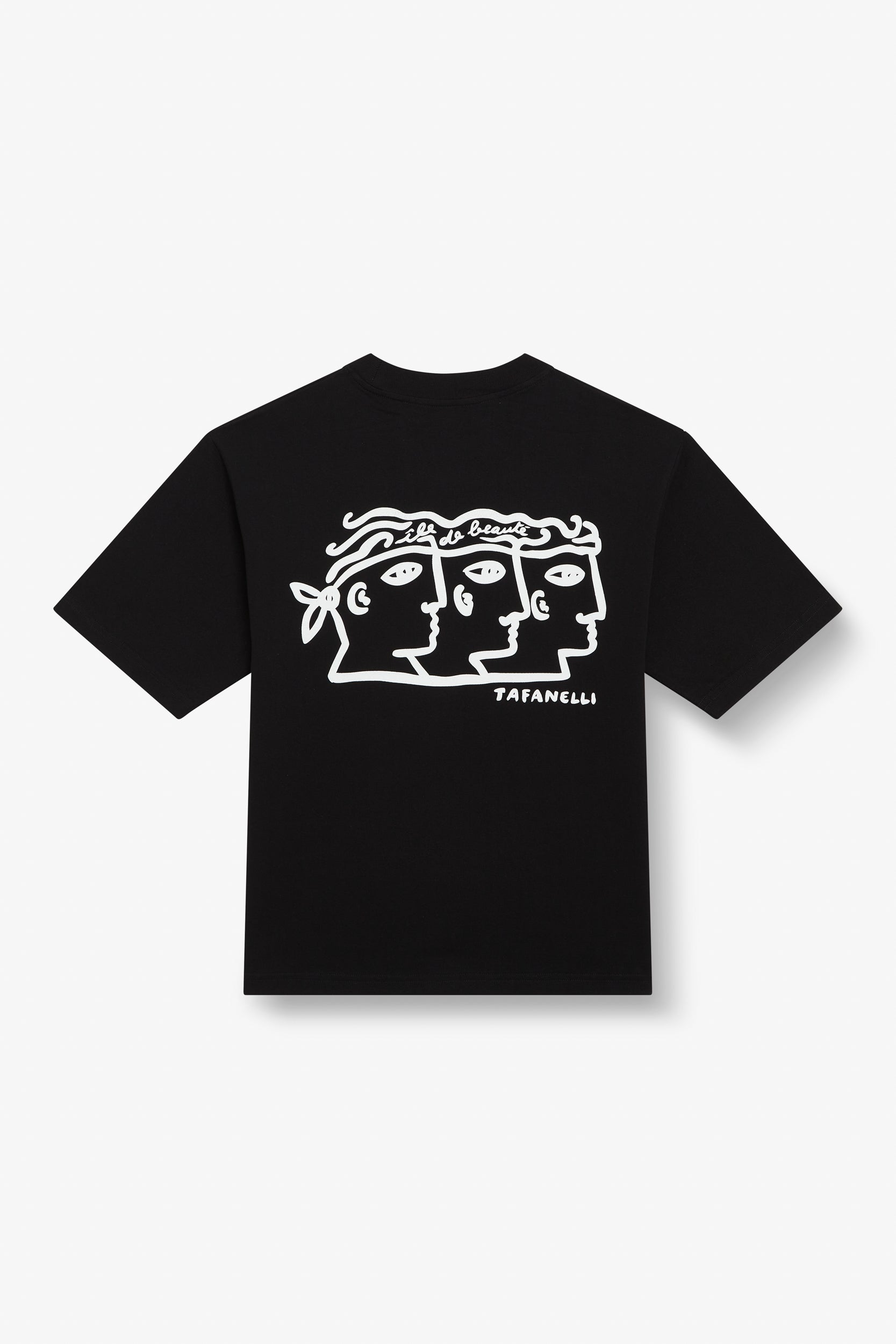
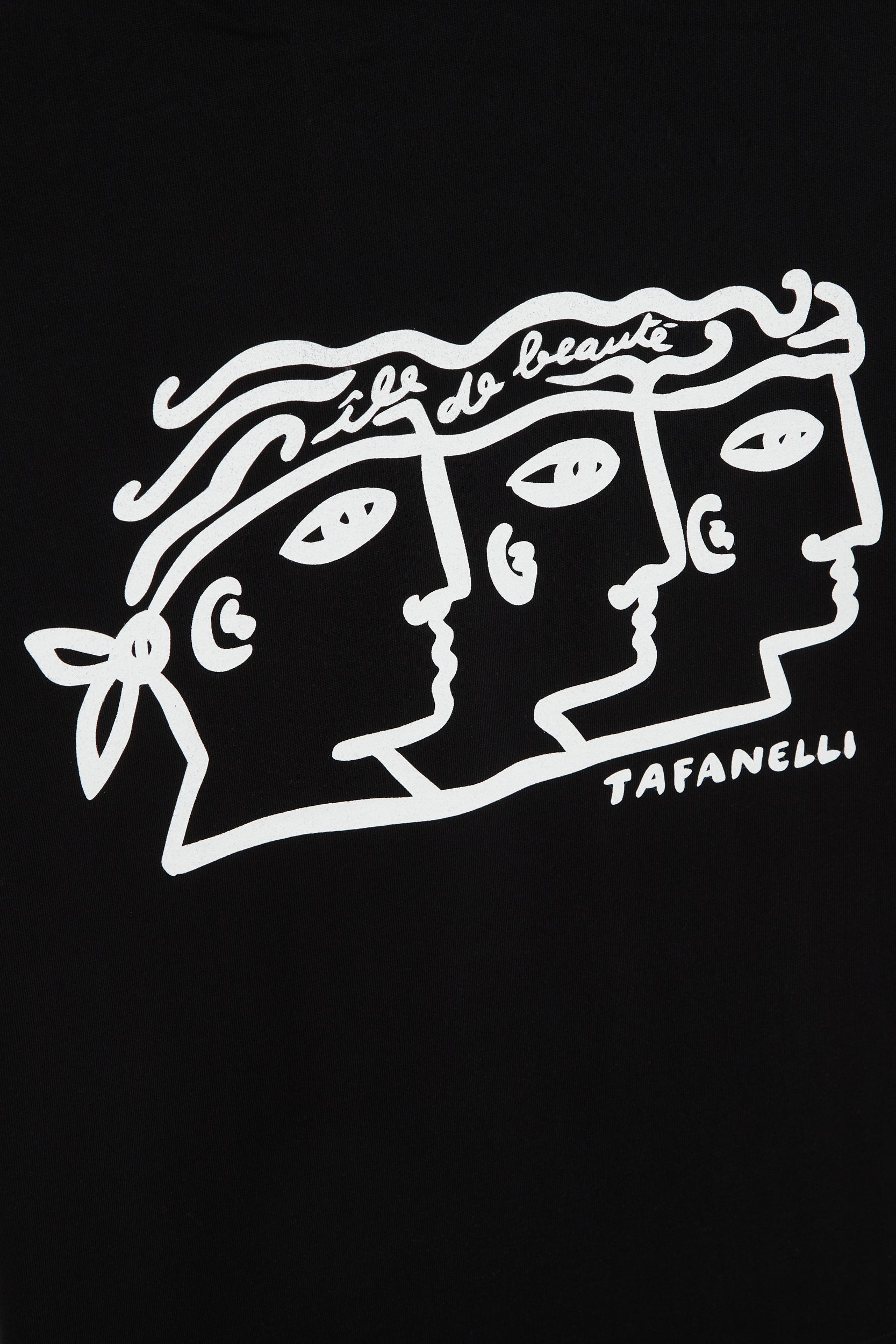
Like the *paghjella* which lives from the meeting of three voices, our wardrobe is organized into trinities. Our new capsule La Trinità literally embodies this trinity (three profiles on the same horizon). It engages in dialogue with the concept of Corsican polyphony: three elements that meet to create a greater identity.
To go further on this capsule, see our Mare, Muntagna, Machja article.
The wardrobe for a polyphonic concert
Attending a polyphonic concert in a Pisan Romanesque chapel requires a wardrobe worthy of the moment. Sober, respectful, discreet. Here are our essentials:
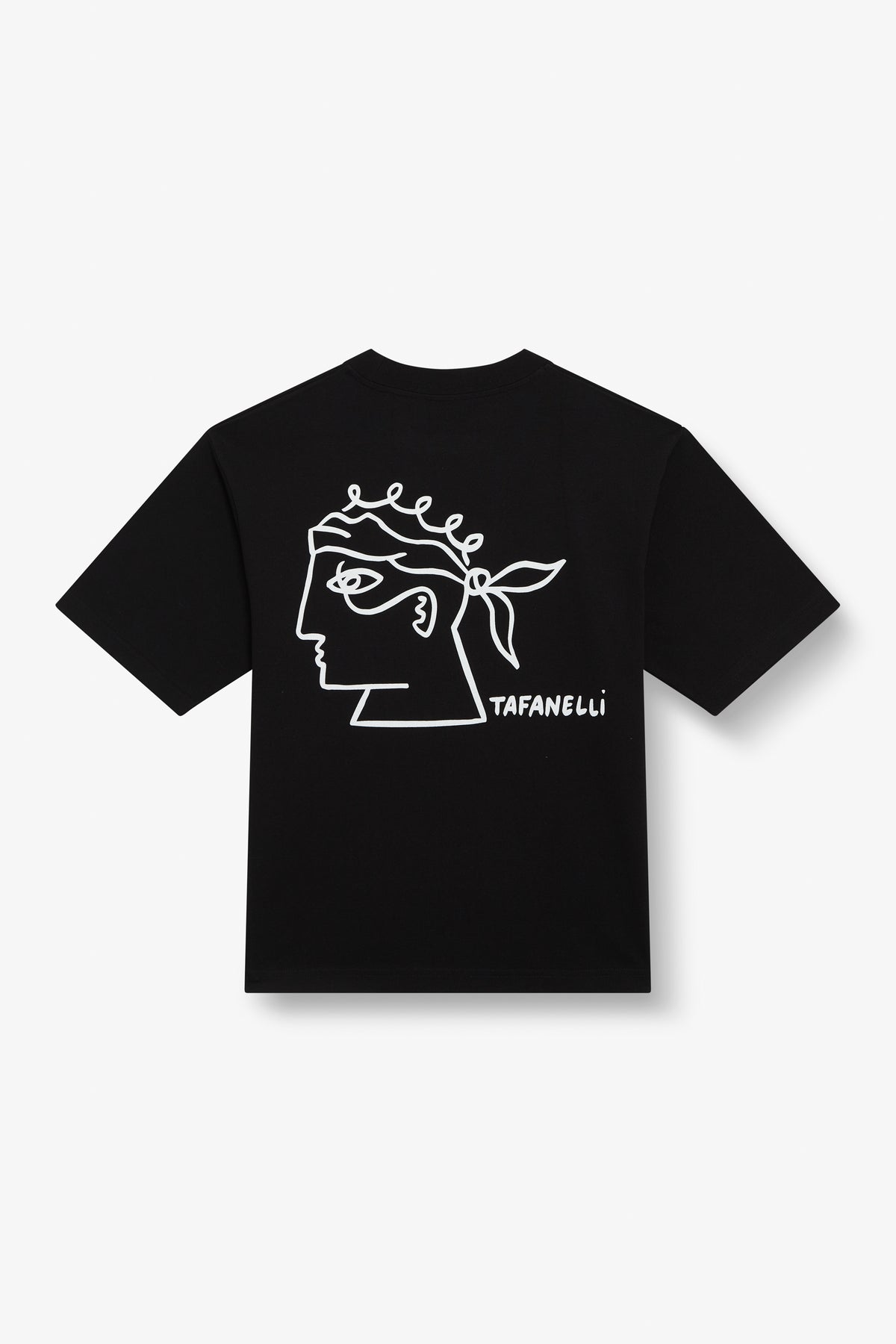
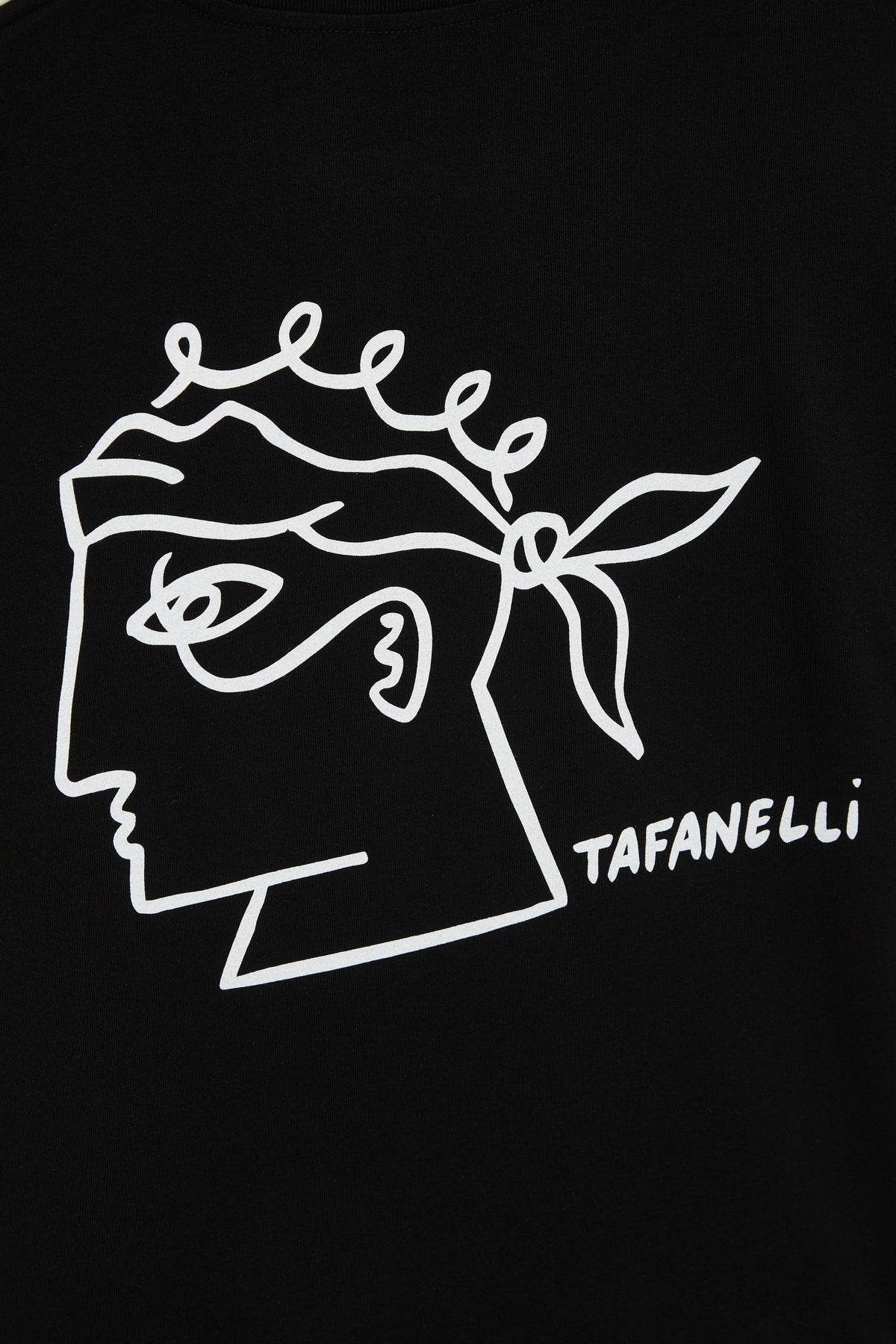
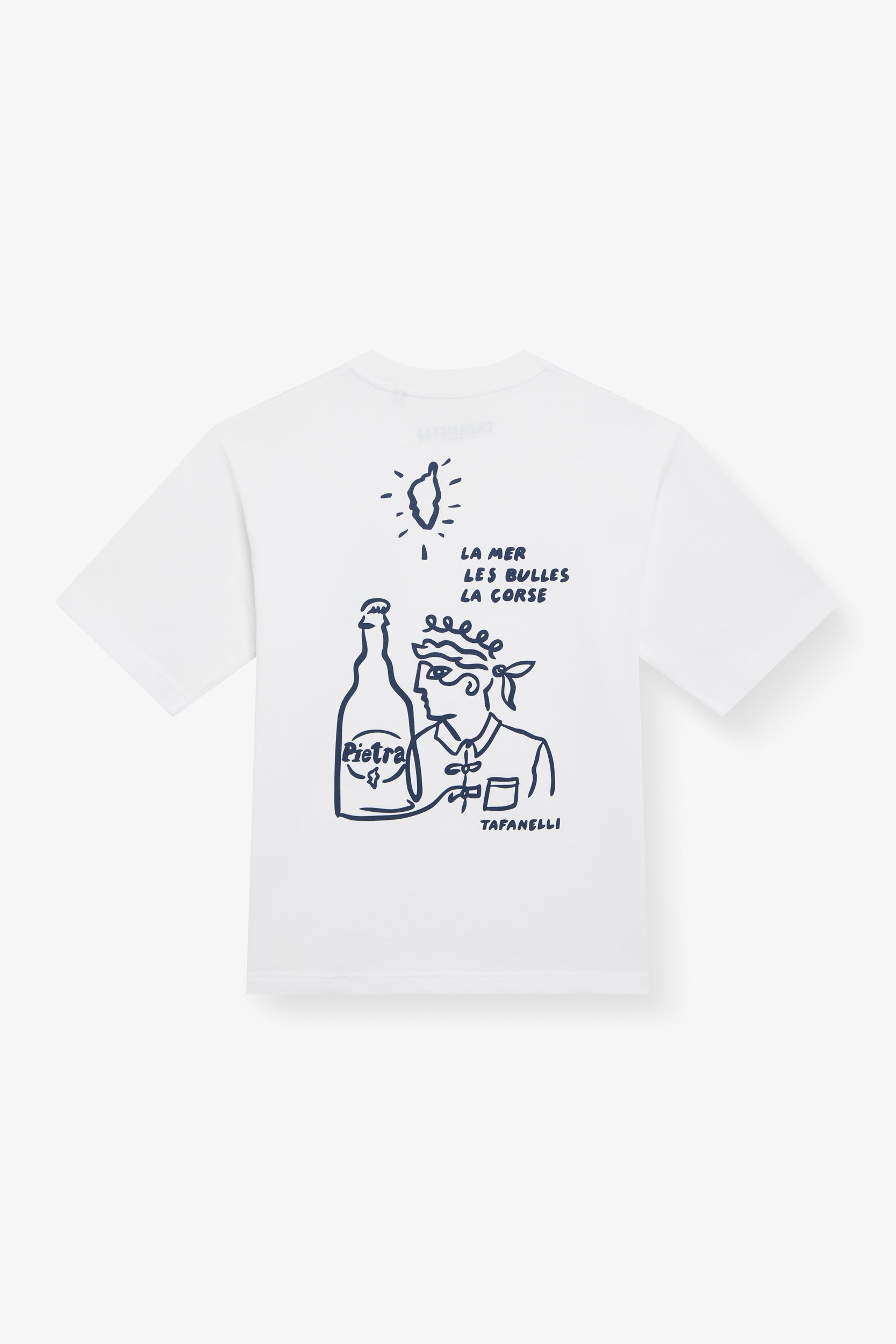
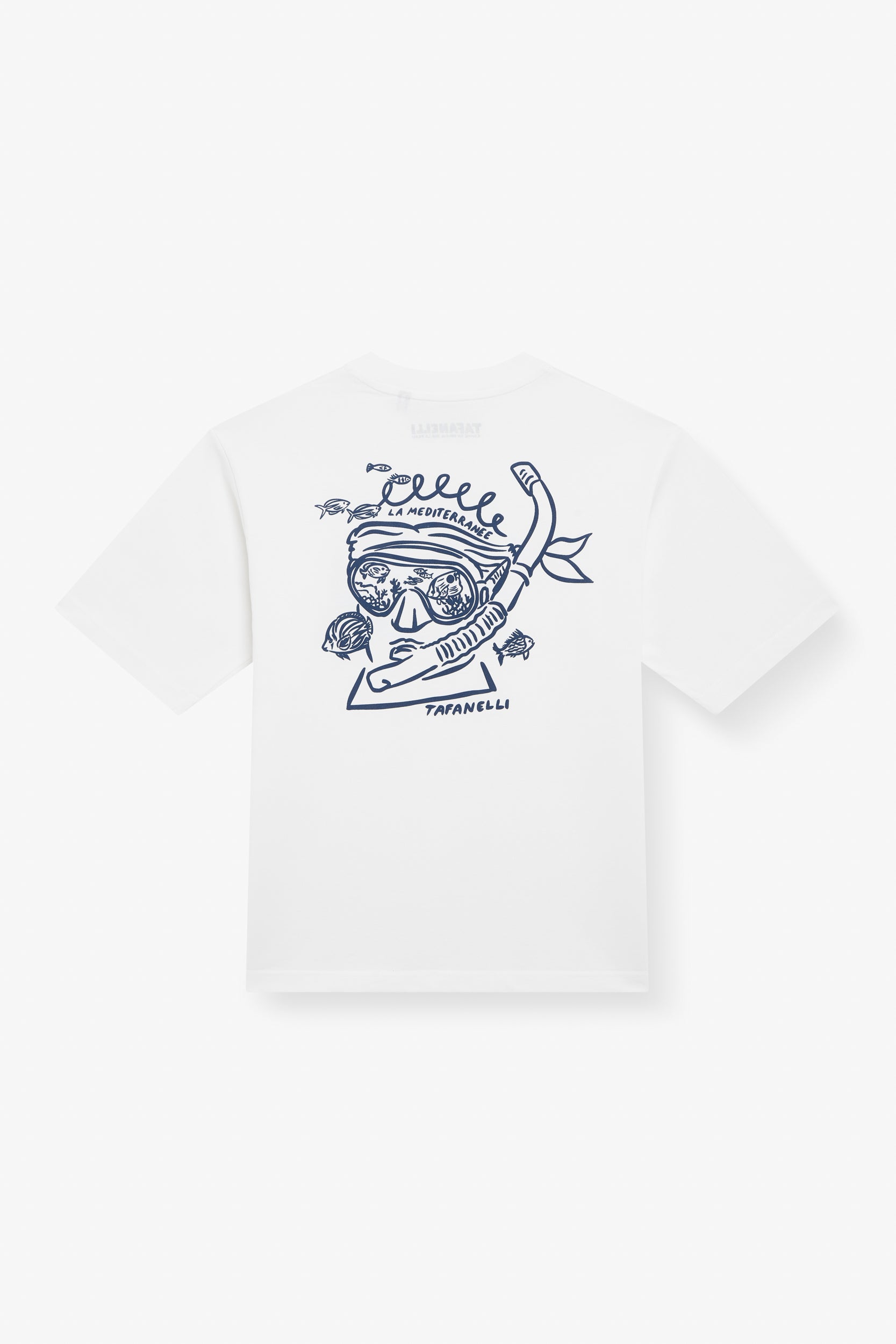
- The Corsica 1755 t-shirt: a tribute to the Paolian heritage and deep Corsican culture.
- The new La Trinità t-shirt: the trinity embodied, perfectly in tune with the vocal trinity.
- The Roccapina t-shirt: 280g/m² cotton, Made in France, straight cut, impeccable drape.
- The Corsican Bandana: a discreet and signature accessory.
Listening to a *paghjella* while wearing a Made in France t-shirt, hand-screen printed, produced in short runs, with a design that has meaning: that is seeking coherence between what one listens to and what one wears. No rupture, no betrayal, just loyalty to the authentic in all dimensions of life.
To go further on our manufacturing codes, consult our TAFANELLI t-shirt editorial manifesto.
Continue the discovery
To extend your exploration of Corsican culture:
- Mare, Muntagna, Machja: the Corsican landscape trinity
- The 10 most beautiful Pisan chapels in Corsica
- The Moor's Head: history and symbolism of the Corsican flag
- Corte, the historic capital of Corsica
- In the footsteps of Napoleon in Corsica
- Balagne complete guide 2026
- Calvi complete guide 2026
- Corsican cultural agenda summer 2026
- The TAFANELLI t-shirt editorial manifesto
While passing through Corsica, the customer becomes a friend.
A DOPU,
TAFA