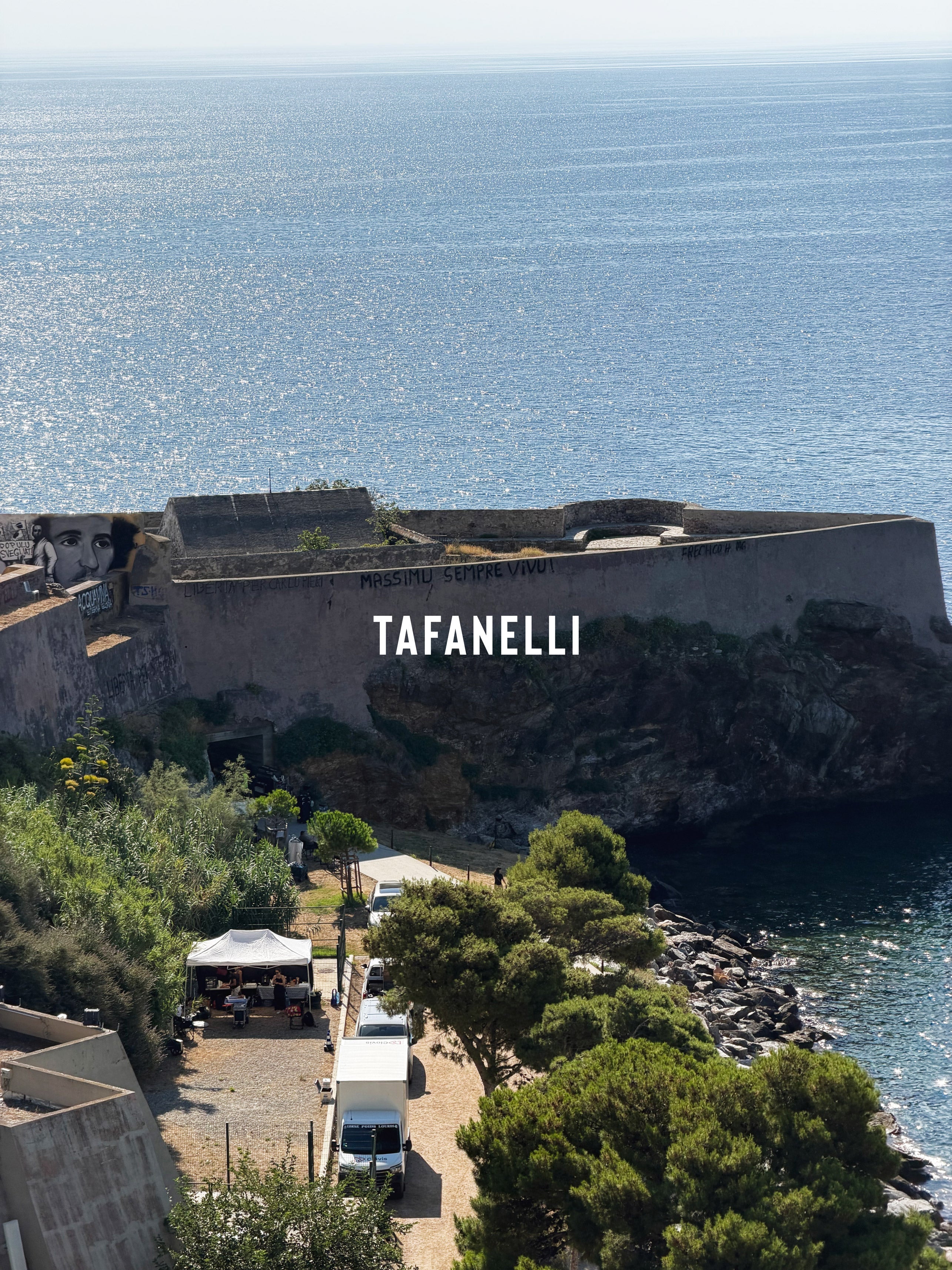
Plaine Orientale season 2 filmed in Bastia: Corsica finally telling its own story Chronicle of a future hit by Pierre Leccia, on our land, with our faces. Published July 9, 2026 by TAFANELLI There are summers when you run into cameras in the narrow streets of Terra Vecchia. Where you spot a spotlight behind a window in the old port. Where you hear, between two café terraces on Place Saint-Nicolas, a floor manager shout "action" in the white light of midday. This summer of 2026 is one of those. In Bastia, season 2 of Plaine Orientale is filming. The crime series by Pierre Leccia for Canal+, produced by Image & Cie and Mediawan, is back to set up its cameras in our city. After a first season that left a lasting impression, the team is back, with a top-tier Corsican cast and a clear ambition: to tell the story of contemporary Corsica with its shadows, its stark light, its silences, and its violence. The Mediterranean crime drama we’ve been waiting for since Mafiosa. At TAFANELLI, we look at this with particular emotion. Because Bastia is our city. Because Corsica told by Corsicans, with Corsican actors, in Corsican light, is exactly what we have been trying to do with our clothing since our very first design. This article is our love letter to this project, to this team, to this Corsica that is starting to speak for itself again. Here is what we know, what we hope for, and what TAFANELLI carries as an echo to this new season. Bastia becomes a set: Corsica films its crime drama This summer, when you walk down Boulevard Paoli in the late afternoon, chances are you’ll come across a technical truck parked in a double row, a walkie-talkie sitting on a hood, or a team of extras seated on a terrace with the same cold beer as everyone else. Season 2 of Plaine Orientale has been filming in Bastia for several weeks now, and the city bears its discreet yet visible marks everywhere. Bastia rumors travel fast. They say a scene was shot at the marina, another in the citadel, a third in the old church of Saint-Jean-Baptiste. Early morning strollers spotted Jean-Philippe Ricci scouting locations on Boulevard Général de Gaulle. Residents of the Fango district saw a night shot filmed by drone, with spotlights mounted on the roofs. A restaurateur friend confided in us that he had served lunch to the entire technical crew one Wednesday in June. What is striking is the way the production team integrates into the city without intruding. No fanfare, no flashy press releases. A discreet, respectful shoot, supported by Corsica Pôle Tournages, and which seems to have understood that you don’t film Bastia the way you film any other French port city. Bastia requires time. It only reveals itself to those who take the trouble to understand it. For us, it’s a powerful signal. For years, Corsica was only filmed by outside teams, often with an exotic, sometimes caricatured gaze. Now, we feel that something has changed. Corsica no longer tells its story through the eyes of others. It is picking up the pen, writing its own script, and choosing its own framing. And that is a historic moment. To extend your trip to Bastia and discover what makes the city so photogenic, we invite you to read our complete guide to the 15 must-sees in Bastia and our chronicle of the San Ghjuva, the night of the Saint-Jean bonfire that sets the bay ablaze every June 23rd. Plaine Orientale, the new Mafiosa by Pierre Leccia To understand what is happening in Bastia this summer, you first have to look at who is at the helm of this project. Pierre Leccia, director and screenwriter, is no beginner. Those who have followed French crime drama for the past fifteen years know that, alongside Olivier Marchal, he wrote several seasons of Braquo, one of the series that established the codes of the contemporary French noir thriller on Canal+. He knows the genre, he knows the codes, he knows the pitfalls. With Plaine Orientale, co-written with Aurélie Teisseire, he brings this expertise home, to Corsica. The result is a grounded, hard-hitting, contemporary crime drama that centers on the anti-mafia unit in Bastia. The main character, Reda, played by Raphaël Acloque, is confronted by his half-sister Ines, a young Parisian magistrate who arrives in Corsica to join this unit. The scene is set. Two worlds, two generations, two visions of law and blood. Bastia as the theater. For those who grew up with Mafiosa, the cult Canal+ series broadcast from 2006 to 2014, the DNA is immediately recognizable. Same broadcaster, Canal+. Same territory, the island. Same subject, the invisible links between power, money, family, and violence. But with a more contemporary, more international, and drier approach. Where Mafiosa played on the baroque, Plaine Orientale seems to play on precision. The fact that Canal+ Image & Cie, a subsidiary of Mediawan, is behind the production says everything about the level of ambition. Mediawan is the group that currently produces the biggest European series (The Bureau, Marseille, The Fever). This is not an isolated regional project. It is a national project, with national resources, filmed in a territory that had not benefited from such exposure since Mafiosa. Nicole Collet on production, Pierre Leccia on directing, Aurélie Teisseire on the script. A trio that carries weight, on a project that carries weight, in a territory that matters. That is exactly the coherence that Corsica needed to be told on a human scale. A top-tier Corsican cast: Ricci, Fraticelli, Appietto, Federicci A series cast is only as good as the faces it brings together. And in Plaine Orientale, these faces are a statement. First, Jean-Philippe Ricci. The man who left a mark on all of France in Jacques Audiard’s A Prophet, in the role of the Corsican Vettori. One of the great Corsican actors of his generation, capable of a silence that weighs more than dialogue. His mere presence in the credits changes the tempo of the series. We know we are going to see something real. Next, Éric Fraticelli. The cult Corsican actor, part of the Barbouzes troupe, a rare comedian capable of switching from the most popular comedy to the most restrained drama. His smile is enough to set a scene. His Corsican accent is an instrument. He has been part of all the island's major cultural moments for the past twenty years. Cédric Appietto, a Bastia theater and film actor who has been present in major Corsican fictions for a long time. He carries that particular Mediterranean gravity, a gaze that seems to have seen many things before appearing in front of the camera. Jean-Christophe Federicci, another fascinating career path: a former professional basketball player turned actor, he embodies this physical Corsica, a body that speaks before words do. His screen presence exudes a rare natural authority. Michel Ferracci, Petru Bracci, Jean-Marc Michelangeli who plays the role of the Mayor of Bastia Antoine Santelli, Denis Pierinelli, Petru-Antone Vesperini, Bruno Magne. A full Corsican brigade, which gives the series that territorial grounding that no outside attempt could ever produce. Added to this Corsican core is a top-tier international cast. Veerle Baetens, the Oscar-worthy Belgian actress revealed in The Broken Circle Breakdown. Antonia Desplat, daughter of Oscar-winning composer Alexandre Desplat, on the rise. Lina El Arabi, a French actress of Moroccan origin noted in Noces and Mektoub, My Love, who plays Ines, the Parisian magistrate. Raphaël Acloque in the lead role of Reda. Aurélien Gabrielli, Fatima Adoum, Julie Ledru, Adrien Castagne, Henri-Noël Tabary. This marriage between the local and the international, between the deep Corsican roots and great French cinema, is exactly what gives this series its unique signature. Neither an exotic film shot by foreigners, nor a purely regional production. A hybrid, ambitious, grounded, and open cultural object. Like Corsica itself, when it is faithful to who it is. Bastia as a character: the city and its narrow streets in all their glory In a well-crafted crime drama, the city is never just a backdrop. It is a character. And Bastia is a rich, complex character, never docile. There is first the citadel, with its ocher walls and narrow streets that climb toward the Place du Donjon. The ideal terrain for night stakeout scenes, whispered meetings, old score-settling. The heights of the citadel also offer a panorama over the entire bay, a classic framing for contemplative crime drama. There is the old port, with its colorful boats huddled against the quay, its cafes that open early, its fishermen returning at the crack of dawn. A setting that has always fascinated filmmakers, but one that few have known how to film with the precision it deserves. Pierre Leccia seems to have understood that the old port must be filmed at dawn or dusk, never at high noon. There is Place Saint-Nicolas, the largest in Europe according to Bastia residents, with its statue of Napoleon in a Roman toga, its century-old plane trees, and its Café des Palmiers. The perfect setting for scenes of political discussion, ambiguous appointments, and moments where two characters must cross paths without being seen. There is Terra Vecchia, the old working-class district that climbs behind the port, with its laundry hanging between windows, its wrought-iron balconies that have threatened to fall for a century and never do. Sensitive terrain, rarely filmed accurately, often with condescension. We hope that Plaine Orientale will know how to respect it as it deserves. There is the church of Saint-Jean-Baptiste, whose two towers dominate the entire Bastia landscape. There is the chapel of Saint-Roch. There is the marina and its new light-concrete aesthetic. There is Boulevard Paoli, a nervous commercial artery, and Boulevard Général de Gaulle, more solemn, more institutional. Bastia is not a postcard. It is a dense city, sometimes harsh, often beautiful, never consensual. The gamble taken by Pierre Leccia and his team is to film it as it is, without smoothing it over, without looking down on it. The gamble is to make Bastia a lead character, just like Reda and Ines. If the gamble pays off, the series will go down in the history of French crime drama. From Bastia to Aléria, the Plaine Orientale finally takes the spotlight The series' title is not coincidental. The Plaine Orientale is that strip of land stretching from Casinca south of Bastia to Solenzara, running along the entire east coast of the island. An agricultural and wine-growing region, often forgotten by mass tourism, more discreet than Balagne or the South, harder, more laborious, more rural. It is the land of Casinca, with its villages perched on the ridges (Loreto-di-Casinca, Vescovato, Castellare-di-Casinca), overlooking the plain like sentinels. The land of the Golo Valley, which fed generations of Corsican families before tourism invented other geographies. The land of Aléria, the ancient Roman capital of Corsica, whose ruins tell a story spanning twenty-five hundred years. The Plaine Orientale is also the land of the great Corsican wine estates. Domaine de Torraccia, Domaine Alziari, Clos Nicrosi, Domaine Antoine Arena. The east coast produces the wines that are now the pride of Corsica, with indigenous grape varieties (Vermentinu, Nielluccio, Sciaccarellu) that exist nowhere else. A region that works, produces, and thinks. It is also the land of Ghisonaccia, a crossroads town of the plain, long criticized for its rapid urbanization, now in the midst of a reinvention. The land of Solenzara, on the border with the rocky south, the last village on the plain before the Alta Rocca massifs. The land of the Diana lagoon, where oysters have been farmed since Roman antiquity. French cinema has almost never filmed this region. It preferred Balagne for its light (Calvi, Île-Rousse), the South for its spectacular landscapes (Bonifacio, Porto-Vecchio), and Cap Corse for its mystery. The Plaine Orientale has remained in the blind spot of the gaze. Choosing this name for a Corsican series is a strong political and cultural gesture. It is saying that Corsica cannot be reduced to its postcard coasts. It is saying that there is a deep Corsica, an agricultural Corsica, a working-class Corsica, a Corsica that stays standing through work and silence. And that this Corsica also deserves its image. To continue reading about the wines of the Plaine Orientale and Corsican wine identity, our complete guide to Corsican AOC wines 2026 traces the entire geography of the island's estates. Pierre Gambini on music: contemporary Corsica on screen One final sign that does not deceive regarding the project's ambition: the series' original music is entrusted to Pierre Gambini. For the initiated, this name carries weight. Pierre Gambini is one of the most important Corsican composers and performers of his generation. A former member of the musical adventure I Muvrini at the turn of the 2000s, he has since built a powerful solo body of work, at the crossroads of traditional Corsican singing (paghjella, terzetti), chamber music, contemporary folk, and Mediterranean balladry. His album Fughjimi appressu remains a reference in the contemporary Corsican musical landscape, and his collaborations with artists like Antoine Ciosi, Petru Guelfucci, or more recently continental musicians like Cali or Zaz, have made him a major cultural bridge between Corsica and the French musical scene. Entrusting the score of a Canal+ crime series to Pierre Gambini is making a strong editorial choice. It is refusing Hollywood synthetic music. It is refusing the anonymous strings of generic crime dramas. It is choosing to tell the story of Corsica with its own musical voice, its own timbres, its own silences. It is making sound an additional character. We can already imagine what it might sound like. A male three-part paghjella rising during a funeral scene in Corte. A cetera solo settling over a shot of a sunset over the bay of Bastia. A song in the Corsican language accompanying a night tracking shot through the narrow streets of Terra Vecchia. If Pierre Leccia and Pierre Gambini have truly trusted each other, the soundtrack of Plaine Orientale could become the best musical ambassador of contemporary Corsica on a national scale. An additional signal of something we have been repeating at TAFANELLI since day one: when Corsica tells its own story, with its own artists, it produces something that no one else can do. Not Paris, not Marseille, not Los Angeles. What TAFANELLI echoes in this Corsican crime drama We don't make clothes to illustrate a television series. We make clothes to tell the story of a territory. But when an audiovisual project recounts the same territory as ours, with the same precision and honesty, natural bridges are inevitably drawn between our worlds. Here, piece by piece, is what TAFANELLI echoes in the spirit of Plaine Orientale. The Corsica 1755, identity in capital letters Our Le Corsica 1755 t-shirt bears the year of Pascal Paoli’s Corsican Constitution, the first modern democratic constitution in Europe. It is our most historical piece, and the most political in the noble sense of the word. A garment that states where we come from, without demagoguery or folklore. Exactly the tone that Plaine Orientale seeks to establish. The Roccapina, the myth and the landscape The Roccapina oilskin jacket, inspired by the lion-shaped rock in southern Corsica, is our most formal piece. A transitional-season jacket, cut to last, made from oilskin cotton that stands the test of time. A piece that one of the secondary characters in Plaine Orientale would readily wear—an old-timer from the village who knows everything but says nothing. The Corsican Bandana, the signature accessory Our Corsican bandana features the Moor's Head symbol on a square of fine cotton, to be worn around the neck, in the hair, or as a pocket square. It’s the discreet accessory that asserts identity without overdoing it. The kind of detail an excellent artistic director might slip onto one of the series' characters. The Diver of Calvi, the intimate Mediterranean Our Le Plongeur de Calvi t-shirt recounts the intimacy between a freediver and his sea. A contemplative piece that speaks to the ancestral relationship between the Corsican and their Mediterranean. A relationship that Plaine Orientale will inevitably explore in its own way, in its seaside scenes. The Requin Méditerranée Club cap Our Requin Méditerranée Club cap evokes the wild power of the Corsican sea, the predator that reminds us that here, beauty is not given for free. An accessory that possesses exactly the energy of a Mediterranean crime thriller. The Misíncu x TAFANELLI capsule, the Cap Corse exclusivity Our upcoming collaboration with the Misíncu hotel in Cap Corse, featuring a trident-wielding, crowned mermaid emerging from the waters of the Cape, embodies the blend of myth and modernity that makes up today’s Corsica. The series and this capsule share the same visual roots. All these pieces are made in France, hand-drawn, produced in limited series, and screen-printed by our partner workshop. Like Pierre Leccia’s series, they reject shortcuts and imitations. They prefer slowness, craftsmanship, and sincere presence. See you on Canal+, and until then, on our lands The official release date for season 2 of Plaine Orientale has not yet been announced. We can reasonably expect it for the first half of 2027, following a post-production phase that should last several months. In the meantime, Pierre Leccia’s team continues to film in our streets, in our light, with our faces. What this series represents for Corsica goes far beyond its format and subject matter. It represents a rare cultural moment, where an island chooses to tell its own story, with its own artists, its own languages, and its own silences. A moment that Corsica hadn’t experienced since the great years of Mafiosa. A moment that, if the reception matches the caliber of the cast and the stated ambitions, could open up an entire decade of quality Corsican fiction. At TAFANELLI, we view this moment with both pride and responsibility. Pride, because our city, Bastia, is once again becoming a place of fiction, a setting for stories, a cultural material that matters. Responsibility, because wearing a TAFANELLI garment should no longer be a trivial act. It is a gesture that inscribes the wearer into a greater history—that of a Corsica finding its voice again, telling its own story, and existing fully within the French cultural landscape. While awaiting the broadcast on Canal+, we invite you to experience Corsica in person: travel it, love it, wear it. Our friend retailers, from Balagne to the Var, are carrying our pieces this summer, in the places where Corsica reveals its true self. Find our interactive retailer map to discover the ten locations where TAFANELLI is available in-store. And check back right here on our journal for the next installment of our Corsican cultural chronicles. See you soon. Passing through Corsica, the customer becomes a friend. TAFANELLI For further reading What to do in Bastia: 15 must-sees for July 2026 San Ghjuva: The Night of the Saint John's Fire in Bastia Corsican Wines: A complete guide to the 2026 AOCs Corsican Summer Cultural Calendar 2026 Why TAFANELLI, the contemporary Corsican brand <!-- ============================================ END OF ARTICLE DAY 35 Length: ~3,300 words Cross-links: 6 internal articles + 6 product pages Targeted SEO keywords: - plaine orientale season 2 bastia - plaine orientale corsican series - filming bastia 2026 - pierre leccia plaine orientale - corsican series canal+ 2026 - corsican crime drama tafanelli ============================================ -->