Why this area is fragile
The underarm area is a point of constant stress. The fabric works continuously there: the arm goes up, down, pulls the knit upward, then releases it. Added to this are heat, moisture, and skin-on-fabric friction. Even a t-shirt that seems "okay" at first can eventually weaken here first.
The typical sign is a hole that always appears in the same place, often on the dominant side, then widens over time. This is not an isolated defect. It is a combination of material, fit, and care.
Friction and repeated movements
With every step, with every gesture, the knit undergoes micro-friction. Under the armpits, this friction is mechanical: a seam rubbing, fabric folding, skin snagging slightly, a bag pressing down. On light fabric, these micro-abrasions eventually break fibers one by one until they rupture.
Common accelerators
- Backpack or shoulder bag that creates continuous friction
- Fitted jacket worn over it
- Fit too tight at the armholes
- Arms highly active in daily life, sports, driving
Perspiration and fiber weakening
Perspiration does not damage by "magic," but it accelerates wear. Salt and minerals deposit in the knit. When it dries, it locally stiffens the fiber. The next movement or wash creates more abrasive friction. The result: the area thins, then breaks.
Simple rule: if your t-shirt tends to dry damp under the arms (hot days, commuting, sports), wash it sooner. Leaving salt in the fiber for several days accelerates fatigue.
Cotton quality and fabric weight
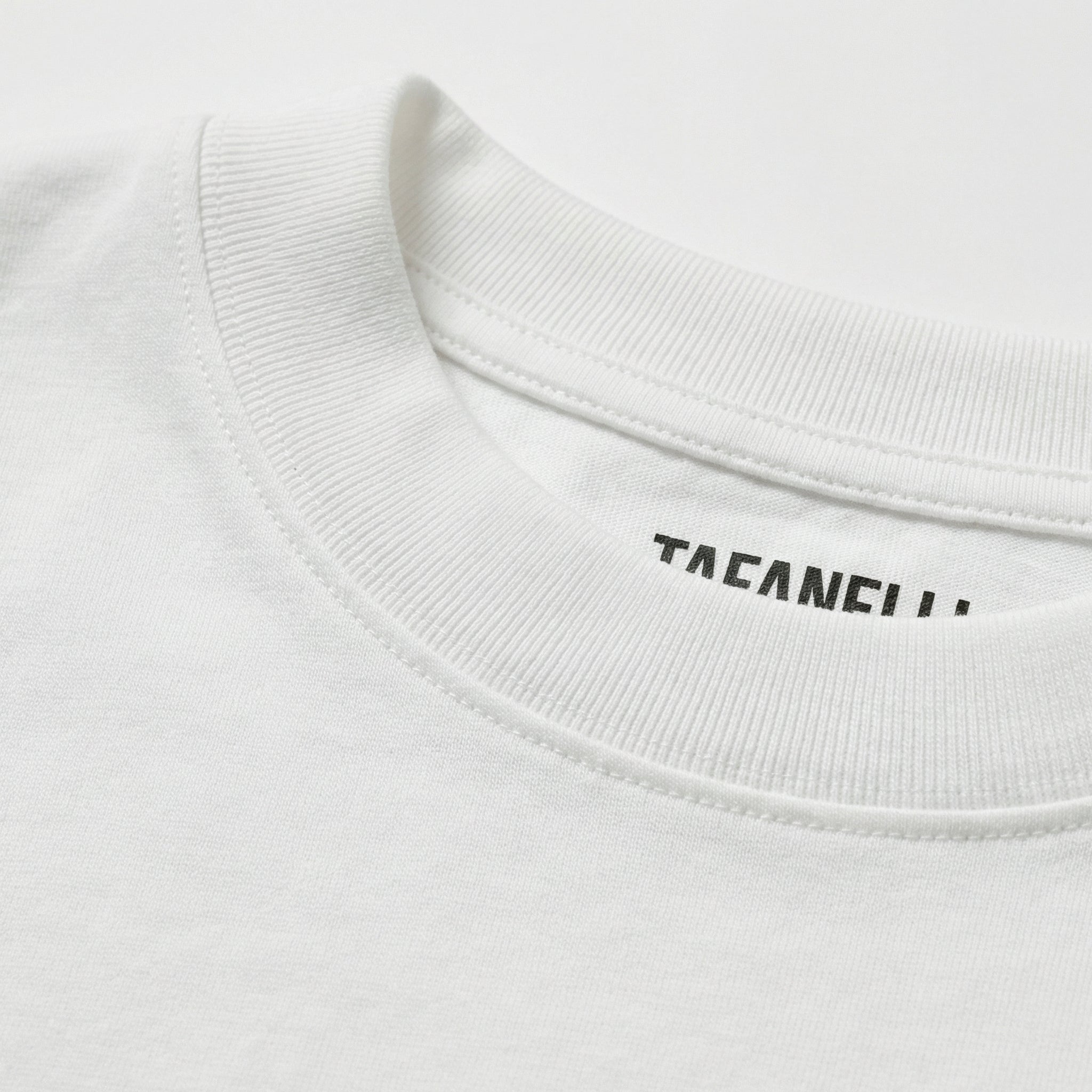
A higher fabric weight often corresponds to a denser knit. A base around 220 to 260 GSM resists repeated tension better than a very light cotton. The more open the knit, the more the fibers move, and the more easily they break in areas of friction.
But fabric weight isn't everything. Yarn quality matters: longer fibers, more consistent yarn, more stable surface. Better-spun cotton lasts longer, especially on "hinge" areas like the armpits.
Simple rule: if your t-shirts regularly get holes under the arms, the fabric is likely too light for your usage or the fit puts too much tension on that area.
Seams and pattern: the forgotten point
Many armpit holes do not come from the "fabric" alone. They come from a poorly placed tension point. An armhole that is too high, a construction that pulls, a seam that works against itself instead of distributing the stress, and the fiber breaks in the same spot, wash after wash.
What you can check
- When you raise your arm, does the t-shirt pull at the armpit?
- Is the underarm seam thick or "hard" to the touch?
- Does the hole appear at the edge of the seam or in the middle of the fabric?
Washing: what weakens the knit
Aggressive washing accelerates wear on areas already under tension. High spin speeds, overloaded drums, mixing with abrasive textiles, and cycles that are too hot increase invisible micro-tears. The fabric doesn't necessarily "lose" material in the first wash, but it loses strength.
To preserve the structure, it is also important to prevent a t-shirt from shrinking in the wash, as shrinkage creates internal tension that further weakens the armholes.
Simple routine
- Wash at 30°C when possible
- Turn the t-shirt inside out before washing
- Moderate spin speed
- Avoid hot tumble drying
- Wash with similar materials
Can you repair an armpit hole?
Yes, sometimes. If the hole is small and the area around it isn't too thinned, a repair can extend the life of the t-shirt. The goal is to stabilize the knit before it tears further.
Clean solution
- Stop wearing the t-shirt for "sports" days until it is repaired
- Have a discreet reinforcement applied to the inside (fine patch or piece)
- Avoid overly rigid sewing: it creates a new tension point
If the area is already very thin, the repair will last less time. In that case, the real issue is the material base and the fit.
| Cause | Visible effect | Solution |
|---|---|---|
| Fabric too light | Holes after a few months, especially under tension | Prioritize a denser fabric weight |
| Repeated friction | Localized wear at the same point | Avoid abrasive bags/jackets, choose a less tight fit |
| Perspiration + salt | Area thins then breaks | Wash after heavy use, do not leave damp |
| Pattern/seam under tension | Hole at seam edge, always in the same place | Choose more stable construction, better-designed armholes |
| Aggressive washing | Invisible micro-tears | Gentle cycle, moderate spin |
How to avoid holes under the armpits
The goal is not to be a "perfectionist." The goal is to reduce the two main levers: tension + abrasion.
Simple checklist
- Choose a denser fabric for daily use
- Avoid fits that pull under the arm
- Wash promptly after heavy sweating
- Gentle cycle, moderate spin
- Limit hot tumble drying
To go further on overall durability: how to recognize a quality t-shirt.
What changes with a denser base
When the material is more stable and better constructed, the underarm area resists daily stress better. The knit remains homogeneous, the fit holds up, and wear appears much later.
Go further
Discover t-shirts designed to resist friction and maintain their structure over time.