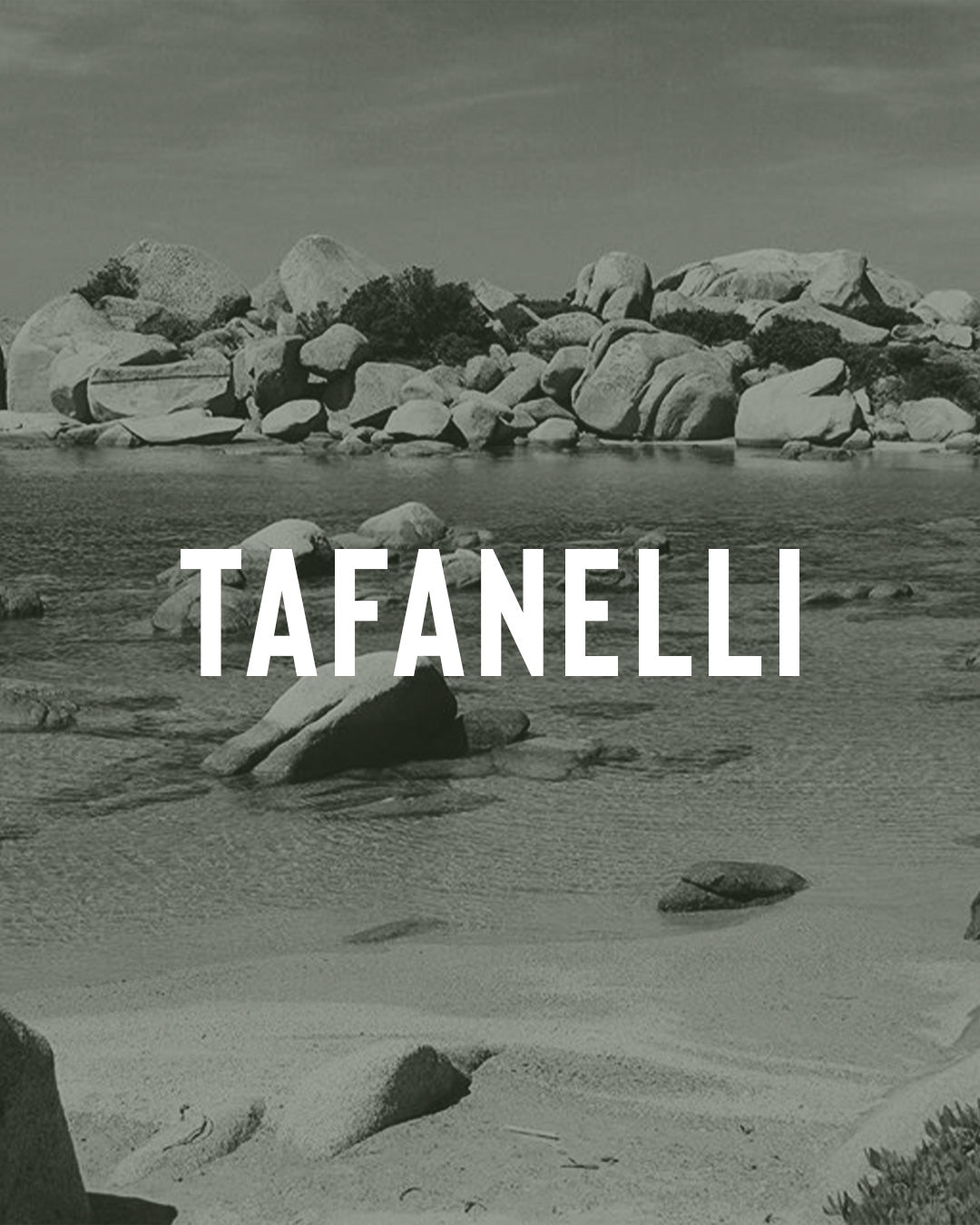
The 10 most beautiful satellite islands of Corsica: the secret archipelago of the Island of Beauty
Corsica is not just an island. It is an archipelago. Surrounding the main island, a constellation of small lands emerges from the sea: inhabited islands, wild islets, secret peninsulas, bird sanctuaries, and havens of biodiversity. Some are famous, like the Sanguinaires or the Lavezzi. Others are virtually unknown, reserved for experienced boaters and lovers of silence. Here is our subjective selection of the ten most beautiful satellite islands of Corsica, the ones that make the heart beat faster, the ones that tell another side of the Island of Beauty.
The Corsican archipelago, a well-kept secret
When you look at a map of Corsica, you see a large island shaped like a foot. What you see less of is the constellation of satellite islands that surrounds it. There are more than sixty of them, recorded by marine cartographers, spread all around the coastline. Some span several hectares, while others are just emerging rocks. All have their history, their biodiversity, and their mystery.
This archipelago constitutes one of the richest marine biodiversity zones in the Mediterranean. Natural reserves, Natura 2000 zones, marine parks: many satellite islands are now protected to preserve their fauna (Audouin's gulls, European shags, shearwaters) and their endemic flora (immortelle, sea lavender, Corsican campion).
For Corsicans, these islands are more than landscapes. They are sentinels at the entrance to the gulfs, refuges for fishermen caught in a storm, and landmarks for returning to port. Every island has a name, a history, and often a legend. Here are the ten that, in our opinion, deserve an article dedicated to them.
Looking at Corsica from its satellite islands offers a completely different perspective. You see the coast as a granite rampart, the sea as a sacred moat, and the island as a green fortress floating on turquoise water. It is a perspective reserved for those who take the time to travel by boat.
1. The Lavezzi: the granite paradise of the far south
It is impossible to start anywhere else. The Lavezzi archipelago, located off the coast of Bonifacio in the strait that separates Corsica from Sardinia, is one of the most iconic natural wonders of the Mediterranean. A collection of granite rocks polished by the sea, sculpted by the winds, carpeted with low vegetation, and surrounded by turquoise waters worthy of the Caribbean.
What you need to know
- Area: approximately 66 hectares for the main island.
- Status: natural reserve since 1982.
- Access: shuttles from Bonifacio (April to October).
- What to see: rounded granite blocks, secret coves, exceptional water clarity.
The story of the Sémillante
The Lavezzi islands carry a tragic memory. On February 15, 1855, the French frigate La Sémillante, en route to the Crimea with 750 soldiers on board, smashed against the reefs of the Lavezzi during a storm. There were no survivors. It remains one of the greatest shipwrecks of the 19th century. A military cemetery remains on the island, along with a commemorative chapel erected by Napoleon III.
Walking between the graves on this wind-swept desert island is a moving experience. You understand the fragile balance between beauty and danger that the Strait of Bonifacio represents for sailors.
2. The Sanguinaires: the legendary sunset
At the entrance to the Gulf of Ajaccio, four islands turn red in the setting sun. These are the Sanguinaires Islands, arguably the most photographed landscape in Corsica after the Calanques de Piana. Their name is said to come from the color of the red porphyry they are composed of, which is particularly flamboyant at sunset.
The four islands
The Sanguinaires archipelago is made up of four main islands:
- Mezzu Mare (the Grand Sanguinaire): the largest, with its iconic lighthouse.
- Cala d'Alga: a small island frequented by cormorants.
- Isulottu: a rocky islet.
- Cormorans: a rock that hosts a large colony of seabirds.
The lighthouse and Daudet
The Sanguinaires lighthouse, built in 1844, inspired one of the most famous texts by Alphonse Daudet, The Lighthouse of the Sanguinaires, published in his Letters from My Windmill. The Provençal writer spent a few days there and immortalized the solitary life of the lighthouse keepers, between sun, wind, and sea.
Today, you can land on the Grand Sanguinaire, hike up the hill to the lighthouse, and come back down via the coves. An easy two-hour hike that offers one of the most beautiful viewpoints over the Gulf of Ajaccio.
Watching a sunset over the Sanguinaires, from the Parata or from a boat, is to understand why Corsicans call their island the "Island of Beauty." The light pours fire over the porphyry. It is a spectacle one never tires of seeing.
3. The Giraglia: the northern sentinel of Cap Corse
At the very north of Corsica, at the tip of the Cape, stands the Giraglia. A rocky and austere island, topped with an iconic lighthouse, which marks the northernmost point of the island. For a sailor, passing the Giraglia means crossing a symbolic cape: you are either entering or leaving the Corsican world.
The lighthouse island
The Giraglia is dominated by its 1848 lighthouse, built on the pre-existing Genoese tower. It is one of the oldest and most iconic lighthouses in Corsica. Long inhabited, it is now automated, but remains active and still signals the difficult passage between Corsica and the Italian mainland.
The legendary regatta
The Giraglia has given its name to one of the most prestigious regattas in the Mediterranean: the Rolex Giraglia, contested since 1953 between Saint-Tropez and Genoa, with a mandatory passage around the island. Every year in June, hundreds of sailboats brush past the island in a spectacular ballet.
To learn more about sailing culture in Corsica, check out our article on Corsica Classic Yachting.
Biodiversity
The Giraglia is home to a large population of Audouin's gulls, a protected species. The island is in a Natura 2000 zone, and access is regulated to preserve nesting.
4. The Finocchiarola Islands: sanctuary of the eastern Cap Corse
On the eastern coast of Cap Corse, facing Macinaggio, three small islands emerge: the Finocchiarola Islands. Their name evokes the wild fennel (finocchio in Italian and Corsican) that grows in abundance on their rocky slopes.
The natural reserve
The Finocchiarola are one of the most strictly protected natural reserves in Corsica. Access is completely prohibited during the nesting period (March to August) because they house one of the most important sanctuaries for Audouin's gulls and Mediterranean shags.
These three islands, along with their surrounding marine area, form a rare ecosystem. They can be observed from Macinaggio or from a boat, but without landing during the sensitive season.
The Customs Officers' Path
The best way to discover the magic of the Finocchiarola is to walk along the coast from Macinaggio via the famous Customs Officers' Path (Sentier des Douaniers). This coastal path offers breathtaking views of the three islands and the deserted beaches of Tamarone, Barcaggio, and Cala Genovese.
5. The Cerbicale Islands: the treasure of the Gulf of Porto-Vecchio
At the entrance to the Gulf of Porto-Vecchio, five islands make up the Cerbicale archipelago. Little known to the general public, they are a paradise for boaters and divers who love calm, preserved spots.
The five islands
- Isula Piana: the largest.
- Isula di Cornuta.
- Toro.
- Forana.
- Vacca.
Protection status
The Cerbicale have been classified as a national natural reserve since 1981. Their marine and avian biodiversity is exceptional: Yelkouan shearwaters, Audouin's gulls, groupers, red coral, and Posidonia seagrass beds.
Navigation around the Cerbicale is permitted, but landing is prohibited on most of them. The seabed offers some of the best diving sites in Corsica, with spectacular drop-offs and visibility often exceeding 30 meters.
6. Gargalu: the wild island of Scandola
In the heart of the Scandola Nature Reserve, between Galéria and the Gulf of Porto, the island of Gargalu is an absolute gem. Little known, difficult to access, and protected by its position within one of the most preserved zones in the Mediterranean.
Scandola, UNESCO World Heritage
Gargalu is an integral part of the Scandola Nature Reserve, which has been a UNESCO World Heritage site since 1983 as part of the "Gulf of Porto: Calanche of Piana, Gulf of Girolata, Scandola Reserve" site. It is one of Corsica's major natural treasures.
Bird colonies
Gargalu houses one of the most important colonies of ospreys in the Mediterranean. This sea eagle, which has virtually disappeared from most European coastlines, finds an ideal sanctuary on Scandola and Gargalu for nesting and fishing.
Access
Access to Gargalu and its immediate surroundings is strictly regulated: navigation from a distance, no landing, and fishing prohibited in protected zones. This rigor explains why the biodiversity there is so remarkable.
7. Pietricaggiosa: the mysterious southeastern islet
Located off the southeastern coast of Corsica, between Solenzara and Fautea, the small island of Pietricaggiosa is one of the least known of the archipelago. Few tourists know of its existence.
A pebble of granite
Pietricaggiosa (its name means "stony rock" in Corsican) is a small rocky islet, almost devoid of vegetation, emerging a few hundred meters from the coast. It is easily reached by paddleboard or kayak from nearby beaches, particularly the one at Fautea.
Its appeal lies in the absolute silence that reigns there and in the view it offers of the Corsican coast: the red coves, the Genoese towers, and the green massifs plunging into the sea. A place to meditate for an entire afternoon without crossing paths with a soul.
8. The islet of Porri: the little Balagne jewel
Just off the coast of the Balagne, between Algajola and Île-Rousse, stands the small islet of Porri. Barely larger than a rock, it has nonetheless become an iconic landmark for the residents and visitors of the region.
The Balagne charm
Porri embodies the spirit of the Balagne in its own way: mineral, isolated, and timeless. You can circle it by boat or from the nearby beaches. Its silhouette cuts through the horizon in a dreamlike setting, with the mountains of the Balagne plunging into the sea in the background.
To explore more of the Balagne, discover our complete guide to the garden of Corsica.
9. Capense: the sentinel of the Gulf of Porto
At the entrance to the Gulf of Porto, the islet of Capense (sometimes spelled Capigliolo) emerges from deep waters. Although rarely visited, it offers one of the most beautiful viewpoints of the Calanches de Piana and the red coast of the gulf.
A 360-degree panorama
Viewed from Capense, the Gulf of Porto unfolds in all its splendor: the Calanches de Piana to the west, Scandola to the north, the marina of Porto at the back, and the mountains of Fango to the east. A panorama spanning several kilometers that no land terrace could ever offer.
Access for boaters
The islet is accessible by boat from Porto or Piana. You must anchor at a distance and approach by tender or by swimming. Be wary of currents, which can be strong at the entrance to the gulf.
10. The emerged rocks of Piana: mineral archipelago
At the foot of the Calanches de Piana, the sea is dotted with dozens of emerged rocks that form a kind of floating mineral archipelago. Too small to be islands, too numerous to be ignored, they are an integral part of the UNESCO-listed landscape.
A science-fiction setting
These red rocks, sculpted by the sea and wind into fantastic shapes (the dog, the eagle, the heart, the man's head), give the Calanches de Piana their surreal look. Some emerge just a few meters above the water, others reach dozens of meters in height.
Discovery by kayak
The best way to discover them is by kayak or paddleboard, starting from the marina of Ficajola. You can slalom between the rocks, enter sea caves, and discover coves inaccessible on foot.
Paddling between the red rocks of Piana on a summer morning at dawn, before the first tourist boats arrive, is experiencing one of the most memorable moments a traveler can have in Corsica. The sea, the silence, the red rock. Nothing else.
Practical tips for discovering the Corsican archipelago
A few recommendations before you set off to explore Corsica's satellite islands.
Respect protected zones
The majority of the satellite islands described in this article are classified as natural reserves or Natura 2000 zones. This implies strict rules:
- Landing is prohibited on certain islands during the nesting season.
- Fishing prohibited in marine protected areas.
- Anchoring regulated (often mandatory on buoys).
- Picking endemic flora is prohibited.
- No fires, no camping.
These rules are not red tape: they are the condition for the Corsican archipelago to remain the unique treasure it is today.
Choosing the right season
The best time to discover the islands is May-June or September-October: the sea is beautiful, visitor numbers are limited, and bird nesting is either over or yet to come. In July-August, excessive tourist crowds degrade the experience.
Choosing your mode of transport
- Tourist shuttles: convenient for Lavezzi and the Sanguinaires from Bonifacio and Ajaccio.
- Boat rental with skipper: the best option for personalized access.
- Private sailboat: for experts who have their own boat.
- Kayak or paddleboard: for islands close to the coast (Porri, Piana rocks, Pietricaggiosa).
Leave nothing behind
The golden rule for any lover of Corsica: leave no trace. Take your waste back with you. Take nothing. Change nothing. Travel as a discreet visitor.
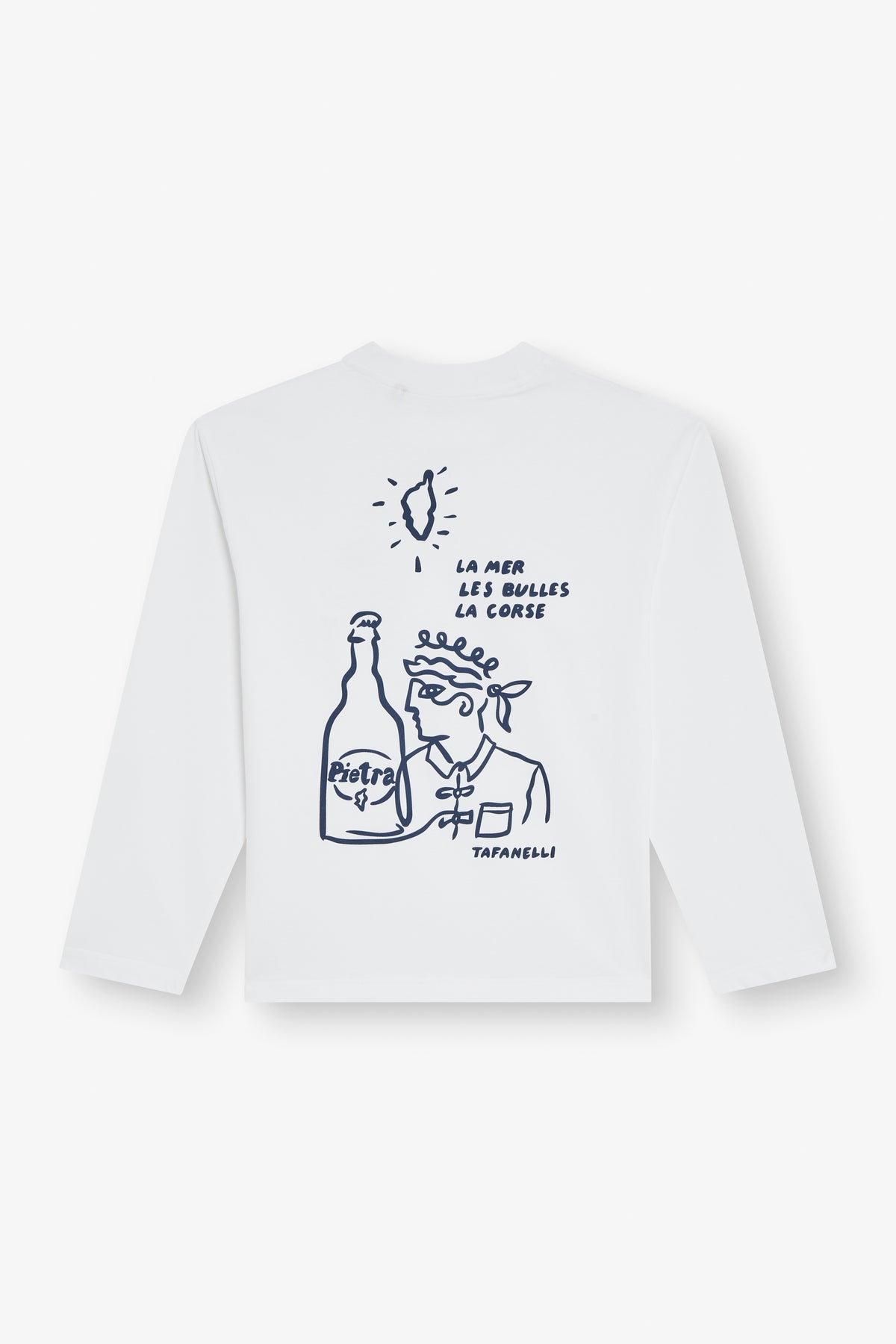
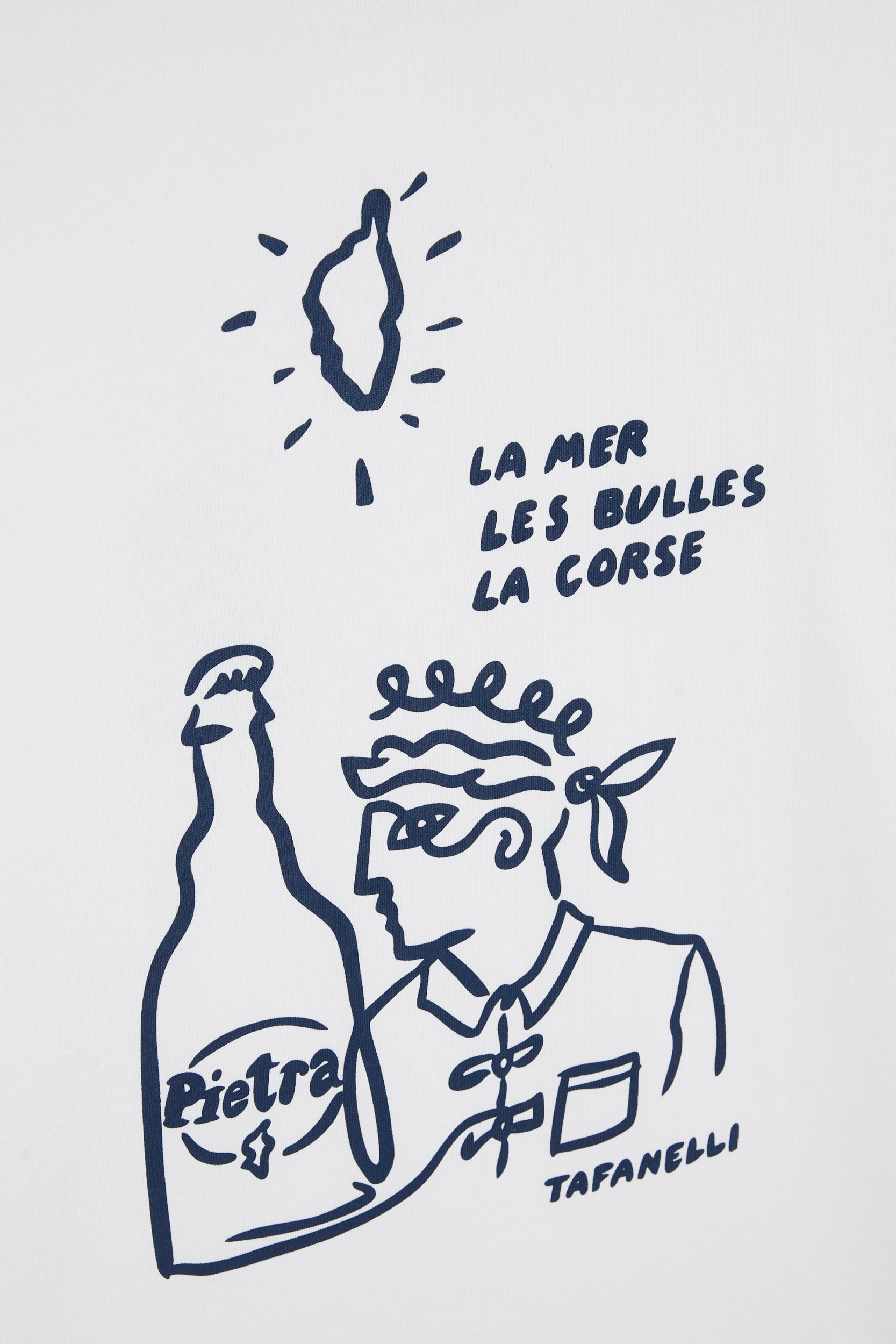
The archipelago in the TAFANELLI wardrobe
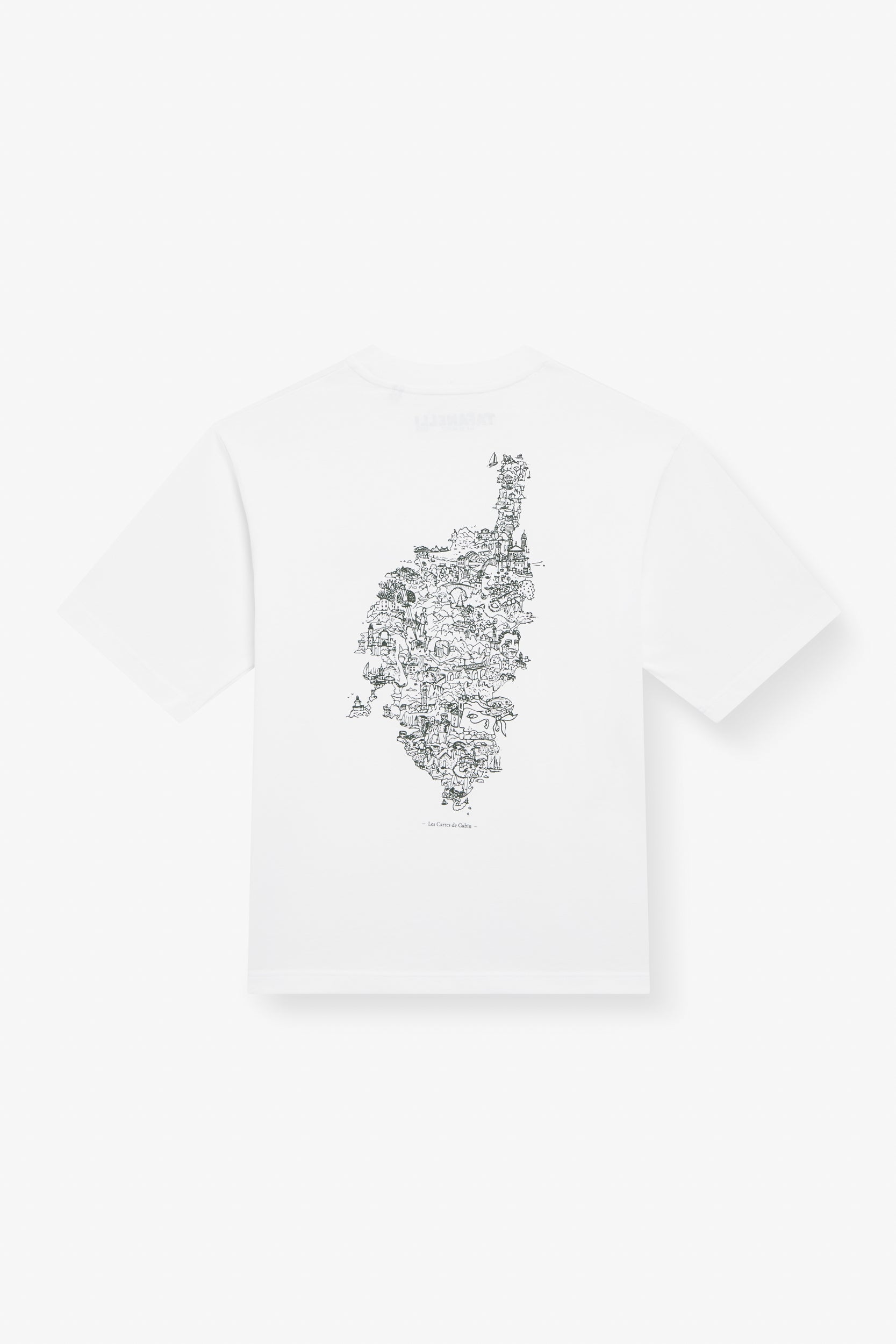
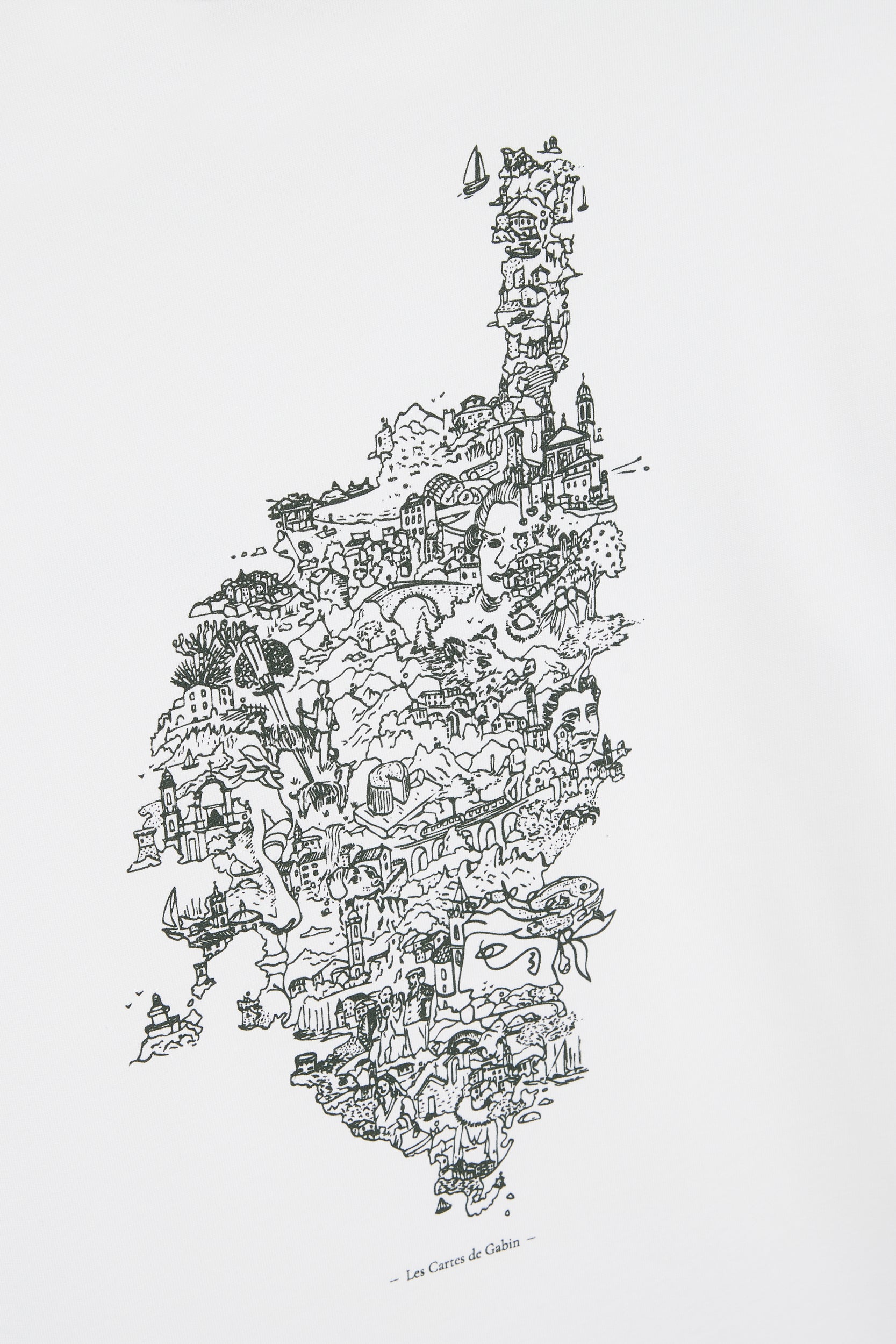
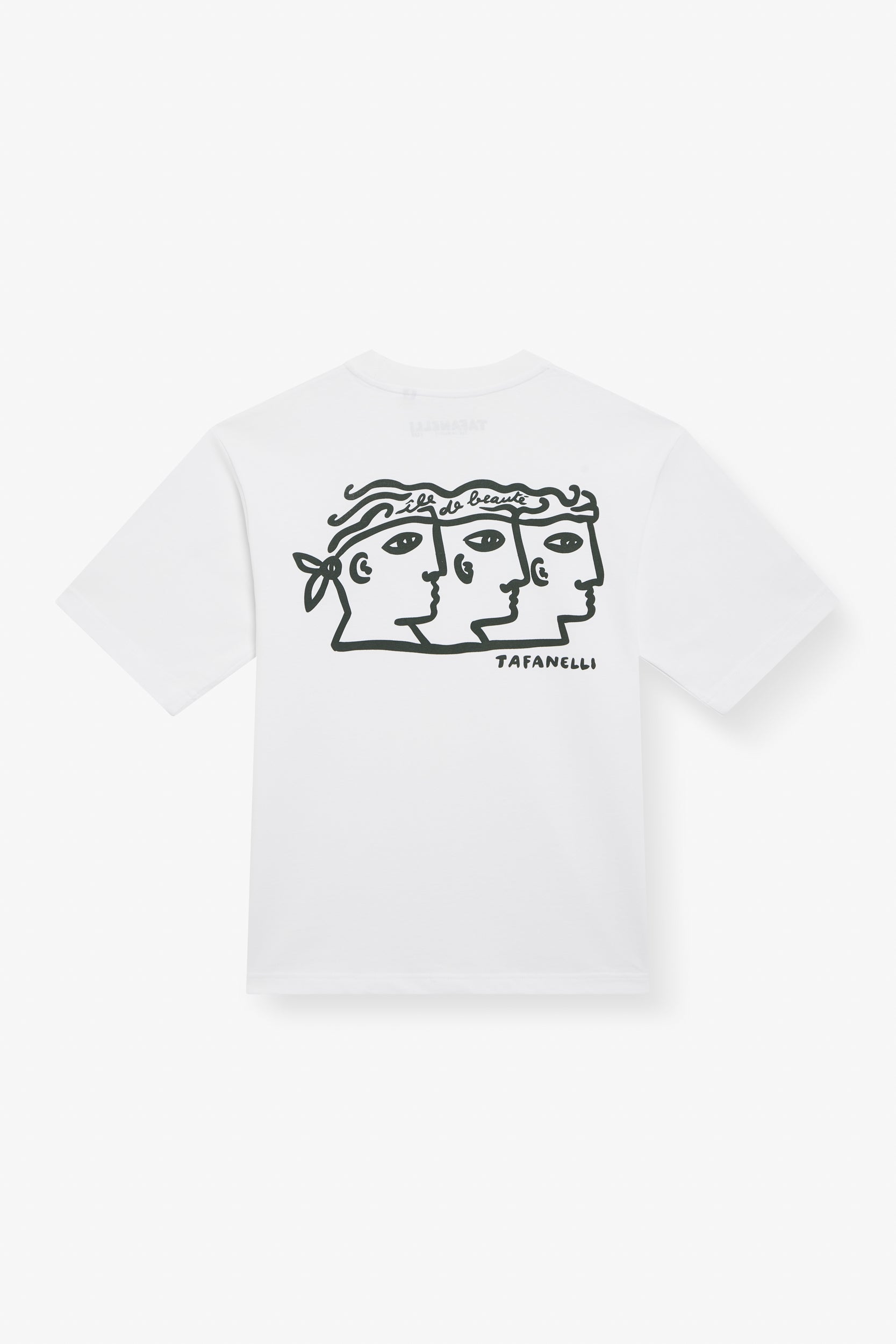
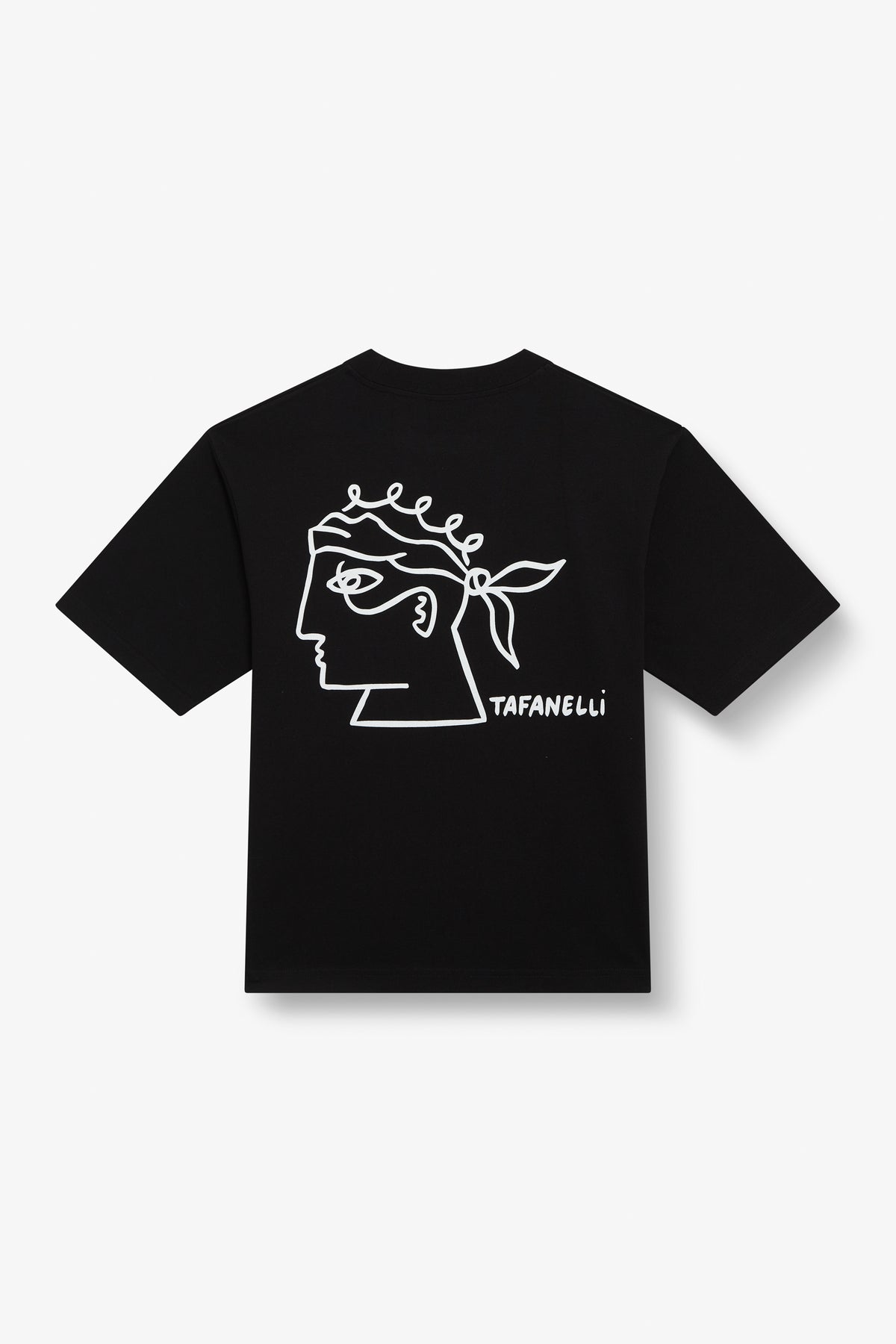
The island's geography is at the heart of the TAFANELLI imagination. Our designs regularly draw from the landscapes of the coastline and the sea. Discover our current collection:
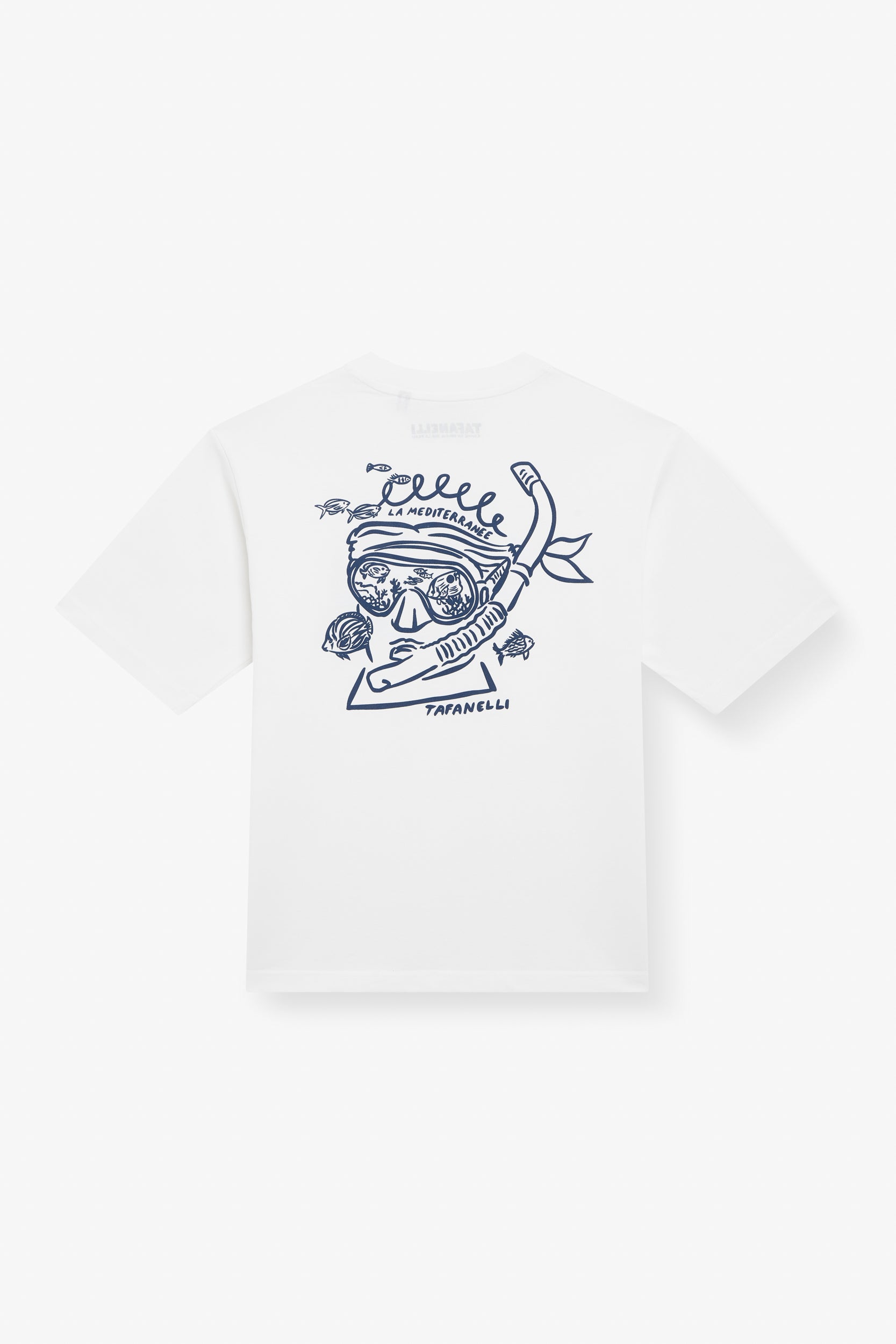
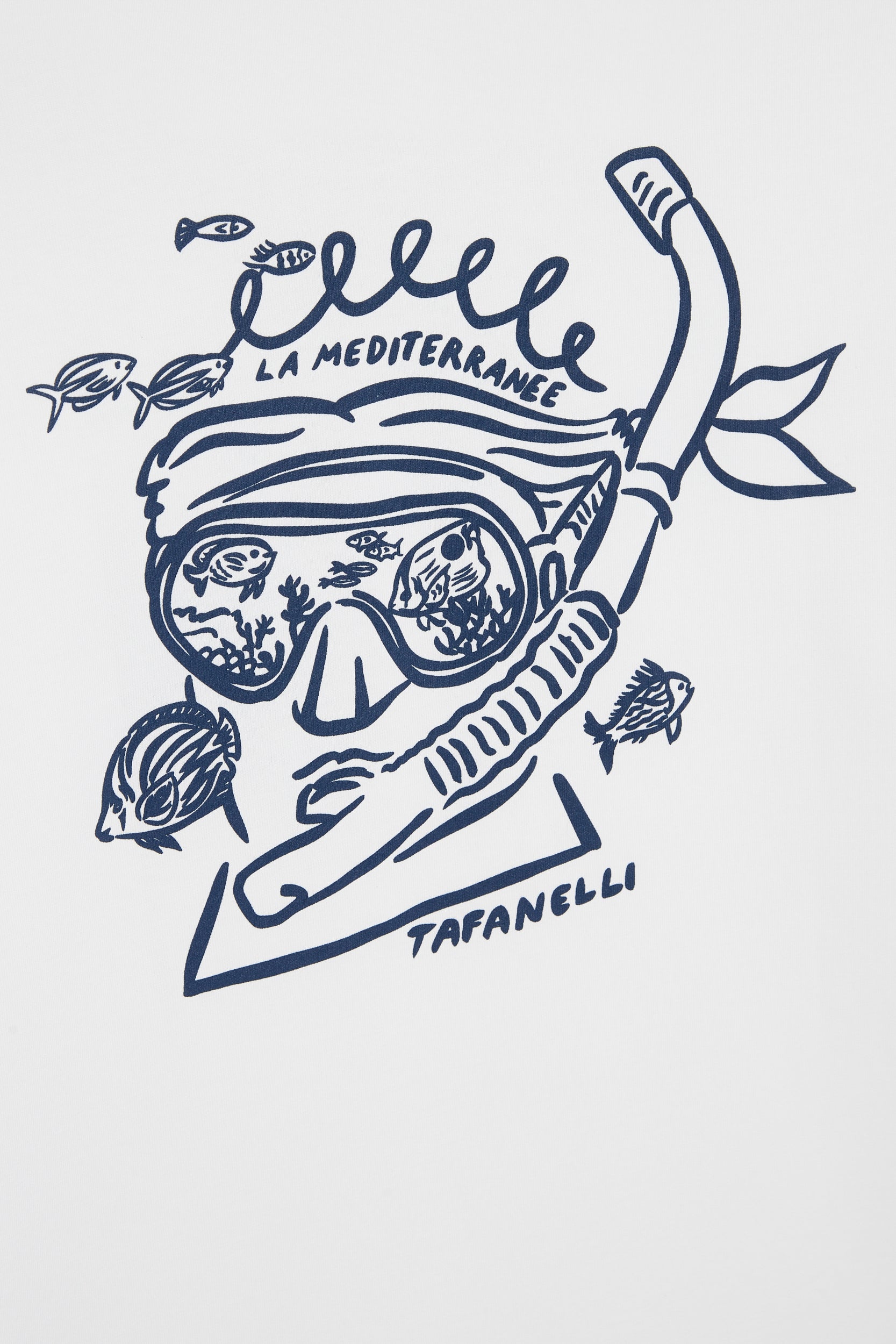
- The Mediterranean Diver t-shirt: man suspended between sky and sea, a tribute to marine culture.
- The Roccapina t-shirt: the granite lion of the wild Corsican south.
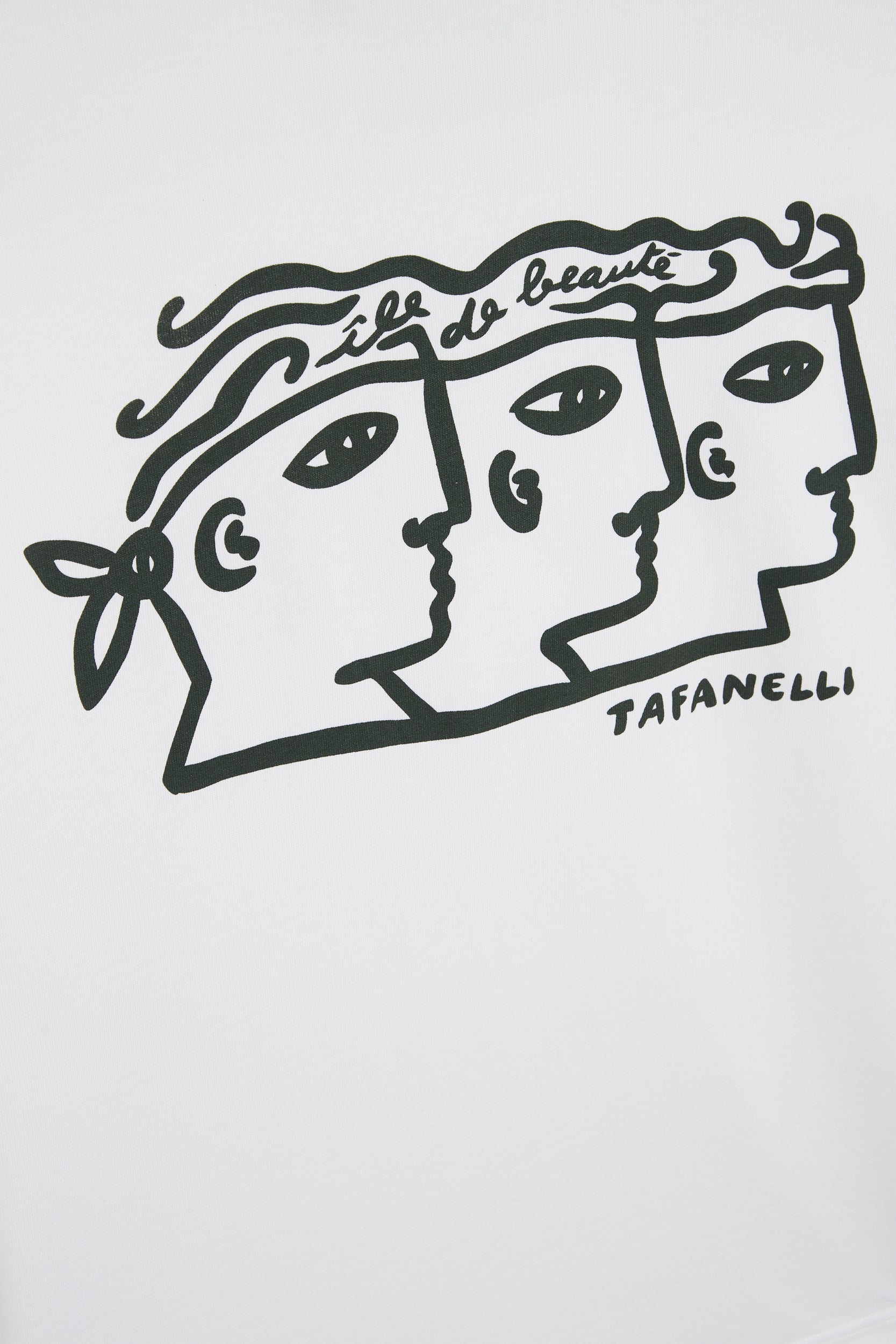
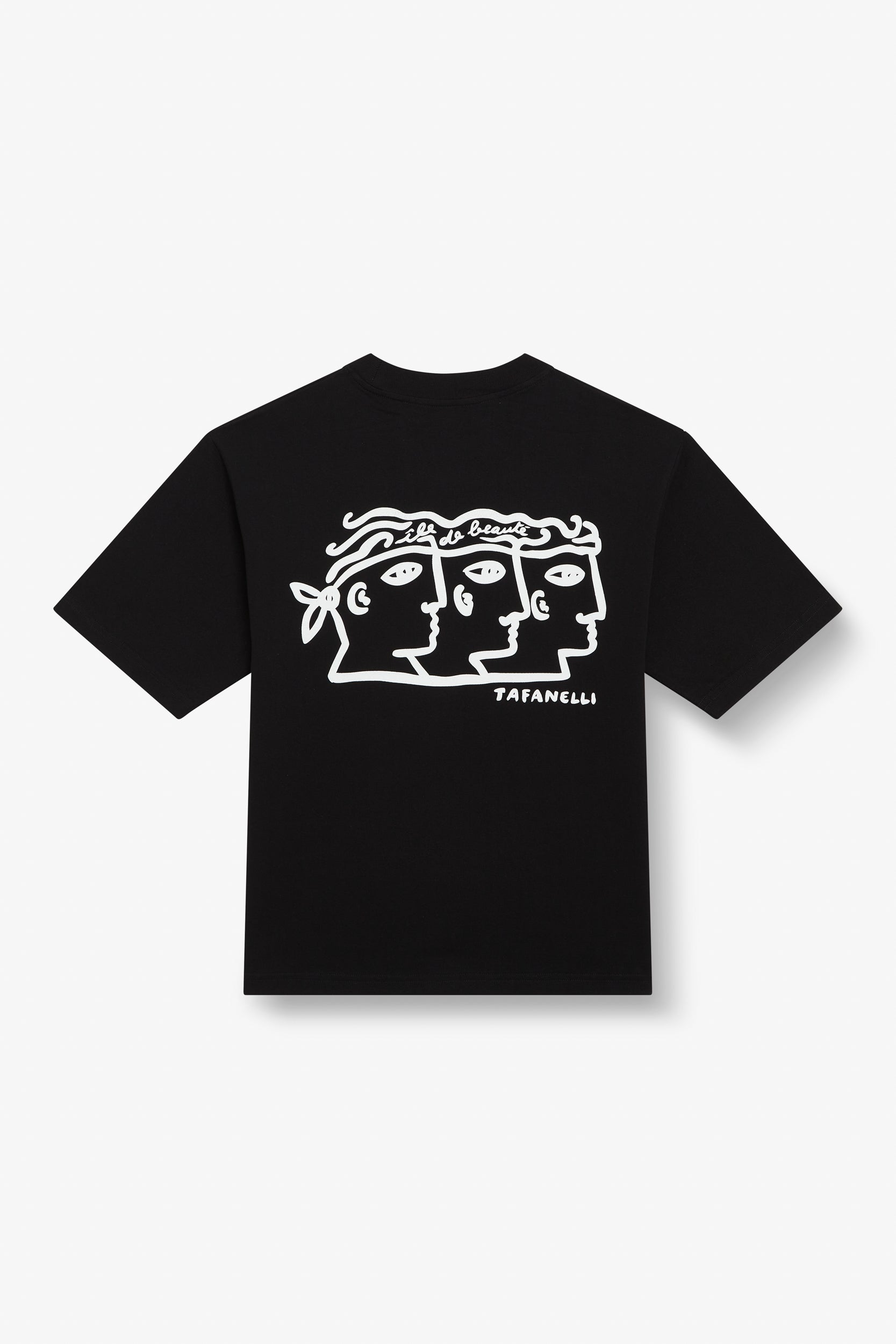
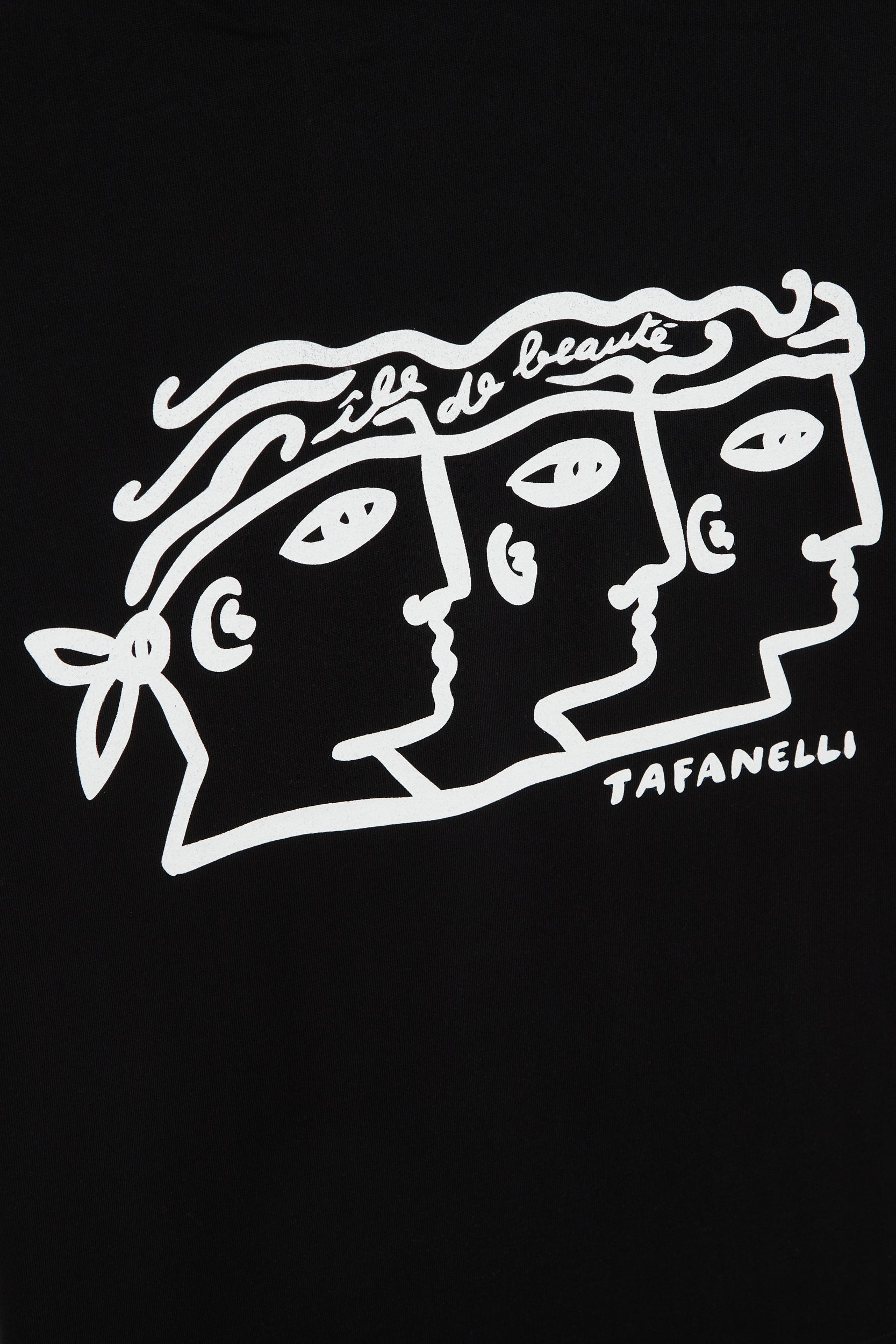
- The La Trinità t-shirt: the three profiles of the island of beauty.
- The Sea Urchin Fishing t-shirt: the ancestral technique of Corsican sailors.
To learn more about Corsica and its landscapes:
- Mare, Muntagna, Machja: the Corsican landscape trinity
- The 10 most beautiful Genoese towers in Corsica
- Bavella, the needles at the heart of Corsica
- Saint-Florent, the Corsican Saint-Tropez
- L'Île-Rousse, the Paoli invitation
- Cargèse, the Greek village of Corsica
When passing through Corsica, the customer becomes a friend.
A DOPU,
TAFA