Bastelica, the village of Sampiero Corso: mountains, charcuterie, and Corsican pride
Perched at an altitude of nearly 800 meters, resting against the slopes of Monte Renoso in the Prunelli valley, Bastelica is one of the most beautiful mountain villages in the hinterland of Ajaccio. It is here that the most flamboyant of Corsican heroes was born, Sampiero Corso. A village of character, famous for its exceptional charcuterie, its forests, its winter snow, and its island pride etched into its core. Complete guide.
A mountain village above Ajaccio
About forty kilometers from Ajaccio, the road winds up the Prunelli valley, runs alongside the Tolla reservoir, and climbs toward the heights to Bastelica. The scenery changes: you leave the sea and the bays behind to enter a green, forested, and alpine Corsica, made of beech trees, Laricio pines, pastures, and summits.
Bastelica is terraced on its hillsides at an altitude of approximately 770-800 meters, dominated by the ridges of Monte Renoso (2,352 m). It is a true mountain village, with its hamlets, granite houses, fountains, and crisp air. In summer, people come here to seek coolness; in winter, it is not rare to see snow. Another facet of Corsica, far from the beaches, that attracts lovers of nature and authenticity.
There are two Corsicas: that of the coast, radiant, and that of the mountains, more secret and rugged. Bastelica belongs to the latter. It was there, in the cold of the heights, that the character of the men who shaped the island's history was forged.
The birthplace of Sampiero Corso
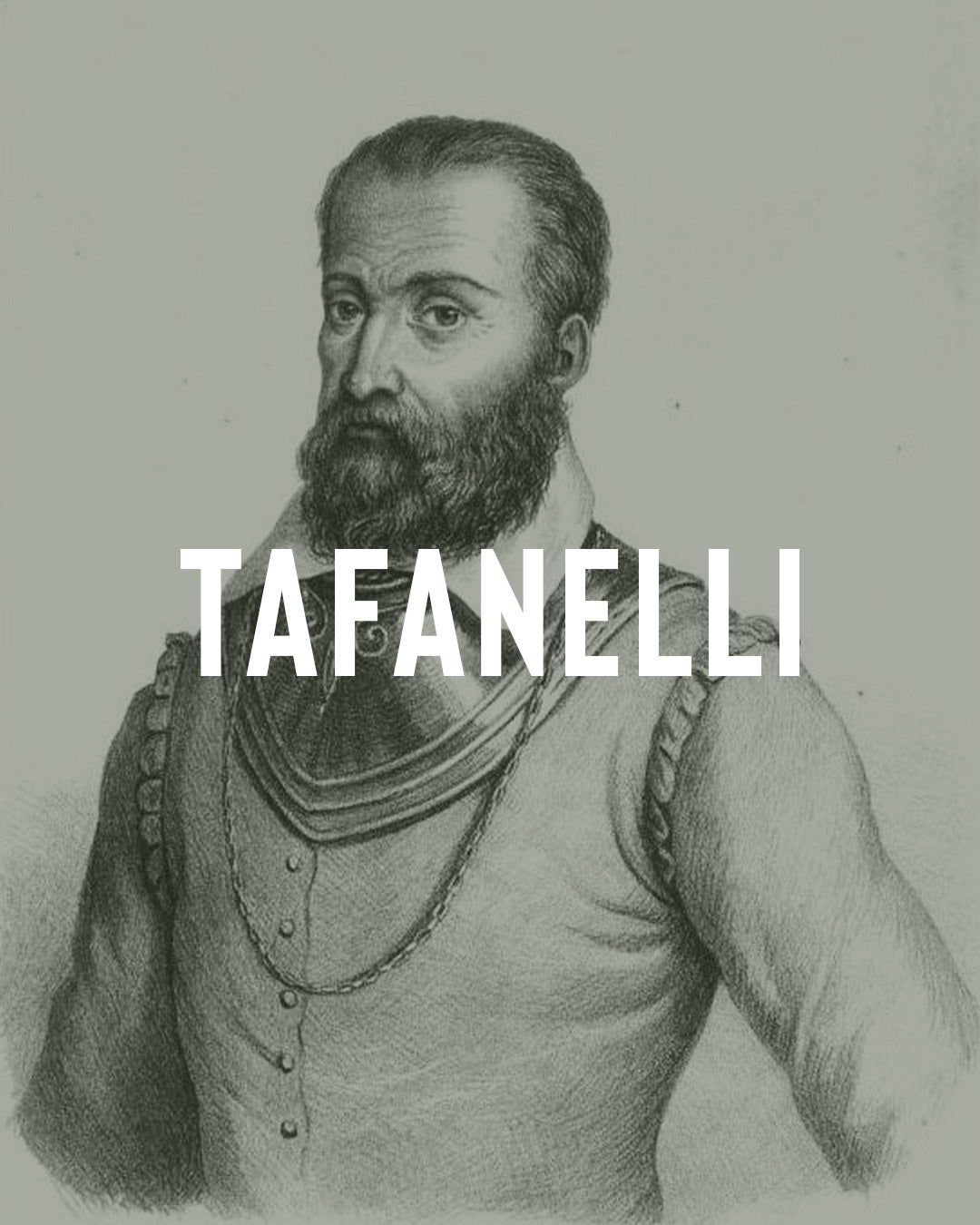
Bastelica is inseparable from one name: Sampiero Corso. It was here, around 1498, that the famous warlord, colonel in the service of the kings of France and the first great liberator of Corsica from Genoa, was born—nicknamed u più Corsu di i Corsi, "the most Corsican of all Corsicans."
The village pays tribute to him with a proud bronze statue that stands on the square, representing him as a warrior, hand on his sword, eyes turned toward his mountains. It is one of the island's most powerful sites of memory, a pilgrimage for those interested in Corsican history. Discover the flamboyant and tragic destiny of this son of Bastelica in our article dedicated to Sampiero Corso.
This bond with the hero gives the village a special aura: Bastelica is not just beautiful, it is inhabited by history, proud to have given Corsica one of its greatest figures.
Bastelica charcuterie
If there is one thing for which Bastelica is renowned throughout Corsica, it is its charcuterie. The village is one of the premier centers of the island's charcuterie expertise, driven by a tradition of raising pigs in semi-freedom in the chestnut groves and the high-altitude maquis.
Here, the pigs feed on chestnuts and acorns, which gives the meat its incomparable taste. They produce exceptional mountain charcuterie: figatelli, coppa, lonzu, prisuttu, salciccia, dried in the pure air of the heights. It is the terroir in its truest form, to be found in our complete guide to Corsican charcuterie.
Tasting a grilled figatellu in Bastelica, in winter, in front of a fire, with a glass of Corsican wine: this is an experience that tells you everything about the mountain soul of the island.
Mountains, forests, and Val d'Ese
Bastelica is a gateway to the high Corsican mountains. The nature-based possibilities are immense:
- Monte Renoso (2,352 m): one of the great summits of the island, accessible to seasoned hikers, with its glacial lakes (such as Lake Bastani).
- Val d'Ese: a small winter sports resort above the village, where you can ski and sled when there is snow—alpine Corsica, often little known.
- Forests and waterfalls: beech forests, Laricio pines, shaded paths, and rushing waters for beautiful summer hikes.
- The Prunelli gorges and Lake Tolla, below, for swimming and scenery.
It is an ideal destination for those who want to discover the interior of Corsica, that of shepherds, transhumance, and wide-open spaces, less than an hour from Ajaccio.
What to see and do in Bastelica
- The statue of Sampiero Corso: a must-see, on the village square.
- The Saint-Michel church and the built heritage of the hamlets.
- Charcuterie producers: meet the artisans, taste, and take home the village specialties.
- Hiking toward the Renoso, the sheepfolds, and the ridges.
- Val d'Ese in winter, for snow just a stone's throw from Ajaccio.
- Festivals and the atmosphere of a true living mountain village.
Practical advice
- Where: in the Prunelli valley, about 40 km (1 hour of mountain driving) from Ajaccio.
- Access: by car, via a beautiful winding road that goes up the valley; allow time and be careful in winter.
- When to come: in spring and summer for the freshness and hiking; in autumn for the colors and charcuterie; in winter for the snow and Val d'Ese.
- To take home: Bastelica charcuterie, obviously—one of the best taste-related souvenirs from Corsica.
- To combine: with a visit to Ajaccio and its bay, to taste both faces of Corsica, sea and mountain.
Bastelica and the TAFANELLI spirit
Bastelica embodies a Corsica that we deeply love: that of the mountains, character, and memory. The village that saw the birth of Sampiero, that nurtured generations with its charcuterie and braved the winters, says everything about the quiet strength of the island. It is the Muntagna of our trinity, as essential as the sea.
The wardrobe for those who love the Corsican interior:
- The La Trinità t-shirt: sea, mountain, maquis, the soul of the land.
- The "Corsica 1755" t-shirt: island pride, hand-screen printed.
- The TAFANELLI bandana: the companion for mountain trails.
- The TAFANELLI cap: sober and proud, for the heights and the villages.
To continue exploring the Corsica of history and mountains:
- Sampiero Corso, the most Corsican of all Corsicans
- Ajaccio, 2026 complete guide
- Corsican charcuterie, complete guide
- The Corsican maquis: nature, symbolism, resistance
- The 10 most beautiful perched villages in Corsica
By passing through Corsica, the customer becomes a friend.
A DOPU,
TAFA