The Corsican language: history, identity, and the rebirth of a language that refuses to die
"Salute", "A dopu", "Pace e salute"... These words that we slip into every one of our messages are not just decoration: they are the very soul of Corsica. Corsican (u corsu) is a language in its own right, rich with a thousand years of history, long threatened, and today carried by a new generation determined to keep it alive. Here is the story and the struggle of a language that refuses to die.
Corsican, a real language
Contrary to popular belief, Corsican is not a "patois" or a dialect of Italian: it is a full-fledged Romance language from the Italo-Romance group, born from Latin just like French, Italian, or Spanish. Close to Tuscan, it possesses its own grammar, phonetics, and a wealth of vocabulary.
Corsican exists as a continuum of dialects, from north to south: cismontincu (north of the mountains, around Bastia and the Cap) and pumontincu (in the south, toward Sartène and the Alta Rocca), with a thousand nuances from village to village. This diversity is not a weakness; it is proof of a living language, rooted in every part of the island.
A language is not just a tool for understanding one another. It is a way of seeing the world, a memory, a piece of music. Speaking Corsican is not just saying words: it is carrying an entire country within you.
A thousand years of history
Corsican roots itself in the Latin spoken on the island since antiquity. In the Middle Ages, the influence of Pisa and later Genoa durably shaped the language, which drew closer to Tuscan—with literary Italian serving as the written and administrative language for a long time.
For centuries, Corsican was the language of daily life, of the home, of polyphonic songs, of shepherds and evening gatherings. It is the language of Pasquale Paoli and of independent Corsica. Then, after the annexation to France in 1768, French gradually imposed itself as the official language, and a long period of coexistence began.
The time of decline
The 20th century almost proved fatal for Corsican. The Republic's schools, rural flight, the wars, and a policy of linguistic standardization broke the transmission. Generations were made to feel ashamed of speaking their language; many parents, thinking they were doing the right thing, stopped passing it on to their children to "spare them a handicap."
The result: in a few decades, the number of speakers plummeted, and Corsican found itself classified among the endangered languages by UNESCO. A language that had spanned centuries suddenly found itself on the brink of extinction within the space of two or three generations. A tragic scenario common to many regional languages.
The Riacquistu, the reconquest
But Corsica did not resign itself. In the 1970s, a vast movement of identity reappropriation—the Riacquistu ("the reconquest")—placed the language back at the heart of the cultural struggle. People began to relearn, sing, write, and teach Corsican.
Music played a decisive role: groups like Canta u Populu Corsu restored the language's prestige, and villages like Pigna became centers of this renaissance. The language ceased to be a source of shame and became a source of pride again. It is one of the most beautiful cultural revivals in the island's recent history.
The Corsican language today
Today, Corsican is recognized as a regional language and benefits from a real transmission network, even though the battle is far from won:
- At school: French-Corsican bilingual programs, from kindergarten to high school, and optional instruction.
- At the university: The University of Corsica, in Corte, studies and teaches the language at the highest level.
- In the media: Radio, television, and press in Corsican keep the language alive in daily life.
- In public spaces: Bilingual signage, place names, signs—the language is reaffirming itself everywhere.
- In politics: The demand for co-officiality (official status for Corsican alongside French) remains a central debate.
The real challenge remains passing it on to the youth and using it daily: a language only survives if it is spoken at home, among friends, and in the street.
A connected rebirth
Good news: a new generation is embracing the language with today's tools. Apps, modern methods, videos, and especially social media are bringing Corsican back where it was least expected—on the phones of young islanders and lovers of Corsica.
This is the case with valuable initiatives like @impara_insemi ("learn together"), an account dedicated to learning and transmitting the Corsican language, which makes corsu accessible, lively, and shared by as many as possible. These enthusiasts are doing essential work: proving that the language is not a relic of the past, but a very lively, modern, and joyful tool. We support them wholeheartedly.
The Corsican language will not be saved by nostalgia, but by those who speak it today, in stories, in songs, in bursts of laughter. Every word passed on is a victory. Ampara u corsu: learn Corsican.
A Casa di e Lingue: Bastia, living language
In Bastia, our heart region, the Corsican language now has a home of its own: A Casa di e Lingue ("the House of Languages"). Located in the Espace Sant'Anghjuli, in the historic center, it welcomes the public every day from 8 AM to 8 PM, under a magnificent motto carried by the city: Lingua Corsa, Lingua Viva!—Corsican language, living language.
It is a pioneering place, open to all, from beginners to the fluent, dedicated to learning and practicing Corsican (and other languages): masterclasses, conferences, concerts, showcases, quizzes... It brings together several essential actors for the language under one roof:
- Praticalingua: a 100% Corsican-speaking immersion learning center, with dozens of workshops and hundreds of members across the island.
- Scola Corsa: the network of immersion schools teaching in Corsican (Bastia, Biguglia, Corti, Sarrula è Carcupinu...).
- A Scola Internaziunale di e Lingue: which uses Corsican as a tool language to open up to multilingualism.
- Réseau Canopé / Educorsica: free educational resources, from kindergarten to high school.
This is exactly what a language needs to live: a place, conduits, joy, and daily use. Hats off to the Cità di Bastia and all those who bring this project to life. More info on the city's official page, A Casa di e Lingue, and on the "Lingua Corsa Lingua Viva" manifesto.
"E lingue sò vive perchè sò in mossa, fèmune altrettantu!" — Languages are alive because they are in motion; let's do the same! Everything is said: a language is not kept under a glass bell, it is spoken, it moves, it lives.
A few words to start
Want to get started? Here are a few words and expressions to slip in today:
- Bonghjornu: hello — Salute: hi
- A dopu / A prestu: see you later / see you soon
- Pace e salute: "peace and health", the quintessential Corsican wish
- Grazie / Ti ringraziu: thank you / I thank you
- Forza!: come on! (encouragement)
- Ti tengu caru / cara: I love you (I hold you dear)
- Ampara u corsu: learn Corsican
The language and the TAFANELLI spirit
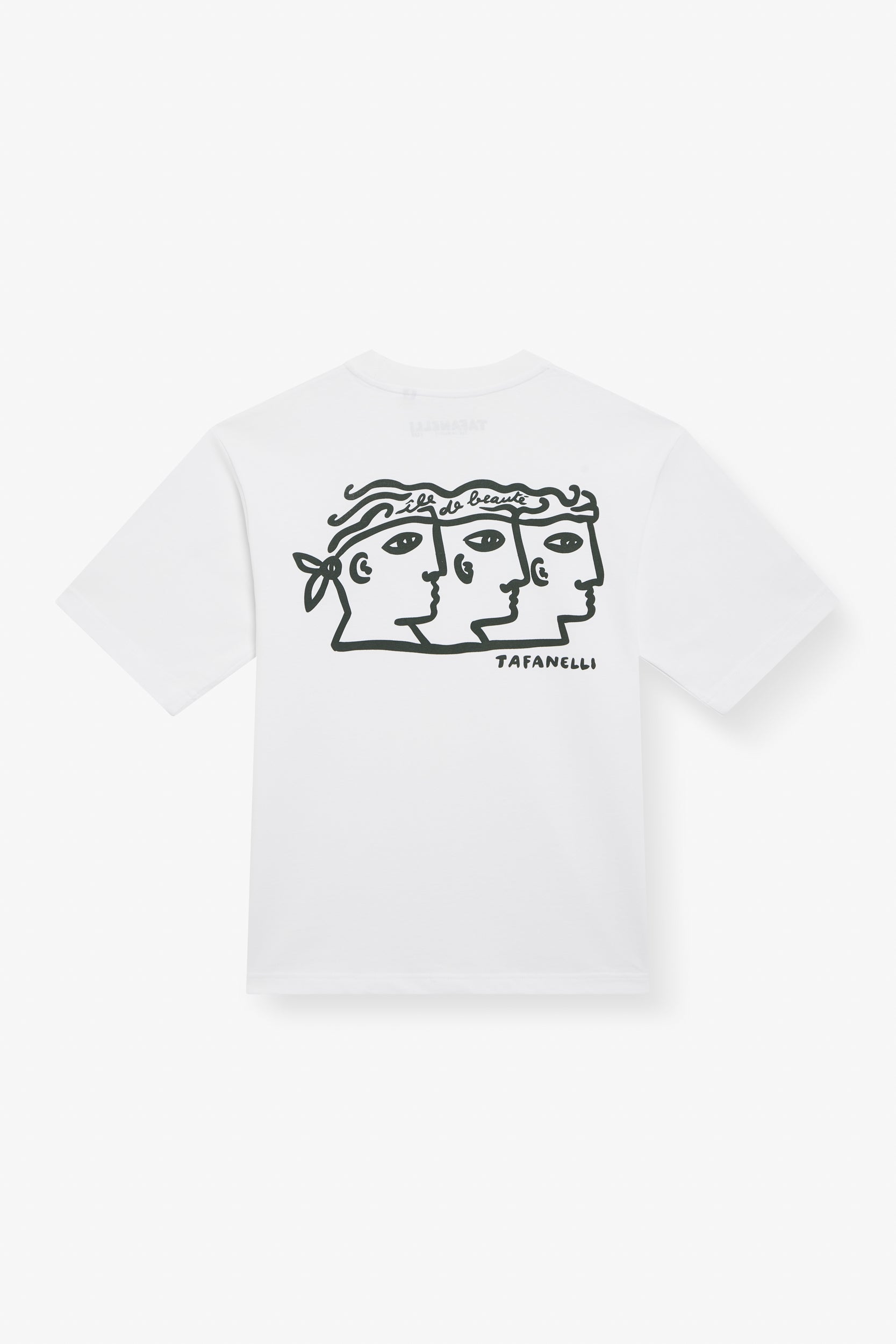
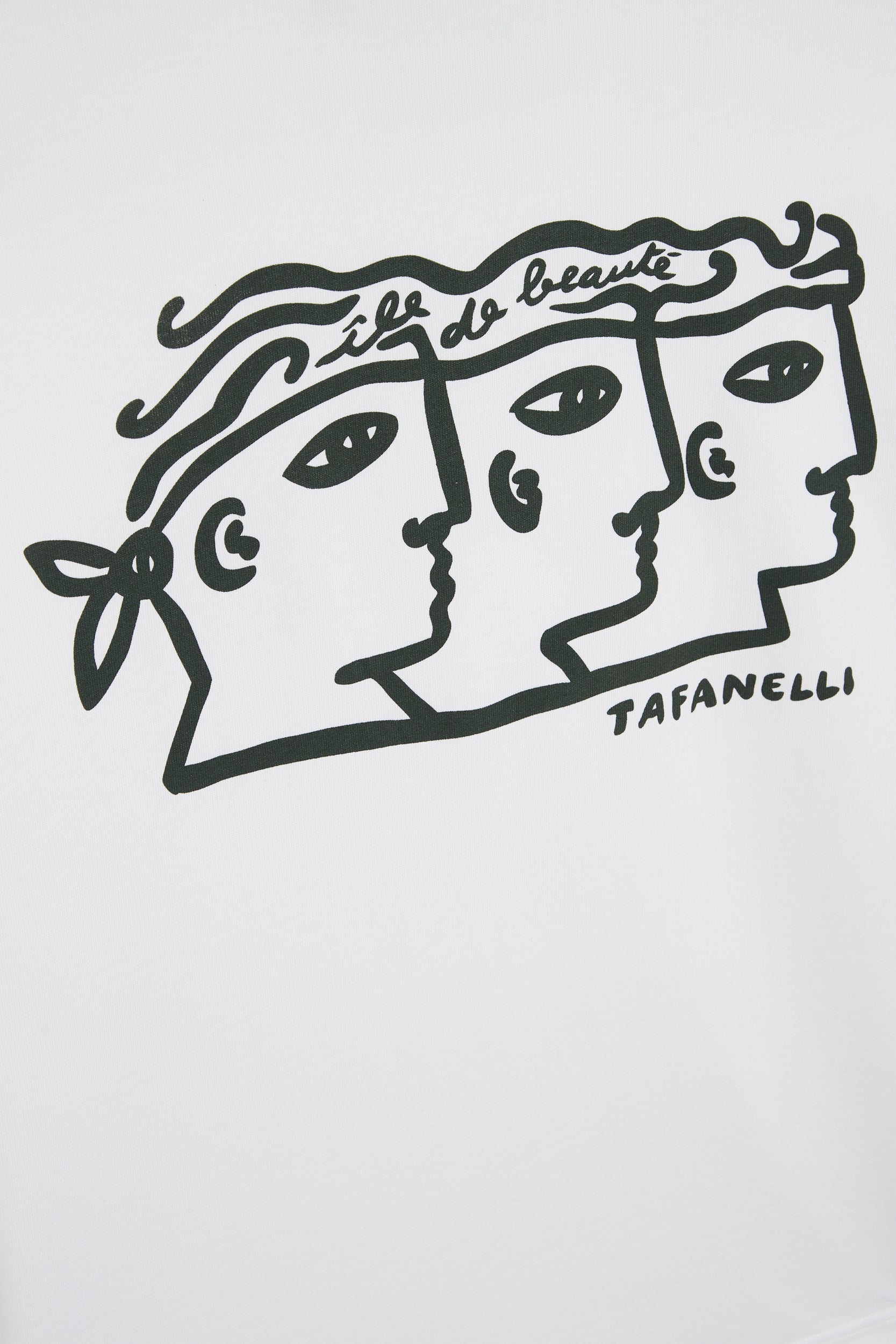
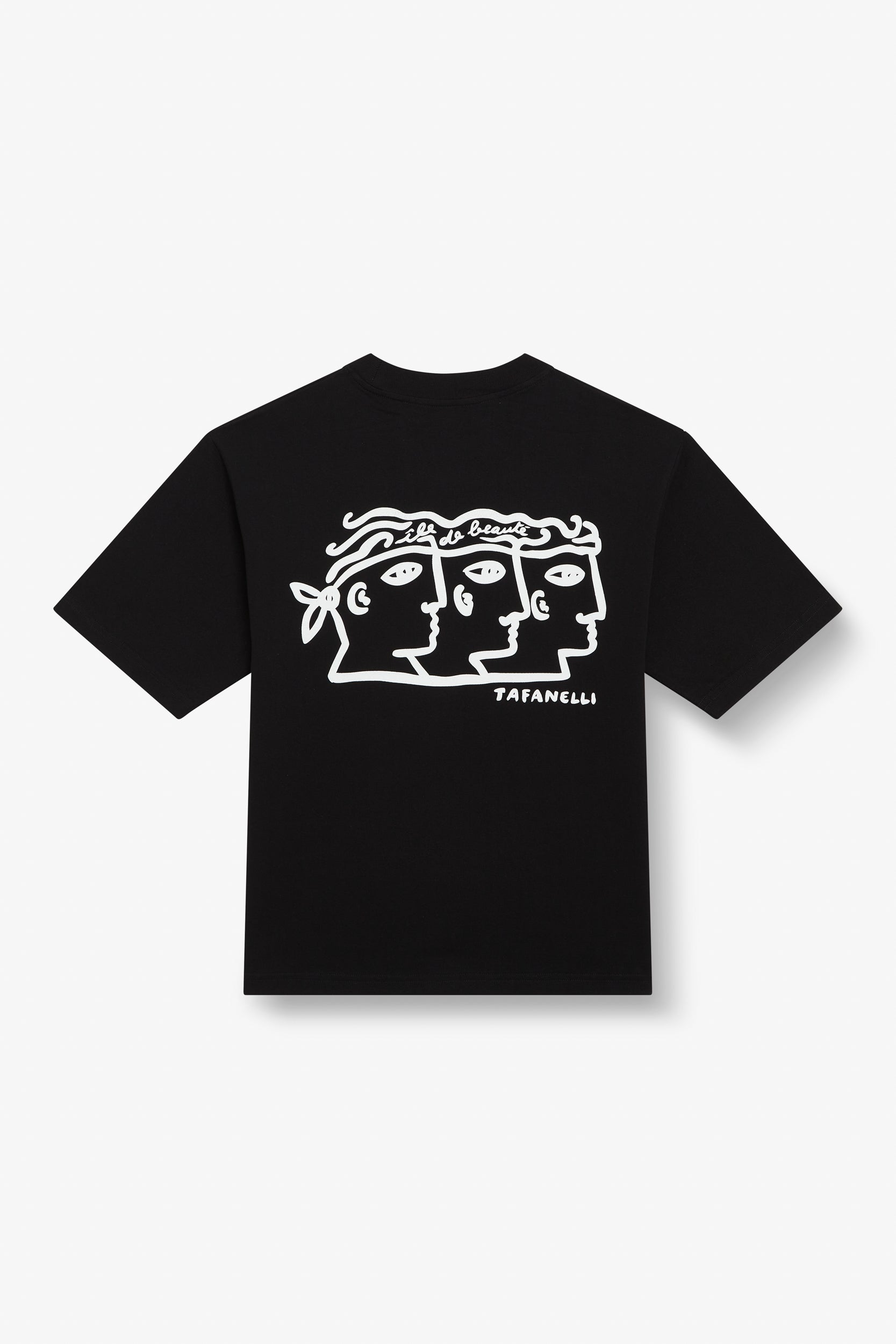
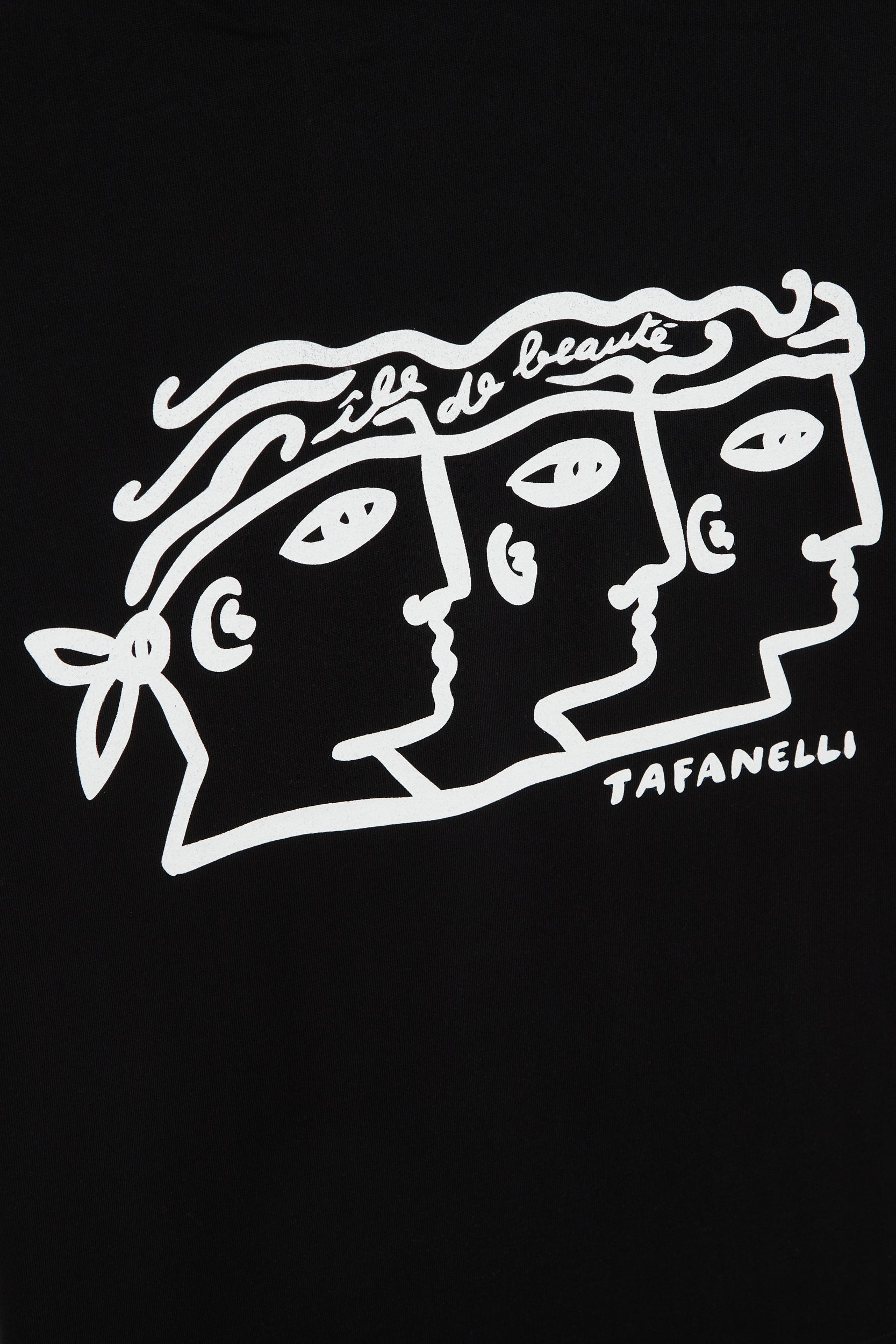
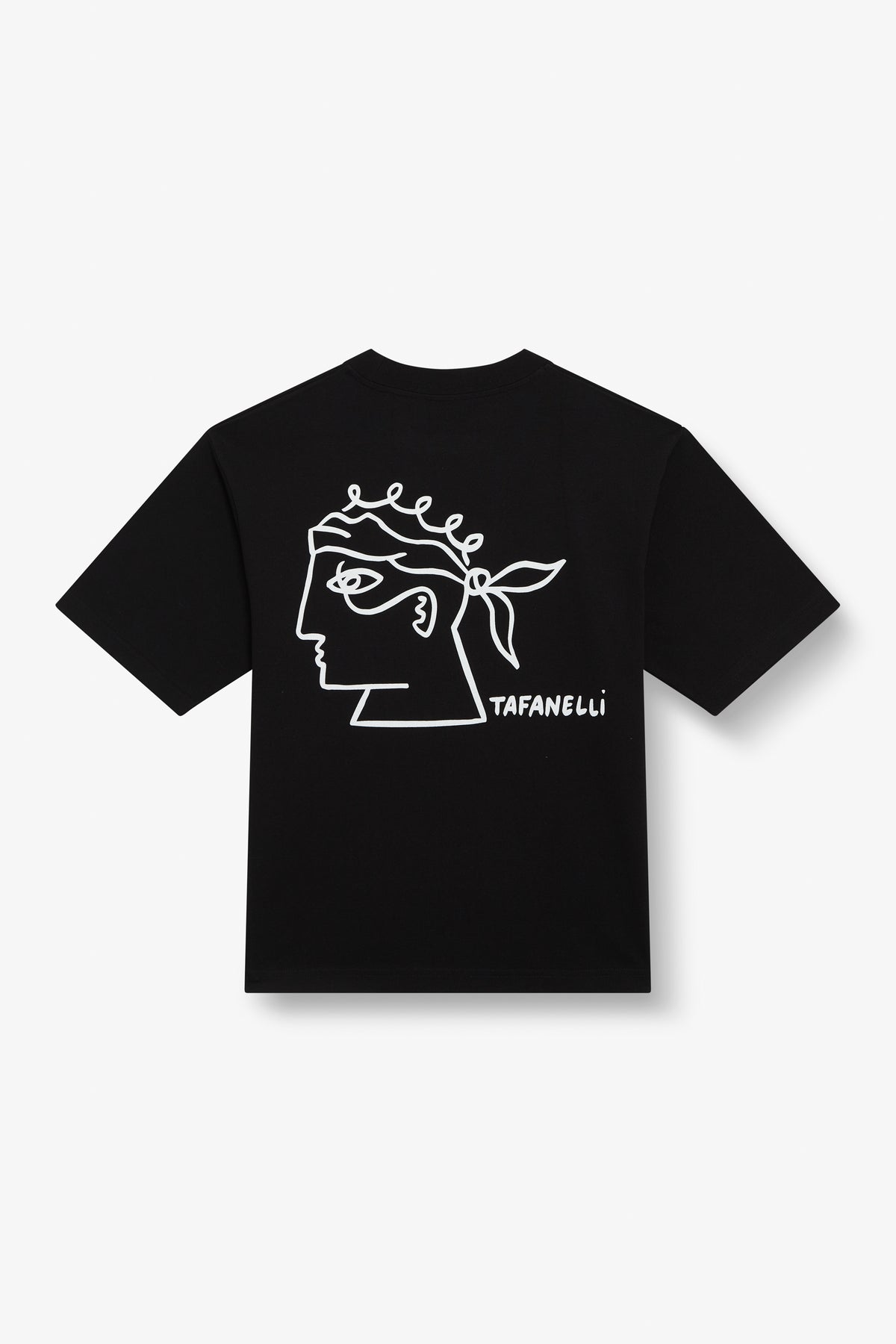
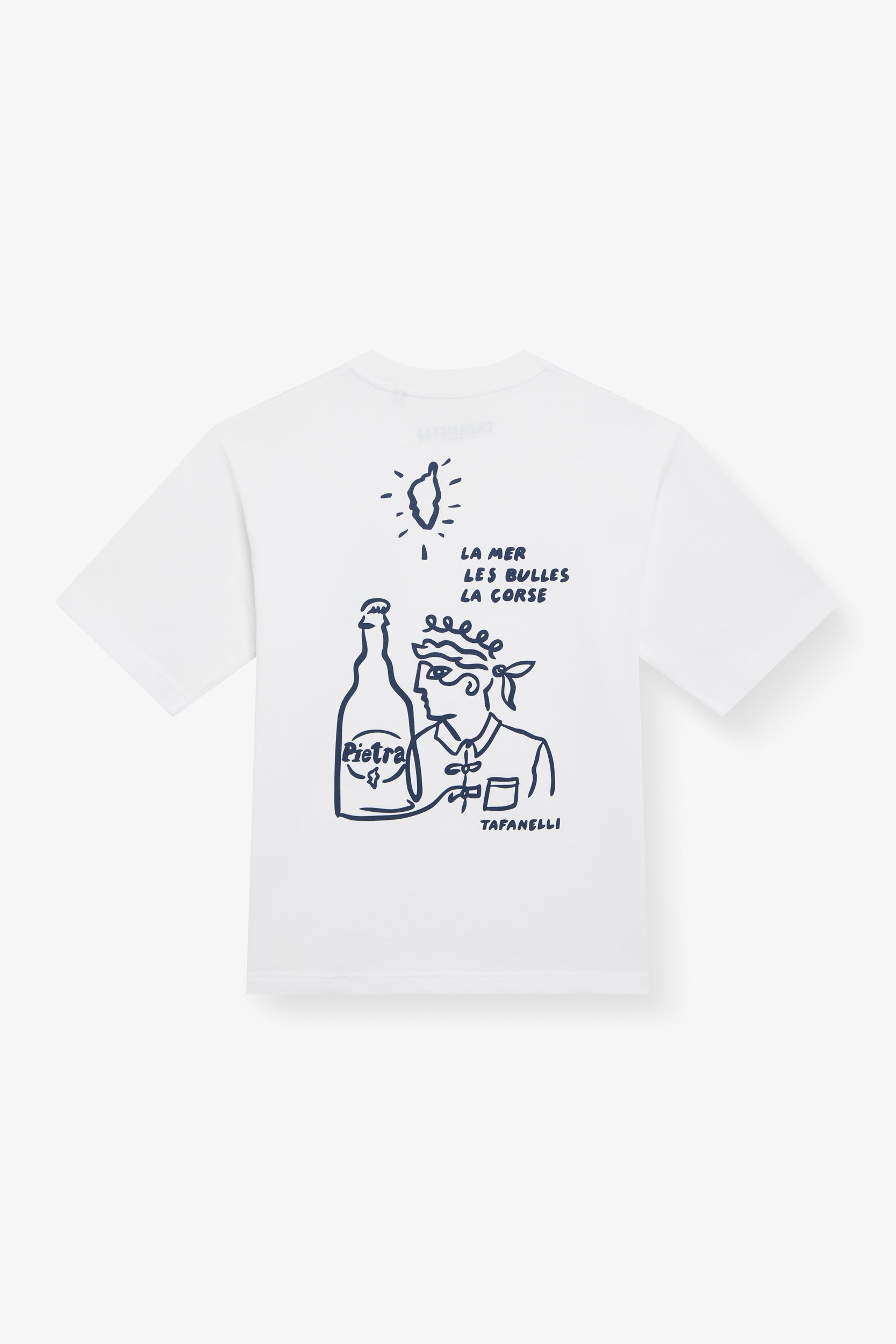
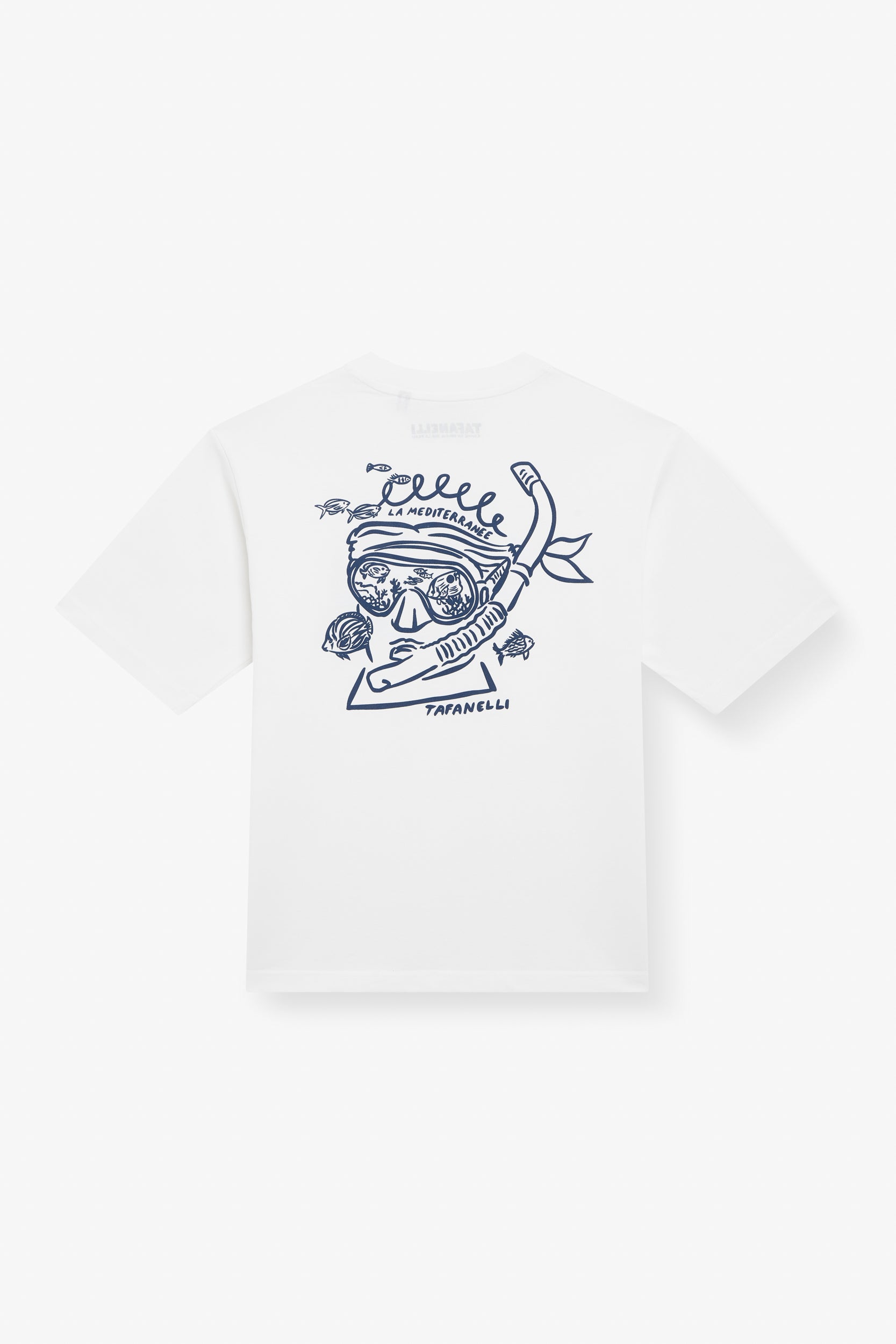
At TAFANELLI, the Corsican language is not an accessory: it is a golden thread. Our signature "A DOPU", our model names, our trinity Mare, Muntagna, Machja—everything speaks to our attachment to this language. Every time we use it, we participate, in our own way, in keeping it alive. Wearing TAFANELLI also means wearing a few words of Corsican.
The wardrobe for those who love the Corsican soul:
- The La Trinità t-shirt: mare, muntagna, machja, the soul of the country in three Corsican words.
- The "Corsica 1755" t-shirt: island pride, hand-screen printed.
- The TAFANELLI bandana: a piece of Corsica in your daily life.
- The TAFANELLI cap: sober and proud, just like the language.
To continue exploring the soul of Corsica:
- The paghjella, Corsican polyphony listed by UNESCO
- Pigna, cradle of the Corsican renaissance
- Pasquale Paoli, father of the Corsican nation
- Mare, Muntagna, Machja: the Corsican trinity
- The Moor's Head, history of the Corsican flag
When visiting Corsica, the customer becomes a friend.
A DOPU,
TAFA