PDO Corsican olive oil: A complete guide to the green gold of the Island of Beauty
A golden hue ranging from straw yellow to almond green. The scent of fresh almonds, cut hay, and raw artichoke. A round, sweet, almost sugary taste, free of any aggressive bitterness. This is PDO Corsican olive oil, one of the most singular oils in the Mediterranean. Since 2004, it has benefited from a Protected Designation of Origin that safeguards its age-old expertise. Here is our complete guide to understanding why this oil is a treasure of the Island of Beauty, how it is produced, where to find it, and how to recognize it.
The green gold of the Island of Beauty
Among the trio of great gastronomic treasures of Corsica (cheese, charcuterie, and olive oil), the oil occupies a special place. It is discreet, it does not make media noise like brocciu or coppa. Yet it is everywhere in Corsican cooking, from starters to desserts. A drizzle on a soup. A spoonful in a salad. A bath for frying. A splash on fresh cheese.
This oil has a distinct identity. Unlike Italian or Spanish oils that are often powerful, spicy, and bitter, Corsican olive oil is round, mild, and fragrant. It leaves a slightly sweet finish on the palate, without an aggressive prickle in the throat. This is a unique signature in the Mediterranean.
This singularity is due to several factors: the ancient olive varieties grown only in Corsica, the traditional late harvest method, and the insular terroir that gives the fruit a unique Mediterranean character. Each of these elements contributes to the final aromatic profile.
Corsican olive oil is an oil for contemplation. It does not seek to impose itself. It allows itself to be discovered, to be understood. It asks that we take the time to taste it like a wine. It is an oil that has learned the patience of its island.
An age-old history
The olive tree has been in Corsica since the beginning. Or almost. Archaeologists date its introduction to the island to Antiquity, around the 4th century BC, by the Greek colonists who founded Aléria and other trading posts on the eastern coast.
The Roman legacy
The Romans, great consumers of olive oil, massively developed olive cultivation in Corsica. They notably planted the first structured olive groves of the Balagne, a region that remains one of the island's main production terroirs today.
Medieval development
Under the Genoese occupation (from the 13th to the 18th century), Corsican olive production experienced its golden age. The Genoese, in high demand for quality olive oil, encouraged Corsican farmers to plant olive trees, particularly on poor lands where other crops would not grow. Genoese ordinances even required every family to plant a certain number of olive trees per year.
It was during this period that the Corsican olive grove reached its maximum extent, with thousand-year-old trees that still exist today. Some olive trees in the Balagne or the Alta Rocca region are over 1,000 years old, making them living natural monuments.
The decline of the 19th and 20th centuries
From the end of the 19th century, Corsican olive production declined due to competition from Italian and Spanish oils, the catastrophic frost of 1985 which decimated the groves, and rural exodus. Corsica went from producing more than 10,000 tons of oil per year in the 18th century to less than 200 tons in the 1970s.
The contemporary renaissance
Since the 1990s-2000s, Corsican olive growing has been reborn. New generations of producers are planting, replanting, and reviving the sector. The achievement of PDO status in 2004 was a decisive step: it protects the specificity of Corsican oil and gives it official recognition. Today, Corsica produces about 500 tons of PDO oil per year, a limited but very high-quality production.
PDO: Protection and rigor
The Protected Designation of Origin "Huile d'olive de Corse - Oliu di Corsica" was obtained in 2004 at the French level, and later extended to the European level. This PDO protects a production method, a terroir, and an oil style.
The specification rules
To carry the PDO label, an oil must meet several strict conditions:
- Production area: only in Corsica, in zones delimited by the PDO.
- Authorized varieties: at least 70% local Corsican varieties (Sabina, Ghjermana, Zinzala, Capannace, Curtinese, Raspulada).
- Late maturity harvest: the olives must be black or dark brown, not green.
- Cold extraction: the process must not exceed 27 degrees Celsius.
- Extraction without additives: using only mechanical processes.
- Maximum acidity: must not exceed 1.5% (extra virgin = less than 0.8%).
- Traceable origin: each bottle must be identified with the batch, producer, and harvest year.
Two PDO categories
Since 2020, the PDO distinguishes between two oil styles:
- PDO Corsican "Traditional Harvest" olive oil: the traditional method, late harvest (November to March), ripe fruit, round and sweet oil.
- PDO Corsican "Green Fruity" olive oil: modern method, early harvest (October-November), green or turning fruit, more powerful, greener oil with more bitterness.
Both styles coexist and represent two complementary approaches to the same tradition. We will return to this in the tasting section.
Corsican olive varieties
Corsica cultivates about half a dozen olive varieties of its own, the result of several centuries of peasant selection adapted to the island's climate and soils.
Sabina
The most widespread variety, especially in Balagne. A vigorous, highly productive tree with medium-sized fruit that ripens late. It yields a sweet, round oil with aromas of almond and cut hay. It is the signature variety for traditional Corsican oil.
Ghjermana
A variety from Cap Corse, adapted to schistous and windy terrain. Elongated fruit, resulting in a more floral and light oil with notes of artichoke.
Zinzala
A variety found in the southeast, with round, dark fruit. Fruitier oil with notes of dried tomato and aromatic herbs.
Capannace
A variety present in the Sartène region and Alta Rocca. Large, oil-rich fruit. Yields a powerful oil with vegetal notes.
Curtinese
A rare variety, present on the east coast. Small production but very aromatic oil.
Raspulada
A Nebbio variety, around Saint-Florent. Fine and fruity oil.
Most PDO Corsican oils are blends of several of these varieties, giving each terroir its own distinct aromatic signature.
Production terroirs
Five major terroirs concentrate the production of PDO Corsican olive oil.
Balagne
The main production terroir, around Calvi, Île-Rousse, Corbara, and Pigna. Ancient olive groves, often set on dry-stone terraces with centuries-old trees. Round, sweet, very fragrant oil with notes of almond.
To learn more about Balagne, consult our complete guide to the garden of Corsica.
Cap Corse
Around Rogliano, Nonza, Centuri, and Patrimonio. A windy, schistous terroir that produces fine, floral oils. Often produced by small family estates that prioritize quality over quantity.
The Eastern Plain
From Bastia to Solenzara, on the plains and hillsides along the Tyrrhenian Sea. A more mechanized production zone with larger volumes. Generally balanced, high-quality, and accessible oils.
The Ajaccio region
Around Ajaccio, Peri, and Sarrola-Carcopino. A maquis terroir that imparts pronounced vegetal notes to the oils.
Alta Rocca and the South
Around Sartène, Levie, and Zonza. A mountain terroir with resilient olive trees, often millennia-old. Powerful, complex, and highly characteristic oils.
To go further into these terroirs, consult our guides on Sartène, Saint-Florent, and Île-Rousse.
The production process
To understand Corsican olive oil is to understand its production process, particularly the choice of late maturity harvesting, which distinguishes it from other Mediterranean oils.
Step 1: Harvesting
The traditional Corsican specialty: olives are harvested very late, between November and March, when they are black, ripe, and sometimes almost withered. This late maturity gives the oil its sweet and round character.
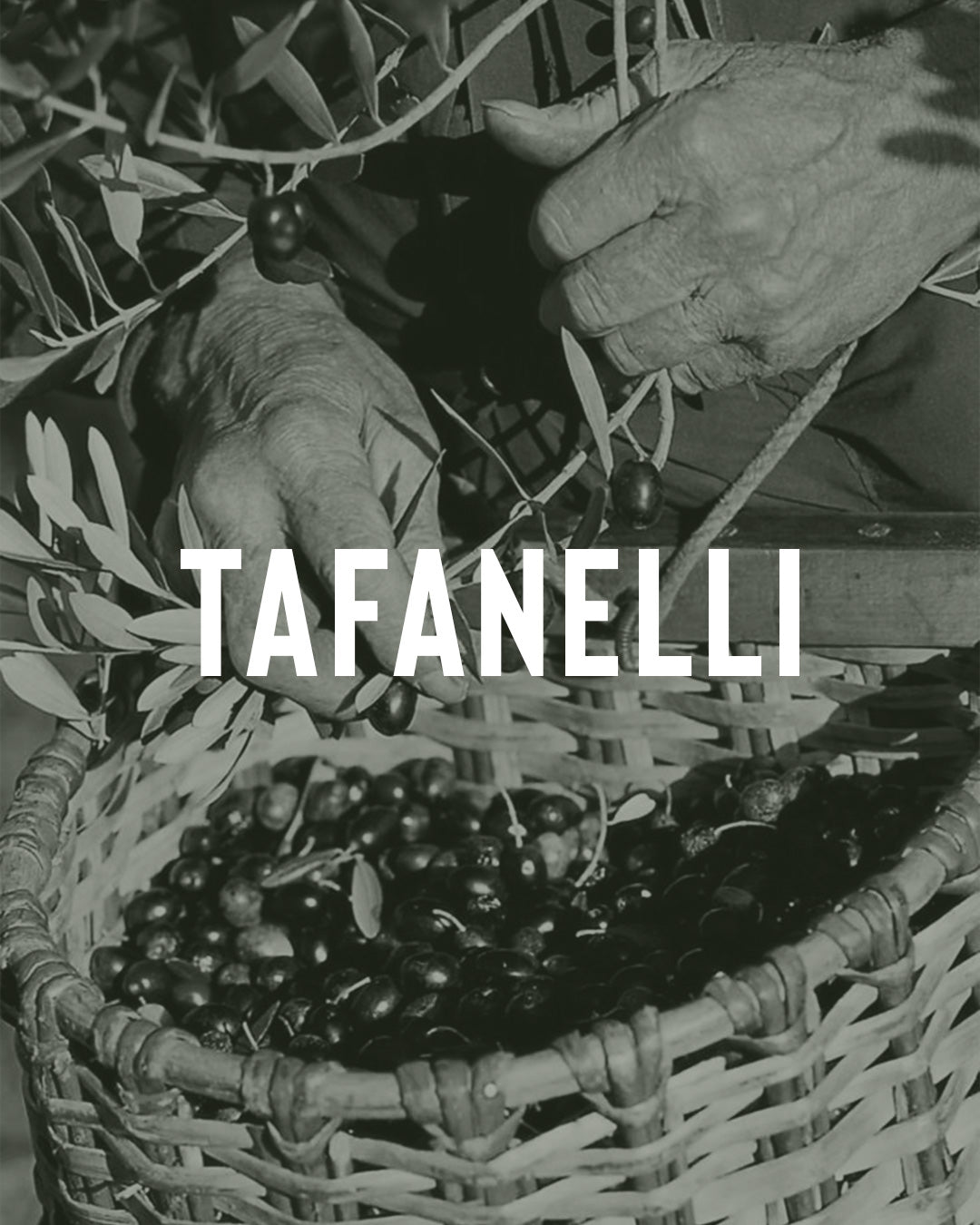
Traditionally, harvesting was done by collecting from the ground: farmers placed nets under the trees and waited for the olives to fall naturally. Today, most producers harvest by mechanical vibration or manual combing, which limits contact with the ground and improves sanitary quality.
Step 2: Rapid transport to the mill
The harvested olives must be brought to the mill quickly (ideally within 24 to 48 hours) to prevent fermentation. Each producer works with a local mill, often shared among several growers in the same region.
Step 3: Washing and defoliating
The olives are washed in clean water to remove dust and residual leaves.
Step 4: Crushing
The olives are crushed (with their pits) to obtain a paste. Traditionally done with a stone mill, crushing is most often mechanical today.
Step 5: Malaxation
The paste is kneaded for 30 to 60 minutes at a low temperature (less than 27°C, as per PDO requirements) to allow the oil droplets to merge.
Step 6: Extraction
The oil is separated from the rest of the paste by centrifugation or pressing. Centrifugation dominates today, as it allows for better yield and hygiene.
Step 7: Decanting and storage
The resulting oil is left to rest for several weeks in stainless steel tanks away from light. Impurities settle to the bottom, and the oil clarifies naturally.
Step 8: Packaging
The oil is bottled (ideally in dark glass to protect it from light) and labeled with the batch, harvest year, and producer. It is then ready to be sold.
From a tree planted by a grandfather, cultivated by a father, harvested by a son, kneaded at the village mill, and bottled in a dark cellar: this chain of gestures is what makes a bottle of PDO Corsican olive oil valuable. It is not an industrial product. It is bottled family heritage.
Two styles, two harvest times
As mentioned above, since 2020, the PDO has distinguished between two styles of Corsican oil, which correspond to two harvest times and two distinct aromatic profiles.
"Traditional Harvest" style (Oliu Maturu)
This is the traditional Corsican style, which built the island oil's reputation. The harvest takes place late, between December and March, when the olives are ripe and almost withered. The oil obtained is:
- Color: golden yellow, sometimes with very slight green highlights.
- Nose: fresh almond, cut hay, dried fruit, notes of undergrowth.
- Palate: round, sweet, sugary, with no bitterness or spice.
- Finish: average persistence, very pleasant, with no aggression.
It is a versatile oil that goes with everything: raw vegetables, fish, fresh cheeses, and desserts (yes, desserts, particularly on vanilla ice cream).
"Green Fruity" style (Oliu Verde)
A more recent style, inspired by modern Italian and Spanish oils. The harvest takes place early, in October-November, when the olives are green or turning. The oil obtained is:
- Color: almond green to deep green.
- Nose: fresh grass, raw artichoke, green tomato, aromatic plants.
- Palate: more powerful, with a slight bitterness and a peppery prickle in the throat.
- Finish: long, persistent, and more complex.
This oil is better used on simple dishes so it can be highlighted: bruschetta, white fish fillets, steamed vegetables, poached eggs.
How to taste Corsican oil
Olive oil is tasted like wine. Here is the professional method for fully appreciating a PDO Corsican oil.
Step 1: Appearance
Pour a spoonful of oil into a small tasting glass (preferably dark blue, so as not to be influenced by the color). Observe the fluidity and brilliance. A quality oil must be clear, shiny, and free of cloudy sediment.
Step 2: Nose
Warm the glass slightly between the palms of your hands (the oil expresses itself better at 25-28°C). Bring the glass close to your nose and inhale deeply. Identify the aromatic families: fresh fruit, herbs, spices, dried fruit, vegetal.
Step 3: the mouth
Take a small sip, keeping the oil in your mouth. Roll it over your tongue to identify:
- Roundness: is it sweet, fatty, enveloping?
- Bitterness: presence in the middle of the mouth.
- Pungency: presence in the throat upon swallowing.
- Aromas: what tastes do you identify?
Step 4: the finish
Swallow the oil or spit it out. Evaluate the persistence in the mouth and the quality of the finish. A good oil leaves a clean, pleasant sensation that invites you to have more.
Tasting an AOP Corsican olive oil means reconnecting with an age-old expertise. It means literally tasting the island's terroir. The sun, the wind, the stone, the farmer's hand. All of that is in this spoon.
Uses in Corsican cuisine
Olive oil is omnipresent in traditional Corsican cuisine. Here are the most emblematic uses.
L'aziminu (Corsican bouillabaisse)
Corsican fish soup is prepared with a generous drizzle of olive oil poured raw onto the plate, just before serving. It is this drizzle that transforms the soup into a truly Corsican dish.
Brocciu and fresh cheeses
A drizzle of Corsican olive oil over fresh brocciu, with a turn of the pepper mill: this is perhaps the finest gesture in Corsican cuisine. Simple, precise, revealing.
To learn more about brocciu and Corsican cheeses, consult our dedicated guides.
Vegetables from the maquis
Zucchini, eggplant, tomatoes, peppers, artichokes: all vegetables from the Corsican garden pair well with a drizzle of olive oil. Raw on crudités, or gently cooked in hot dishes.
Mediterranean fish
Red mullet, dentex, sea bass, sea bream: a Corsican fish baked or grilled is finished with a raw drizzle of olive oil, a pinch of fleur de sel, and a few drops of lemon. Perfection in simplicity.
Pasta
Corsican cuisine incorporates plenty of pasta (an Italian influence), always generously drizzled with local olive oil. Strangulaprete with brocciu, Corsican pasta al pesto (made with brocciu and herbs), wild boar lasagna.
Corsican pastry
Surprise: Corsican olive oil is used in several traditional pastries. Aniseed canistrelli, frappes, certain chestnut cakes. It brings a unique texture and a note of terroir to sweet preparations.
To go further on the Corsican chestnut, consult our dedicated guide.
Producers to know
Here are some emblematic producers of AOP Corsican olive oil. A subjective, non-exhaustive list to be completed according to your own discoveries.
Domaine de Marquiliani (Prunelli-di-Fiumorbo)
One of the most respected estates in Corsica. Anne Amalric produces an exceptional oil that is both delicate and complex. Sold throughout France in the best gourmet food stores.
Moulin d'Alzipratu (Zilia, Balagne)
A cooperative mill that brings together Balagne olive growers. A round and fragrant oil, typical of the Balagne terroir. Shop open to the public for tours and tastings.
Oliveraie de Bastelicaccia (near Ajaccio)
A family-run farm in the Ajaccio region, with centuries-old olive groves. A powerful and vegetal oil.
Moulin de l'Isula (Île-Rousse, Balagne)
Fine Balagne production, with oils that are both traditional and modern.
Domaine Sant'Armettu (Sartenais)
A family estate in the south, with powerful and characteristic oils.
Where to find them
These producers are sold:
- Directly at the property (tours and on-site sales).
- In the best gourmet food stores in Corsica and on the mainland.
- At Corsican markets.
- At specialized wine merchants who carry a fine selection from the island.
Where and how to buy
Some practical advice for buying authentic, quality AOP Corsican olive oil.
Criteria to check on the label
- Mention "AOP Huile d'olive de Corse" or "Oliu di Corsica" clearly visible.
- European AOP logo (red and yellow).
- Name of the producer or mill and location in Corsica.
- Harvest year (ideally consumed within 18 months).
- Mention "extra virgin" (acidity below 0.8%).
- Dark glass bottle (protects from light).
Prices to expect
A quality AOP Corsican olive oil costs between 25 and 45 euros per liter. Below 20 euros, be wary. Above 50 euros, you are entering the very high-end oils, often from small, confidential productions.
Beware of counterfeits
A significant portion of oils sold in tourist markets as "Corsican" are not AOP. They may be reconditioned Italian or Spanish oils, or non-certified Corsican oils. Always check for official AOP mentions.
Storage at home
Corsican olive oil should be stored away from light, heat, and air. Ideal: dark cupboard, well-sealed bottle, consumed within 12 months after opening.
Olive oil and the TAFANELLI collection
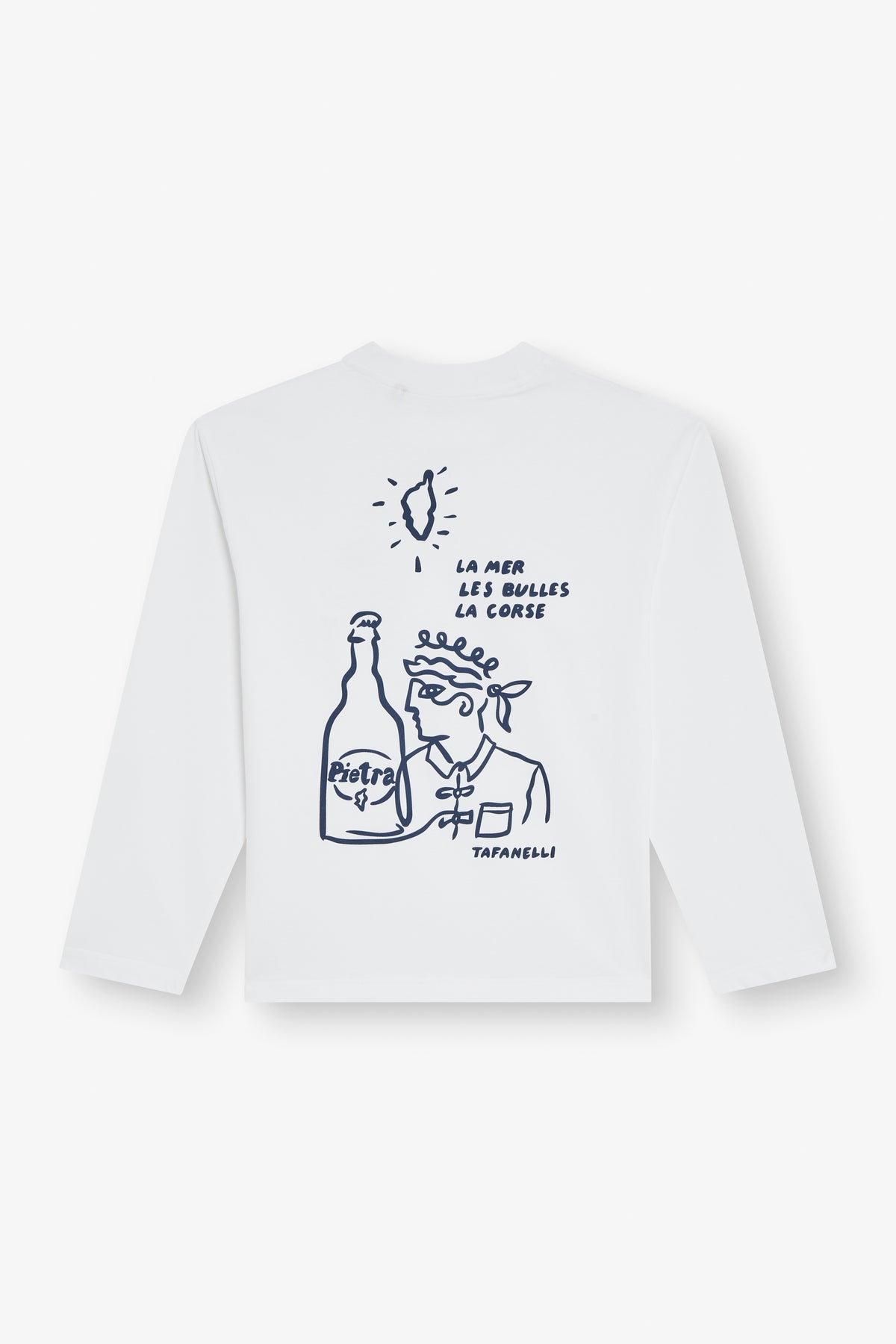
AOP Corsican olive oil perfectly embodies our brand philosophy: exceptional products, artisan expertise, island terroir, patience. Like a TAFA t-shirt, a bottle of Corsican oil is the result of years of work, passed-down expertise, and a standard of quality that refuses any compromise.
Discover our current collection that celebrates Corsican craftsmanship and terroir:
- The La Pêche aux Oursins t-shirt: a tribute to ancestral Corsican gestures.
- The La Trinità t-shirt: symbol of the island's three profiles.
- The Roccapina t-shirt: the wild Corsican south.
- The TAFANELLI cap: sober and essential.
To further your gastronomic and cultural discovery of Corsica:
- Complete guide to Corsican cheeses
- The Corsican chestnut and Castagniccia
- Balagne, the garden of Corsica
- Mare, Muntagna, Machja: the Corsican landscape trinity
- Precision and rarity: the TAFA t-shirt manifesto
When visiting Corsica, the customer becomes a friend.
A DOPU,
TAFA