Napoleon 2026: The 10 Places to Visit in Corsica to Understand the Emperor (257 Years Since His Birth)
August 15, 2026, marks the 257th anniversary of the birth of Napoleon Bonaparte, who was born in Ajaccio in 1769, barely fifteen years after the proclamation of independent Corsica by Pascal Paoli in 1755. It is too often forgotten that the Emperor of the French was born a Corsican, on an island in revolution, in a family attached to Paolian ideals. To understand Napoleon today, one must first return to Corsica, following the trails of the places that shaped him. Here is our TAFANELLI guide to the 10 unmissable Corsican locations to visit in 2026 to understand the man behind the legend.
Context: The independent Corsica of 1755 into which Napoleon was born
To truly understand Napoleon, one must first revisit what Corsica had become at the time of his birth. On August 15, 1769, the day Letizia Bonaparte gave birth in Ajaccio, the island was barely emerging from a revolution that had left its mark on the entire Enlightenment Europe.
In 1755, Pascal Paoli and his supporters had proclaimed the independence of Corsica and endowed the island with the first democratic Constitution of the modern world, two years before the American one was enacted on European soil. Universal male suffrage, separation of powers, religious freedom: at that time, Paoli inspired intellectuals such as Rousseau and Voltaire.
But in May 1768, the Republic of Genoa sold its rights to Corsica to France via the Treaty of Versailles. In 1769, a few months before Napoleon's birth, French troops crushed the Paolian army at Ponte Novu. Pascal Paoli went into exile in England. Corsica became French.
Napoleon was born only three months after the defeat at Ponte Novu. His father, Carlo Bonaparte, a former private secretary to Paoli, would soon rally to the French power. But the child Napoleon grew up with the family story of free Corsica, and with his mother Letizia’s admiration for Paoli. This dual Corsican and French identity would structure his entire life.
A birth on an island in revolution
This is the Corsica that the 10 places in our guide allow you to understand: the place where a child born into a family of Corsican notables loyal to France, yet raised in the memory of Paoli, would become within thirty years the Emperor of a Europe he would redraw with his own hand.
1. The Maison Bonaparte in Ajaccio
This is the place where you must begin. The Maison Bonaparte, located on Rue Saint-Charles in the historic center of Ajaccio, is the family home where Napoleon was born on August 15, 1769. Today, it is one of the most visited French national museums, with more than 90,000 visitors per year.
The house was acquired by the Bonaparte family in the seventeenth century. At the time of Napoleon's birth, the family occupied part of the first floor, in an apartment that was modest relative to the subsequent legend. A comfortable Corsican notability, but not spectacular wealth.
What you absolutely must see
The visit allows you to discover the sofa on which, according to family tradition, Letizia gave birth to Napoleon (she was returning from Assumption Mass when the contractions began). There is period furniture, family portraits, the child’s bedroom, the table where the future Emperor did his homework, and the small private chapel where the family prayed.
The museum also presents a unique collection of objects that belonged to Napoleon himself, returned by his family in the twentieth century: autograph letters, a campaign saber, personal effects, and above all, the death mask made a few hours after his death on Saint Helena in 1821.
Practical info
Address: Rue Saint-Charles, 20000 Ajaccio. Open daily in July-August except Monday morning, from 10:30 AM to 6:00 PM. Price is approximately 7 euros. Allow at least an hour for the visit. The inner courtyard of the house is freely accessible and worth the detour.
2. The Cathedral of Notre-Dame-de-l'Assomption in Ajaccio
A two-minute walk from the Maison Bonaparte, the Cathedral of Notre-Dame-de-l'Assomption is the site of Napoleon's baptism. The child was baptized there on July 21, 1771, at the age of one year and eleven months, at the same time as his sister Marie-Anne (future Élisa Bonaparte). A late baptism, but standard for the time in Corsica.
The building, constructed at the end of the sixteenth century in an Italian Counter-Reformation style, is more intimate than grand. It perfectly embodies the Ajaccio of the era: a human-sized port city, oriented toward the Mediterranean, with its Genoese religious traditions and popular piety.
Napoleon's view of his cathedral
Once he became Emperor, Napoleon would keep an attached memory of this cathedral. In his will written on Saint Helena in 1821, he specified that his heart should be kept in a silver vase and given to Marie-Louise, but that if his body could not rest in Paris, he wished to be buried in the cathedral of Ajaccio, alongside his ancestors. This wish was never fulfilled, as his remains have rested at Les Invalides since 1840.
Practical info
Address: Rue Forcioli-Conti, 20000 Ajaccio. Open daily with free access. The cathedral still holds regular services today. The visit is free. A side chapel houses the original baptismal fonts used for the Emperor’s baptism.
3. The Palais Fesch, Fine Arts Museum of Ajaccio
The Palais Fesch is one of the great provincial art museums in France, and the most important outside the Louvre for Italian art from the fourteenth to the nineteenth centuries. It was founded by Cardinal Joseph Fesch, Napoleon’s maternal uncle, who bequeathed his immense collection of works to his native city of Ajaccio.
Fesch (1763-1839) is one of the most fascinating characters of the imperial family. Twenty-eight years younger than his half-sister Letizia, he grew up in the Bonaparte house like a brother to Napoleon. As Cardinal-Archbishop of Lyon and ambassador to Rome, he built one of the greatest art collections in Europe: 16,000 paintings at its peak.
The collection you shouldn't miss
Today, the museum presents about 1,000 works, including an exceptional set of Italian primitives (Botticelli, Bellini, Titian), sixteenth-century masters, and a rich Napoleonic collection. The Napoleonic room focuses on imperial portraits, busts, personal effects, and above all, a unique collection on the Bonaparte family.
The Imperial Chapel
Next to the museum, the Imperial Chapel houses the tombs of several members of the Bonaparte family: Charles Bonaparte (Napoleon’s father), Letizia Bonaparte (mother), Cardinal Fesch himself, and several of the Emperor's brothers and sisters. It is a place filled with emotion, often visited less than the Maison Bonaparte, but just as essential for understanding the family history.
Practical info
Address: 50-52 Rue Cardinal Fesch, 20000 Ajaccio. Open daily in July-August except Tuesday, from 9:30 AM to 6:00 PM. Price is approximately 8 euros for the museum; there is a separate entrance for the Chapel. Allow two to three hours for the full visit.
4. Napoleon’s Grotto
On the road to the Sanguinaires, a few kilometers west of the center of Ajaccio, a modest rock crevice is known as Napoleon’s Grotto. It is a discreet spot, barely marked, but filled with family memories.
According to tradition, the child Napoleon liked to retreat there alone, starting from age 7 or 8, to watch the sea, meditate, or build his first military strategies using pebbles as figurines. The grotto offers an exceptional view of the Gulf of Ajaccio and the Sanguinaires Islands, five granite islets that turn blood-red at sunset.
A place of memory
Did the future Emperor actually go there? Corsican oral tradition has told the story for two centuries, but no written proof exists. What is certain is that this place embodies the imagination of Napoleon's Corsican childhood today: solitude, observation, Mediterranean contemplation, and the formation of a unique character.
Practical info
Free and open access, about 3 kilometers west of the center of Ajaccio, toward the Sanguinaires islands. Discreet signage, access path on foot. Plan for about a one-hour walk. The best time to go is at the end of the day, to enjoy the sunset over the Sanguinaires from the grotto itself.
5. The Napoleonic Salon at the Ajaccio City Hall
Few visitors know it, but the Ajaccio City Hall houses one of the most moving Napoleonic sites in the city: the Napoleonic Salon. Located on the first floor of the building on Place Foch, it presents a rich collection of imperial objects in a Second Empire state decor.
The centerpiece of the collection is Napoleon's original baptismal certificate, preserved in a display case, as well as several medals, decorations, and personal items belonging to the Emperor. Period furniture, tapestries, and imperial portraits decorate the space with a unique atmosphere.
A living space
The Napoleonic Salon continues to host official ceremonies for the Ajaccio City Hall, particularly during the August 15 celebrations and state visits. It is a living space, not just a static museum.
Practical info
Address: City Hall, Place Foch, 20000 Ajaccio. Open to visitors Monday through Friday (note: reduced hours in summer). Price is approximately 2.50 euros. Visit duration is about 30 minutes. Ideal as a supplement to the Maison Bonaparte, located a five-minute walk away.
6. Place Foch and the statue of Napoleon as First Consul
The historic heart of Ajaccio, Place Foch brings together the City Hall, the city’s central terraces, the shaded palm grove, and one of the most beautiful statues of Napoleon in Corsica.
In the center of the square stands the statue of Napoleon as First Consul, sculpted in white marble in 1850 by Laboureur. Napoleon is depicted draped in classical style, like Roman emperors, with a scroll in his hand and his gaze turned toward the horizon. The statue is surrounded by four bronze lions that seem to guard it. It is a peaceful, almost contemplative image of the future Emperor.
The heart of Ajaccio life
The square is now one of the most frequented spots in Ajaccio in the evenings. The people of Ajaccio meet there at the end of the day to have a drink on the terraces; children play around the statue, and young people meet near the palm grove. It is the beating heart of the city, in a continuity that has not changed for a century and a half.
Practical info
Place Foch, 20000 Ajaccio. Open access at all hours. Ideal for an aperitif at sunset in July, or to observe the August 15 ceremonies that take place there every year in the presence of authorities.
7. Place du Général de Gaulle and the Four Lions monument
A few streets from Place Foch, Place du Général de Gaulle, more commonly known as Place du Diamant by the people of Ajaccio, houses the city’s most spectacular monument: Napoleon as a Roman Emperor surrounded by his four brothers, sculpted in 1865 by Viollet-le-Duc.
The monument is monumental: Napoleon sits in a Roman toga on a horse, in a posture of a triumphant emperor. Around the pedestal, four statues represent his brothers Joseph, Lucien, Louis, and Jérôme, all five of whom reigned at some point over European kingdoms. The whole forms one of the most impressive sculpted ensembles dedicated to Napoleon in France.
The symbol of a Corsican family at the top of Europe
This monument tells a fascinating story: that of a Corsican family born in Ajaccio into a modest island nobility, who, in one generation, placed five of its members on the thrones of Europe. Napoleon in France and Italy, Joseph in Spain, Lucien in Rome, Louis in Holland, Jérôme in Westphalia. A family trajectory without equal in European history.
Practical info
Place du Général de Gaulle (known as Place du Diamant), 20000 Ajaccio. Open access 24/7. The best time to photograph it is in the morning (raking sunlight from the east) or in the late afternoon (warm light on the monument).
8. Bocognano, the refuge village of Letizia Bonaparte
Forty kilometers inland from Ajaccio, the village of Bocognano, perched at an altitude of 640 meters in the Monte d'Oro massif, is a little-known but essential location in the history of the Bonaparte family.
It was here that Letizia Bonaparte, pregnant with Napoleon, took refuge with her husband Carlo during the final Paolian battles of the spring of 1769. They stayed for several weeks with cousins, in a sheepfold that still exists (private property, not open for visitors), sheltered from the fighting that was ravaging the Corsican mid-mountains at the time.
A birth that could have taken place somewhere other than Ajaccio
If Napoleon had been born a few weeks earlier, it would not have been in Ajaccio that he was born, but in a Corsican mid-mountain village. A historical detail that reminds us how much the future Emperor's life depended on fragile balances from the very moment of his birth.
What to visit in Bocognano today
The village is one of the best-preserved in the Corsican interior, with its golden stone houses, centuries-old chestnut trees, central fountain, and baroque church. The Chestnut Festival, held every December, is one of the island's major rural events. In summer, several hiking trails start from the village toward the ridges of Monte d'Oro. A perfect stop if you are heading to Corte from Ajaccio.
9. Corte, former capital of Paolian Corsica
A one-hour drive from Ajaccio, Corte is the city that, more than any other, embodies the 18th-century Corsican independence movement. Chosen by Pascal Paoli as the capital of independent Corsica in 1755, it housed for fourteen years the government of a Republic that inspired all of Europe.
Corte is perched at an altitude of 400 meters in the heart of Corsica, in a spectacular defensive site at the confluence of two valleys. Its citadel, its old town, and its steep narrow streets keep intact the atmosphere of the small mountain capital it once was.
The Museum of Corsica and the National Palace
Two stops are a must in Corte: the Museum of Corsica (Regional Museum of Anthropology), which presents the island's history, culture, and traditions in a remarkably modern setting, and above all the National Palace, the former seat of Paoli's government. It was in this sober Corsican stone building that the Corsican Constitution of 1755 was promulgated, one of the first democratic Constitutions of the modern world.
Why it's essential for a Napoleon itinerary
When visiting Corte, Napoleon was walking in the footsteps of Paoli, whom he secretly admired. Napoleon's father, Carlo Bonaparte, had been Paoli's private secretary in Corte in the 1760s. It was likely in the corridors of the National Palace that Carlo crossed paths with Pasquale Paoli every morning, just a few years before Napoleon's birth. Corte is therefore the place where the Bonapartes, before siding with France, were at the heart of the Paolist project.
10. The port of Calvi, the starting point for Brienne
The last place on our route, and not the least symbolic: the port of Calvi, in Balagne, in the northwest of Corsica. It was here, at the age of nine, in December 1778, that Napoleon left Corsica, never to return for any long period again.
His father Carlo took him, along with his older brother Joseph, aboard a ship bound for Marseille, then Autun for an initial learning of the French language, before entering the Royal Military School of Brienne. Young Napoleon spoke only Italian and Corsican at the time. He wept when leaving his mother and his island.
A farewell that would shape his life
Napoleon would return to Corsica several times, notably in 1785 for his father's funeral, and in 1793 during his final break with Paoli (who had returned from exile and was hostile to the Bonaparte family). But this departure from Calvi at the age of nine remains the true turning point: the transition from Corsican childhood to French adolescence, the birth of the future Emperor in his European destiny.
What to see in Calvi today
The port of Calvi is today one of the most beautiful marinas in Corsica, dominated by its Genoese citadel. A commemorative plaque marks Napoleon's departure in 1778. From the citadel, the view extends out to the island of Elba (where Napoleon would be exiled for the first time in 1814, just 45 kilometers from Cap Corse). A place steeped in a dual imperial history.
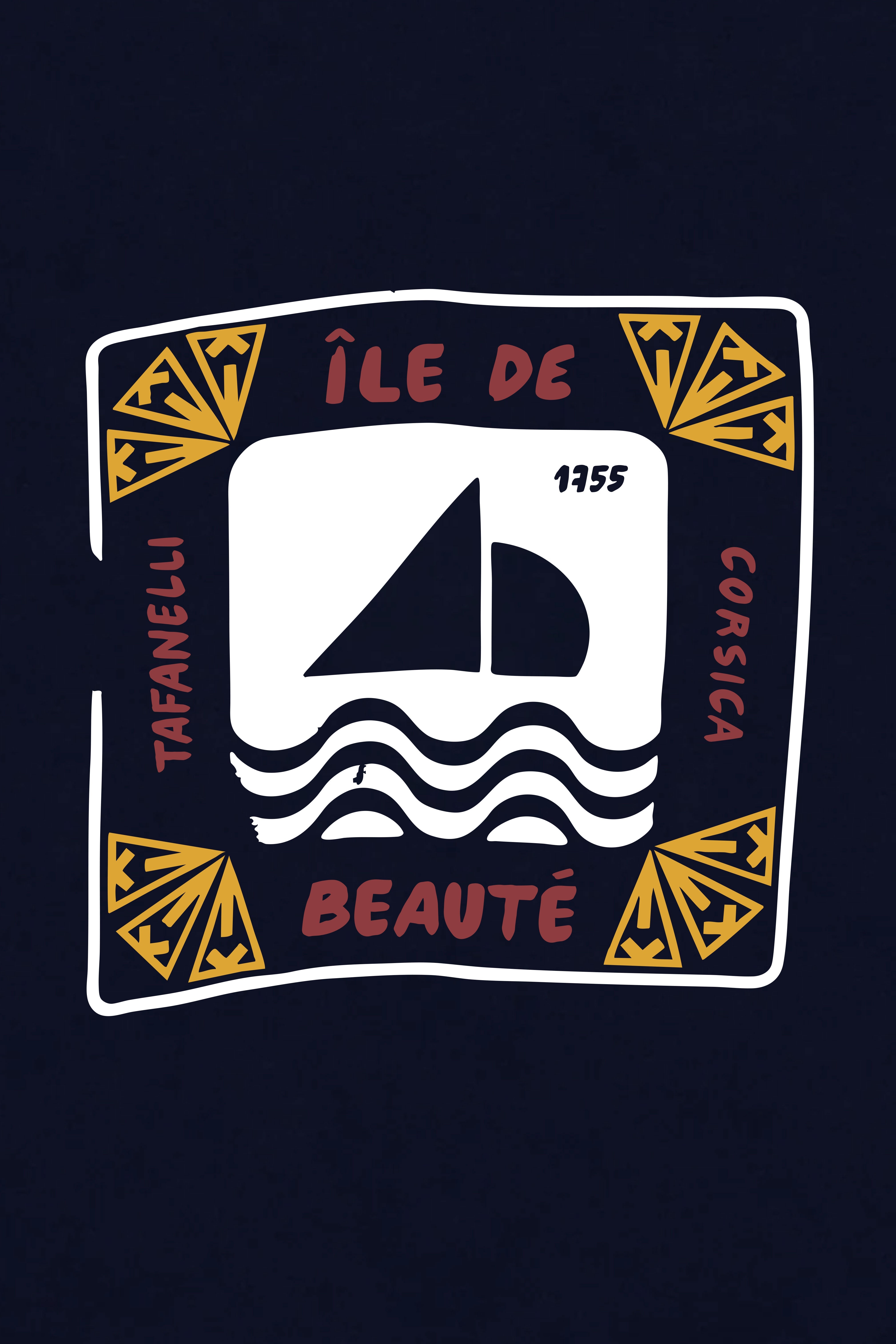
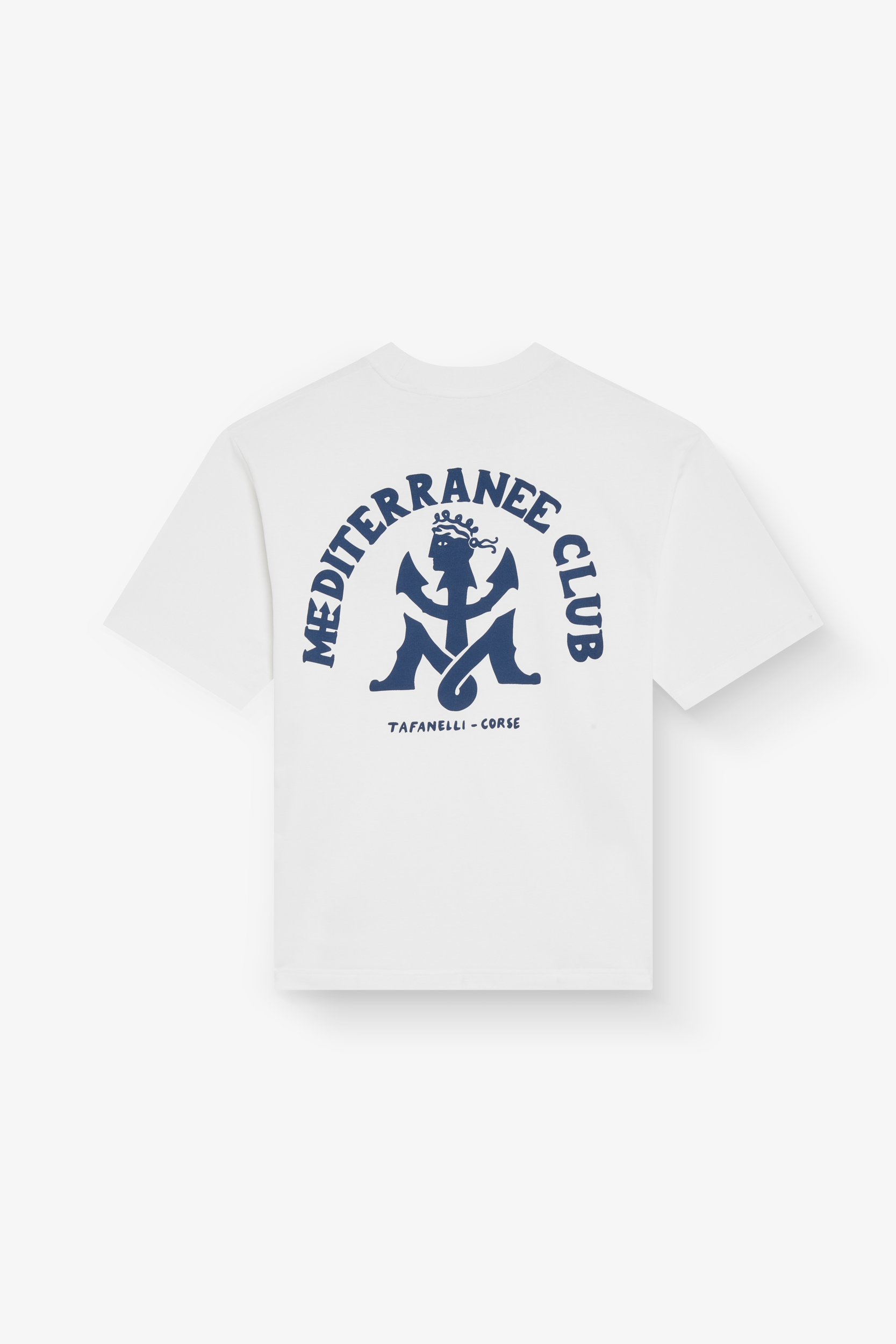
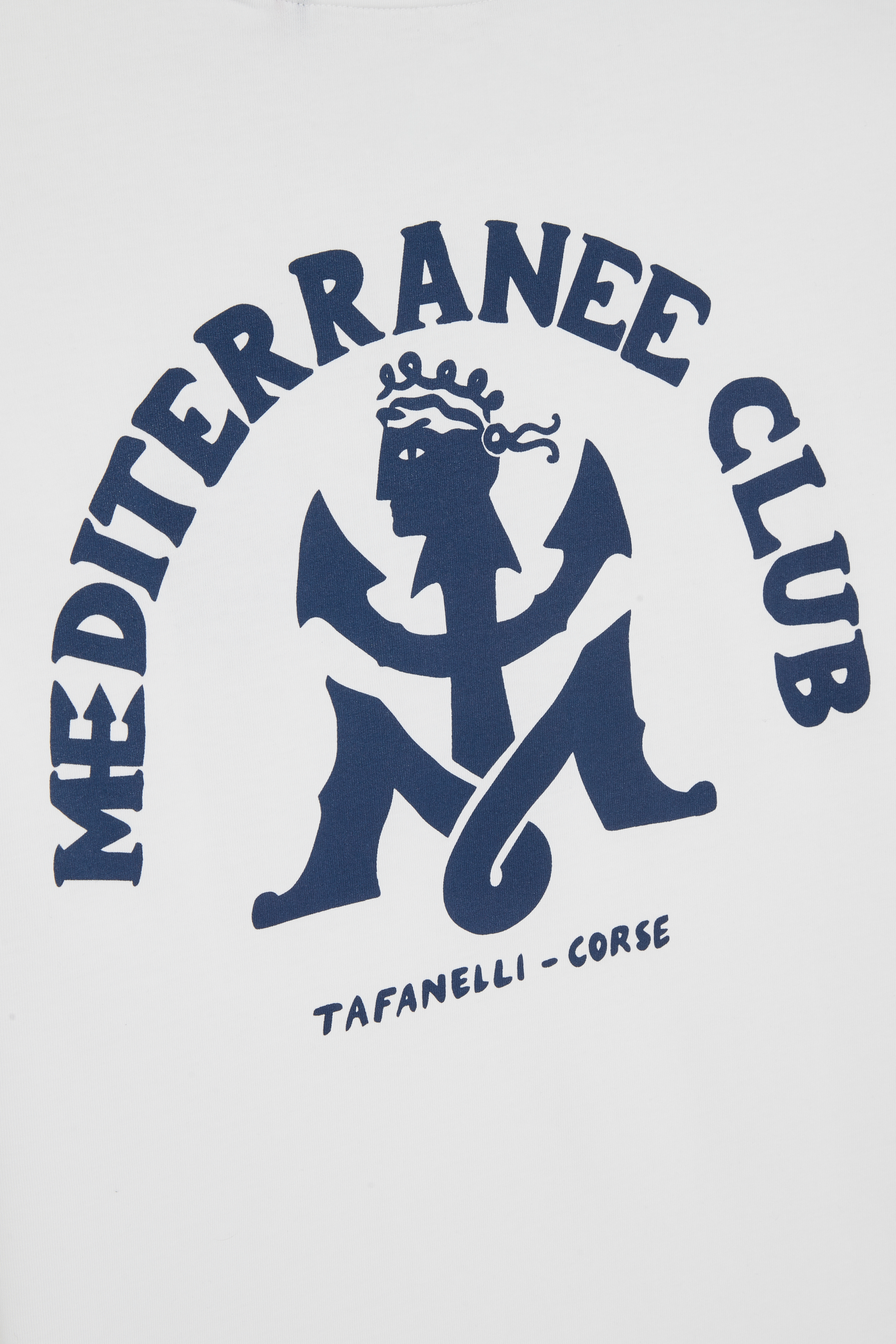
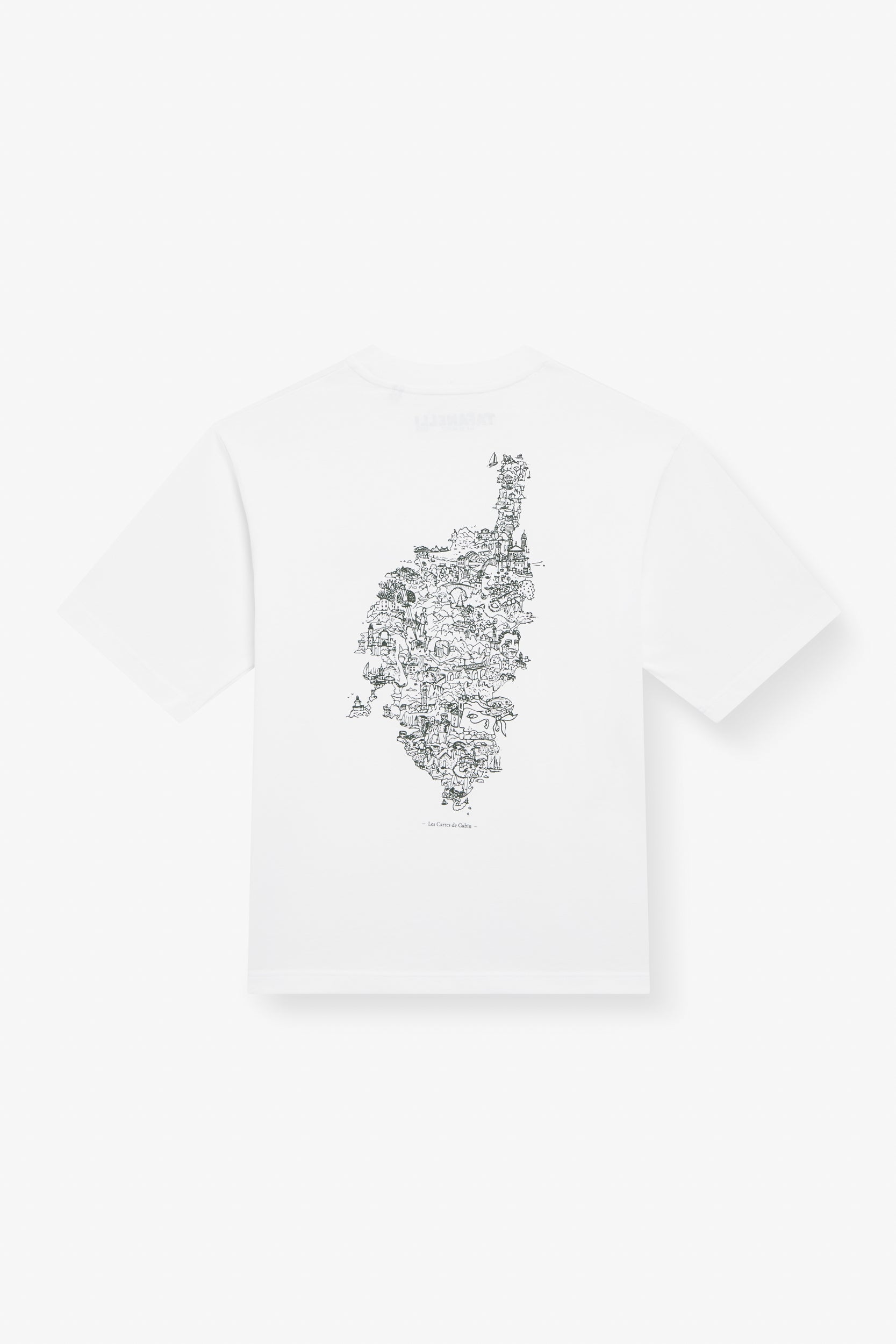
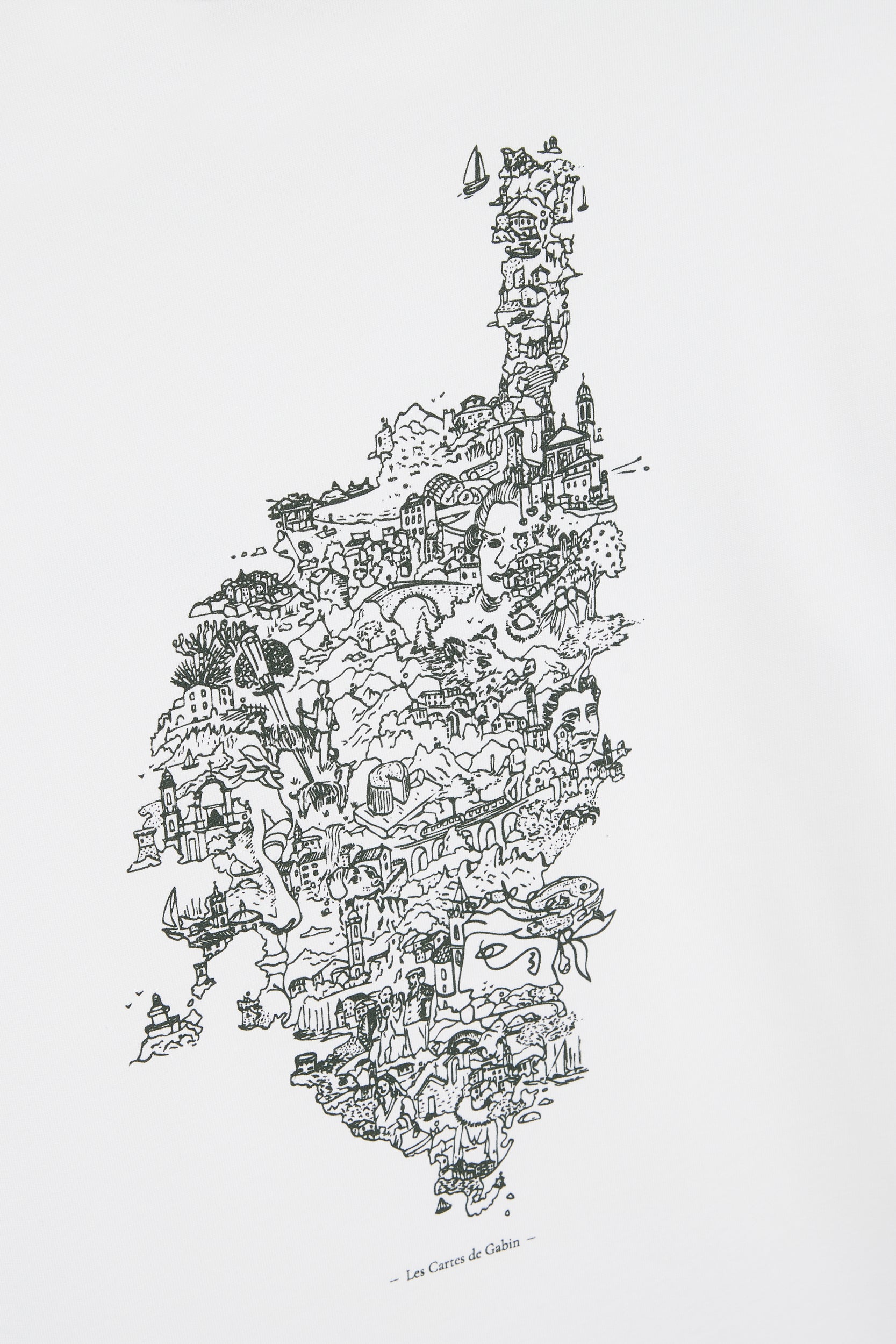
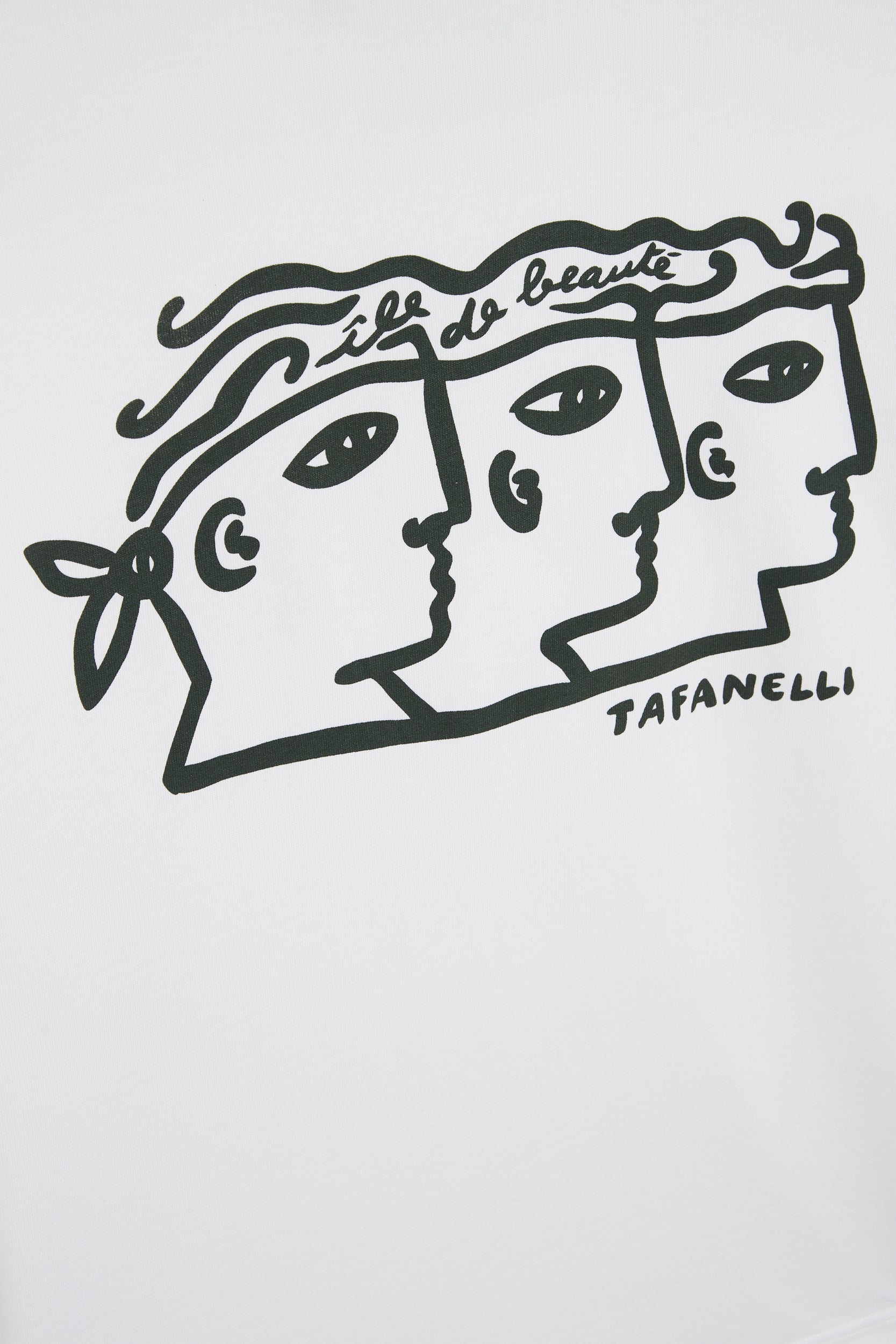
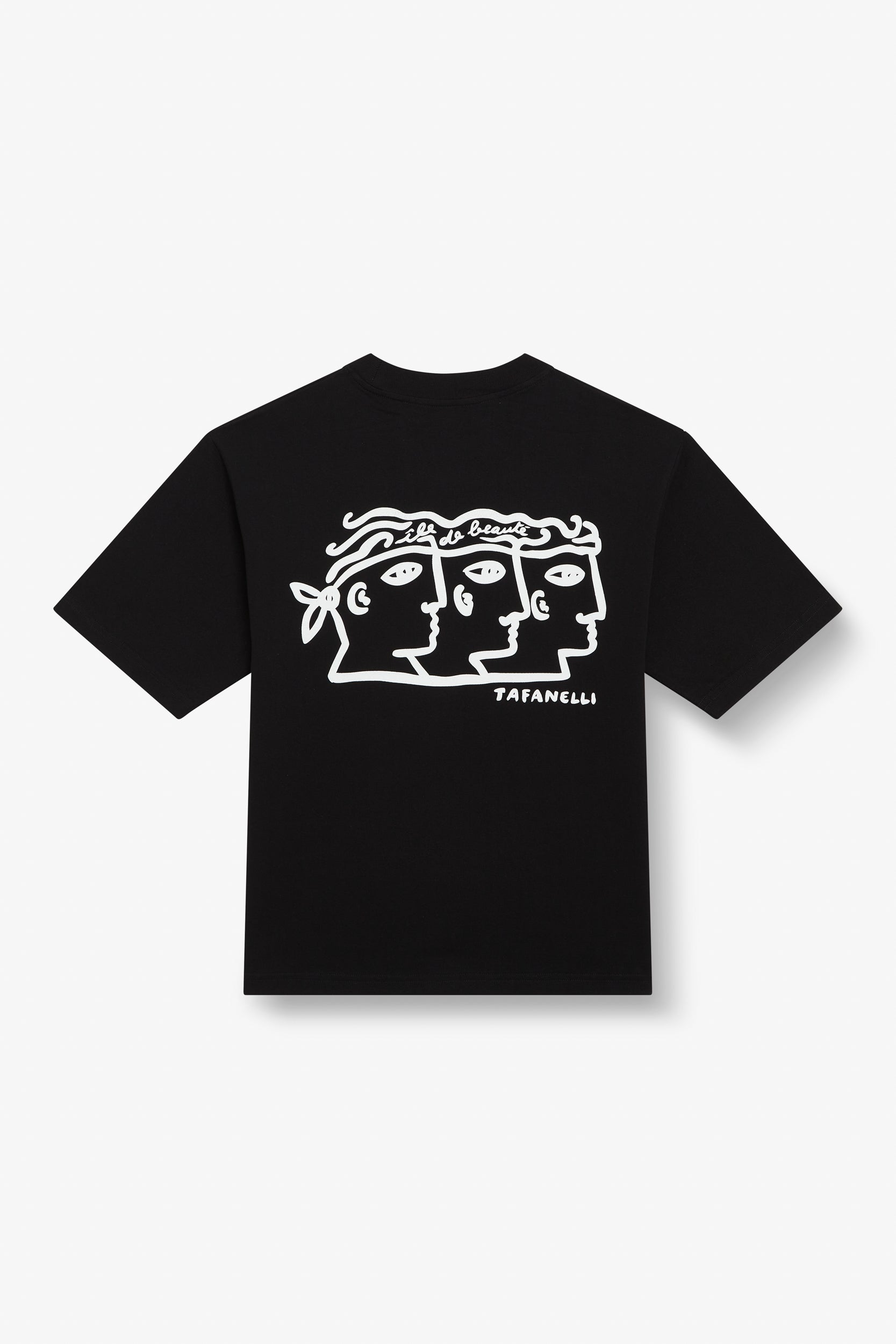
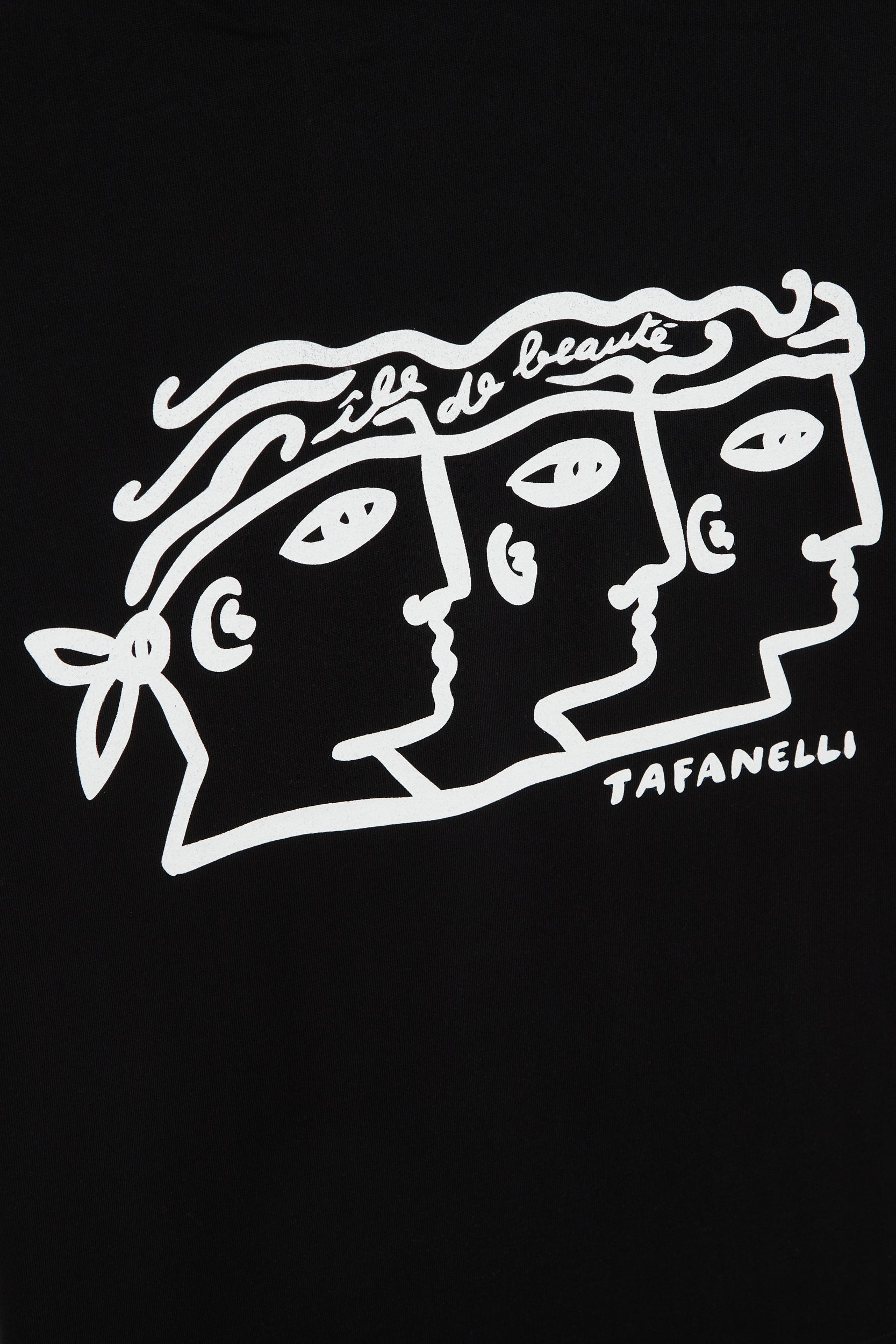
The "Île de Beauté 1755" t-shirt, the TAFANELLI tribute
At TAFANELLI, the date 1755 is not just a decorative figure. It is the founding year of modern Corsica, the year Pascal Paoli proclaimed the island's independence and endowed it with its first democratic Constitution. It is also the year that, fourteen years later, prepared the historical ground in which Napoleon would be born.
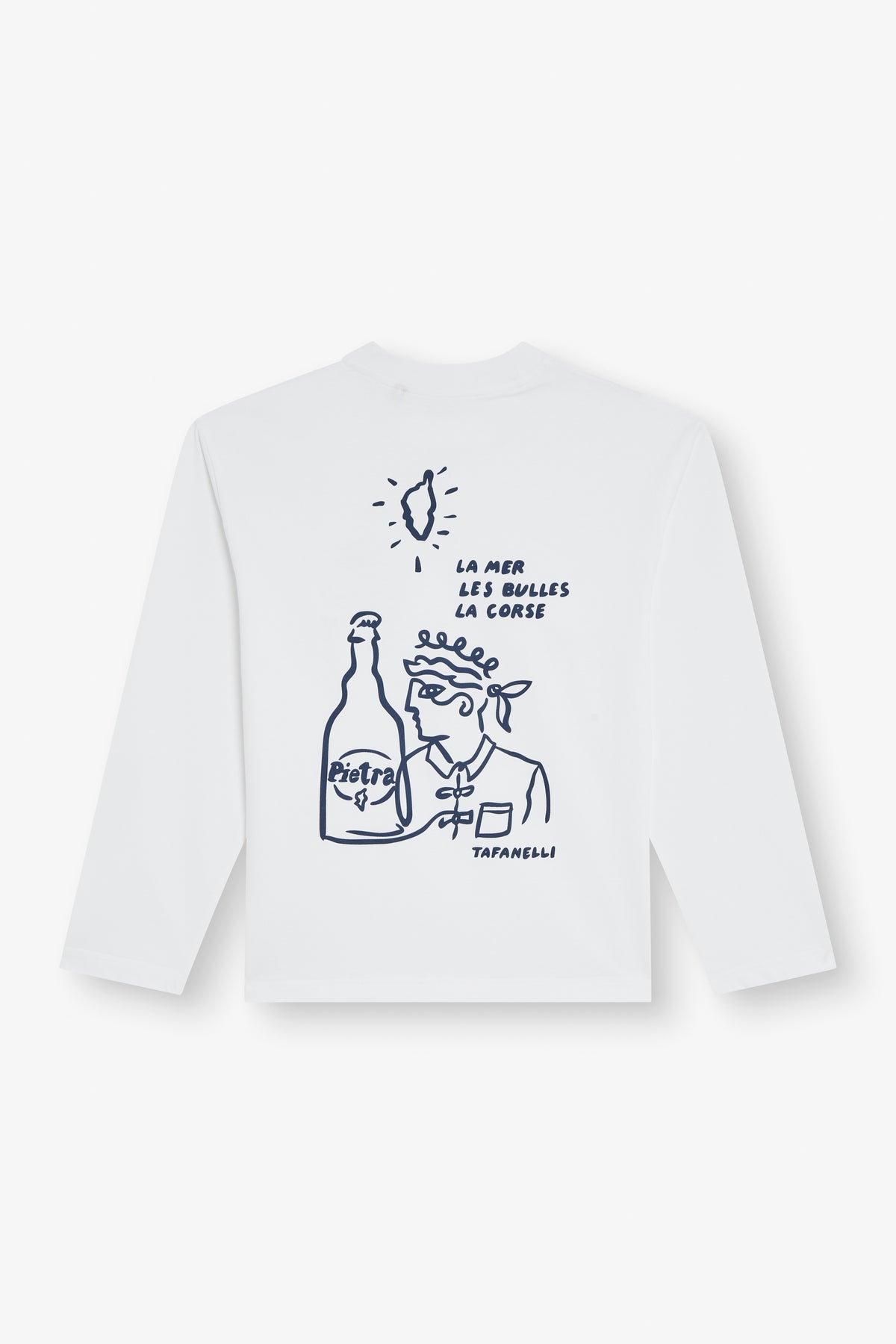
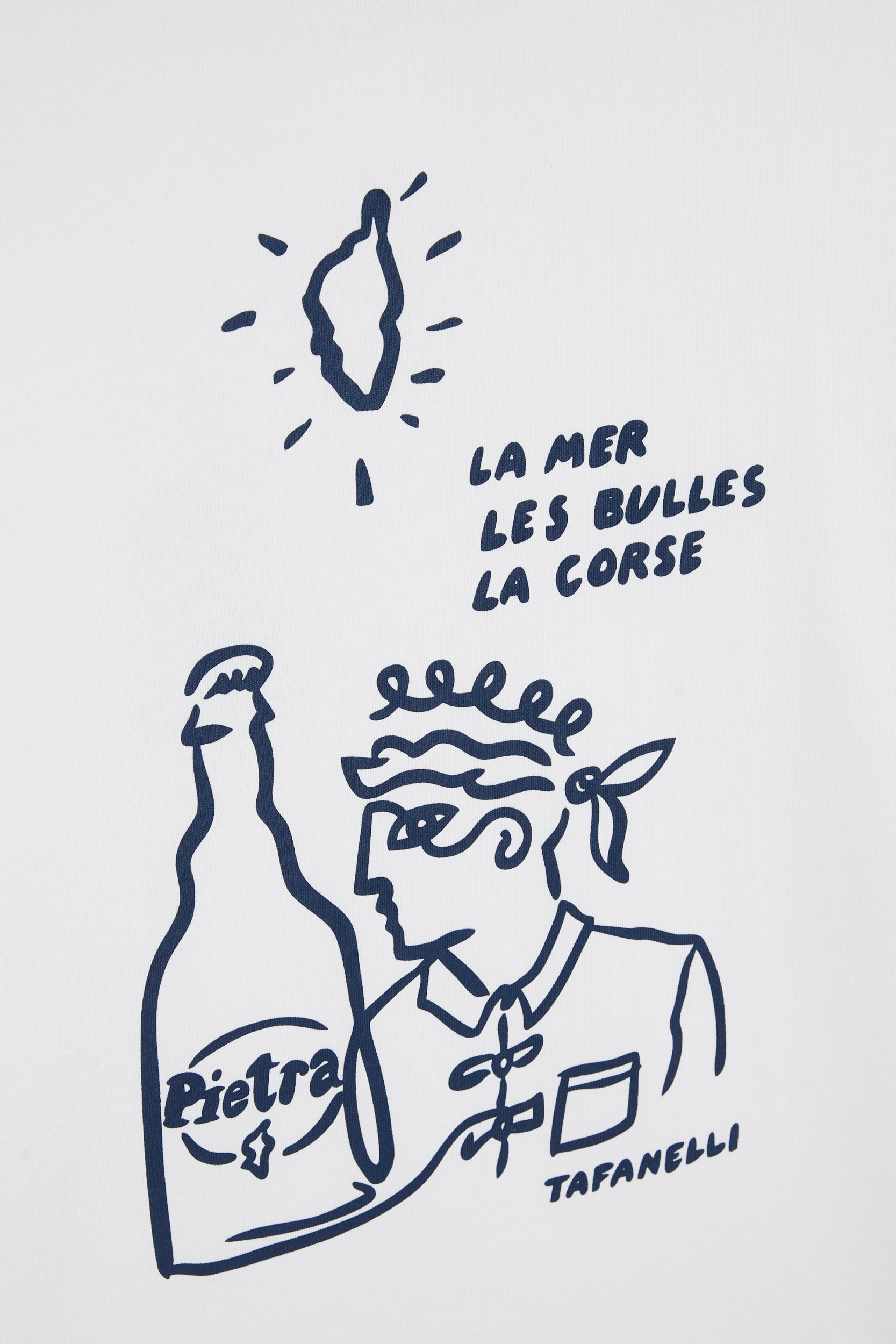
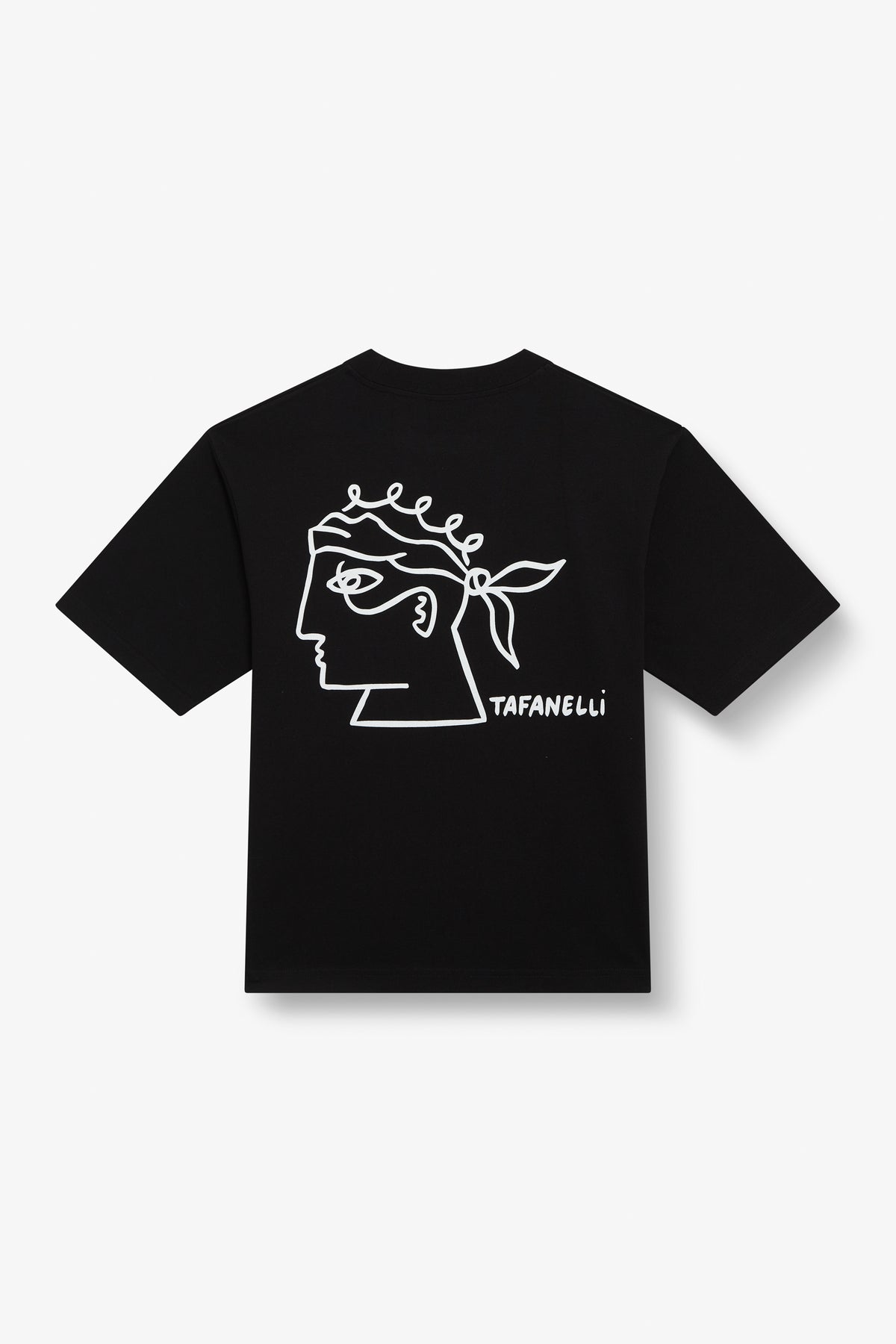
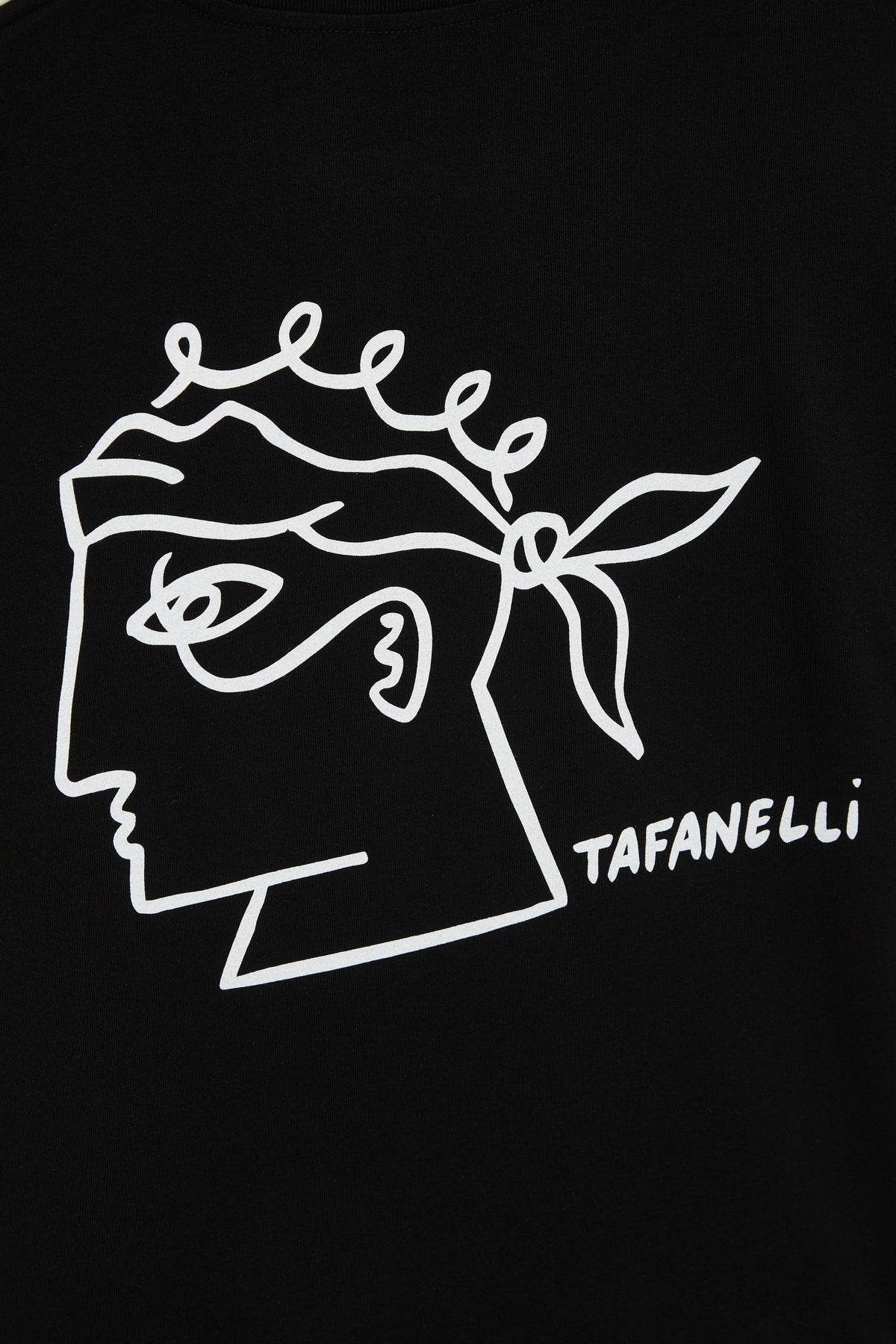
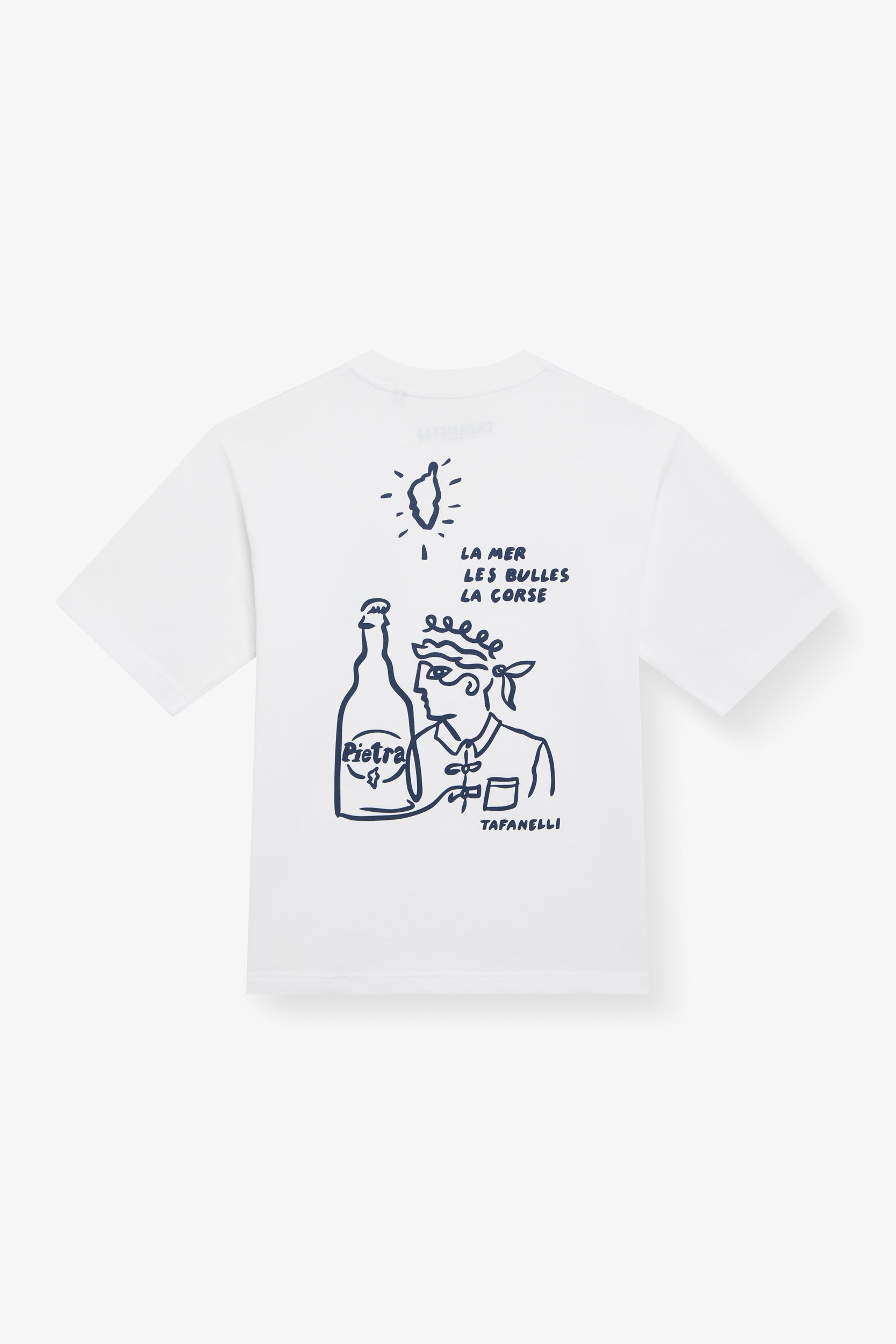
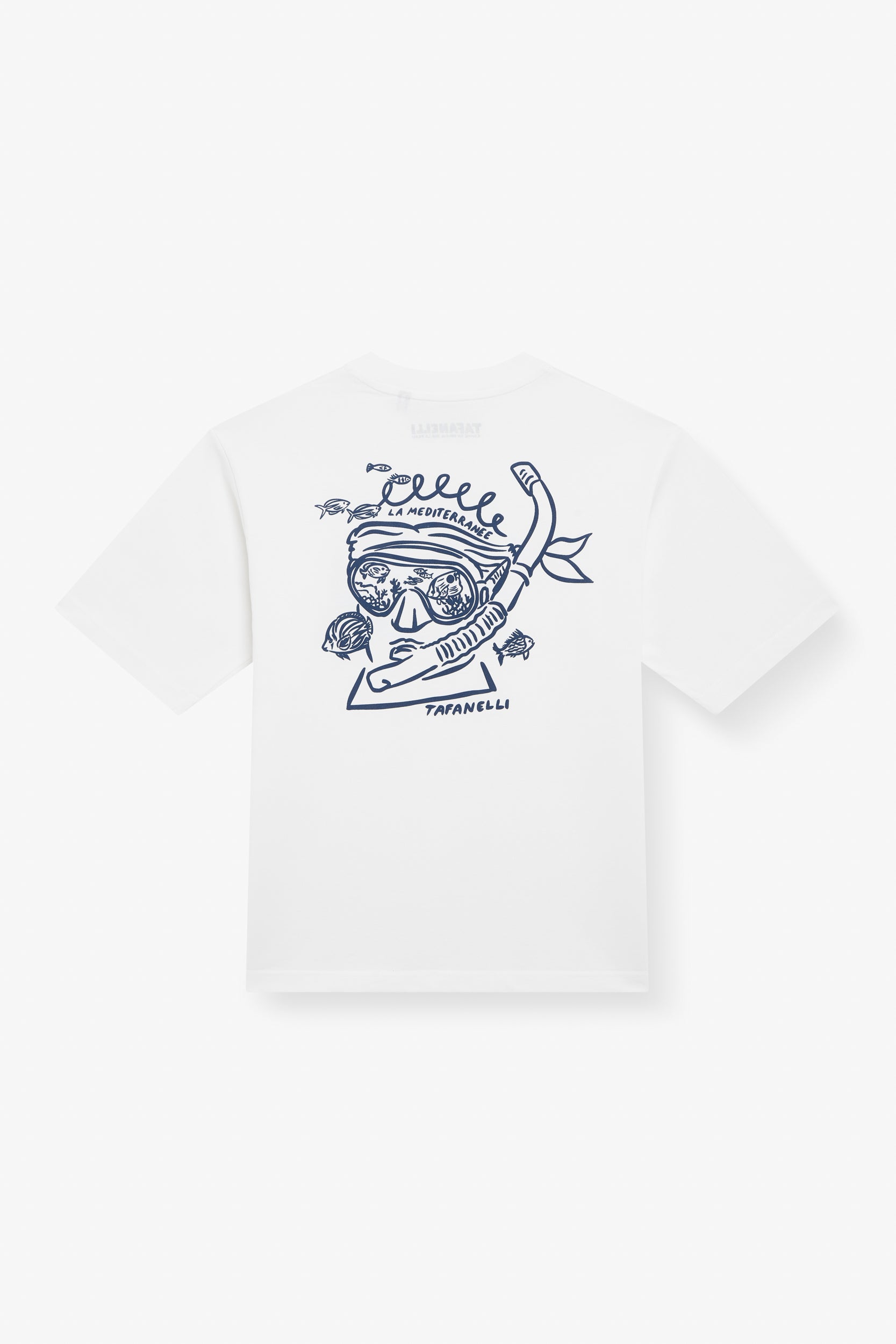
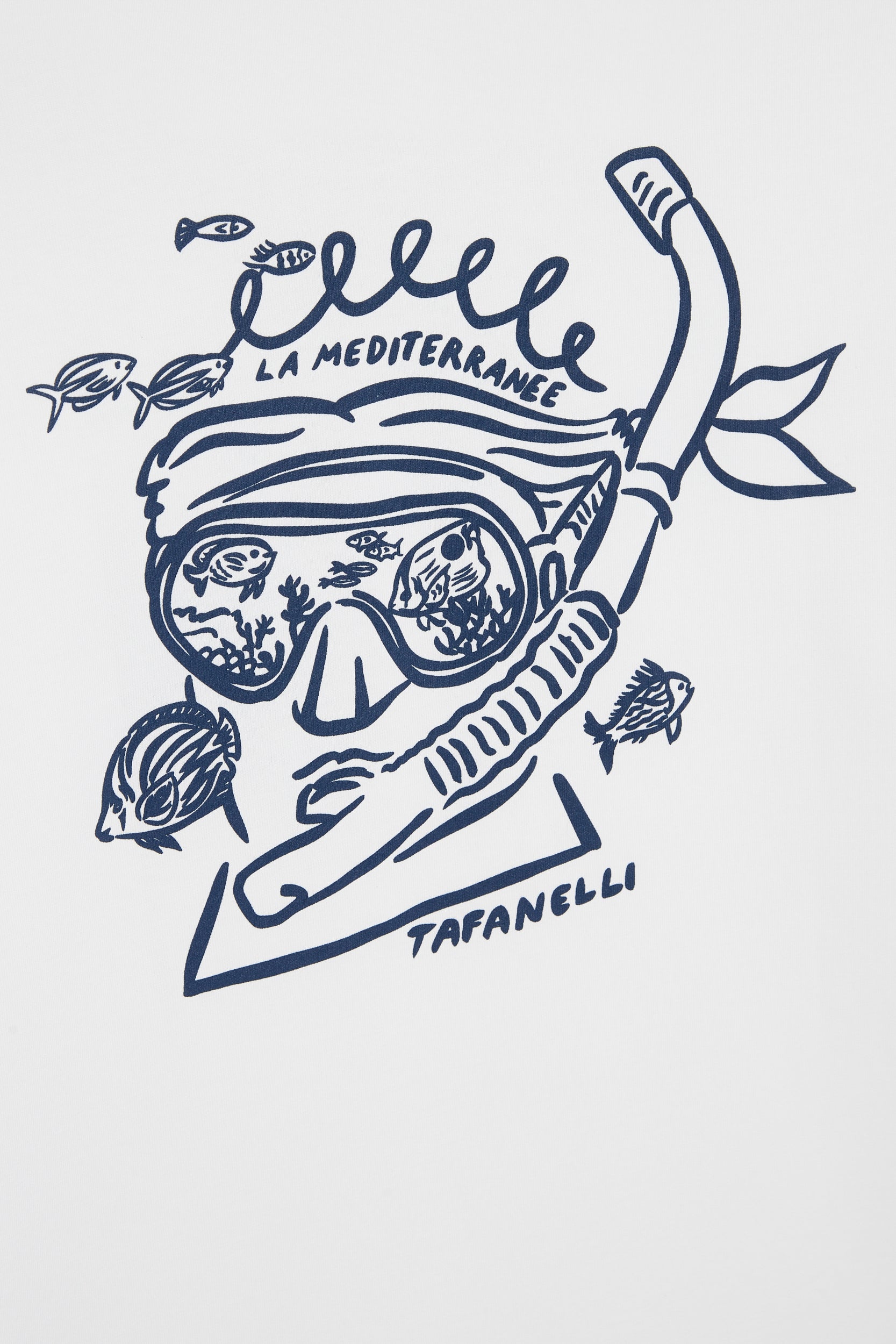
Our Île de Beauté 1755 range is a direct tribute to this foundational period. It carries our attachment to an open, enlightened Corsica, anchored in its democratic roots. Each piece in the range is hand-drawn, with thick and deliberate lines, in the graphic legacy of Cocteau and Matisse: the line as a gesture, the form as silence, the economy of the stroke as a choice.
Why 1755 and not 1769
It would have been easy for us to build a "Napoleon 1769" range as the 257th anniversary of his birth approached. We chose 1755. Because 1755 precedes Napoleon; it contextualizes him and reminds us that Corsican history cannot be reduced to one man, however immense he may be. It reminds us that Napoleon was born on an island that, fifteen years earlier, was inventing itself as a democratic Republic even before the United States of America.
A range being updated in ecru
We will very soon be releasing a new capsule collection in this range, including a reissue of our iconic Sea Urchin Fishing design on a magnificent ecru fabric with Mediterranean tones. An anniversary piece, a piece to give as a gift, a piece to keep for a long time. Follow our @tafanelli account and our newsletter to be informed in advance.
Preparing your 2026 Napoleon visit to Corsica
A few practical benchmarks for organizing a Napoleon-themed stay in Corsica this summer.
How many days to plan
A full stay allows you to complete the entire route in four to five days. Two days in Ajaccio (Bonaparte House, Cathedral, Fesch Museum, Napoleonic Room, Place Foch, Place du Diamant, Grotto). One day for Ajaccio-Bocognano-Corte (a spectacular mountain road). One day in Corte (Museum, National Palace, old town). One day for Corte-Calvi via Balagne, ending the stay in Calvi.
The date not to miss: August 15, 2026
August 15 is the annual Imperial Festival in Ajaccio. Official ceremonies at the Bonaparte House, wreath-laying at Place Foch, the Assumption procession starting from the cathedral, and a grand fireworks display over the Gulf of Ajaccio in the evening. In 2026, the 257th anniversary promises to be particularly intense. Book your accommodation several weeks in advance.
Where to sleep in Ajaccio
For a stay in Ajaccio, a few recommended addresses: Hôtel des Étrangers (historic center, authentic Napoleonic atmosphere), Palazzu u Domu (boutique hotel in an 18th-century residence), Sofitel Golfe d'Ajaccio (seaside luxury just a few minutes from the city). For a more authentic experience, the guest houses in Bocognano or the gites in Corte are excellent.
The ideal wardrobe
For an August trip to Corsica, pack light clothing that is respectful of religious sites (cathedral, Imperial Chapel). A 280g/m² premium t-shirt from our Île de Beauté 1755 range, a white linen shirt, light-colored trousers, and a light jacket for the evenings in Ajaccio. The August 15 ceremony is an occasion to dress with care, in a Mediterranean simplicity.
Continue the discovery
To go deeper into Corsican history and the TAFANELLI universe, here is a selection of related editorial articles:
- The story of 1755, the year Corsica proclaimed its independence
- Île de Beauté, Corsica: where these two names come from
- Calvi: complete 2026 guide to discovering the pearl of the Balagne
- Chez Tao Calvi: the history of the legendary citadel restaurant since 1935
- Things to do in Bastia in July 2026: the 15 must-sees
- The 2026 Corsican summer cultural agenda
- The complete 2026 guide to Corsican wines
- What to wear in Corsica this summer 2026
Understanding Napoleon in 2026 does not mean giving in to imperial nostalgia. It means recognizing that a child born in 1769 on an island in revolution, fifteen years after Pascal Paoli's democratic proclamation, marked all of Europe with his trajectory. It also means measuring how much Corsica, even before the birth of the Emperor, was already an exceptional political and cultural laboratory.
At TAFANELLI, we tell that story of Corsica: the one of 1755, the one of Paoli, the one of the Bonapartes before their European destiny. Our Île de Beauté 1755 range is its most direct expression. Also discover our full collection to find the piece that will accompany your Corsican stay this summer. Free delivery in mainland France, same-day shipping for all orders placed before 2 p.m.
A PRESTU,
TAFA