Ajaccio: The complete 2026 guide to discovering Corsica's capital
The administrative capital of Corsica, the birthplace of Napoleon Bonaparte, founded by the Genoese in 1492 at the head of one of the most beautiful gulfs in the Mediterranean, Ajaccio is a city that too many visitors pass through without ever truly seeing. That is a mistake. Ajaccio does not give itself up at first glance, but reveals itself in successive layers: its old town with steep alleyways, its morning market, its palm-lined Place Foch, its urban beaches with turquoise waters, and its now-mythical Route des Sanguinaires. Here is our complete TAFANELLI guide to discovering the Corsican capital as it should be in 2026.
Ajaccio in 5 key dates to understand the city
It is impossible to properly discover Ajaccio without some essential historical context. The city we visit today is the result of centuries of layers that explain its unique atmosphere.
1492: The founding by the Genoese
The Republic of Genoa founded the city in 1492, the same year as the discovery of America by Christopher Columbus (who, according to some traditions, was also born in Corsica). It was built on a remarkable defensive site, dominated by a citadel, protected by the sea and by the mountains that enclose it to the north.
1769: The birth of Napoleon Bonaparte
On August 15, 1769, a child named Napoleone di Buonaparte was born in a modest house in the old town. He would change the fate of Europe and give Ajaccio its global status. We have dedicated a full article to this history: Napoleon 2026: 10 places to visit in Corsica to understand the Emperor.
1811: Ajaccio becomes the capital of the Corsica department
By decree of Napoleon himself, Ajaccio was designated the capital of the newly created department of Corsica, to the detriment of Bastia, the island's historical capital under the Genoese. This political shift left a lasting mark on the rivalries between Corsica's two main cities.
1943: The first liberated French city
Ajaccio was liberated in September 1943, making it the first city in metropolitan France to be liberated during the Second World War. A little-known but essential status in the contemporary Ajaccian consciousness.
2018: A growing cultural capital
Since the 2010s, Ajaccio has undergone a major cultural renewal: the restoration of the Palais Fesch, the development of summer festivals, the opening of new gastronomic and hotel addresses, and the redevelopment of the waterfront. The city is shedding its image as a simple administrative center to become a full-fledged Mediterranean cultural capital once again.
The 5 districts of Ajaccio you need to know
To understand Ajaccio, you must first grasp its geography. The city stretches for about ten kilometers from east to west along the gulf, and is made up of several districts with very different personalities.
The Old Town (Città Vecchia)
This is the historic heart. Between Place Foch, the cathedral, the Maison Bonaparte, and the citadel, the old town concentrates essential monuments in a maze of steep alleys, shaded squares, and ocher and yellow facades. This is where you can best feel the city's original Mediterranean atmosphere.
The "Etrangers" (Foreigners') Quarter
In the nineteenth century, Ajaccio became a popular winter resort for the European aristocracy. The Foreigners' Quarter, around the Cours Grandval, retains from that era wide avenues lined with palm trees, Haussmann-style buildings, and historic grand hotels. It is Ajaccio's bourgeois district, which is very pleasant to walk through.
Les Salines and the marina
To the east of the old town, Les Salines brings together the commercial port, the modern marina, and the large seaside hotels. It is the city's functional district, less picturesque but essential for understanding the contemporary Ajaccian economy.
Les Cannes and Saint-Joseph
Residential areas to the north of the center, less touristy but often recommended for those looking for more affordable or quieter rentals. Good popular restaurants, with a local family atmosphere.
The Route des Sanguinaires
To the west of the city, the legendary Route des Sanguinaires runs along the coast for about ten kilometers towards the Pointe de la Parata. It concentrates the most beautiful urban beaches in Ajaccio, charming beach huts, writers' villas, and ends with the iconic panoramic view of the Sanguinaires Islands. It is the seaside district of Ajaccio par excellence.
Place Foch and the Old Port, the city's beating heart
This is where you should start your discovery of Ajaccio. Place Foch is the central square of the city, dominated by the City Hall, adorned with centuries-old palm trees, and constantly animated by café terraces. In its center sits a monumental fountain and the statue of Napoleon as First Consul, surrounded by four bronze lions.
At the southern end of the square, the Old Port of Ajaccio opens onto the gulf. Traditional boats, fishermen returning with their catch early in the morning, sailboats, and the direct view of the mountains that enclose the gulf to the south: it is a picture that has barely changed in a century.
The aperitif ritual on Place Foch
A moment not to be missed: settle down in the late afternoon on a terrace on Place Foch, around 7 p.m., with a Cap Corse Mattei on ice or an Aperol Spritz. The palm trees rustle, the light descends softly on the facades, the locals meet up after work, and children play around the fountain. It is a living, intact tableau.
The Napoleonic Salon at the City Hall
Few visitors know it, but the City Hall houses the Napoleonic Salon on the first floor, which notably preserves Napoleon's original baptismal certificate, imperial medals, and ceremonial furniture from the Second Empire. A short (30-minute) but essential visit. Entrance is approximately 2.50 euros.
The Maison Bonaparte and the Napoleonic circuit
Two minutes' walk from Place Foch, the Maison Bonaparte on Rue Saint-Charles is the Emperor's birthplace. Now a national museum, it welcomes more than 90,000 visitors per year. You can discover period furniture, family portraits, the bedroom where Napoleon grew up, and a unique collection of the Emperor's personal belongings, including his death mask made on Saint Helena in 1821.
The Napoleonic circuit in Ajaccio also includes several other essential sites: the cathedral where he was baptized, the Palais Fesch founded by his maternal uncle, the Imperial Chapel where his parents rest, the Place du Diamant with the equestrian monument depicting him as a Roman emperor, and the Grotte de Napoléon on the Route des Sanguinaires where he liked to take refuge as a child.
We have dedicated a full article to this route: Napoleon 2026: 10 places to visit in Corsica to understand the Emperor. A must-read before preparing your visit to Ajaccio, especially for those coming around August 15, 2026, the year of the 257th anniversary of his birth.
Maison Bonaparte practical info
Rue Saint-Charles, 20000 Ajaccio. Open daily in July-August except Monday mornings, from 10:30 a.m. to 6:00 p.m. Price approximately 7 euros. Allow at least one hour for the visit.
The Cathedral and the Saint-Roch Oratory
A five-minute walk from the Maison Bonaparte, the Cathedral of Notre-Dame-de-l'Assomption is one of the most important religious monuments in Corsica. Built at the end of the sixteenth century in the Italian counter-reformation style, it is more intimate than grandiose. It is here that little Napoleon was baptized on July 21, 1771.
The interior deserves careful inspection: the baroque frescoes, the polychrome marble altar, the side chapels, and above all the original baptismal font used for Napoleon. A commemorative plaque marks this event.
The Saint-Roch Oratory
In the immediate vicinity, the Saint-Roch Oratory is a small religious building that is often overlooked. Built in the seventeenth century by the Saint-Roch Confraternity, it houses a superb statue of the saint and a collection of ex-votos left by the people of Ajaccio over the centuries. It is a place charged with emotion, to be visited in silence.
The August 15 procession
Every August 15, the Ajaccio cathedral is the starting point for the Assumption Day procession, a major religious event in the city, which coincides with Napoleon's birthday. A deeply moving ceremony, especially in 2026 for the Emperor's 257th birthday.
The Palais Fesch, one of the great French museums
Often neglected by rushed visitors, the Palais Fesch, Museum of Fine Arts of Ajaccio, is nevertheless one of the most important French museums outside the Louvre for Italian art from the fourteenth to the nineteenth centuries.
It was founded by Cardinal Joseph Fesch (1763-1839), Napoleon's maternal uncle, Cardinal-Archbishop of Lyon and ambassador to Rome, who bequeathed to his hometown a staggering collection of Italian works: primitives, sixteenth-century masters, the Bolognese school, and the Neapolitan school. Botticelli, Bellini, Titian, Guercino, and Poussin are represented here.
The Napoleonic room
The museum also houses a rich Napoleonic section, with imperial portraits, busts, and personal effects of the Bonaparte family. Essential reading after visiting the Maison Bonaparte.
The Imperial Chapel
Adjoining the museum, the Imperial Chapel houses the tombs of Charles Bonaparte (Napoleon's father), Letizia Bonaparte (mother), Cardinal Fesch himself, as well as several of the Emperor's brothers and sisters. A tranquil place, less crowded than the Maison Bonaparte, yet essential for understanding the family history.
Palais Fesch practical info
50-52 Rue Cardinal Fesch, 20000 Ajaccio. Open daily in July-August except Tuesdays, from 9:30 a.m. to 6:00 p.m. Price approximately 8 euros for the museum. Allow two to three hours for the full visit, including the chapel.
The municipal market at Place Campinchi
Every morning except Monday, Place Campinchi, on the edge of the old town, transforms into one of the most endearing markets in Corsica. This is where the people of Ajaccio have been shopping for over a century, in a perfectly preserved southern atmosphere.
The market mixes Corsican producers with sellers of imported products, but the best stands are clearly identifiable: the charcutiers from the villages of Fiumorbo and Rocca (lonzu, coppa, prizuttu, figatellu), the cheesemakers from Niolu and Restonica (brocciu, Corsican tomme, casgiu), the market gardeners from south of Ajaccio, the beekeepers from the surrounding massifs, and the producers of AOP olive oil from Balagne and Sartenais.
The Ajaccian morning ritual
The best time: arrive between 8 a.m. and 10 a.m., when the market is at its liveliest and the vendors still have their best selection. Buy fresh bread, a slice of figatellu, a bit of brocciu, and go enjoy it on a bench at the Old Port. It's the authentic Ajaccio breakfast.
Practical info
Place Campinchi, 20000 Ajaccio. Open daily from Tuesday to Sunday, 7:00 a.m. to 1:00 p.m. Closed on Mondays. In July-August, arrive early to avoid the crowds.
The beaches of Ajaccio, from Trottel to Barbicaja
Contrary to what many visitors think, Ajaccio is a seaside town with beaches accessible on foot or by bus from the center. Here is our selection of the best.
Saint-François Beach (in the city center)
The closest to the center, a three-minute walk from Place Foch. A small urban beach with light sand, very popular in summer but perfect for a quick dip between visits. Clear water, family atmosphere, and a terrace above for a drink after swimming.
Trottel Beach
A natural extension of Saint-François, a little more extensive and often less crowded. Fine sand, turquoise water, and a view of the citadel. An excellent option for combining urban tourism and swimming on the same day.
Beaches of the Route des Sanguinaires (Ariadne, Marinella, Barbicaja)
By taking the road or bus #5 to the west, you discover a series of beaches, each more beautiful than the last, spread out over ten kilometers. Barbicaja is a favorite among locals for its very fine sand and view of the Sanguinaires. Marinella is larger, family-oriented, with beach huts and kayak rentals. Ariadne remains more intimate and wilder.
Capo di Feno Beach
For lovers of wild beaches, head to Capo di Feno, a twenty-minute drive north of La Parata. This long beach, buffeted by western winds, is one of Corsica's premier surf spots. A very different atmosphere from the urban beaches, spectacular scenery, and less crowded.
The Route des Sanguinaires and the Pointe de la Parata
No visit to Ajaccio is complete without the Route des Sanguinaires. This mythical coastal road, about twelve kilometers long, starts from the city center and follows the coastline to the Pointe de la Parata in the far west.
The road gets its name from the blood-red color that the five granite islets visible offshore, the Sanguinaires Islands, take on at sunset. Alphonse Daudet, who stayed in Ajaccio, made them the setting for one of his Letters from My Mill, permanently engraving the name in the French imagination.
The Pointe de la Parata
The road ends at the Pointe de la Parata, a site classified as a "Grand Site de France." The Parata trail, laid out for visitors, leads in a ten-minute walk to a sixteenth-century Genoese tower overlooking the Sanguinaires Islands. It is the No. 1 spot to watch the sunset in Ajaccio, without a doubt.
The sunset ritual
The Ajaccian ritual par excellence: leave around 7:30 p.m. in July, settle on the rocks around the Genoese tower, bring a drink, and wait. The sun descends behind the islands, and the sea takes on shades of red, orange, and purple. A moment that no visitor to Ajaccio should miss, and one that all locals continue to do regularly.
Where to have a drink on the way
The Route des Sanguinaires is lined with charming beach huts that have been part of the Ajaccio landscape for decades. La Palm Beach, l'Ariadne Plage, and Barbicaja Plage are three essential spots for a lunch or late-afternoon cocktail, with your feet in the sand.
The Sanguinaires Islands by boat
Seeing the Sanguinaires from the Parata is already splendid. Going there by boat is an experience in itself. Several companies offer daily 3 to 5-hour sea excursions in summer from the port of Ajaccio, including sailing around the five islands, a swimming stop in coves accessible only by sea, and a return at sunset.
What to discover on-site
The main island, Mezzu Mare, is home to an old lighthouse, a Genoese tower, and an abandoned cemetery that testifies to a former lazaretto (quarantine station). The islands feature remarkable endemic flora, protected birdlife (gulls, shags), and turquoise-blue coves you won't soon forget.
Booking
In July and August, excursions fill up several days in advance. Booking is mandatory upon your arrival in Ajaccio (or even better, online in advance). Recommended companies: Nave Va, Découvertes Naturelles. Expect to pay between 40 and 60 euros per person depending on the package.
The best tables in Ajaccio
Ajaccio has seen a true gastronomic revival over the last ten years. Here is our selection of the five addresses that best embody today’s Ajaccio cuisine, balancing tradition and modernity.
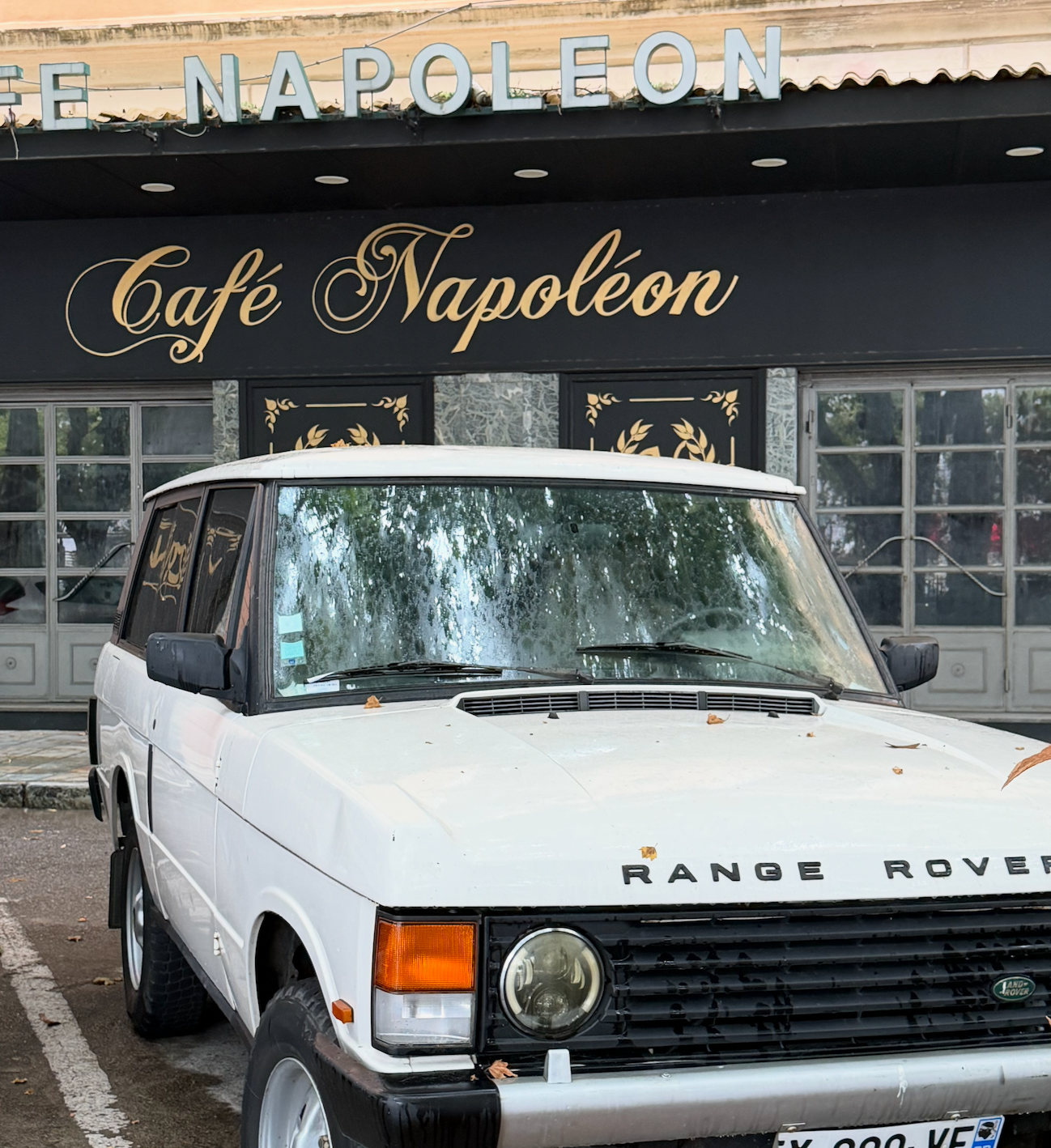
Le Grand Café Napoléon
A historic institution on the Cours Napoléon, open since 1938. Classic French cuisine, a dining room steeped in history, and a timeless atmosphere. Lunch on the terrace remains a reliable choice. Reservations recommended in July and August.
A Nepita
Contemporary Corsican cuisine in the heart of the old town. Local products, daily specials on the chalkboard, and young, dedicated service. This is where the locals dine when they want the best version of today’s island cuisine.
Le 20123
An iconic address in Ajaccio's old town, decorated like a Corsican village recreated inside a restaurant. A fixed menu of traditional specialties and a festive atmosphere. An experience to enjoy at least once to grasp the popular Corsican spirit.
L'Amirauté
A gourmet restaurant facing the port, specializing in seafood. Locally caught fish, meticulous preparation, and a cellar well-stocked with Corsican wines. Reservations are essential.
Le Café de Paris
A legendary terrace on Place Foch with an elegant, relaxed vibe. Well-executed Mediterranean cuisine, expertly crafted cocktails, and attentive service. Ideal for a dinner facing the statue of Napoleon.
Where to have a drink and go out at night
Ajaccio's nightlife is concentrated around two main areas: the historic center and the Route des Sanguinaires.
In the city center
The terraces of Place Foch and the Old Port remain the essential meeting points for an Ajaccio aperitif. For a more sophisticated cocktail, head to the Bar de l'Hôtel des Étrangers. For a younger, more festive atmosphere, Cesare and the Wine Room are the places to be right now.
On the Route des Sanguinaires
The seaside beach huts turn into lounge bars at the end of the day. Barbicaja Plage and La Palm Beach are the go-to spots for a sunset cocktail, with live DJ sets in July and August.
Festive evenings
To extend the night after midnight, head to Blue Moon or Nova Corse, two Ajaccio institutions that stay open until dawn in peak season. Expect a clubbing vibe and a varied musical program.
Where to sleep in Ajaccio
Ajaccio offers an extensive range of hotels, from charming boutique hotels in the city center to modern seaside resorts on the outskirts.
Palazzu u Domu
A boutique hotel in an 18th-century mansion in the heart of the old town. Elegant rooms, an interior patio, and attentive service. The best address for an immersive stay in the city center.
Hôtel des Étrangers
A 19th-century Ajaccio institution, tastefully renovated. A distinct Napoleonic atmosphere, a renowned bar, and a prime location between Place Foch and the Old Port. Excellent value for money in July and August.
Sofitel Golfe d'Ajaccio Thalassa Sea & Spa
On the Route des Sanguinaires, a four-star resort with a full spa, private beach, and direct views of the Sanguinaires. Ideal for an upscale seaside stay without leaving the Ajaccio region.
Les Mouettes
A charming hotel perched on the heights, with panoramic views of the Gulf of Ajaccio. Swimming pool, terrace, and a family atmosphere. A perfect alternative for those who prefer tranquility to the lively city center.
Ajaccio and TAFANELLI, two Corsican capitals in dialogue
We are a brand born in Bastia, the historical capital of Corsica under the Genoese. Ajaccio, the modern political capital, is our big cousin to the South. Our two cities have always cultivated a friendship made of rivalry and mutual respect. We devote the same attention to Ajaccio as we do to Bastia in our editorial world.
The historical connection via 1755
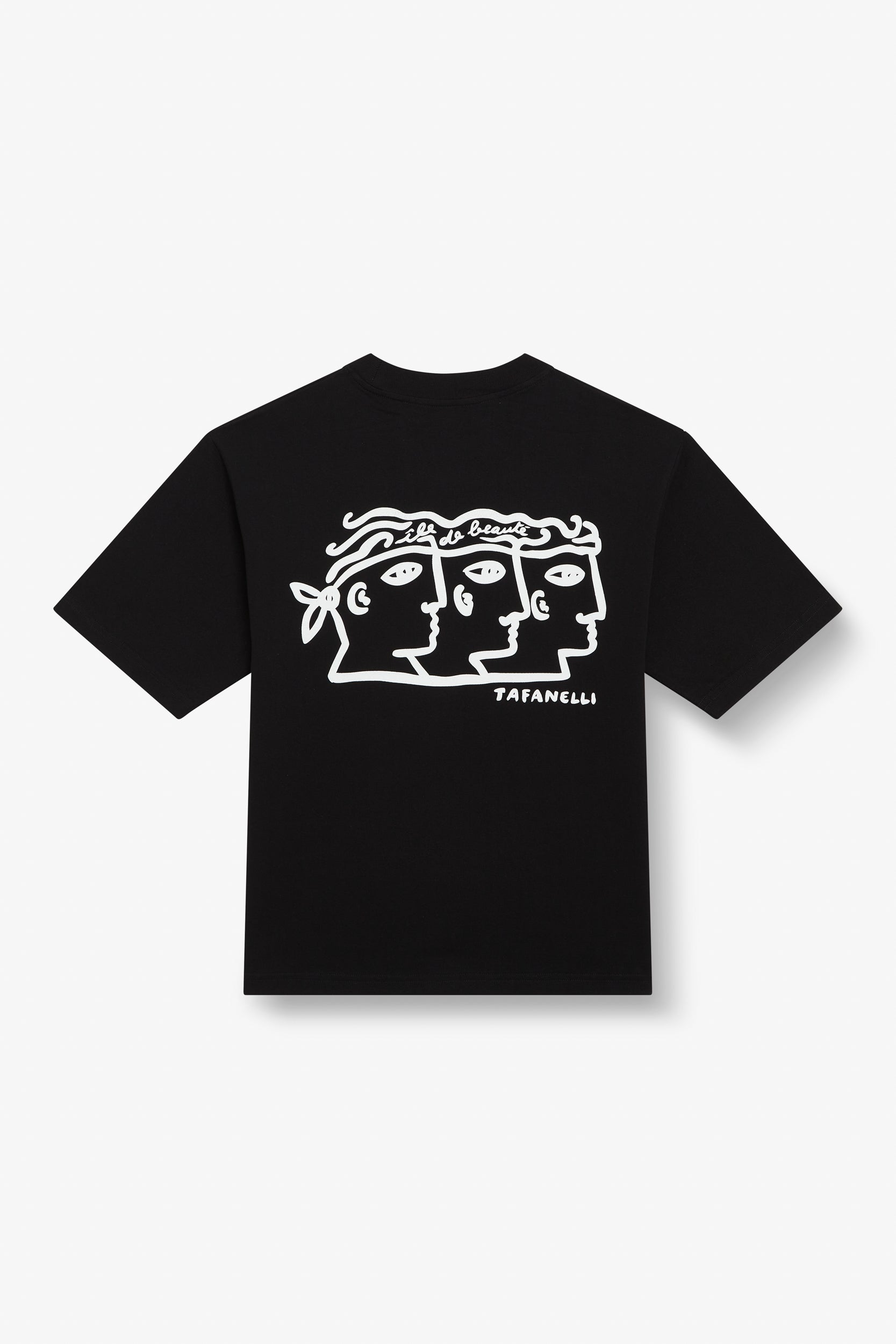
Our Île de Beauté 1755 range is a direct tribute to Pascal Paoli's independent Corsica, proclaimed fifteen years before Napoleon was born in Ajaccio. This is the historical bridge our two cities share: that of an island that, before becoming French, invented itself as a democracy.
Our pieces to wear in Ajaccio
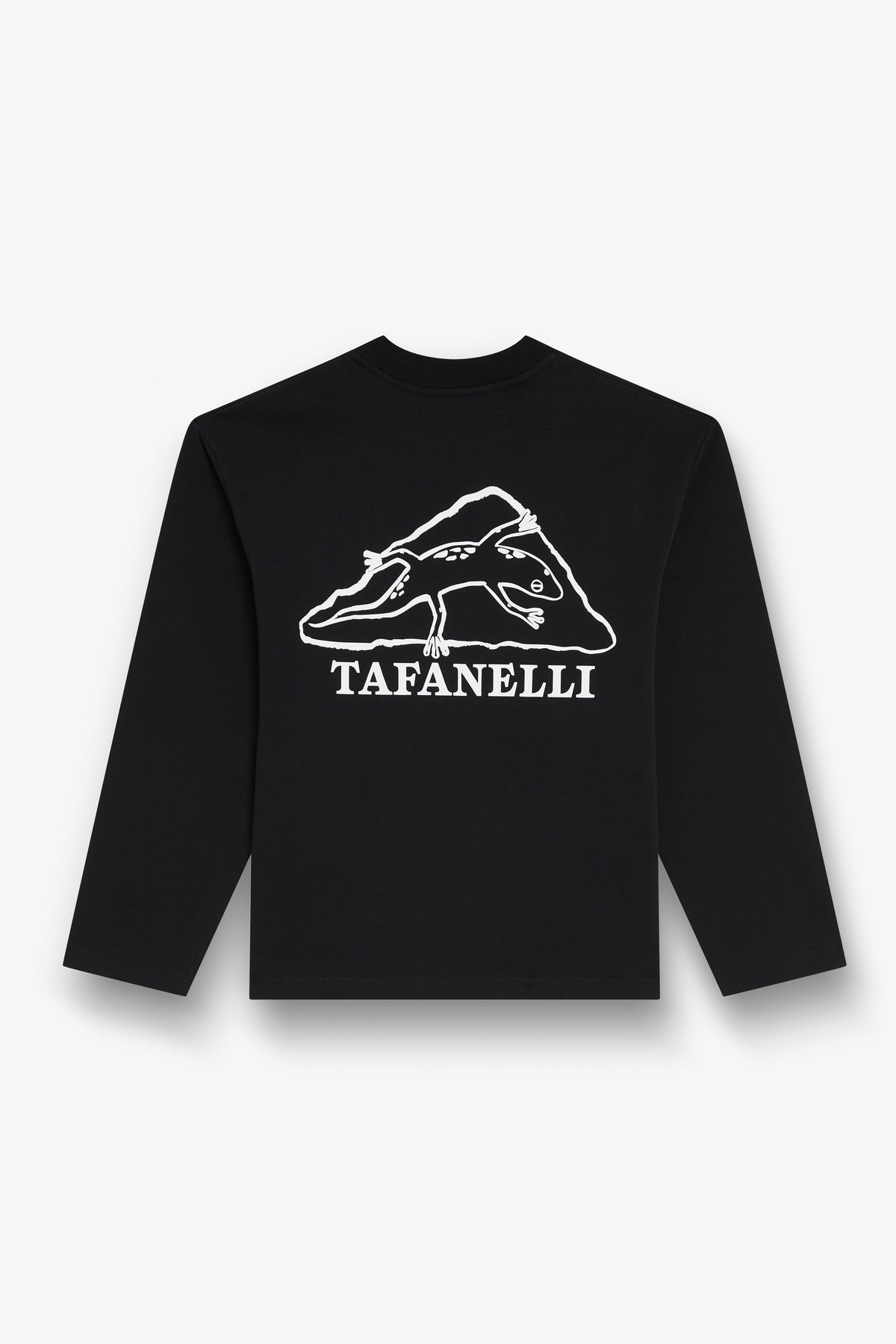
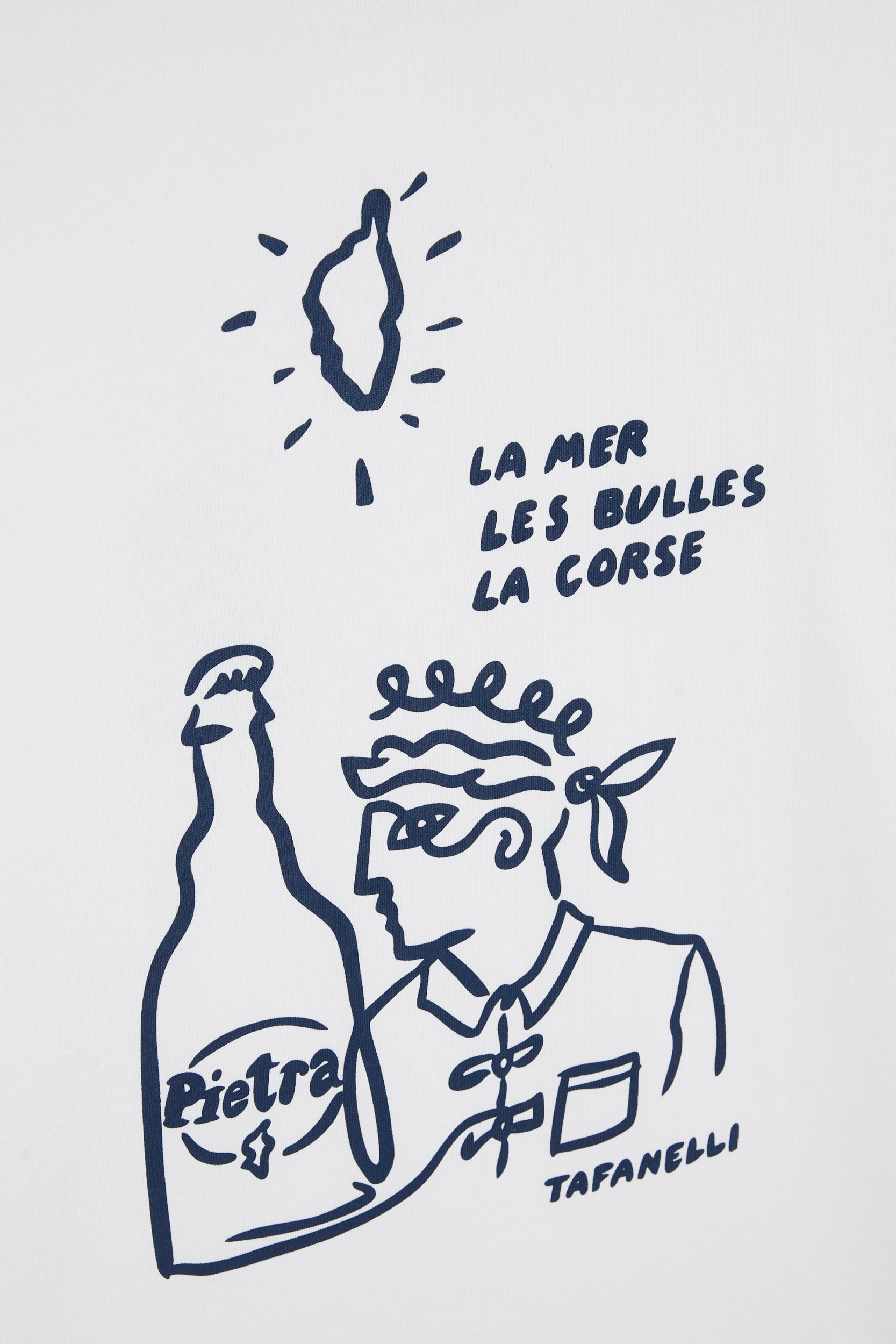
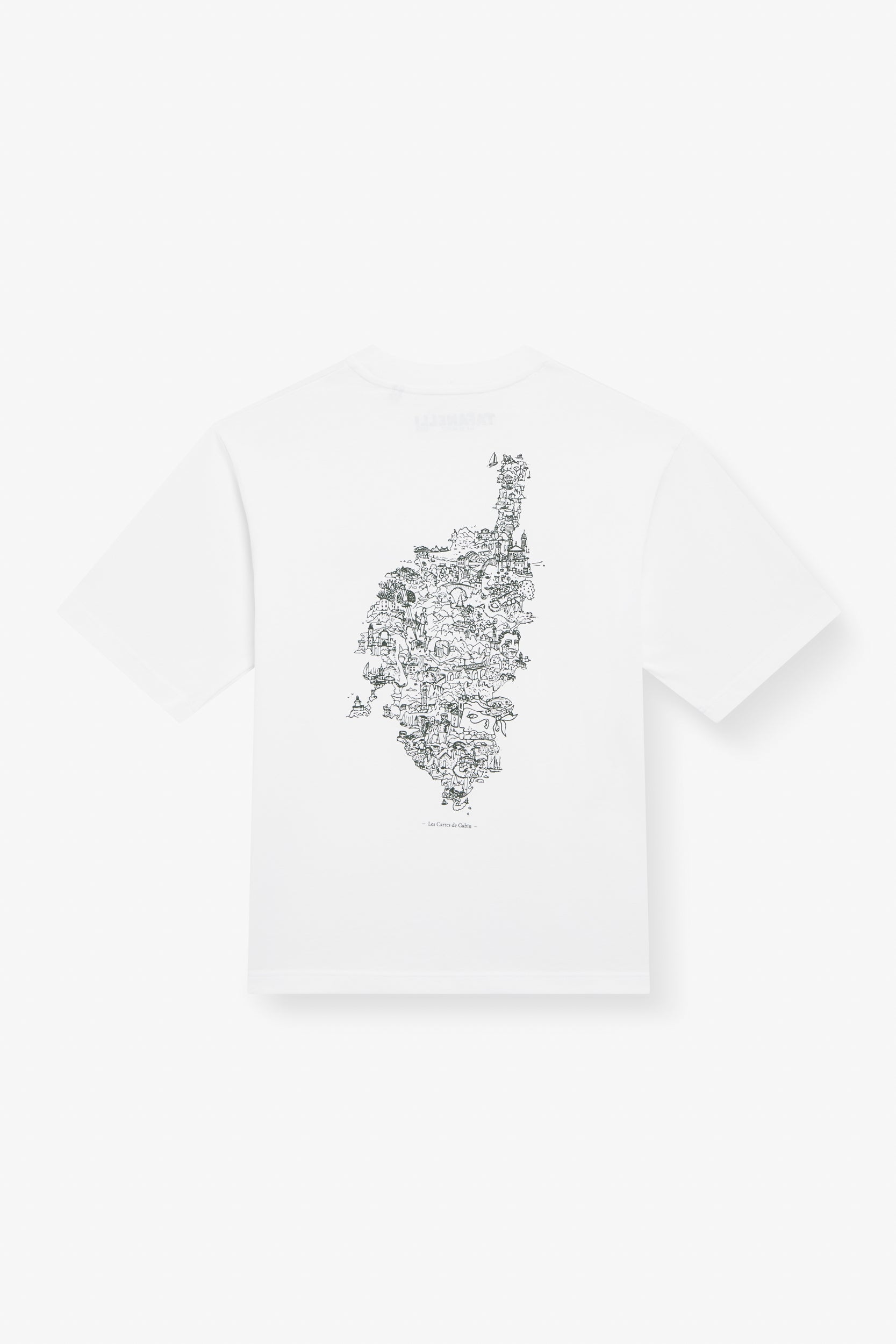
Three TAFANELLI pieces dialogue particularly well with the Ajaccio atmosphere. Our 1755 range for imperial visits and the Napoleonic circuit. Our complete collection with its 280g/m² Made in France t-shirts, perfect for hot days on the Route des Sanguinaires. Our Bleu de Chine Ulysse jacket for windy evenings at the Old Port or on the Parata at sunset.
Where to find TAFANELLI in Corsica
Our pieces are available at our partner retailers across Corsica: Cala Rossa, Le Bout du Monde in Calvi, U Nichjaretu in Calvi. Check our retailer map to find the store closest to your stay in Ajaccio. Delivery is also available throughout France via our website.
2026 Practical tips for planning your stay
How to get to Ajaccio
Ajaccio is served by Napoleon Bonaparte Airport, 8 kilometers from the city center, with daily flights from Paris, Marseille, Nice, Lyon, Toulouse, and several European cities. By sea, the Port of Ajaccio welcomes ferries from Corsica Linea, Corsica Ferries, and La Méridionale from Marseille, Toulon, and Nice. In July, book several weeks in advance.
The date not to miss in 2026
August 15, 2026, marks the 257th anniversary of Napoleon's birth. Official ceremonies at the Maison Bonaparte, Assumption procession from the cathedral, and a monumental fireworks display over the Gulf of Ajaccio in the evening. If you are in Ajaccio that week, book your accommodation now.
Getting around Ajaccio
The historic center can be visited entirely on foot. To reach the Route des Sanguinaires or more remote beaches, a scooter, a rental car, or bus no. 5 (running every 15 minutes in summer) are your best allies. Taxis are available at the Old Port and Place Foch.
July-August weather
Ajaccio enjoys average temperatures between 26 and 33 degrees in summer, with peaks of 36 degrees during heatwaves. The seawater is 24-26 degrees, ideal for swimming. The west wind (libeccio) regularly cools the afternoons, especially on the Sanguinaires side.
The ideal wardrobe
For a week in Ajaccio in summer, plan for light and breathable pieces, but also something to dress up for religious visits and dinners in town. A 280g/m² premium cotton t-shirt like our Île de Beauté 1755 range, a white linen shirt, light-colored trousers, a cap for the Parata, and a light jacket for windy evenings. Comfortable walking shoes for the hilly old town.
Continue the discovery
To go further in discovering Ajaccio, Corsica, and the TAFANELLI world, here is a selection of editorial articles that complement this one:
- Napoleon 2026: 10 places to visit in Corsica to understand the Emperor
- The history of 1755, the year Corsica proclaimed its independence
- Île de Beauté, Corsica: where these two names come from
- What to do in Bastia in July 2026: 15 must-sees
- Calvi: complete 2026 guide to discover the pearl of the Balagne
- Bonifacio: the complete 2026 guide
- The complete guide to Corsican wines 2026
- What to wear in Corsica this summer 2026
Ajaccio is a city that rewards patience. It does not allow itself to be seduced by those who pass through in three hours, but it gives itself entirely to those who take the time to visit each neighborhood, to sit for an hour at Place Foch, to walk along the Route des Sanguinaires in the late afternoon, to dine in the old town, and to sleep in a room overlooking the palm trees.
It is a Mediterranean capital in all its dignity, halfway between Genoese Italy, post-Napoleonic France, and contemporary Corsican identity. It deserves at least four days, more if you also want to explore the surrounding region (Filitosa, Porto-Vecchio, Bonifacio, Sartène).
For your 2026 trip to Ajaccio, our complete TAFANELLI collection offers the wardrobe that perfectly accompanies the city's atmosphere. Free delivery in mainland France, same-day shipping for all orders placed before 2:00 PM.
A PRESTU,
TAFA