An obsession with precision
What strikes you first about a Japanese garment is not a logo, nor marketing storytelling. It is the level of precision. The cut, the stitching, the tension of the line, the attention to detail, the placement of a collar, a pocket, a shoulder. Nothing seems left to chance.
Where many productions primarily seek efficiency, Japan often seeks accuracy. And this difference is immediately visible. The garment appears calmer, more structured, denser. It does not try to compensate for a weakness with a flourish.
In Japan, a detail is not there to decorate. It is there because it holds the whole together.
What this changes in practice
- More consistent proportions
- Cleaner finishes
- A silhouette that remains stable over time
- A sensation of a garment that was "thought out" rather than just produced
Some of the most beautiful materials in the world
Japan has become a global textile benchmark for a very simple reason: material is taken seriously there. Selvedge denim, heavy canvases, dense jerseys, French Terry, technical fabrics, brushed cottons, or weaves inspired by archives—everything is approached with almost obsessive standards.
A beautiful Japanese material doesn't just feel pleasant to the first touch. It supports the silhouette, absorbs light in a particular way, drapes better on the body, and holds a promise for the future. It is a garment that reveals itself as you live in it.
Density
More visual presence, more structure, more impact on the silhouette.
Texture
Surfaces that are alive and deep, rarely flat or artificial.
Durability
Fabrics designed to age gracefully, not to wear out quickly.
Patina
A capacity to gain character with time and wear.
The difference is quickly felt: a great material doesn't just fill out a garment; it provides its backbone.
This logic is perfectly reflected in the finest versions of the "bleu de Chine": how to recognize a genuine "bleu de Chine".
A radically different relationship with time
One of the reasons why Japanese clothing is so highly sought after lies in its relationship with time. Much of the fashion industry designs clothing for the immediate effect. Japan much more often designs clothing for its future life.
A good Japanese garment isn't just beautiful when new. It is designed to age well. The material gains depth. The cut remains sharp. The garment transforms without losing its quality. It is precisely this approach that creates attachment.
Time is not perceived as a threat. It is integrated from the start into the quality of the garment.
A deep culture of clothing
Japan possesses a singular clothing culture, one that is both extremely well-informed and very free. You find a deep respect for traditional garments, work uniforms, military pieces, and iconic Western clothes, but also a rare ability to reinterpret them without betraying them.
This culture is not based on simple reproduction. It is based on study, understanding, and then reformulation. This explains why so many Japanese brands manage to produce garments that seem both familiar and radically more accurate.
What makes this culture unique
- A true knowledge of the original pieces
- A deep respect for construction
- An ability to modernize without stripping the garment of its meaning
- An equal focus on material, cut, and usage
The strength of Japanese reinterpretations
Many countries produce "inspirations." Japan, however, often produces reinterpretations. It is not the same thing. An inspiration adopts visible codes. A reinterpretation understands the logic of the piece before translating it.
This is precisely why Japanese clothing is so admired by connoisseurs. It does not give the impression of a garment disguised as an archive piece. It gives the impression of an antique garment that has naturally found its place today.
The true luxury here: evolving a piece without making it lose its core identity.
Why it changes everything today
In a landscape saturated with rapidly produced clothing, often lacking depth, Japanese pieces offer something else. They give meaning back to what really matters: material, cut, longevity, and how a garment holds up over time. They appeal to people who are not just looking to get dressed, but to build a wardrobe.
This change in perspective is essential. It explains why Japanese clothes are so sought after by enthusiasts, but also why they are now attracting a wider audience: because they offer perceptible quality, not an abstract promise.
Why they are so sought after
- Because they hold up better
- Because they age better
- Because they tell a greater story
- Because they give the garment more than just an aesthetic function
The natural link with the "bleu de Chine"
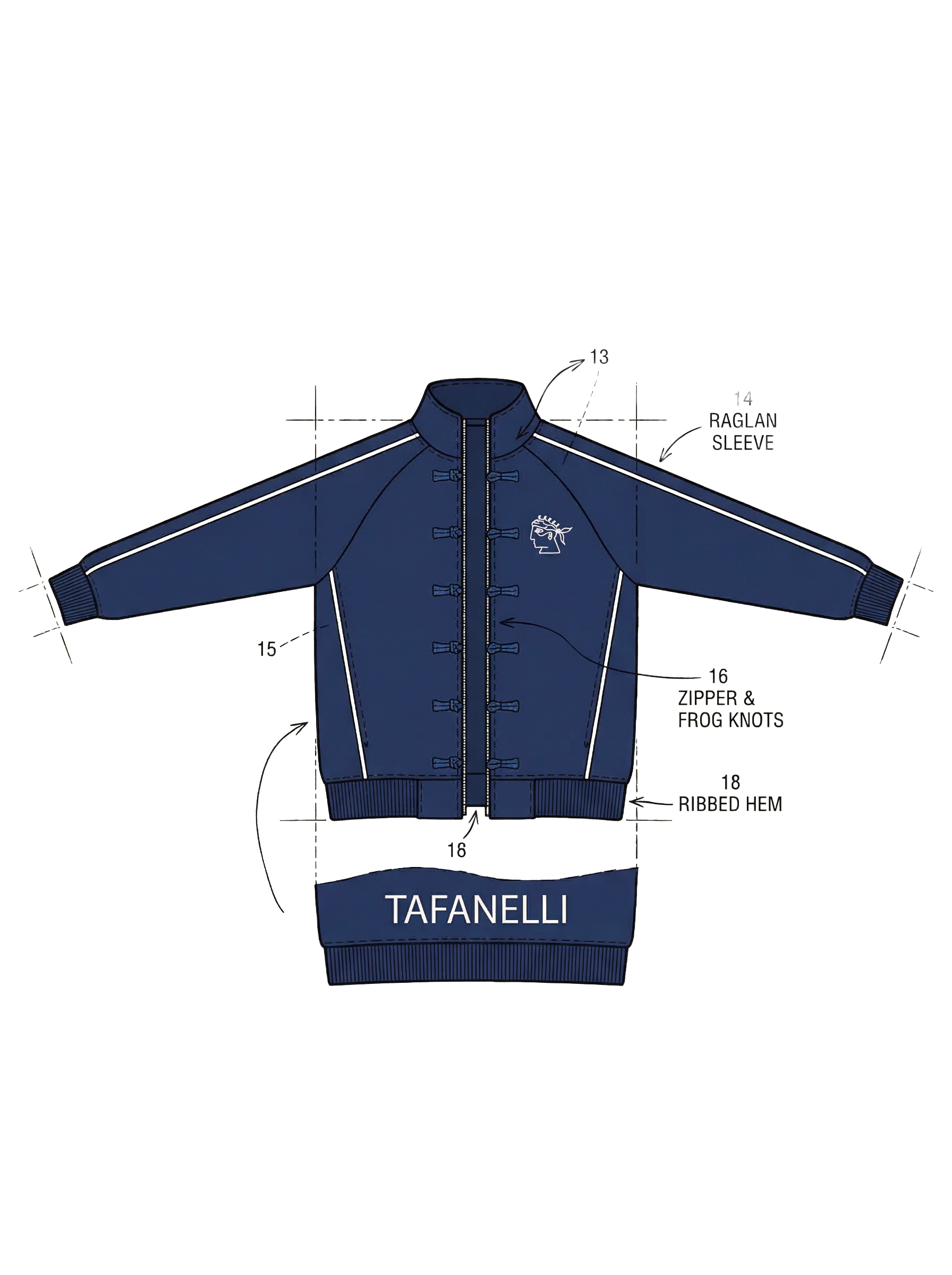
The "bleu de Chine" shares this exact logic: a piece born of utility, strong in its material, its cut, and its ability to develop a patina. It is therefore quite natural that Japan has become a benchmark when it comes to interpreting or extending this type of garment.
When a piece relies so heavily on density, structure, the logic of the cut, and the relationship with time, the quality of manufacturing becomes decisive. This is where Japanese standards change everything. They allow the garment to retain its gravity while gaining a contemporary precision.
To understand the history of this piece: why the "bleu de Chine" is a timeless garment and "bleu de Chine" vs work jacket.
A standard of excellence we have chosen
If Japanese clothing is so highly sought after, it is not due to a trend. It is because it embodies a more demanding idea of clothing. An idea in which material matters, the cut matters, time matters, and nothing is left to convenience.
It is in this spirit that we have chosen to develop our own vision of the "bleu de Chine." Not by seeking a manufacturing effect, but by sourcing that level of excellence directly at the source.
Discover this piece: the Tafanelli "bleu de Chine".
Explore Tafanelli
Pieces designed around material, time, and what really makes the difference.