

Why a t-shirt retains odors
A t-shirt doesn’t smell bad just because you sweat. In reality, perspiration alone is often nearly neutral. What creates a lingering odor is the encounter between humidity, body heat, repeated friction, and a material that traps all of this instead of letting it evaporate.
The more a fabric holds moisture in its fibers or on its surface, the more it becomes a breeding ground for persistent odors. That is why two t-shirts worn under the same conditions can react in completely different ways. One remains wearable until the evening. The other already gives a feeling of saturation after just a few hours.
Not all t-shirts retain odors the same way. The real difference isn't always visible right away. It is smelled after a few hours.
Humidity
When the fabric does not regulate moisture well, it stays damp longer and quickly loses its feeling of freshness.
Heat
Hot areas of the body accelerate the development of an odor when the material does not breathe properly.
Friction
The armpits, upper back, or chest concentrate movement and wear the fabric down faster on a daily basis.
Residue
Detergent, deodorant, fabric softener, or incomplete washing can eventually block the fabric and trap odors inside.
The material makes all the difference
This is often where everything is decided. Many t-shirts that quickly develop an odor have one thing in common: their material does not age well on the body. Some synthetic textiles provide an immediate feeling of lightness, but they also grab odors very quickly. Conversely, a better-constructed, denser, better-spun cotton often keeps a feeling that is cleaner, more stable, and more breathable over time.
That doesn't mean all cottons are equal. A cotton that is too thin, too loose, too dry, or too low-end can also wear out quickly. It loses its shape, absorbs poorly, dries irregularly, and sometimes ends up keeping a background odor, even just after washing.
Key takeaways
When a t-shirt starts to smell quickly, the problem is not always your usage. It may come from a textile that is too poor, too thin, or too full of fibers that trap odors. This is exactly why the quality of a t-shirt is never limited to its appearance.
| Material or construction | Frequent reaction when worn | Impact on odor |
|---|---|---|
| Synthetic-dominant | Dries quickly but sometimes gets hotter on the body | Can lock in odors quickly |
| Very thin cotton | Light at first but limited durability | Can saturate quickly with intense use |
| Dense and well-constructed cotton | Better shape retention, more stable feel | Often handles long days better |
| Material full of residue | Feeling of fabric that "suffocates" | Odor returns despite washing |
To delve deeper into the real quality of a textile, you can also read how to recognize a quality t-shirt in 5 seconds. It is often the best starting point to understand why certain models age poorly.
Why the odor remains after washing
This is one of the most frustrating cases. The t-shirt comes out of the machine, looks clean, smells good for a few minutes, then the odor returns as soon as it heats up again on the body. This feeling often comes from a fabric that hasn't been deep-cleaned, but simply perfumed on the surface.
Several causes often come up: a machine that is too cold, overdosed detergent, too much fabric softener, a drum that is too full, or a t-shirt left damp for too long before drying. Over time, residue builds up in the material. The fabric seems clean, but it is actually saturated.
A t-shirt that still smells after washing isn't necessarily worn out. It is sometimes simply invisibly clogged.
The "false clean"
It’s a classic trap. Many garments look fresh to the touch but regain their odor within the first few minutes of body heat. The laundry scent masks a problem without fixing it. The more mediocre the fabric, the faster this phenomenon can appear.
Washing that is too aggressive or poorly suited
Conversely, washing too hard or too often doesn't necessarily help. A weakened textile loses its shape, deforms, absorbs poorly, and sometimes begins to age faster. We see the same logic as in why a t-shirt shrinks in the wash: when the material is poorly chosen or poorly maintained, everything else follows.
The zones that saturate first
All parts of a t-shirt do not experience wear in the same way. Odors almost always concentrate in areas where the fabric is compressed, heated, or rubbed more intensely. You therefore have to look at the garment's reaction by zone, not just as a whole.
Armpits
This is the most exposed zone: heat, humidity, deodorant, friction. A mediocre fabric quickly shows its limits here.
Upper back
Under a bag, in the car, or while moving, the material heats up and traps moisture more easily.
Chest
Depending on the fit, this area can quickly stick to the body and lose its feeling of breathability.
Collar
Repeated contact with the skin, the nape of the neck, and sometimes hair products can also wear out the material.
Observing these areas often helps to understand if the problem comes from your usage or the piece itself. A good t-shirt does not react excessively everywhere. It maintains a form of balance. This is also what differentiates it from a model that pills, twists, or wears out too quickly. On this point, our article why my t-shirt pills complements this reading very well.
How to prevent a t-shirt from smelling bad
The first answer is not to change detergents every month. You mostly need to get back to the right basics: choose a more consistent fabric, wash it properly, avoid suffocating it with too many products, and let it dry correctly.
Choosing a material that stands up to wear
A t-shirt that retains good density, real shape, and genuine breathability resists long days better. This isn't obvious in the store. But it is decisive after several wears.
Do not saturate the wash
Too much detergent doesn't mean more cleanliness. On the contrary, it can leave a film on the fabric. The same goes for fabric softener, which sometimes gives an immediate soft feeling but can end up suffocating the material.
Avoid the laundry basket for too long
A t-shirt that has been worn, is damp, or sweaty should not remain compacted for days. The longer it waits, the more time odors have to settle in. It’s a simple detail, but it changes a lot of things.
Rotate your pieces
Wearing the same two or three t-shirts constantly wears out the textiles faster. A wider rotation lets the pieces breathe and allows each material to age better.
The right logic
To avoid odors, focus less on masking the problem and more on preventing it. A good fabric, good density, and a simple but clean wash are worth more than an accumulation of emergency solutions.
The hidden detail: fabric weight
We often talk about fit, rarely about fabric weight (grammage). Yet, it is one of the most important elements in the actual behavior of a t-shirt. A denser fabric is not automatically better, but it often offers better structure, a more stable presence on the body, and a superior ability to withstand successive wears without immediately losing its construction.
Conversely, a t-shirt that is too light might give a pleasant impression on first contact, but then become unstable as soon as it is faced with heat, friction, and repeated washing. This is often where problems begin: transparency, deformation, saturation, and more noticeable odors.
If you want to understand this point in depth, you absolutely must connect this article to which t-shirt to choose to last a long time. It is the natural extension of this subject. Odor is often just a symptom. The real question is almost always about the construction of the t-shirt.
Choosing better from the start
A t-shirt that smells quickly is not necessarily an accident. It is often a signal. A signal of a material that doesn't measure up, a density that is too low, a fabric that doesn't regulate correctly, or maintenance that doesn't match its construction. Choosing better at the start helps avoid a large part of the problem.
You have to look at the garment beyond the color or pattern. How does it drape? What is its actual weight? Does the collar look stable? Does the material feel dry, soft, hollow, or, on the contrary, dense and clean? These are the details that often decide what happens next.
In reality, the right piece is the one you forget about during the day. The one that accompanies the body without sticking, without twisting, without saturating too quickly. It’s a matter of comfort, but also of honest construction.
Not all t-shirts react the same way
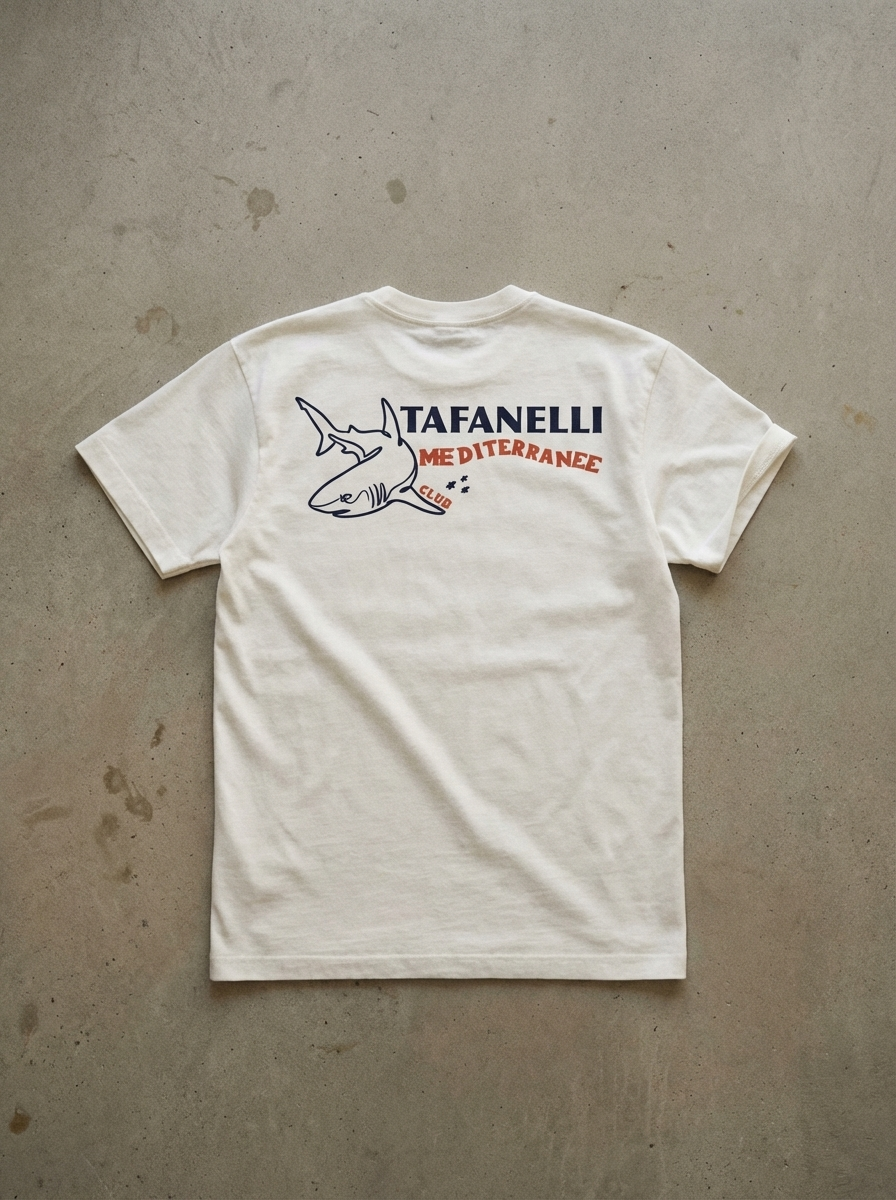
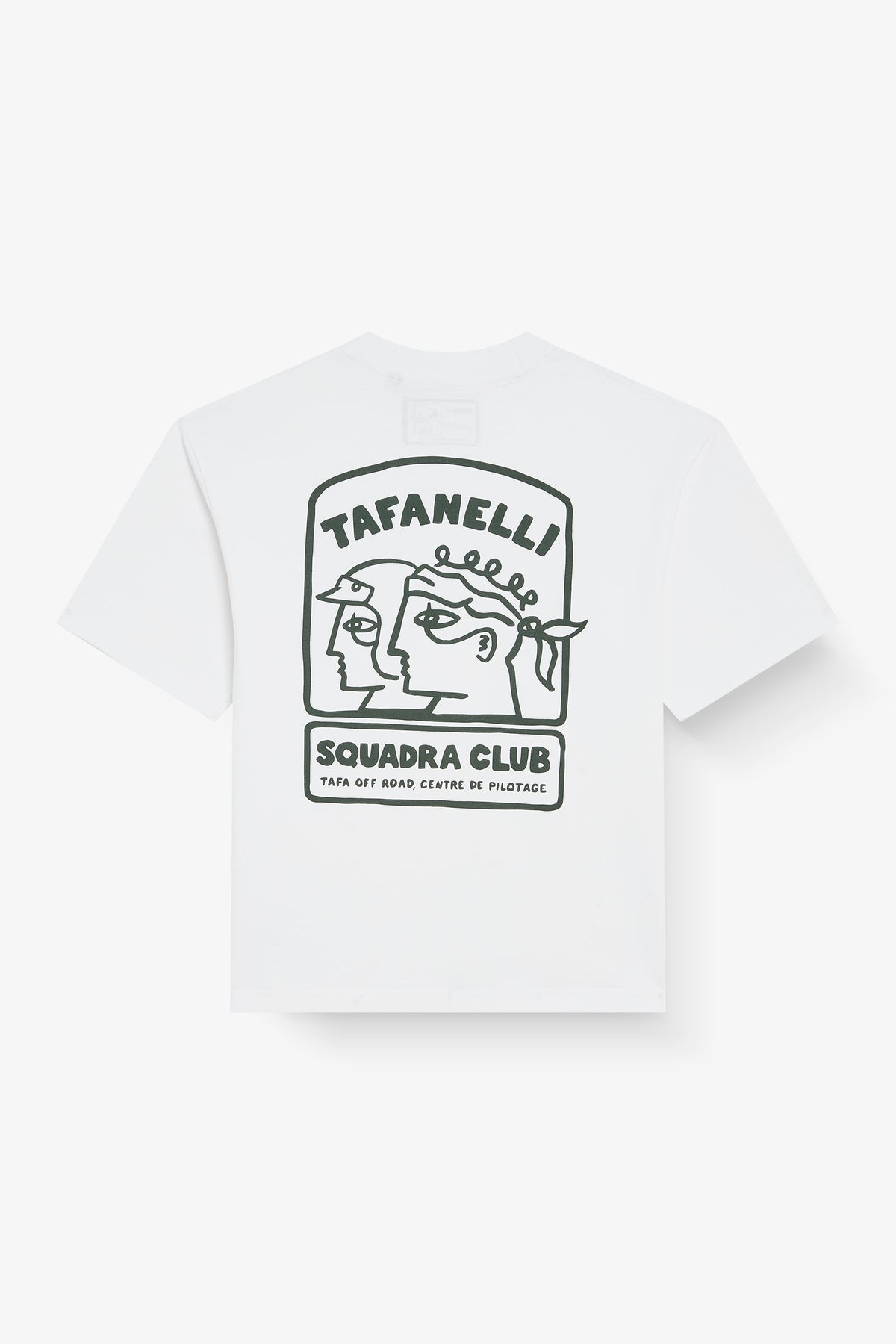
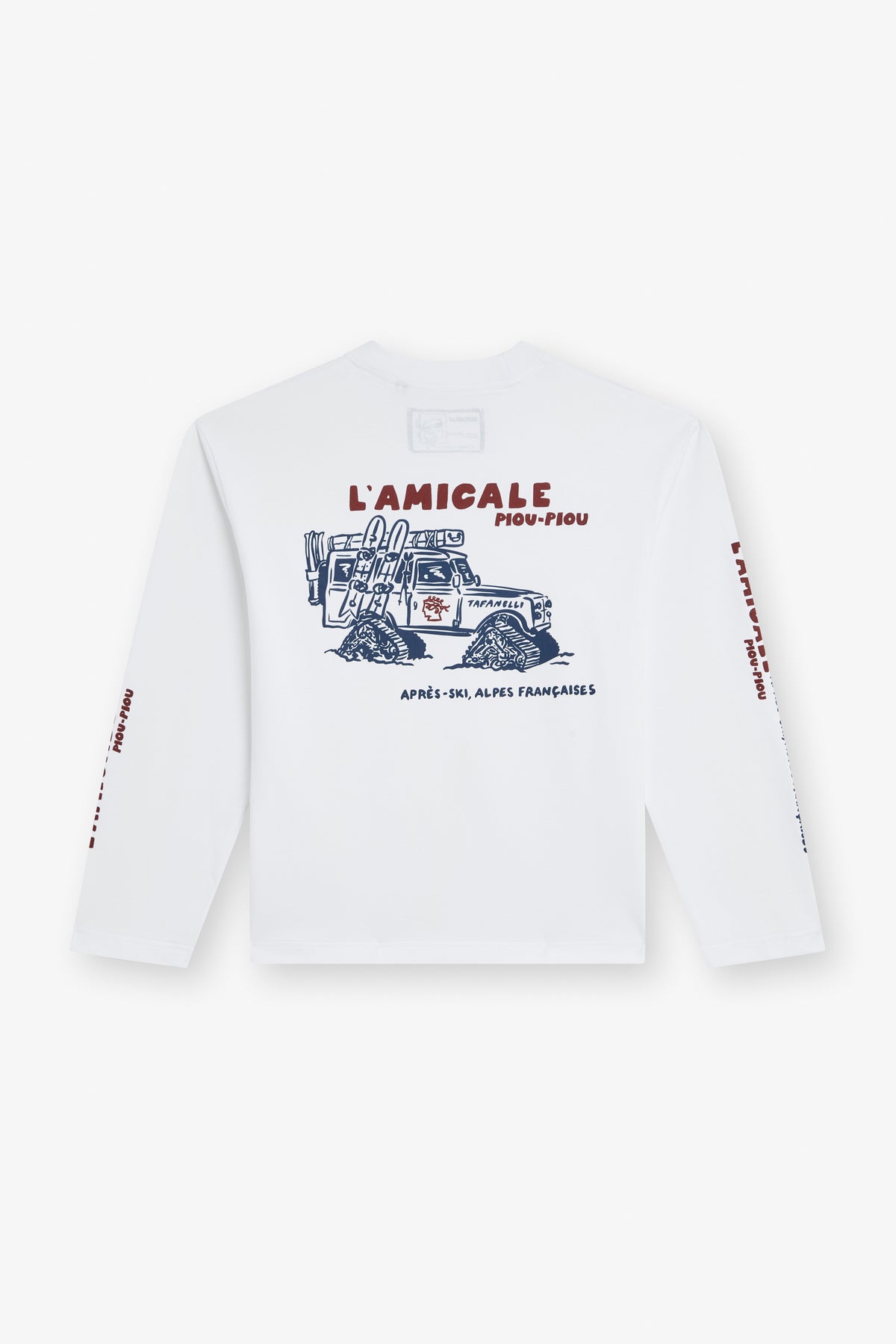
When a piece smells quickly, the problem rarely comes from chance. The difference often starts with the material, the density, and the way the fabric lives on a daily basis. Discover our selection of TAFANELLI t-shirts and continue reading with how to recognize a quality t-shirt in 5 seconds, why a t-shirt shrinks in the wash, and why my t-shirt pills.
See the t-shirts