Corsican first names: origin, meaning and complete guide
For centuries, no one chose their child's first name in Corsica. The rule was written in advance: the eldest child bore that of their grandfather. Then, in one generation, everything changed. Here is the history of Corsican first names, their meaning, their pronunciation, and why today's parents broke with tradition while believing they were perpetuating it.
The old rule: the eldest child bears the grandfather's name
In traditional Corsica, you didn't look for a first name. You applied it.
The first boy received the paternal grandfather's first name. The first girl, that of the paternal grandmother. The following children took the first names from the maternal side, then those of the uncles and aunts. The system was so strict that one could guess a child's position in a sibling group just by hearing their first name.
A Corsican first name was not a parental whim. It was a place in a lineage.
This mechanism explains two things. First, the massive repetition of a few first names within the same village, to the point where nicknames had to be used to distinguish people. Second, the function of the first name itself: it did not serve to single out a child, but to connect one generation to the previous one. In a society where family took precedence over the individual, this was logical.
The same reasoning governed the language, the land, and the house. You did not own; you passed on.
The riacquistu, or the break through tradition
Starting in the 1970s, the riacquistu, the Corsican cultural reconquest movement, changed everything. The language returned in songs, in writing, and in the public sphere. And parents began giving their children Corsican first names.
Here is the paradox, and it is rarely highlighted.
These parents think they are reconnecting with tradition. In reality, they are breaking it. Because the Corsican tradition did not consist of choosing a beautiful island name; it consisted of taking the grandfather's, whatever it might be, often Gallicized for decades. Choosing Chjara or Andria for its sound and meaning is a modern, individual gesture, exactly what the old system forbade.
The result is no less sincere. A language that returns in first names is a language that is winning, because it is passed on before the child even speaks. But one must know what one is talking about: today's Corsican first names are a contemporary cultural act, not a survival.
It is the same movement that saved the paghjella and put island symbols back into circulation, starting with the Moor's Head.
How to pronounce a Corsican first name
Two groups of letters confuse everyone, and they are everywhere.
- Ghj is pronounced like a soft "dj". Ghjuvanni is pronounced approximately "djou-VA-ni", and not "ge-ju-vani".
- Chj is pronounced like a soft "ky" or "tch". Chjara is pronounced "KYA-ra", in a single attack.
- U at the end is pronounced "ou". Petru is pronounced "PÉ-trou", Santu "SAN-tou".
- Double consonants are held, as in Italian. Ghjuvanni has an emphasized "n".
These spellings are not decorative. They note sounds that exist in Corsican and do not exist in French. That is precisely why they were kept when the language was given a standard orthography.
Corsican first names for boys
The classics
- Ghjuvanni (John). The most widespread of all, the source of dozens of compound names and diminutives.
- Petru (Peter). From the Latin petrus, the stone.
- Andria (Andrew). From the Greek andreios, courageous, virile. One of the most popular today.
- Matteu (Matthew). From the Hebrew, gift of God.
- Marcu (Mark).
- Paulu (Paul).
- Ghjacumu (James).
- Filippu (Philip).
- Lisandru (Alexander).
- Antone (Anthony), very often as a compound.
- Dumenicu (Dominic), from the Latin dominicus, of the Lord.
- Saveriu (Xavier).
- Nicolau (Nicholas).
Calendar first names
An entire family of first names comes from the great religious holidays, a marker of a deeply Catholic society.
- Pasquale, born at Easter. Borne by Pasquale Paoli, the father of the Corsican nation.
- Natale, born at Christmas.
- Santu, literally "saint".
- Anghjulu, angel.
Specifically island-based first names
- Orsu, the bear. A first name without a direct French equivalent, often compounded as Orsu Maria or Orsu Antone.
- Sampieru, contraction of Santu Petru, popularized by Sampiero Corso.
- Vincentellu, diminutive of Vincent, borne by the condottiere Vincentellu d'Istria.
- Culombu, dove in the masculine.
Corsican first names for girls
The most popular
- Chjara (Clara/Claire). From the Latin clara, luminous, brilliant. One of the great contemporary successes, in Corsica as in Italy.
- Ghjulia (Julia). Very popular today.
- Alba, the dawn. Short, Latin, immediately understandable throughout the Mediterranean.
- Ghjuvanna (Joan/Jane), and its diminutive Vannina, borne by Vannina d'Ornano, a tragic figure of the 16th century.
- Anghjula, angel.
- Catalina (Catherine).
- Antonia (Antoinette).
- Serena, serene, calm.
- Bianca, white.
- Livia, of Roman origin.
- Diana, the goddess of the hunt.
Marian first names
They form a distinct, very Corsican group, directly derived from the liturgical calendar.
- Maria, alone or in a compound, omnipresent.
- Assunta, born around August 15th, the day of the Assumption.
- Nunzia, from the Annunciation.
- Lucia, from Saint Lucy on December 13th, the festival of light.
Two first names laden with history
Letizia, from the Latin laetitia, joy. Borne by Maria Letizia Ramolino, mother of Napoleon, born in Ajaccio.
Culomba, the dove, made famous outside the island by Prosper Mérimée's novel published in 1840, whose heroine encourages her brother to pursue a vendetta. A gentle name for a book that permanently set the image of Corsica in France, for better or for worse.
Compound first names
This is a Corsican signature. The compound is not a whim; it solves a practical problem: when the whole village is named Ghjuvanni, one must distinguish.
- Ghjuvan Battista (John the Baptist), often abbreviated to Battì.
- Ghjuvan Petru, Ghjuvan Marcu, Ghjuvan Andria.
- Anton Dumenicu, Anton Francescu.
- Petru Santu, Orsu Maria.
- Maria Ghjulia, Maria Antonia, Maria Serena.
Note that Maria appears in both masculine and feminine compounds. Orsu Maria is a man's name, and no one in Corsica is surprised by it.
In daily use, the compound is almost always shortened: Ghjuvan Battista becomes Battì, Anton Dumenicu becomes Antondu. The official first name is long, the real first name is short.
The most popular first names today
The current trend on the island highlights a small group of first names, driven both by Mediterranean fashion and attachment to the language.
- For boys: Andria is in the lead, ahead of Ghjuvanni, Matteu and Lisandru.
- For girls: Ghjulia, Chjara, Alba and Elena dominate.
Two characteristics bring them together. They are short, which makes them usable anywhere, including off the island. And they are transparent: a continental, an Italian or a Spaniard immediately understands them. This is exactly the profile of an identity that is carried without justification.
The diaspora plays an important role in this movement. Many families living on the continent choose a Corsican first name as a maintained link with the island, sometimes more systematically than families who have remained on site.
Frequently asked questions
What are the most popular Corsican first names?
Andria and Ghjulia are in the lead, accompanied by Chjara, Alba, Elena for girls, and Ghjuvanni, Matteu and Lisandru for boys.
How is Ghjuvanni pronounced?
Approximately "djou-VA-ni". The "ghj" group is pronounced like a soft "dj", and the final "u" is pronounced "ou".
Can I register a Corsican first name with the French civil registry?
Yes. Corsican first names can be freely registered, including with their specific spellings. The registrar can only refuse if the name is contrary to the child's interest, which is obviously not the case here.
What is the Corsican tradition for naming a child?
Traditionally, the eldest boy received his paternal grandfather's name and the eldest girl her paternal grandmother's, then they went up the maternal line. The first name marked a place in the lineage, not a preference.
Are there Corsican first names without a French equivalent?
Yes. Orsu, which means the bear, is the best example. Sampieru, Vincentellu and Vannina also have no real translation; they are specifically island forms.
Passing on the island, at TAFANELLI
Giving a Corsican first name to a child born in Marseille, Nice or Paris is deciding that the island does not stop at the port. This is exactly the reason we exist.
A clothing brand does not pass on a language. But it can be one of the objects through which a link is maintained: what we wear, what we give, what we keep.
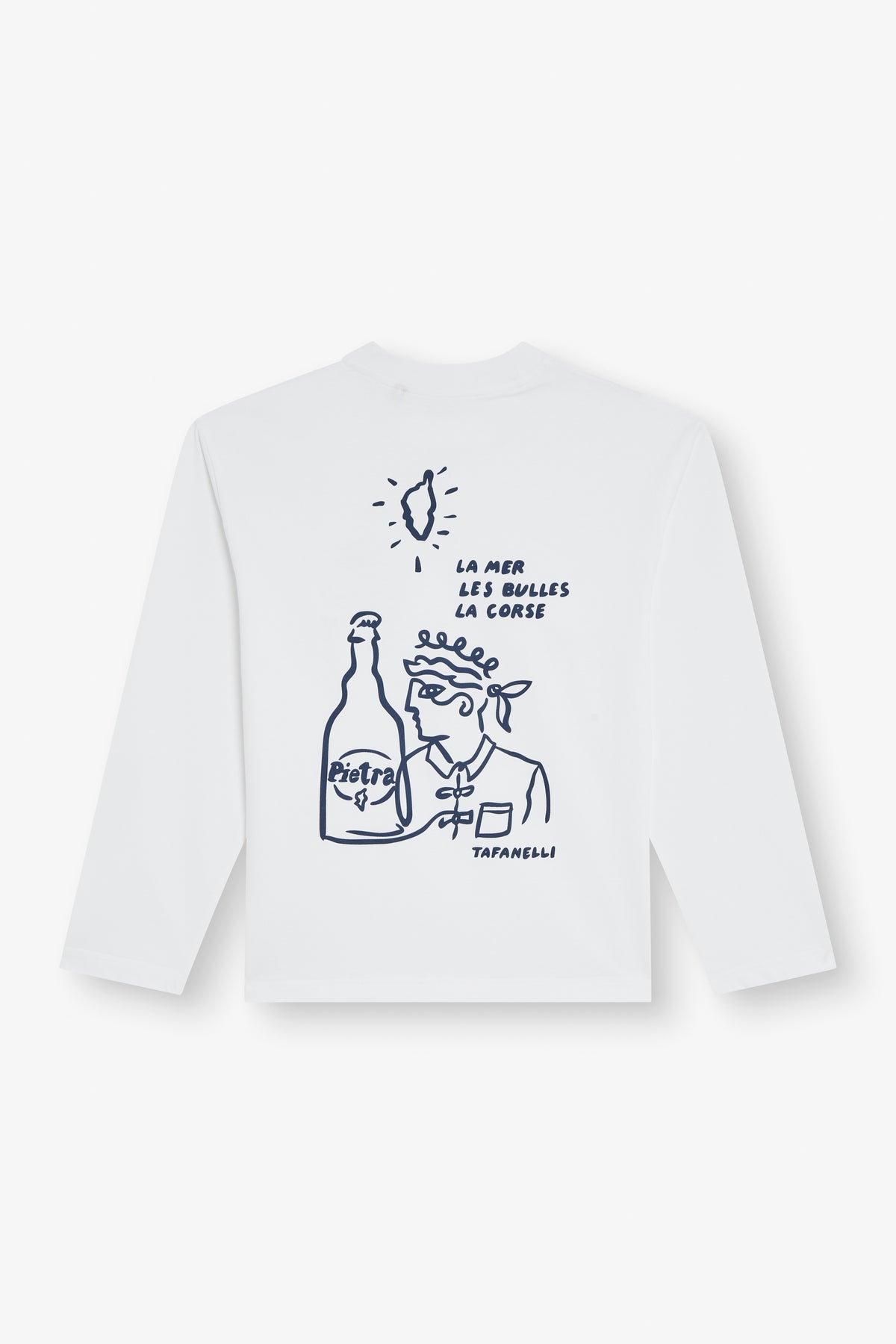
This is the intention behind Zitellu, our children's line. Zitellu means "child" in Corsican. Same materials as our adult pieces, same cotton, same hand-screen printing, with no compromise on quality just because it is small.
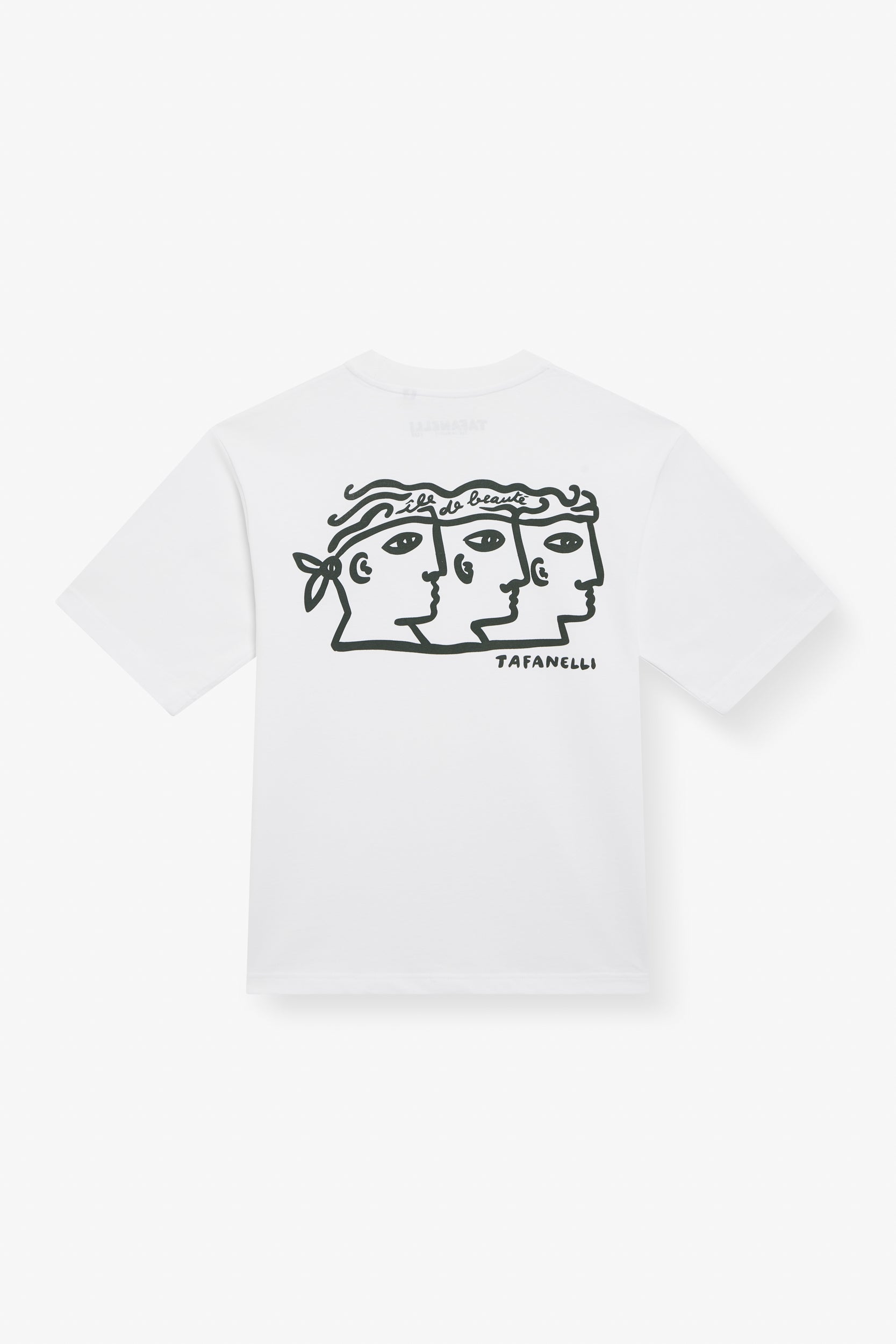
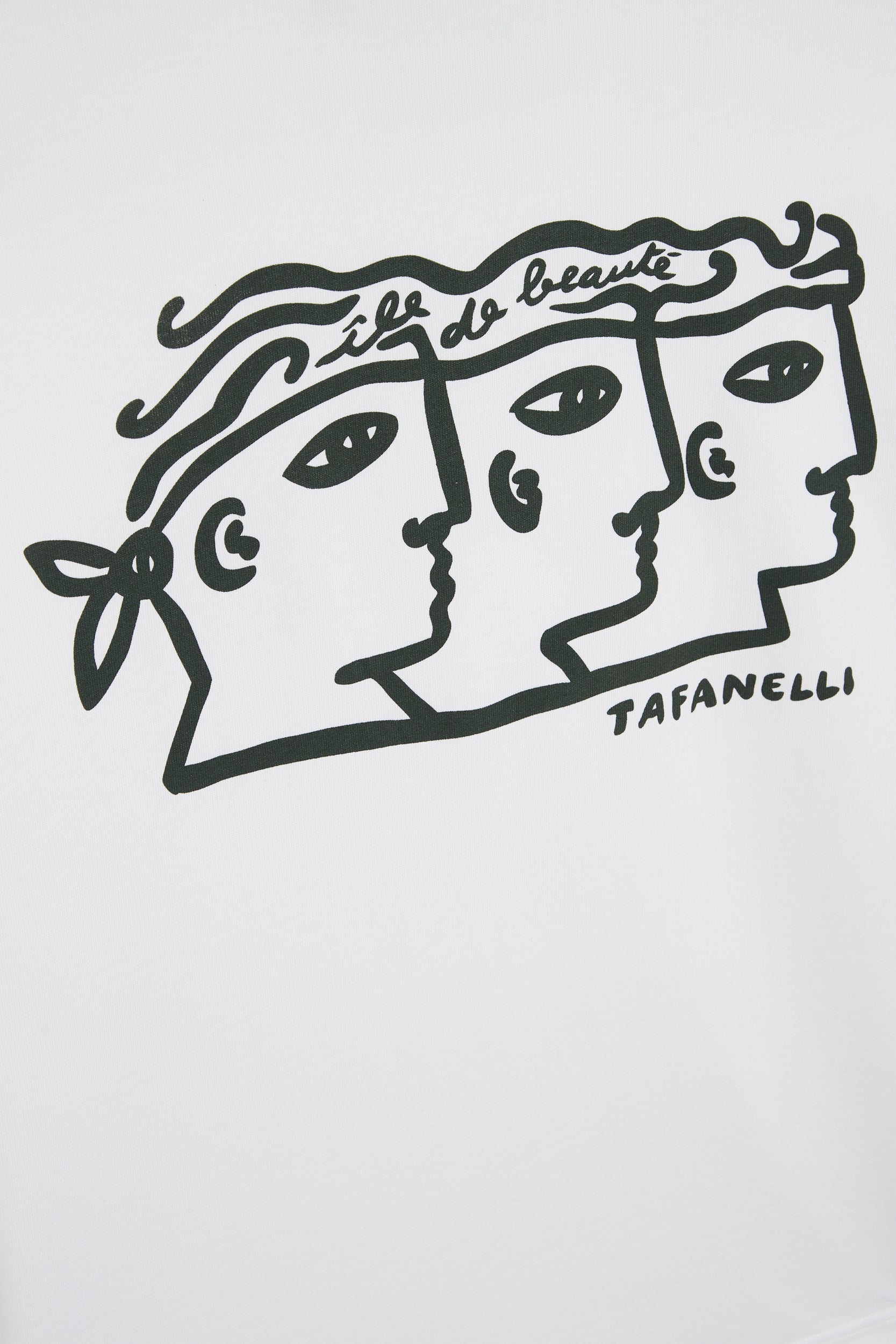
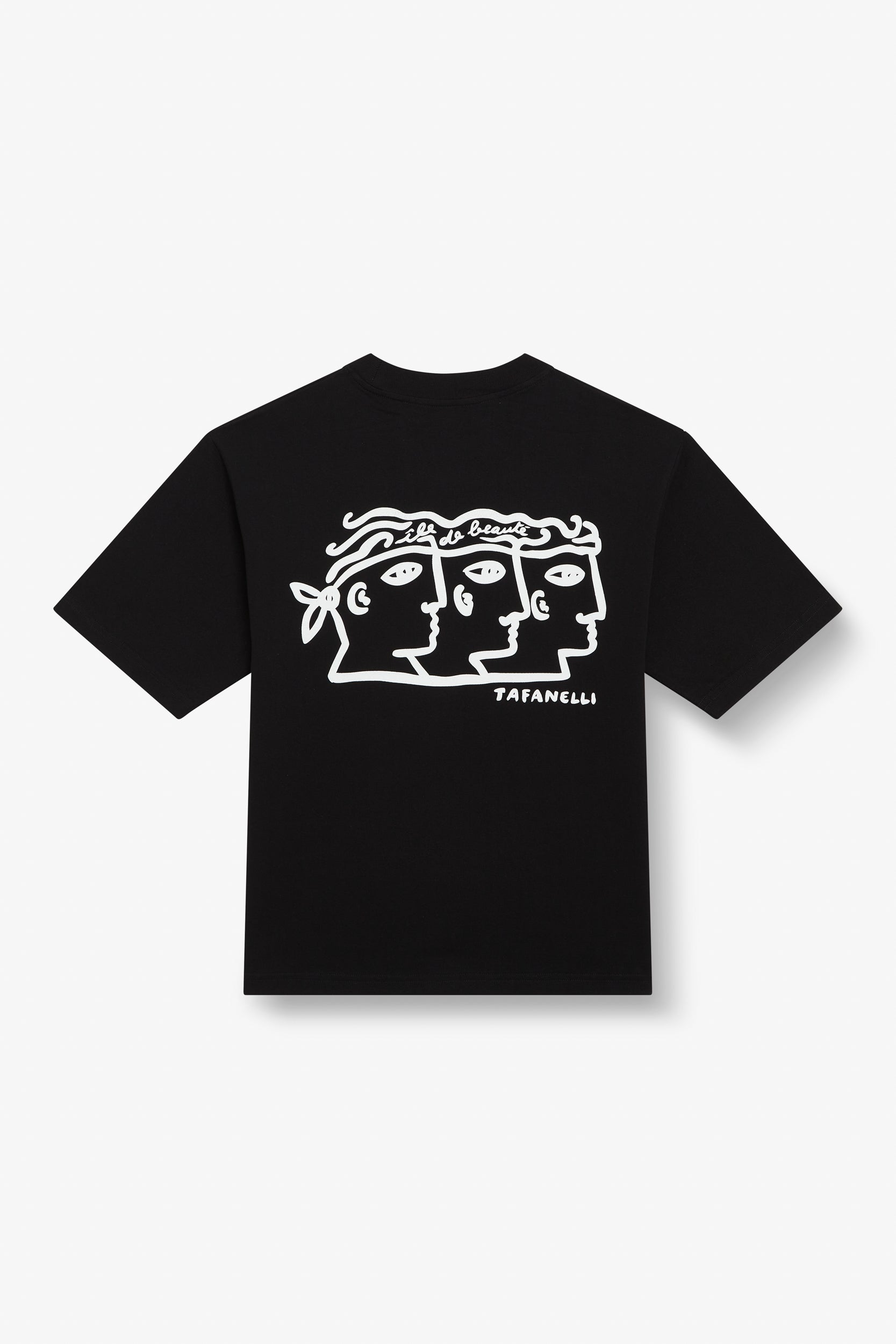
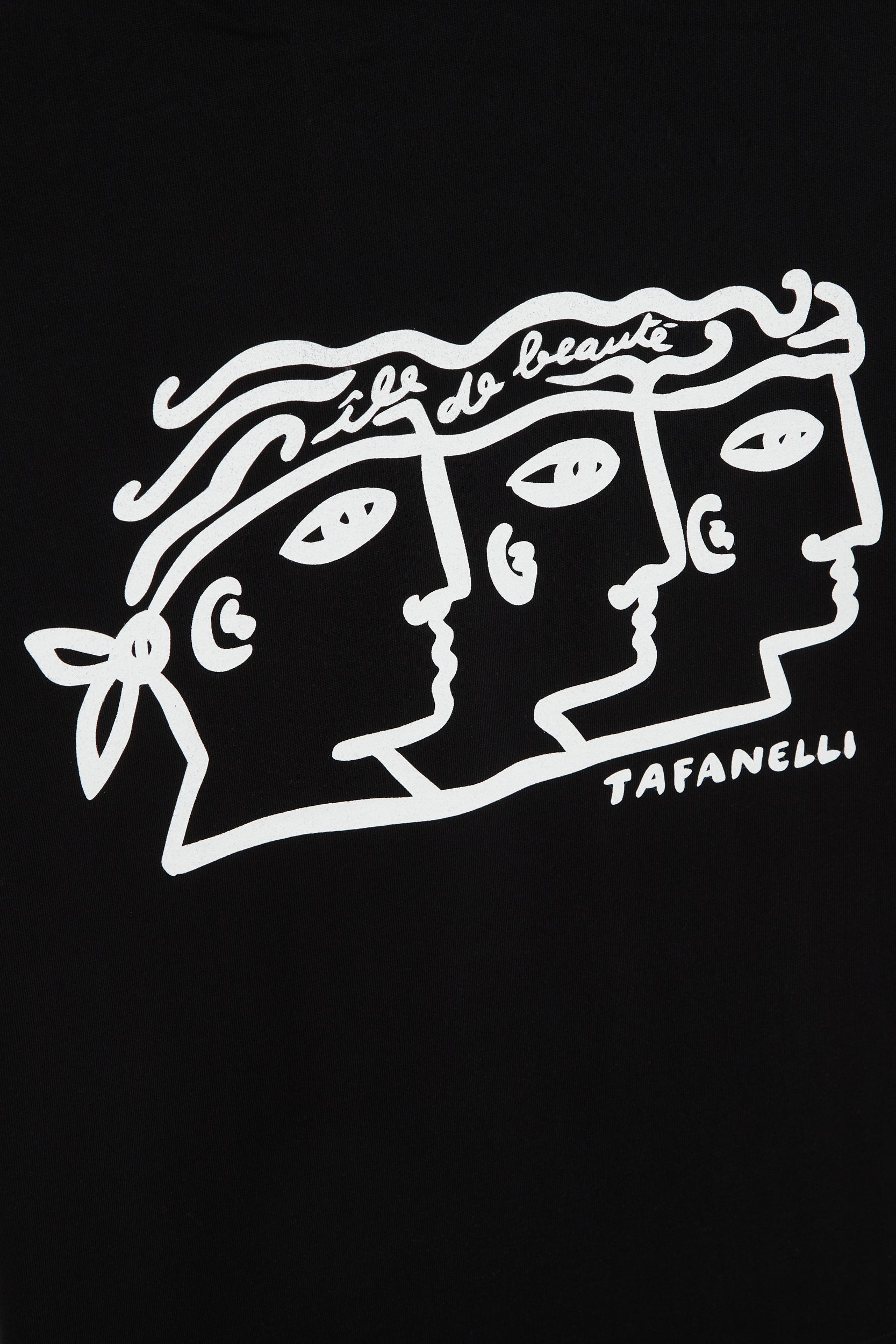
And our latest piece, La Trinità, bears the historic appellation of the island under three profiles facing the same horizon: mare, muntagna, machja. Three Corsican words, like a first name that is passed on.
To learn more:
- The Corsican language, history and renaissance
- Traditional Corsican dress
- The paghjella, Corsican polyphony on the UNESCO heritage list
- The Moor's Head, history of the Corsican flag
- TAFANELLI, a Corsican brand and Mediterranean wardrobe
In passing through Corsica, the client becomes a friend.
A DOPU,
TAFA