The Eye of Saint Lucia: the complete history of the Mediterranean's most mysterious Corsican talisman
Every Corsican child has one in their pocket. Every grandmother slips one into a newborn's crib. Every sailor keeps one on their boat. The Eye of Saint Lucia, also known as the Eye of Ulysses or "Ochju di Santa Lucia" in the Corsican language, is much more than just a shell picked up on the beach. It is not, in fact, a shell at all: it is the operculum of a sea snail, the small calcareous door that closes its shell. Here is its complete history: blending Christian legend, marine science, pagan rituals, and Corsican symbolism.
An ancient Corsican talisman
If you ask a Corsican what the most precious item in their family home is, there is a good chance they will tell you about a small, seemingly insignificant object, often kept in a jewelry box, a leather pouch, or a souvenir drawer. It is an Eye of Saint Lucia. It comes from the nearby beach, often found in childhood under the feet of a grandfather, a cousin, or a family friend.
This little object, cream-white on one side and spiraled brown on the other, holds cultural significance that is completely disproportionate to its apparent modesty. It crosses centuries, wars, migrations, and generational shifts, keeping its function intact: to protect the one who wears it.
Every Corsican has received one in their lifetime. Every family keeps several. And yet, very few people know its complete history, so natural—almost invisible through sheer daily presence—has it become.
Why Corsica more than elsewhere?
The animal from which the Eye of Saint Lucia originates lives throughout the western Mediterranean, notably on the coasts of Provence, Sardinia, Catalonia, and, of course, Corsica. But it is in Corsica that the tradition of the talisman has survived most continuously, never once interrupted. Today, Corsica is one of the last Mediterranean territories to keep this tradition alive, transmitted orally and intact from generation to generation, just like its language or its polyphonic chants.
The legend of Saint Lucy of Syracuse
The origin of the name "Eye of Saint Lucia" dates back to a Christian story from the fourth century. Saint Lucy of Syracuse is one of the major figures of early Mediterranean Christianity. She was born around 283 in Sicily, in Syracuse, into a noble family.
Legend has it that she refused to marry a pagan suitor, having taken a vow of virginity to dedicate herself to her faith. She was denounced to the Roman authorities, who condemned her to martyrdom. According to tradition, she died in 304, at about 21 years old, during the reign of Emperor Diocletian.
The eyes of Saint Lucy
Several variations of her legend state that before her death, Saint Lucy gouged out her own eyes, either to discourage the suitor who admired their beauty, or because her torturers tore them out during her ordeal. These episodes belong to hagiographic tradition rather than historical record: they appear in accounts written centuries after her death.
A Mediterranean version recounts that her eyes were thrown into the sea, where they transformed into small pearlescent objects that the waves have washed up on beaches ever since to protect people from curses, particularly eye diseases. This is where the name comes from.
Patron saint of vision and sailors
Since the Middle Ages, Saint Lucy has been venerated as the patron saint of vision and the blind. Her very name, derived from the Latin lux (light), reinforces this symbolism. In Mediterranean maritime traditions, she is also invoked by sailors and fishermen against storms. This dual role explains why the talisman bearing her name has spread so widely across the Mediterranean world.
The scientific origin: the operculum of the Bolma rugosa
Behind the Christian legend, the Eye of Saint Lucia has a perfectly biological origin. It is the operculum of a marine gastropod named Bolma rugosa, commonly known as the rough turban snail.
The operculum is the small calcareous piece that seals the opening of the mollusk's shell when it retracts inside. It is, literally, its door. In the Bolma rugosa, this door has a shape and structure so distinct that it has become one of the most recognizable objects in the Mediterranean.
Biological description
The Bolma rugosa is a herbivorous marine mollusk that lives in the shallow waters of the western Mediterranean on rocky bottoms covered with algae, generally down to a few dozen meters deep. Its conical shell, which is brown or greenish, measures between 4 and 8 centimeters.
Upon its death, the mollusk decomposes and the shell itself breaks or disappears, but the operculum, extremely hard and resistant, survives. It is this calcareous piece, tumbled by the waves, that washes up on Mediterranean beaches, where it waits to be found.
Where to find it in Corsica
The best places are pebble and coarse sand beaches, especially after storms that dump large quantities of these small objects on the shore. In Corsica, the beaches of Cap Corse, particularly around Nonza, Farinole, and Erbalunga, as well as those in the Balagne region (Lozari, Ostriconi, Bodri) and the east coast, are particularly favorable. The winter season, following the heavy storms between December and March, is the best time for gathering.
The two sides of the eye: white mother-of-pearl and brown spiral
The Eye of Saint Lucia derives all its visual charm from its duality: two radically different sides that evoke a human eye seen from the front or in profile.
The convex side: the white of the eye
The domed side features a cream or pearl-white surface, smooth and slightly translucent. It corresponds to what one would call the white of the eye by analogy. This is the side traditionally displayed when wearing the eye as jewelry, as it reflects light beautifully.
The flat side: the spiraled pupil
The flat side features a brown, ocher, or reddish spiral, creating a hypnotic pattern. This is the side that most strongly evokes a pupil. It is also what gives the object its mystery: it seems to watch the person looking at it, which has fueled centuries of belief regarding its protective power.
The symbolism of duality
This duality, a luminous surface on one side and a dark spiral on the other, has been interpreted in multiple ways in Mediterranean culture: good and evil, light and shadow, the visible and the invisible. It explains why the Eye of Saint Lucia is perceived as an object that is both protective and somewhat magical.
The "ochju bonu" and the "ochju malu," two sides of the same belief
To understand why the Eye of Saint Lucia is so venerated in Corsica, one must delve into the deeply rooted belief in the "ochju," which literally means "eye" in the Corsican language but primarily refers to the evil eye.
The "ochju malu," the evil eye
According to traditional belief, the "ochju malu" can be cast upon a person by a gaze laden with envy or jealousy. It is not necessarily a voluntary act: one can cast an "ochju" simply by admiring a child, an achievement, or a beautiful object too intensely.
The symptoms attributed to the "ochju" are clearly identified in Corsican culture: sudden headaches, inexplicable fatigue, diffuse malaise, and crying for no reason in children. Traditionally, it is suspected when a happy event is followed by unexplained discomfort.
The "ochju bonu," the good eye
Faced with the evil eye, Corsican culture developed its antidote: the "ochju bonu," the good eye, protective and benevolent. The Eye of Saint Lucia is its physical incarnation. Wearing it means placing oneself under permanent protection.
A belief that spans the centuries
This belief system is very ancient and similar to the evil eye traditions found throughout the Mediterranean basin since antiquity. Local Christianity, rather than fighting it, absorbed it by renaming it after a saint. This syncretism is typically Mediterranean and is found in many other island traditions, from the Saint John's fire in Bastia to agrarian calendar festivals.
The "signadora," guardian of rituals against the evil eye
The belief in the "ochju" is accompanied by a system of traditional guardians: the "signadore." A "signadora" is a woman, usually elderly, who has received the transmission of a ritual capable of lifting the "ochju."
The "signadora" ritual
The ritual unfolds as follows. The person who believes they have been a victim of an "ochju" visits the "signadora," usually at her home. The "signadora" fills a plate with water, pours a few drops of olive oil, and silently recites an orally transmitted prayer. If the oil disperses without reforming, the "ochju" is confirmed. The "signadora" then recites other prayers to undo it. At the end of the ritual, the oil must reform.
Strictly regulated transmission
Tradition dictates that knowledge of the ritual be transmitted at a specific time, often on Christmas Eve, between a woman and her daughter or granddaughter. The exact methods vary from one micro-region to another, and this discretion is an integral part of the practice: this is also why it is still alive today without ever becoming a public spectacle.
Complementarity with the Eye
The Eye of Saint Lucia and the "signadora" work in a complementary way: the Eye is the preventative protection one wears daily, while the "signadora" is the remedy in the event of a confirmed affliction. One prevents the "ochju" from taking hold, the other removes it if it has set in.
How to recognize a genuine Eye of Saint Lucia
With the growing popularity of this object, one can now find numerous imitations made of plastic, glass, or resin sold as authentic Eyes of Saint Lucia. Here is how not to be fooled.
Criterion 1: weight and material
A real eye is made of natural limestone, making it dense and heavy for its size. It feels cool and smooth to the touch. A resin imitation is much lighter and often too perfect.
Criterion 2: natural irregularity
Every real eye is unique: variable color shades, slightly asymmetrical shape, small imperfections, and scratches due to wear in the sea. An eye that is perfectly round and perfectly smooth is likely manufactured.
Criterion 3: the spiral on the flat side
The flat side features a spiral that is genuinely raised, which can be felt when running a fingernail over it. An imitation often has a painted or printed spiral that is flat to the touch.
Criterion 4: pearlescent reflections
The domed side of a real eye shows reflections that change depending on the light, with subtle iridescence. A resin imitation remains dull and uniform.
Criterion 5: size
Real Eyes of Saint Lucia generally measure between 1 and 2.5 centimeters. Larger examples exist but remain rare. Be wary of objects 3 centimeters or larger sold as authentic.
Where to find an authentic eye in Corsica
There are three ways to acquire a real Eye of Saint Lucia.
Method 1: gathering them yourself
This is the most authentic way. On Corsican pebble beaches, especially after a winter storm, it is not rare to find several per outing if one searches patiently. The beaches of Cap Corse, the one at Bodri in Balagne, and several hidden coves on the island are particularly rich. The ideal season is from November to March.
The right technique: search the strandline, the place where waves deposit debris, gently pushing aside seaweed and pebbles. The eye is often hidden between two stones, its pearlescent side catching the light.
Method 2: Corsican jewelry stores
Several Corsican jewelers offer authentic Eyes of Saint Lucia set in rings, pendants, or earrings, in Ajaccio, Bastia, and through artisans based in the villages of Cap Corse and Balagne. Expect to pay anywhere from a few tens to several hundred euros depending on the size of the eye and the setting.
Method 3: the family gift
The most traditional method. In Corsica, it is customary to receive an eye as a gift for an important occasion: birth, baptism, wedding, graduation, or a first apartment. This gift is considered a blessing and a protection. If you are looking for other ideas in the same vein, we have written a complete guide on what to bring back from Corsica.
How to wear the Eye of Saint Lucia daily
There are several traditional ways to wear or keep an Eye of Saint Lucia.
As jewelry
The most visible way. The eye can be set as a pendant, in a ring, in earrings, or more rarely, a bracelet. The setting is traditionally silver. The pearlescent side is usually displayed facing out, but some prefer to show the spiral for its maximum protective effect.
As a keychain
A silver or leather setting allows it to be turned into a discreet keychain, kept on one's person at all times. This version is popular among those who do not wear jewelry.
In a wallet or pocket
A frequent Corsican practice: slipping a small eye into one's wallet or an inside pocket. It cannot be seen, but it is there. This is the version traditionally given to close friends, simply by saying "to keep in your pocket."
In a house or car
Eyes of Saint Lucia also protect places. It is common to find them hidden in a Corsican home: in a kitchen drawer, on a bookshelf, or in a memory box. People also place them in cars and boats.
In a crib
The most moving tradition: slipping a Saint Lucy's Eye into a newborn's crib. This practice, still alive today, is intended to protect the child from the moment they come into the world.
The Eye of Ulysses and the myth of Homer
The Saint Lucy's Eye also goes by another name: the Eye of Ulysses. This name refers to the hero of the Odyssey, who traversed the Mediterranean while facing numerous perils.
The Homeric legend in Corsica
An ancient tradition of interpretation, taken up by several commentators, associates the bay of Bonifacio, with its limestone cliffs and dangerous currents, with the land of the Laestrygonians—the giant people described in the Odyssey who allegedly destroyed part of Ulysses' fleet. This comparison belongs to the geographical reading of the poem, not an established fact: the Odyssey is a poetic text, and the locations of its stopovers have been debated since antiquity.
In this context, the small pearly objects deposited on Corsican beaches were identified in popular tradition as the "eyes" left behind by Ulysses or his men.
A bridge between pagan and Christian
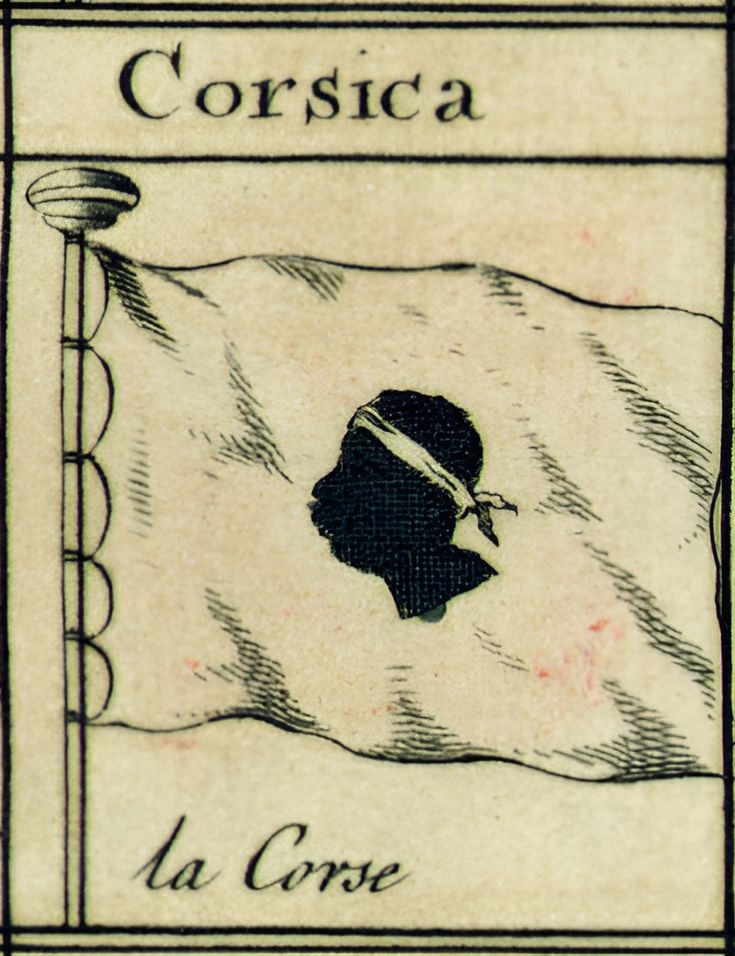
This dual naming perfectly illustrates the mechanism of religious syncretism that characterizes Mediterranean culture. Christianity did not erase ancient beliefs; it absorbed them, renamed them, and integrated them into its own calendar. That is why Corsican culture holds both traditions together without contradiction. The same mechanism is at work on the Moor's Head of the Corsican flag, a symbol of medieval war that has become an emblem of freedom.
The feast of Saint Lucy on December 13th
Every year, on December 13th, Corsica celebrates the feast of Saint Lucy. Before the adoption of the Gregorian calendar, this date corresponded roughly to the winter solstice, the longest night of the year. Saint Lucy, the saint of light, is thus celebrated at the moment when the days begin to lengthen again.
Traditions of December 13th in Corsica
In several Corsican villages, December 13th gives rise to processions, dedicated masses, and family meals. It is traditionally the ideal day to gift a Saint Lucy's Eye to a loved one. It is also the day when mothers often pass the object down to their children. We have dedicated an entire article to this day: December 13th in Corsica, the day the light returns.
Saint Lucy and Advent
Placed right in the middle of Advent, the feast of Saint Lucy heralds Christmas. This symbolism of reborn light makes it one of the most anticipated moments of the Corsican winter calendar.
The Saint Lucy's Eye in the TAFANELLI universe
At TAFANELLI, the Saint Lucy's Eye holds a special place in our graphic vocabulary. It is an object we have known since childhood, that we wear ourselves, and that we give to people who matter.
The aesthetics of the eye and our line
There is an obvious kinship between the Saint Lucy's Eye and our graphic language. Our line is thick, deliberate, continuous, and without fill. Yet the eye, with its brown spiral perfectly contrasted against its pearly base, is in itself a Mediterranean design in its purest state: a single continuous line that tells a complete story in one gesture. It is this kinship that we explore in the symbolism of our designs.
Echoes in our collections
Several of our pieces echo this aesthetic without always naming it. The Calvi Diver, with its circular motion entering the water. The Island of Beauty 1755, whose vintage year refers to Paoli's Constitution. Sea Urchin Fishing, which speaks of the same sea and the same rocky seabeds where the Bolma rugosa lives.
The talisman in our habits
Since the early days of TAFANELLI, we sometimes slip a Saint Lucy's Eye into a package or gift sent to a partner. It is a way of perpetuating the tradition as it is practiced here: discreetly, without announcing it, and never selling it.
A dedicated piece in preparation
We are working on a piece entirely devoted to the Saint Lucy's Eye. It will be hand-drawn, in our usual style, and issued in a deliberately limited series. We will not communicate dates or details until the piece is ready: we prefer to announce a release once it is certain.
To be the first to know, the easiest way is to sign up for our newsletter at tafanelli.fr. Our subscribers receive announcements before they go online, which matters for the shortest series.
Frequently Asked Questions
What exactly is a Saint Lucy's Eye?
It is not a shell or a stone, contrary to common belief. It is the operculum of the Bolma rugosa, a Mediterranean sea snail: the small limestone "door" that closes its shell when it retracts. Upon the animal's death, the shell disintegrates, but the operculum, which is very hard, survives and eventually washes up on beaches.
Why is it called Saint Lucy's Eye?
In reference to Saint Lucy of Syracuse, a fourth-century martyr and patron saint of sight. A Mediterranean legend tells that her eyes, thrown into the sea, transformed into these little pearly objects deposited by the waves. The name has become standard throughout the Christian Mediterranean.
What is a Saint Lucy's Eye used for?
It is a protective talisman against the ochju, the evil eye of Corsican tradition. It is worn as jewelry, slipped into a pocket, a wallet, a crib, a car, or a boat. It acts as a preventative measure: it stops the evil eye from taking hold.
Where can you find a Saint Lucy's Eye in Corsica?
On pebble and coarse sand beaches, especially after winter storms, from November to March. Cap Corse and the Balagne region are particularly favorable. Otherwise, they can be found at traditional Corsican jewelers in Ajaccio, Bastia, and the villages in the north of the island.
How do you recognize a genuine Saint Lucy's Eye?
Five criteria: it is heavy and dense for its size (natural limestone), it has natural irregularities, its spiral is in relief and not painted, its pearly side has shifting reflections, and it measures between 1 and 2.5 centimeters. An object that is light, perfectly regular, and perfectly smooth is an imitation.
What is the difference between the Saint Lucy's Eye and the Eye of Ulysses?
None; they are two names for the same object. "Eye of Ulysses" refers to the ancient tradition and the Homeric voyage in the Mediterranean, while "Saint Lucy's Eye" refers to the medieval Christian tradition. Both names coexist in Corsica without contradiction.
Can you gift a Saint Lucy's Eye?
It is actually the most traditional use. It is given for a birth, a baptism, a wedding, a graduation, or a move. December 13th, Saint Lucy's Day, is the preferred date for this gift.
Continue exploring
To delve deeper into the heart of Corsica, its traditions, and the TAFANELLI universe:
- December 13th in Corsica: the feast of Saint Lucy
- The Moor's Head: history and symbolism of the Corsican flag
- Corsican brand: what it means and how to recognize the real one
- Napoleon: 10 places to visit in Corsica to understand the Emperor
- The complete guide to Corsican wines
- Cap Corse: villages, the Customs trail, wines, and recommendations
- The Calvi Diver, the story of an iconic t-shirt
- What to wear in Corsica: the Mediterranean style guide
The Saint Lucy's Eye is much more than a small object picked up on a beach. It is a fragment of the Mediterranean that has traversed the centuries without losing any of its symbolic power. It connects Greek antiquity to medieval Christianity, the mythology of Homer to the legends of saints, and marine biology to spiritual protection.
It is also, and above all, a living object that continues to circulate through the hands of Corsican families, from generation to generation. At TAFANELLI, we believe that paying tribute to it is one of the most beautiful responsibilities a contemporary Corsican brand can bear.
While awaiting our dedicated piece, our complete collection already offers several pieces imbued with the same intent.
A PRESTU,
TAFA