Bavella and its Needles: Complete 2026 Guide
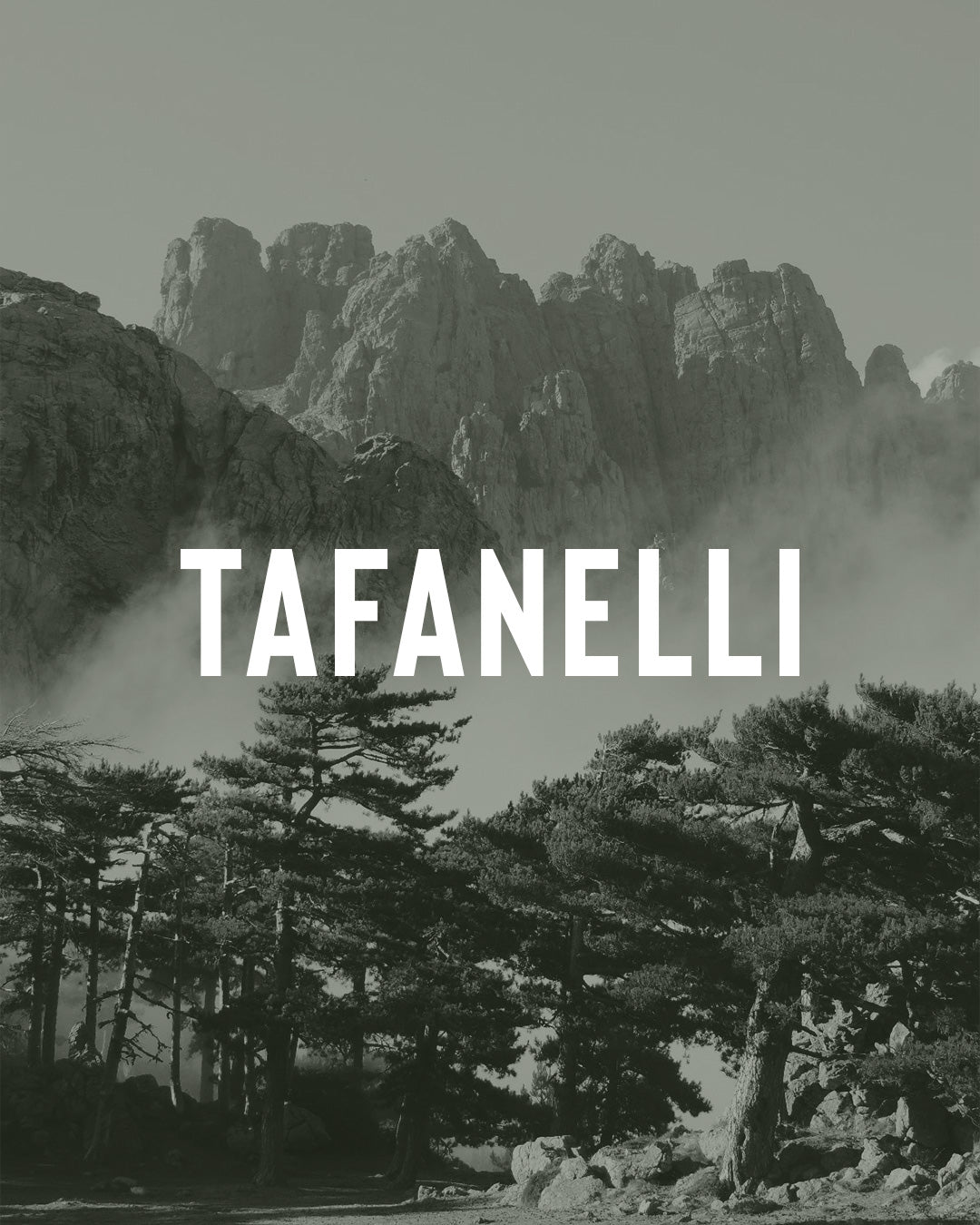
They rise to over 1,600 meters in altitude, seven peaks of pink and gray granite sculpted by the wind, rain, and time over millions of years. The Bavella Needles are likely the most recognizable mountain panorama in Corsica, and one of the most photographed in the entire Mediterranean. Surrounding them is an exceptional territory: the Bavella Massif, an ancestral pastoral land, a hiker's paradise, a sanctuary for mouflon, and a setting for international film shoots. Here is our complete 2026 guide to the massif: access, hiking trails, viewpoints, local addresses, fauna, accommodation, and apparel.
Bavella, Corsica's Mineral Cathedral
There are natural sites that can be read in a single glance. Bavella is not one of them. Bavella must be read over time, in silence, and in the shifting light. The Needles are not just rocks. They are presences. They dominate the landscape without overwhelming it, they command silence without forcing respect, and they immediately remind those who know how to look that Corsica is the highest island in the Mediterranean.
The Bavella massif spans roughly 15 kilometers between the communes of Zonza (to the south) and Solenzara (to the east). It reaches its peak at 1,899 meters at the Punta di a Vacca Morta and is defined by its silhouette of seven rocky spires (the Needles) that give the site its unique visual identity.
Long ignored by tourists, Bavella has established itself over the last thirty years as one of the major mountain destinations in Corsica. The Bavella Pass (1,218 meters) is now one of the most frequented viewpoints on the island in summer, with several hundred thousand visitors per year.
At Bavella, time passes differently. The Needles haven't moved for millions of years. They won't move anytime soon. That puts things into perspective. Standing before them, one realizes that Corsica is not just an island; it is a mountain set upon the sea.
This guide accompanies you in discovering the massif: its access points, its most iconic hikes, its addresses, and its secrets. A site to visit at least once for anyone who loves the deep heart of Corsica.
Where to find Bavella
Bavella is located in central southeastern Corsica, about halfway between Ajaccio and Bonifacio, in the heart of the Alta Rocca, the southern mountain region.
Distances and Access
- From Ajaccio: approx. 100 km, 2-hour drive.
- From Porto-Vecchio: approx. 45 km, 1-hour drive.
- From Bonifacio: approx. 70 km, 1.5-hour drive.
- From Bastia: approx. 170 km, 3.5-hour drive.
- From Solenzara (east coast): 30 km, 45 min via the D268, a spectacular mountain road.
- From Zonza: 9 km, 15 min via the D268.
The Two Approach Routes
Bavella Pass is accessible via two main routes, both magnificent yet distinct:
- The ascent from Solenzara via the D268: roughly 30 kilometers of winding mountain road, with landscapes alternating between pine forests, gorges, and high-altitude sheepfolds. A twisty route that takes its time, with no technical traps.
- The ascent from Zonza via the D268: shorter (9 km) and less winding, allowing for quick access to the pass from central Alta Rocca.
To complete your stay in the region, check out our complete guide to Porto-Vecchio, an ideal base for exploring Bavella during the day.
A Geology of Pink Granite
What makes Bavella so visually distinct is its geology. The Needles are composed of pink granite, a magmatic rock that takes on warm hues depending on the light.
An Ancient Formation
The Bavella granite formed approximately 300 million years ago during the Variscan orogeny. The bedrock was subsequently lifted to high altitudes by the tectonic movements that created the Corsican mountain range. Since then, erosion (wind, rain, freeze-thaw cycles) has sculpted the characteristic vertical peaks we see today.
A Festival of Colors Depending on the Light
The pink granite of Bavella plays with light throughout the day. At dawn, it takes on orange, almost incandescent tints. In the middle of the day, it shifts to a rosy gray. At sunset, it turns a warm red, sometimes with purple shades that illuminate the Needles. This is the moment most sought after by photographers.
Spending an entire day at the Bavella Pass means watching the Needles come alive. They are never the same two hours in a row. They change with the wind, the clouds, and the sun's angle. It is a natural work of art in constant motion.
The Seven Needles
The massif technically contains more than seven peaks, but popular imagination identifies the seven main ones visible from the pass:
- La Punta di U Furnellu (1,500 m)
- La Punta Bunifazu (1,550 m)
- La Punta di a Vacca (1,611 m)
- La Punta Muvrella (1,601 m)
- La Punta di i Paliri (1,690 m)
- La Punta d'Arghinu (1,500 m)
- La Punta Neru (1,545 m)
Each peak has its own history, accessibility, and climbing routes. Some are accessible to experienced hikers, while others are only reachable via mountaineering.
The Pastoral History of Bavella
Before being a tourist site, Bavella was pastoral territory. For centuries, shepherds from the Alta Rocca led their herds of sheep and goats to the high-altitude summer pastures around the Needles. This transhumance shaped the landscape, with paths, sheepfolds, and stone enclosures still visible today.
High-Altitude Pastoralism
The massif housed dozens of sheepfolds, most of which are now in ruins or converted into hiking shelters. These dry-stone constructions, sometimes covered with granite slabs, testify to an intense human life at high altitudes, kilometers from the nearest village. Shepherds would spend the summer there, from June to October, entirely self-sufficiently.
Bavella Cheeses
An exceptional cheese-making tradition was born from this pastoral activity. The sheep cheeses of Bavella (similar to bercadin and calenzana) were renowned throughout Corsica. Today, they benefit from the Corsican AOP (Protected Designation of Origin) production. To learn everything about Corsican cheeses, check out our complete guide to Corsican cheeses.
The Municipal Forest
The Bavella massif is largely composed of a municipal forest of Laricio pines, the endemic Corsican species. These pines, which can reach 45 meters in height and live for 800 years, form one of the most beautiful wooded areas in the Mediterranean. Since 1965, the site has been protected by strict regulations to preserve this exceptional natural heritage.
Bavella Pass and its Panorama
The Bavella Pass (1,218 meters) is the main access point to the massif. It is also the essential meeting place for all visitors, with its parking, inn, monumental cross, and views of the Needles.
Our Lady of the Snows
A statue of the Virgin and Child, known as Our Lady of the Snows, has stood at the pass since 1955. It was erected by the region's shepherds as a sign of gratitude after a particularly difficult year. Today, it has become a symbol of the site, featured on almost every postcard.
The Panorama
From the pass, one can gaze upon:
- To the west, the seven Needles in a line.
- To the south, the Fiumicicoli valley descending toward Zonza.
- To the east, the descent toward Solenzara and the Tyrrhenian Sea in the distance.
- To the north, the central Corsican range and Monte Rotondo on clear days.
It is one of the few places in Corsica where one can see both the sea and the island's highest peaks at the same time.
The Best Moments
Bavella Pass is particularly magical:
- At dawn (5 AM–7 AM in summer): pink light on the Needles, total silence.
- At sunset: warmest colors, though the parking lot is crowded.
- In the off-season (October–November): autumn colors, few people.
- Under the snow (December–March): a completely different setting, magical and rare.
The "Trou de la Bombe" (Bomb Hole)
The Trou de la Bombe, called Cor'à Mare in Corsican (the "heart beating toward the sea"), is likely the most iconic hike in the Bavella massif. It attracts tens of thousands of hikers every year.
What you see
The "Hole" is a massive natural ring sculpted in the granite, opening in the heart of one of the Needles. It forms a monumental window (about 8 meters in diameter) through which one can glimpse the Tyrrhenian Sea 25 kilometers away. The contrast between the pink stone, the blue sky, and the distant sea is striking.
Hike Characteristics
- Start: Bavella Pass (inn parking lot).
- Distance: approx. 3 km one way.
- Elevation gain: 300 meters positive.
- Duration: 1.5 to 2 hours one way, 3 to 4 hours round trip.
- Difficulty: moderate. Well-marked trail but steep at the end.
- Markers: red.
Our Tips
- Leave early in the morning (7 AM–8 AM) to avoid the heat and crowds.
- Bring at least 2 liters of water per person in summer.
- Hiking shoes are mandatory; no sandals or flip-flops.
- Cap and sunscreen for exposed sections.
- Avoid days with strong wind (the final section is dizzying).
Arriving at the Trou de la Bombe at dawn, when the sun rises through the granite ring, is experiencing one of the purest moments a hiker can have in Corsica. It is worth every drop of sweat on the ascent.
The Alpine Trail (GR20 variant)
The Bavella Alpine Trail is a technical variant of the southern GR20, renowned for its challenging sections and exceptional panoramas. Reserved for experienced hikers.
Characteristics
- Start: Bavella Pass.
- End: Paliri Refuge (2 hours) or Conca (6–8 hours to finish the end of the GR20).
- Difficulty: demanding. Cables, exposed ridges, handrails essential.
- Markers: red and yellow.
Iconic Sections
The Alpine trail traverses several technical sections:
- The descent toward Punta Tafunata: cabled section on polished rock.
- Crossing the Vacca Morta: exposed ridge with panoramic view.
- Paliri Refuge: classic GR20 shelter, authentic atmosphere.
For the complete GR20 experience, consult our complete guide to the GR20.
The Natural Pools of Purcaraccia
A half-hour drive south of Bavella Pass is one of the most popular natural sites of the Corsican summer: the natural pools of Purcaraccia.
What you'll discover
A series of pools and waterfalls sculpted into the granite by the Purcaraccia river. Turquoise water, pink rock polished over millennia, all framed by Laricio pines. The pools offer refreshing natural swims during the summer heat.
Canyoning
Purcaraccia is also one of the best canyoning sites in Corsica. Several companies offer guided descents featuring jumps, natural slides, and rappels. Expect to pay between 60 and 80 euros for a half-day excursion.
Access
- From Bavella Pass: descend toward Solenzara via the D268, then take the path indicated as "Purcaraccia."
- Parking about 500 meters from the pools.
- Approach walk: 20–30 minutes on a shaded trail.
Caution: in the event of heavy rain (rare in summer), the flow can increase very rapidly. Check the weather forecast before leaving.
The Tafunatu di i Paliri
The Tafunatu di i Paliri is a lesser-known but spectacular hike in the Bavella massif. It leads to a second natural ring formation, a cousin of the Trou de la Bombe, on the north face of the Needles.
Characteristics
- Start: Bavella Pass.
- Distance: 6 km round trip.
- Elevation gain: 400 meters positive.
- Duration: 4 to 5 hours round trip.
- Difficulty: challenging; the trail is less frequented than the Trou de la Bombe.
Why do it
To avoid the crowds. While the Trou de la Bombe attracts hundreds of hikers in high season, the Tafunatu di i Paliri remains almost deserted. You walk in silence, with the Aiguilles for company and likely a few mouflons for spectators.
The massif's flora and fauna
The Bavella massif is home to exceptional biodiversity, protected by its status as a classified site.
The Corsican mouflon
The Corsican mouflon (Ovis gmelini musimon) is the emblem of the massif. Introduced to Corsica approximately 6,000 years ago, it has evolved in isolation. The Bavella population numbers about 300 individuals, which can be regularly observed at dawn on the ridges.
The Corsican mouflon has been protected since 1955. Hunting it is strictly regulated, with a very limited annual quota. It is a shy, silent animal, to be observed with binoculars from a respectful distance.
The Laricio pine
The Corsican Laricio pine (Pinus nigra laricio) is the dominant species in the massif. This endemic variety is distinguished by:
- A height that can reach 45 meters.
- A straight, cylindrical trunk.
- Exceptional longevity (up to 800 years).
- Wood sought after for carpentry and shipbuilding (historically used by the Genoese navy).
Other iconic species
- The Corsican wild boar (Sus scrofa meridionalis): present in large numbers, often visible at the end of the day.
- The golden eagle: a few pairs nest in the Aiguilles.
- The bearded vulture: rare, but sometimes spotted flying over the massif.
- The Corsican nuthatch: a small passerine bird endemic to Corsica, found in the pine forests.
Addresses at the Bavella Pass
The Bavella Pass has a few essential spots for dining, resting, and extending your mountain experience.
L'Auberge du col de Bavella
An iconic institution. This historic inn offers traditional Corsican cuisine: PDO charcuterie, farmhouse cheeses, veal with olives, and wild boar stew. Terrace with a direct view of the Aiguilles. Reservations are essential in summer.
Le Refuge d'A Rasta
A simple but warm mountain hut, open mainly during the hiking season (May to October). Family-style cooking, homemade pasta, friendly atmosphere among hikers. Ideal for a quick lunch between two stages of the GR20.
Seasonal refreshment stalls
Several refreshment stalls and snack bars set up in the parking lot during summer, offering drinks, ice cream, and sandwiches. Fine for a quick refill, but nothing more.
To continue discovering other iconic Corsican tables, check out our article on Chez Tao in Calvi and our article on U Paradisu in Tamarone.
When to visit Bavella
Bavella can be visited year-round, but each season offers a different experience.
Spring (May-June)
Probably the best time. Mild temperatures (15 to 22°C at the pass), trails clear of snow, blooming of the high-altitude maquis, very few crowds. Ideal for serious hikers.
Summer (July-August)
High season. Crowded at the pass and on the main trails, especially the Trou de la Bombe. Warm (25 to 32°C) but cooled by the altitude. Watch out for afternoon thunderstorms, which are frequent in July and August. Start very early (before 8 a.m.) to avoid the crowds.
Autumn (September-October)
The magical season. Autumn colors in the pine forests, pleasant temperatures, low-angle light ideal for photography, and crowds that quickly diminish. One of the best periods for photographers and hikers who appreciate the beauty of the site.
Winter (November-March)
A very different atmosphere. Frequent snow at the pass (the pass can be closed for a few days each year), absolute silence, magnificent winter panoramas. Some hikes become inaccessible or dangerous. Caution and mountain equipment are mandatory.
Where to stay around Bavella
The pass itself has few accommodations. It is better to stay in neighboring villages.
In Zonza
The closest village (9 km, 15 min). Several hotels and charming gîtes, with a mountain resort ambiance. Ideal as a base for several nights.
In Solenzara
On the east coast (30 km). A mix of sea and mountain, convenient for alternating between the beach and hiking. Many vacation rentals and hotels.
In Sainte-Lucie de Porto-Vecchio
A 30-minute drive away. An ideal coastal base for exploring Bavella by day while enjoying the beaches of Palombaggia and Santa Giulia in the late afternoon.
In GR20 mountain huts
For hikers, the Paliri hut offers an exceptional overnight stay, high in altitude, with a direct view of the Aiguilles at dawn. Reservations are mandatory in summer.
The TAFANELLI wardrobe for Bavella
Hiking in Bavella requires an adapted wardrobe: light, breathable, sturdy, without compromising on quality. At TAFANELLI, we design our pieces to hold up in these kinds of environments.
Our essentials for Bavella
- The Roccapina t-shirt: 280g/m² Made in France cotton that withstands sweat, dries quickly, and develops a patina with use.
- The new La Trinità t-shirt: embodies the Corsican landscape trinity, perfect for visiting a site that illustrates it perfectly (sea, mountain, maquis in a single panorama).
- The Corsica Shark Cap: essential sun protection for long hours of exposure on the ridges.
- The Corsican Bandana: versatile, for the neck, for sweat, or as a neck gaiter in case of cold wind at altitude.
- The Oiled Roccapina Jacket: the sturdy piece for modern shepherds, perfect for cool evenings at the pass.
Bavella is a place where clothing must be invisible to be effective. No flashy logos, no showy technical materials. Just heavy cotton, a straight cut, and a drape that respects the sobriety of the location. That is exactly our philosophy at TAFANELLI.
To learn more about our manufacturing standards, consult our editorial manifesto for the TAFANELLI t-shirt.
Continue the discovery
To extend the adventure around Bavella and deep into Corsica:
- The GR20 complete guide
- François D'Haene and his GR20 record
- Corte, historical capital of Corsica
- The 10 most beautiful perched villages of Corsica
- Porto-Vecchio complete guide
- Mare, Muntagna, Machja: the Corsican landscape trinity
- Corsican cheeses
- The 10 most beautiful Pisan chapels of Corsica
When passing through Corsica, the customer becomes a friend.
A DOPU,
TAFA