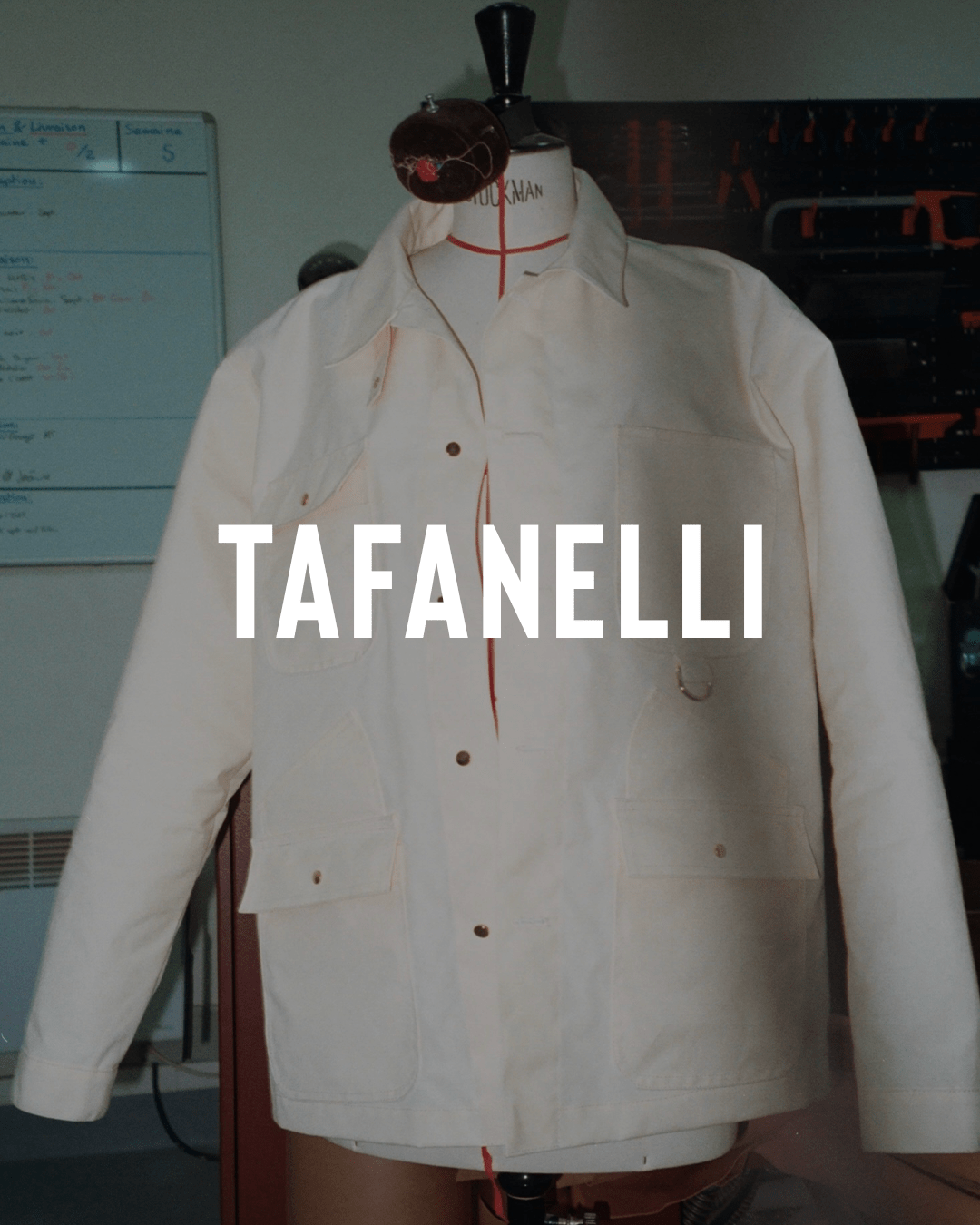
How is a handmade jacket made?
A handcrafted jacket is not born in a factory. It is born from a sketch, from a fabric, from a hand. At Tafanelli, each jacket is the result of a long dialogue between material and craft. Behind every seam, there is a human breath and French savoir-faire that does not cheat.

TAFANELLI. The hand before the machine, the material before the logo.
Everything begins with a drawing
Before the sewing, there is the line. Every Tafanelli jacket is born from a hand-drawn sketch, drawn slowly on heavy paper. The drawing seeks balance: a straight, natural cut that follows movement without restricting it. Here, the shape does not respond to fashion, but to the body. Every line, every proportion is designed to last over time — not just for the season.
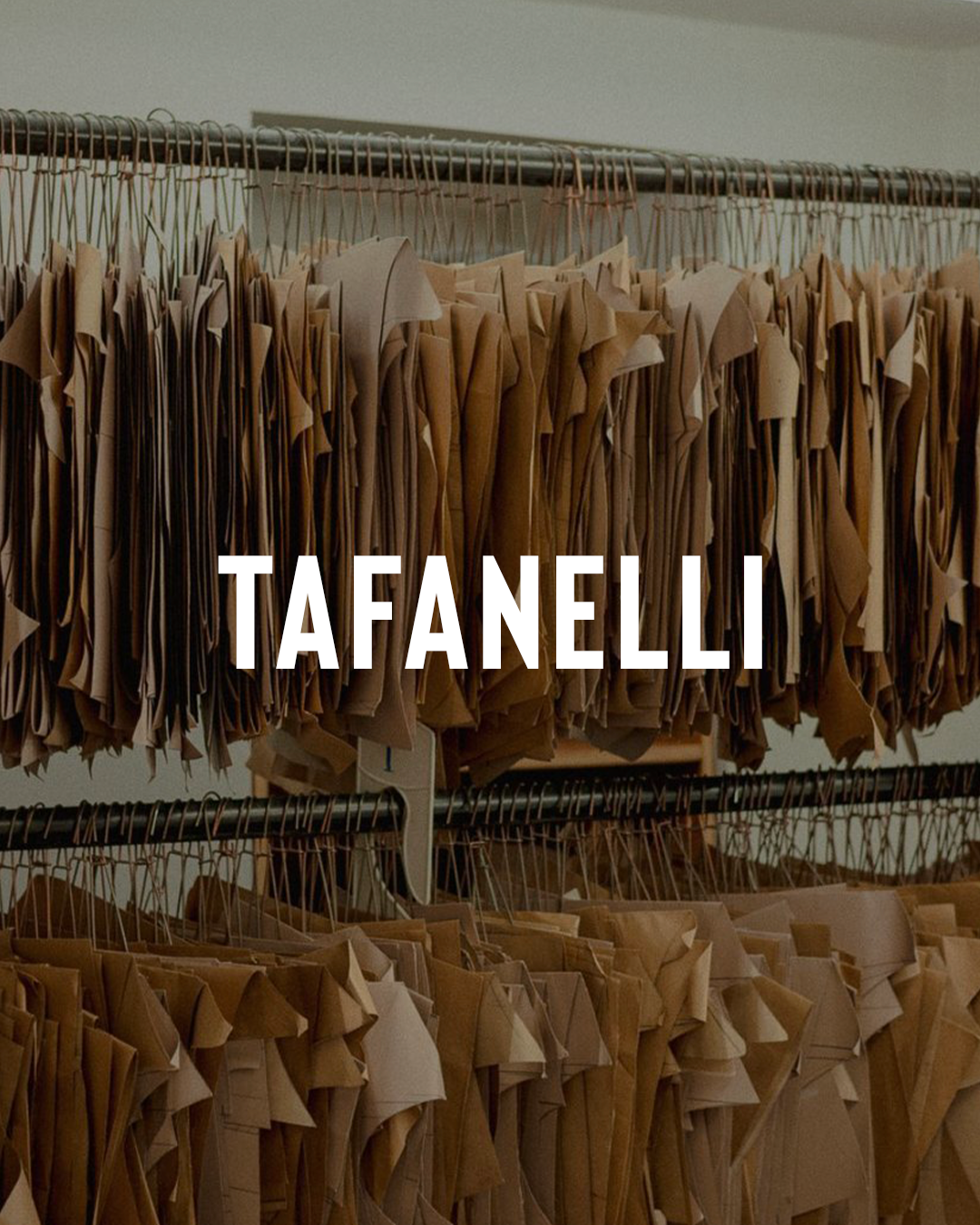
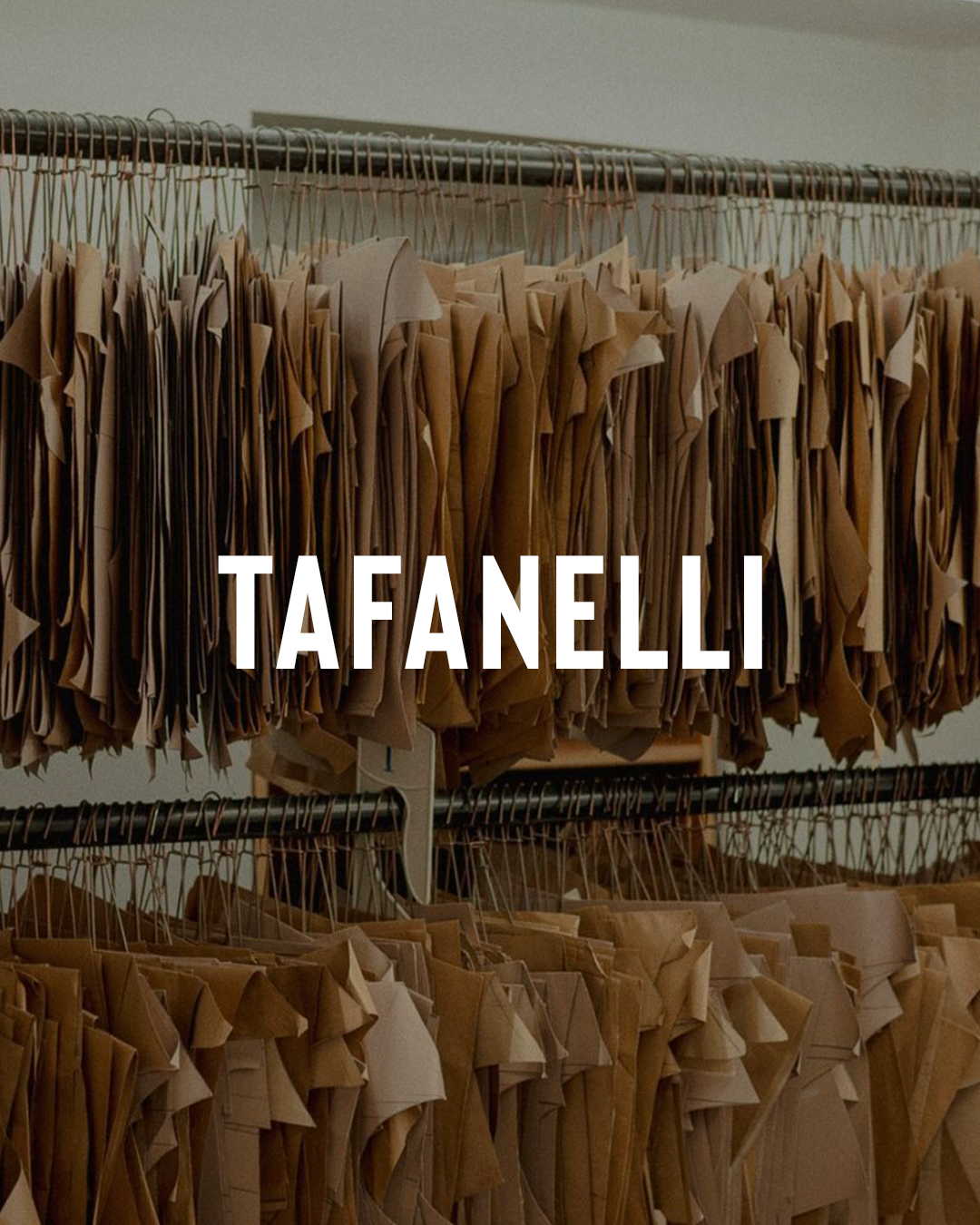
This drawing then becomes a pattern. A map of the garment, where every millimeter counts. This is the moment the idea becomes material.
Choosing the fabric
A handcrafted jacket always begins with the material. At Tafanelli, fabrics are chosen for their density, their feel, their durability. Twill, organic cotton, French gabardine: fabrics meant to age with you. This choice takes time. The fabric is observed, folded, tested under the light. It must breathe, ring true, and hold itself without stiffness.
Each roll is then washed and softened before cutting. It is an invisible, but essential step: it prepares the fabric for life.
The cut
The pattern is laid on the fabric, cut by hand with a rotary cutter. Here, there is no laser cutting or automated machinery. The hand adjusts every line, checks every angle, anticipates the tension of the fabric. Handcrafted cutting is an art of slow precision. A millimeter too much, and the jacket pulls at the shoulder. A poorly placed gesture, and the sleeve loses its movement.
In our Corsican and French workshops, it is often the same person who cuts and assembles: a continuity of gesture that gives the garment its harmony.
The assembly
This is the heart of the work. The pattern pieces are joined one by one, sewn by hand or on traditional mechanical machines. The artisan adjusts the seams, checks thread tension, and presses between each step. Each seam is solid, regular, straight. This is where the garment takes shape and the material becomes architecture.
Tafanelli workshops operate as small units: sewing, pressing, inspection. Nothing leaves without being reviewed, corrected, adjusted. It is this slowness that ensures the garment's durability over time.
The finishing touches
A handcrafted jacket is recognized by its details: a reinforced buttonhole, a perfectly placed lining, a hand-stitched label. The interior seams are piped, the edges stabilized, the hems checked under a magnifying glass. This finishing work is the final pass of the gesture — the one that transforms a garment into a piece. At Tafanelli, this step is always done by hand, in the silence of a workshop where one can still hear the iron and the wind blowing under the door.
The final pressing
Before leaving the workshop, each jacket is pressed at length with gentle steam. This pressing is not cosmetic: it stabilizes the fiber, sets the shape, and reveals the couturier's hand. This simple gesture gives the garment its presence. The fabric settles, the seams tighten, and the jacket breathes for the first time.
A garment that has passed through many hands
Between the drawing and the packing, a Tafanelli jacket passes through more than ten pairs of hands. Each leaves a trace, invisible but real. It is these traces, these attentions, these adjustments that give the garment its soul. Craftsmanship here is not a label. It is a way of being in the world — slow, sincere, faithful.
And that is why a handcrafted jacket is never exactly like another. Because it bears the hand of the one who made it.