The simple rule for washing a t-shirt
A t-shirt lasts when you limit two things: unnecessary heat and mechanical twisting. Cotton naturally moves in water and then tightens as it dries. If you add too much heat, too much spin, or an aggressive tumble dryer, you accelerate aging and deformation.
The 4-step rule
- 30°C whenever possible
- Little detergent, no overdosing
- Moderate spin speed
- Air dry
If you already notice a loss of shape: why my t-shirt loses its shape in the wash.
Temperature: the right setting
Temperature is the simplest lever to control. The higher you go, the more you tire the fiber. Many t-shirts "don't last" because they are too often washed at 40°C or higher.
30°C
The best compromise for preserving fit, color, and structure.
40°C
Possible occasionally, but more aggressive over time.
60°C
To be avoided for most cotton t-shirts.
Cold water
Very good for preserving the fiber, especially for colors.
Simple rule of thumb: if your goal is longevity, 30°C becomes your default setting.
Detergent: what to use and how much
Overdosing is common. Too much detergent leaves residues, makes the fabric duller, sometimes rougher, and increases friction inside the drum. A light dose is sufficient in most cases.
The right habit
- Reduce the dose rather than increase it
- Use mild liquid detergent if you want to preserve the feel of the cotton
- Avoid unnecessary additives when your goal is durability
If your t-shirt is becoming rough: why my t-shirt becomes rough after washing.
Spin speed: the real cause of deformation
Spinning twists the textile. The higher the speed, the more the fabric is twisted, and the more sensitive areas wear out. This is a common trigger for twisted seams and t-shirts that lose their alignment.
Recommended setting
- 800 to 1000 RPM maximum
- Avoid "turbo" cycles
- Do not overload the machine
To understand the phenomenon: why my t-shirt seams twist.
Drying: the safest method
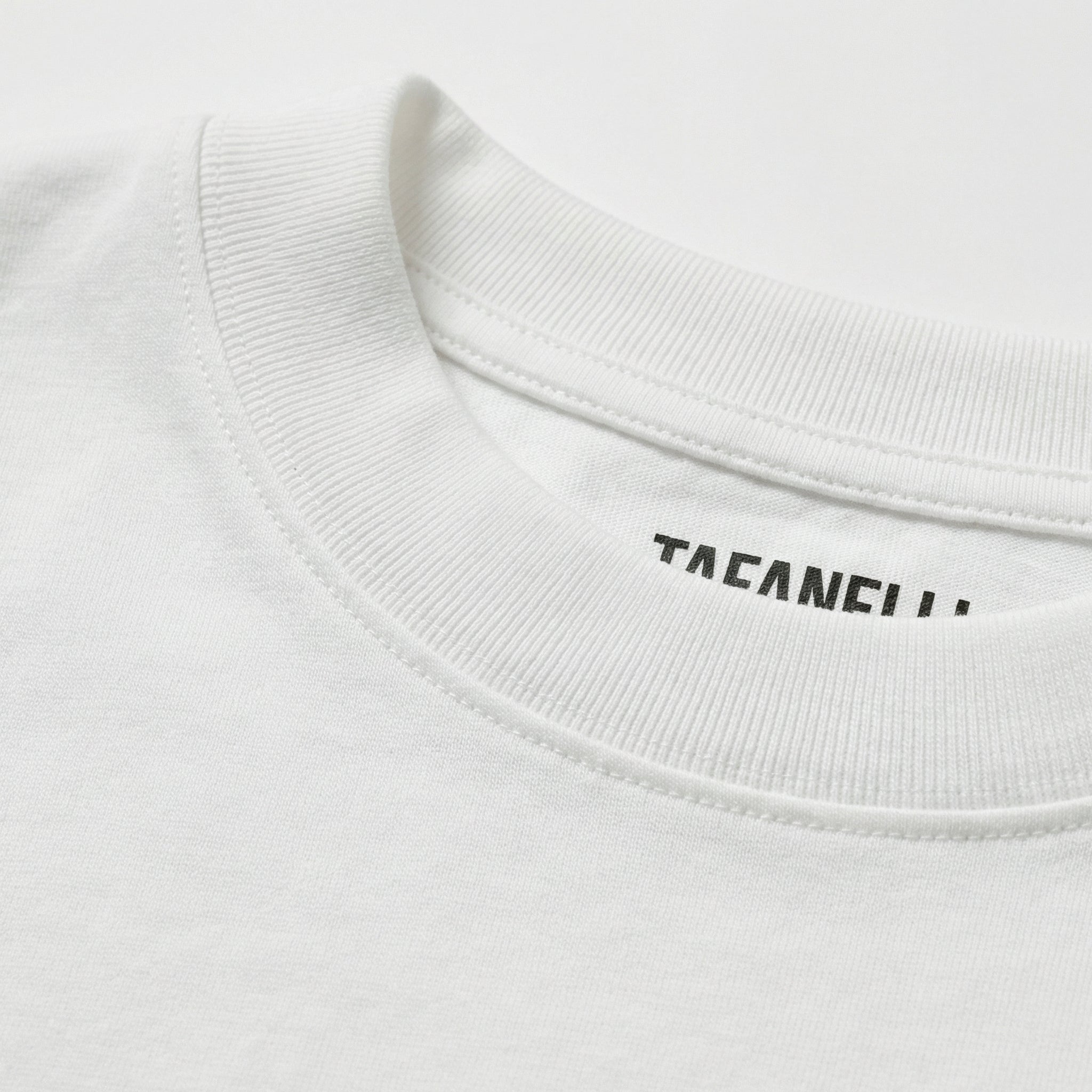
A wet t-shirt is heavy. If you hang it too wet, it can stretch under its own weight, especially around the collar and shoulders. The tumble dryer accelerates wear through heat and friction.
Simple tip: when taking it out of the machine, shake the t-shirt and reshape it before drying. This reduces residual twisting.
Best for durability
- Air dry
- Lay flat if you want maximum stability
- Avoid the tumble dryer whenever you can
If your collar is losing its shape: why my t-shirt collar is stretching out.
Sorting and loading the machine
Longevity also depends on what you wash your t-shirt with. Mixing a t-shirt with jeans or an abrasive item increases friction and wears down the cotton surface.
Proper sorting
- Wash with similar materials
- Avoid jeans, zippers, or rough items in the same cycle
- Fill the machine to about 70% capacity
Table: ideal program for every case
| Case | Temperature | Spin | Drying |
|---|---|---|---|
| Daily use | 30°C | 800 to 1000 | Air dry |
| Dark colors | Cold or 30°C | 800 | Air dry, in the shade |
| Dense fabric | 30°C | 800 to 1000 | Lay flat if possible |
| Heavy perspiration | 30°C | 800 | Air dry |
Mistakes that ruin a t-shirt
- 40°C or more for every wash
- Very high spin speed
- Systematic use of tumble dryer
- Detergent overdosing
- Overloaded machine
- Mixing with abrasive clothing
These points accelerate deformation, loss of structure, and surface wear.
How many washes for a well-made t-shirt
A well-made t-shirt can handle dozens of cycles without losing its shape. The difference lies in the density of the fabric and the stability of the construction. Dense cotton holds up better over time, especially if the care is appropriate.
To understand the density metric: which fabric weight to choose for a t-shirt.
What changes when you master garment care
When you wash correctly, a t-shirt retains its fit, its collar stays neat, the knit doesn't pull apart, and the item ages much more gracefully. This isn't luck; it's a simple routine.
If you want the full criteria: how to recognize a quality t-shirt.
Discover our t-shirts
A dense base and stable construction make the difference. Proper care finishes the job.