Traditional Corsican costume: history, pieces, and legacy
A goat-hair cape that keeps out the rain. A wild boar leather cartridge belt containing everything needed to repair one's shoes on the road. A printed cotton veil from India via Genoa. The Corsican costume was never about folklore: it was a response to a territory. Here is what it truly was, piece by piece, and what remains of it today.
An island that did not produce its own fabrics
We must start here, because everything flows from this.
Corsica never had a textile industry. No manufacturing, no large-scale production, no textile towns. What was worn on the island came from two sources: what one made oneself, at home, with the wool from the village animals, and what was imported through the ports, primarily from Genoa, then Marseille and Livorno.
This constraint explains the Corsican costume better than any theory on identity. People did not dress according to fashion; they dressed according to what the mountains provided and what the ships brought.
The Corsican costume was born of necessity, not style. That is what makes it authentic.
What the island did know how to do, however, it did very well: spinning, weaving, tailoring, assembling. The expertise was domestic, passed down from mother to daughter, from village to village. It was not craftsmanship in the commercial sense of the term. It was a necessity.
The three fabrics of Corsica
Traditional island weaving produced three materials, and only three. Each had a specific use.
U pannu frisu, woolen cloth
Sheep's wool cloth, woven and then fulled to tighten it. This is the base fabric of Corsican clothing: used for trousers, jackets, skirts. Sturdy, thick, warm, capable of lasting for years. Its color ranged from brown to black depending on the animals' fleece, rarely dyed.
U piloni, goat hair
A coarse fabric woven from goat hair, reserved for a single use: the shepherd's coat. Goat hair has a property that wool does not: it repels water. This is what allowed generations of shepherds to spend nights outdoors, in the mountains, in the rain.
Linen cloth
For everything that touched the skin: shirts, petticoats, headgear. Linen was grown on the island, spun at home, and woven in the village.
Three materials. Nothing else. Everything else was imported, and therefore rare, and therefore expensive, and therefore visible. A piece of silk or printed cotton, in an 18th-century Corsican village, immediately said something about the person wearing it.
The men's costume
The Corsican man's wardrobe was built around a simple idea: one walks, one works outdoors, one may need to defend oneself.
U pilone, the centerpiece
This is the iconic piece of the Corsican costume, the one found in all ancient engravings.
A large, heavy hooded coat, cut from goat-hair fabric. Naturally waterproof, without treatment, without lining. It was worn over everything else, pulled up over the head, and served as a blanket at night and a shelter during the day. A garment and a roof all in one.
The pilone was not decorative. It had no embroidery, no color, no markings. It did a job, and it did it well. A shepherd equipped with a pilone could sleep outside at high altitude, which made the transhumance possible as it was practiced for centuries.
A carchera, the cartridge belt
A wide leather belt, often made of wild boar skin, worn at the waist and equipped with a front pouch.
Ammunition was kept there, obviously. But also all the necessities for travel: supplies to resew a shoe, repair a garment, or survive another day away from home. The carchera is the object that best summarizes the Corsican relationship with clothing. Nothing superfluous, everything is useful, and what is useful is made to last.
The rest of the wardrobe
- The linen shirt, worn next to the skin, white or off-white.
- The vest and breeches, in woolen cloth, then in corduroy from the 19th century onwards, when the fabric became accessible via the ports.
- Leather gaiters, which protected the legs in the maquis, where branches tear through everything.
- The woolen cap, dark, simple, worn daily.
This is the silhouette that was captured in the engravings of 19th-century European travelers, and it is the one still associated today with island figures like Sampiero Corso.
The women's costume
More constructed, more codified, and much more revealing of social status.
The pieces
- A camisgia, the linen shirt, the foundation of every outfit.
- L'imbustu, a fitted bodice that structures the silhouette and laces in the front.
- U vestu, the dress, often sleeveless, worn over the shirt.
- Petticoats, layered. This is the most telling detail: on festive days, a woman might wear five or seven of them, in different colors, offset in length so that each border appeared beneath the previous one.
This layering was not for nothing. The number of petticoats and the quality of the fabrics spoke to a family's wealth. In a society where people did not boast, clothing spoke for them.
The headgear
Daily, a simple linen headdress. On festive days, the mezzaru, which deserves its own chapter.
The mezzaru, the Corsican enigma
A large veil worn over the head and falling over the shoulders, made of printed cotton, sometimes silk or lace. It appeared in Corsica in the 17th century and became, within two generations, the most recognizable sign of the island's women's costume.
Its origin is what makes it fascinating.
The mezzaru is not Corsican. It descends from painted fabrics imported from India by European East India companies, landed in Genoa, Marseille, and Livorno, and then spread throughout the Mediterranean basin. These printed cottons, known as "indiennes," were an exotic and expensive luxury product.
The most iconic piece of the Corsican costume is an Indian fabric that arrived via an Italian port. An island does not invent itself in a vacuum.
The Corsicans adopted them, wore them, and transformed them into an identity marker, until no one remembered where they came from. This is exactly how a Mediterranean culture works: it takes what arrives by sea and makes it into something that belongs only to it.
The contemporary Corsican bandana is a direct descendant of this logic.
Why so much black
All ancient images of Corsican women show the same thing: black, everywhere, for all ages.
Two reasons, one practical, the other tragic.
The first is material. Corsican sheep's wool was naturally brown or black, and dyeing was expensive. Dark was the default option, not an aesthetic choice.
The second is heavier. In a society marked by mortality, family conflicts, and vendettas, mourning was almost never finished. A woman who lost a relative wore black for years. Many never gave it up, moving from one mourning to the next without a break. Black was not a color; it was a state of being.
Traces of this remain in rituals that have survived, such as U Catenacciu of Sartène, or in the polyphonic chants born around death.
Where to see costumes today
- The Museum of Corsica, in Corte, holds the reference collection: pilone, carchera, mezzaru, pieces of cloth, and weaving tools. It is a must-see for anyone wanting to see the materials up close.
- The Cap Corse Conservatory, in Canari, regularly presents the traditional costume of the micro-region.
- Confraternities and processions, especially during Holy Week, where some pieces are still worn for real.
- Village festivals and traditional singing groups, mainly in the summer and during patronal feasts.
To go further, the reference work is Costumes de Corse: Pannu è panni, 16th-20th century, by Renée Pecqueux-Barboni, published by Albiana.
Frequently asked questions
What is the traditional Corsican costume for a man?
A linen shirt, a vest and breeches in woolen cloth or corduroy, leather gaiters, a dark woolen cap, the cartridge belt called a carchera, and over it all, the pilone, a waterproof goat-hair hooded coat.
What is the mezzaru?
A large women's head veil, in printed cotton, silk, or lace, which appeared in Corsica in the 17th century. It descends from Indian painted fabrics imported through Mediterranean ports and became the most recognizable sign of the Corsican women's costume.
Why were Corsican women dressed in black?
For two reasons. Local wool was naturally dark and dye was expensive. Above all, mourning was almost permanent in a society marked by mortality and family conflicts. Many women never left off wearing black in their adult lives.
Is the Corsican costume still worn?
No longer in daily life. It persists in religious processions, confraternities, traditional singing groups, and village festivals. The rest is preserved in museums, mainly in Corte.
Was there a unique Corsican costume?
No. Shapes, colors, and headgear varied from one micro-region to another, from Cap Corse to the Alta Rocca. What was common were the available materials, not the cuts.
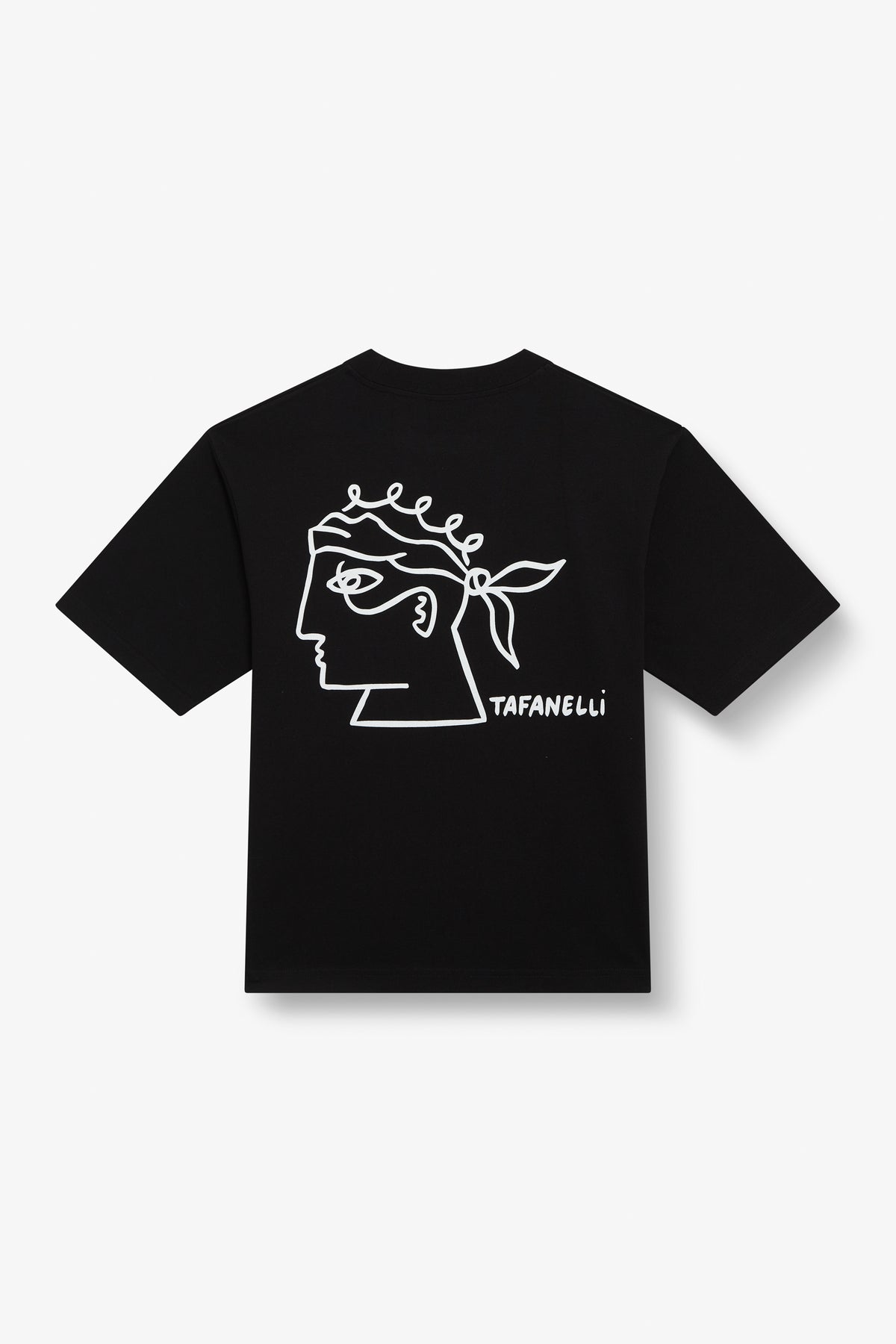
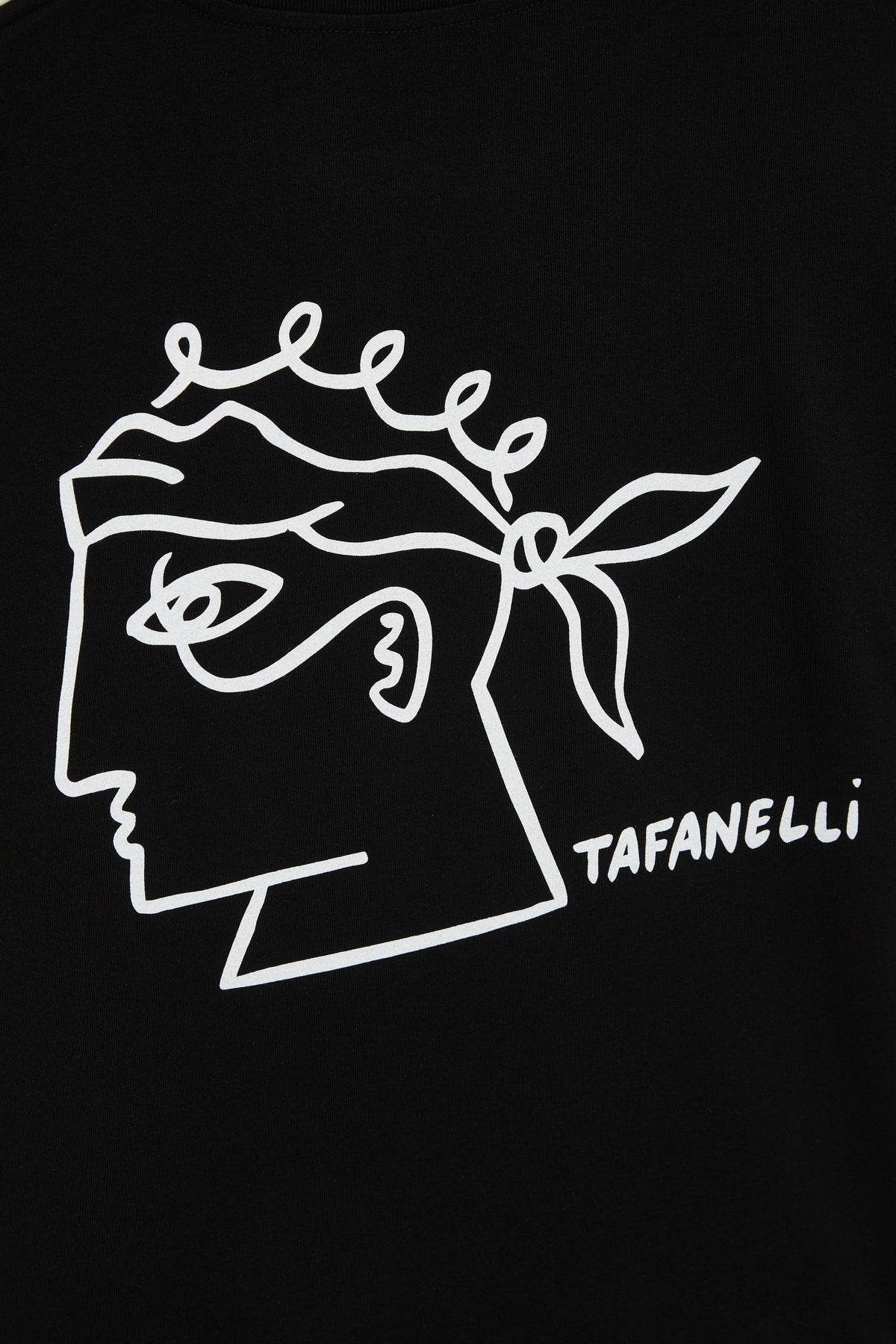
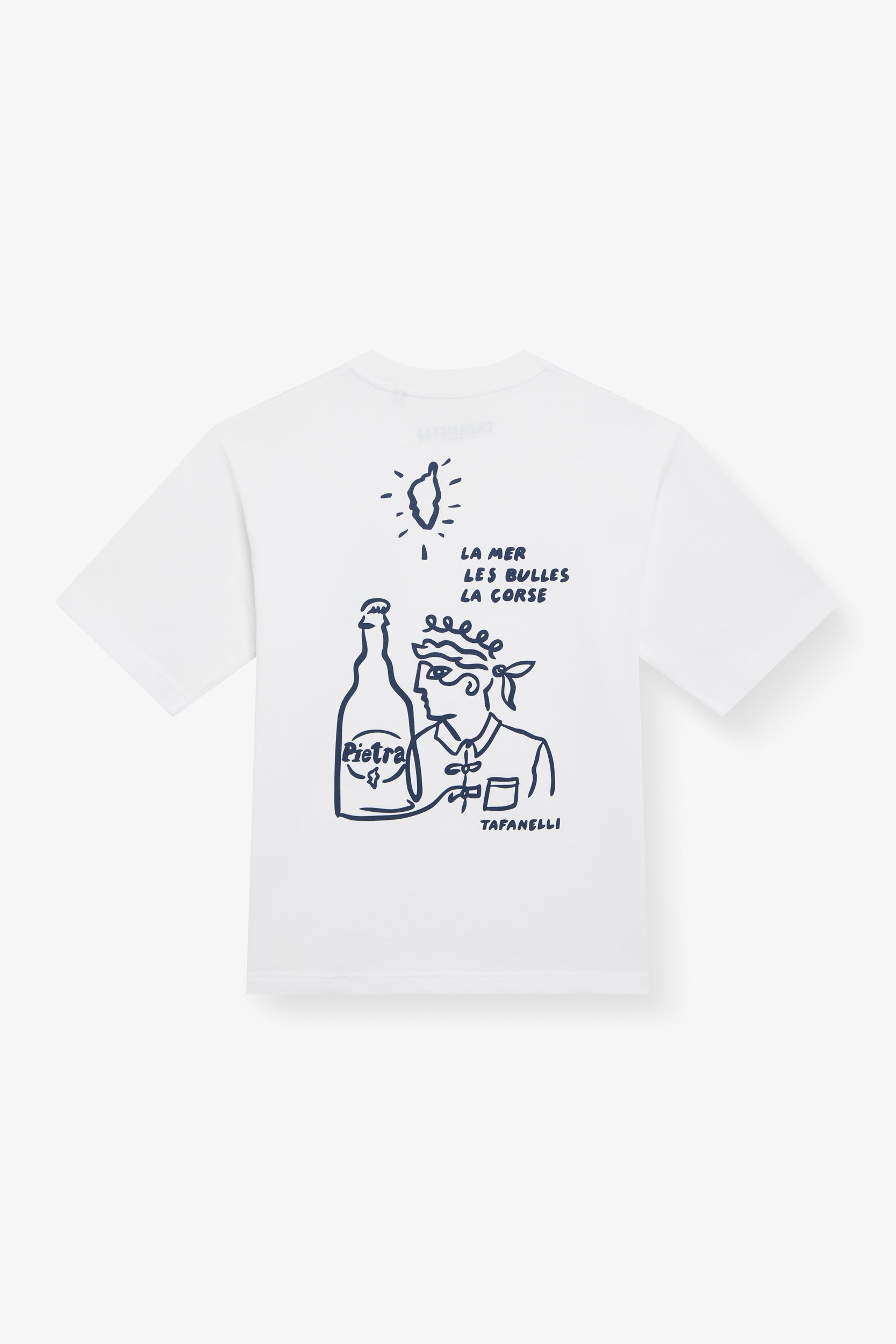
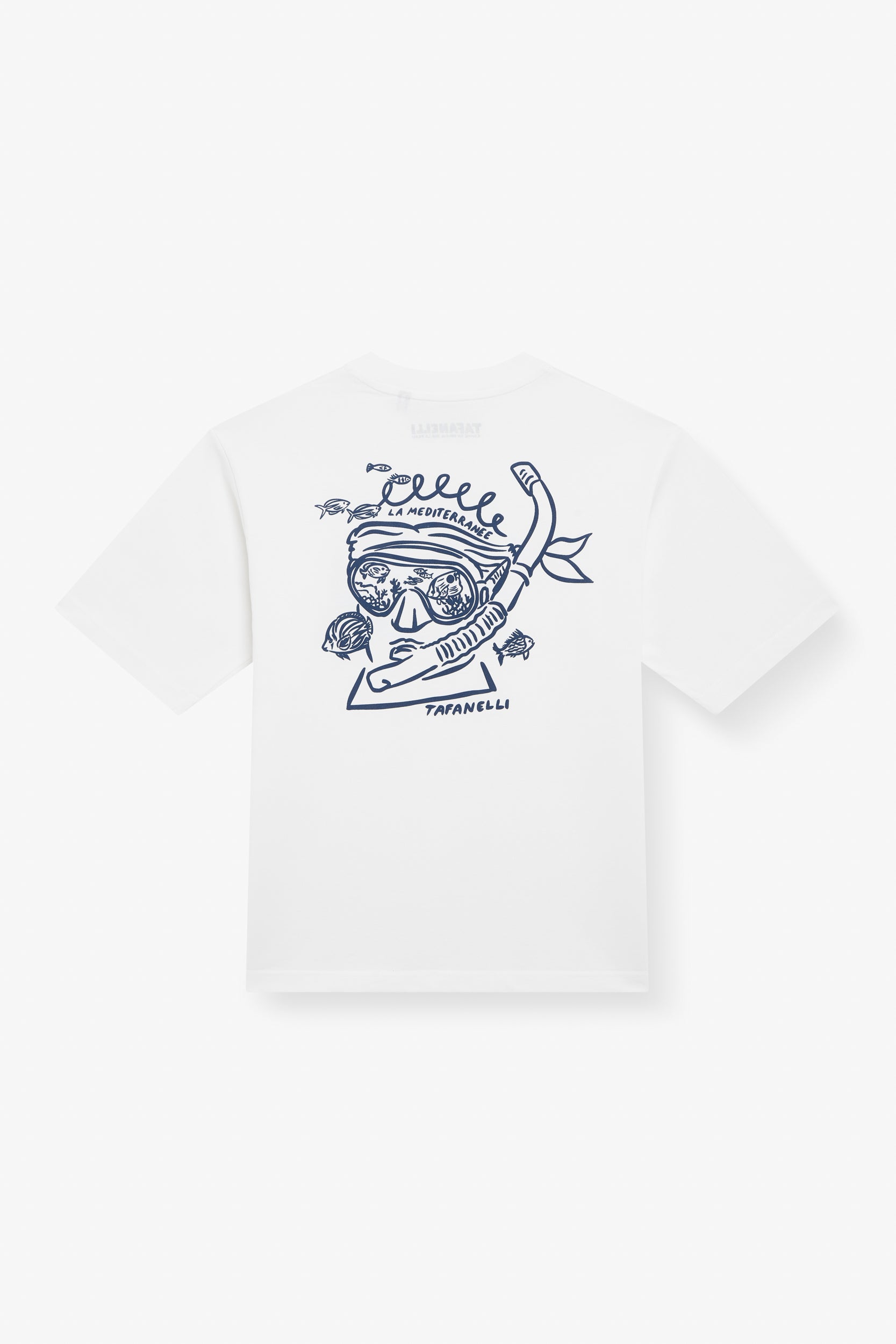
What TAFANELLI takes from it
We do not manufacture piloni and we do not sell mezzari. Making the traditional costume a product line would be a masquerade, and the island does not need that.
What we take is the method.
- A material chosen for its function, not its price. Goat hair because it stops the water. Our 280 g/m² cotton because a 150-gram t-shirt is a one-season garment.
- Nothing superfluous. The carchera contained what was needed, and nothing else. Our pieces have no visible logos, no internal tags, and no ornaments.
- A garment made to last for years, not to last one summer. That was the only thing Corsican cloth had to prove, and it is ours as well.
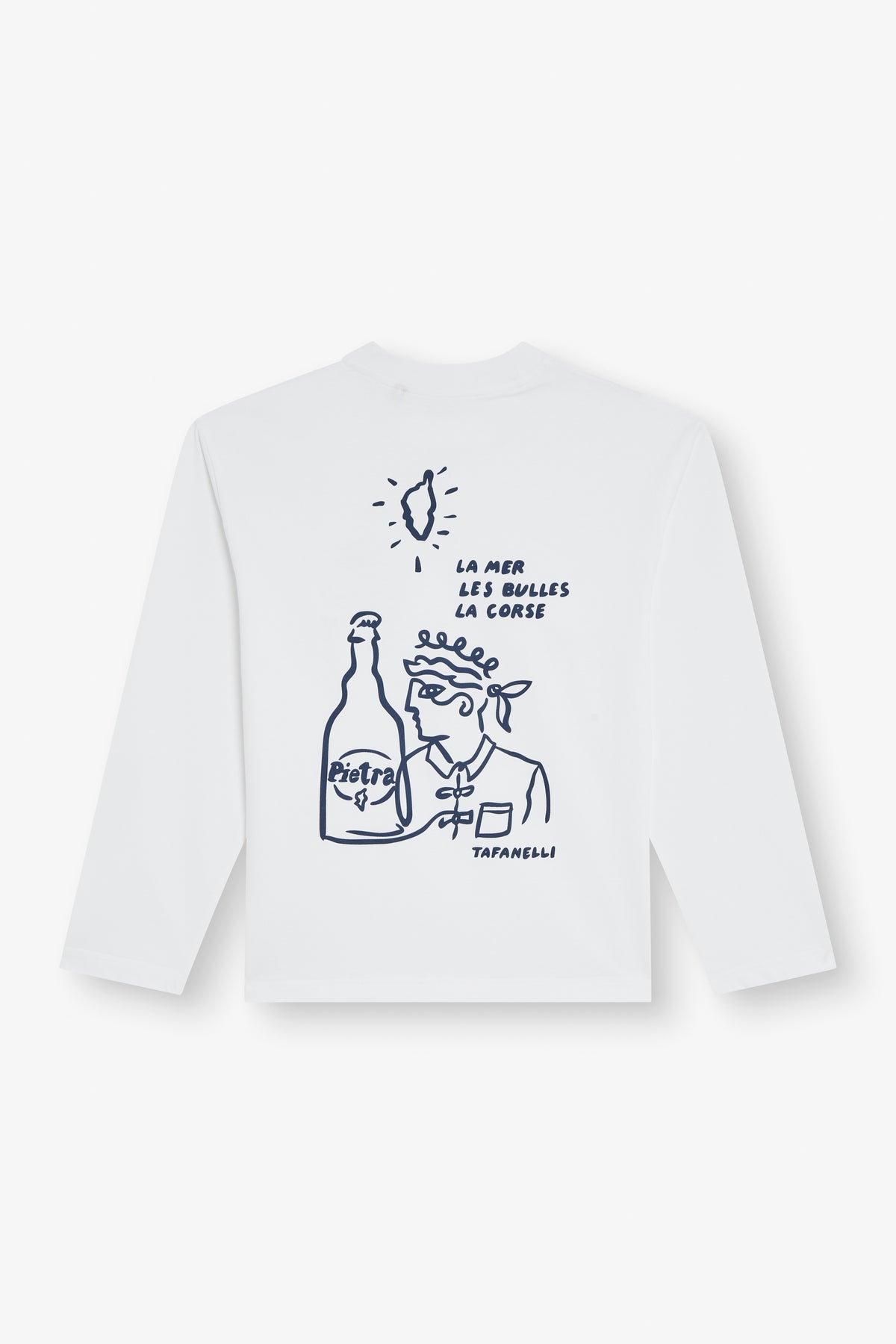
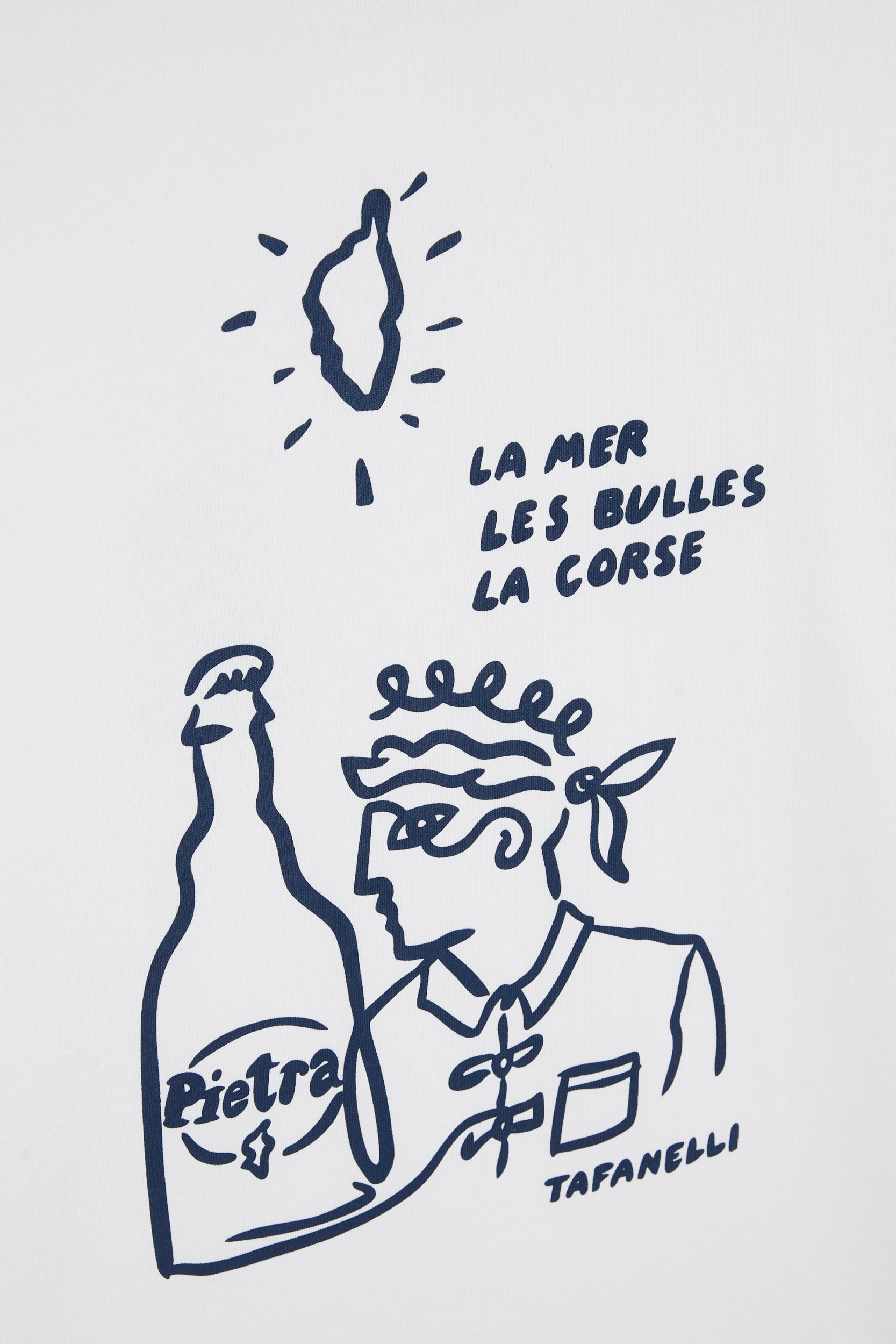
- What comes from elsewhere becomes Corsican by being worn. The mezzaru proved this. Our designs are hand-screenprinted in a workshop in France, on an inherently Mediterranean framework.
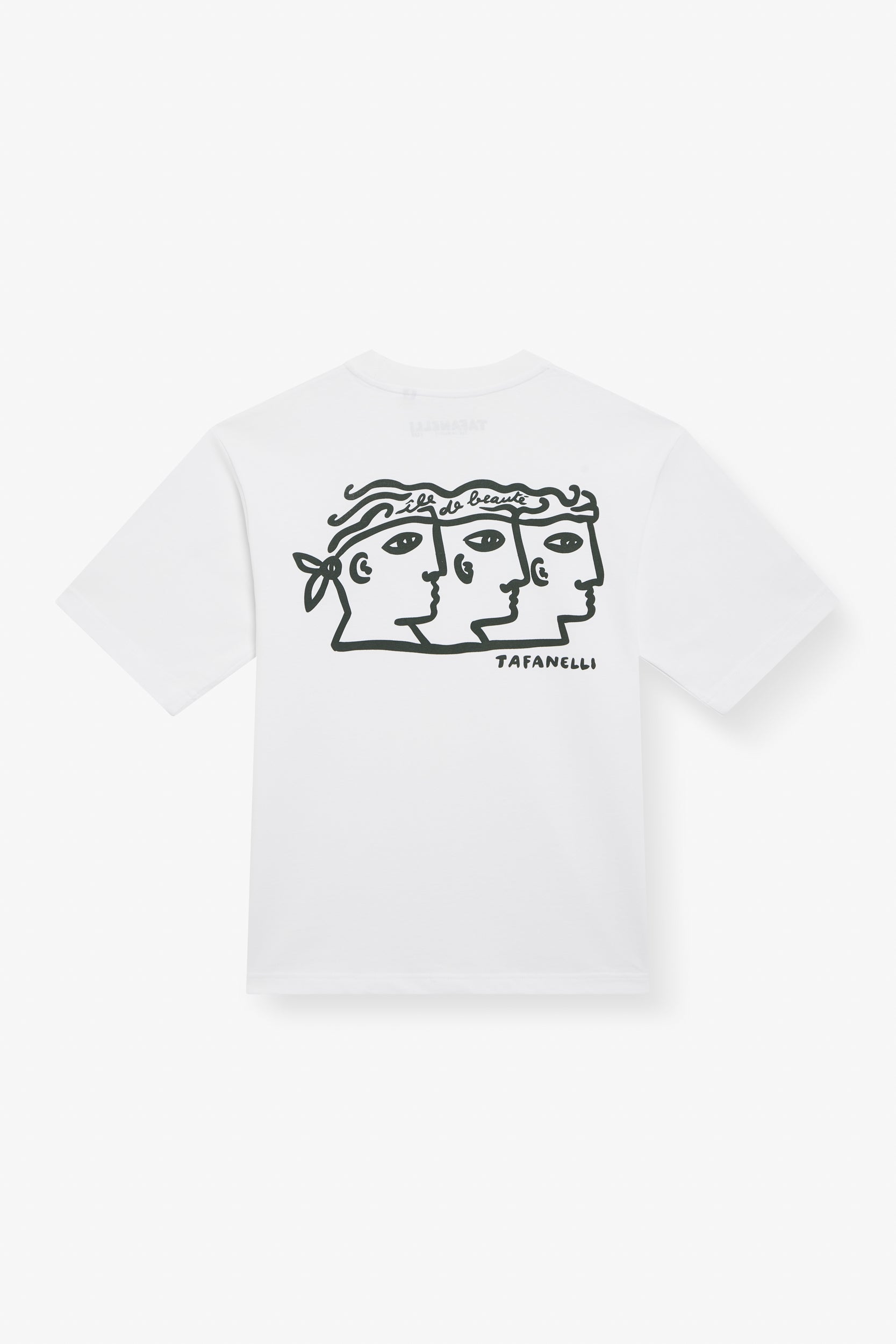
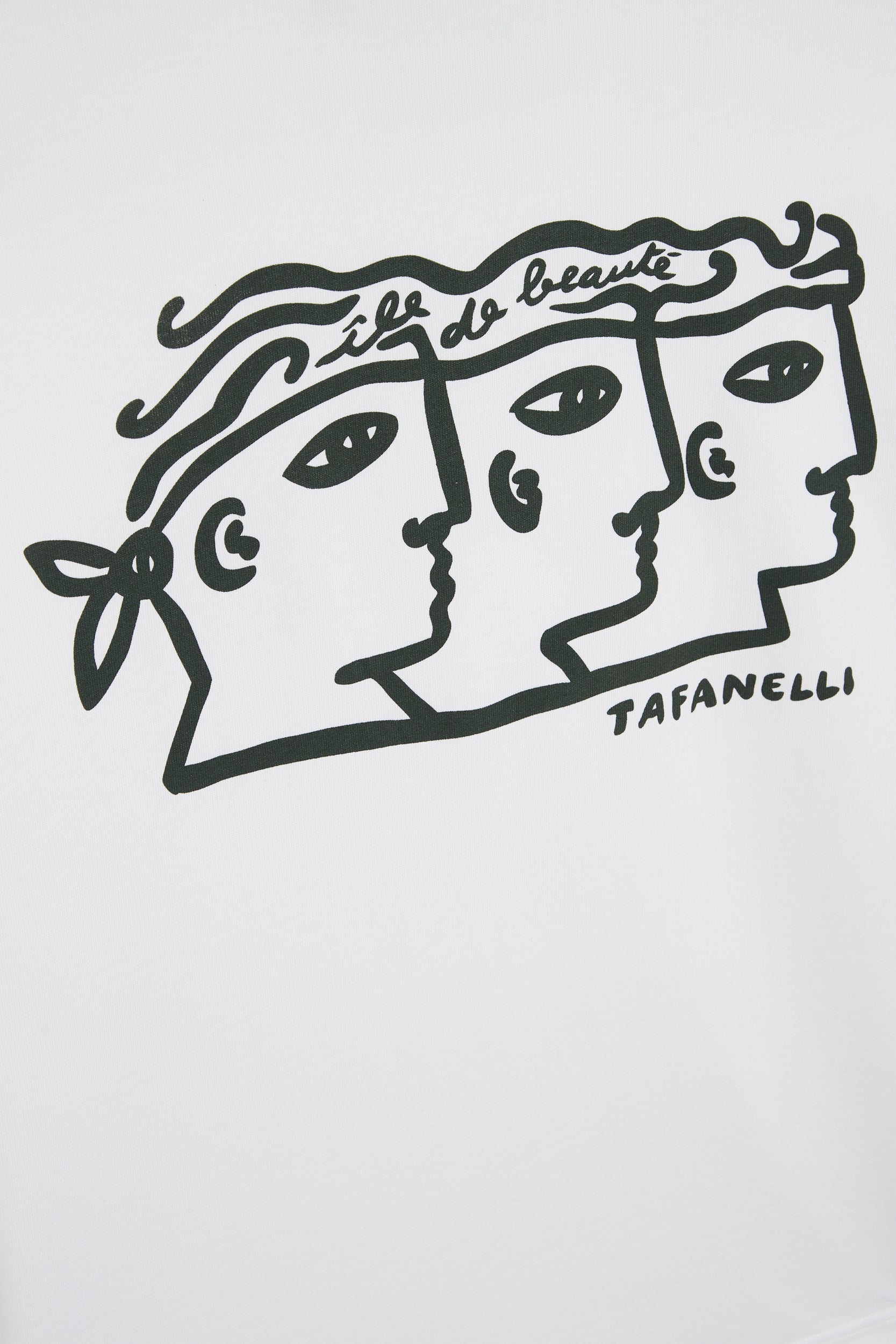
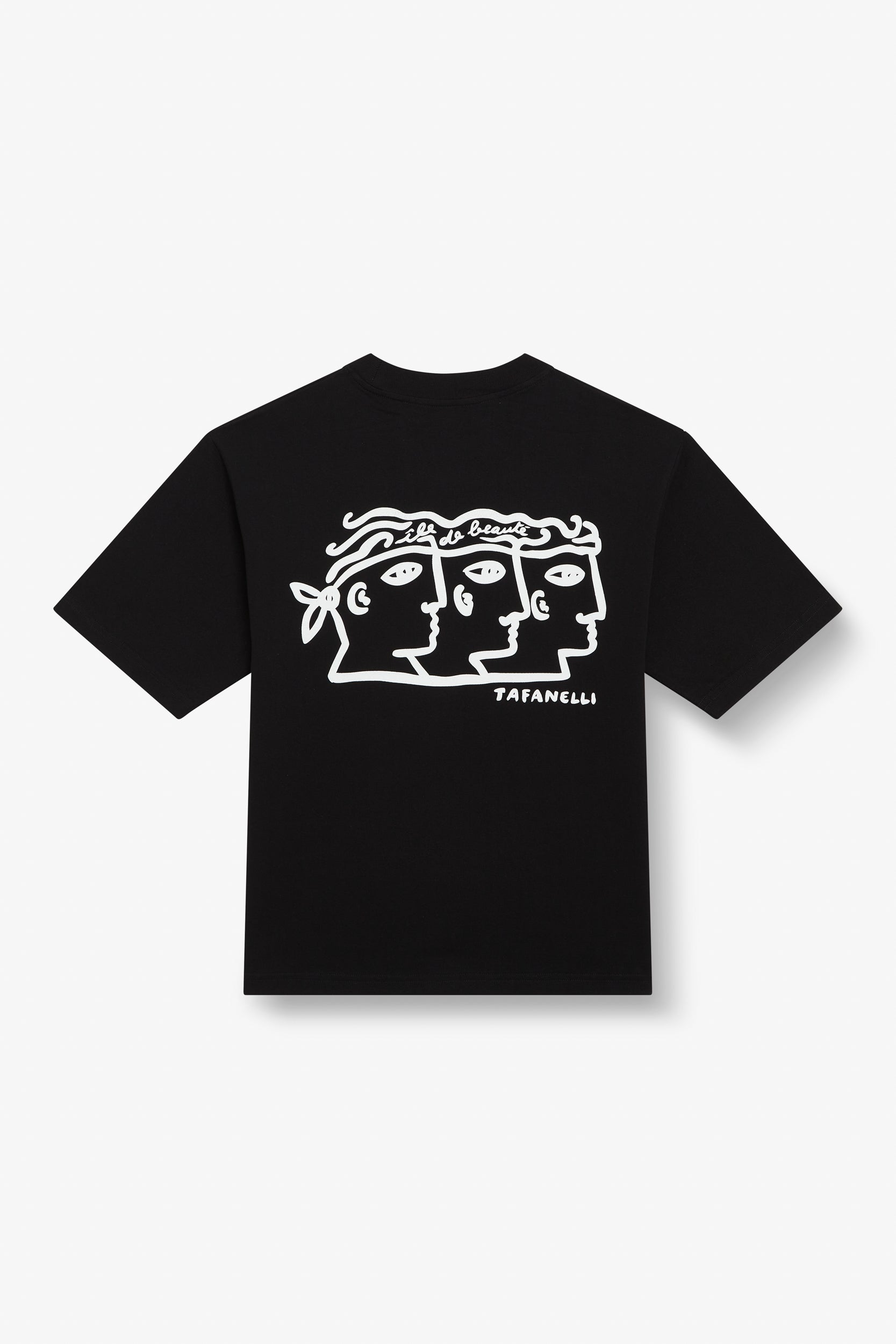
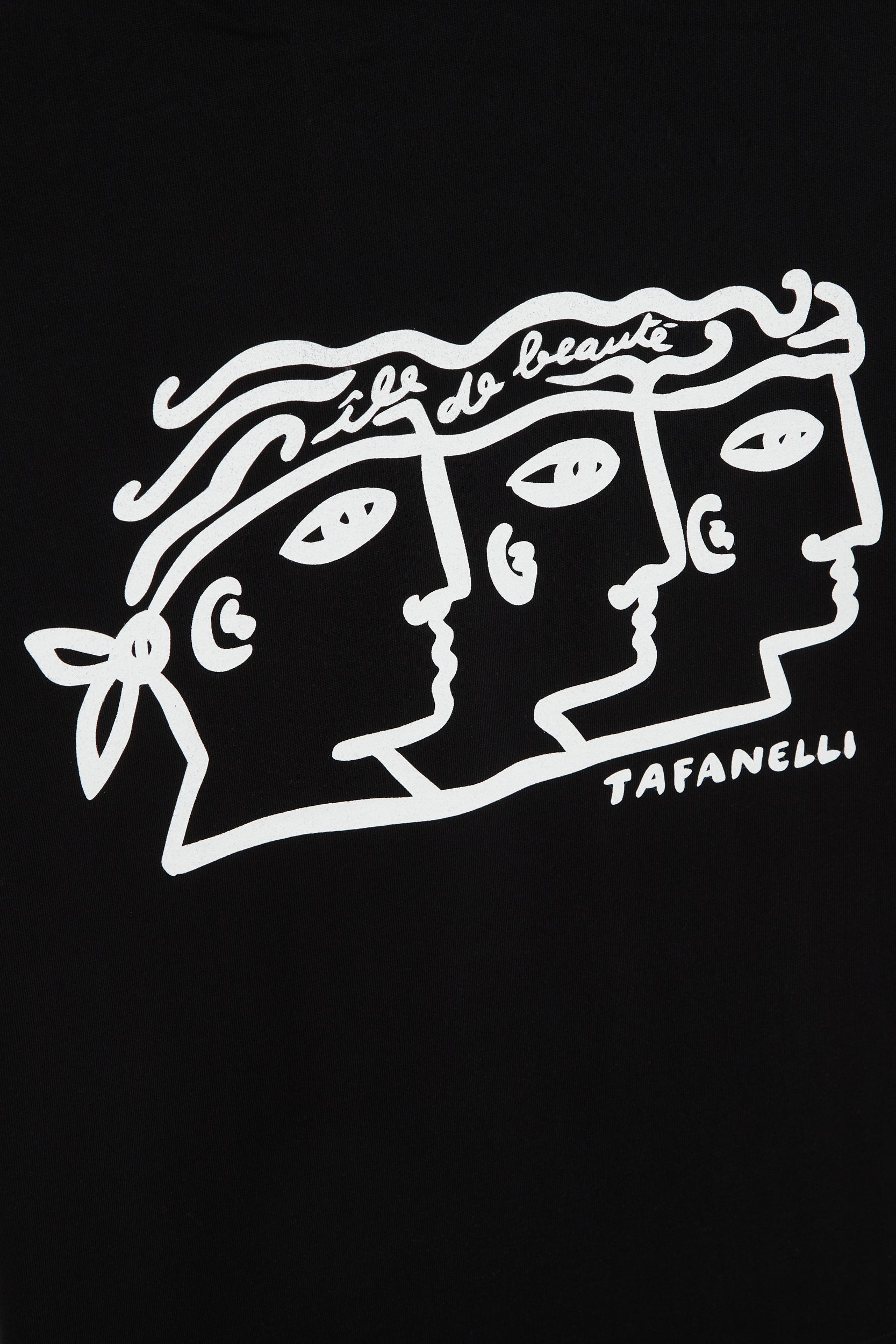
Our most recent piece carries this logic to its conclusion. La Trinità unites three profiles turned toward the same horizon, under the island's historical designation: mare, muntagna, machja. The sea, the mountains, the maquis. The three territories that, for centuries, dictated how people dressed here.
To learn more:
- TAFANELLI, Corsican brand and Mediterranean wardrobe
- Corsican men's clothing, the guide to Mediterranean masculine style
- The Moor's Head, history and symbolism of the Corsican flag
- The Corsican language, history and renaissance
- Shepherds and transhumance in Corsica
- Made in France T-shirt, the guide to choosing the right one
When visiting Corsica, the customer becomes a friend.
A DOPU,
TAFA