Gulf of Porto, Girolata, and Scandola: a complete guide to the UNESCO-listed trio
If Corsica were to show only one of its faces to the world, it might be this one. On the west coast, an entire gulf is classified as a UNESCO World Heritage site: the Gulf of Porto, with the lost hamlet of Girolata—accessible only by sea or on foot—at the edge of its waters, and the legendary Scandola Nature Reserve, a sanctuary of red granite and wildlife. After the Calanques de Piana, here is the rest of this natural masterpiece. A complete guide.
A World Heritage-listed gulf
In 1983, UNESCO inscribed a Corsican site of exceptional universal value onto its World Heritage list: "Gulf of Porto: Calanche of Piana, Gulf of Girolata, Scandola Reserve." Three wonders gathered in the same setting, on the island’s west coast.
We have already recounted the Calanques. What remains is the beating heart of the site: the Gulf of Porto itself, that deep indentation in the coast where the red mountains plunge into an impossibly blue sea, with the village of Porto at the base and the two jewels of Girolata and Scandola at its extremities.
This classification is no coincidence. It rewards an ensemble where spectacular geology (red porphyry), marine and terrestrial biodiversity (ospreys, groupers, coral), and almost intact preservation combine like nowhere else in the Mediterranean. It is one of the rare places where you can still see Corsica as it was a thousand years ago.
The Gulf of Porto is one of those places that makes you humble. You sail between cliffs of fire, you cross paths with the flight of an osprey, you arrive at a hamlet with no roads. And you suddenly realize that the true wealth of Corsica is not in what it has built, but in what it has managed not to destroy.
The gulf and the marine of Porto
At the base of the gulf, the village of Porto (Portu in Corsican) is the gateway to the entire site. A small harbor nestled between the red mountains and the sea, overlooked by an iconic silhouette.
The Genoese Tower
Perched on a red granite peak at the entrance to the harbor, the Genoese Tower of Porto, square and massive, has been watching over the gulf since the 16th century. Restored, it is open to visitors and offers a superb view from its summit. It is one of the most photographed symbols of the west coast. For more information, check out our article on the 10 most beautiful Genoese towers in Corsica.
The harbor and the eucalyptus trees
The Porto harbor is organized around its small marina and a bridge spanning the river, lined with a famous row of eucalyptus trees planted in the 19th century. This is where most excursions to Scandola and Girolata depart from.
Porto is also an ideal base for exploring the hinterland: the Spelunca Gorges, the Aïtone Forest, and the village of Evisa are within driving distance, offering a striking contrast between the red sea and the green mountains.
The Scandola Nature Reserve
This is the absolute jewel of the gulf and one of the most beautiful nature reserves in the Mediterranean: the Scandola Nature Reserve, created in 1975.
A landscape at the end of the world
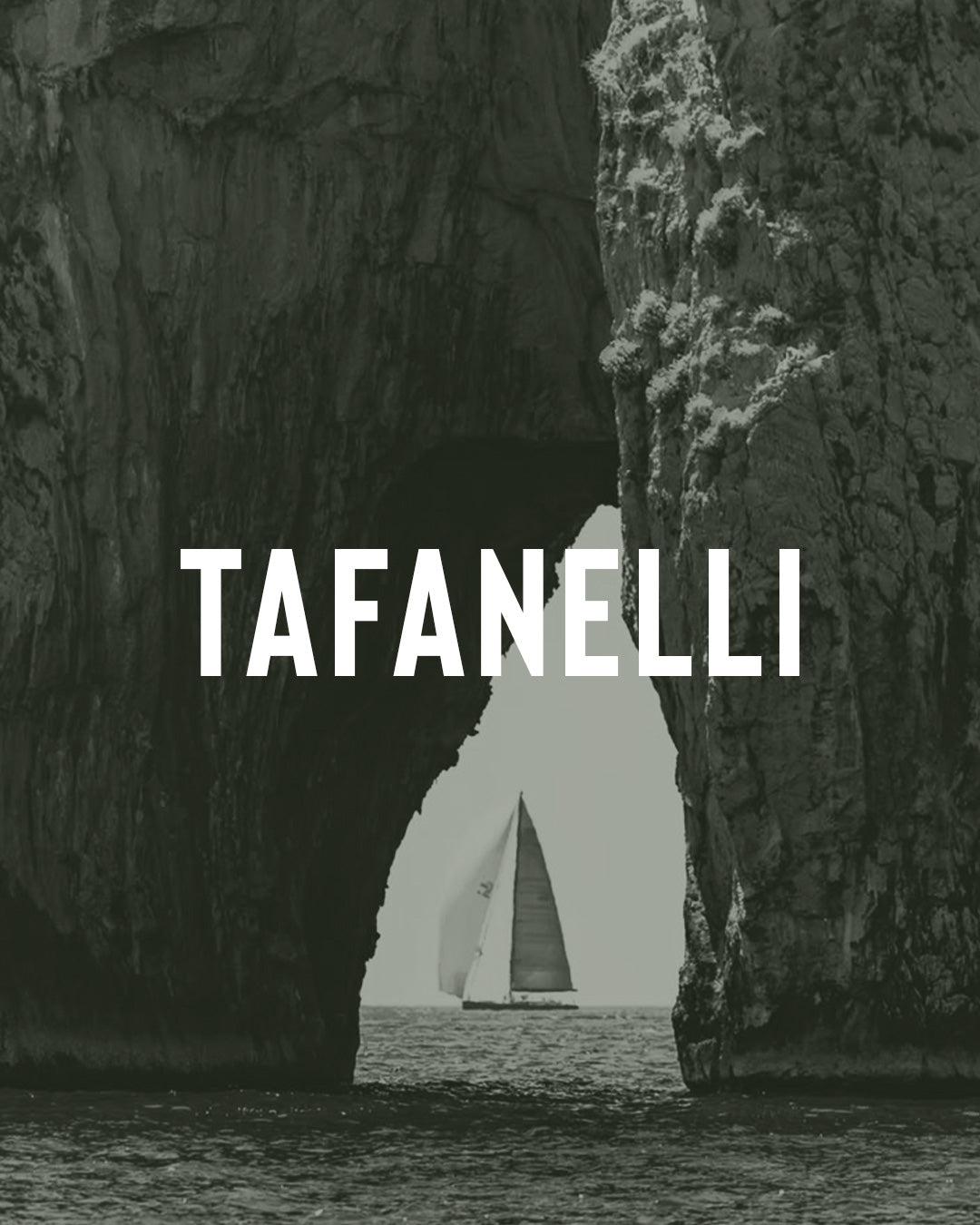
Scandola is a peninsula of red porphyry, born from volcanic activity millions of years ago. Its steep cliffs plunge directly into transparent water, forming stone organ pipes, caves, arches, and needles of a flamboyant red. Seen from the sea, it is an unreal, almost Martian landscape of breathtaking wild beauty.
Double protection
The reserve protects both the terrestrial environment (cliffs, maquis shrubland, fauna) and the marine environment (seabed, seagrass beds, fish). It is this double protection, land and sea, that makes its wealth exceptional and its UNESCO status unique.
Access is strictly regulated: you can only discover Scandola from the sea, without disembarking on the protected part, without fishing, and without diving into the core of the reserve. These strict rules are the very reason why Scandola remains so intact. To learn more about Gargalu Island in the heart of Scandola, see our guide to the satellite islands of Corsica.
Girolata, the village at the end of the world
Between Porto and Scandola, tucked away in the back of a protected bay, hides one of the most unique places in Corsica: the hamlet of Girolata.
A village without roads
The special feature of Girolata is that no road leads there. It can only be reached by sea (boat, shuttle) or on foot (via the postman's path). This isolation makes it a place out of time, where a few dozen inhabitants live at the rhythm of the sea, without cars or agitation.
The Genoese fort
The hamlet is dominated by a 16th-century Genoese fort perched on its promontory, watching over the bay. Below are a few fishermen's houses, beach huts, and restaurants that treat visitors to fresh fish and Corsican specialties, facing one of the most beautiful bays on the island.
Having lunch in Girolata, feet almost in the water, after a morning spent sailing in Scandola, is one of the most memorable Corsican experiences possible. A rare privilege: that of a place that modernity has not reached.
Girolata has no roads, no cars, no engine noise. Just the lapping water, the cicadas, and the flight of the gulls. It is a piece of the "old" Corsica, preserved solely by its geography. Setting foot there is like stepping back in time a century.
Exploring the gulf by boat
The premier way to discover the Porto-Scandola-Girolata trio is by sea. It is, in fact, the only way to see Scandola and to easily access Girolata.
Excursions departing from Porto
Many companies offer trips from the Porto harbor (as well as from Calvi, Ajaccio, Cargèse, and Sagone). Classic options include:
- Scandola + Girolata (half-day): cruise along the reserve, its caves and red cliffs, then a lunch stop in Girolata.
- Scandola + Girolata + Calanques de Piana (full day): the grand tour of the UNESCO site in one outing.
- Sunset trips: to watch the porphyry set ablaze in the evening light.
Tip: opt for small boats or rigid-inflatables to get as close as possible to the caves and coves where large ships cannot go. And book in advance during high season.
The "Factor's Trail"
For hikers, there is a magnificent way to reach Girolata: the Factor's Trail (u sentieru di u portalettere), named after the path the mail carrier once used to deliver letters to the isolated hamlet.
- Start: Col de la Croix (Bocca a Croce), on the D81 between Porto and Galéria.
- Duration: approx. 2 hours one way, 4 hours round trip.
- Difficulty: moderate, some climbs, well-marked trail.
- Scenery: fragrant maquis, deserted coves (Tuara beach on the way), plunging views of the sea.
Many combine the two: hike there via the Factor's Trail, have lunch in Girolata, and return by maritime shuttle. The perfect way to experience the place from every angle.
Exceptional flora and fauna
The Gulf of Porto is classified because of its remarkable biodiversity, one of the best-preserved in the Mediterranean.
The Osprey
The emblem of Scandola. This sea raptor, almost extinct on European coasts, finds one of its last sanctuaries in the reserve. You can spot its nests perched on the red cliffs, and sometimes see it diving to fish. A rare and moving spectacle.
Other species
- European shags, Audouin's gulls, peregrine falcons: the reserve is an ornithological paradise.
- Groupers, brown meagres, spiny lobsters, red coral: the protected seabed is teeming with life.
- Posidonia seagrass beds: the underwater meadows, the lungs of the Mediterranean, are intact here.
- Endemic flora: orange lichens that color the rocks, maquis plants adapted to salt and wind.
A sanctuary to respect
The Gulf of Porto is a victim of its own success. Tourist traffic, especially maritime, puts pressure on a fragile ecosystem. Everyone has a role to play.
- Respect Scandola regulations: no disembarking in the protected zone, no fishing, no diving in the heart of the reserve, mooring prohibited on seagrass beds.
- Choose responsible operators: prioritize companies that respect quotas and approach distances for wildlife.
- Do not disturb birds: keep a distance from nesting cliffs.
- Leave nothing behind: no waste, neither at sea nor on the trails.
- On the Factor's Trail: stay on the path, do not pick plants, and carry plenty of water (there are no supply points).
Scandola is a miracle of preservation in a Mediterranean damaged everywhere else. This miracle depends on one thing: strict rules, respected by all. Visitors who break them are not just having fun; they are stealing something from future generations.
Practical advice
When to come
- May-June: maquis in bloom, beautiful sea, gentle crowds. Ideal.
- September-October: warm water, golden light, crowds gone. Our favorite time.
- July-August: superb but very crowded at sea. Book early and opt for the first outings of the morning.
Where to stay
The harbor of Porto and the village of Ota just above offer hotels and guesthouses. For a broader stay, Piana, Cargèse, or Sagone are excellent bases for exploring the entire west coast.
How long
Plan for at least two to three days to fully experience the gulf: one day at sea (Scandola + Girolata), one day for the Calanques + village of Piana, one day for the hinterland (Spelunca, Aïtone, Evisa). A concentrate of everything most beautiful in Corsica.
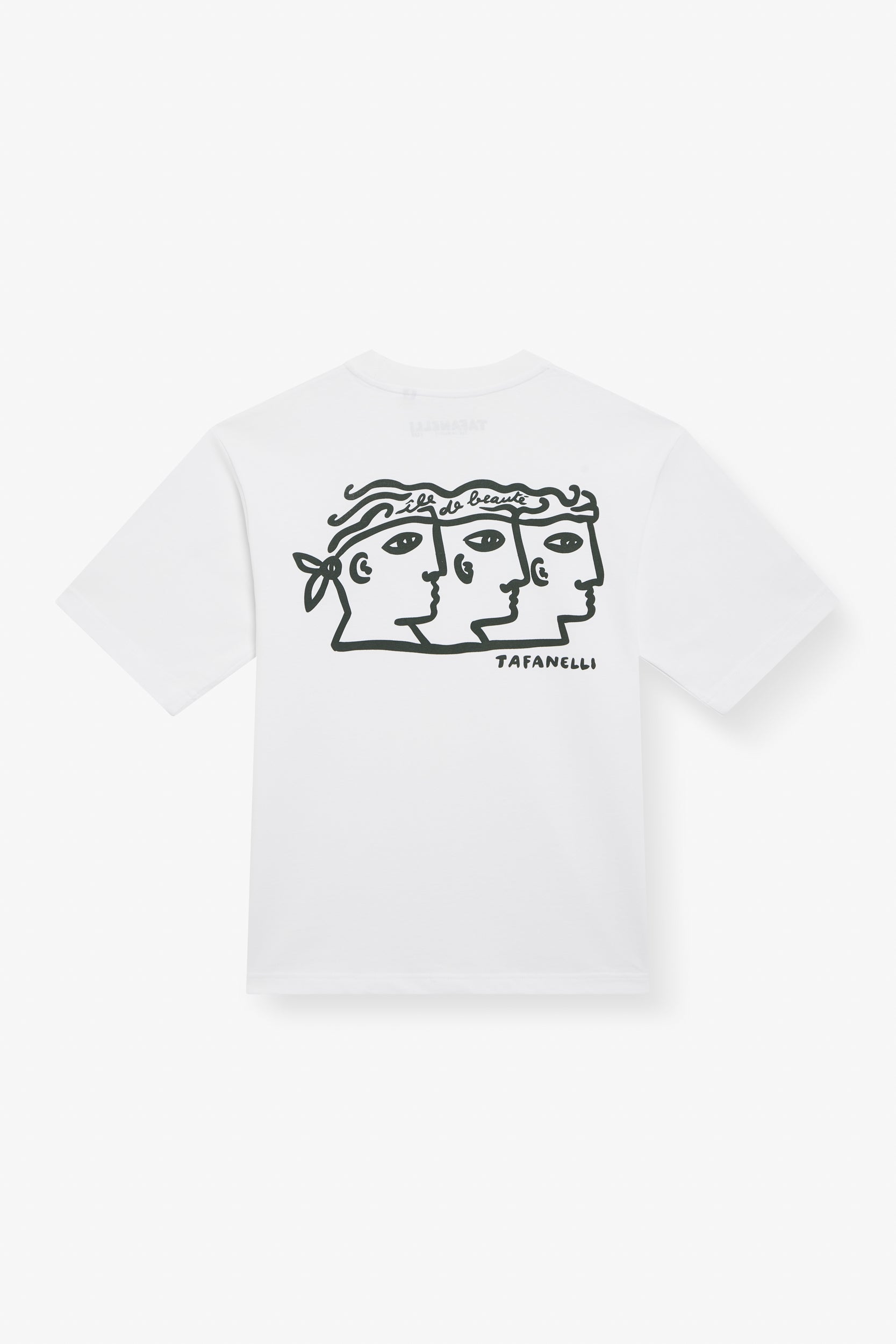
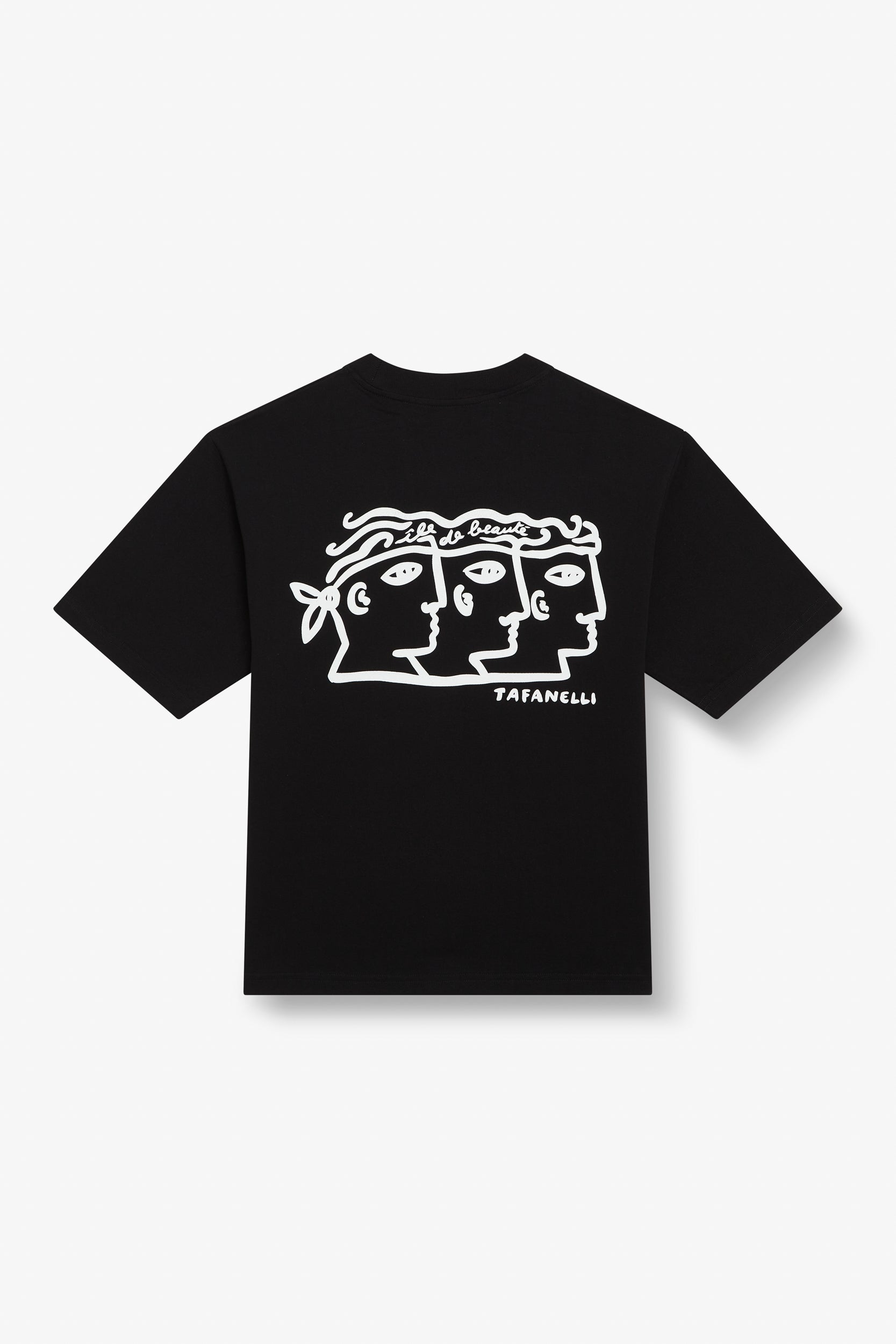
The Gulf of Porto and the TAFANELLI wardrobe
The Gulf of Porto alone embodies the trinity we celebrate: the deep Mer (sea), the red Muntagna (mountain), and the fragrant Machja (maquis). A concentrate of the Corsican soul—raw and precious—exactly what we sew into every piece.
Discover the designs born from this imagination:
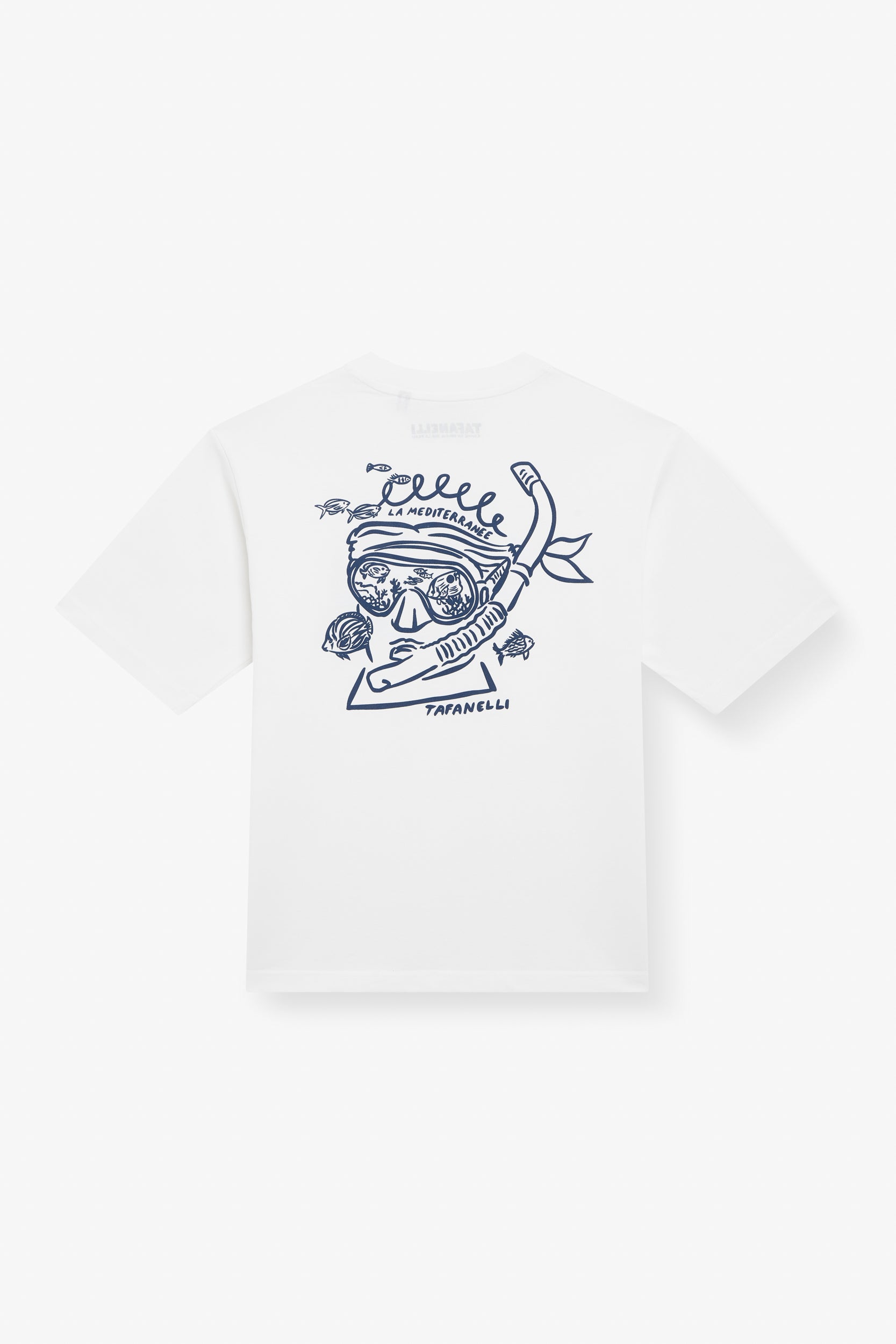
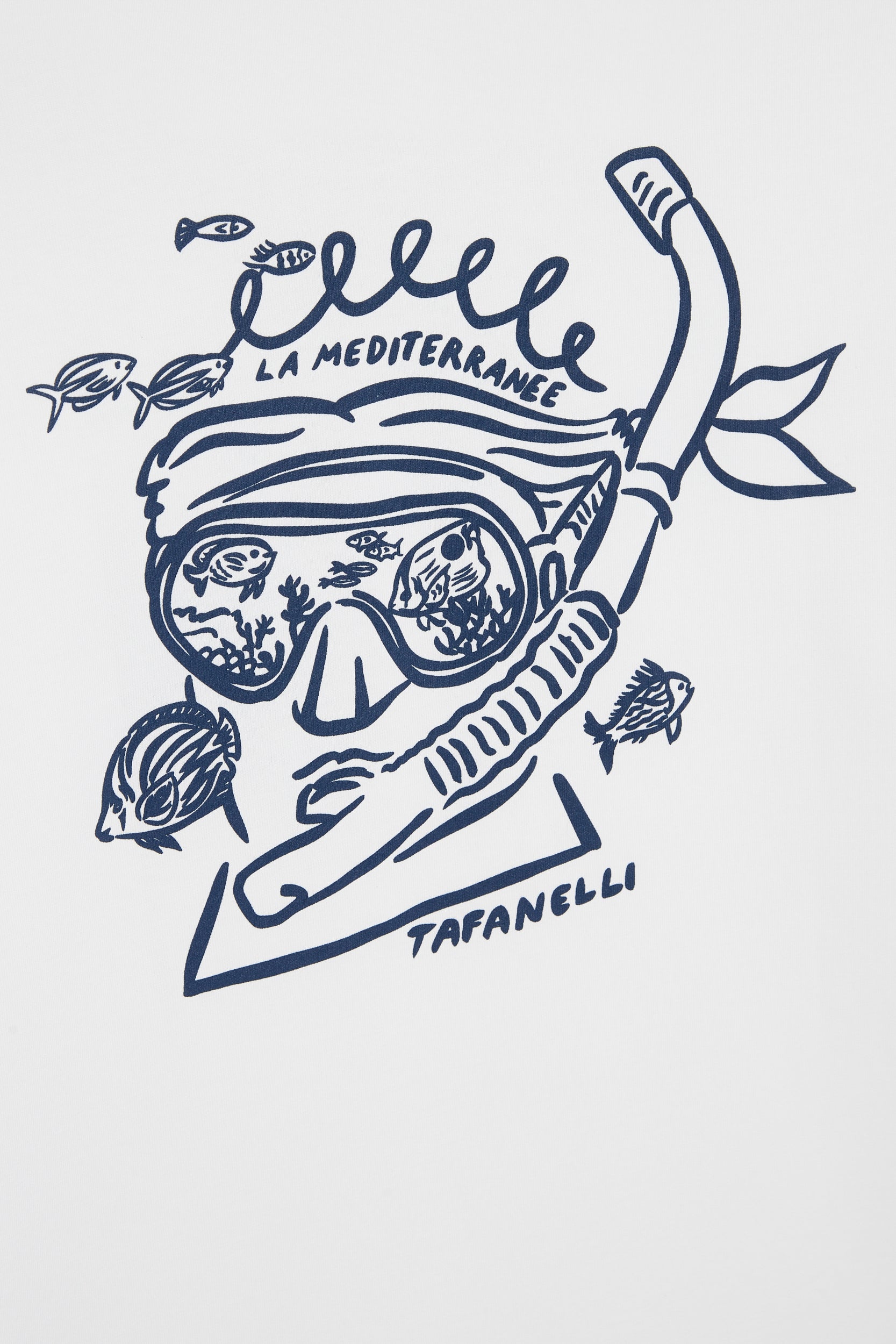
- The Mediterranean Diver t-shirt: man between sky and sea, at the foot of the red cliffs.
- The Roccapina t-shirt: a tribute to the sculpted granite of the west coast.
- The La Trinità t-shirt: sea, mountain, and maquis reunited.
- The TAFANELLI cap: companion for sea trips and trails.
To continue discovering the west coast:
- The Calanques de Piana, a masterpiece of red granite
- Cargèse, the Greek village of Corsica
- The 10 most beautiful satellite islands of Corsica
- The 20 most beautiful wild beaches of Corsica
- Mare, Muntagna, Machja: the Corsican landscape trinity
When passing through Corsica, the customer becomes a friend.
A DOPU,
TAFA