Corsican brand: what it means, and how to spot a real one
A Moor's head printed on a T-shirt made in Bangladesh does not make a Corsican brand. It makes a roadside souvenir. The difference is not a question of design, it's a question of method: where you produce, with what material, for what lifespan, and what you refuse to do. Here are the criteria, and what they really imply.
What is a Corsican brand
The question seems simple. It is not, because three different answers are circulating.
First answer: a brand registered in Corsica. A legal, verifiable criterion, but insufficient. A company can have its headquarters in Ajaccio and have all its pieces manufactured on the other side of the world.
Second answer: a brand that uses Corsican symbols. A graphic criterion, and the most misleading of all. The Moor's head, the flag, the word Corsica in capital letters: these elements belong to everyone, and anyone can print them.
Third answer: a brand whose decisions are determined by the island. It is the only one that holds up.
A Corsican brand is not a brand that talks about Corsica. It is a brand to which Corsica imposes constraints.
These constraints are concrete. An island without a textile industry cannot produce locally, so it must choose a workshop elsewhere and own it. A territory where everyone knows everyone doesn't allow for lying about the origin for long. A clientele composed of islanders and the diaspora does not forgive fake folklore. And a market of 350,000 inhabitants forces you to make few pieces, therefore to make them well.
These are not marketing postures. These are real limits, and they are what shape the style.
The three traps of fake Corsican goods
The souvenir disguised as a brand
This is the most common. A ten or fifteen-euro T-shirt, light 150 g/m² cotton, digital print, Moor's head centered on the chest. It's sold on the roadside between two beaches, it lasts for one season, it loses its shape in the third wash.
It's not illegitimate, it's just something else. It's a vacation souvenir, not a garment. The problem starts when this product presents itself as a brand.
Folklore as an argument
Second trap: reducing the island to an iconography. Boar, chestnut, stylized mountain, phrase in poorly spelled Corsican. The garment becomes a wearable postcard.
Yet contemporary Corsica is anything but a backdrop. It produces wines that rival the best on the continent, cheeses and cured meats under designation of origin, and music classified by UNESCO. A brand that treats it as a cliché betrays it twice: it damages the island's image and deprives itself of everything that could have made it interesting.
"Made in France" that means nothing
Third trap, the most technical. The mention "Made in France" can cover very different realities: a garment entirely crafted in the territory, or an imported T-shirt on which a print was simply placed before reselling.
The question to ask is not "where is it made," but "what is done where." Knitting the jersey, the assembly, the printing: three distinct steps, three possible locations. An honest brand distinguishes between them. See our guide to the Made in France T-shirt.
What the wardrobe owes to the territory
The traditional Corsican costume offers a lesson that few brands have remembered.
The island never had a textile industry. Everything worn there came either from the wool of village livestock or from Genoese ships. Only three materials were produced locally: wool cloth, goat hair, and linen fabric. Each had a precise function.
The pilone, the coat of the shepherds, was cut from goat hair because this material repels water. Not because it was beautiful. The carchera, the leather belt, held ammunition and gear to repair one's shoes on the road. Nothing superfluous, everything justified by use.
And yet, the most iconic piece of the female costume, the mezzaru, is a printed cotton veil descended from the Indian fabrics imported by Genoa in the 17th century. A foreign fabric, adopted and then become identity-forming to the point that its origin has been forgotten.
A Mediterranean island takes what arrives by sea and makes something out of it that belongs only to itself. That is the very definition of an insular culture.
Two principles emerge from this, and they are enough to build a wardrobe: the material is chosen for what it does, and outside influence is not a weakness as long as it is digested.
The codes of the contemporary Mediterranean wardrobe
What someone who lives between the sea, the mountains, and the maquis actually wears.
- Few pieces, very solid. The climate requires few layers but a lot of use. A garment worn three hundred days a year must be built accordingly.
- A short palette. Ecru, white, navy, black. Bright colors tire quickly in this light, and the sun eats them.
- Straight cuts. Nothing tight-fitting, nothing that hinders. You walk, you sail, you climb to the villages.
- Natural materials. Cotton, linen, wool. Synthetics are unbearable at 35 degrees in August.
- No ostentation. No visible logo, no outward signs. In Corsica, getting noticed by what you wear is a lapse in taste.
- A garment that ages well. Salt, sun, and wind damage everything. A piece is judged by its condition after three summers, not in the fitting room.
These codes are not unique to Corsica. We find them from Saint-Tropez to the Balearic Islands. But they are stricter there, because the territory is harsher.
The six criteria to recognize a true Corsican brand
Applicable to any brand, including ours.
- The weight is indicated. A brand that does not communicate the weight of its jersey has something to hide. Below 180 g/m², we are talking about a one-season T-shirt. Above 240, a garment that lasts.
- Manufacturing steps are detailed. Knitting, assembly, printing. Three named steps, three specified locations. "Made in France" without further detail is not information.
- Series are short. An insular brand that produces in volume is producing for elsewhere. This is not a flaw in itself, but it is no longer the same business.
- Drawings are original. No public domain symbols used as is. A clean, signed drawing that tells something precise.
- The price is consistent and explained. A T-shirt actually made in France, in heavy cotton and hand-screenprinted, cannot cost twenty euros. If it does, a step has been skipped.
- The brand physically exists on the island. Points of sale, partners, people who know it. A Corsican brand that no one in Corsica has heard of raises questions.
TAFANELLI, what we do and how
We apply our own criteria, point by point.
The material
280 g/m² organic cotton jersey, pre-washed. This is the weight of archival T-shirts from the 90s. The market produces mostly around 150 g/m². Ours weighs almost double, and it is felt the first second it's in your hand.
Pre-washing ensures it will not shrink. The collar is mounted and reinforced, because a T-shirt always dies at the collar.
Manufacturing
Assembly in France. Hand screenprinting, layer by layer, in our workshop. Each piece passes through human hands before being packed, which explains both the quality and the limited number of pieces produced.
The drawings
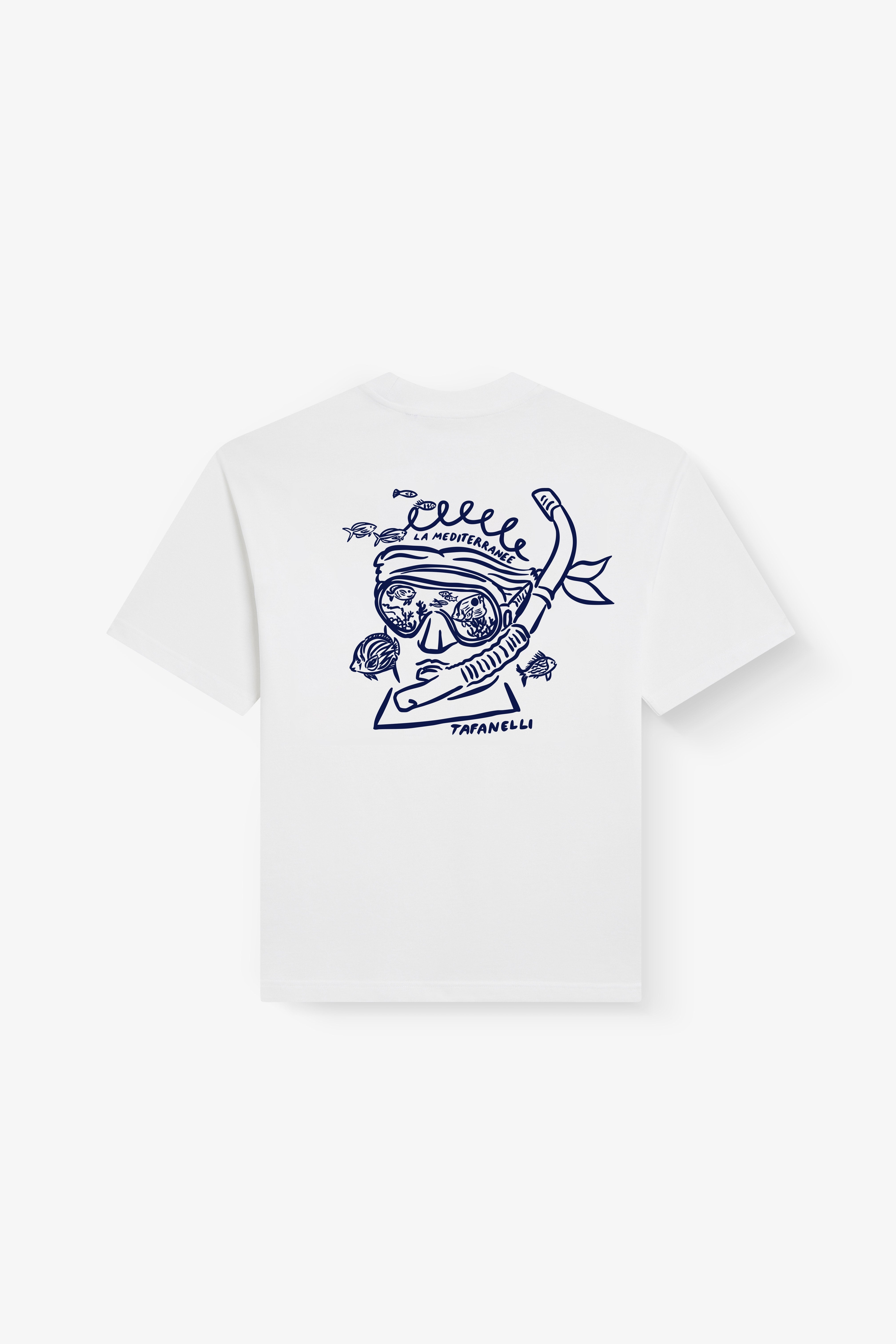
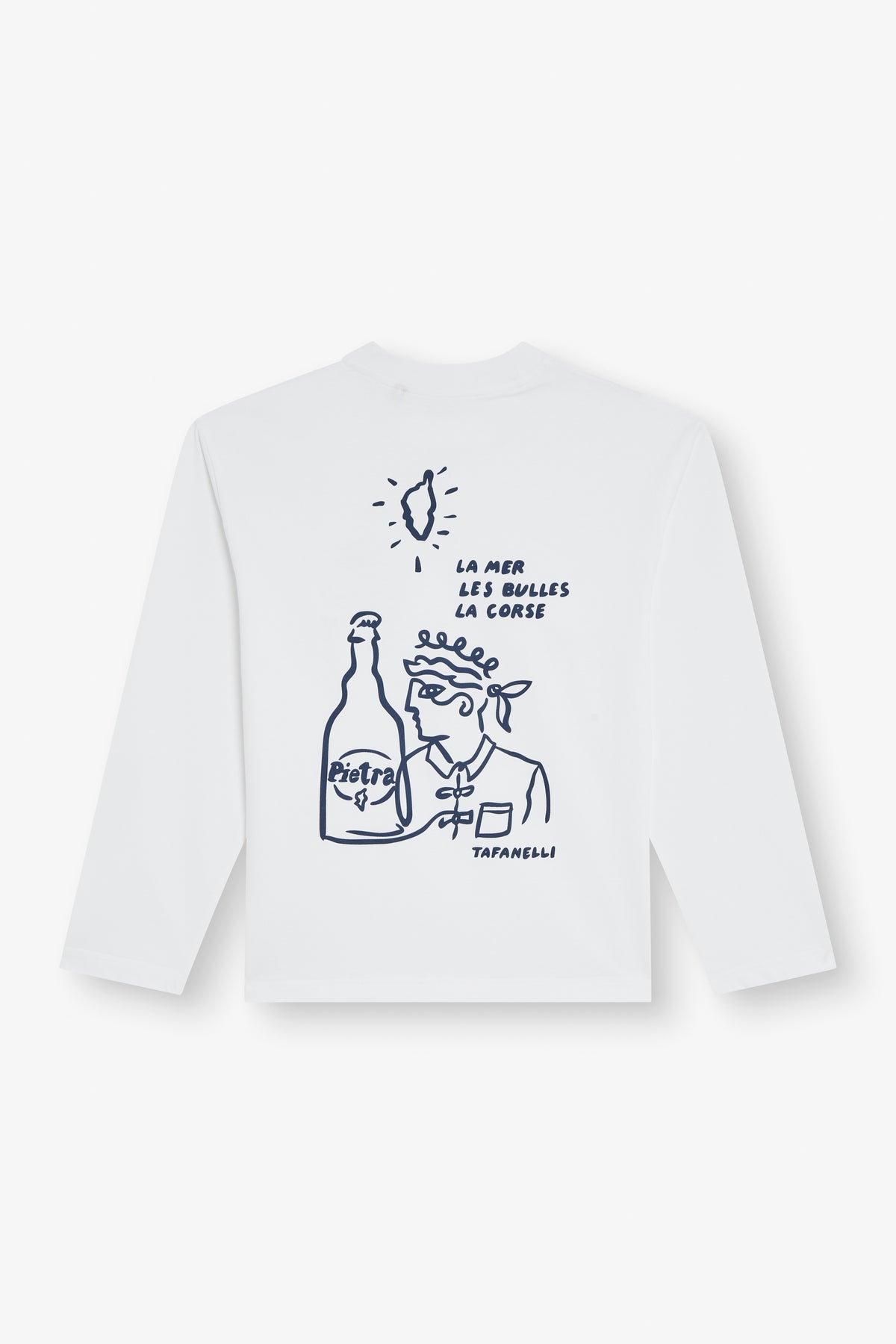
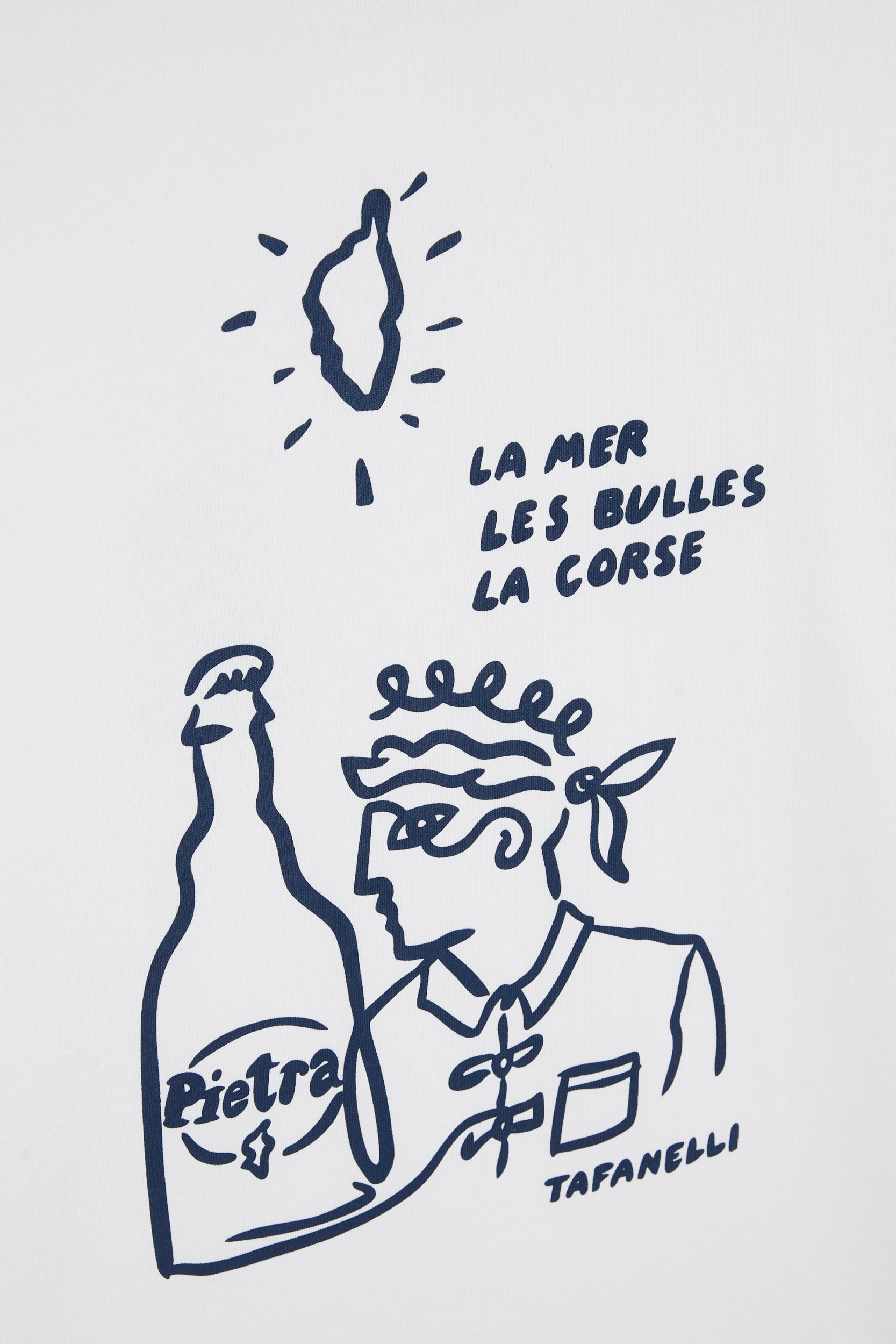
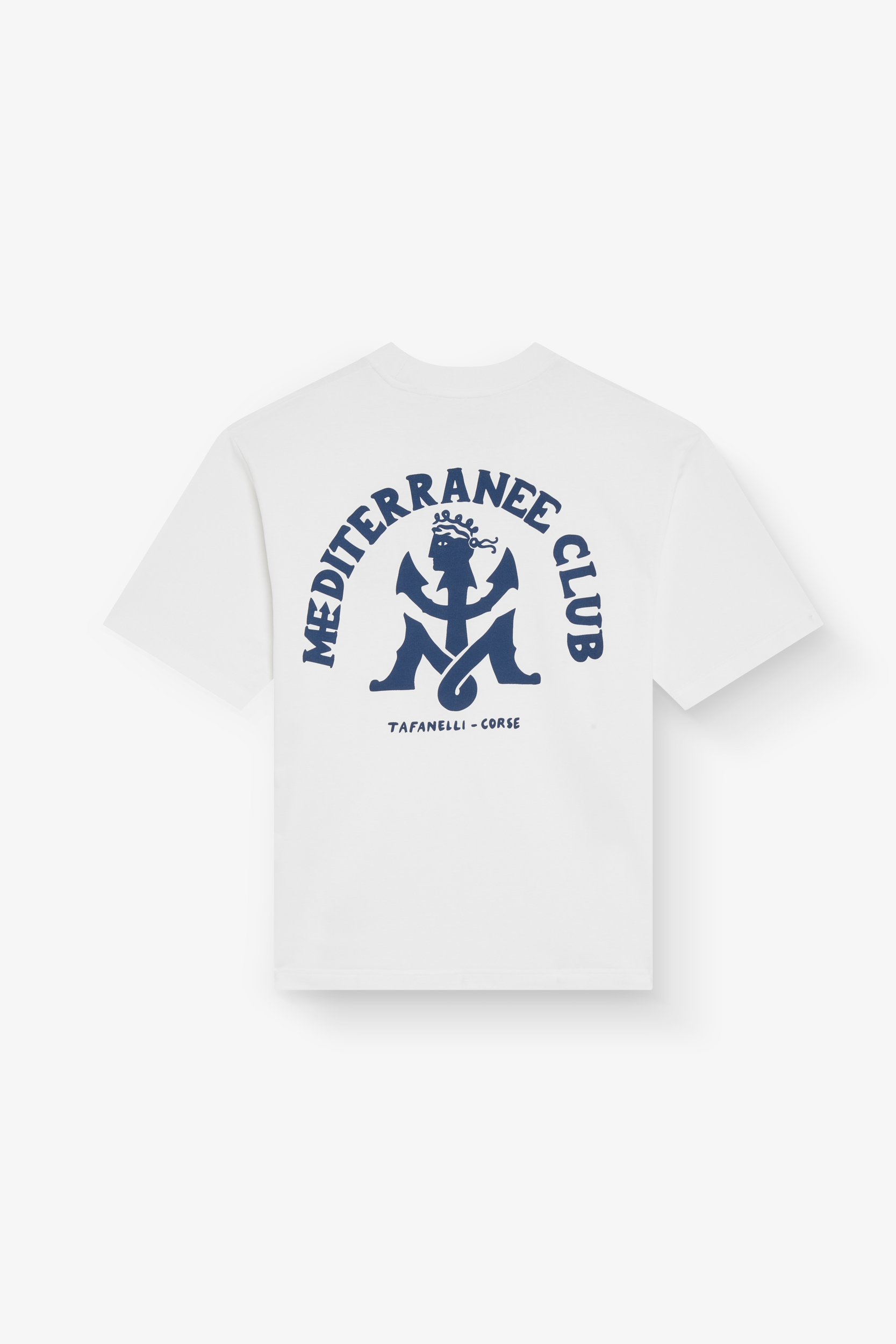
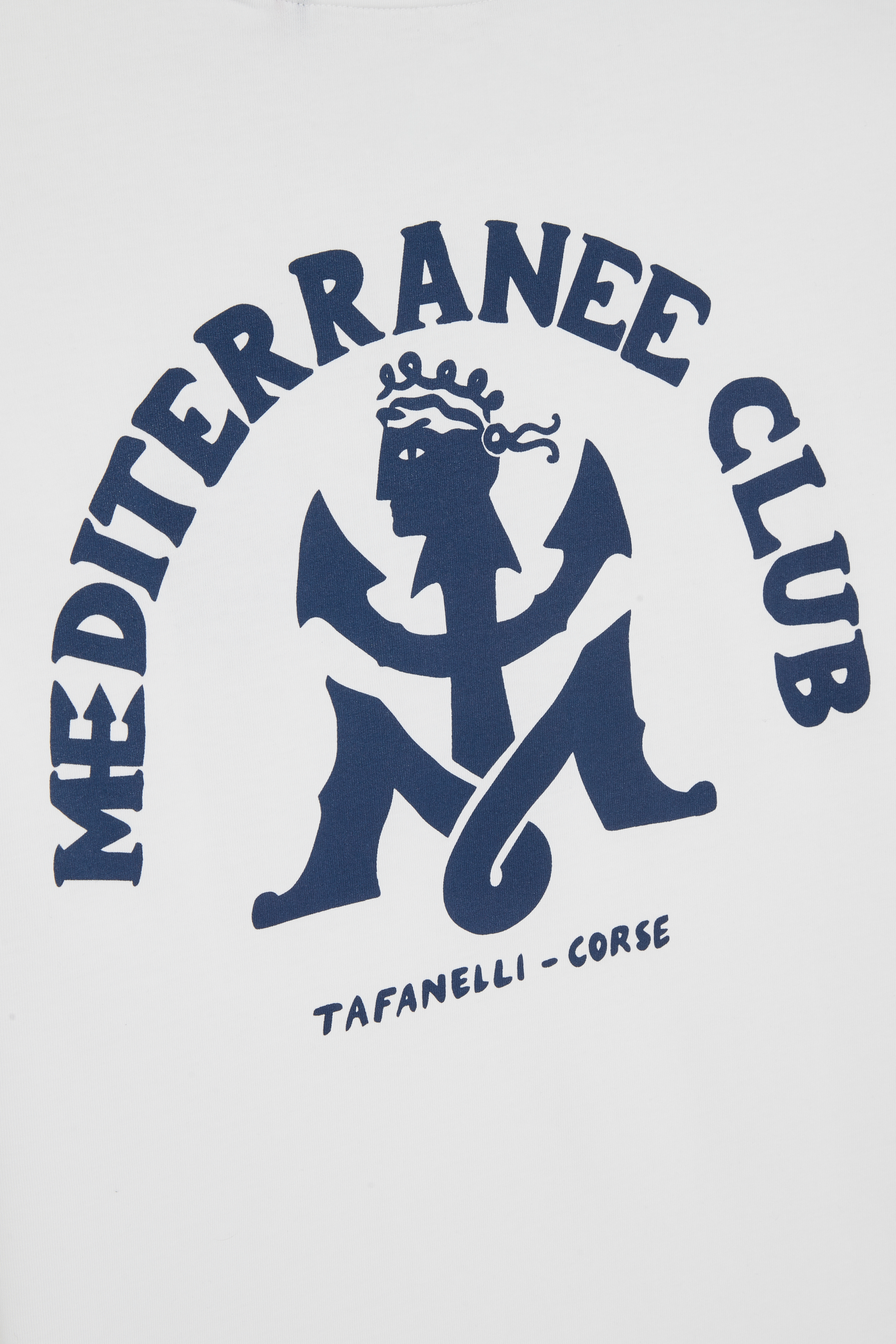
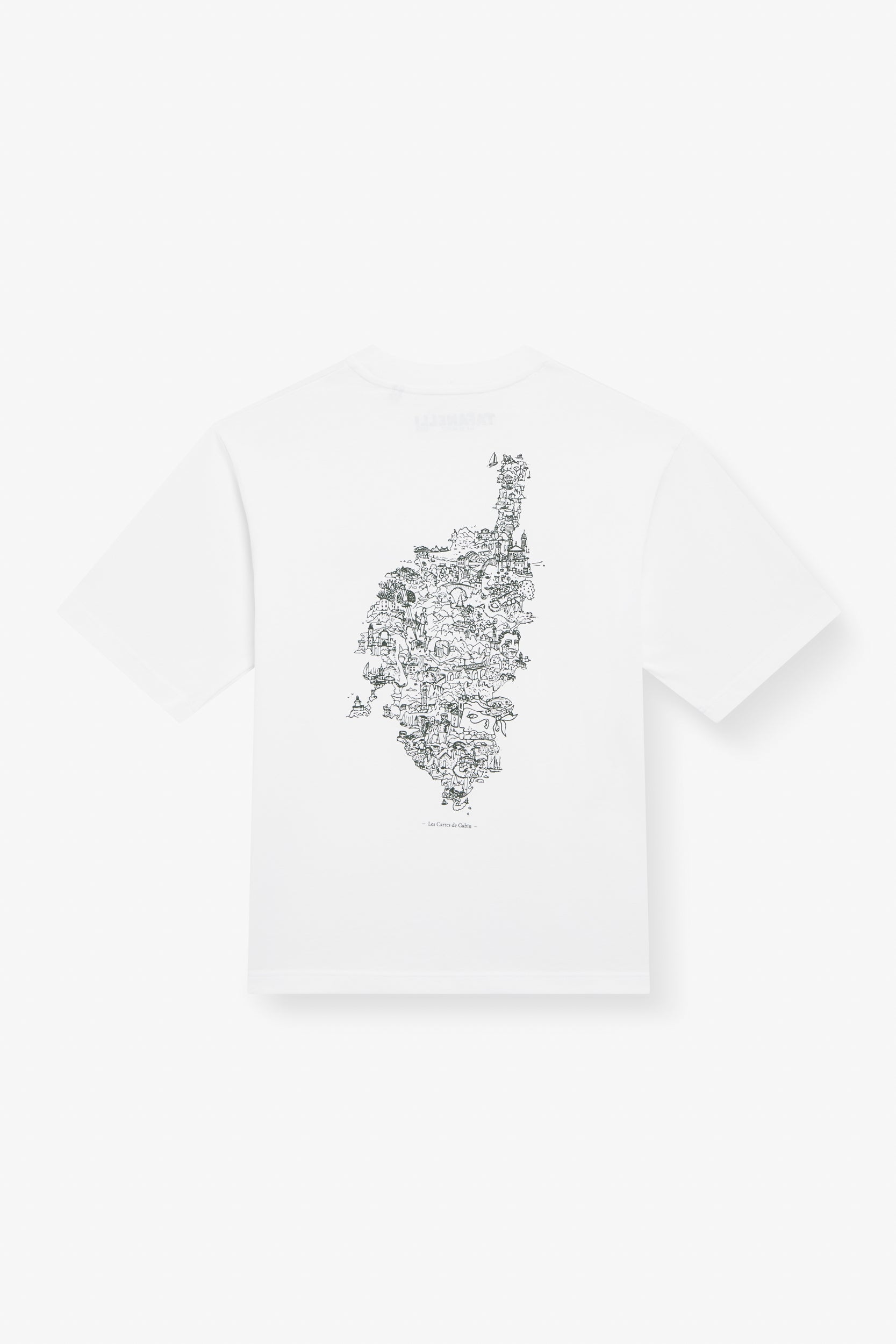
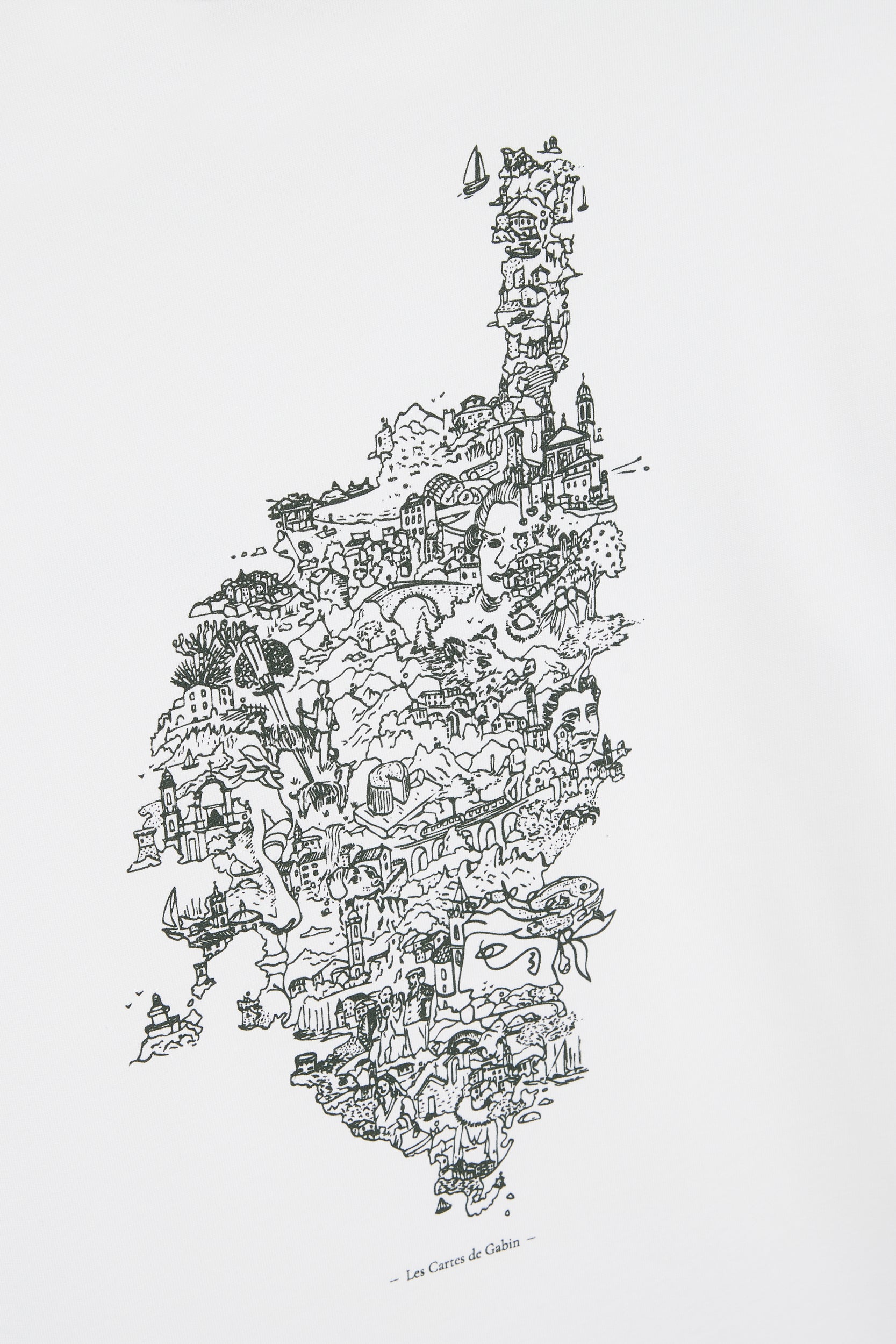
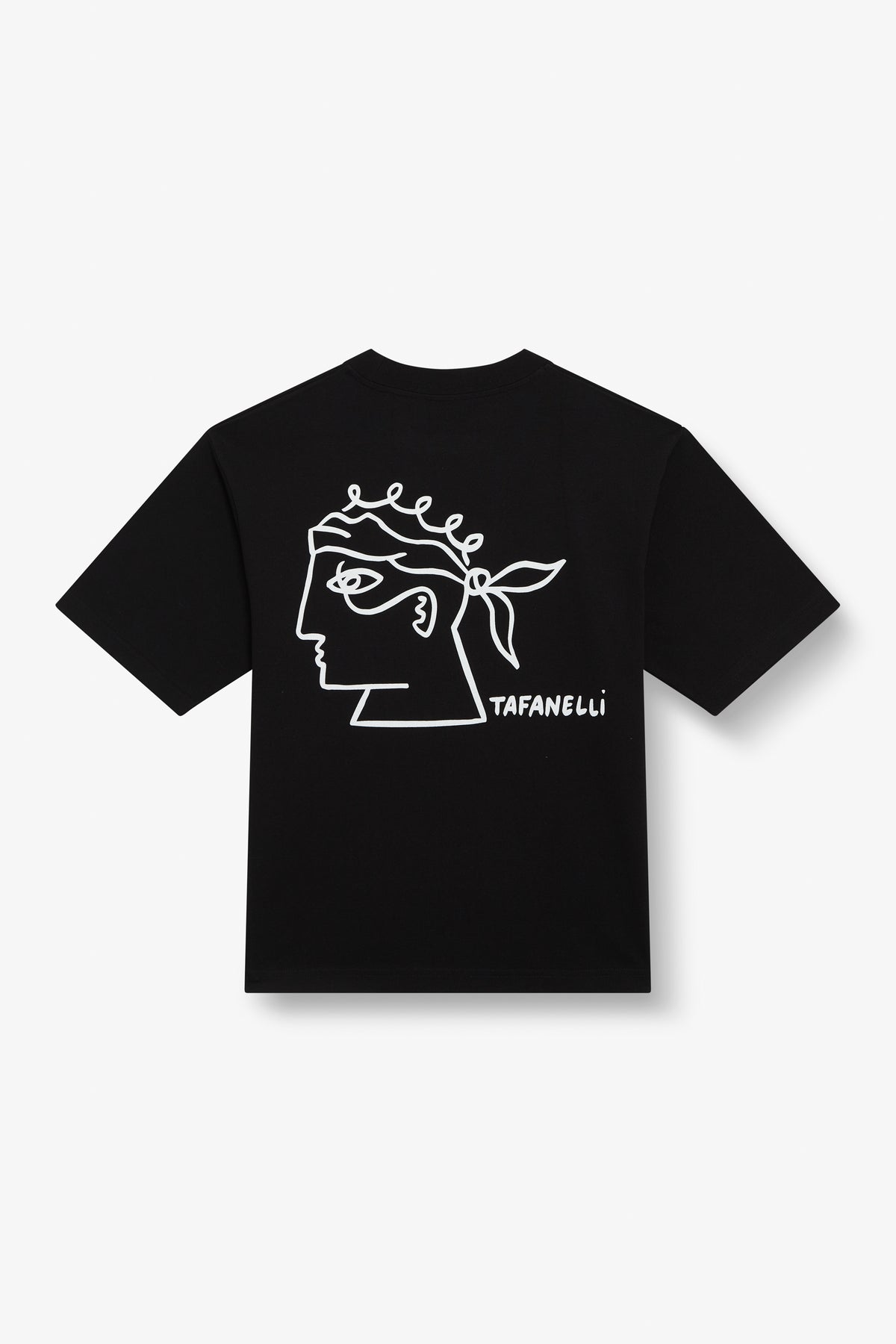
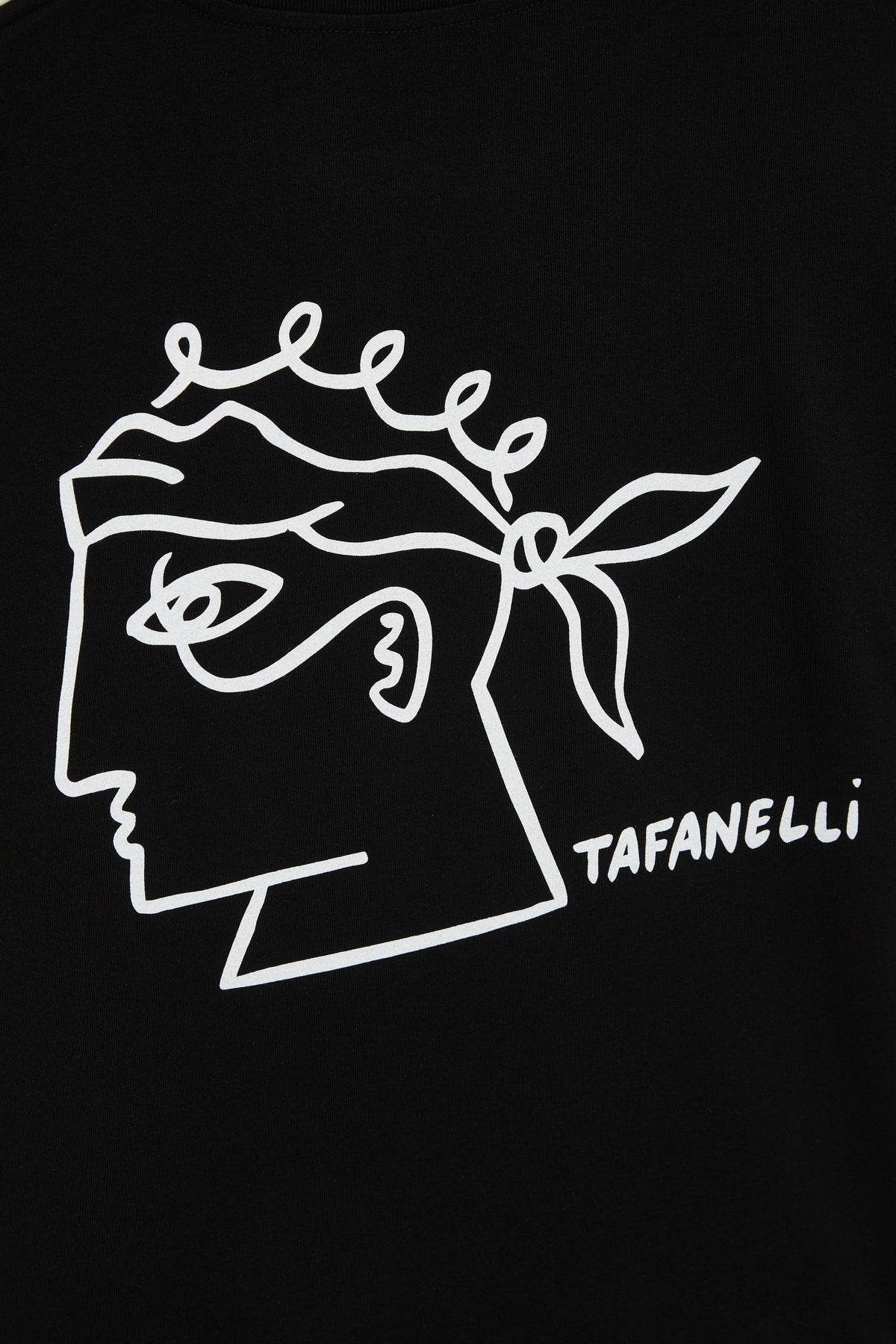
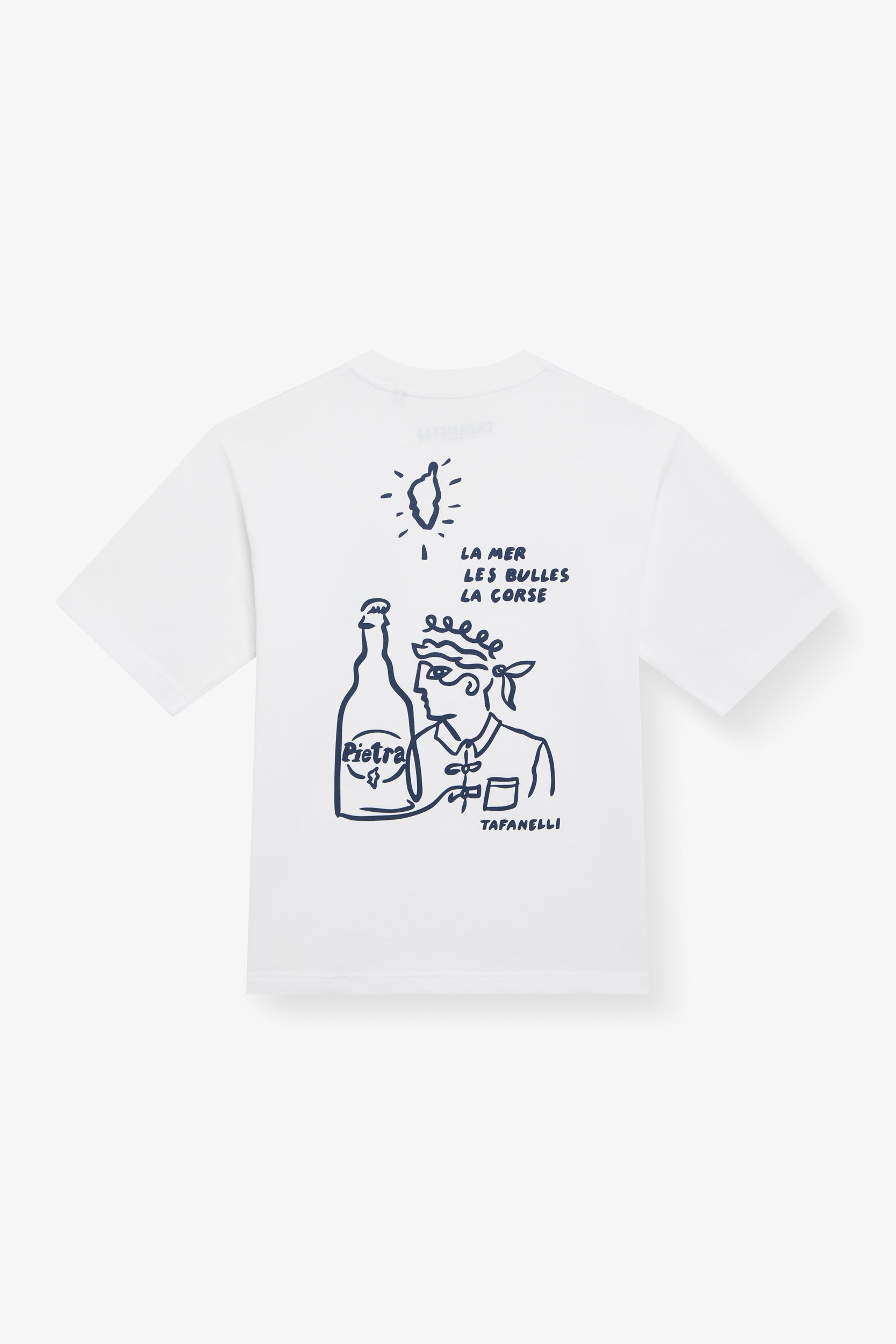
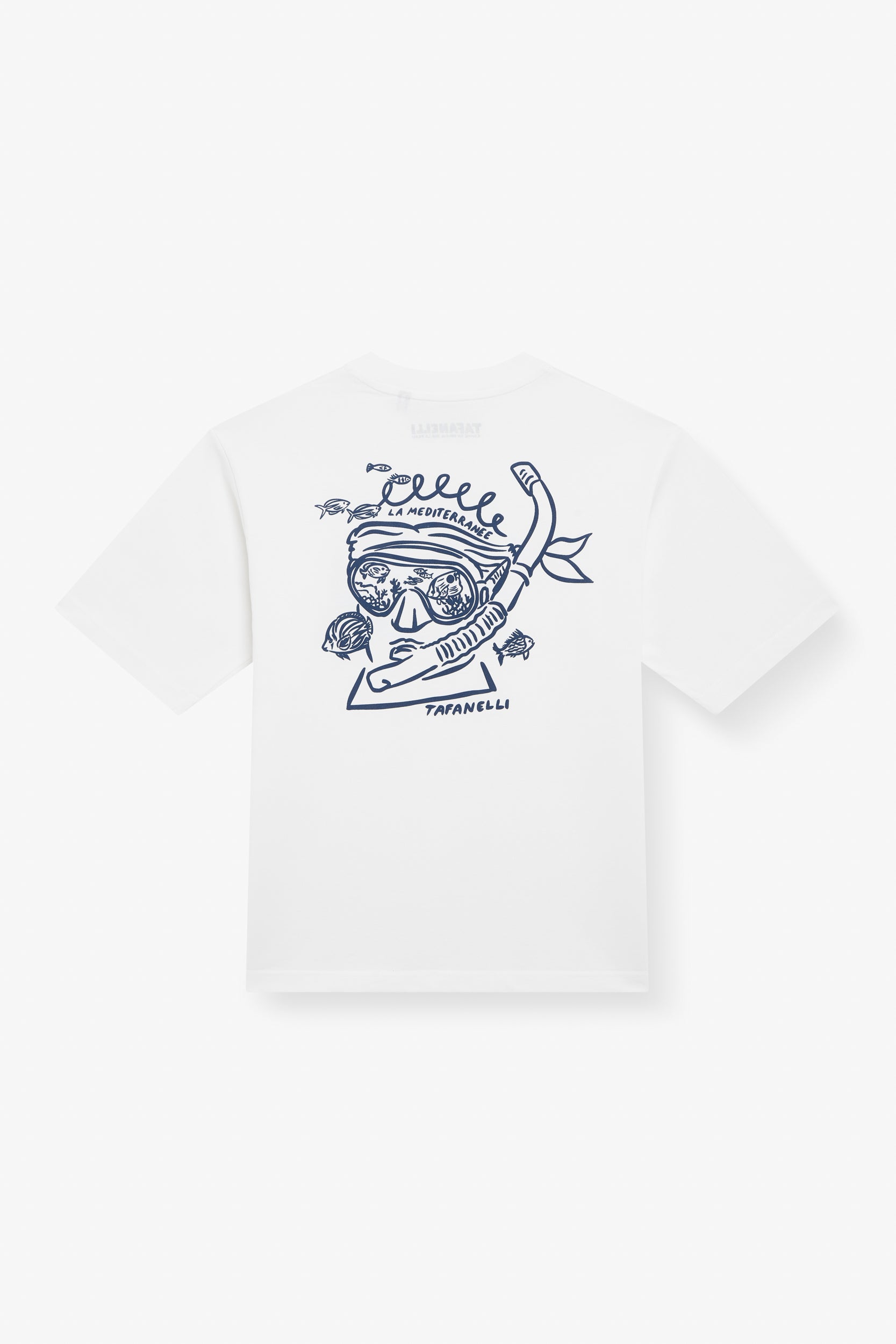
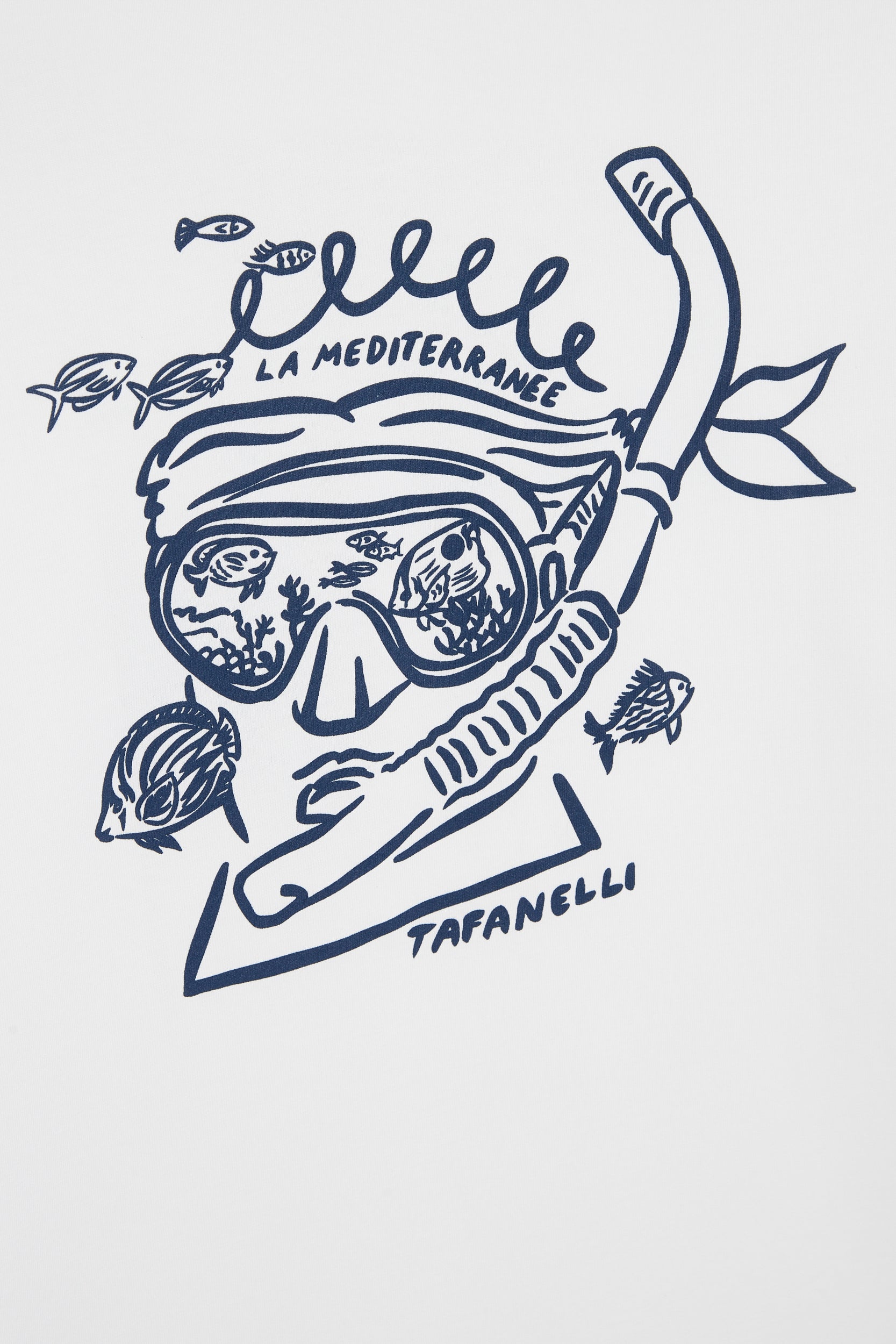
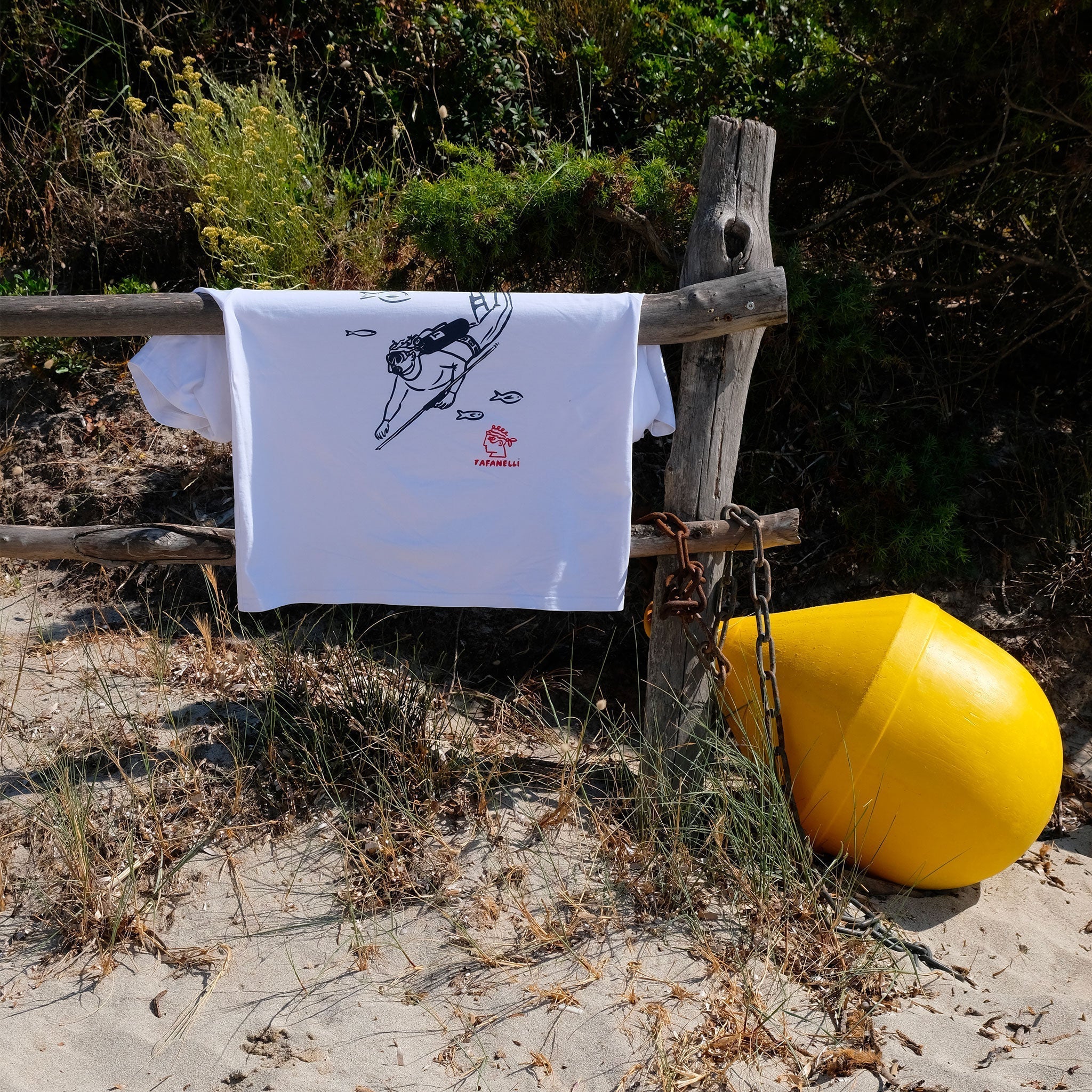
All original, all drawn for us. The Diver of Calvi, the Sea Urchin Fishing, the Siren Club: each starts from a real scene of island life, not from a recycled symbol.
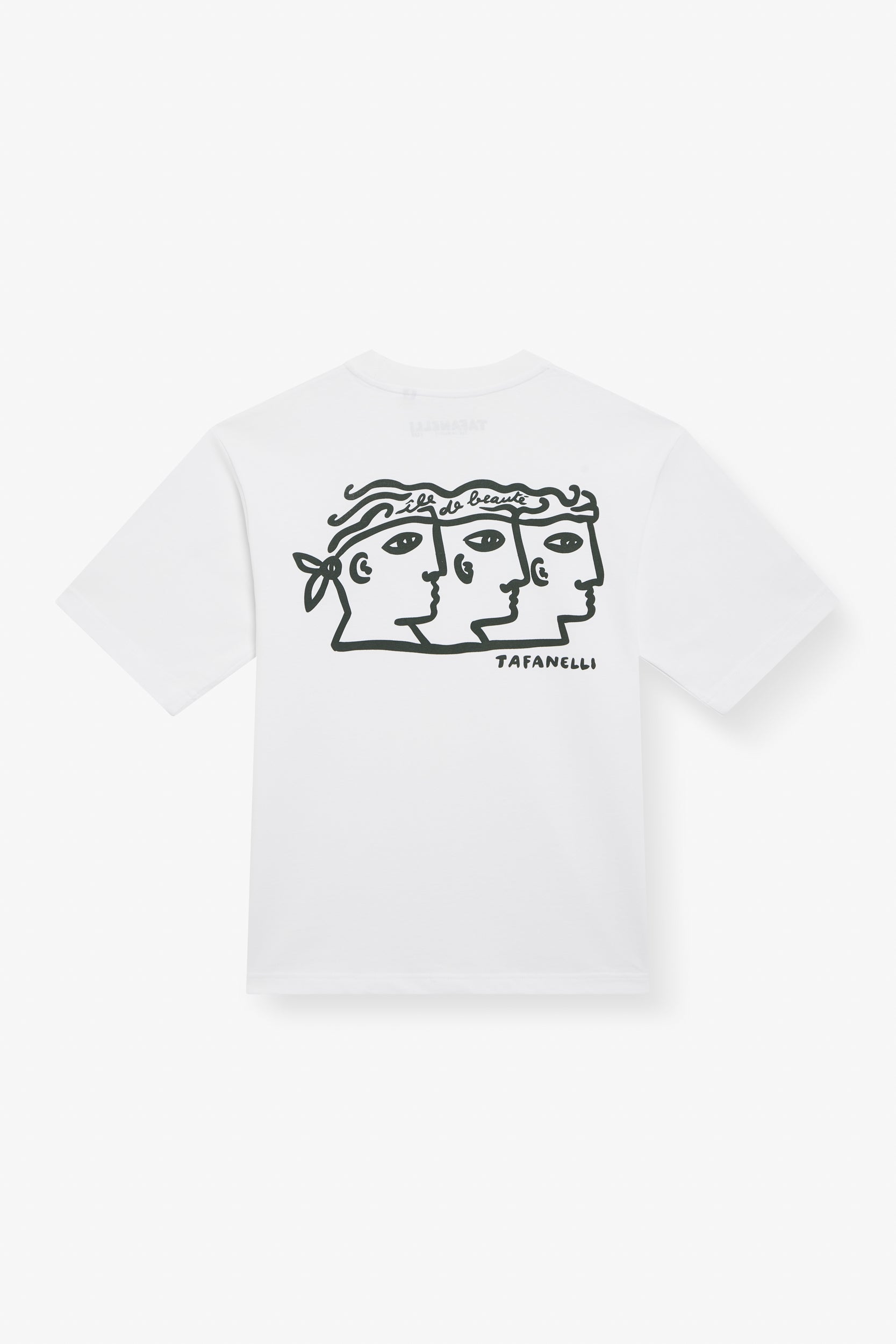
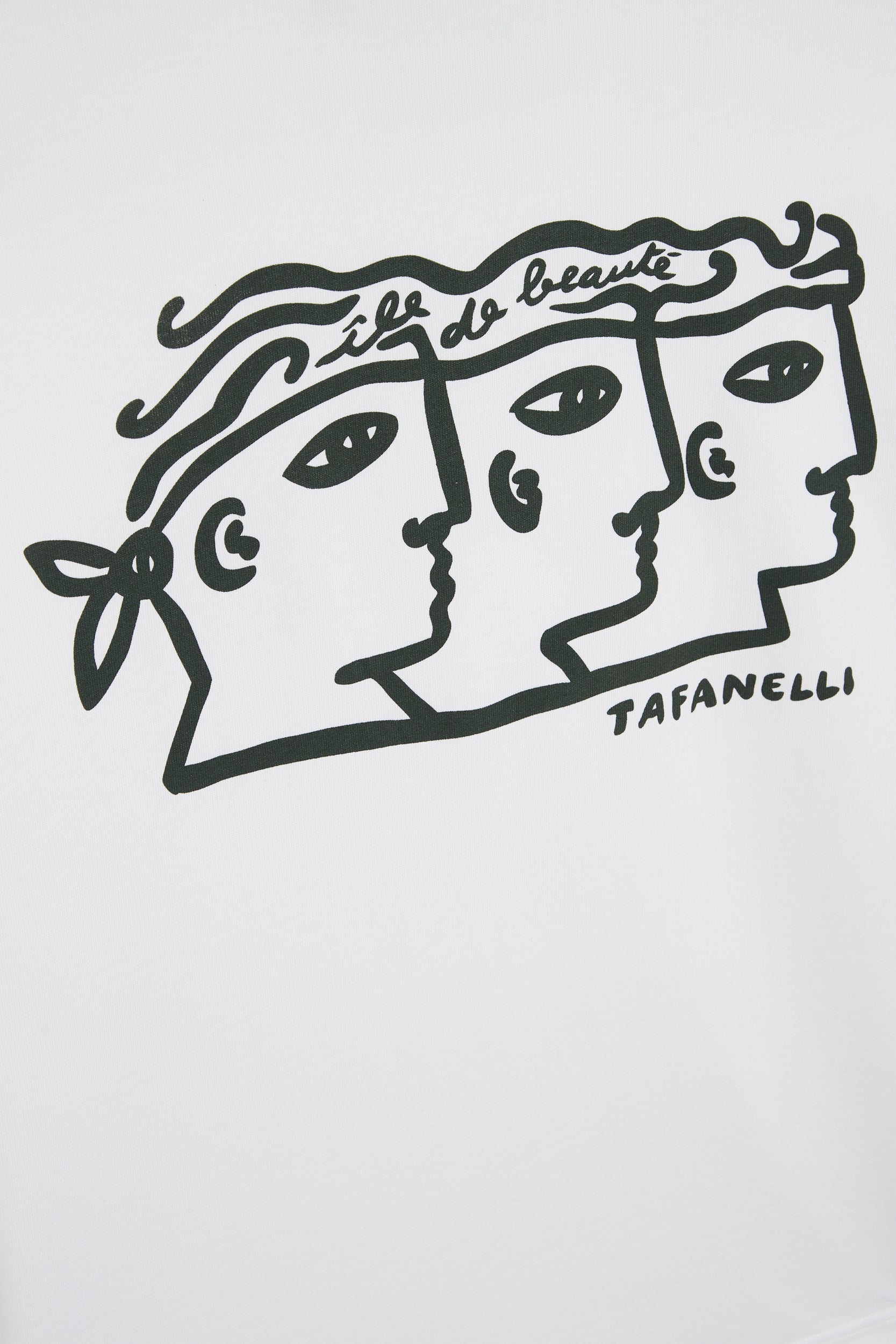
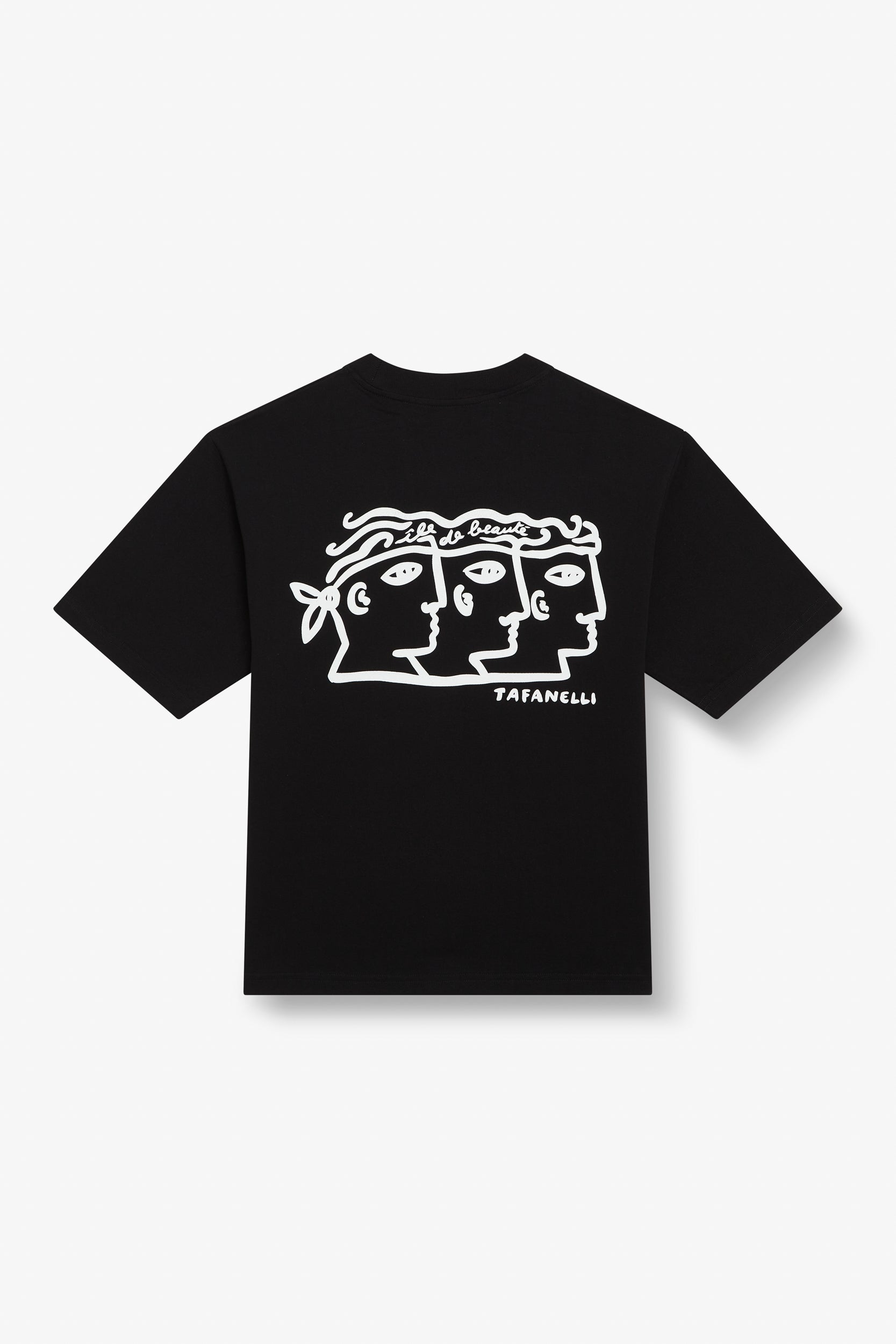
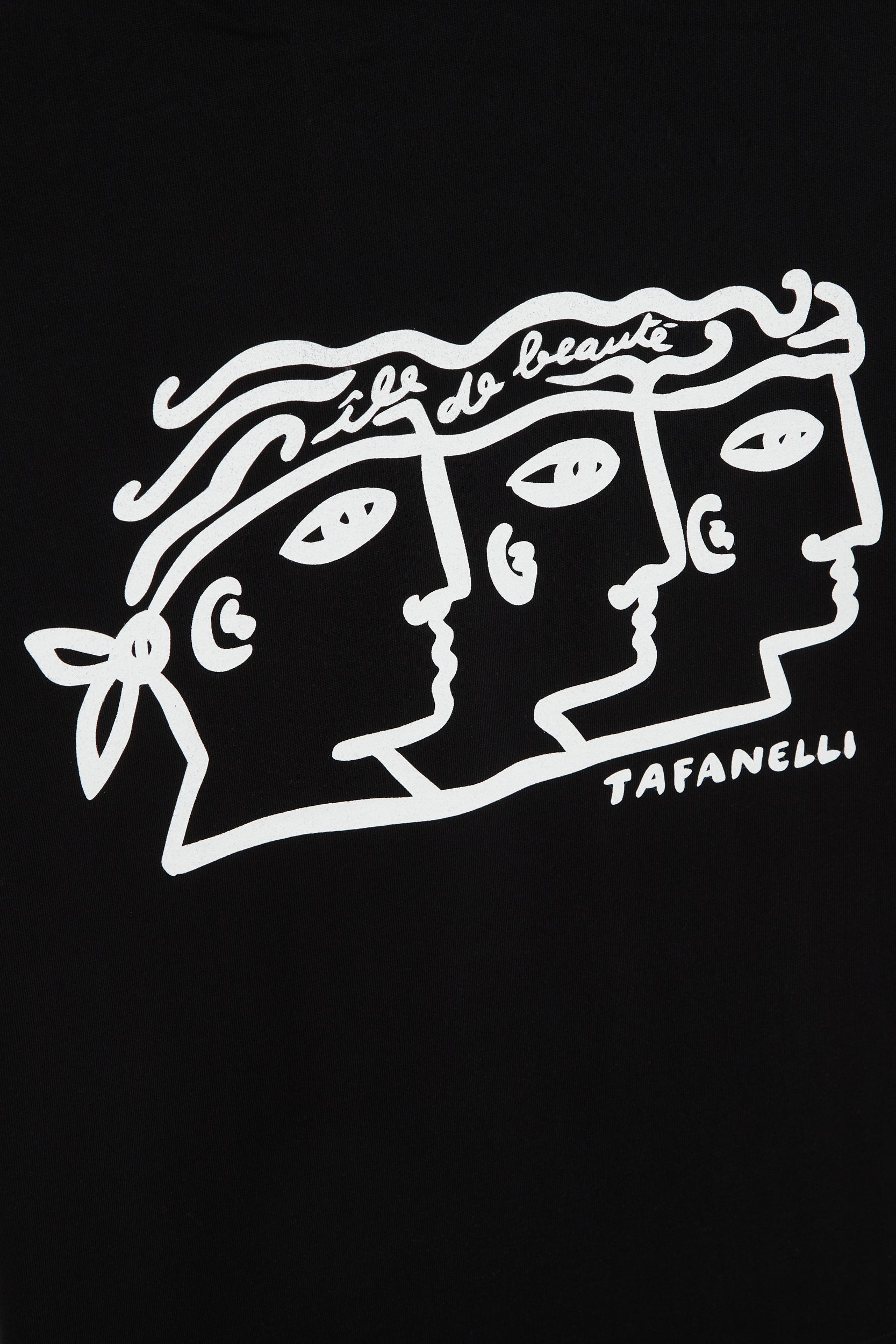
Our most recent piece, La Trinità, took four years of work. Three profiles turned toward the same horizon, united by a band bearing the island's historical designation. Mare, muntagna, machja. The sea, the mountain, the maquis, inseparable.
The price
Our T-shirts are between 85 and 95 euros. It's expensive, and we explain it in detail in our article on the real cost of a French T-shirt. Heavy cotton, assembly in France, and manual screenprinting have a cost that we do not seek to hide.
Four-part payment exists so that this price does not become a barrier.
Where to find us on the island
Our pieces are present in a dozen addresses in Corsica, from Rogliano to Calvi, as well as in the Var. Hotels, beach huts, boutiques: places chosen one by one, run by people we know.
The complete map of addresses can be viewed online.
And from December 3 to 6, 2026, we will be in Paris, in the Marais. The details are here.
Frequently asked questions
What defines a Corsican brand?
Not the symbols used, but the decisions made: material chosen for its durability, detailed manufacturing steps, short series, original drawings, consistent pricing, real presence on the island.
How to recognize a real Corsican T-shirt?
Look at the weight. Below 180 g/m², it's a tourist T-shirt. Then check if the brand distinguishes between knitting, assembly, and printing, and if the drawing is original or taken from the public domain.
Why does a Corsican T-shirt cost 85 euros?
Because 280 g/m² organic cotton, assembly in France, and manual screenprinting represent a production cost that is incomparable to mass production. The breakdown of the calculation is public on our blog.
Where to buy quality Corsican clothing?
Online at tafanelli.fr, or at our partner addresses in Corsica and the Var. The list is available on our reseller page.
Does Corsica produce clothing on its territory?
There is no insular textile industry, historically or today. Corsican brands design on the island and have them manufactured elsewhere, mainly in France or Portugal. What matters is that it is stated clearly.
To go further
- Traditional Corsican costume, history and pieces
- Corsican men's clothing, the style guide
- Made in France T-shirt, the guide to choosing the right one
- Hand screenprinting
- The Moor's Head, history of the Corsican flag
- The Corsican bandana
- See all our T-shirts
By passing through Corsica, the client becomes a friend.
A DOPU,
TAFA