Bastia celebrates San Ghjuva: the Saint John's bonfire, the soul of the city on the night of June 23rd
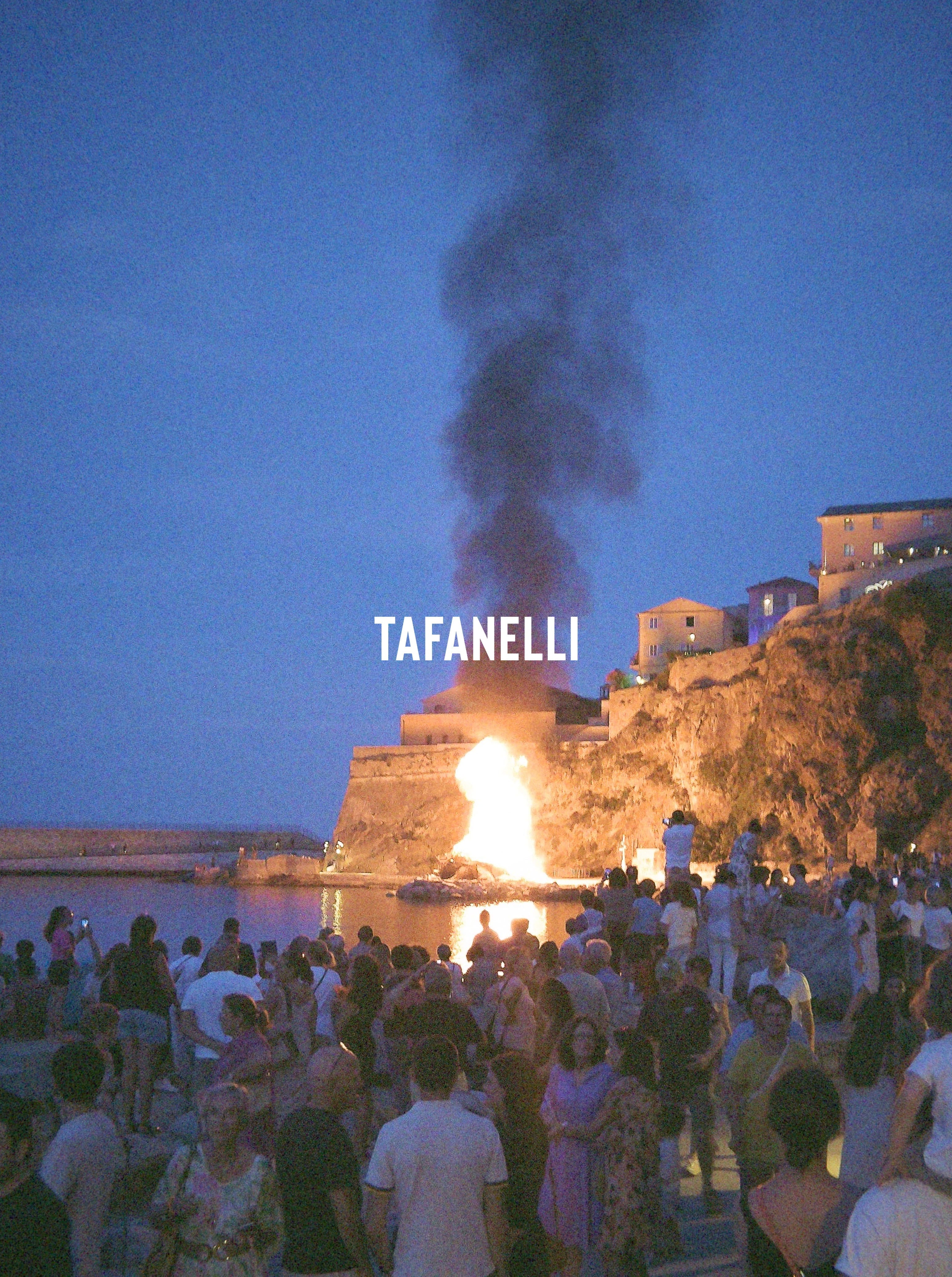
Every year on the night of June 23rd to 24th, Bastia ignites to celebrate its patron saint, Saint John the Baptist, known in Corsican as San Ghjuvà. A millenary celebration that blends pagan roots, Catholic faith, and island pride, centered around the fucaracci—the great bonfires over which people jump to invoke good luck and purification. Here is the story of one of the most beautiful nights that Corsica offers to those who choose to experience it.
San Ghjuva: Saint John the Baptist, patron saint of Bastia
Before being a celebration, San Ghjuva is a name. It is the Corsican form of Saint John the Baptist, the saint who announced the coming of Christ in the Gospels, and who, along the Mediterranean shores, became the tutelary protector of many coastal towns.
Bastia is one of them. Saint John the Baptist has been the patron saint of Bastia since the official founding of the city by the Genoese in 1380. The historic district of Terra Vechja, which houses the Old Port and the oldest alleys of the city, was placed under his protection from the very beginning. The church that overlooks the Old Port even bears his name: the San Ghjuvà church, an iconic monument of Bastia.
For the people of Bastia, San Ghjuva is therefore not just another religious festival. It is the day the city celebrates its deep identity, its footing, and its roots. The celebration takes place every year on the night of June 23rd to 24th, following a ritual that combines masses, processions, bonfires, and popular vigils.
At the origins of the Saint John's bonfire
The Saint John's bonfire is not a Christian invention. It is the heir to an extremely ancient pre-Christian tradition linked to the summer solstice.
A solar cult dating back to Antiquity
The summer solstice (around June 21st) is the longest day of the year in the Northern Hemisphere. Ancient civilizations (Celts, Greeks, Romans, Phoenicians, Egyptians) saw it as a major cosmic moment, when the Sun reached its peak before beginning its slow decline toward winter. Lighting a great fire on that night was both a way to celebrate the triumphant light of the Sun and to seek to lend it a helping hand, to ward off the coming decline.
In Syria, Phoenicia, and Greece, the celebration was dedicated to deities such as Tammuz, god of vegetation and the reborn Sun. Among the Celts, the solstice gave rise to purifying fires on the summits, around which people danced and through which herds were led to be protected from disease.
The Christianization of the ritual
With the Christianization of Europe starting in the 4th century, the Church cleverly integrated this solar festival into its liturgical calendar. June 24th, dedicated to Saint John the Baptist (who announced the coming of Christ with the words "He must increase, but I must decrease"), fell exactly at the time when sunlight begins to wane after the solstice. The symbolism lent itself perfectly to the fusion: John decreases, like the Sun after the solstice. Christ increases, as the expectation of Salvation intensifies toward Christmas.
Thus, throughout Mediterranean Europe, the fires on the night of June 23rd to 24th became both Saint John's fires and solstice fires. In Corsica, this dual heritage remains intact, passed down from generation to generation for over a thousand years.
The fucaracci, the fires that define Bastia
In Corsican, the Saint John's bonfires are called fucaracci (singular: fucaracciu), literally "little fire." The word is misleading: these fires can reach several meters in height. The term is affectionate, almost familiar, as if Bastia were on intimate terms with the sacred fire.
How a fucaracciu is prepared
Several days before June 23rd, the residents of Bastia's districts gather dry wood: salvaged pallets, old olive or pine branches, and green waste from the spring. Children actively participate in the collection, as they do everywhere in Corsica.
On the evening of June 23rd, the pyre is built on the neighborhood squares: Place Saint-Nicolas, the market square in Terra Vechja, the Place du Donjon in the Citadel, and in many small squares in districts like Lupinu, Saint-Joseph, or Toga. Each district prepares its own fucaracciu, making Bastia a true archipelago of fires on the night of the solstice.
Leaping over the fire
Once the pyre is lit and the flames have subsided to a manageable level, comes the most iconic moment of the celebration: leaping over the fire. Tradition holds that jumping over the embers of Saint John brings luck, prosperity, health, and love for the year to come.
Young people do it at full speed, in groups or as couples. The elders, more cautiously, jump over the low embers. Children still participate under the watchful eye of their parents. It is a symbolic gesture as much as a physical one: one passes through the flame to purify oneself from past misfortunes and to invoke the forces of the coming summer.
Vigils and songs
Around the fucaracci, people sing. Corsican polyphonies echo into the night, carried by male voices responding to one another in a semi-circle. Traditional paghjelle, terzetti, and sometimes songs by A Filetta or Voce Ventu give San Ghjuva a truly sacred dimension that goes far beyond a simple village fair.
People also eat there: Corsican charcuterie (especially figatellu grilled over the embers), cheeses, and rustic bread, accompanied by wines from Patrimonio or Cap Corse. The nights are long and balmy, and people return home late, sometimes at dawn, their clothes impregnated with the scent of burnt wood and the maquis.
The San Ghjuvà church, Baroque sentinel of the Old Port
At the heart of the celebration is an edifice that is worth a visit in its own right: the Saint John the Baptist church of Bastia, called San Ghjuvà.
A history spanning several centuries
The first chapel dedicated to Saint John the Baptist on this site dated back to the late 16th century. Built starting in 1583, it quickly proved too small to accommodate the faithful of a growing city. It was therefore demolished in the mid-17th century to make way for a much larger and more majestic edifice, the one we know today.
Remarkable architecture
The San Ghjuvà church features a tall and noble classical façade, largely hidden by the neighboring buildings that crowd it (a characteristic of dense Mediterranean cities). Inside, one discovers a magnificent 18th-century Corsican Baroque interior: a spacious nave, painted ceiling, marbled altars, and discreet yet omnipresent gilding.
The furnishings are exceptional: an antique organ in the loft, a finely carved pulpit, and several paintings from the prestigious collection of Cardinal Fesch (uncle of Napoleon Bonaparte, a great collector of religious art).
The church is classified as a Historical Monument. It is open to the public throughout the year (except during services) and is an absolute must-visit for anyone staying in Bastia.
The role of the church during San Ghjuva
On June 23rd and 24th, the San Ghjuvà church becomes the spiritual heart of the celebration. A High Mass is celebrated there on the morning of June 24th in honor of the patron saint. A procession may wind through the streets of the Old Port, with the statue of the saint carried by confraternities in traditional costumes. Gregorian chants and sacred polyphonies resonate under the Baroque vaults. It is one of the most powerful moments of the festival, where the religious dimension meets the popular one.
How to experience San Ghjuva in Bastia
If you find yourself in Bastia or Upper Corsica around June 23rd-24th, here is how to experience San Ghjuva under the best conditions.
The evening of June 23rd: the fucaracci
- Place Saint-Nicolas: Bastia's great central square, where the main fire takes place and where the largest crowds gather. A popular and festive atmosphere. Ideal for newcomers.
- Place du Marché and Old Port (Terra Vechja): The fire in the historic district, more intimate, in the alleys around the San Ghjuvà church. A more authentic, local atmosphere.
- Citadel (Terra Nova): A more discreet but magical fire, within the exceptional architectural setting of the Genoese citadel.
- Lupinu, Saint-Joseph, Toga districts: Neighborhood fires less frequented by tourists, more authentic.
Lighting usually occurs between 9:00 PM and 10:00 PM, once night has fallen. The jumps over the embers begin around 11:00 PM, once the flames have subsided.
The morning of June 24th: the religious dimension
To experience the spiritual dimension of the festival, attend the High Mass at 10:00 AM or 11:00 AM at the San Ghjuvà church (Rue Saint-Jean, Old Port). Sacred polyphonies, incense, popular fervor. Proper attire is required out of respect for the venue.
If a procession is organized after the mass, follow it through the alleys of the Old Port. It is a rare and moving spectacle that turns back the clock several centuries.
June 24th during the day: enjoying the celebration
June 24th is traditionally a local public holiday in Bastia in honor of the patron saint. It is an opportunity to enjoy the city in a relaxed atmosphere: markets, terraces of the Old Port, walks along the coastal path, or swimming at the beaches of Marana or in Bastia itself.
Saint John's Day elsewhere in Corsica
Bastia is not the only city to celebrate San Ghjuva. Saint John's Day is one of the most widely celebrated festivals throughout Corsica, with local nuances depending on the region.
Calvi and Balagne
In Calvi, the Saint John's bonfires are lit on the marina, by the seaside, in a particularly photogenic atmosphere with the Citadel in the background. Several villages in Balagne (Sant'Antonino, Pigna, Aregno) also organize their own fucaracci in their squares. These are more intimate, traditional fires, worth discovering if you are staying in this region between Balagne and Calvi.
Ajaccio and the South
In Ajaccio, Saint John's Day is celebrated in several neighborhoods and on Place Foch. The tradition is more discreet than in Bastia (Saint John the Baptist is not the official patron saint of Ajaccio, which celebrates its own feast day around the Madonuccia on March 18th). In the south, it is the Assumption on August 15th that is by far the most significant event.
Cap Corse and the East Coast
In every village of Cap Corse, fucaracci are lit in the squares. In Erbalunga, Centuri, Macinaggio, and Sisco, the fires are lit near the sea, leading to particularly striking photographs. In Ghisonaccia, on the east coast, a solemn procession accompanies the pyre, following an ancient ritual.
The hilltop village of Nonza and the inland Cape
In the perched villages of the Cape, such as Nonza, the Saint John's fires have a particularly spectacular dimension, lit on terraces overlooking the Tyrrhenian Sea, visible from very far away.
The TAFANELLI spirit on the night of June 23rd
At TAFANELLI, we believe that the true moments of a Corsican life involve these types of nights: a neighborhood square, a crackling fucaracciu, songs that echo, and the scent of the maquis descending from the hills. It is precisely this art of living that we try to honor in each of our pieces.
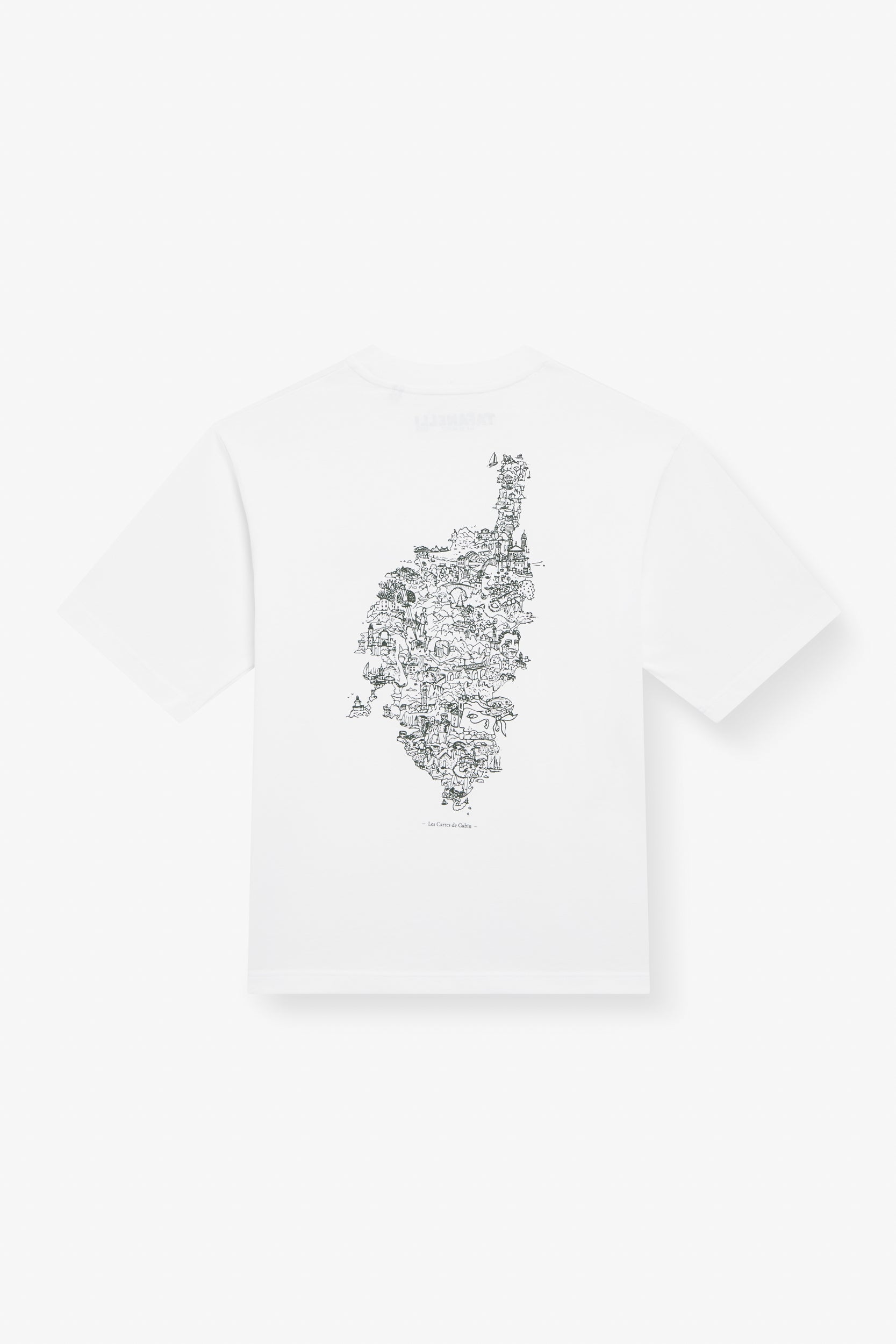
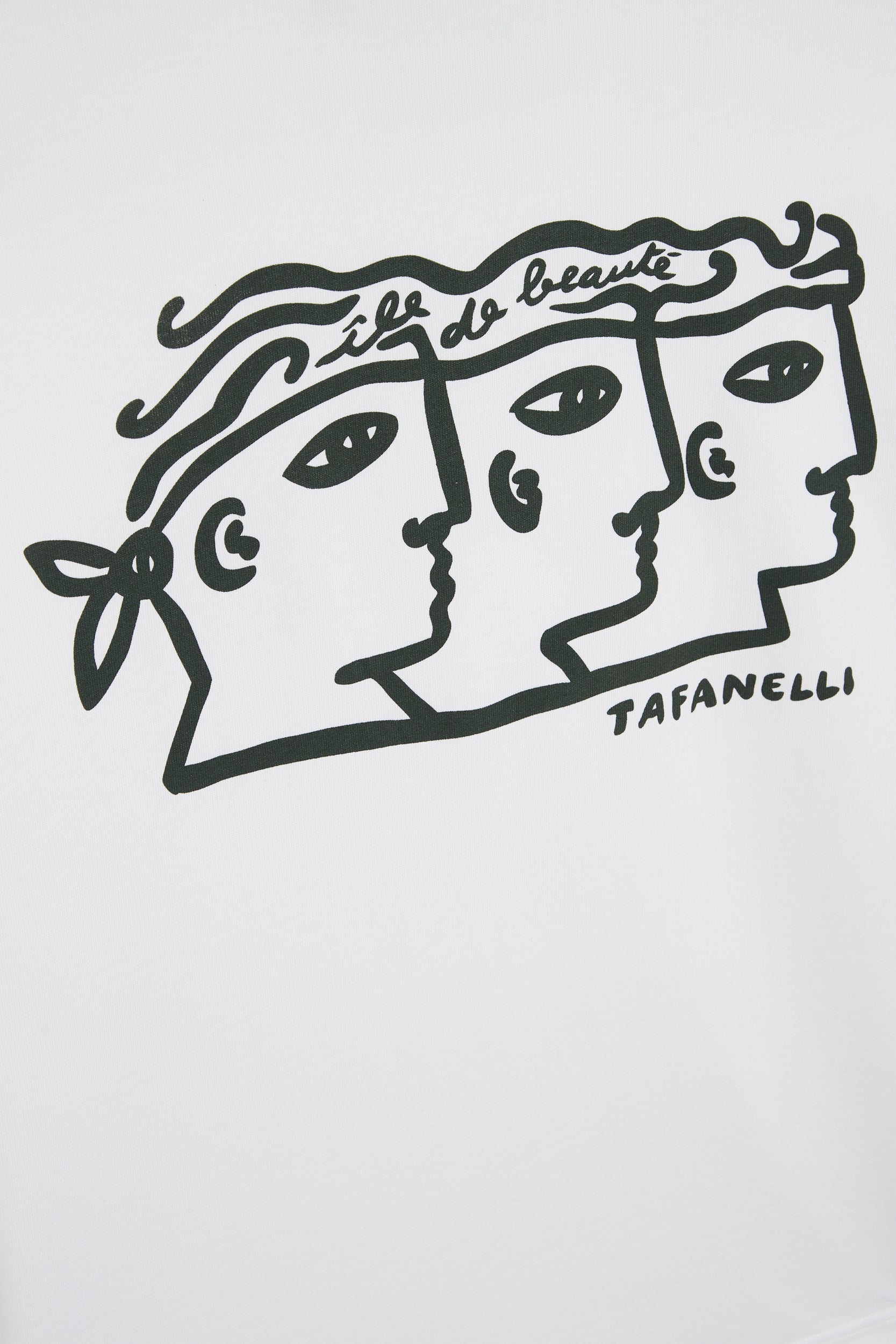
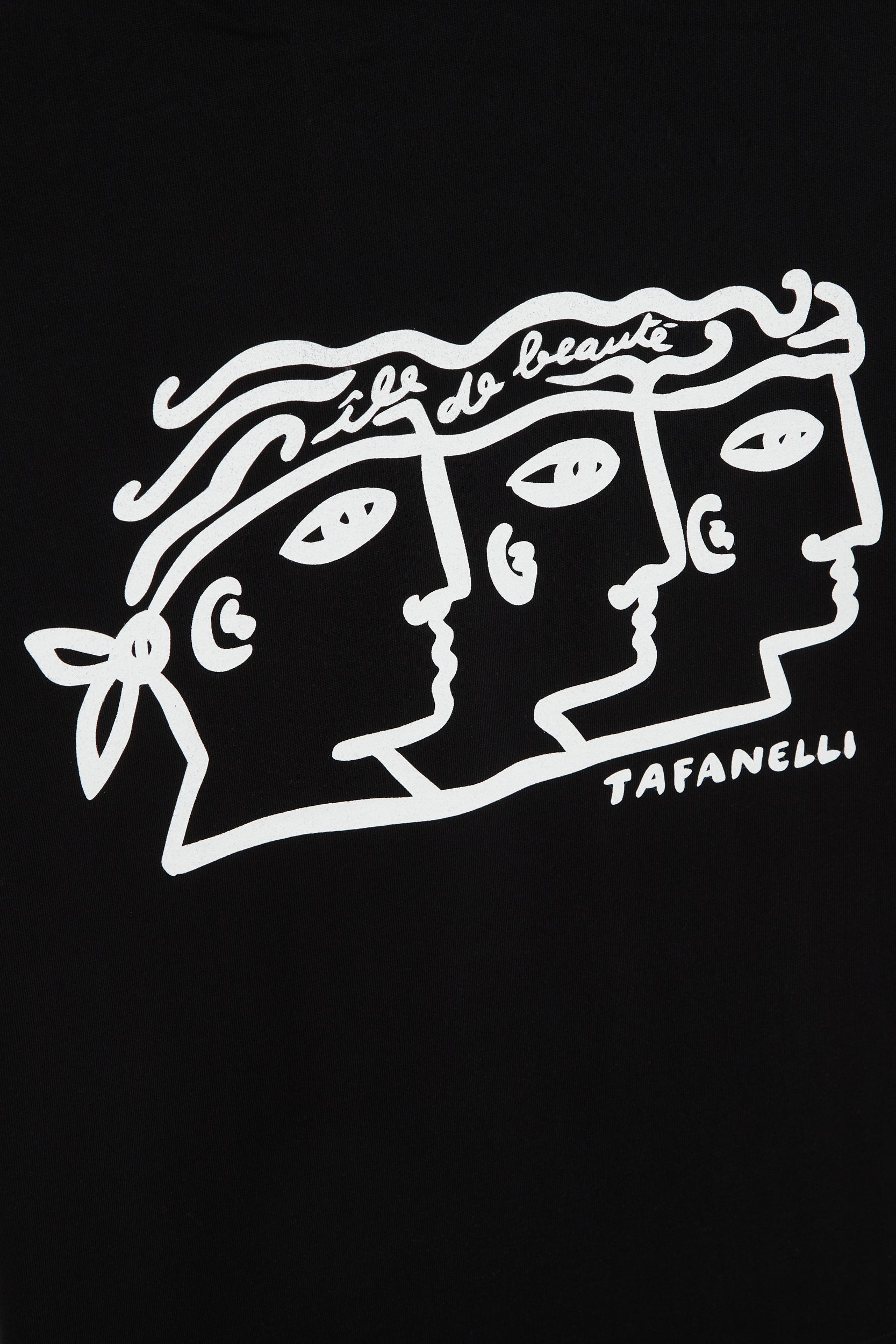
San Ghjuva embodies what we call the island art of living: a moment where the sky (the solstice), the sea (the fires of the coastal villages responding to each other), and Corsica (the land, the maquis, the voices) converge. This triad, which we carry as a signature on our Île de Beauté t-shirt, finds its purest translation on the night of June 23rd.
A few TAFANELLI pieces to wear for the San Ghjuva experience:
- A simple premium cotton t-shirt (Île de Beauté or Sportmer Navy) under an open linen shirt, for the cool night air around the fire
- The TAFA Marine cap in hand, never on the head during religious moments
- A Corsican bandana around the neck or wrist, a discreet sign of belonging
- Light linen trousers or sand chinos, to navigate the festivities comfortably
The ensemble composes the look of a Bastiais who knows how to experience the great moments of his city without falling into folklore. This is the grammar that we document in detail in our Corsican summer 2026 style guide.
Frequently Asked Questions
Why does Bastia celebrate Saint John's Day?
Bastia celebrates Saint John's Day (San Ghjuva in Corsican) because Saint John the Baptist has been the patron saint of the city since its official founding by the Genoese in 1380. The historic district of Terra Vechja, which houses the Old Port and the San Ghjuvà church, was placed under the protection of the saint from the very beginning. It is therefore both a religious festival and a celebration of Bastia's identity.
When is San Ghjuva celebrated in Bastia?
San Ghjuva is celebrated every year on the night of June 23rd to 24th, with bonfires (fucaracci) lit on the evening of June 23rd, and the High Mass and procession on the morning of June 24th. This date corresponds to the eve and the day of the feast of Saint John the Baptist in the Catholic liturgical calendar, close to the summer solstice.
What is a fucaracciu?
A fucaracciu (plural: fucaracci) is the Saint John's bonfire in Corsican. Literally "little fire," the term actually refers to a large pyre several meters high, set up in the squares of districts and villages on the night of June 23rd. Lit at dusk, it becomes the center of a popular vigil where people jump over the embers to invoke luck and purification.
Why do people jump over the Saint John's bonfire?
Leaping over the Saint John's bonfire is a purifying ritual inherited from pre-Christian solar cults. Tradition holds that by jumping through the embers, one symbolically sheds the misfortunes of the past year and invokes luck, prosperity, health, and love for the year to come. It is also an act of courage and communion with the observing community.
Is the San Ghjuvà church in Bastia open to visitors?
Yes, the Saint-Jean-Baptiste church in Bastia (San Ghjuvà) is open to the public outside of religious service hours. Located on Rue Saint-Jean in the Vieux-Port, it is one of Bastia's iconic monuments and houses an exceptional 18th-century Baroque interior, paintings from the collection of Cardinal Fesch, an antique organ, and a carved pulpit. The building is a listed Historical Monument.
Where can you see the best Saint-Jean bonfire in Bastia?
Three main locations in Bastia:
- Place Saint-Nicolas: main bonfire, popular and festive atmosphere, most accessible for visitors
- Place du Marché and Vieux-Port (Terra Vechja): more intimate bonfire, authentic ambiance, near the San Ghjuvà church
- Citadelle (Terra Nova): more discreet bonfire within the exceptional Genoese architectural setting
For a more local experience, neighborhood bonfires (Lupinu, Saint-Joseph, Toga) are less frequented by tourists and more authentic.
Is San Ghjuva celebrated elsewhere in Corsica besides Bastia?
Yes, Saint-Jean is celebrated in virtually every Corsican village on the night of June 23rd to 24th. The most significant celebrations take place in Bastia (patron saint), Calvi (bonfires on the harbor), Ghisonaccia (traditional procession), the villages of Cap Corse (Erbalunga, Centuri, Macinaggio, Sisco), and the perched villages of Balagne (Sant'Antonino, Pigna, Aregno).
How should you dress for a Saint-Jean celebration in Corsica?
Choose sober attire in natural materials (cotton, linen) and discreet colors (white, ecru, navy, beige) to respect the spirit of the celebration. Avoid outfits that are too short or revealing if you are attending mass or the morning procession. For the evening vigil, bring an extra layer (linen shirt, light sweater) as Corsican nights can be cool even in June. Our Corsica Summer 2026 style guide details the appropriate dress codes.
To delve deeper into Corsican traditions
The San Ghjuva in Bastia is part of a dense island cultural agenda that we document in depth. To continue reading:
- The Corsican summer 2026 cultural agenda: festivals, patronal feasts, and events
- Sky, sea, and Corsica: the essence of an island lifestyle
- What to wear in Corsica this summer 2026: the Mediterranean style guide
- U Paradisu in Tamarone: the beach bar that defines Cap Corse
- Corsican fashion: 5 codes that make an authentic brand
And to dress for your next Saint-Jean night in Bastia or any Corsican village, browse our complete collection. Free delivery in mainland France, same-day shipping for all orders placed before 2 p.m.
May your night of June 23rd be bright, in Bastia or elsewhere on the island.
A PRESTU,
TAFA