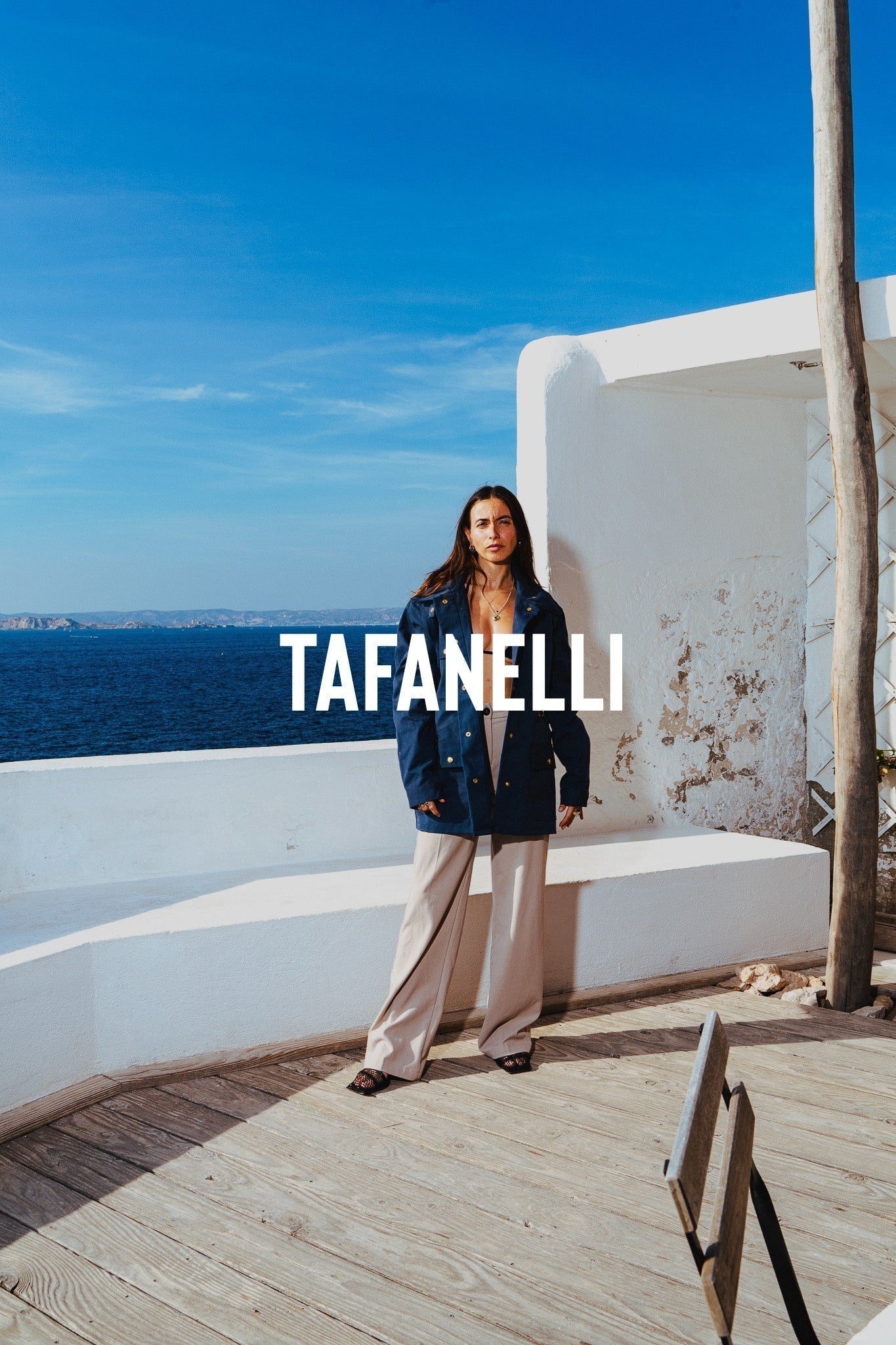
Why French brands cost more
A French brand doesn't just sell a garment. It sells the time it took to make it, the hand that stitched it, the proximity of the workshop, the sincerity of the craft. At Tafanelli, this price isn't a markup: it is a measure of the truth.

TAFANELLI. The value of the craft, the time of the hand.
The price of time
A garment made in France costs more because it takes more time. Each step—cutting, assembly, finishing—is carried out by an artisan who works with care, not speed. This time is not an extra; it is the foundation of a well-made garment.
In a French workshop, we don't make a hundred pieces an hour. We make ten, but they are right. This human time, this measured rhythm, has a cost. It is this cost that is reflected in the price: that of the craft, not that of marketing.
The cost of proximity
Manufacturing locally means choosing proximity over relocation. French workshops meet the most demanding social and environmental standards. Artisans there are paid fairly, fabrics are traceable, and processes are transparent. Nothing is hidden, nothing is compressed.
This ethic has a price. Where global production cuts costs by distancing the hand, French production invests in the relationship. Between the designer and the artisan, there is no distance: there is dialogue. This human bond is felt in the garment—and in its price.
True material
Cheap fabric ages poorly. Dense cotton, quality twill or brushed fleece cost more from the start because they are woven in Europe, sometimes spun in France, and they meet strict ecological criteria. At Tafanelli, every material is chosen to last. This choice of durability is paid for once, but it lasts a long time.
The material, like the craft, has no shortcuts. What you are paying for is not rarity: it is correctness.
The price of independence
Producing in France also means choosing freedom. Refusing margins dictated by volumes, rhythms imposed by platforms, and seasons that follow one another too quickly. It means accepting being small, but true. This price is that of coherence: producing less, but producing better. Each Tafanelli piece comes from a workshop that belongs to no one but those who work there.
This independence is costly, but it protects the essential: mastery of the craft and the meaning.
The weight of ethics
A garment made in France hides nothing. It pays fairly, respects resources, and supports a local economic fabric. This extra layer of ethics, invisible to the eye, is stitched into the seams. It represents a concrete, measurable, and sustainable commitment.
It is not a question of luxury, but of responsibility. Buying a TAFANELLI garment means participating in an economy with a human face—where value is measured in trust, not in speed.
The garment that lasts
A French garment costs more, but it is replaced less often. Its cut resists, its seams hold, its material develops a patina without tearing. Over time, this price becomes a saving. A Tafanelli garment is not an expense: it is a partnership. It accompanies you, softens, and is passed on. And that is perhaps the true value of a garment made here: to endure with you.
The value of the truth
French brands do not cost more because of a strategy. They cost more because they refuse compromise. Because they pay for time, the hand, and proximity. Because they choose the beauty of the truth over the mirage of a low price.
At Tafanelli, we are not selling a product: we are defending a rhythm, a way of doing things, and a respect for the world. And that respect has a fair price.