What does “handmade piece” mean
"Handcrafted": three words often read, rarely understood. Behind them lies more than a gesture: a philosophy. At Tafanelli, it means time, precision, and that touch of humanity that makes the difference between a garment produced and a garment born.

TAFANELLI. The hand, the thread, the breath of time.
The hand as a measure
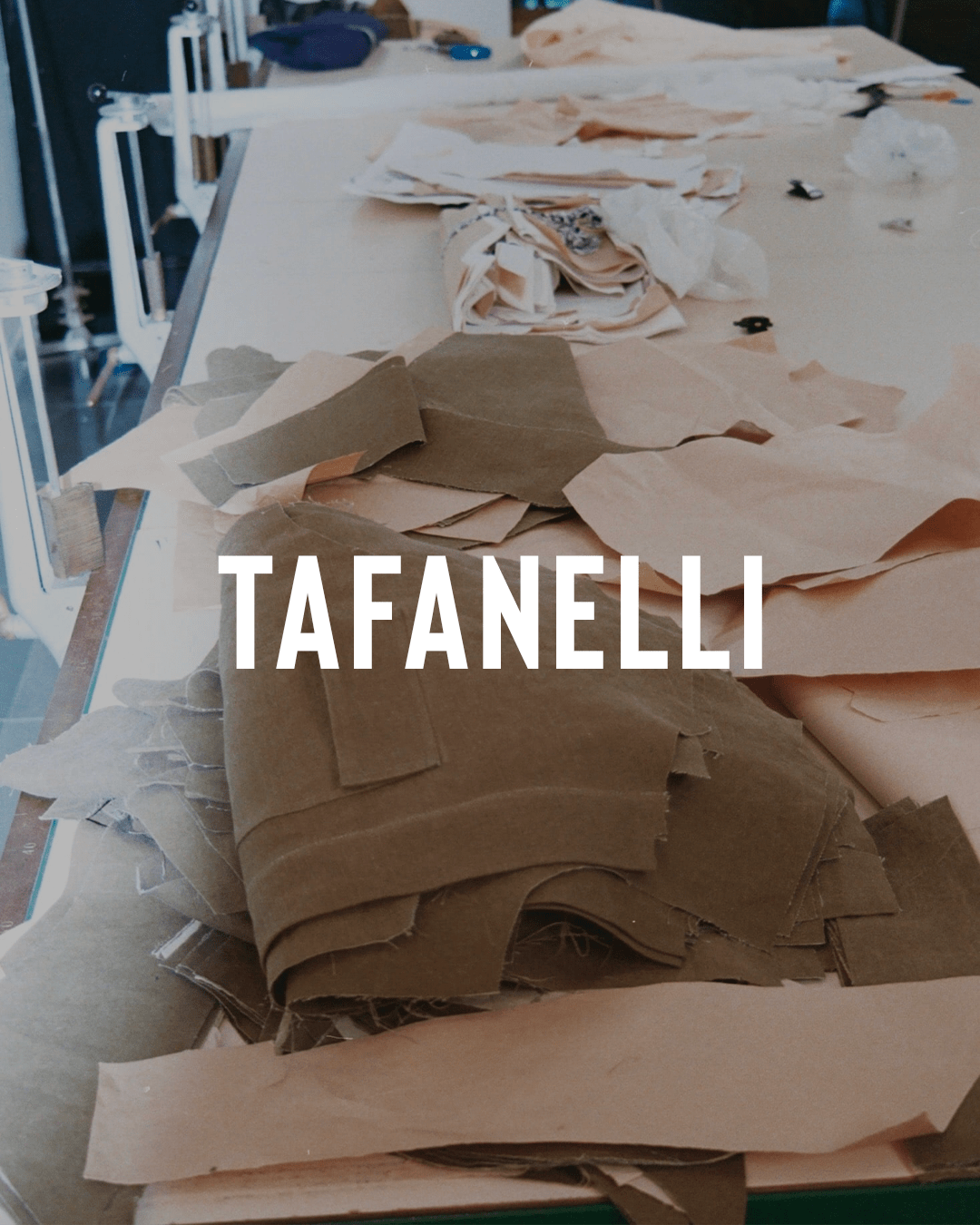
Handcrafting means placing the hand back at the center of the process. It is what guides, adjusts, and feels. Where the machine imposes, the hand corrects. It knows when the fabric resists, when the thread must give, when the stitch must be redone. This constant dialogue between the material and the artisan is the foundation of the right garment.
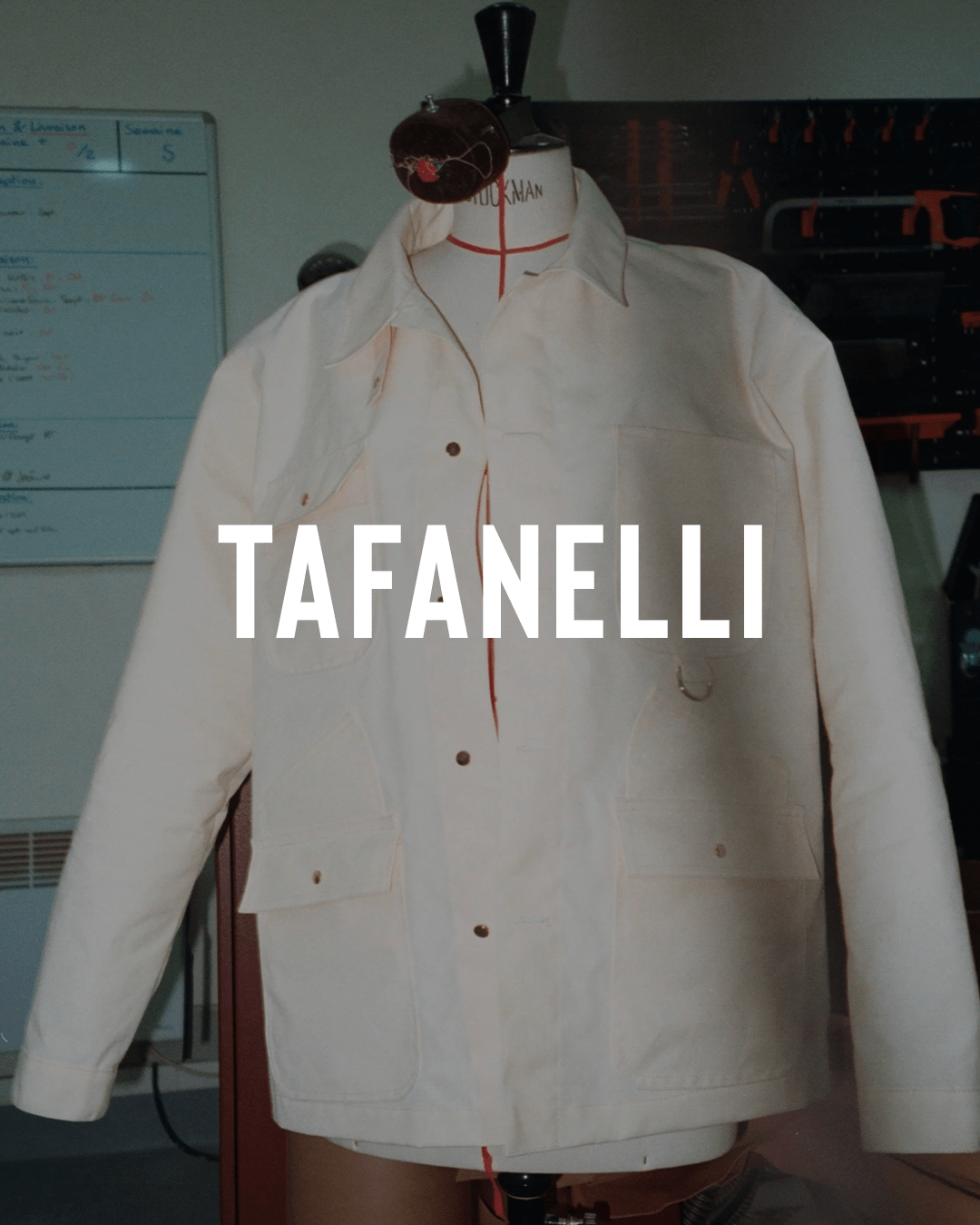
At Tafanelli, every step—from the initial ironing to the final seam—passes through human hands. This is not a selling point, it is a promise: that of a respected rhythm, of a garment that betrays neither the fiber nor the one who wears it.
The invisible time
Handmade requires time, a time that the industry has erased. A sleeve sewn, a collar mounted, a buttonhole finished: each gesture repeated dozens of times before being right. That time is not seen on the label, but it is felt. In the drape, in the durability, in the peace that a well-born garment inspires.
Every Tafanelli piece maintains this slow rhythm. The workshops in Corsica and mainland France work on a small scale, in an almost silent relationship with the material. The thread moves at the rhythm of the breath, not the cadence.
The signs of handmade
A handcrafted garment is recognized by its details: the slightly irregular stitching, the thread tension that is perfect but not mechanical, the button firmly attached in a cross, the lining carefully set. Nothing is automatic. The garment keeps a part of humanity—this slight imperfection that constitutes its beauty.
"Handmade" also means freedom: the freedom to adjust a seam according to the fabric, to adapt to a living material. The machine repeats; the hand listens. What emerges from this is a unique piece, faithful to its origin.
A relationship of trust
Each Tafanelli garment is the fruit of a collaboration between creator and artisan. A conversation more than a production. The artisan understands the designer's intent; the creator respects the knowledge of the gesture. This bond of trust, as old as the tailoring trades, runs through every thread. It is what gives the garment its moral as well as physical structure.
This is not just manufacturing: it is a passage. From one hand to another, from a mind to a body. This is what makes a Tafanelli garment not something to be consumed: it is something to be received.
The difference from industrial
An industrial garment is born from a calculation. A handcrafted garment is born from listening. One seeks speed; the other, accuracy. The first is perfect at the start, but falls apart over time. The second adapts, improves, and stabilizes. That is the great difference: the handmade ages well, because it was made slowly.
This is not an opposition, it is a choice of world. At Tafanelli, we have chosen that of long time, of the visible trace, of the human thread.
The garment as an extension
Wearing a handcrafted piece means entering a continuity. The garment keeps something of the gesture that created it: the pressure of the finger, the tension of the thread, the breath of the artisan. It is a form of silent intimacy, a proximity rare in a world of anonymous production.
A handmade garment does not belong only to the one who wears it. It also belongs to the one who made it. Between the two, there is mutual respect—that of honest work and time given.