U Trinighellu: The Corsican train, a complete guide to the island's most beautiful lines
It crosses the mountains at 900 meters, spans an Eiffel-designed viaduct 84 meters above the void, and runs along the beaches of Balagne, stopping on request. The Corsican train, known to everyone here as U Trinighellu, is not a means of transport like any other: it is one of the most beautiful rail journeys in the Mediterranean. Here is the complete guide: lines, travel times, the beach train, and why you absolutely must take it at least once.
U Trinighellu, the train of an entire people
Its nickname says it all. U Trinighellu, "the one that trembles," "the rattler." An affectionate moniker born from the rolling motion of the old carriages on a narrow-gauge track that hugs every curve of the mountain.
Built at the end of the 19th century, this railway is a feat of engineering. It required piercing, crossing, and skirting one of the most difficult terrains in Europe to connect the island's three major cities. Tunnels, viaducts, hairpin bends: every kilometer came at a high cost, both in money and human lives.
Today, the network belongs to the Collectivity of Corsica and remains a daily public service, used by high school students from Corte as well as by residents of the plains. That is also what makes it charming: it is not a tourist train, it is the Corsicans' train. People board it to get to work, and you encounter travelers from far away who are blown away by the scenery.
The Trinighellu won't save you time. That is exactly why you should take it.
The network: 232 km and three branches
The Corsican rail network consists of approximately 232 kilometers of track, organized around three destinations connected at a single point: Ponte-Leccia, the island's railway hub.
- Bastia | Ajaccio: the central line, about 157 km, which traverses the island from northeast to southwest through the mountains.
- Ponte-Leccia | Calvi: the Balagne line, about 73 km, which reaches Calvi while serving L'Île-Rousse.
- The Balagne tramway, between L'Île-Rousse and Calvi, operated as a summer shuttle: the famous beach train.
The main stations on the central line: Bastia, Furiani, Biguglia, Casamozza, Ponte-Novu, Ponte-Leccia, Francardo, Corte, Venaco, Vivario, Vizzavona, Bocognano, Mezzana, Ajaccio.
Bastia | Ajaccio, the mountain crossing
This is the grand journey, and one of the most beautiful railway lines in France. Allow about 3 hours and 40 minutes between Bastia and Ajaccio.
The route is a distillation of Corsica. You leave the eastern plain, head up the Golo, and reach Corte with its citadel perched on its rock. Then the train really starts to climb: the Restonica Valley comes into view, Corsican pines replace the maquis, and you cross the Vizzavona Pass at nearly 900 meters, in the heart of one of the island's most beautiful forests, where the GR20 passes through.
Then the descent toward Ajaccio, the changing light, the return of the maquis, and the sea at the end. In less than four hours, you have traversed all the facets of Corsica: sea, mountain, maquis.
One important detail: sit on the left side in the direction of Bastia to Ajaccio on the mountain section; that is where the drop-offs are most spectacular.
The Eiffel bridge of the Vecchio
It is the monument of the line, and many travelers do not even know they are about to cross it.
Between Venaco and Vivario, the viaduct over the Vecchio is a metal structure built in 1891-1892, produced by Gustave Eiffel's workshops. It is nearly 171 meters long, rests on three 44.5-meter spans, and crosses the Vecchio riverbed at a height of 84 meters.
The crossing lasts a few seconds. The void suddenly opens beneath the windows, the steel structure flashes by, and you realize what such a project meant in the middle of the Corsican mountains at a time when everything arrived by mule back.
The viaduct also makes for great photos from the road, below, where a road bridge allows you to observe it head-on. A stop worth making if you are driving around the island.
The Balagne beach train
This is the most endearing line, and probably the best holiday idea in all of Corsica.
Between L'Île-Rousse and Calvi, the Balagne tramway runs along the coast for about 22 kilometers, with about fifteen optional stops. You wave on the platform, and the train stops. You want to get off, you let them know, and it stops too.
The result: direct access to beaches that are otherwise difficult to reach, without a car, without searching for a parking space in the middle of August, and without traffic jams on the coastal road. The full journey takes about 40 minutes, for a few euros.
For a day at the beach in Balagne, it is unbeatable: you get off at one stop in the morning and get back on at another in the evening. The train runs regularly during the summer season.
Combine it with our guides for Calvi, L'Île-Rousse, and Punta di Spanu.
Practical information
- Operator: Chemins de fer de la Corse (Corsican Railways), network of the Collectivity of Corsica. Schedules and fares at train-corse.com.
- Tickets: at the station, or directly from the conductor at smaller stops. No reservation is required for most journeys.
- Fares: very affordable. The beach train costs a few euros per trip.
- Frequency: several round trips per day on the central line, with increased service on the Balagne line in summer.
- Luggage: allowed, but the carriages are small. Travel light.
- Bicycles: accepted depending on the train and passenger numbers; check beforehand.
- Punctuality: it is a single track in the mountains. Allow some buffer time if you have a boat or plane to catch.
Our tips for enjoying it
- Take the Bastia | Corte route rather than the entire line if you are short on time: the most beautiful section is the mountain one.
- Get off at Vizzavona and spend a day in the forest. The "Cascade des Anglais" waterfall is just a few minutes' walk from the station.
- Take the train in September or June: superb light, comfortable carriages, and no queues.
- Open the window when possible. The scent of the maquis upon exiting the tunnels is worth any view.
- Don't look for speed. This train takes hours where a car takes half as long. That is the point.
- Cap and water: the carriages can heat up in the middle of summer, and not all of them are air-conditioned.
Frequently Asked Questions
How long does the Bastia | Ajaccio train journey take?
About 3 hours and 40 minutes for 157 kilometers. The car is faster, but the landscape is incomparable.
Why is it called U Trinighellu?
It is an affectionate Corsican nickname that evokes the trembling and rolling of the carriages on the mountain narrow-gauge track. Literally "the rattler."
Does the train serve Porto-Vecchio and Bonifacio?
No. The network only serves Bastia, Ajaccio, Calvi, and intermediate stations. The south and far south of the island are not connected to the railway.
What is the beach train?
It is the Balagne tramway between L'Île-Rousse and Calvi, about 22 km long, with about fifteen optional stops serving the beaches directly. Allow about 40 minutes from end to end.
Where is the Eiffel bridge in Corsica?
The viaduct over the Vecchio, between Venaco and Vivario, on the Bastia-Ajaccio line. Built in 1891-1892, it spans the river at a height of 84 meters.
The Trinighellu and TAFANELLI
A train that takes four hours to do what a car does in two, on a track laid by hand one hundred and thirty years ago, and which no one wanted to replace with something faster. We love this idea.
It is the same logic that leads us to screen-print by hand, one piece after another, in short runs, on premium 280 g/m² organic cotton made in France. It is not the fastest way. It is the most honest.
The traveler's wardrobe:
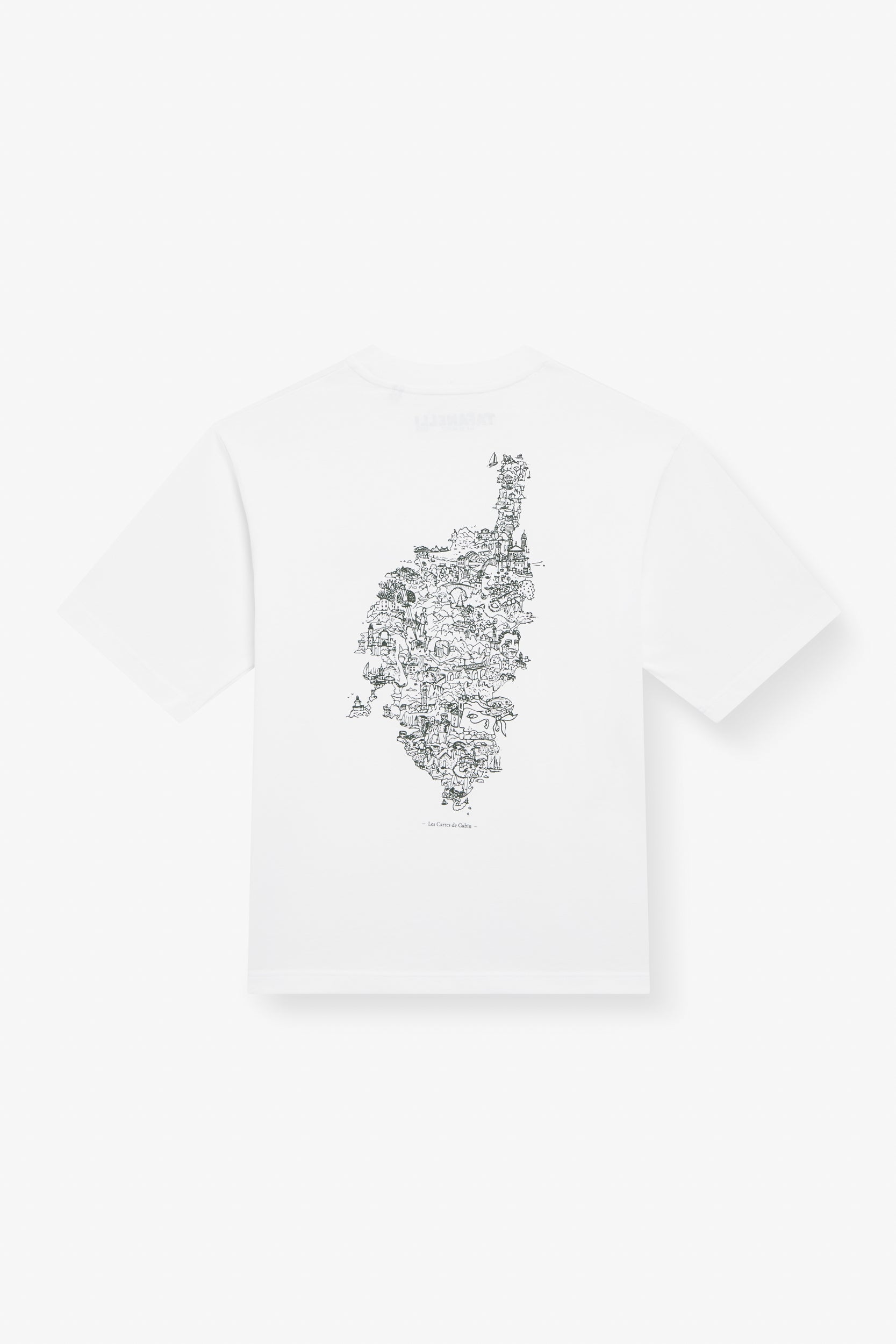
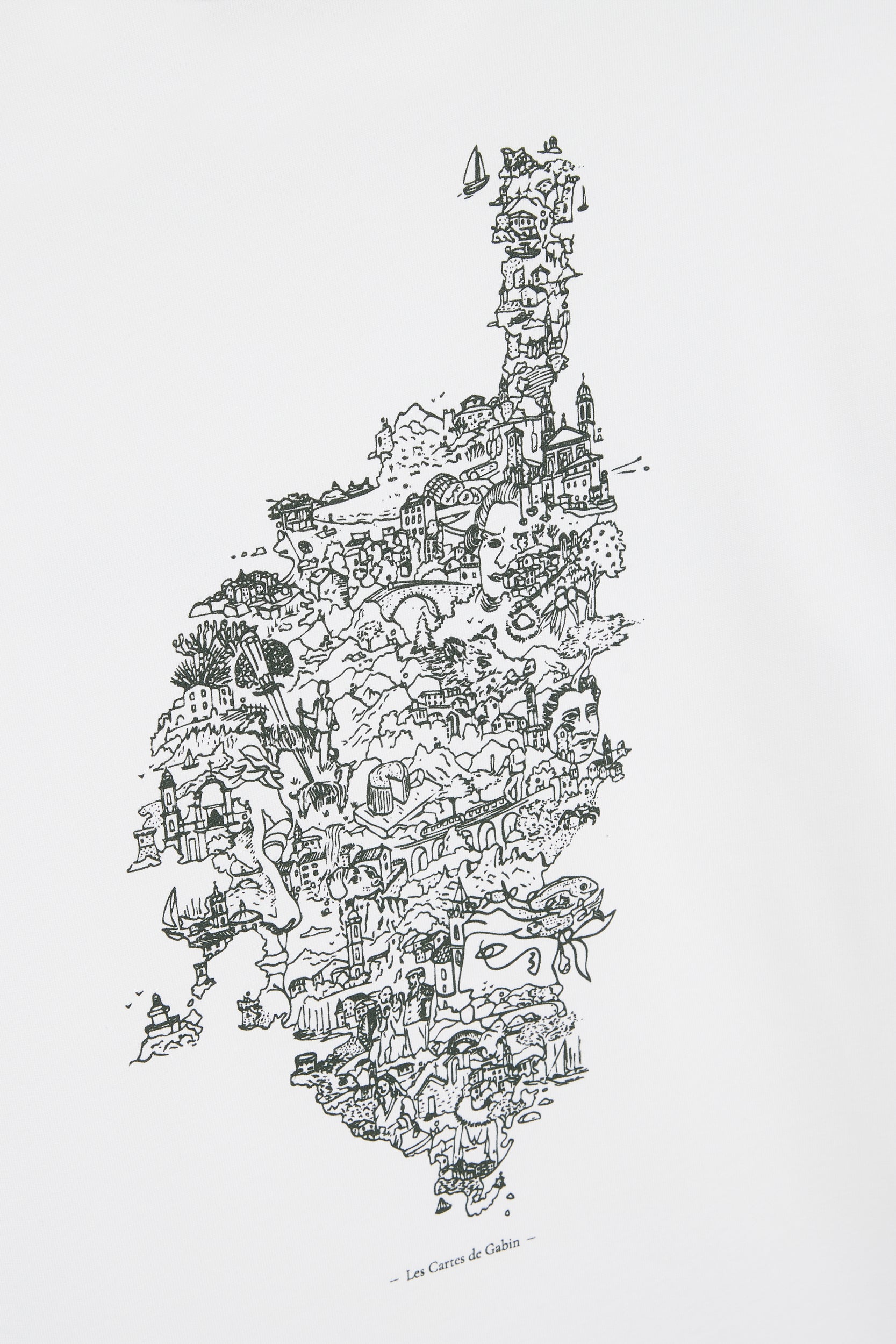
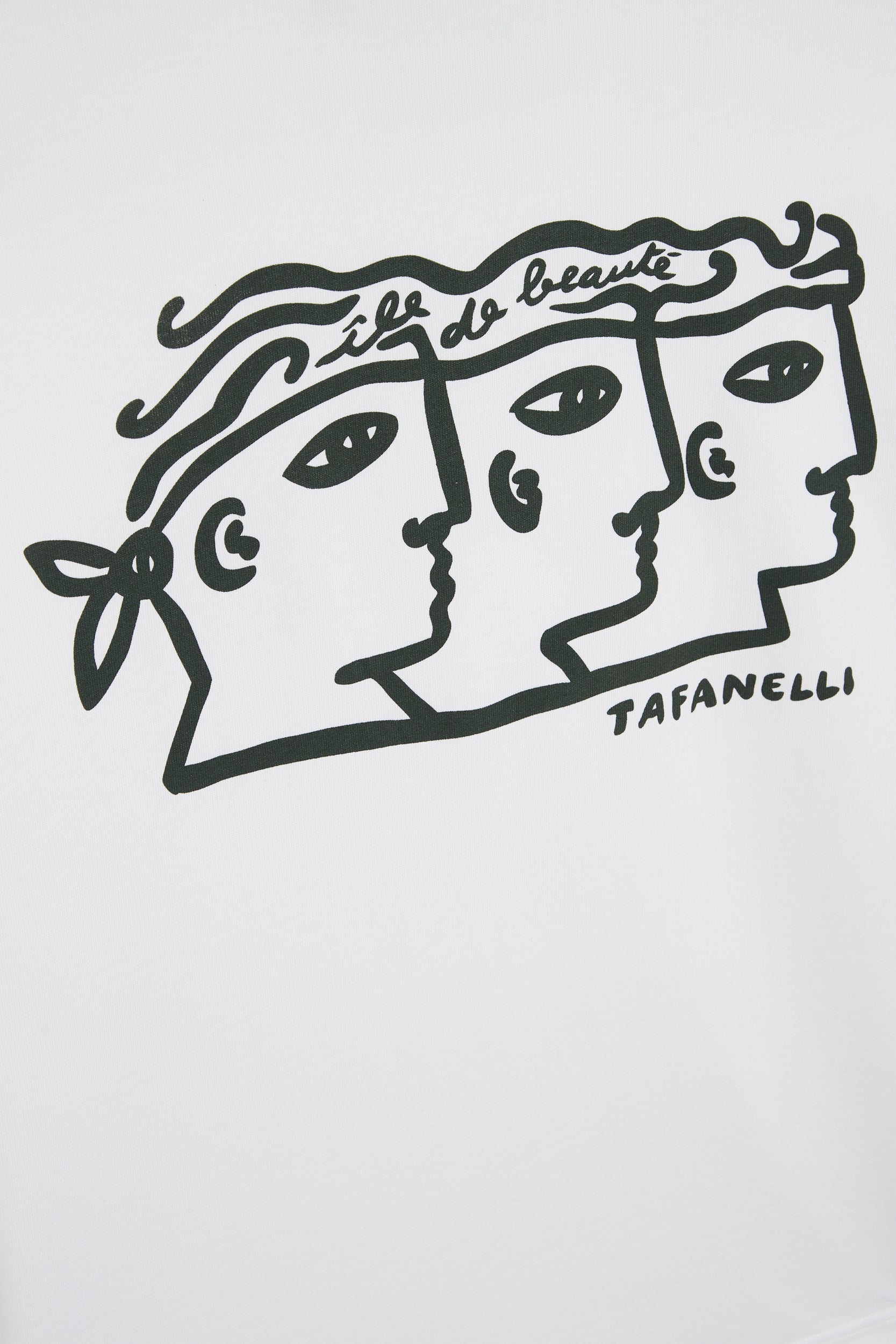
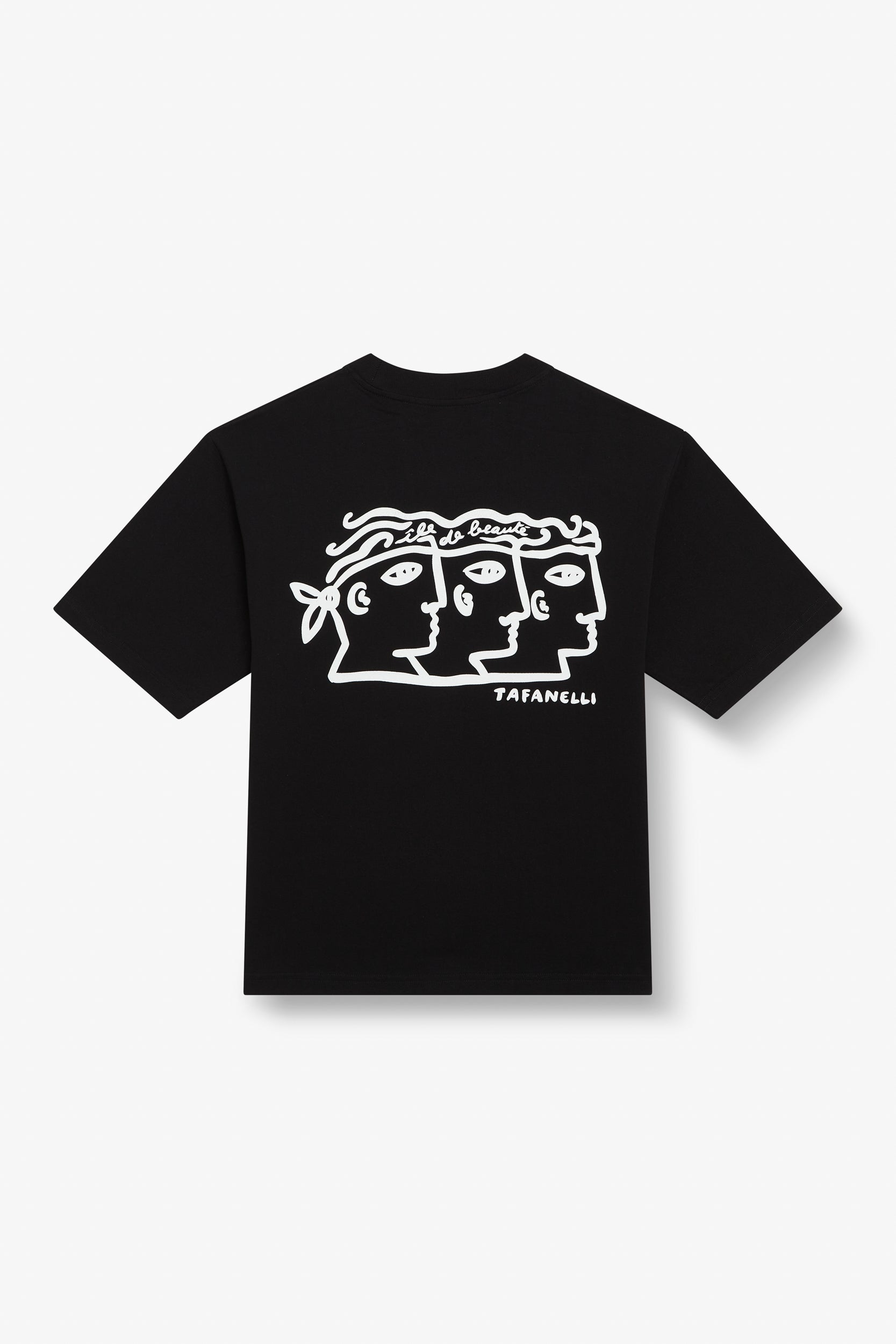
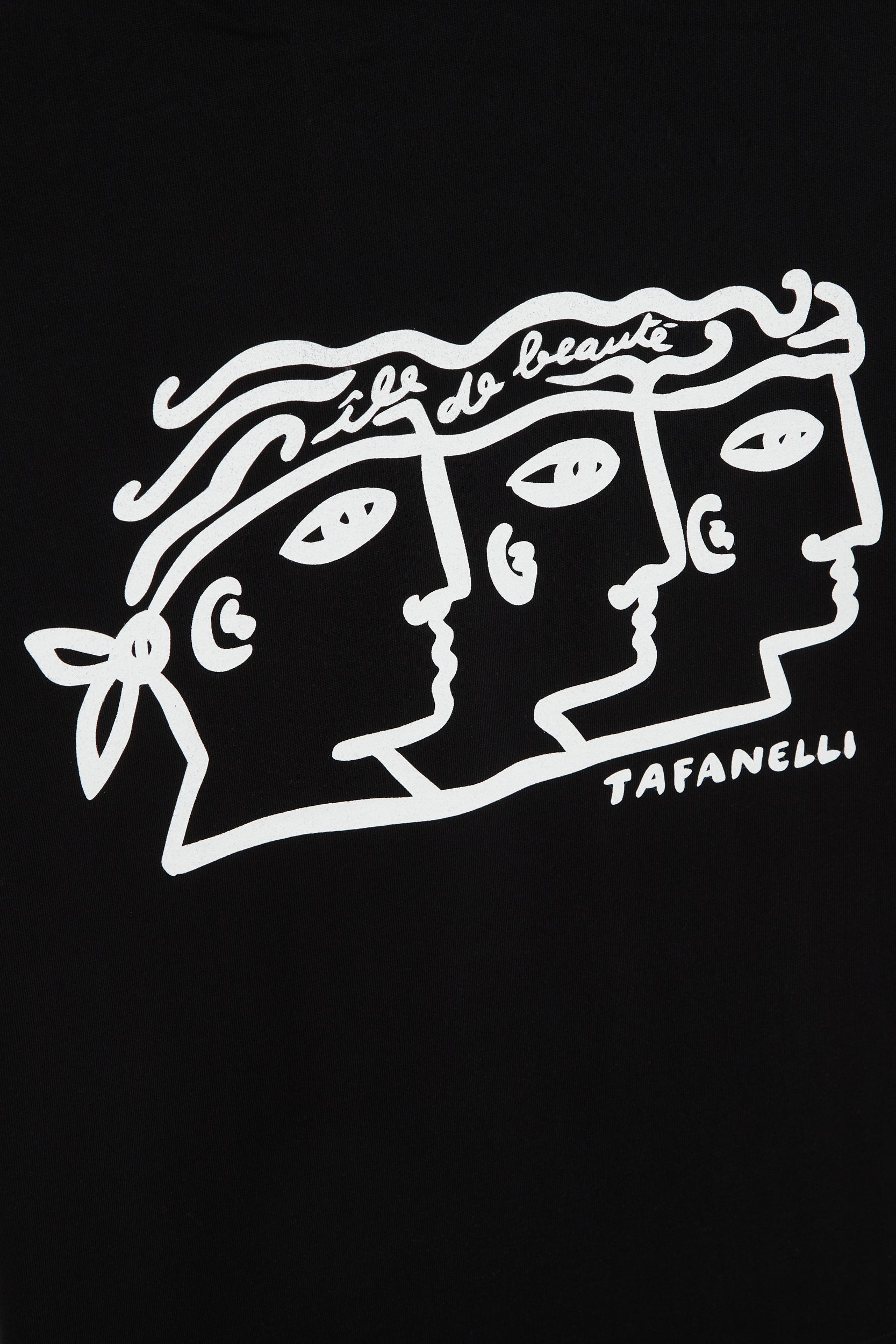
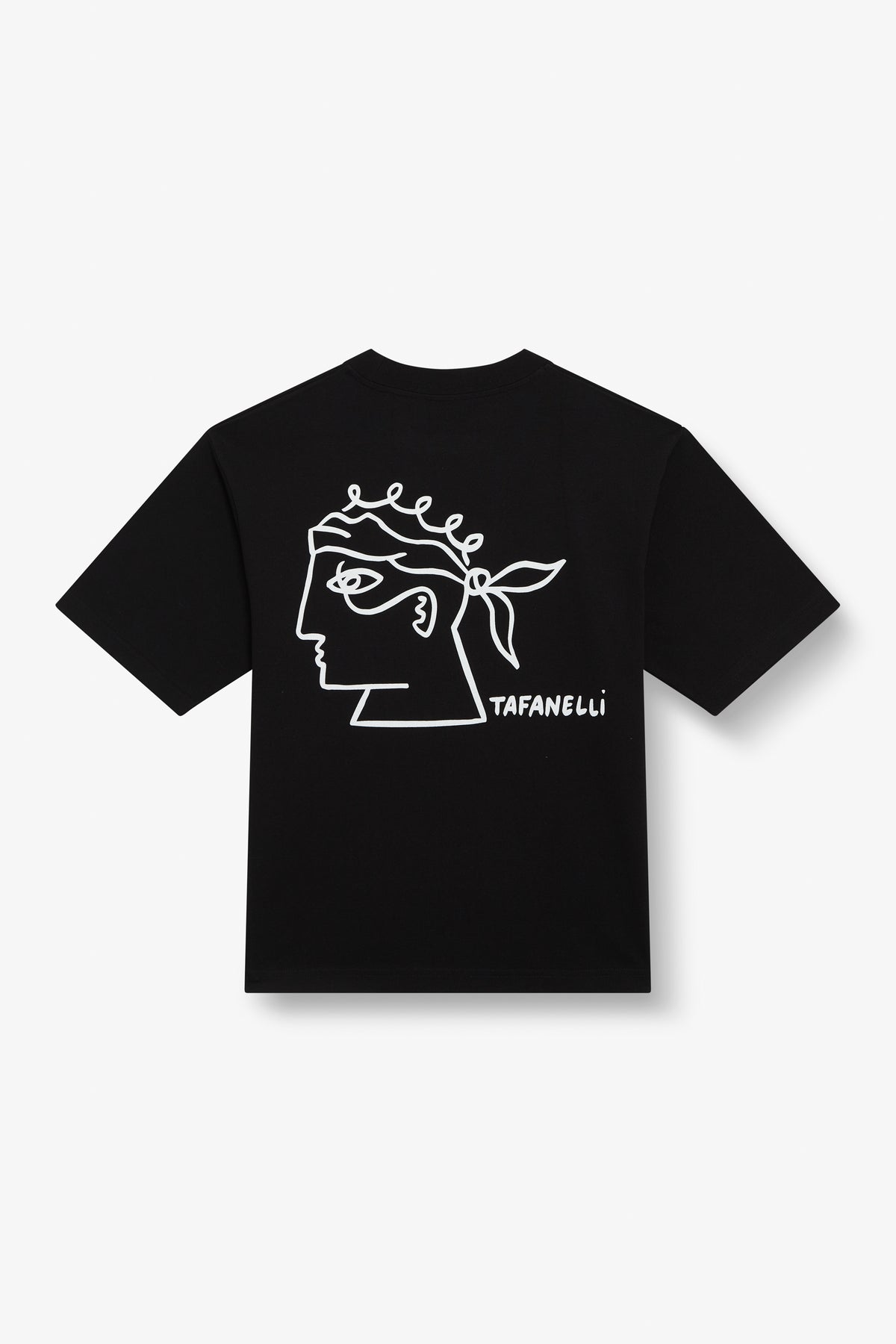
- The La Trinità t-shirt: sea, mountain, maquis, the three Corsicas that the Trinighellu traverses.
- The "Corsica 1755" t-shirt: island pride.
- The TAFANELLI cap: for the platforms and stops of Balagne.
To continue the journey:
- Corte, historical capital of Corsica
- Balagne, complete guide
- Calvi, complete guide
- L'Île-Rousse, complete guide
- The GR20, complete guide
- TAFANELLI, Corsican brand and Mediterranean wardrobe
While passing through Corsica, the customer becomes a friend.
A DOPU,
TAFA