Long-sleeve T-shirts: why they aren't just for winter
On the mainland, we bring out the long sleeves when it’s cold. In the Mediterranean, we wear them for the wind, for the sun, and for the six months when the sea is still warm but the libecciu starts picking up at five in the afternoon. Here is the real difference compared to a short-sleeve, and how to choose between the two.
The mistake everyone makes
Long sleeves are put in the wrong category. We take them out in November, put them away in April, and miss out on what they’re actually capable of.
This mistake comes from a simple, false idea: that sleeve length is solely for keeping warm. Yet in a Mediterranean climate, that is almost never the reason why we cover our arms.
Look at the people working outside on the island in the middle of July. The fishermen, the shepherds, the sailors. Their arms are covered.
They aren't cold. They are protecting themselves from something else.
The wind, the real reason
In Corsica, the air temperature doesn't tell you much about how it actually feels. What counts is the wind.
An afternoon at twenty-four degrees is pleasant. That same afternoon with a steady thirty-knot libecciu becomes something else entirely: the wind sweeps away the layer of warm air on the surface of the skin and carries it off. Bare arms cool down in minutes, even though the thermometer hasn't budged.
This is exactly what a long-sleeve does: it doesn't warm you up, it prevents the wind from stealing your warmth. A dense cotton jersey blocks gusts very effectively, much better than a loose knit.
And on the island, the wind isn't an exception; it’s the standard pattern. The south-westerly libecciu, the north-westerly maestrale, the warm sciroccu from Africa: we’ve dedicated an entire article to them, the Corsican wind rose.
On a boat, the question doesn't even arise. Apparent wind adds to the real wind, spray cools things down, and no one sails all day with bare arms. See also our guide to Corsica by boat.
The sun: why sailors cover their arms
This is the part almost no one anticipates, and it is the most important.
A garment protects against solar radiation, and this protection depends directly on the density of the fabric. The tighter and heavier the knit, the less radiation it lets through. A light, translucent fabric offers very little protection. A dense jersey protects much better.
This is why people whose jobs keep them outside, under the July sun, wear long sleeves rather than reapplying sunscreen every two hours. Clothing doesn't wash off in the water, you don't forget to put it on, and it requires no effort.
Color also plays a role, in a counter-intuitive way: dark shades block more radiation than light ones, even if they absorb more heat. We detailed this paradox in white or black t-shirt in full sun.
A note of honesty: without a certified UPF rating, no ordinary garment can be presented as solar protection equipment. A dense jersey works better than a light fabric—that’s a textile fact—but it does not replace sunscreen or shade during the harshest hours.
September and October, the best season
There is a moment of the year on the island when everything becomes simpler. The beaches empty out, tables open up, the days grow longer. And the sea, heated for three months, remains warmer than the air.
These are the weeks when the long-sleeve becomes the most appropriate piece in your wardrobe.
A typical September day in Corsica looks like this: twenty-six degrees at noon, a swim at five in the afternoon, then the wind picks up and the temperature drops by eight degrees in an hour. A short-sleeve is too little at that point. A jacket is already too much. The long-sleeve handles that gap perfectly.
We discussed this at length in Corsica in September and the off-season, which remains our favorite travel recommendation.
And the reasoning applies in the other direction: April, May, June. Two windows of three months. Six months a year when it is the most useful piece you can wear.
Long sleeve or short sleeve: an honest comparison
Choose the short sleeve if
- You are in the heart of summer, with no wind, in the shade, or on the move.
- You are looking for the most versatile piece in your wardrobe, the one that goes under everything.
- You live in a climate where the difference between midday and evening remains small.
- It’s your go-to item at home and you want the simplest option.
Choose the long sleeve if
- You spend time outside during the mid-season, or on the water at any time of year.
- You have fair skin and prefer to cover up rather than reapply cream.
- You want a piece that can be worn on its own in September and under a jacket in November.
- You are looking for a dressier silhouette, which is the real secret of the long sleeve.
This last point is worth dwelling on. For the same design and the same fabric, a long-sleeve always looks more polished than a short-sleeve. It covers the wrist, it structures the silhouette, it leans closer to a shirt. It’s the piece that allows you to remain in a T-shirt in situations where a standard T-shirt wouldn't suffice.
Why fabric weight matters even more for long sleeves
With a short sleeve, a light jersey can pass. With a long sleeve, never.
The reason is mechanical. The sleeve is the part of the garment that moves the most, rubs the most, and undergoes the most tension: the elbow bends thousands of times, the forearm rests against surfaces, and the wrist stretches when putting it on. A light knit cannot withstand this stress. It stretches out at the elbow, bags out, and ends up looking saggy after one season.
A dense knit can take it. It holds its shape at the elbow, hangs straight, and the wrist doesn't gape.
This is why a well-made long-sleeve costs more than a well-made short-sleeve: there is more material, and that material has to be of higher quality. You can spot a low-quality long-sleeve after three washes.
To understand what fabric density really does, see also our article on Portuguese cotton.
How to wear it
On its own
This is the primary use, from March to June and from September to November. Tucked in or left out depending on the cut—but with a straight cut, left out.
Sleeves rolled up
The most useful move of the day. Two folds at the forearm and the garment changes its look: it becomes more casual, more summery, and lets you adjust your temperature without changing clothes. A well-cut long-sleeve rolls up neatly; a bad one bulges.
As a base layer
Under an overshirt, a canvas jacket, or a bomber jacket in winter. The wrist poking out from the sleeve does the work, and the density of the knit avoids that "undergarment" look.
Over a swimsuit
The Mediterranean classic, perfect for days on the boat and coming back from the beach. It dries, it protects, and it never looks like you’re trying too hard.
The question of sizing
One thing to know: for a straight cut, choose the same size for a long-sleeve as you would for the corresponding short-sleeve. There is no reason to size up.
The real variable isn't the shoulder width, it’s the sleeve length. A sleeve that stops before the wrist bone makes the piece look too small, regardless of the other measurements. A sleeve that covers half the hand looks sloppy.
The right benchmark: the sleeve should fall to the base of your thumb with arms relaxed at your sides.
Before ordering, the safest bet is to compare flat measurements with a piece you already wear. Our size guide explains how to do this in two minutes.
The four classic mistakes
1. Saving it for winter
You’re missing out on six months of use. The long-sleeve is a mid-season and seaside piece before it is a cold-weather piece.
2. Sizing up
With a straight cut, the size doesn't change between short and long sleeves. Sizing up results in dropped shoulders and sleeves that are too long.
3. Choosing a light knit
This is the false economy that ends up costing the most. A light jersey sleeve stretches at the elbow and never bounces back.
4. Tumble drying
True for all our clothes, but critical here: the sleeves move the most in the drum, making them the first to suffer. Wash at 30°C inside out, dry flat or on a hanger. Our screen-printing care guide details the rest.
Frequently asked questions
Can you wear a long-sleeve T-shirt in summer?
Yes, it’s actually common practice for those who work outside. By the seaside, in a steady wind, or under prolonged direct sun, a dense knit protects better than a light fabric and prevents sunburn on the forearms.
Should I choose the same size as my short-sleeves?
Yes, for a straight cut. What changes is not the shoulder width but the sleeve length, which should fall to the base of the thumb with arms at your sides.
Does a long-sleeve really keep you warm?
It doesn't produce heat; it prevents the wind from taking it from you. This is an important distinction: its primary quality is blocking gusts, not insulating like a wool sweater.
Why does it cost more than a short-sleeve?
More material, and above all, material that must withstand the bending of the elbow and the stretching of the wrist. A light knit cannot handle this strain, which makes the cost-cutting measures possible in short-sleeves impossible here.
What season should I wear it in Corsica?
From April to June and September to November, on its own. From December to March, as a base layer under a jacket. In July and August, on the water and at the end of the day when the wind picks up.
Can you roll up the sleeves?
Yes, it’s the very move that makes the piece versatile. Two folds at the forearm are enough. A dense knit rolls up neatly and stays in place.
Why this subject matters to us
Because we took our time making this garment, and there’s a reason for that.
A long-sleeve isn't just a short-sleeve with extra sleeves. It is a piece that highlights every weakness of a mediocre fabric. You can't cheat on the elbow, you can't cheat on the wrist, you can't cheat on the shape after twenty washes. We had to start from the same foundation as our T-shirts, not from a compromise.
And then there is the island's calendar, which isn't the same as the industry's collections. The tourist season ends at the end of August. The Corsican season, however, continues: September, October, the grape harvest, the low light, the sea still warm, and the wind picking back up. This is our favorite time, and that is precisely when this garment is useful.
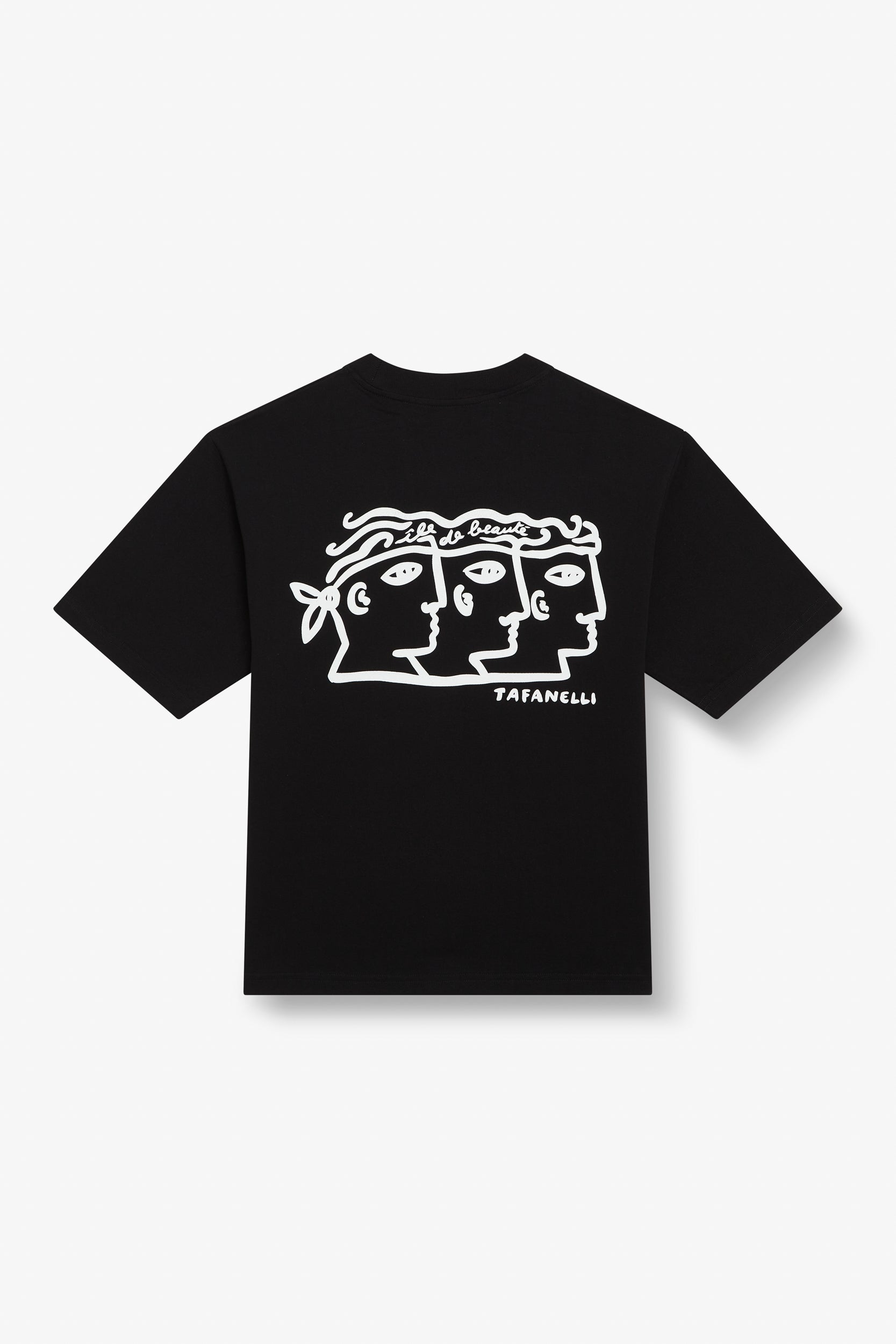
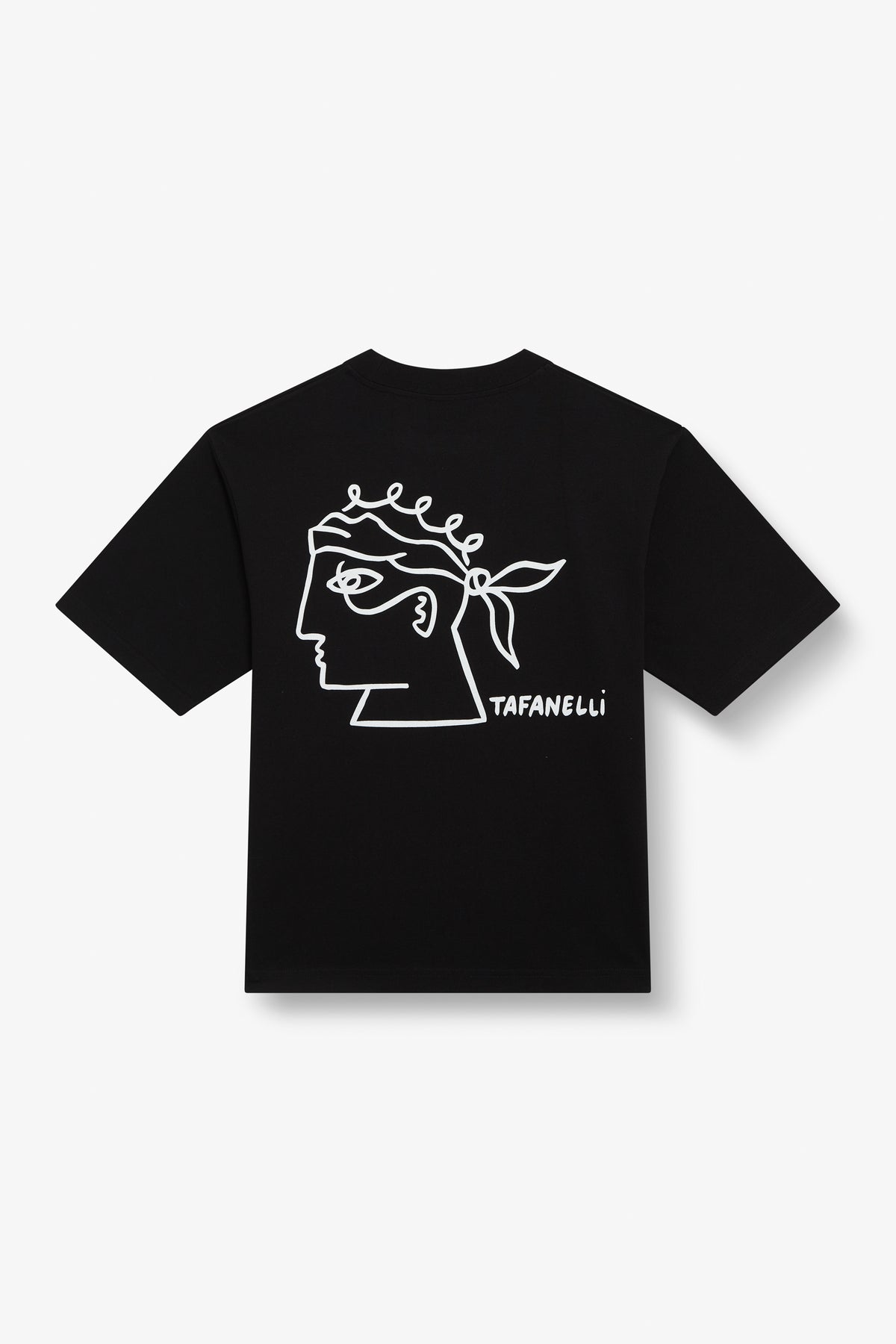
We are preparing a long-sleeve based exactly on our short-sleeve: same knit, same weight, same standards. It’s coming soon.
Read more: Corsican winds, Corsica in September, and what materials to wear in extreme heat.
Passing through Corsica, a customer becomes a friend.
A DOPU, TAFA