The 10 most beautiful Pisan chapels in Corsica: complete 2026 guide
They are planted in the middle of vineyards, lost in the maquis, isolated on hills, or integrated into sleepy villages. These are the Pisan chapels of Corsica, little-known jewels of an exceptional architectural heritage. Built between the 11th and 13th centuries by master builders from Pisa, they tell the story of a formative period in island history, when the small Tuscan republic ruled the island and transformed its landscapes with architecture of rare elegance. More than 50 are still in a state of preservation today. Here is our selection of the 10 most beautiful to discover in 2026.
A little-known island heritage
There is a heritage in Corsica that remains strangely discreet. A heritage that does not appear in standard tourist guides, that does not attract crowds, and yet likely represents the greatest concentration of Pisan Romanesque architecture outside of Tuscany itself. This heritage is the Pisan chapels.
These religious buildings, constructed between the 11th and 13th centuries, are characterized by absolute sobriety, perfect geometry, and often a striking bichromism between light and dark stone. They were built at a time when Pisa dominated Corsica, when Tuscan master stonemasons were sent to the island to build places of worship that were simultaneously monastic, parish-based, and symbolic.
A Pisan chapel is not just a church. It is an architectural manifesto. A declaration of faith and power, made in stone, in a geometric language that still speaks to us today. The sobriety of the Pisan Romanesque may be what makes these chapels so moving: nothing is added; everything is intentional.
Today, these chapels are mostly isolated in the Corsican landscape. Some stand in the middle of the vineyards of Patrimonio or Balagne. Others are tucked into the southern maquis, difficult to find without precise directions. Others still are integrated into medieval villages that grew up around them.
Visiting a Pisan chapel is taking a journey through time into the medieval history of Corsica. It is also gaining access to sites of rare contemplative beauty. Here is our complete guide.
The Pisan history of Corsica
To understand the Pisan chapels, one must understand the history that produced them.
The 11th-century context
In the 11th century, Corsica was a disputed territory. Byzantium had lost control. The Christian kingdoms of the West were seeking to establish a foothold there. The Saracen threat remained strong. In 1077, Pope Gregory VII officially entrusted the ecclesiastical administration of Corsica to the Republic of Pisa, then an ascending maritime power.
Pisa thus obtained dual legitimacy on the island: political (via maritime and commercial control) and religious (via papal delegation). It would use this control for more than two centuries, until the Battle of Meloria in 1284, when Genoa destroyed the Pisan fleet and took over.
An intense period of construction
During their two centuries of dominance, the Pisans launched a vast program of religious construction in Corsica. They brought to the island:
- Pisan master builders trained in Tuscan Romanesque techniques.
- Stonemasons specialized in working with local materials (schist, limestone, granite, serpentine).
- Sculptors capable of adorning facades with fantastic bestiaries and geometric motifs.
- Architects who adapted Pisan models to the constraints of Corsican terrain.
This period produced architecture of remarkable stylistic homogeneity. One immediately recognizes a Pisan chapel by its shape, proportions, materials, and ornaments. It is this homogeneity that gives Corsican Romanesque heritage its exceptional coherence.
The end of the Pisan era
After the Pisan defeat in 1284, Genoa took control of Corsica. The new occupants did not continue the religious construction program. Some chapels were left to abandon, others were modified, and still others continued to function as places of worship.
Today, what remains of this heritage forms a unique ensemble in the Mediterranean—sometimes forgotten, sometimes classified as a Historical Monument, and often undergoing restoration thanks to the joint efforts of municipalities, the Departments of Haute-Corse and Corse-du-Sud, the Conservatoire, and private patrons.
Characteristics of Pisan architecture
Pisan Romanesque architecture, as it is expressed in Corsica, is distinguished by several identifiable characteristics.
The floor plan
Pisan chapels generally follow a simple plan: a single nave terminating in a semi-circular apse. Three-nave plans exist for cathedral churches (Nebbio, Mariana) but remain in the minority. This simplicity of plan reinforces the meditative power of the interior space.
Bichromism
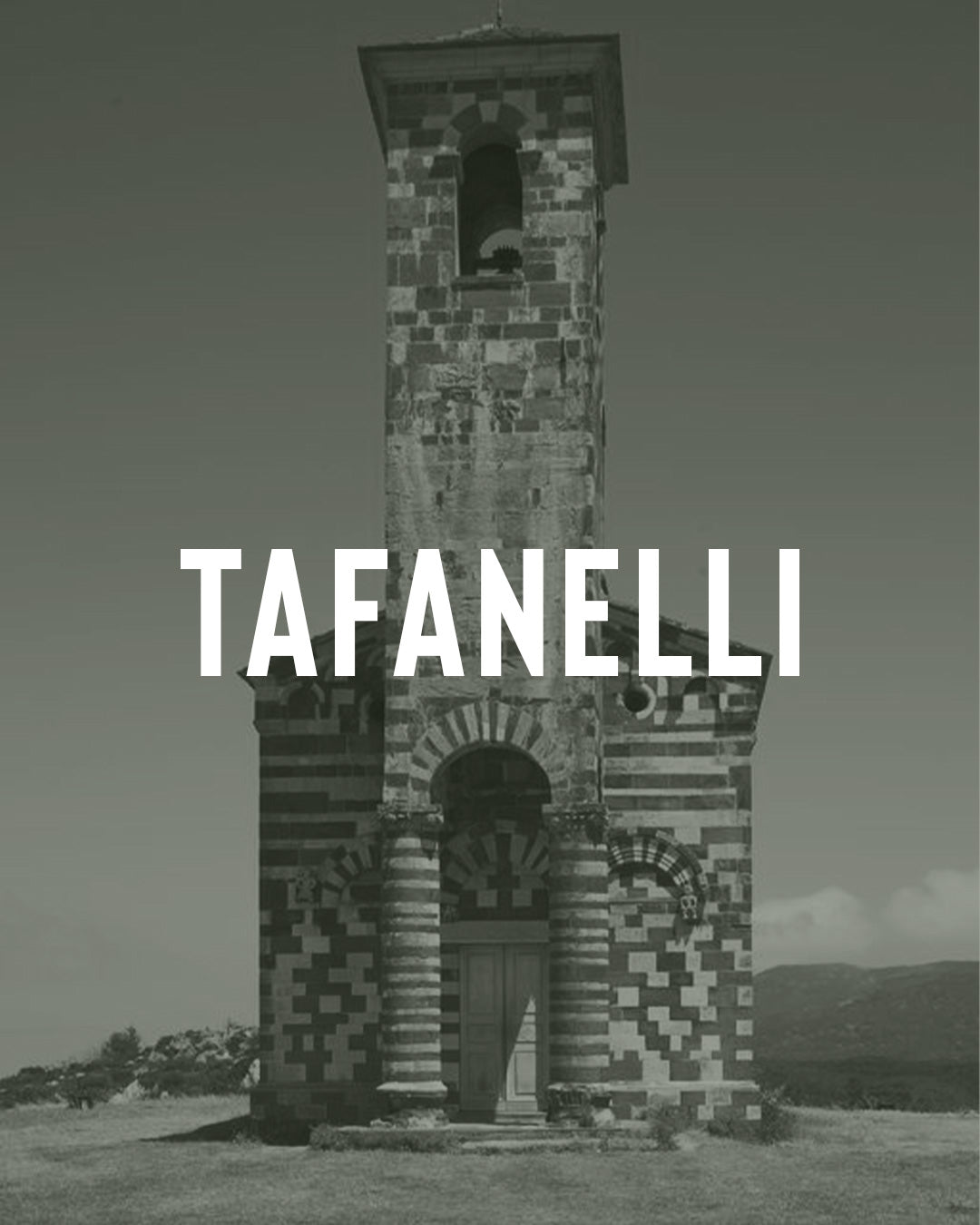
This is the most visible characteristic of Corsican Pisan architecture. Masons alternated rows of light stone (white limestone) and dark stone (green serpentine, schist). This bichromism creates a striking visual effect and directly recalls the great Pisan buildings of Tuscany (baptistery, cathedral, Campo dei Miracoli).
The most spectacular examples in Corsica: San Michele of Murato (green serpentine + white limestone), The Trinity of Aregno (serpentine + limestone), Santa Cristina of Cervione.
Blind arcades
Pisan facades are characterized by blind arcades: arches carved into the stone that do not open onto anything, but which visually pace the wall. These arcades are often supported by engaged columns and give the facades a recognizable geometric dynamism.
Sculptures
Pisan chapels often host extraordinary figurative sculptures: fantastic bestiaries (lions, dragons, sirens, monsters), biblical scenes, Christian symbols (Paschal lamb, crosses, doves), and pagan motifs predating Christianization. These sculptures, sometimes crude but always expressive, are among the most beautiful testimonies to the Corsican medieval imagination.
Orientation
Like all Romanesque churches, Pisan chapels are oriented toward the east. The apse faces the rising sun, and the entrance faces west. This liturgical orientation creates spectacular plays of light at certain hours of the day, especially at sunrise and sunset.
What distinguishes Pisan architecture is not ornamental richness. It is precision. Every stone is in its place. Every proportion is calculated. Every visual effect is considered. These chapels are the works of engineers as much as artists.
1. The Trinity and San Giovanni d'Aregno (Balagne)
If you were to visit only one Pisan chapel in Corsica, this would be it. The Trinity and San Giovanni d'Aregno, planted in the middle of Balagne vineyards and orange groves, is probably the most beautiful testimony to Pisan Romanesque architecture on the island.
Characteristics
Built around 1150, this chapel displays perfect bichromism: green serpentine (locally extracted in Balagne) and white limestone. The facade is adorned with blind arcades and a series of unique figurative sculptures: a man pointing at a serpent, a figure with a crosier, lions, and monsters.
Unique sculptures
These sculptures likely represent symbolic scenes that are still debated by historians. Notably visible are:
- A figure identified as Adam holding a coiled serpent.
- A man removing a thorn from his foot (a salvaged Roman motif).
- Lions framing the doors (symbolic protection).
- Two-bodied monsters that recall medieval bestiaries.
Access
The Trinity of Aregno is located 500 meters from the village of Aregno, in a bucolic setting of vineyards and fig trees. It is accessible by car and then on foot. Entrance is free. Visit at sunrise or sunset for the best light on the facade.
Aregno is located in Balagne. To learn more, consult our Balagne guide.
2. San Michele of Murato (Nebbio)
The San Michele chapel of Murato is likely the most photogenic of all Corsican Pisan chapels. Its bicolored silhouette, planted on a hill facing the Gulf of Saint-Florent, is one of the most recognizable images of Corsican heritage.
Characteristics
Built around 1140, San Michele is a textbook case of Pisan Romanesque architecture. Its bichromism uses:
- Bevinco green serpentine: local stone with a dark olive to black hue.
- White limestone: absolute contrast with the serpentine.
The alternating rows create a striped visual effect, unique in the Mediterranean. The chapel is about 15 meters long by 6 meters wide. It has been classified as a Historical Monument since 1875.
The bell tower
The detached bell tower, planted next to the chapel, is later (15th century). It complements the ensemble harmoniously without overwhelming the Romanesque chapel.
Access
San Michele of Murato is accessible by car from the village of Murato (Nebbio), about 20 minutes from Saint-Florent. The chapel is isolated in its setting of hills, right in the maquis. A moment of contemplation guaranteed.
To continue, consult our complete guide to Saint-Florent and the Nebbio.
3. The Canonica of Mariana (eastern plain)
The Canonica of Mariana, in the eastern plain near Lucciana, is the oldest cathedral in Corsica still standing. It was consecrated in 1119, making it likely the oldest Pisan Romanesque building on the island.
An ancient site
The Canonica was built on the ruins of Mariana, an ancient Roman city founded by Marius in 93 BC. The surrounding archaeological site preserves traces of the ancient city: thermal baths, mosaics, and a forum. Indeed, the chapel incorporates many reused ancient stones.
Characteristics
The Canonica is a three-nave basilica (wider than most country Pisan chapels), built of white Brando limestone. Its facade displays the blind arcades characteristic of the Pisan style, with beautiful sobriety.
Access
The Canonica is accessible by car from Bastia (20 minutes) or from Poretta airport (10 minutes). It is part of an important archaeological ensemble that can be visited freely.
To continue around Bastia, consult our guide to the 15 must-see spots in Bastia.
4. Santa Maria Assunta of the Nebbio (Saint-Florent)
The cathedral of Santa Maria Assunta of the Nebbio, planted in the vineyards one kilometer from the center of Saint-Florent, is one of the absolute Romanesque masterpieces of Corsica.
Characteristics
Built between 1130 and 1140, this country cathedral is built entirely of white limestone. Its facade displays an exceptional combination of blind arcades, engaged columns, and animal sculptures of Lombard and Pisan inspiration.
The interior, with three naves separated by marble columns, breathes medieval sobriety. The contrast between the light of the facade and the dimness of the nave creates an atmosphere of intense recollection.
A masterpiece preserved by isolation
The cathedral escaped destruction thanks to its off-center position. The medieval village that surrounded it (the old Saint-Florent) was abandoned in the 18th century due to malaria. The cathedral remained alone in the middle of the vineyards, preserved from time and men.
Access
Santa Maria Assunta is accessible in 15 minutes on foot from the center of Saint-Florent, or by car. Entrance is free during the tourist season.
5. Santa Maria di Rescamone (Castagniccia)
The Santa Maria di Rescamone is one of the oldest Pisan chapels in Corsica. Built in the 11th century, it testifies to a pre-classical phase of the Pisan Romanesque that is more rustic and expressive.
A chapel of origins
Rescamone is located in a pass above Poggio-Marinaccio, in the Castagniccia. It belongs to a phase of construction where Pisan techniques were still being assimilated by local artisans. The result: an architecture that is more unrefined, closer to the Lombard Romanesque, with particularly moving, naive sculptures.
An isolated site
Rescamone is located in a totally preserved environment, in the middle of chestnut trees and the maquis. The site is rarely visited, which gives it a quasi-meditative atmosphere. It is also a gateway to the Castagniccia, the central region of Corsica that remains little known.
Access
Rescamone is accessible via the D71 from Ponte Novu or Ortiporio. A short 10-minute walk from the parking area leads to the chapel. Wear appropriate shoes for the trail.
6. San Michele de Sisco (Cap Corse)
San Michele de Sisco, located in the marina of the same name on the east coast of Cap Corse, is the most bucolic of the Corsican Pisan chapels.
Characteristics
Built in the 12th century from local schist, San Michele is small, sober, and almost intimate. It measures about 12 meters long. Its location by a stream, nestled in a grove, gives it a rural character that is unique among Pisan chapels.
The atmosphere of the place
Unlike the spectacular two-tone chapels (Aregno, Murato), San Michele is defined by a total sobriety. No striking colors, no figurative sculptures. Just perfect geometry and harmonious integration into its natural surroundings.
Access
San Michele is accessible from the Sisco marina via a small path that follows the stream. A 15-minute walk through the trees. A moment of meditative freshness in the middle of summer.
To continue, check out our complete Cap Corse guide.
7. San Quilico de Cambia (Castagniccia)
San Quilico de Cambia, in the village of Cambia in Castagniccia, is famous for its exceptional animal sculptures.
A medieval bestiary
The facade of San Quilico is adorned with a remarkable fantastic bestiary: lions, monsters, and symbolic figures. These sculptures, more complex than those of Aregno, show advanced technical and symbolic mastery. They bear witness to the Lombard and Byzantine influences that permeated Pisan art.
Characteristics
Built in the 12th century, San Quilico has a simple layout (single nave, semi-circular apse). It is built of local schist, with marble inserts for the sculptures. Its restored interior allows visitors to admire fragmentary medieval frescoes.
Access
Cambia is a small village in the Castagniccia, accessible via the D71. The chapel is located at the entrance to the village. It is open during the summer season; otherwise, the key can be requested at the town hall.
8. Santa Cristina de Cervione
Santa Cristina de Cervione, on the heights of the Costa Verde, is a chapel that combines Pisan architecture and exceptional medieval frescoes.
A dual architecture
This chapel features a unique characteristic in Corsica: it is composed of two twin parallel, communicating naves, with two apses. It is an extremely rare case in Pisan Romanesque architecture, likely linked to a dual religious function (two communities shared the space).
The frescoes
The naves preserve exceptional medieval frescoes, dated to the 15th century but located in an earlier Pisan space. One can see scenes of the Passion, saints, and decorative motifs. It is one of the best collections of Romanesque frescoes preserved in Corsica.
Access
Santa Cristina is accessible from Cervione by a small road that climbs into the countryside. Plan for a guided tour or check opening hours before heading out.
9. San Parteo de Mariana (eastern plain)
A few hundred meters from the Canonica de Mariana stands San Parteo, the second Pisan chapel on this ancient site.
Characteristics
Built in the 12th century in limestone, San Parteo is smaller than the Canonica (single nave) but features exceptional figurative sculptures: lions devouring a victim, plant motifs, and Christian symbols. These sculptures are attributed to the same school of artists who worked on Aregno and Murato.
The Canonica/San Parteo duo
Together, Canonica and San Parteo form a coherent Pisan Romanesque ensemble that is unique in Corsica. They were likely linked to the same ecclesiastical community and represented the dual function of cathedral (Canonica) and sanctuary (San Parteo).
Access
San Parteo can be visited at the same time as the Canonica, just a few minutes' walk away. Allow 2 hours for the entire site (chapels + ancient remains of Mariana).
10. Santa Maria di Figaniella (near Sartène)
Santa Maria di Figaniella, in the south of Corsica near Sartène, is the southernmost Pisan chapel in our selection.
A chapel of the maquis
Figaniella is isolated in the middle of the Sartène maquis, a few kilometers from the village of Figari. Its access is more secluded than the other chapels, which preserves it from mass tourism. You will likely be alone during your visit.
Characteristics
Built in the 12th century using local granite, the chapel is more austere than its northern cousins. No spectacular bichromy, no abundant sculptures. Just perfect geometry in a setting of fragrant maquis. Its facade nevertheless features beautiful, typically Pisan blind arcades.
Access
Figaniella is accessible from the village of Figari via a small road followed by a trail. Expect about a 20-minute walk from the parking area. Bring water and good shoes.
A complete tour in Corsica
To visit the 10 Pisan chapels in our selection, here is a possible 5 to 7-day tour in Corsica.
Days 1-2: Bastia and the eastern plain
Base in Bastia. Visit the Canonica de Mariana and San Parteo in the same morning. Afternoon discovery of Bastia. The next day, head up toward Castagniccia for Santa Maria di Rescamone and San Quilico de Cambia.
Day 3: Cap Corse
Descend toward San Michele de Sisco. Continue around Cap Corse.
Day 4: Nebbio and Saint-Florent
Travel toward San Michele de Murato in the morning. Santa Maria Assunta du Nebbio in the afternoon, with a tasting in the cellars of Patrimonio.
Day 5: Balagne
Drive toward Aregno for La Trinité d'Aregno. Use the rest of the day to discover the Balagne region (Chez Léon in Cateri, Sant'Antonino, Pigna).
Days 6-7: Costa Verde and the South
Descend toward Santa Cristina de Cervione. Then, make the long journey south for Santa Maria di Figaniella near Sartène.
This complete tour forms a common thread through all of Corsica. It crosses the major territory guides we have published: Cap Corse, Saint-Florent, Balagne, Bastia.
Pisan chapels and the TAFANELLI collection
At TAFANELLI, we pay particular attention to Corsican architectural heritage. Pisan chapels, with their absolute sobriety and geometric precision, embody a philosophy we share in our clothing: everything is calculated to disappear for the sake of presence.
The ideal wardrobe for your visit
Here are the pieces to pack to explore the Pisan chapels:
- The La Trinità t-shirt: the new capsule that embodies the Corsican landscape trinity, aesthetically close to Pisan sobriety.
- The Corsica 1755: a tribute to the medieval and Paolian history of Corsica.
- The Corsica Shark Cap: sun protection for visits deep in the maquis (Rescamone, Figaniella, Aregno).
- The Corsican Bandana: a versatile accessory that accompanies walks on isolated sites.
A Pisan chapel is a manifesto of sobriety. No unnecessary ornamentation, no showboating, just the pure presence of material and geometry. It is very close to the philosophy of a TAFANELLI t-shirt: precision in service of the essential. Nothing is added, everything is considered.
This aesthetic kinship is no coincidence. Our official wording asserts that "luxury is what cannot be seen." The Pisan masters who built these chapels would likely have subscribed to this formula.
To learn more about our manufacturing philosophy, see our manifesto article Why we took four years to perfect our t-shirt.
Continue your discovery
To complete your discovery of Corsican heritage:
- The 10 most beautiful Genoese towers in Corsica (military heritage, pairs with this article)
- The 10 most beautiful hilltop villages in Corsica
- Mare, Muntagna, Machja: the Corsican landscape trinity
- Corte, historical capital of Corsica
- The Moor's Head: history and symbolism of the Corsican flag
- In the footsteps of Napoleon in Corsica
- Cap Corse complete guide
- Saint-Florent complete guide
When visiting Corsica, the customer becomes a friend.
A DOPU,
TAFA