Corsican bandana: the complete 2026 guide (origins, motifs, how to choose, how to wear, how to tie)
No other accessory is woven as naturally into the history of Corsican dress. From the traditional headscarf worn by village women to the utilitarian tool of shepherds and sailors, and now a contemporary signature spotted on yachts and at pavement cafés in the world's great capitals, the Corsican bandana has evolved without ever losing its identity. It is one of the most versatile items in the island's wardrobe, one of the most steeped in history, and one of the least understood by the general public. Here is the complete guide to understanding everything about the contemporary Corsican bandana: its origins, its iconic motifs, its quality standards, its ten ways to wear it, and the various knots to ensure you never tie it the same way twice.
What is a Corsican bandana
A Corsican bandana is a square of cotton fabric, generally between 50 and 65 centimeters on each side, featuring motifs linked to the island's visual identity: the Moor's Head with the bandana raised, the eight-pointed star from medieval coats of arms, traditional gozzi sailboats, the Lion of Roccapina, heraldic motifs borrowed from Corsican village crests, or abstract compositions evoking the colors and shapes of the island landscape.
The contemporary Corsican bandana is radically different from the classic American bandana (paisley, hippie patterns, bright colors) due to its restrained palette (navy, ecru, black, ochre, terracotta), its precise (never generic) heritage motifs, and its relationship with the material (100% natural heavy cotton, never polyester).
More than just an accessory, the Corsican bandana has, in recent years, become one of the most recognizable sartorial markers of island identity in contemporary fashion. Wearing one is not just about completing an outfit; it is about evoking a narrative, signaling a sense of belonging, and passing on a visual memory.
Origins and history of the bandana in Corsica
To understand the contemporary Corsican bandana, one must understand its three major eras of development.
The traditional era (before 1900)
The scarf has held a central place in traditional Corsican costume for centuries. Village women wore the fazzulettu, a black scarf tied over the head, marking both religious modesty and regional identity. Men in the mountains wore scarves around their necks to absorb sweat from working in the fields and to protect their necks from the sun. Fishermen along the coast used bandanas as utilitarian tools: head protection, sweat absorption, hair ties, and sometimes even as makeshift bandages.
At that time, the patterns were simple: solid dark colors for women, sometimes with fine stripes for men, without sophisticated prints.
The mixed era (1900-2000)
During the twentieth century, the Corsican bandana gradually transformed. Traditional motifs (Moor's Head, eight-pointed star) were incorporated into local textile production. Corsican craft cooperatives began producing scarves bearing island emblems, intended first for local markets and then for seasonal tourists.
This was also the era when Corsican men widely adopted the bandana as a definitive fashion accessory. Worn around the neck, in a jacket breast pocket, or sometimes as a bracelet, it became a marker of regional belonging, much like the Basque bandana or the Provençal scarf.
The contemporary era (since 2010)
Starting in the 2010s, a new generation of Corsican designers proposed a premium reinterpretation of the bandana. Heavy cotton, hand-screened high-density prints, a refined earthy palette, and precise, finely drawn heritage motifs. The Corsican bandana left the tourist segment to enter the premium fashion accessory market, at the crossroads of maritime codes, heritage codes, and contemporary Mediterranean codes.
Today, in 2026, the contemporary Corsican bandana is one of the most sought-after accessories by enthusiasts of sophisticated Mediterranean fashion. It is worn just as easily in Calvi as in Paris, in Saint-Florent as in Milan, on all occasions where one wants to signal their attachment to the island without resorting to flashier elements.
The five great traditional Corsican motifs
The motifs that appear on contemporary Corsican bandanas are never chosen at random. Each one invokes a precise heritage reference. Here are the five major motifs to recognize.
1. The Moor's Head with the bandana raised
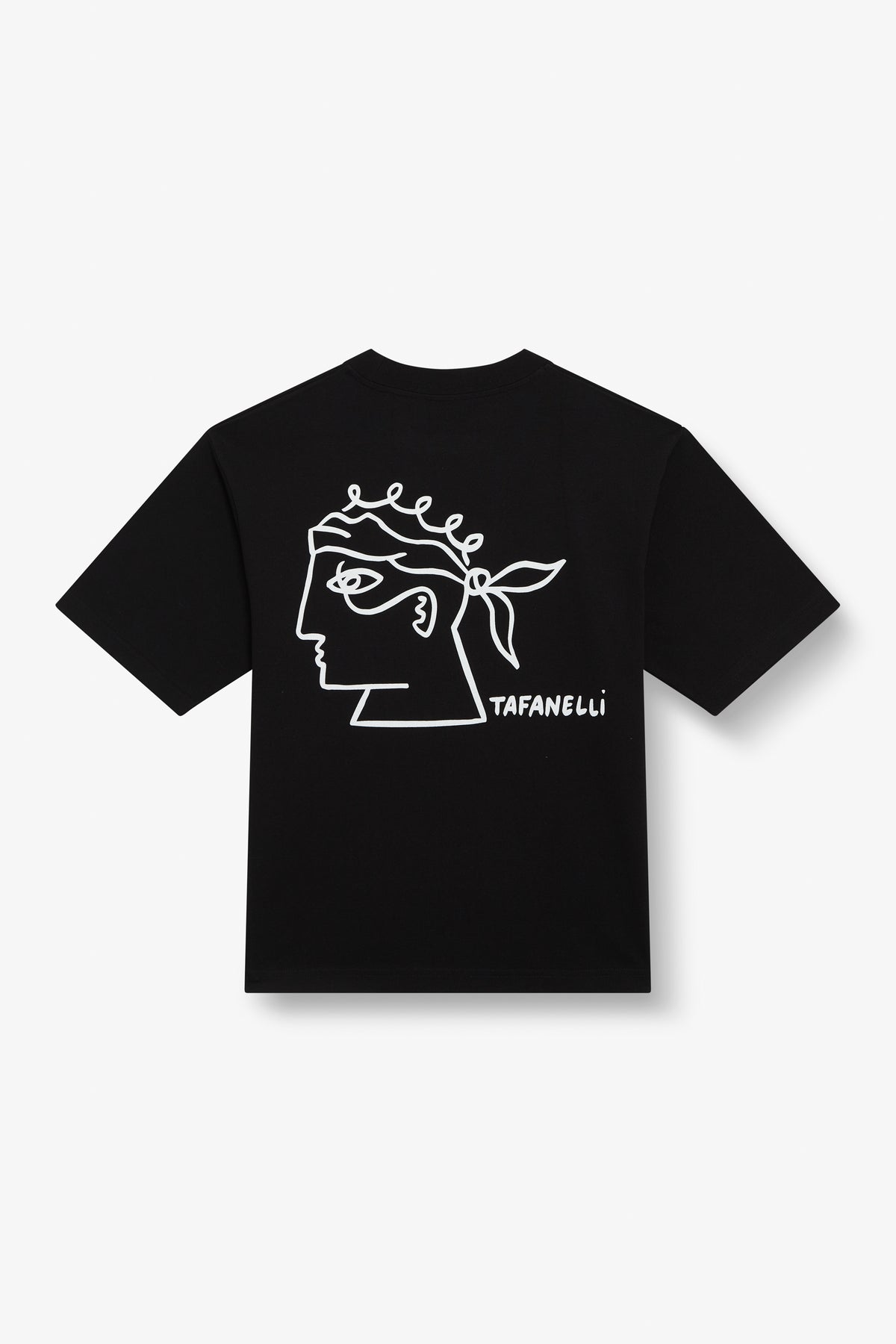
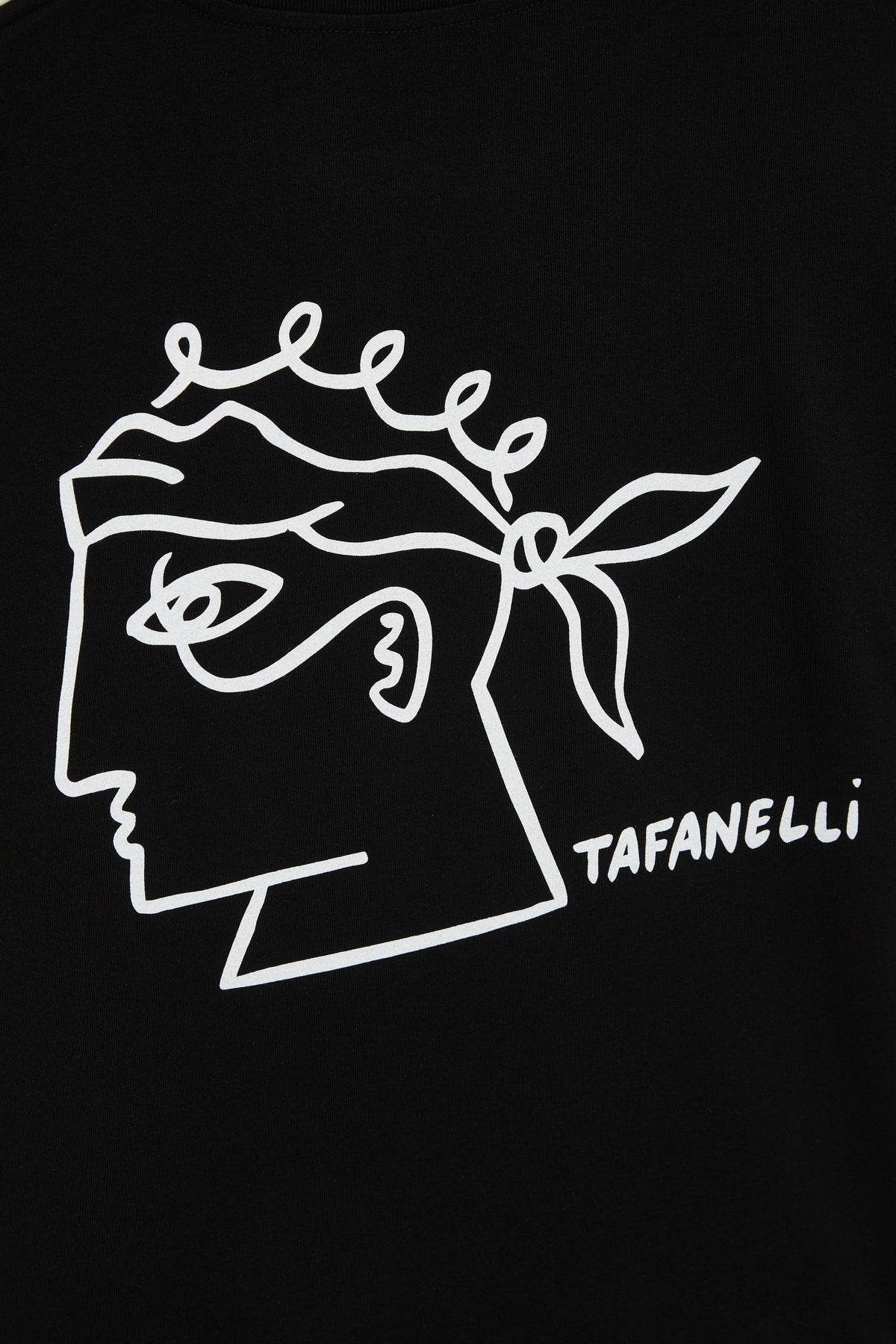
The iconic symbol of the Corsican flag, chosen in 1762 by Pasquale Paoli as the national emblem. It depicts a North African man with the headband raised above the forehead, signifying regained freedom. This is the most powerful and symbolically charged of all Corsican motifs. It should be worn with respect and never treated as a mere decorative ornament.
2. The eight-pointed star
A heraldic motif present on many medieval Corsican coats of arms, and particularly on those of the island's great noble families. The eight-pointed star symbolically represents the compass rose, orientation, and maritime travel. It is widely used in contemporary bandanas for its universal graphic qualities and its precise Corsican grounding.
3. The traditional sailboat (gozzu)
Evokes the traditional Corsican coastal trading boats that plied the Mediterranean for centuries, transporting goods and men between Bastia, Calvi, Bonifacio, and Italian continental ports. A powerful maritime motif that speaks directly to the island's culture of fishing and maritime trade.
4. The Lion of Roccapina
A reference to the famous rock shaped like a crouching lion that dominates the southwestern coast of Corsica, near Sartène. An animal form sculpted by erosion over millions of years, it has become one of the most recognizable visual icons of the island landscape. Often depicted in profile, stylized, on premium bandanas.
5. Heraldic maritime motifs
Abstract compositions mixing anchors, ropes, stylized waves, and crosses, traditionally used in the crests of yacht clubs and European nautical circles. These motifs, integrated into contemporary Corsican visual grammar, give the bandana a dimension that is both historical and resolutely contemporary.
The four types of contemporary Corsican bandanas
The current range of Corsican bandanas is structured around four distinct categories, which one should know in order to choose the right item.
1. The limited edition premium bandana
100% natural heavy cotton (usually between 130 and 180 g/m²), 55x55 cm or 60x60 cm square format, hand-applied high-density screen printing, precise heritage motifs, French or Italian manufacture. Deliberately limited production. Price between 45 and 95 euros. This is the category for TAFANELLI bandanas and a few other premium narrative Corsican brands.
2. The semi-premium bandana
100% natural standard cotton, classic 55x55 cm format, digital printing or good quality industrial screen printing, contemporary Corsican motifs. European manufacture. Price between 25 and 45 euros. A good option for those who want decent quality without investing in limited editions.
3. The tourist bandana
Lighter cotton, sometimes a synthetic blend, manufactured in Asia, standardized Corsican motifs (highly enlarged Moor's Head, "Corse" in block letters, folkloric patterns). Price between 8 and 20 euros, sold mainly in beach shops and airports. To be avoided for a sophisticated fashion approach.
4. The authentic vintage bandana
Older pieces, sometimes found in antique shops or at Corsican flea markets, or issued before the 1980s. Often feature a particular fabric grain, a slightly faded hue, and a patina that contemporary editions cannot replicate. Highly sought after by collectors.
How to choose a high-quality Corsican bandana
To avoid disappointment, here are the six essential criteria that distinguish a good Corsican bandana from a generic product.
1. The material
Demand 100% natural cotton. Absolutely avoid polyester blends or viscose bandanas, which do not develop a proper patina and retain odors after a few wears. A good Corsican bandana has a weight between 130 and 180 grams per square meter, sufficient to hold its shape without being too thick.
2. The printing technique
Prefer high-density screen printing (the ink penetrates the fabric and remains there permanently). Low-end digital prints crack after the third wash. To recognize quality screen printing: run your finger over the printed motif; it should have slight resistance to the touch (the ink forms a thin layer), rather than being completely flat like digital printing.
3. Edge finishing
The edges should be neatly hemmed (stitched edge) or hand-rolled (a traditional Italian technique). Avoid bandanas where the edges are simply cut, as they will fray after the first wash.
4. Precision of the motif
The design should be crisp and precise, with no smudges or blurry areas. Check the fine details particularly (the facial features of the Moor's Head, the outlines of the stars, the sails of the gozzu). An imprecise motif betrays low-end industrial production.
5. The color palette
Favor bandanas in the earthy Corsican palette: ecru, deep navy, matte black, faded khaki, ochre, terracotta. Avoid bandanas with garish colors (bright red, saturated yellow, electric blue) that do not respect the island's chromatic spirit.
6. Manufacturing
Check the origin of manufacture. Premium bandanas are generally made in France or Italy. Bandanas made in Asia may be of decent quality but require increased vigilance regarding the other criteria (material, finish, motif precision).
Ten ways to wear a Corsican bandana (men)
The Corsican bandana is one of the most versatile accessories in existence. Here are ten proven ways to integrate it into your look.
1. Around the neck (classic)
Folded into a triangle, simply tied around the neck with the point in front, over an open linen shirt or a heavy cotton t-shirt. It is the most classic and universal way. Suitable for all seasons.
2. In a jacket breast pocket
Folded in an accordion style, tucked into the breast pocket of a suit jacket, a blazer, or a French worker jacket (bleu de Chine). Adds a touch of identity without breaking the style. Perfect for weddings, evening events, and creative business lunches.
3. On the wrist
Folded into a narrow strip, tied two or three times around the wrist to replace a watch or leather bracelet. Very summery, a contemporary signature.
4. On the head (pirate / fisherman style)
Folded into a triangle, tied at the back of the head, the traditional Corsican sailor technique. Wear for vigorous summer activities (boating, hiking). Not well suited for formal settings.
5. As a pocket square
Like a traditional silk pocket square, tucked into the outer pocket of a summer jacket, point up or folded down depending on the context.
6. Around a hat or cap
Tied around the base of a straw hat or a flat cap as a decorative band. This 1960s Italian technique remains very effective today.
7. On the belt
Folded and threaded through the belt loops of jeans or chinos, replacing or complementing a leather belt. Adds a touch of color and identity.
8. As a sponge or pocket towel
Utilitarian use: to wipe your forehead in midsummer, clean your sunglasses, or protect a fragile object in your pocket. The functional origin of the bandana, fully embraced.
9. On a bag or tote
Tied around the handle of a beach bag, a raffia basket, or a leather tote. Personalizes the accessory and subtly displays your Corsican identity.
10. As home decor
Placed on a coffee table, on the back of an armchair, or on a bathroom shelf. Beyond wearing it, the Corsican bandana also works as a decorative object that brings a Mediterranean touch to an interior.
Ten ways to wear a Corsican bandana (women)
For women, the Corsican bandana offers an even wider range of styles, often more creative than for men.
1. As a hair scarf
Folded into a narrow strip and tied around the hair, 1950s or 1960s style. Instantly brings a refined Mediterranean touch to any silhouette.
2. As a headband
Folded into a narrow strip and tied in the front or on the side to keep hair away from the face. Perfect for the beach, boat trips, or sunny lunches.
3. Around the neck
Folded into a triangle or a strip, simply tied. As with men, it is the most classic and versatile way.
4. On a handbag
Tied around the handle or as a lavalier on the flap of a bag. Immediately personalizes any bag, from an Hermès Birkin to a natural canvas tote bag.
5. As an improvised top
For the beach, folded into a triangle and tied at the back like a support band. A strong summer trend that turns a bandana into a garment in its own right.
6. As a tied belt
Folded into a strip and passed around the waist to replace a classic belt on a loose dress, shorts, or high-waisted jeans. Adds a touch of identity and structures the silhouette.
7. As a bracelet or necklace
On the wrist or around the neck to replace a more formal scarf. Wrapped several times to create a layered effect.
8. As a light shawl or sarong
Several bandanas combined can form an improvised sarong on the beach. Elegant, original, and totally island-inspired.
9. In a ponytail
Tied around the base of a ponytail or bun to replace a standard hair tie. A subtle but immediately recognizable detail.
10. At the nape of the neck (stewardess style)
Folded into a triangle, tied under the hair at the base of the neck, 1960s airline stewardess style. Instant retro chic.
The five essential knots to master
Beyond how you wear it, knowing how to tie your bandana properly makes all the difference. Here are the five must-know knots.
1. The sailor knot
The most classic. Fold the bandana into a triangle, place the center point forward under the chin, cross the two side points behind the neck, and bring them back to the front to tie a simple knot. Simple, balanced, timeless.
2. The cowboy knot
Fold into a triangle, point forward. Cross the side points behind the neck and bring them back to the front to tie a tighter, double flat knot. More structured than the sailor knot, it gives a more assertive impression.
3. The loose triangle
Fold into a simple triangle and drape it around the neck without a knot, just resting on the shoulders. The fabric holds its shape thanks to its weight and cut. Very summery, very natural, very chic in its simplicity.
4. The ascot knot
Fold into a narrow band, wrap it twice around the neck, and tie a simple knot in front, letting the two ends hang freely. The ascot style of English horse racing, transposed to a contemporary Corsican register. Very elegant.
5. The Italian scarf knot
Fold into a band, wrap it once around the neck, and tie a loose knot in the front, letting a long, asymmetrical end hang down. 1960s Italian style, perfectly suited to Mediterranean silhouettes.
Care and preservation
A good Corsican bandana, properly cared for, can last for decades. Here are the best practices.
Washing
Hand wash in cold or lukewarm water (maximum 30°C) with a mild detergent, or machine wash on a delicate cycle at 30°C in a laundry bag. Strictly avoid bleach and harsh stain removers, which can damage the screen printing.
Drying
Air dry, flat or hung, in the shade. Avoid the tumble dryer, which can shrink the cotton and cause the screen print to crack. Also avoid direct sunlight, which fades the colors.
Ironing
Iron inside out, at a medium temperature, avoiding ironing directly over the screen-printed area. To preserve the natural suppleness of the fabric, only iron your bandana when necessary.
Storage
Fold your bandana and store it in a drawer with your other cotton accessories, away from humidity. For collectible bandanas or very limited editions, a protective linen bag can extend their longevity.
The TAFANELLI approach
At TAFANELLI, we have made the Corsican bandana one of our signature accessories. There are several reasons for this: it is the most versatile object in the island wardrobe, the one most easily passed down, and the one that condenses the entire visual grammar of contemporary Corsican identity into a single square of cotton.
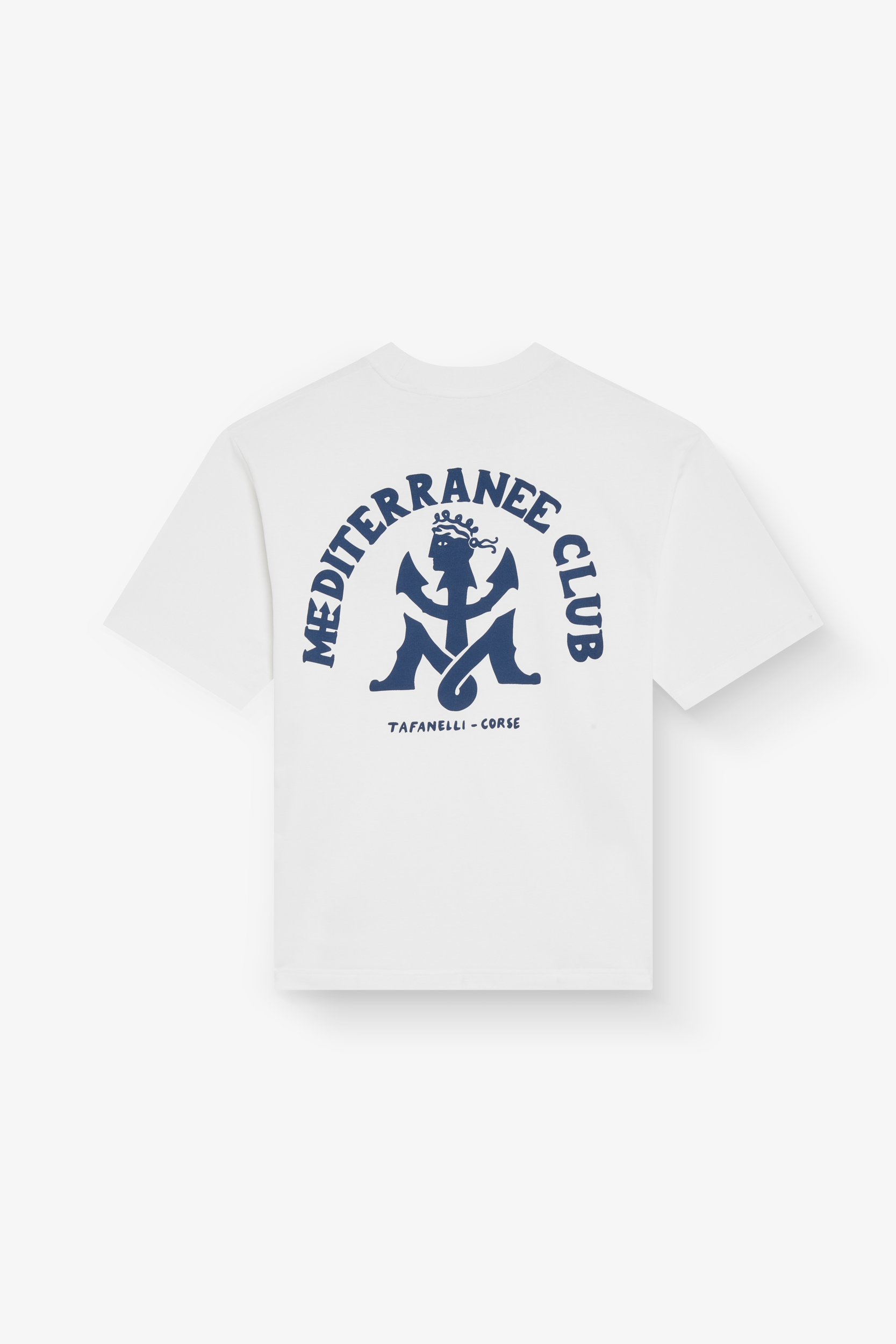
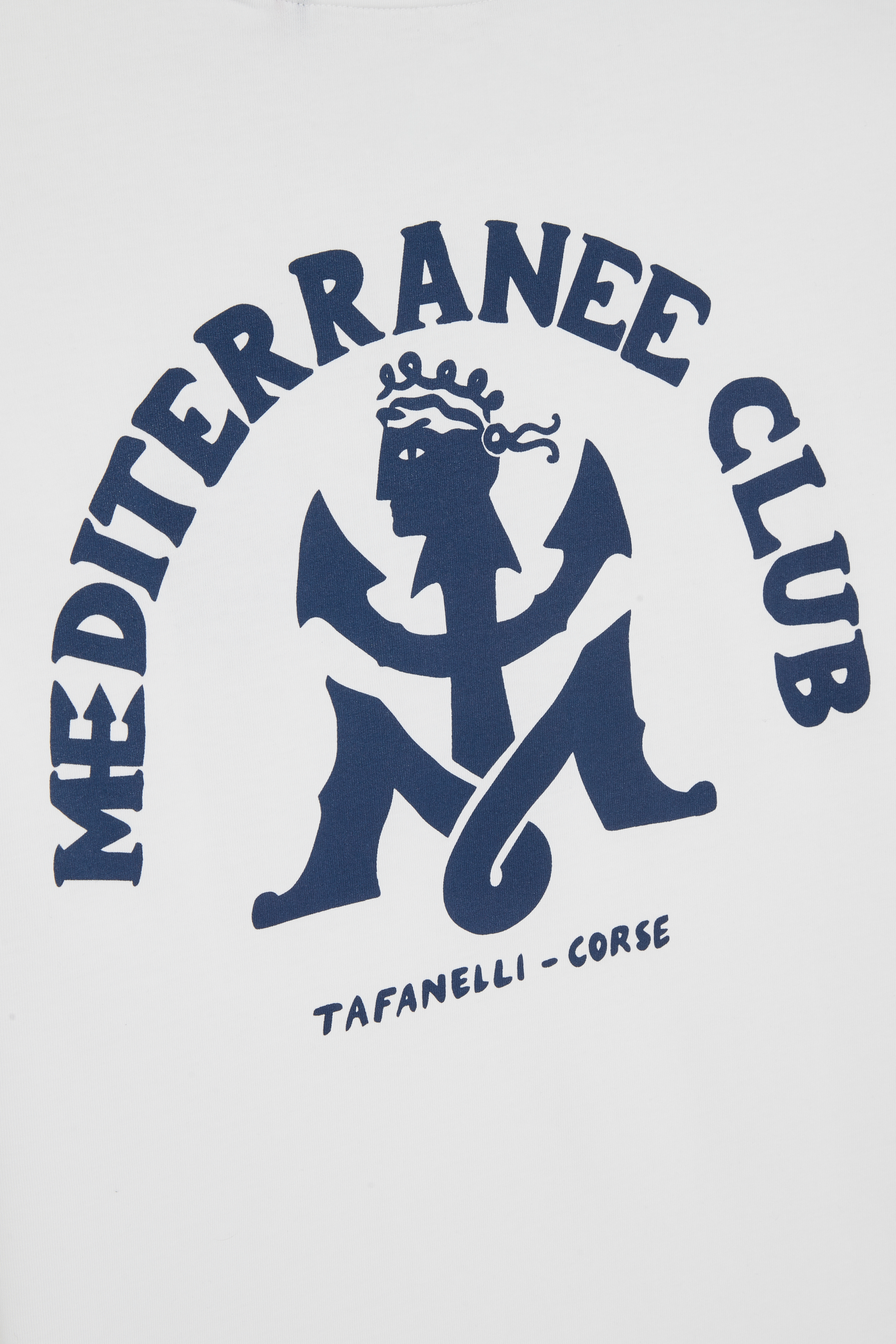
Our bandanas are made in France from 100% natural heavyweight cotton, with high-density screen printing applied by hand in our partner workshops. The edges are carefully hemmed. The motifs are designed by our teams, in direct connection with the island's visual heritage: Moor's Head with a raised headband, eight-pointed star, traditional gozzi sailboats, Lion of Roccapina, and heraldic maritime motifs.
55x55 cm format for the standard size, 60x60 cm for more generous editions. Palette restrained to Corsican codes (deep navy, ecru, matte black, faded khaki). Deliberately limited print runs. Price between 45 and 75 euros depending on the model.
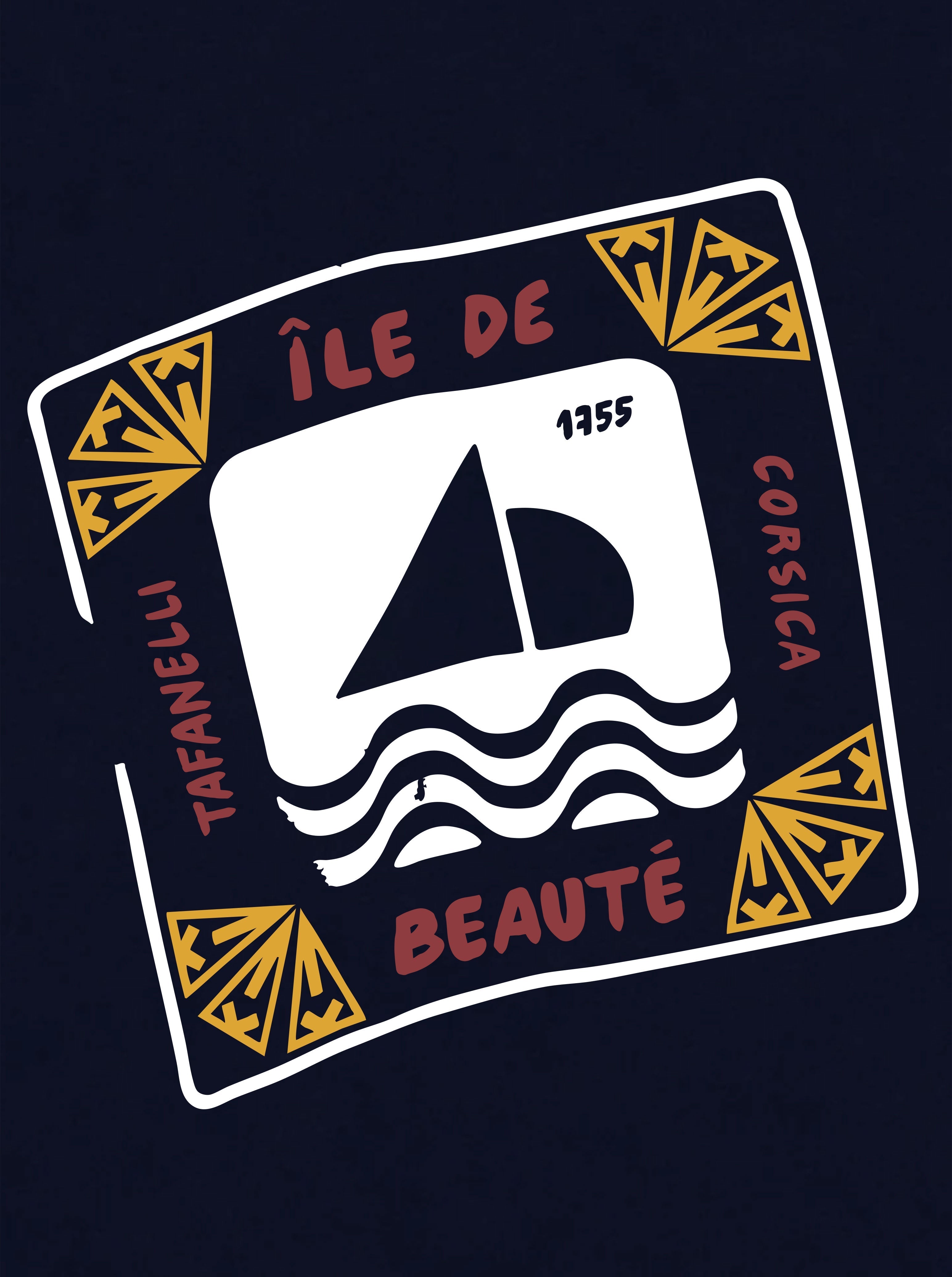
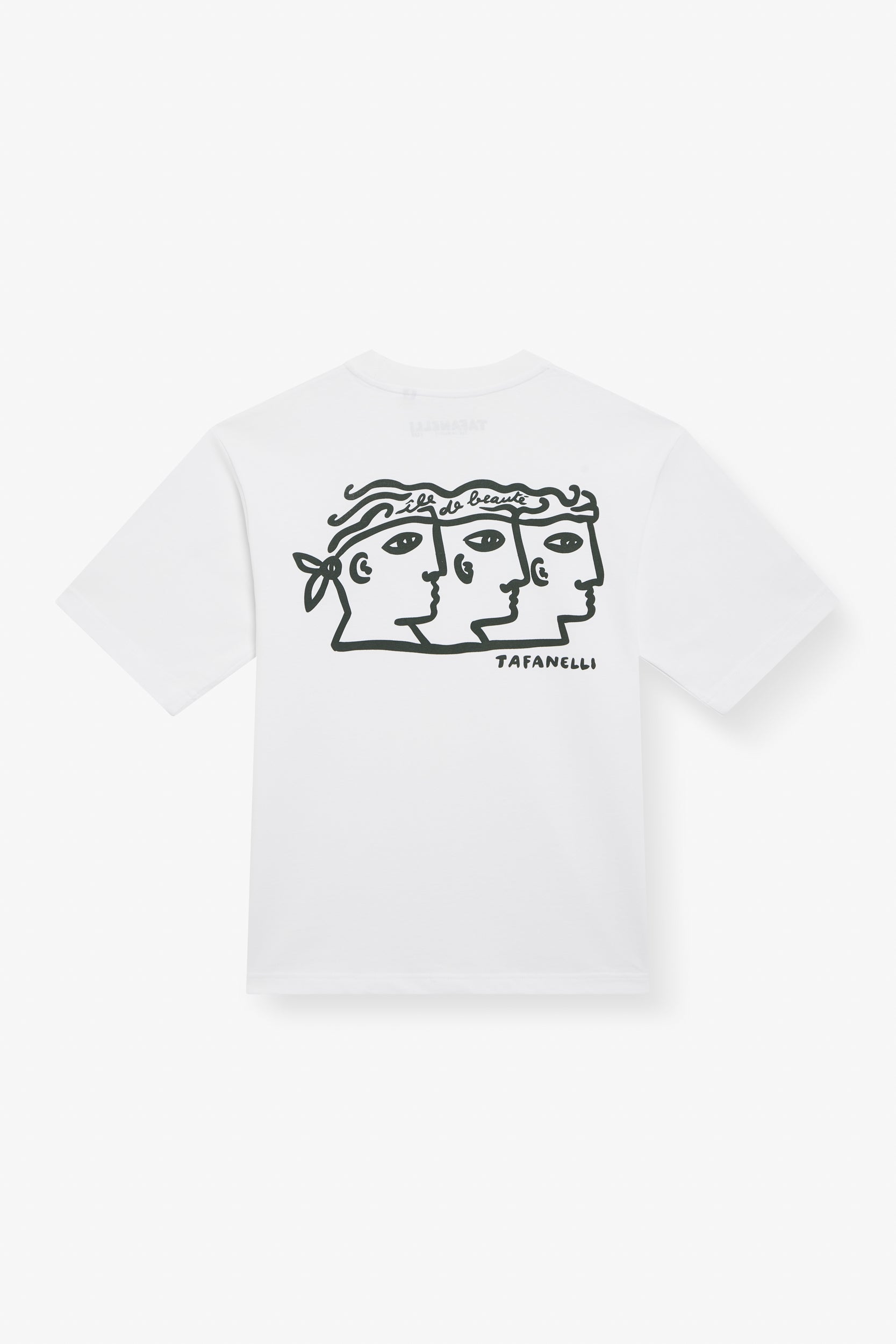
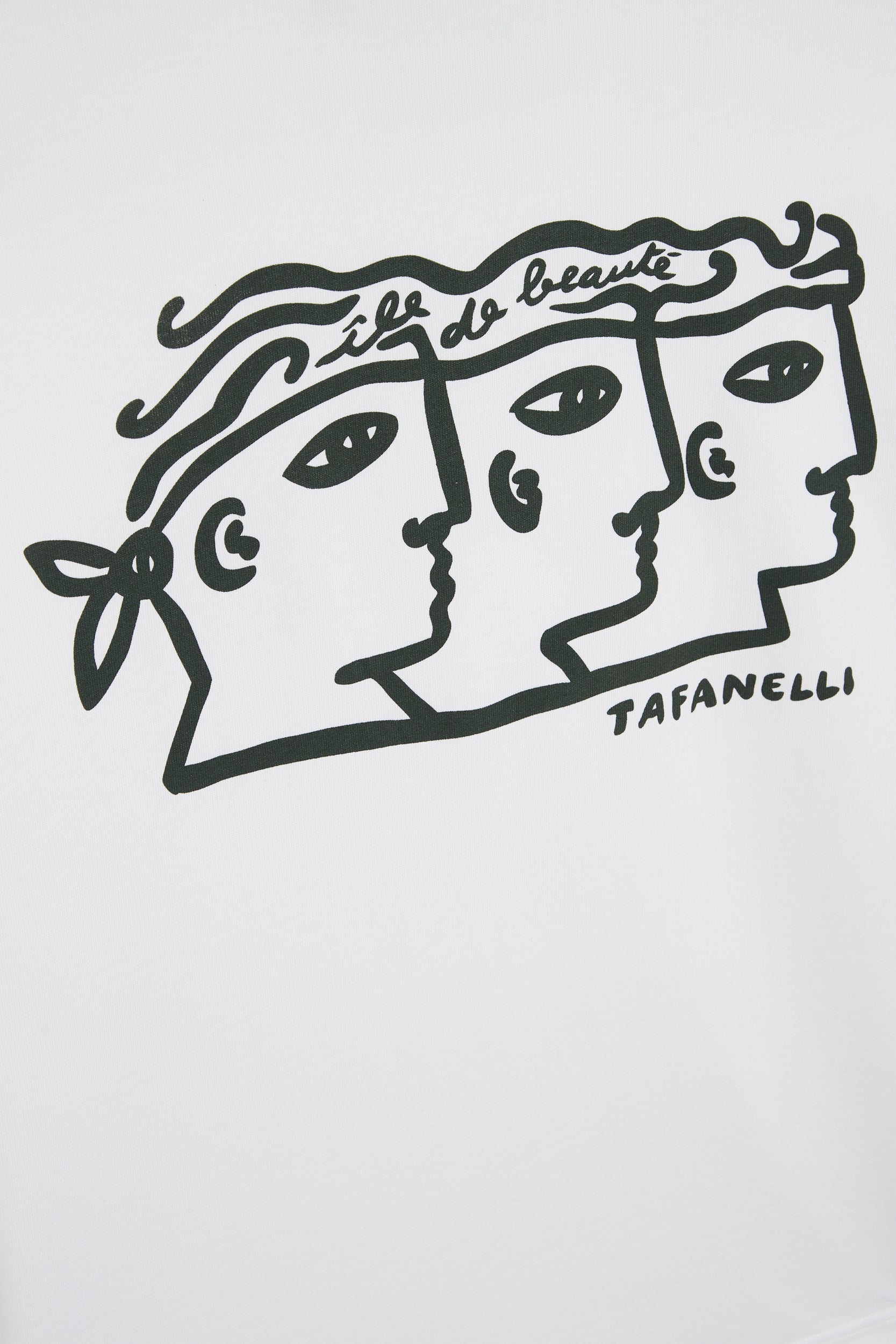
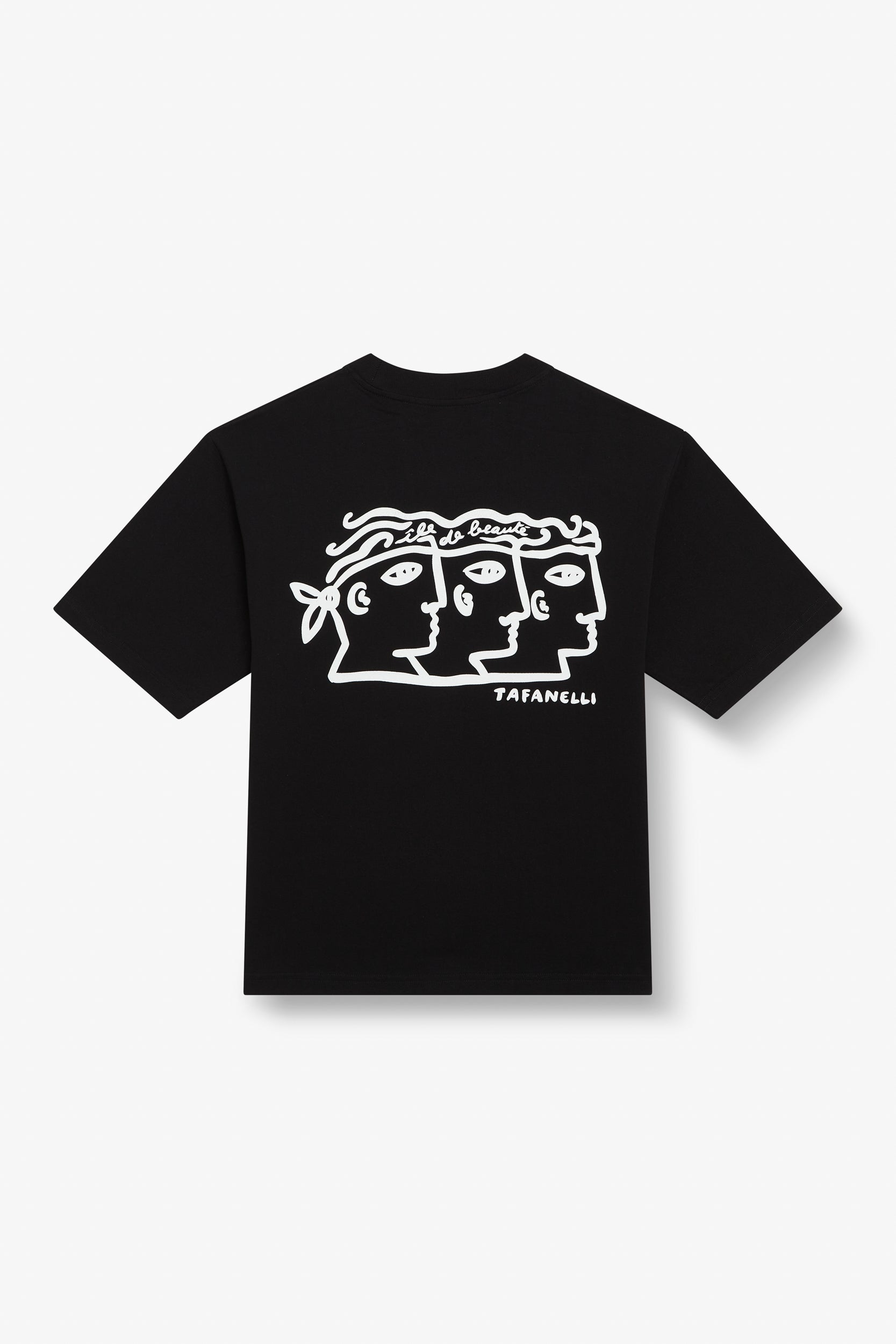
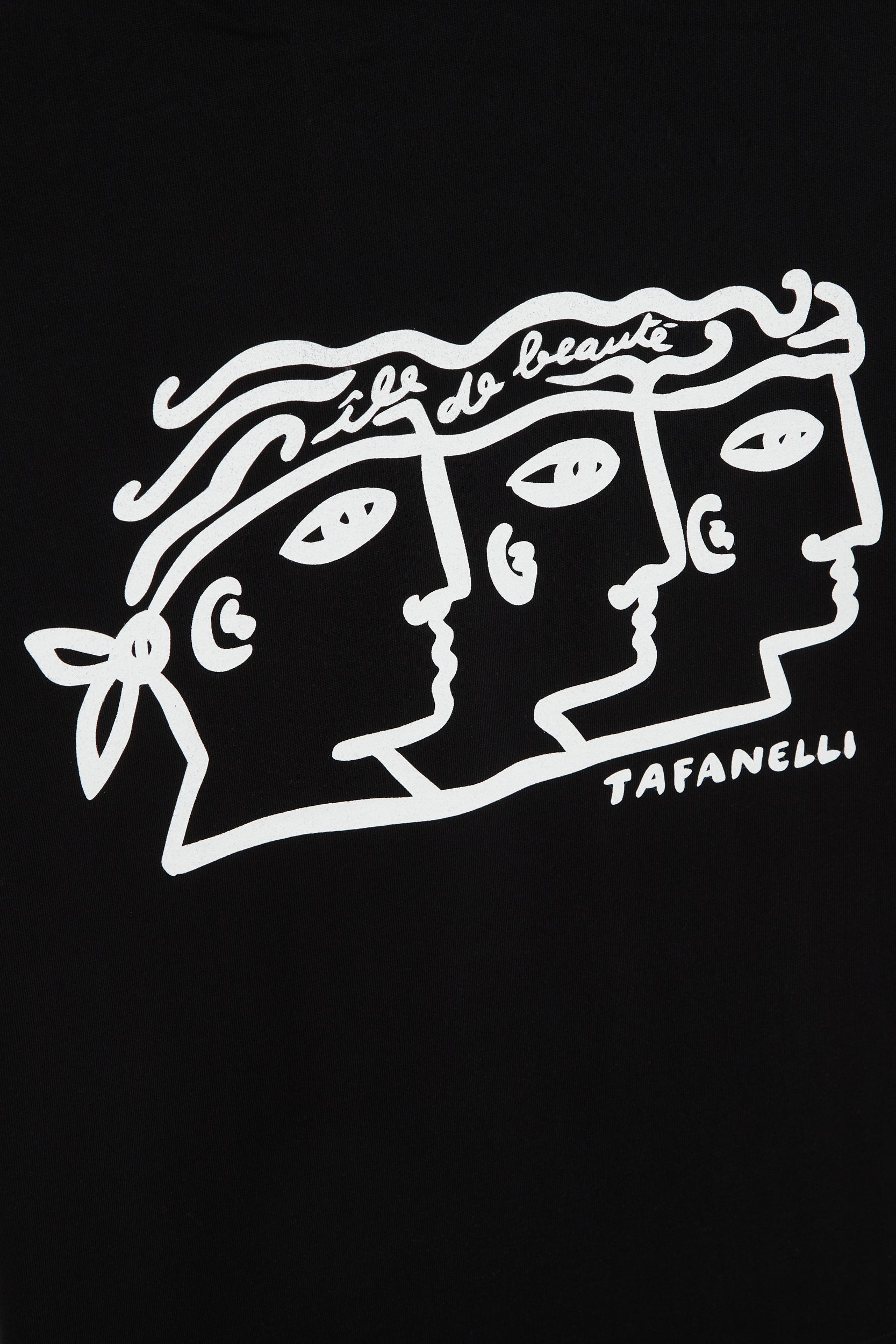
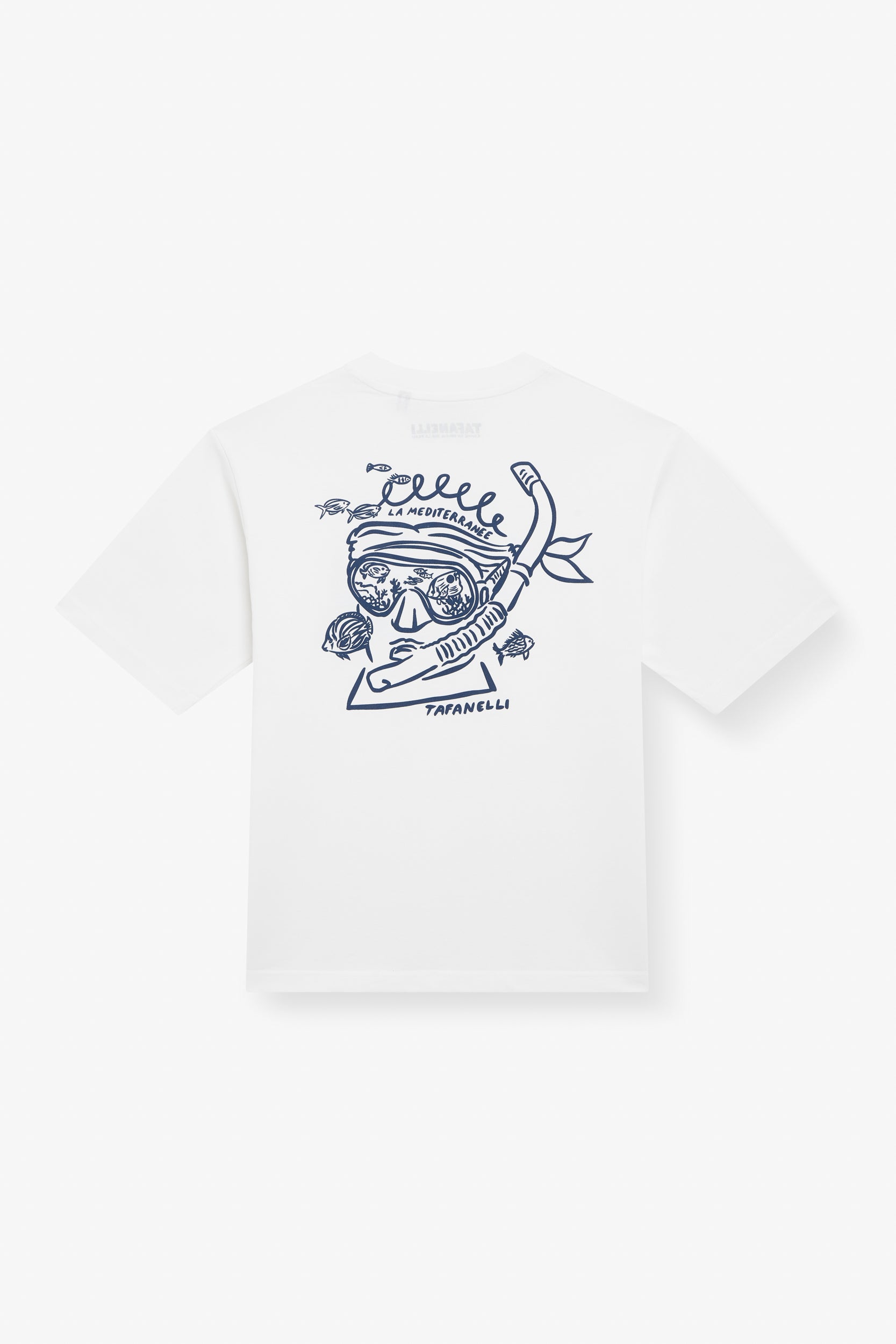
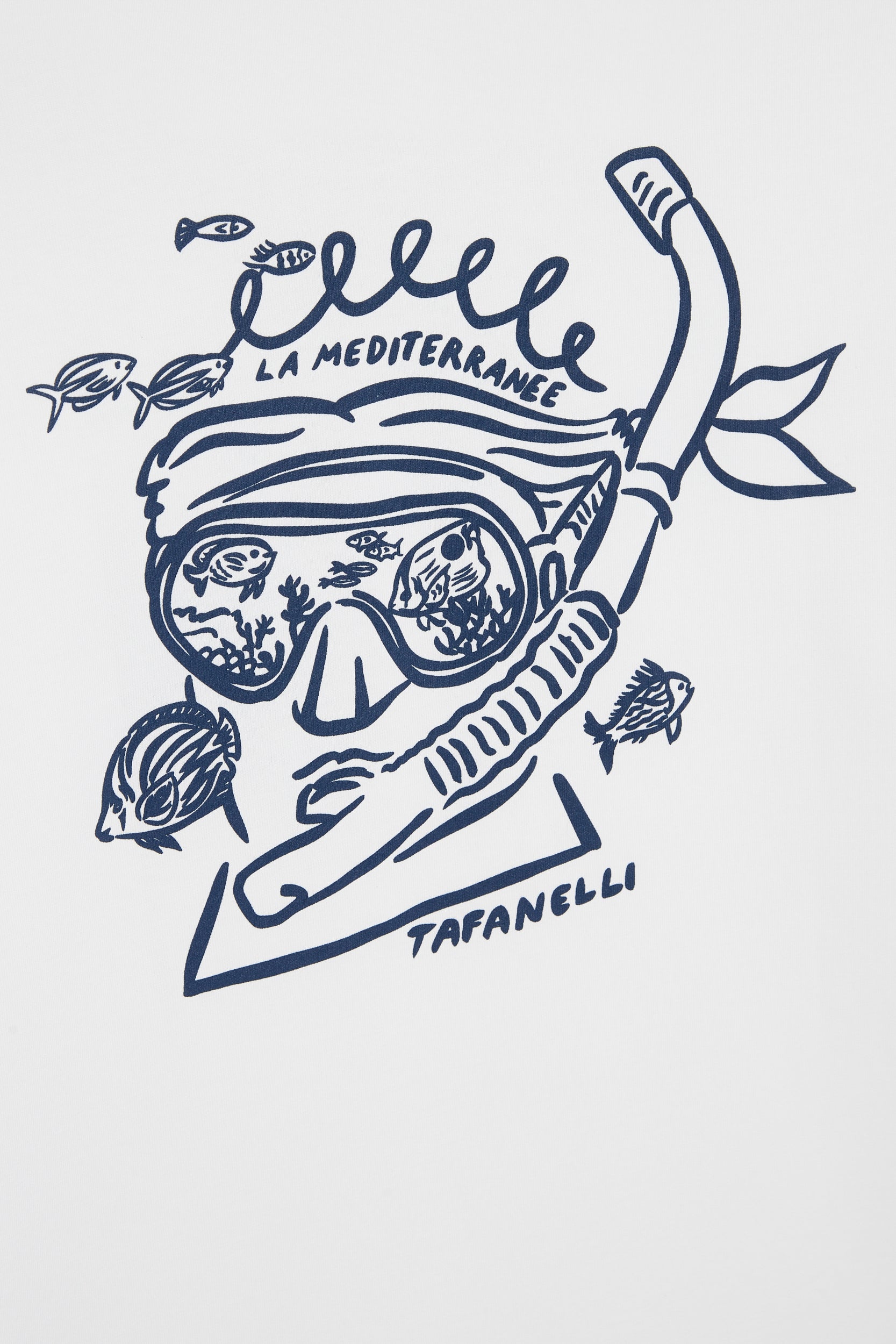
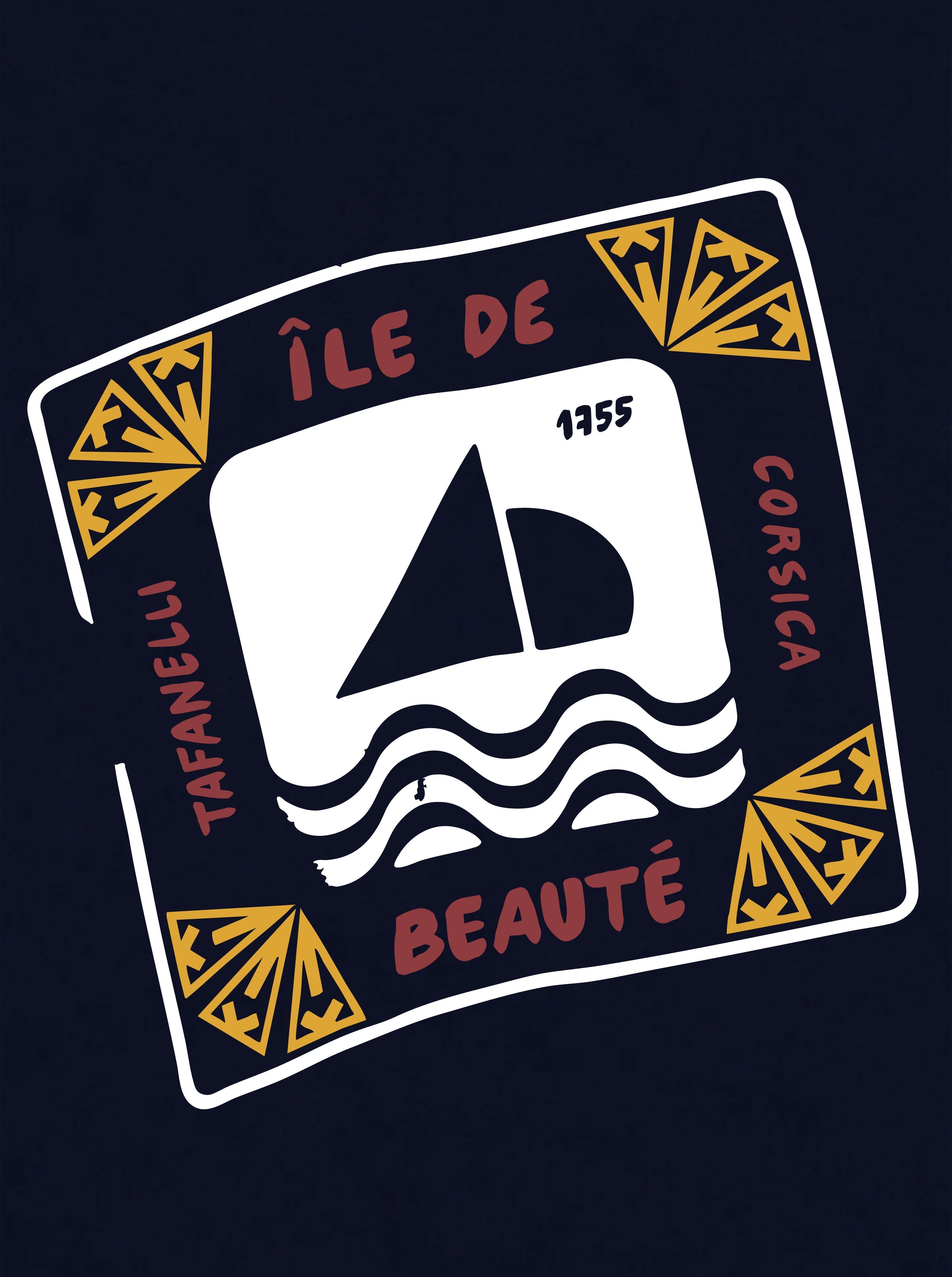
Our bandanas can be worn as a complement to our heavyweight cotton pieces (Sportmer Navy, Île de Beauté 1755, Plongeur de Calvi) or with any piece of Mediterranean-inspired clothing to provide that precise Corsican touch that few accessories can offer.
To discover our complete collection of bandanas, browse our online catalog.
Frequently asked questions
What is a Corsican bandana?
A Corsican bandana is a square of cotton (usually 55x55 cm or 60x60 cm) bearing motifs related to the island's visual identity: Moor's Head with a raised headband, eight-pointed star, traditional sailboats, Lion of Roccapina, or heraldic motifs. It differs from the classic American bandana in its restrained palette (navy, ecru, black, ocher), its precise heritage motifs, and its relationship to the material (100% natural cotton).
What is the origin of the Corsican bandana?
The Corsican bandana finds its roots in the traditional island costume: the fazzulettu worn by village women, the utilitarian scarves of shepherds and sailors, and its subsequent adoption by men during the twentieth century as an accessory of regional belonging. Its premium contemporary version, with screen printing and precise heritage motifs, was born in the 2010s with the emergence of a new generation of Corsican designers.
How do you wear a Corsican bandana?
The Corsican bandana can be worn in many ways: around the neck (classic sailor knot), on the head (pirate or headband style), in a jacket breast pocket, as a wrist bracelet, around a bag, on the base of a hat, or at the waist. For women, it can also be worn in the hair, as a ponytail tie, an improvised top on the beach, or a knotted belt. In total, there are easily fifteen to twenty ways to wear a bandana depending on the context.
How do you tie a Corsican bandana?
Five main knots to master: the sailor knot (the most classic, triangle with a simple knot behind), the cowboy knot (tighter double knot), the loose triangle (draped without a knot), the French/ascot knot (two wraps with a simple knot in front), and the Italian scarf knot (one wrap with a long asymmetrical end). Each of these knots corresponds to a different stylistic register.
Which motif should you choose for your Corsican bandana?
The five great traditional Corsican motifs are the Moor's Head with a raised headband (the most iconic), the eight-pointed star (medieval heraldry), the traditional gozzu sailboat (maritime), the Lion of Roccapina (iconographic of the south), and heraldic maritime motifs (anchors, ropes, stylized waves). The choice depends on the register you wish to convey: political identity (Moor's Head), maritime elegance (gozzu, star), or regional heritage (Lion of Roccapina).
How much does a quality Corsican bandana cost?
A premium limited-edition Corsican bandana costs between 45 and 95 euros depending on the brand and print run. Semi-premium bandanas range from 25 to 45 euros. Low-end tourist versions at 8-20 euros generally do not meet quality standards (lightweight cotton, caricatural motifs, Asian manufacturing without transparency). The investment in a premium bandana is well justified by its lifespan (decades) and its versatility.
Where can I buy an authentic Corsican bandana?
Contemporary premium Corsican brands (including TAFANELLI) have dedicated online shops. Several physical points of sale also exist on the island (Calvi, L'Île-Rousse, Bastia, Ajaccio, Porto-Vecchio) and on the French mainland (Saint-Tropez, Paris, Marseille). Beware of bandanas sold on the beach without a clear brand indication, which are often tourist products of average quality.
How do you wash a cotton Corsican bandana?
Hand wash in cold or lukewarm water (maximum 30°C) with a mild detergent, or machine wash on a delicate cycle at 30°C in a laundry bag. Avoid bleach, harsh stain removers, and the tumble dryer. Air dry flat in the shade. Iron inside out at a medium temperature only if necessary.
Can a Corsican bandana be worn year-round?
Absolutely. It is one of the most versatile accessories in terms of seasonality. In summer, it is worn around the neck, in the hair, or on the beach. In mid-season, it can be tucked into a jacket pocket or used as a bracelet. In winter, it serves as a complement to a turtleneck sweater or as a colorful touch for a darker silhouette. The Corsican bandana effortlessly transitions through all seasons.
Which size of Corsican bandana should I choose?
The standard size is 55x55 cm, which is sufficient for all classic uses (worn around the neck, in a jacket pocket, on the wrist). More generous sizes (60x60 cm or 65x65 cm) allow for more creative uses (as an improvised top, a knotted belt, or a wide headband). To start, we recommend the 55x55 cm standard size.
To go further into the TAFANELLI universe
The Corsican bandana is just one of the iconic accessories of the contemporary island wardrobe. To explore the Corsican dress codes in more depth:
- The Moor's Head: history and symbolism of the Corsican flag
- Corsican clothing: the complete 2026 guide
- What to wear in Corsica in the summer of 2026
- Île de Beauté or Corsica: the history of the two names
- 5 codes for authentic Corsican fashion
- Bleu de Chine jacket: the complete 2026 guide
- L'Île de Beauté 1755: the story of a vintage t-shirt
- Saint-Tropez t-shirt or Corsican t-shirt: comparative guide
To discover our bandanas and all of our pieces designed to embody contemporary Corsican elegance, browse our complete collection.
A bandana is an entire story worn around the neck, on the wrist, or in the pocket. The Corsican bandana is an entire Mediterranean heritage invoked with every wear. Choose yours with care, wear it often, and pass it on one day.
A PRESTU,
TAFA