

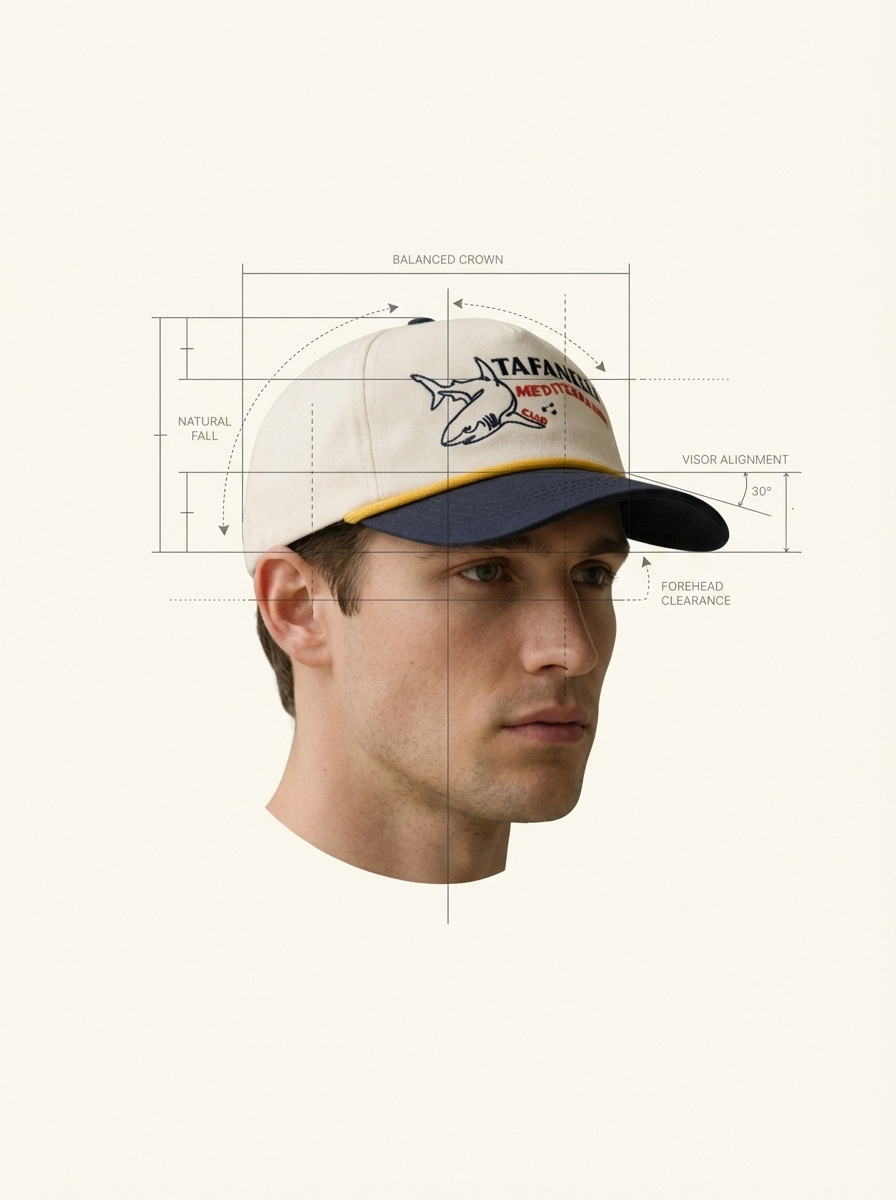
Why the "drape" changes everything
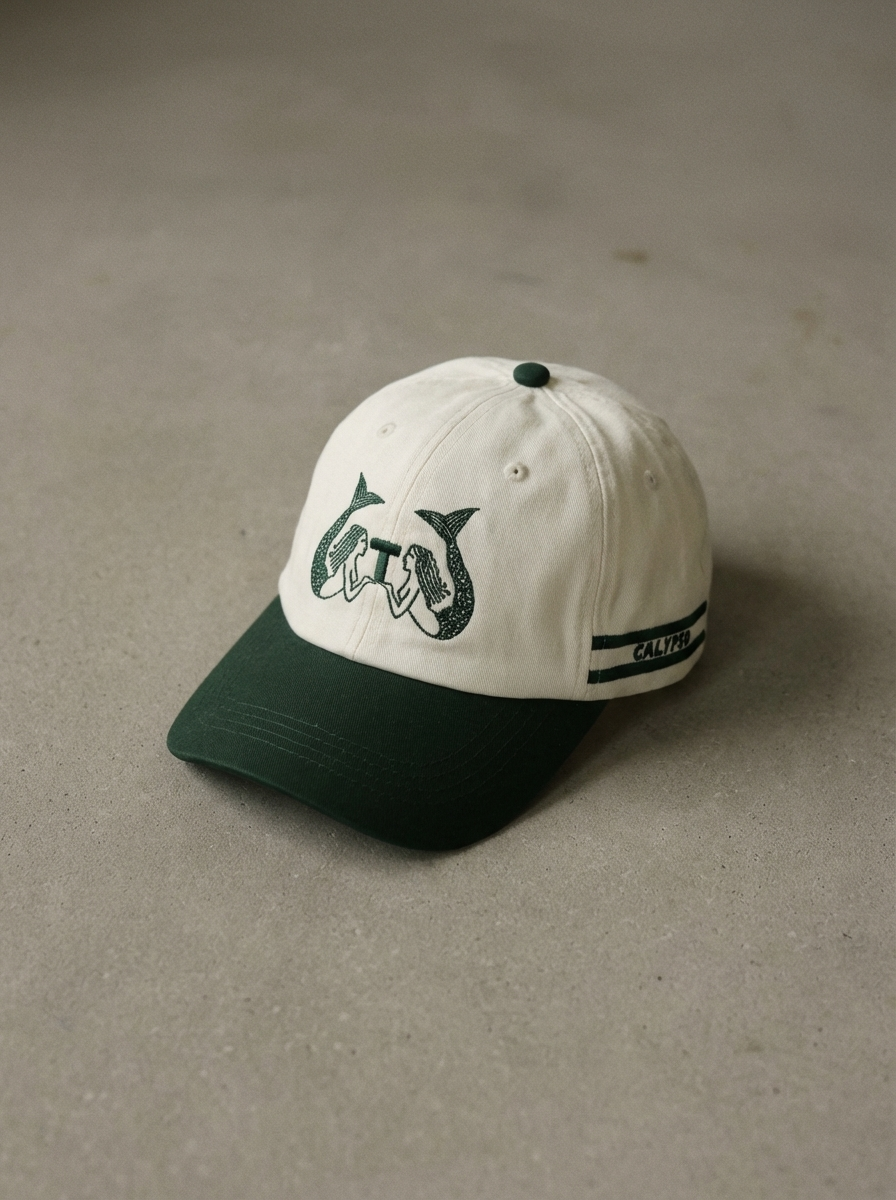
Two caps can have a similar shape in a photo and produce a completely different effect once worn. The reason is simple: the drape.
The drape is the way the cap sits on the head, follows the lines of the face, and maintains its form without effort. It is what creates the impression of balance or, conversely, of being out of sync.
A good cap does not float. It doesn’t squeeze excessively. Nor does it give the impression of being placed too high, too straight, or too limp.
Neither too high, nor too low
The first thing to observe is the height of the crown. If it is too high, the cap overpowers the face. If it is too low, it weighs it down.
the silhouette looks forced, stiffer, sometimes almost like a costume.
the eyes feel closed-off, the forehead disappears, the line becomes less balanced.
The right drape lets the face breathe. It frames without hiding. It accompanies without dominating.
The role of the visor
The visor immediately influences how the piece is perceived. Too flat, and it looks harsh. Too curved, and it can look dated or too dramatic.
The best balance is often found in a slight, natural curve that follows the general volume without breaking the line of the face.
The right benchmark: the visor should extend the cap, not draw all the attention.
Soft or crisp structure
The drape also depends on the structure. A cap that is too soft sags. A cap that is too rigid loses its natural feel.
Good construction keeps a crisp line while remaining wearable. It is what provides that rare impression of effortlessness once the piece is worn.
If you want to go back to the basics, also read how to choose a cap.
The right drape is not a matter of rigidity. It is a matter of balance.
The most common mistakes
Many caps look fine until they are worn. The mistakes often come down to the same points.
it immediately unbalances the face.
it draws all the attention and breaks the line.
the cap loses its presence.
it floats or compresses unnecessarily.
These are often small discrepancies, but they completely change the perception of the product.
The right benchmarks to check
To know if a cap drapes well, a few simple benchmarks are enough.
To check:
the forehead line remains visible, the cap doesn't flare too far from the temples, the visor follows the volume naturally, the structure holds up without looking like cardboard, and the whole piece seems stable without being rigid.
When all these elements come together, the cap doesn't seem added on. It just seems right.
Summary table
| Point of observation | Good drape | Bad drape |
|---|---|---|
| Height | Balanced, natural | Too high or too low |
| Visor | Slightly curved, discreet | Too flat or too dramatic |
| Structure | Crisp, stable | Too limp or too rigid |
| Overall look | The piece integrates | The piece dominates the face |
A good drape doesn't require much showiness. It mostly requires avoiding errors.
Our vision
At Tafanelli, we believe that a cap should hold its line without imposing its presence. The right model complements, balances, and remains wearable for a long time.
The quality of a drape comes from a series of precise choices: correct depth, stable structure, coherent material, well-calibrated visor.
Certain pieces only appear in limited quantities.
Discover our models and their construction.
View the caps