The blue crab in Corsica: the Biguglia lagoon and the invasion we don't know how to stop
It comes from the east coast of the United States. It has colonized all the island's lagoons, from south of Bastia to Bonifacio. It tears holes in nets, scares away fishermen, and is pushing a Corsican species toward extinction. We suggested eating it: that didn't work. Here is why this invasion is more complicated than it seems.
An American crab in a Corsican lagoon
Its scientific name is Callinectes sapidus. Literally: the beautiful, savory swimmer. It comes from the Atlantic coast of North America, where it is a common consumer product, particularly in Chesapeake Bay.
It arrived in the Mediterranean in the ballast water of ships and has settled there. Spain started seeing it in 2012. Corsica arrived later, but the progression has been rapid.
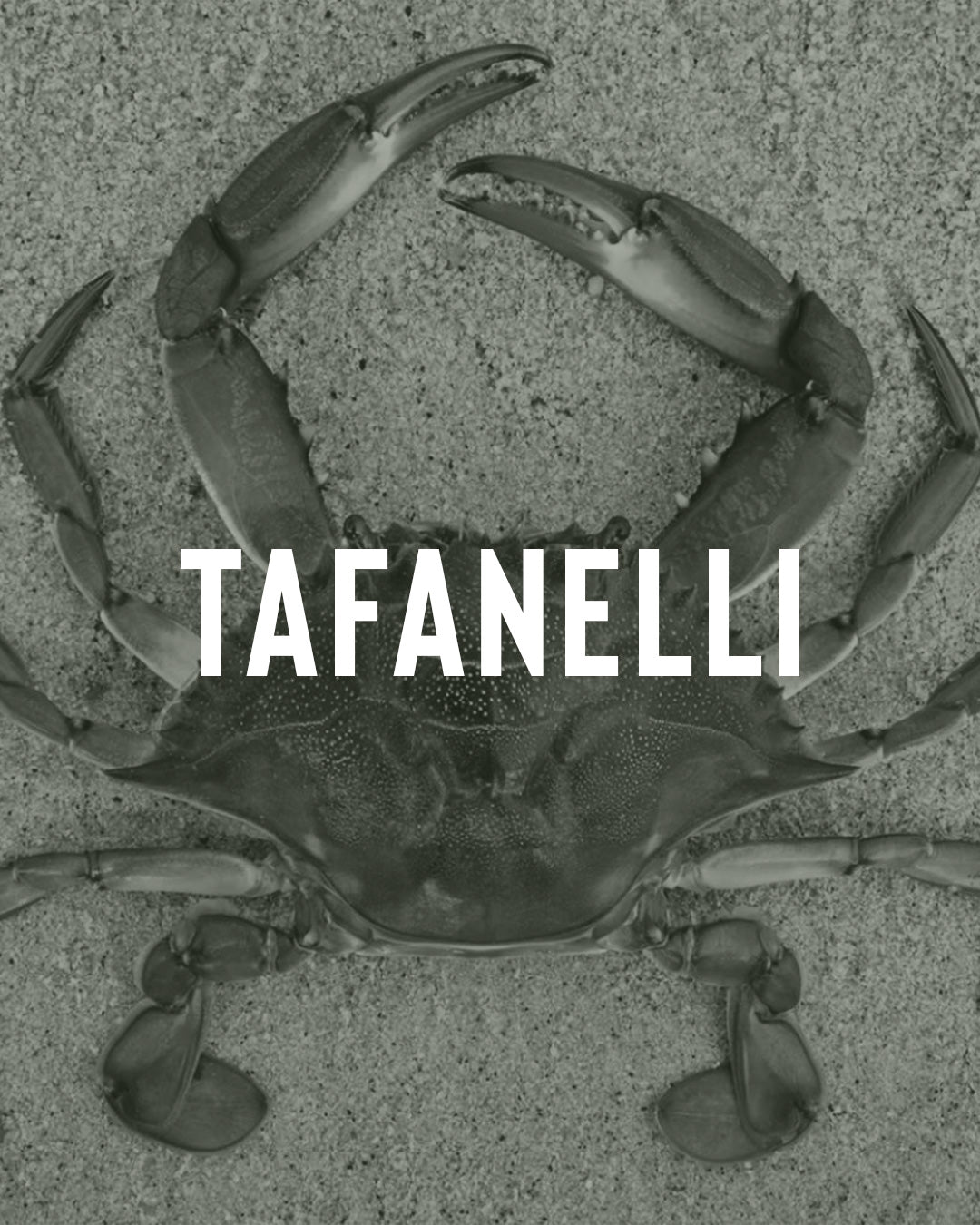
It can be recognized without hesitation: a wide shell, rear legs flattened into paddle shapes that allow it to swim, and above all, those vibrant blue claws that gave it its name.
This is no longer an isolated phenomenon. It is a permanently established species whose impacts continue to spread.
How far it has gone
It has settled along the eastern coast, from south of Bastia to the bay of Sant'Amanza, near Bonifacio, gradually taking possession of the coastline.
But it didn't stop there. Specimens have been observed on beaches in the west, such as Tralicetu near Sartène, and further north as far as Saint-Florent.
The lagoons monitored by scientists measure the extent of the colonization:
- Biguglia, the island's largest wetland
- Palu, on the eastern plain
- Urbinu
- Arasu, Santa Ghjulia, Balistra, Pisciu Cane, and Testarella, in the south
Since 2023, Corsican researchers have relied on a simple indicator to predict its presence: salinity. The species thrives in water between 12 and 25 PSU. Below or above that, it retreats. Habitat suitability maps are produced and updated regularly to identify high-risk areas.
These maps say one simple and discouraging thing: as soon as conditions become favorable again, the crab returns. Sometimes in just a few weeks.
Why Biguglia
The Biguglia lagoon, south of Bastia, is the largest wetland in Corsica. It is a brackish, shallow environment, warm in the summer, separated from the sea by a sandbar.
In other words, it is exactly what the blue crab is looking for.
These lagoons have another characteristic: they react quickly. Rain, a heatwave, or an opening of the channel to the sea, and the salinity shifts. The small lagoons in the south are even more unstable, highly sensitive to the slightest climatic disturbance.
This variability is the real problem for managers. Some periods make any intervention impossible due to lack of water or extreme conditions. Then the parameters shift, and one must act within a few days. The windows are narrow, and you have to be ready.
The green crab, the species we may never see again
This is the part of the story that we talk about the least, and it is the most serious.
The blue crab reproduces quickly, and it does so to the detriment of native species. In Biguglia, the green crab, which has been there forever, is now on the verge of extinction.
There will be no press release, no date, no ceremony. One day, someone will pull up a net and there won't be any left. This is how a species disappears from a lagoon: without anyone noticing at the precise moment it happens.
Torn nets and a trade coming to an end
Fishermen in the Corsican lagoons do not fish for blue crabs. They endure them.
The mechanism is simple and relentless. The crabs get caught in eel nets and tear holes in them. The fish escape through the holes, and the trap quickly becomes unusable.
The president of the Corsican regional committee for maritime fisheries summed it up bluntly: fishermen no longer want to fish in the lagoons because of this. Some have even had to give up mullet fishing, which is used to make bottarga, because it was no longer profitable.
The numbers give an idea of the scale involved. One year, two tons of blue crabs were pulled out of the Palu lagoon and one ton from Biguglia. The following year, by the month of August, 1.3 tons had already been reached in each of the two.
And you have to put that figure into perspective: Palu is ten times smaller than Biguglia. A ton and a half in such a small lagoon says it all.
The Office of the Environment of Corsica has provided nets and fishing equipment free of charge to the affected operators in Palu, Biguglia, and Urbinu. Traps specifically designed to catch crustaceans have been distributed.
These are the right responses. They do not stop the hemorrhage of the trade.
"What if we ate them?"
That is everyone's reaction, and it is logical. The blue crab is excellent. In the United States, it is a staple of celebrations.
Except that Corsica has run into a cultural obstacle that no one had anticipated.
The head of the blue crab project at the Office of the Environment puts it frankly: Corsicans are not great consumers of seafood, particularly crustaceans. It is not in the island's food culture, which is more geared toward meat and charcuterie than seafood.
Restaurateurs have tried. They put blue crab soup on the menu to attract customers. The word used by the Office of the Environment is final: "it was a flop."
And the question that always comes back from maritime professionals, the one that kills the project in one sentence: "Do you know people who eat crab every day?"
The economic wall
Let's assume we wanted to export anyway. There, the wall is even higher.
For the industry to stand on its own and pay everyone properly, the Corsican blue crab would have to sell for between 10 and 12 euros per kilo.
However, the competition is overwhelming.
Tunisia
It extracts six tons of blue crabs per day, which it sells processed and packaged to Asia and the United States, for a price oscillating between two and four euros per kilo. Impossible to compete.
Spain, and its lesson
Confronted with the blue crab since 2012, Spain was the first in Europe to attempt commercialization. For one year, it sold its crab at 14 euros per kilo. It could not hold its own against Tunisia. The following year, prices collapsed to 40 cents per kilo. Unsustainable with European labor costs. The industry shut down.
There is an additional lesson in this Spanish episode: the industry had been exploited to the limit, production lines were opened, and after two years the market was saturated. The president of the Corsican fisheries committee therefore argues for the opposite: caution, a local market, sustainable fishing, and fewer intermediaries.
One last obstacle remains, almost comical if it weren't so decisive: Occitanie, Italy, and Spain are invaded too. All the neighbors have the same product to sell at the same time. Local commercialization is compromised before it has even begun.
What is being done today
The 2024-2027 Territorial Plan for the Control of the Blue Crab forms the backbone of the island's response. It is led by the Collectivity of Corsica and involves scientists, natural space managers, professional fishermen, and public policymakers.
Concretely, this means:
- Permanent monitoring, provided by a network of observers in the field.
- Habitat suitability maps, updated according to salinity, to anticipate expansion phases.
- Biometric monitoring, which allows for the triggering of intensive fishing phases at the most useful times.
- Targeted operations according to location: in Santa Ghjulia between May and July, before the seasonal drying up; in Biguglia and Palu under the auspices of the Collectivity; elsewhere on a case-by-case basis, depending on the most recent data.
The results are presented at the interregional conferences of the Mediterranean Lagoon Relay Center, which brings together Corsica, Occitanie, and Provence-Alpes-Côte d'Azur.
No one in this system talks about eradication. The stated goal is to contain, knowing that the species will not go away.
Frequently asked questions
Where does the blue crab present in Corsica come from?
From the Atlantic coast of North America. Callinectes sapidus arrived in the Mediterranean via the ballast water of ships. Spain has been observing it since 2012; Corsica, more recently.
Where can you find the blue crab in Corsica?
Mainly in the lagoons and ponds: Biguglia, Palu, Urbinu, Arasu, Santa Ghjulia, Balistra, Pisciu Cane, Testarella. Along the coast, from south of Bastia to the bay of Sant'Amanza, with sightings as far as Saint-Florent and Tralicetu.
Is the blue crab dangerous to humans?
It is not venomous, but its claws are powerful and it uses them. Do not handle it with bare hands, especially if it is alive.
Can you fish for it and eat it?
It is edible and even considered savory. Its fishing is regulated under the territorial control plan. However, the development of a real commercial industry is hindered by international competition and the local market's low appetite for crustaceans.
Why is it so difficult to eliminate?
Because it reproduces quickly and the Corsican lagoons are constantly changing. Drying out or an excess of salt slows it down temporarily, but as soon as the salinity returns to between 12 and 25 PSU, it reappears, sometimes in a few weeks.
Which Corsican species is it threatening?
The green crab of Biguglia is now on the verge of extinction, directly competing with the blue crab.
Why this subject matters to us
At TAFANELLI, we design what makes up the island's memory. And we believe that we must also tell the story of what is disappearing from it.
What strikes us here is not the crab. It is the fisherman.
We are talking about a man who pulls up his net, finds it torn, repairs it, puts it back in the water, and finds it torn again. Then who gives up. The blue crab doesn't just make a fish disappear; it makes a trade disappear. And with the trade goes everything that went with it: the bottarga, the gestures, the words to describe them.
There is also this sentence from the Office of the Environment, which says a lot about Corsica: Corsicans are not great consumers of seafood. An island surrounded by water, turned toward the mountains and charcuterie. It's a magnificent paradox, and it is precisely what makes the solution impossible: you don't change a food culture to solve an ecological problem.
Finally, there is the green crab. It doesn't have a famous Corsican name, it doesn't make for pretty pictures, no t-shirt will ever bear its image. It was here before, it will soon no longer be here, and almost no one will know.
We think that deserves at least one article.
Also read: the Corsican cat-fox, the Corsican mouflon, jellyfish in Corsica, and weever fish stings and sea urchins.
Passing through Corsica, the customer becomes a friend.
A DOPU, TAFA
Sources: Corse Net Infos, articles by David Ravier and Charles Monti; Office of the Environment of Corsica, blue crab project; Regional Committee for Maritime Fisheries and Marine Farming of Corsica; Mediterranean Lagoon Relay Center; 2024-2027 Territorial Plan for the Control of the Blue Crab, Collectivity of Corsica.