Mare, Muntagna, Machja: the landscape trinity that defines the soul of Corsica
There are islands that can be described in a single word. Corsica is not one of them. What makes this island unique is not one landscape, but the meeting of three landscapes on a tiny territory: u Mare, a Muntagna, a Machja. The Sea, the Mountain, the Maquis. A fundamental trinity, a geological and cultural trinity, which has structured for millennia the way Corsicans inhabit their island, nourish it, sing of it, and protect it. This article is the editorial manifesto of this trinity, the one that inspires our new TAFANELLI capsule La Trinità.
One island, three landscapes, one soul
Take a map of Corsica. Look at it without preconceptions. What you see, at a single glance, is an island 184 kilometers long by 85 kilometers wide. A handkerchief of land in the middle of the Mediterranean. And yet, on this small territory, nature has brought together three landscapes that, elsewhere, almost never meet.
First, there is the sea. Sea everywhere, all around, with more than 1,000 kilometers of coastline (compare that with the island's 184-kilometer length). A sea that invades every bay, every gulf, every cove, every beach. A sea that can be glimpsed from almost every village, from almost every mountain pass, from almost every hike.
Then there is the mountain. Corsica is the highest island in the Mediterranean. Monte Cinto reaches 2,706 meters. The central chain is a series of peaks over 2,000 meters. A mineral, granite, severe mountain that cuts the island in two and long made its interior almost impenetrable.
Finally, there is the maquis. This dense, fragrant, semi-inextricable vegetation that covers nearly 60% of the territory. The maquis is the very body of the island. It rises from the sea to the feet of the peaks. It invades old abandoned agricultural lands. It shelters wild boars, wild sheep, tortoises, and birds. It carries the scents of Corsica: immortelle, myrtle, rockrose, rosemary, thyme, strawberry tree.
Three landscapes on a handkerchief of land. Three ecosystems that meet and marry. Three experiences of nature that one can live on the same day, a few hours apart. That is Corsica: a miniature geography that contains an entire Mediterranean.
This landscape trinity is not a backdrop. It is a fundamental structure that has shaped the culture, history, gastronomy, music, and even the mental identity of Corsicans. To understand the island, you must understand this trinity. Here is our complete guide.
The geographical singularity of Corsica
Corsica is the result of a unique geological history in the Mediterranean. About 250 million years ago, Corsica and Sardinia formed a single block, attached to the south of present-day France. About 30 million years ago, this block detached and drifted to its current position. This tectonic movement created the central mountain range that still structures the island today.
A mountainous island
Corsica is the highest island in the Mediterranean in relation to its size. Higher than Sardinia, higher than Sicily, higher than Cyprus. It counts more than 120 peaks over 2,000 meters in altitude, concentrated on an area of only 8,700 km².
This verticality has a direct consequence: from the sea, you see the mountain. From the mountain, you see the sea. Unlike most other Mediterranean territories, there is never a real separation between the coast and the interior. The two are constantly looking at each other.
An indented coastline
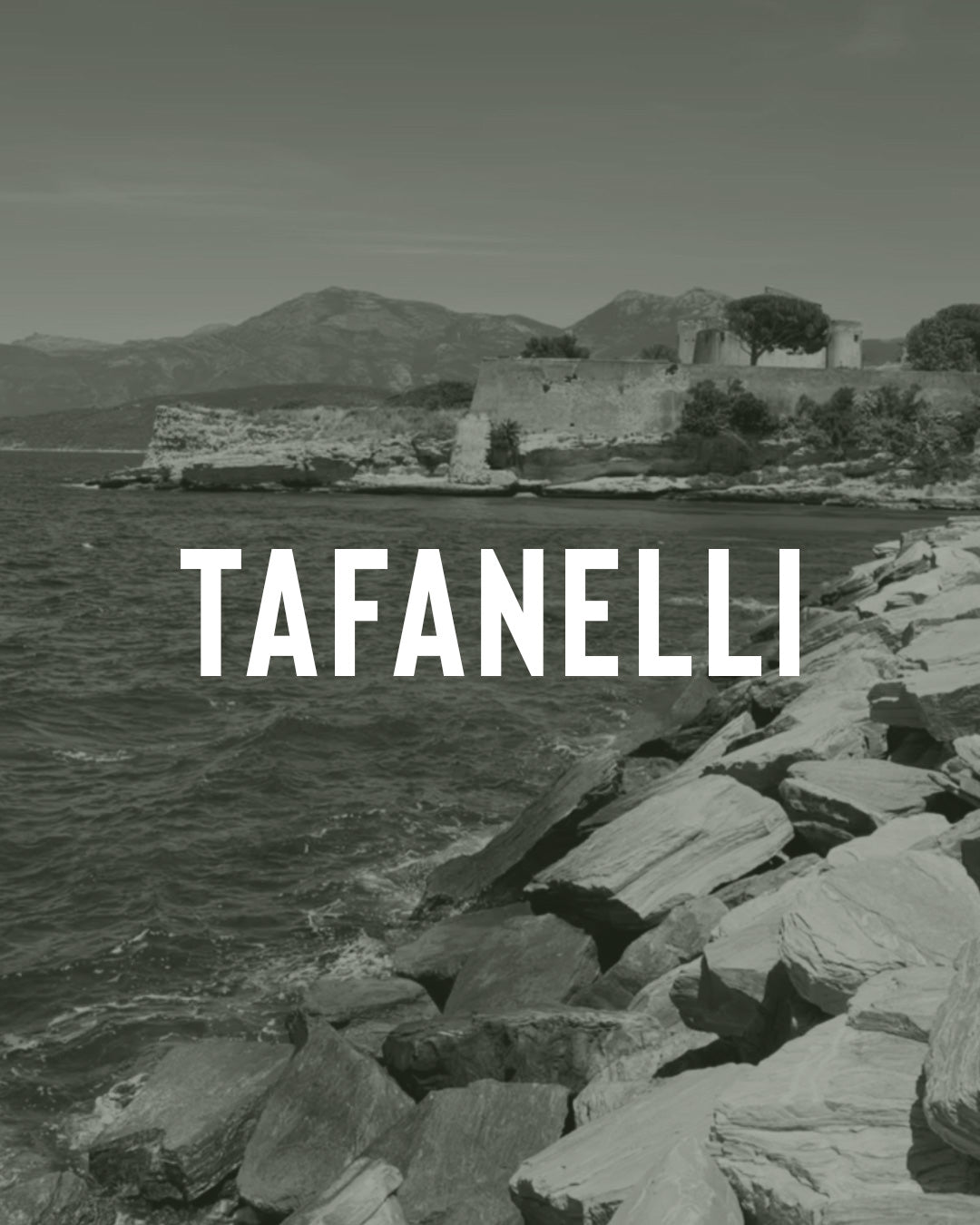
The Corsican coastline is extremely indented. White sand beaches, rocky coves, granite inlets, limestone cliffs, wild beaches of the Agriates desert, deep bays like those of Porto or Saint-Florent, traditional fishing ports: every section of coast has its own character.
To go further on wild beaches, consult our guide to the 20 most beautiful wild beaches in Corsica and our complete guide to the Agriates desert.
An omnipresent maquis
The maquis covers 60% of Corsica. It rises to about 1,000 meters in altitude, where it gives way to the Laricio pine forest, beech forests, and then high-altitude mountain pastures. This omnipresence of the maquis explains why Corsica is sometimes nicknamed the scented island. Every hike, every beach, every village is bathed in vegetable scents.
U Mare: the Corsicans' intimate Mediterranean
The sea, in Corsican, is called u mare. It is a masculine noun, which sometimes surprises people. But the Corsican sea indeed has something masculine in its relationship with the inhabitants: it is powerful, it is open, it is sometimes hostile, it nourishes and it keeps one away.
A nourishing sea
For centuries, the sea nourished the coastal Corsicans. Sea urchins, spiny lobsters, dentex, gurnard, red mullet, sea bream, and squid were staples of fishermen's tables. Fishing remains a living profession in Corsica today, with several active ports: Bastia, Ajaccio, Bonifacio, Calvi, Porto-Vecchio, Cargèse.
To go further on Corsican fishing culture, consult our article dedicated to sea urchins in Corsica.
A dangerous sea
The Corsican sea has also historically been a threat. The Barbary invasions from the 15th to the 18th century marked the collective memory. The coasts were regularly pillaged, the inhabitants kidnapped to be sold as slaves. It was to protect against these raids that 90 Genoese towers were built all along the Corsican coastline. These towers, still visible today, are like watchtowers that recall the ambiguous relationship Corsicans have with the sea.
It is also the sea that brought all the successive invasions: Greeks, Romans, Pisans, Genoese, French, English. The sea, in Corsica, is as much an opening as it is an entry point for foreigners.
A beloved sea
Despite these ambivalences, the sea is deeply loved by Corsicans. Summer days at the beach, boat trips, aperitifs at the port, swimming at sunset: the intimate Mediterranean culture has structured an entire island art of living. Each Corsican family has its own beach, its own spot, its own secret.
The Corsican sea is not the tourist Mediterranean of Saint-Tropez or Positano. It is wilder, more intimate, more secret. It is not easily shared. It belongs to those who have tamed it since childhood.
Emblematic places of the Corsican sea
Some foundational locations to embody u Mare:
- The Agriates desert: Saleccia and Lotu, iconic wild beaches.
- The Cap Corse: Barcaggio, Tamarone, Nonza, Erbalunga.
- The Balagne: Sant'Ambroggio, Punta di Spanu, Ostriconi.
- The south: Roccapina, Rondinara, Palombaggia, Cala Rossa.
- Bonifacio and the Strait, a unique setting in the Mediterranean.
To dig deeper, our complete guide to Cap Corse and our complete guide to Bonifacio.
A Muntagna: the granite heart of the island
The mountain, in Corsican, is called a muntagna. It is a feminine noun, more lyrical than u mare. The muntagna is the matrix, the mother, the one that nourished shepherds and peasants for millennia, the one that sheltered the independence struggles, the one that keeps the deepest traditions.
A pastoral mountain
For more than 3,000 years, Corsican mountain dwellers have practiced transhumance. In summer, the herds of sheep and goats go up to the high-altitude pastures, between 1,200 and 2,000 meters. In winter, they come back down to the plains and coastal areas. This immemorial movement has structured the entire human landscape of the Corsican mountain: the shepherd's huts, the barns, the transhumance paths, the cheeses, the cured meats.
To go further on these products, consult our dedicated articles: Corsican cheeses and PDO Corsican charcuterie.
A refuge mountain
The Corsican mountain has long been a refuge. A refuge for populations fleeing the Barbary invasions of the coast. A refuge for the fighters of independence, notably under Pasquale Paoli in the 18th century. A refuge for the bandits of honor, those ambivalent figures of Corsican culture who escaped French colonial justice by hiding in the mountain ranges.
It is in the mountains that the political history of Corsica was written. Corte, the historic capital perched at 500 meters altitude, is the architectural proof. Consult our complete guide to Corte.
A sporting mountain
The Corsican mountain has also become, since the 1970s, a world-renowned sporting terrain. The GR20, considered one of the most beautiful and difficult long-distance hiking trails in Europe, crosses the island from north to south for 180 kilometers. Trail running, orienteering, mountaineering, and rock climbing find exceptional grounds for expression there.
To go further, our complete guide to the GR20 and our article on François D'Haene's record.
Emblematic mountain ranges
- Monte Cinto: 2,706 meters, highest point of the island.
- Le Niolu: high-altitude plateau in the heart of the Regional Natural Park.
- Le Rotondo: 2,622 meters, historic height of Corte.
- Les Aiguilles de Bavella: iconic granite scenery of the south.
- La Paglia Orba: 2,525 meters, dizzying pyramid.
- Le col de Vergio: 1,477 meters, historic north-south passage.
The Corsican mountain is not a decoration. It is a matrix. A cultural matrix that invented the charcuterie, the cheeses, the polyphony, the language itself. Without the mountain, Corsica would be an island without memory.
A Machja: the maquis that unites everything
The maquis, in Corsican, is called a machja. It is the third element of the trinity, the one that unites the other two. The maquis rises from the sea to the flanks of the mountain. It occupies the space between them. It is the living skin of the island.
A unique ecosystem
The Corsican maquis is a particular Mediterranean ecosystem, adapted to the dry summer climate and mild winters. It mainly consists of several strata:
- The low stratum: rockrose, rosemary, thyme, immortelle, myrtle, mastic, phillyrea.
- The middle stratum: strawberry tree, holm oak, young cork oak, phillyrea, buckthorn.
- The high stratum: adult holm oak, adult cork oak, wild olive, lentisk pistachio.
Iconic scents
The Corsican maquis is famous for its scents. Napoleon, in exile on Saint Helena, said he could recognize Corsica "with his eyes closed" by the smell of the maquis. This unique scent is composed of several essences:
- Italian immortelle (Helichrysum italicum): curry scent, base of many luxury Corsican cosmetics.
- Myrtle: berries used for the famous myrtle liqueur, an iconic digestif.
- Rockrose: musky scent, base of renowned essential oils.
- Rosemary and thyme: present in all Corsican cuisine.
- Strawberry tree: red berries consumed in jam or brandy.
A living space
Historically, the maquis was a lived-in space for Corsicans. Shepherds brought their animals there. Peasants gathered berries and plants there. Hunters tracked wild boar and woodcock there. Rebels hid there (hence the French expression "prendre le maquis"—to go into the maquis—which comes from Corsica and the Resistance).
Today, the maquis remains a living territory. Perfumers come there to harvest immortelle. Distillers continue to harvest myrtle there. Hikers cross it on long-distance hiking trails. It is the sensory matrix of the island.
The maquis is not a wasteland. It is a culture. A living culture, maintained for millennia by the actions of shepherds, hunters, and herbalists. Without the maquis, Corsica would lose its scent, its memory, and its flavor.
The maquis in the language
The Corsican language has a very rich vocabulary to designate the different forms of maquis:
- A machja: the dense maquis, difficult to cross.
- U machjone: the great maquis, almost a low forest.
- A machjetta: the light maquis, where one can walk.
- A machjaghjola: the young maquis, in regrowth.
This linguistic precision shows to what extent the maquis has been intimately known, observed, and categorized by the inhabitants. It is not a backdrop; it is a sensitive geography.
The trinity as a narrative structure of Corsican culture
The Mare, Muntagna, Machja trinity is not a marketing invention. It is a deep narrative structure that is found in almost all Corsican cultural productions.
In literature
Great Corsican writers (Marc Biancarelli, Marie Ferranti, Jean-Pierre Santini) often structure their narratives around three interconnected spaces: the coast, the mountains, and the maquis. Each space carries its own characters, dramas, and temporalities. The maquis is often the place of memory, secrets, and hidden transmission.
In cinema
Recent films rooted in Corsica (the films of Robin Campillo, Thierry de Peretti, the Plaine Orientale series currently filming in Bastia) systematically use the three spaces as dramatic signifiers. Characters descend to the sea for openness to the world, ascend to the mountains for a return to their roots, and hide in the maquis for refuge or secrecy.
In painting and illustration
Contemporary Corsican artists (Jean-François Papi, Jean-Michel Culioli, and those we have crossed paths with) often work with the landscape trinity as a central theme. The three-plane composition (sea in the foreground, maquis in the middle, mountains in the background) is a visual topos of Corsican iconography.
A Corsican painter never paints the sea alone. Nor the mountain alone. They always paint all three together, because that is how a Corsican sees their country: with a single glance, they embrace the entire trinity.
The trinity on the plate: sea, mountain, maquis
Corsican cuisine is arguably the best concrete illustration of the landscape trinity. Every traditional Corsican menu offers elements from the three spaces.
From the sea
Fish (red mullet, dentex, scorpionfish), seafood (sea urchins, lobsters, slipper lobsters), squid, octopus, sardines. Preparations range from simple grilling to elaborate dishes like aziminu (Corsican bouillabaisse) or uovi di rizzu (sea urchin eggs on fresh pasta).
From the mountains
PDO charcuterie (coppa, lonzu, prisuttu, figatelli), cheeses (brocciu, tomme, veru), lamb, kid, wild boar. The entire protein and fat component of a Corsican meal comes from the pastoral mountains. Consult our dedicated guides: Corsican charcuterie and Corsican cheeses.
From the maquis
Aromatic herbs (rosemary, thyme, myrtle), berries (myrtle, strawberry tree, chestnut), PDO maquis honey, olive oil, wines (Corsican vines are planted in the middle of the maquis), liqueurs (myrtle, citron, strawberry tree), artisanal jams.
A true Corsican meal is a gastronomic trinity. A fish from the sea, a cheese from the mountains, a brandy from the maquis. Three universes on a plate, on a tablecloth. It is Corsica in a single bite.
For the wine component, consult our complete guide to AOC Corsican wines.
The trinity in Corsican music and polyphony
Traditional Corsican music is one of the most recognizable cultural expressions in the world. It is structured by a vocal trinity, the paghjella, which is not without symbolic links to the landscape trinity.
The paghjella: three voices, one song
The paghjella is the traditional Corsican polyphonic song, inscribed on the UNESCO Intangible Cultural Heritage list since 2009. It is sung by three male voices that intertwine:
- A siconda: the middle voice that carries the fundamental melody.
- U bassu: the bass voice that provides the harmonic structure.
- A terza: the high voice that ornaments, decorates, and soars toward the sky.
Three voices. Three roles. Three pitches. One melody. The paghjella is the musical trinity of Corsica.
The great groups that perpetuate the tradition
Iconic groups such as A Filetta, I Muvrini, Voce Ventu, and Barbara Furtuna continue to carry this tradition into the contemporary world, blending it with broader influences.
Every September, the Rencontres de Chants Polyphoniques de Calvi bring together the best groups from around the world. It is an unmissable event on the Corsican cultural calendar. See our summer 2026 Corsican cultural calendar.
The trinity embodied by historical Corsican figures
The trinity of Mare (Sea), Muntagna (Mountain), and Machja (Maquis) is also embodied in three historical figures who have shaped the Corsican imagination.
The sailor, u marinaru
The figure of Christopher Columbus (claimed as Corsican by a persistent tradition, born perhaps in Calvi according to some historians), the great seafaring families of Bonifacio, the fishermen of all Corsican ports. The marinaru embodies openness, exploration, and travel. He is the Corsica that departs.
The shepherd, u pastore
The pastore is the oldest, most deeply rooted, and most Corsican figure. He embodies the thousand-year-old transhumance, intimate knowledge of the territory, and fidelity to traditions. He makes the cheese, sings the paghjella at the evening vigil, and passes on the language. He is the Corsica that stays.
The resistance fighter, u ribellu
The ribellu (the rebel) is the one who hides in the maquis, the one who fights for independence, the one who refuses submission. From Sampiero Corso in the 16th century to Pasquale Paoli in the 18th, including the resistance fighters of the Liberation of 1943 (the first French region to be liberated), the figure of the ribellu is foundational. He is the Corsica that refuses.
Sailor, shepherd, resistance fighter. Each of these figures is associated with one of the three landscapes: the sea, the mountain, the maquis. Together, they tell a complete identity. Not a closed identity, but a full one, which embraces all the dimensions of a people.
The trinity in the TAFANELLI wardrobe
At TAFANELLI, the trinity of Mare, Muntagna, and Machja is not just a slogan. It is a design principle that structures our entire range. Each piece can be linked to one of the three elements, and our global catalog forms a truly complete wardrobe that allows you to wear Corsica in all its dimensions.
The Mare pieces
Pieces that celebrate the Mediterranean Sea:
- The Mediterranean Diver: the man suspended between sky and sea.
- Sea Urchin Fishing: the ancestral gesture of the fisherman.
- The Siren Club: the Mediterranean seaside line.
- The Sportmer: tribute to the Mediterranean of the Var region.
The Muntagna pieces
Pieces that celebrate the Corsican mountains and pastoral heritage:
- The Corsica 1755: Paoli, the Corsican Constitution, and historical mountain roots.
- The Roccapina: the granite lion of the wild south.
- The Oiled Roccapina Jacket: the robust piece for modern shepherds.
The Machja pieces
Pieces that celebrate the maquis and the spirit of the territory:
- The Corsican Bandana: a discreet sign of belonging to the maquis.
- The Corsica Shark Cap: protection for the trail, outdoor spirit.
- The Eye of Saint Lucy: ancestral talisman, symbol of the paths.
This wardrobe is not compartmentalized. It mixes, it matches, it is worn together. A Diver t-shirt with a bandana, a Roccapina with a Shark cap, a Corsica 1755 with a bandana: every combination tells a complete Corsica.
La Trinità: our new capsule
In the spring of 2026, we wanted to create a piece that directly, visually embodies the Corsican landscape trinity. A piece that would tell the story of neither the sea, nor the mountain, nor the maquis separately, but of the three together in a unique composition.
That is how La Trinità, our new capsule collection, was born.
The design
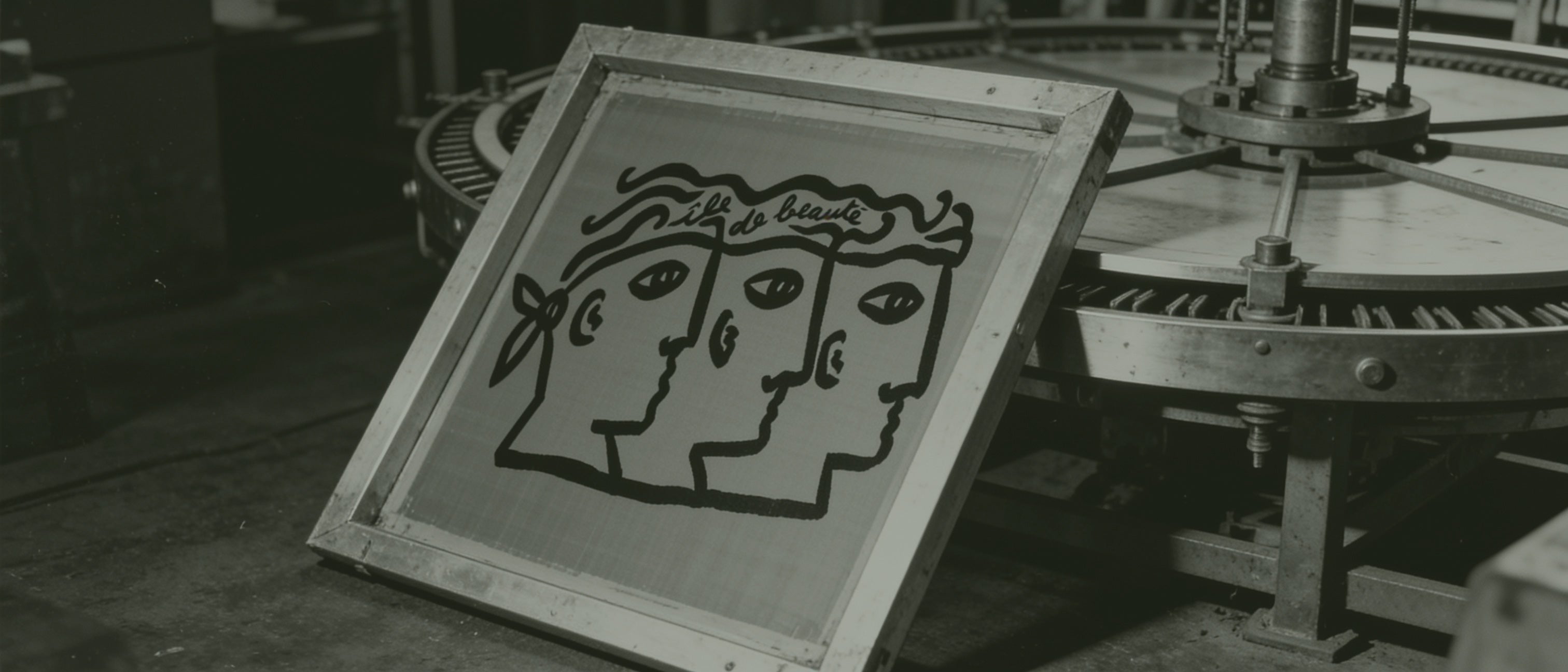
Three male profiles, oriented toward the same horizon, united by a band bearing Corsica's historical name: Island of Beauty. Each profile can be read as one of the three landscapes: the Sea, the Mountain, the Maquis. Together, they form the island's soul.
The design is hand-screenprinted, layer by layer, in our workshop in France. It carries our TAFANELLI signature in the bottom right corner, as do all our pieces.
The collection
La Trinità is available in two formats:
- La Trinità black t-shirt: 280g/m² cotton, Made in France, straight fit, limited edition of 100 pieces.
- La Trinità white t-shirt: the same design in its light version, limited edition of 100 pieces.
- La Trinità Cap: to be worn with or without the t-shirt, a discreet signature.
La Trinità is probably the piece most representative of our identity that we have produced since the creation of TAFANELLI. It tells the story of Corsica in its fundamental structure, without anecdotes, without specific locations, without dated references. It tells the story of the soul.
To understand our manufacturing codes for our t-shirts and why they cost €95, consult our dedicated editorial manifesto.
Continue the discovery
To delve deeper into each of the three universes of the Corsican landscape trinity:
Mare Universe (the sea)
- The 20 most beautiful wild beaches in Corsica
- The Agriates Desert
- The complete Cap Corse guide
- Sea urchins in Corsica
Muntagna Universe (the mountain)
- The complete GR20 guide
- Corte, historical capital
- The 10 most beautiful perched villages
- PDO Corsican charcuterie
- Corsican cheeses
Machja Universe (the maquis)
In passing through Corsica, the customer becomes a friend.
A DOPU,
TAFA