Corsican wines: the complete 2026 guide to appellations, grape varieties, and estates to discover
Small in surface area, immense in diversity, Corsica’s wine scene is home to one of the most beautiful mosaics of terroirs in the Mediterranean. Nine appellations, grape varieties found only here, estates that produce in very small quantities, and a new generation of winemakers putting the island on the global wine map. Here is our complete 2026 guide to understanding, choosing, and tasting Corsican wines, including the seven estates that make up our personal cellar at TAFANELLI.
Why Corsican wines are unique in the world
Corsica has been cultivating vines for over 2,500 years, since the arrival of the Phocaeans (the same Greeks who founded Marseille) on the island's eastern coasts in the 6th century BC. This longevity has allowed for the development of an exceptional ampelographic heritage, made up of indigenous grape varieties not found anywhere else.
Three factors make Corsica a unique wine-growing territory in the Mediterranean:
A highly rich granitic and schistous terroir
Unlike the limestone soils of Provence or the rolled pebbles of the Rhône Valley, Corsica offers a great variety of terroirs: granite on the west coast (Calvi, Ajaccio, Sartène, Figari, Porto-Vecchio), schist in Cap Corse, limestone-clay in Patrimonio, and granitic sand in the interior. This geological diversity produces wines with very distinct personalities depending on the micro-regions.
A Mediterranean climate tempered by sea and mountain
With its 1,047 km of coastline and peaks exceeding 2,700 meters (Monte Cinto), Corsica offers rare climatic conditions. The vines benefit from over 2,800 hours of sunshine per year, a day/night temperature range favorable to aromatic concentration, and sea breezes (libeccio, mistral, sirocco) that naturally sanitize the vineyards. The result: ripe, balanced grapes without excess sugar.
Preserved indigenous grape varieties
Where Provence and the Languedoc have massively adopted international grape varieties (Cabernet, Syrah, Chardonnay), Corsica has preserved its ancestral local varieties. Niellucciu, Sciacarellu, Vermentino, Bianco Gentile, Carcaghjolu Neru, and Aleatico are ampelographic treasures that give the island's wines their absolute uniqueness.
The three major Corsican AOCs
Of the nine Corsican appellations, three hold the status of autonomous AOCs (Appellation d'Origine Contrôlée): Patrimonio, Ajaccio, and Muscat du Cap Corse. The others are geographical designations of the Vin de Corse AOC.
AOC Patrimonio
Recognized in 1968, Patrimonio is the oldest Corsican AOC. Located on the west coast of Cap Corse, around the villages of Patrimonio, Barbaggio, Farinole, and Saint-Florent, it extends over approximately 420 hectares of clay-limestone hillsides (a geological exception on a predominantly granitic island).
The AOC produces three colors: red (based on Niellucciu, the region's signature grape), white (predominantly Vermentino), and rosé. The reds of Patrimonio are among the most structured and age-worthy in all of Corsica. The whites reach remarkable aromatic refinement here.
AOC Ajaccio
Recognized in 1971, the Ajaccio AOC spans the granitic terroirs around the Gulf of Ajaccio. It is primarily renowned for its red wines made from Sciacarellu, a rare grape variety that only gives its best on granitic sands. Ajaccio reds are delicate, fine, and elegant, with aromas of red fruit, sweet spices, and garrigue.
The whites (based on Vermentino) are also remarkable, marked by a saline freshness that recalls their proximity to the Mediterranean.
AOC Muscat du Cap Corse
A doubly protected specialty (AOC + IGP), Muscat du Cap Corse is a natural sweet wine made from Muscat à Petits Grains grapes grown on the schist terraces of the Cap. Vinified according to an ancestral method (slightly dried or passerillé grapes), it offers an aromatic palette of candied citrus, maquis honey, and white flowers.
Enjoy as an aperitif with toasted almonds, or at the end of a meal with a fiadone (Corsican brocciu cake) or canistrelli.
Vin de Corse and its five geographical designations
The Vin de Corse AOC covers the entire island vineyard excluding the Patrimonio and Ajaccio AOCs. It is divided into five geographical designations that correspond to the major wine-growing micro-regions.
Vin de Corse Calvi (Balagne)
On the granitic hillsides of Balagne, around the villages of Calenzana, Lumio, and Aregno, the vineyard produces powerful reds (Niellucciu, Sciacarellu) and mineral whites (Vermentino). It is one of the historic production regions in Corsica, with a climatic influence tempered by the nearby mountain ranges.
Vin de Corse Sartène
In the southwest of Corsica, on the granitic foothills south of Valinco, the Sartène AOC offers concentrated, sometimes rustic, but always expressive wines. The reds (Sciacarellu and Niellucciu) develop aromas of garrigue, spices, and black fruit. It is a still relatively confidential wine region, where some estates produce in very small quantities.
Vin de Corse Figari
In the extreme south, the Figari micro-region is one of the oldest wine-growing areas in Corsica (presence attested since antiquity). The poor granitic soils and very hot climate give birth to solar, rich, and sometimes spicy wines. Vinification is often technical here to preserve freshness in an arid environment.
Vin de Corse Porto-Vecchio
On the south-east coast, around Porto-Vecchio, the AOC produces balanced wines benefiting from the freshness of the gulf and the warmth of the soil. The whites are particularly successful, with great minerality and notable length on the palate.
Vin de Corse Coteaux du Cap Corse
On the schist slopes of the Cap, sometimes on dizzying terraces, winemakers produce whites and rosés of great delicacy. The immediate proximity to the sea marks the wines with a characteristic saline note. It is a region where "heroic" viticulture (steep plots, not easily mechanized) has allowed for the preservation of unique ancient grape varieties.
Signature Corsican grape varieties
Understanding Corsican wines first and foremost means knowing its signature grape varieties, many of which are grown only here.
Niellucciu (red)
The primary red grape of Patrimonio, Niellucciu is genetically related to the Italian Sangiovese (the grape of Chianti and Brunello di Montalcino). It produces sturdy, tannic wines marked by aromas of black cherry, tobacco, leather, and spices. Very age-worthy, it performs best on the clay-limestone soils of Patrimonio.
Sciacarellu (red)
Sciacarellu is the great signature grape of Corsica, existing practically nowhere else in the world. Grown mainly in the Ajaccio and Sartène AOCs, it produces delicate, low-tannin red wines with a light hue and aromas of fresh red fruit (strawberry, raspberry, cherry), garrigue, and pepper. It is a variety that favors elegance over power, comparable in spirit to Burgundian Pinot Noir.
Vermentino (white)
The primary white grape in Corsica, Vermentino (also grown in Sardinia under the name Vermentino di Gallura, as well as in Provence and Liguria) produces fresh, aromatic whites marked by notes of citrus (lemon, grapefruit), white flowers, and wild fennel. On the schist terroirs of Cap Corse, it develops a beautiful saline minerality. On the granites of Ajaccio, it gains roundness and complexity.
Bianco Gentile (white)
An indigenous Corsican white variety that had almost disappeared before being saved by a handful of passionate winemakers in the 1990s. It produces full-bodied, fruity, sometimes exotic whites with a persistent finish. Its production remains very confidential.
Aleatico (red)
An ancient red variety of Greek origin, Aleatico is used in Corsica mainly to produce natural sweet reds (fortified with alcohol like Muscat). These exceptional wines, with a deep garnet color, offer aromas of candied red fruit, cocoa, and sweet spices. A rarity you absolutely must taste if you come across it.
Muscat à Petits Grains (white)
A variety used exclusively for Muscat du Cap Corse, this grape produces natural sweet wines of great aromatic finesse: candied citrus, honey, white flowers, and raisins. Enjoy slightly chilled.
Seven estates you absolutely must discover
Here are the seven Corsican wine estates that make up our personal cellar at TAFANELLI, selected for their uniqueness, the consistent quality of their production, and their ability to embody the best that Corsican viticulture has to offer in 2026.
Domaine Terra Vecchia | Clos Poggiale
One of the iconic estates of the eastern plain, located between Aleria and Ghisonaccia. Clos Poggiale produces balanced, accessible wines that serve as an excellent gateway into the world of contemporary Corsican wines. The reds are particularly successful, suitable to be drunk young or kept for a few years depending on the vintage.
Domaine Saparale (Sartène)
A historic family estate in the Sartène micro-region, owned by the Farinelli family. Saparale wines embody the quintessence of Sartène: concentrated and deep reds, fresh and mineral whites, and delicious rosés. An absolute benchmark of the Sartène AOC.
Clos Canarelli (Figari)
Yves Canarelli is one of the most internationally respected Corsican winemakers. His Clos Canarelli, operating under organic and biodynamic farming, produces top-tier vintages sought after by sommeliers worldwide. His wines made from forgotten grape varieties (Bianco Gentile, Carcaghjolu Neru) are particularly remarkable.
Domaine Vaccelli (Ajaccio)
On the granitic terroirs of Azilone-Ampaza, in the Ajaccio hinterland, Domaine Vaccelli produces Sciacarellu of rare elegance. The estate is a historic one in the Ajaccio AOC and perfectly represents the finesse that this variety can achieve when worked with respect for the terroir.
Domaine Canereccia (Borgo, eastern plain)
On the eastern hillsides between Bastia and Aleria, Domaine Canereccia offers an accessible and high-quality range that is truly worth discovering. The rosés are particularly well-suited for Corsican summer aperitifs; they are fresh and expressive.
Domaine de Torraccia (Porto-Vecchio)
A historic benchmark of the Porto-Vecchio AOC, founded by Christian Imbert in the 1960s (one of the pioneers of the modern Corsican wine renaissance). Domaine de Torraccia, currently in organic conversion, produces recognized wines, especially its reds which can happily age for a decade.
Clos Colonna (Calvi)
A boutique estate in Balagne, Clos Colonna produces vintages in very small quantities, sought after by connoisseurs. The whites are particularly successful, expressive, and mineral. A real gem to discover if you are staying in Balagne.
Nicolas Stromboni: the man to follow for Corsican wines
To go further in the discovery of Corsican wines, one address is the reference on the island: Le Chemin des Vignobles, the wine shop belonging to Nicolas Stromboni, located at 16 Avenue du Docteur Noël Franchini in Ajaccio.
Who is Nicolas Stromboni
Nicolas Stromboni is considered one of the international references for Corsican wine. A passionate wine merchant, demanding selector, and renowned taster, he has contributed for two decades to making Corsican winemakers known beyond the island. His choices lean toward "vins d'auteur" (wines reflecting the winemaker's craft), in confidential allocations, from estates that prioritize authenticity over commercial compromise.
Le Chemin des Vignobles
His shop in Ajaccio is an institution. You will find most of the great Corsican estates there, across all appellations, as well as a rigorous selection of Italian, French, and international winemakers chosen with the same discerning eye. Stromboni is also the author of several reference works on Corsican wine, including the essential "Le chemin des vignes".
Why go there
If you are staying in Ajaccio or just passing through, a stop at Le Chemin des Vignobles is essential for any wine lover. Stromboni and his team will guide you toward the gems of the moment, tell you about the latest discoveries, and introduce you to forgotten grape varieties. It is also the best place to buy a few bottles to take home (to mainland France or abroad).
The official website: www.lechemindesvignobles.corsica
The Corsican grape harvest: an experience to live
The harvest in Corsica generally takes place between late August and late September, depending on the region, altitude, and grape varieties. It is an exceptional time to visit the island, both for wine lovers and for those looking to experience Corsica outside the massive tourist season.
When to come
- Late August / early September: harvest of whites and rosés, particularly in Patrimonio, Calvi, and Ajaccio
- Mid-September: harvest of early reds (Sciacarellu, young Niellucciu vines)
- Late September: harvest of late reds and Muscat du Cap Corse
Estates to visit during the harvest
Many estates open their doors during this period. It is essential to book in advance, as places are limited. Several estates also offer harvester meals open to the public, an unforgettable experience blending Corsican gastronomy, tasting, and conviviality.
How to organize your trip
The best approach is to create a 3-to-5-day itinerary based on one region (Patrimonio + Cap Corse, or Sartène + Figari + Porto-Vecchio, for example), alternating between estate visits, tastings, and stays in guest houses attached to wine farms.
Which Corsican wine with which Corsican dish?
One of the great pleasures of Corsican cuisine is finding its wines to be perfect companions. Here are some classic pairings to explore.
With Corsican charcuterie (coppa, lonzu, figatellu)
A light Ajaccio red (Sciacarellu) or a fruity Calvi red. The light tannins complement the salty and smoky notes of the charcuterie.
With brocciu (fresh or in a dish)
A Cap Corse Vermentino or a Patrimonio white. The freshness of this whey cheese pairs perfectly with the saline minerality of coastal whites.
With aged Corsican cheeses (sheep, goat)
A Patrimonio red with a few years of aging, or a mature Vermentino white. Strong cheeses require structured wines capable of standing up to them.
With grilled fish (dentex, sea bream, sea bass)
A fresh Vermentino from Calvi or Porto-Vecchio, or a Sartène rosé. The iodized delicacy of the fish calls for light and mineral wines.
With a slow-cooked meat dish (wild boar, lamb, stew)
A structured Patrimonio red or a concentrated Sartène. These full-bodied wines hold their own against the intensity of braised meats.
With a Corsican dessert (fiadone, canistrelli)
A Cap Corse Muscat served slightly chilled, a perfect match for pastries with brocciu and lemon. For enthusiasts, an Aleatico can provide a wonderful surprise with a chocolate dessert.
The TAFANELLI spirit and Corsican wines
At TAFANELLI, Corsican wines hold a special place in our world. They are the liquid version of what we try to instill in our garments: a deep Corsican foundation, a respect for terroir, an uncompromising demand for quality, and a refusal to compromise with industrial standards.
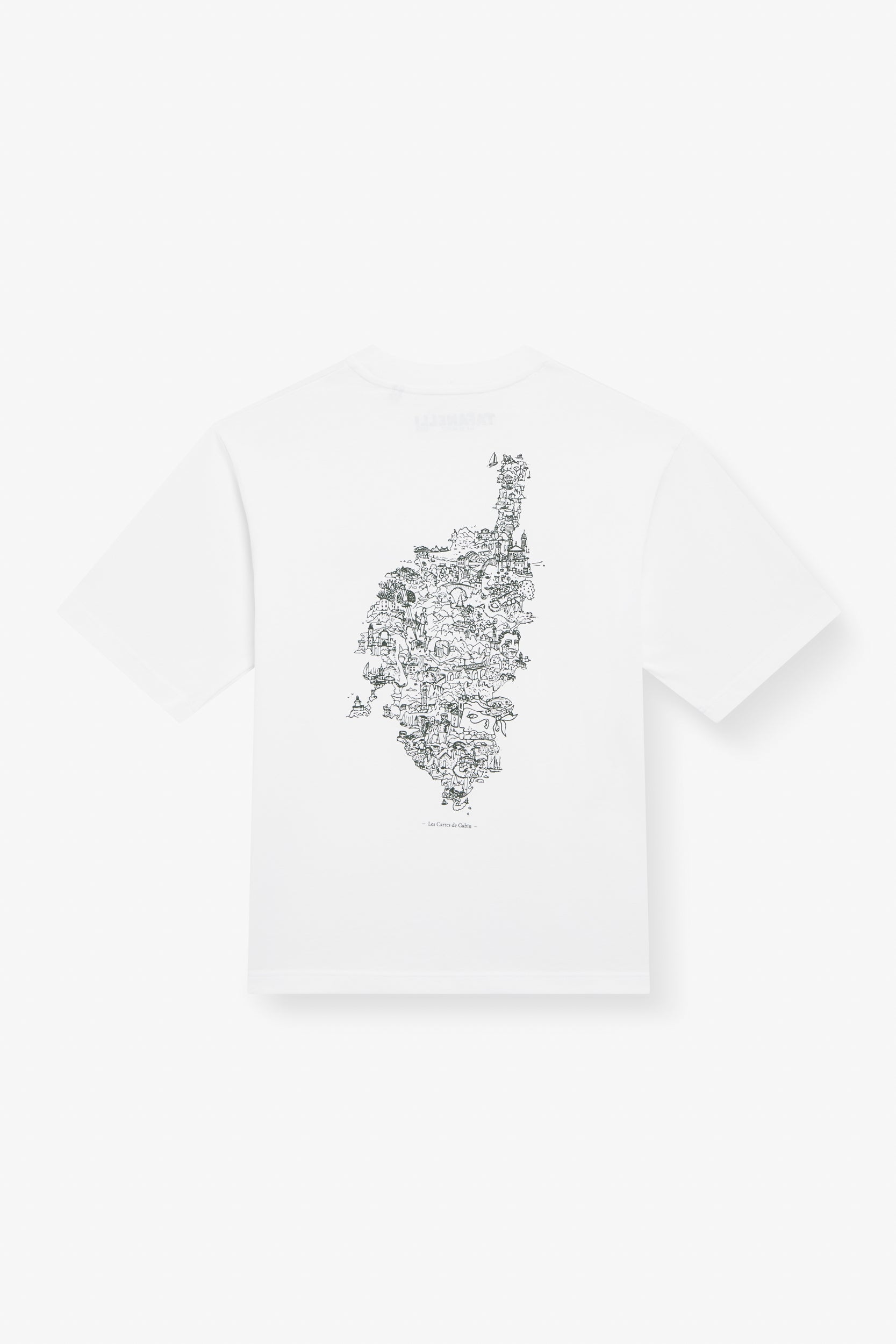
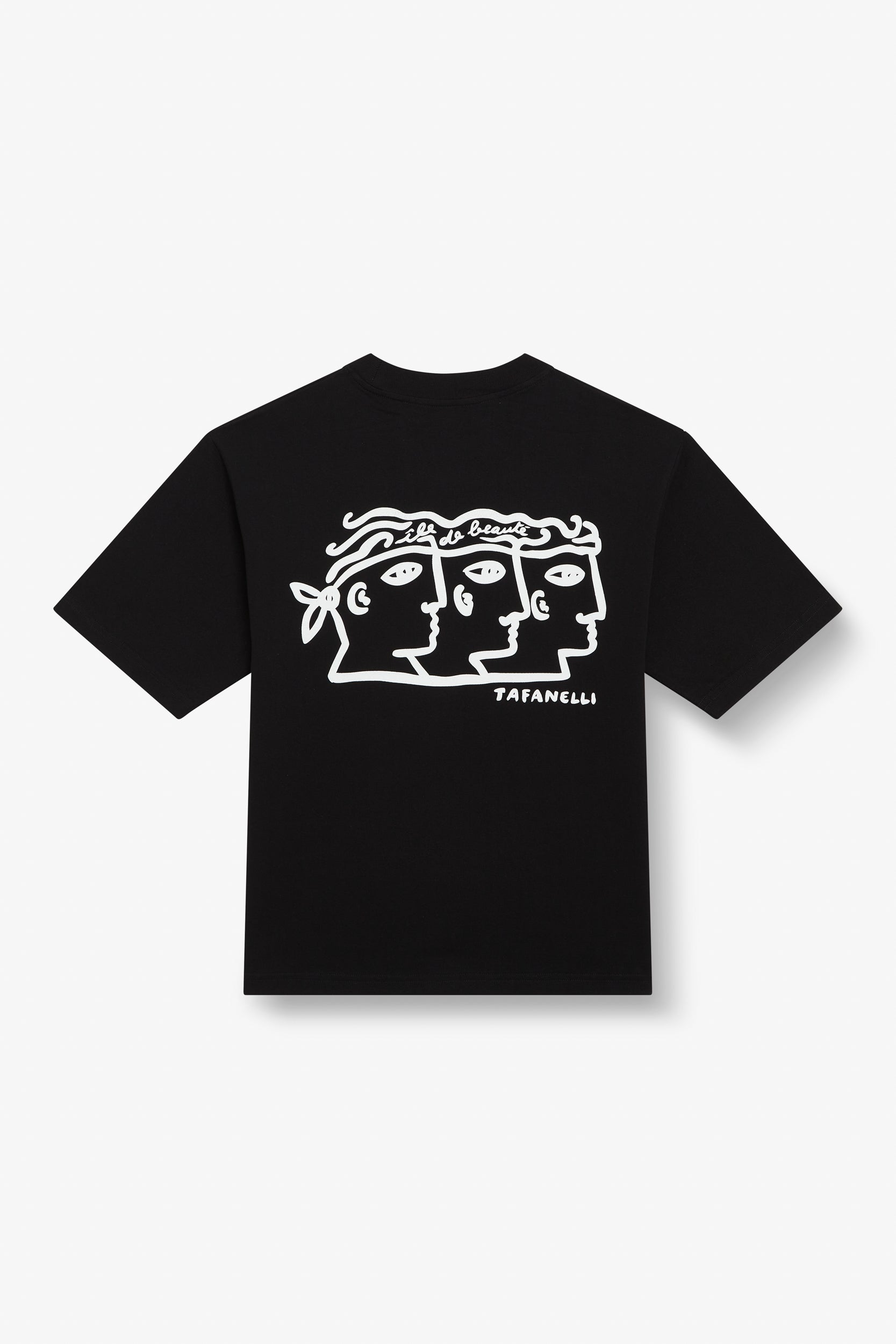
The winemakers we mention in this guide (Saparale, Canarelli, Vaccelli, Torraccia, Canereccia, Clos Poggiale, Clos Colonna) share our same philosophy: produce less, produce better, and respect what the land and time offer. This is exactly what we strive to embody in our 280g/m² cotton t-shirts made in France, in our limited edition "Bleu de Chine" jackets, and in our pieces designed to last for ten seasons or more.
A few TAFANELLI pieces to wear during a Corsican wine tasting:
- The white 280g/m² TAFA t-shirt for cellar visits in the height of summer, understated and resistant to grape must splashes
- A premium piqué polo for lunch on the terrace of a Patrimonio or Sartène estate
- The Bleu de Chine jacket for cool harvest evenings, where the smell of barbecue smoke mingles with the scent of fermenting must
- The TAFA Marine cap for walks through the vineyards in the low September sun
To learn how to assemble a perfect Corsican wardrobe for a season of vineyard discovery, check out our article What to wear in Corsica this summer 2026.
Frequently Asked Questions
How many wine appellations are there in Corsica?
Corsica has nine wine appellations: three independent AOCs (Patrimonio, Ajaccio, Muscat du Cap Corse) and the Vin de Corse AOC with its five geographical denominations (Calvi, Sartène, Figari, Porto-Vecchio, Coteaux du Cap Corse). In addition, there is the Île de Beauté PGI which covers larger-scale production.
What is Corsica's signature grape variety?
Sciacarellu is the most iconic Corsican grape variety, as it is grown almost nowhere else in the world. It produces delicate and elegant reds, primarily within the Ajaccio and Sartène AOCs. Niellucciu (a cousin of the Italian Sangiovese) is the dominant red grape in Patrimonio, and Vermentino is the primary white grape across the entire island.
Which are the best Corsican wineries to visit?
Our personal selection at TAFANELLI includes seven benchmark estates: Domaine Terra Vecchia (Clos Poggiale) in the Eastern Plains, Domaine Saparale in Sartène, Clos Canarelli in Figari, Domaine Vaccelli in Ajaccio, Domaine Canereccia in Borgo, Domaine de Torraccia in Porto-Vecchio, and Clos Colonna in Calvi. Each of these estates embodies the best of its home terroir.
Who is Nicolas Stromboni?
Nicolas Stromboni is one of the most respected wine merchants in France, and founder of the Le Chemin des Vignobles wine cellar in Ajaccio (16 avenue du Docteur Noël Franchini, 20090 Ajaccio). He is considered an international authority on Corsican wine, an exacting selector of small-batch "vins d'auteur," and the author of several essential books on the subject, including Le chemin des vignes. Official website: www.lechemindesvignobles.corsica.
When does the harvest take place in Corsica?
The Corsican harvest takes place between late August and late September. Whites and rosés are picked first (late August / early September), followed by early-ripening reds (mid-September), and finally late-ripening reds and the Muscat du Cap Corse (late September). It is an exceptional time to visit the island, avoiding the summer crowds while enjoying weather that remains very mild.
Which Corsican wine should I give as a gift?
For an impressive gift, opt for a Patrimonio red (the most prestigious AOC, suitable for aging), a Coteaux du Cap Corse white (for rarity and delicacy), or a Muscat du Cap Corse (a unique specialty of the island). Vintages from Clos Canarelli, Domaine Saparale, or Domaine Vaccelli are particularly appreciated by knowledgeable connoisseurs. For a tailored selection, the best approach is to contact Nicolas Stromboni at Le Chemin des Vignobles in Ajaccio.
Should Corsican wines be kept in a cellar?
This depends on the specific vintage and appellation. Patrimonio reds can be cellared for 8 to 15 years depending on the vintage and the producer. Sartène and Figari reds can also age for 5 to 10 years. Whites and rosés are best enjoyed young (1 to 3 years), with the exception of some exceptional wood-aged Vermentino cuvées. Muscat du Cap Corse wines are naturally sweet wines that can be kept for a very long time (15 years or more).
How do you pair a Corsican wine with a meal?
A few simple rules: light Ajaccio red with Corsican charcuterie, mineral Cap Corse white with brocciu and fresh cheeses, structured Patrimonio red with slow-cooked meats and aged cheeses, fresh Vermentino with grilled fish, and Cap Corse Muscat with desserts. The diversity of Corsican appellations allows you to cover an entire menu without ever leaving the island.
Delving deeper into Corsican gourmet culture
Corsican wines are an integral part of the island lifestyle that we celebrate at TAFANELLI. To continue your discovery:
- The Corsican cultural calendar for summer 2026
- Sky, sea, and Corsica: the essence of an island lifestyle
- Bastia celebrates San Ghjuva: the Saint John's fire
- U Paradisu at Tamarone: the beach bar that defines Cap Corse
- What to wear in Corsica this summer 2026: the Mediterranean style guide
And to dress for your upcoming vineyard visits, cellar tastings, or harvest meals, browse our full collection. Free shipping in mainland France, with same-day dispatch for all orders placed before 2:00 PM.
May your next bottles of Corsican wine be as remarkable as the island they represent.
A PRESTU,
TAFA