Laetitia Casta and Corsica: Lumio, Balagne, and a career born on a beach
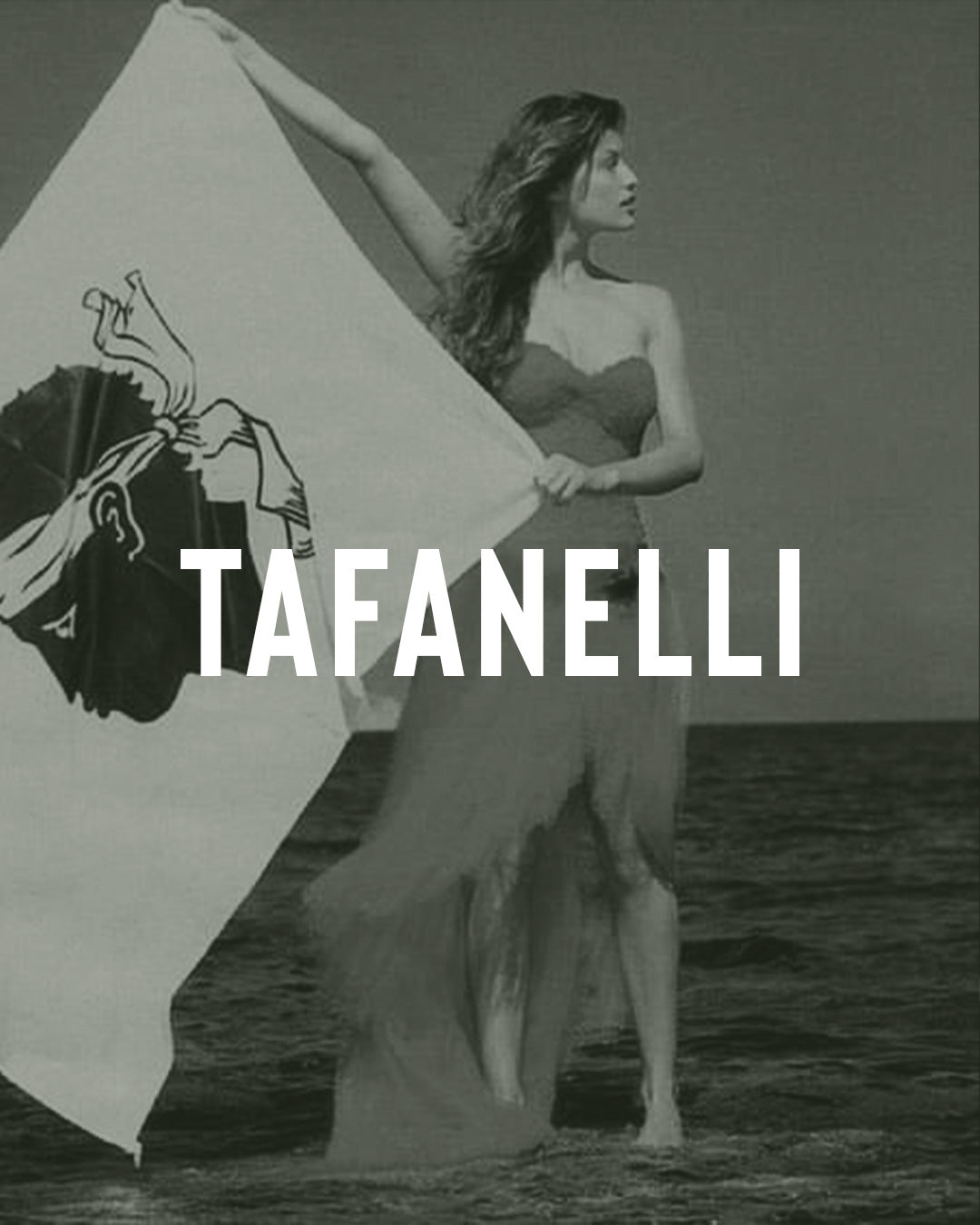
In 1993, a fifteen-year-old girl was spending the summer with her father in Balagne. A photographer noticed her on a beach. Two years later, she was one of the most photographed faces in the world, and in 1999 she became Marianne. Everything started here, on this coast between Calvi and Île-Rousse. Here is the story of a connection that is anything but anecdotal.
A career that began on a Corsican beach
It is the detail everyone knows without ever dwelling on it.
Laetitia Casta was not scouted on a Paris street or at a New York casting call. She was noticed by a photographer while spending her family holiday in Corsica, as she did every year, at her father's place. She was fifteen.
One of the greatest modeling careers of the 20th century began on a Balagne beach during a family vacation.
Two years later, she was landing international campaigns and covers. But the starting point remains the same: an island, a summer, a family reunited in the father's village.
This is not a biographical anecdote. It is what explains why, thirty years later, she still returns to the same place every summer.
Casta, a name from the island
Born in Pont-Audemer, in the Eure department, to a Norman mother and a Corsican father, she grew up between the two regions.
The name comes from the paternal side, and it is strictly insular. In Corsica, a surname says where you are from before you even open your mouth, exactly as first names once indicated one's place in a lineage.
This dual belonging, Normandy and Corsica, has never been presented by her as a conflict. It is a configuration that hundreds of thousands of island families know: one foot on the mainland for daily life, one foot on the island for everything else.
Lumio, the father's village
Lumio sits on the heights, between Calvi and Île-Rousse, with a plunging view of the gulf. Olive trees, stone houses, the sea below. It is one of those Balagne villages that look out at the water without ever descending to it.
The family has owned a house there for several generations. An old building, dating back to the 15th century, nestled between olive trees and the sea. This is where the family gathers every summer.
This point deserves to be emphasized because it radically distinguishes this case from all others. It is not a property bought by a celebrity in search of summer discretion. It is a family home, passed down, in the father's home village. The difference is the one that separates a vacation spot from a place of belonging.
Out of respect for the tranquility of the residents and the family, we will not provide further details on its location. Lumio is a village that lives year-round, and its inhabitants should not have to face the consequences of its popularity.
Marianne, or when Corsica gives a face to the Republic
In 1999, the mayors of France chose her to embody Marianne, the allegorical figure of the French Republic. Her bust entered the country's town halls.
There is an irony here that history enjoys.
Corsica has spent part of its history in a complicated relationship with Paris. It had proclaimed its own Constitution in 1755, twenty years before the American Revolution and thirty-four years before the French Revolution, founded on popular sovereignty and the separation of powers. It gave France its emperor, then a multitude of civil servants, soldiers, and sailors.
And in 1999, it was a girl from Lumio who became the official face of the Republic.
An island of three hundred and fifty thousand inhabitants provided France with an emperor and a Marianne. The demographic balance of power explains nothing.
What Balagne does to fashion
It is not an isolated coincidence. For some years now, this micro-region has been appearing constantly in the vocabulary of fashion.
In June 2026, Jacquemus held a show at the Pietra lighthouse, in Île-Rousse, a few kilometers from Lumio. Magazines have been producing photoshoots there for decades. Mediterranean brands find a light there that they cannot find elsewhere.
The reason is as technical as it is aesthetic. Within a few kilometers, Balagne offers a density of scenery that is impossible to find elsewhere: turquoise sea, mountains, olive groves, stone villages, wild beaches. And a particular light, very white during the day, very warm in the late afternoon, which makes textures look the way few other places allow.
But there is something else, and it is more interesting. Balagne does not produce backgrounds; it produces silhouettes. Here, you dress to walk between a village and a beach, to endure thirty-five degrees at noon and the wind in the evening, to make a few pieces last several seasons. This results in a specific wardrobe: straight cuts, natural materials, a restricted palette, no ostentation.
This is exactly what contemporary Mediterranean fashion seeks to reproduce. Except that here, it is not a stylistic choice. It is a constraint.
Discovering Lumio and its surroundings
The village can be walked through in a few minutes, but the micro-region deserves several days.
- Lumio, for the view of the Gulf of Calvi from the heights at sunset.
- Calvi, seven kilometers away, with its Genoese citadel and Chez Tao, open since 1935.
- Pigna, the village of artisans, and Sant'Antonino, classified as one of the most beautiful villages in France.
- Corbara and its convent, Cateri and its narrow streets.
- La Punta di Spanu, between Lumio and Algajola, one of the most beautiful points on the coast.
- L'Île-Rousse, twenty minutes away, and the Pietra lighthouse.
The best time to visit is not August. It is September, when the sea remains warm and the villages return to being villages.
Frequently asked questions
Is Laetitia Casta Corsican?
Her father, Dominique Casta, is Corsican, originally from Lumio in Balagne. Her mother is Norman. She was born in the Eure and grew up between Normandy and Corsica.
Where is her house in Corsica?
In Lumio, a Balagne village located between Calvi and Île-Rousse. It is an old family home, passed down for several generations. Its precise location is a matter of private life.
How was she discovered?
At fifteen, by a photographer, while she was spending a family holiday in Corsica. Her international career began in the two years that followed.
Where is Lumio located?
In Upper Corsica, in Balagne, about seven kilometers from Calvi. The village is perched on the heights, with a view of the gulf.
Why does Balagne attract so much fashion?
For the density of its scenery within a short distance—sea, mountains, olive groves, and stone villages—and for a very particular light. Jacquemus held a show there in June 2026, at the Pietra lighthouse.
Why this story resonates with us
We have no connection to Laetitia Casta, and this article makes no such claim.
What interests us is the mechanism. A global career born from a summer spent in the father's village. A family home one returns to thirty years later, not to be seen, but because it is home.
This is the very definition of what we try to put into a garment. Not a vacation souvenir, but a connection that lasts.
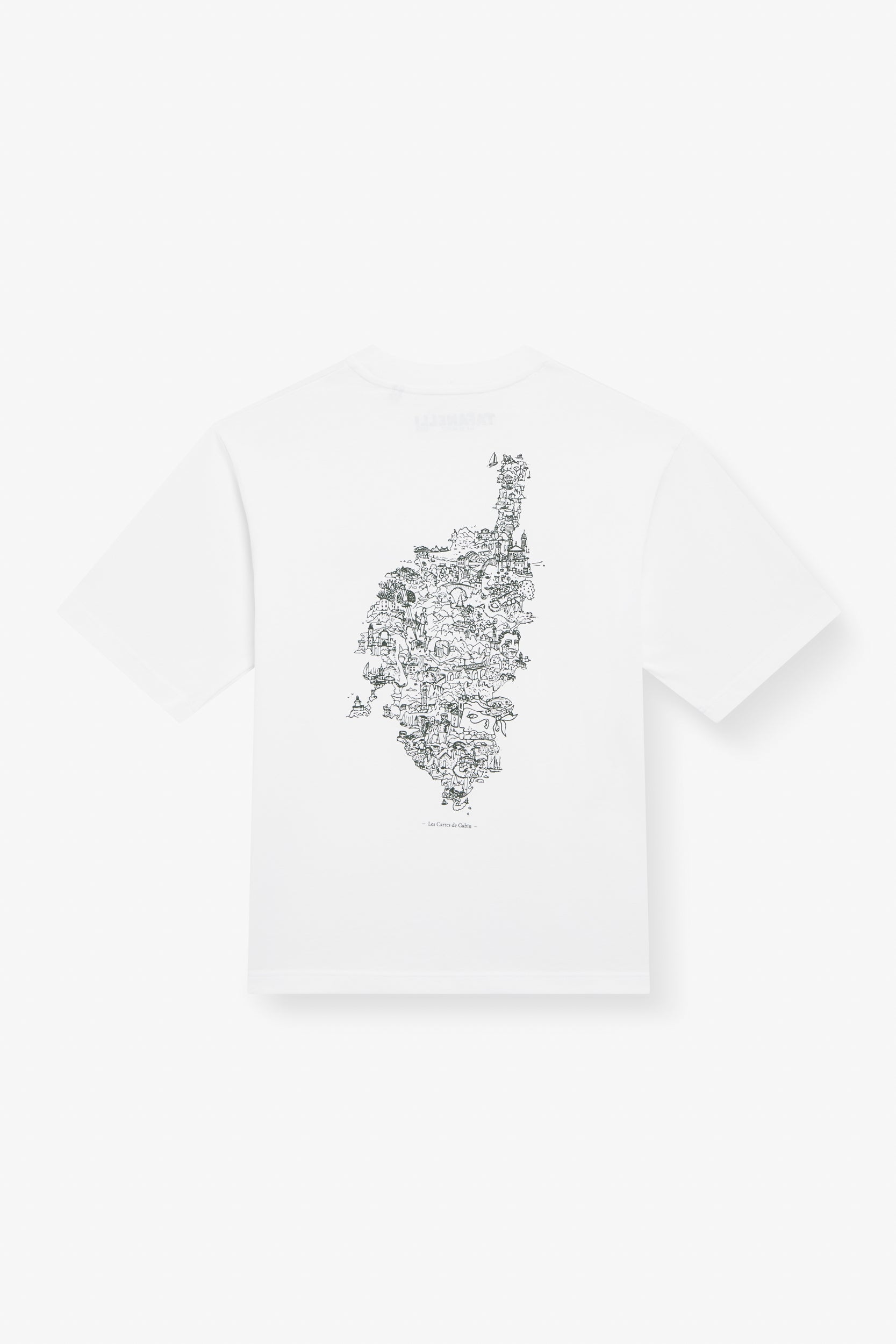
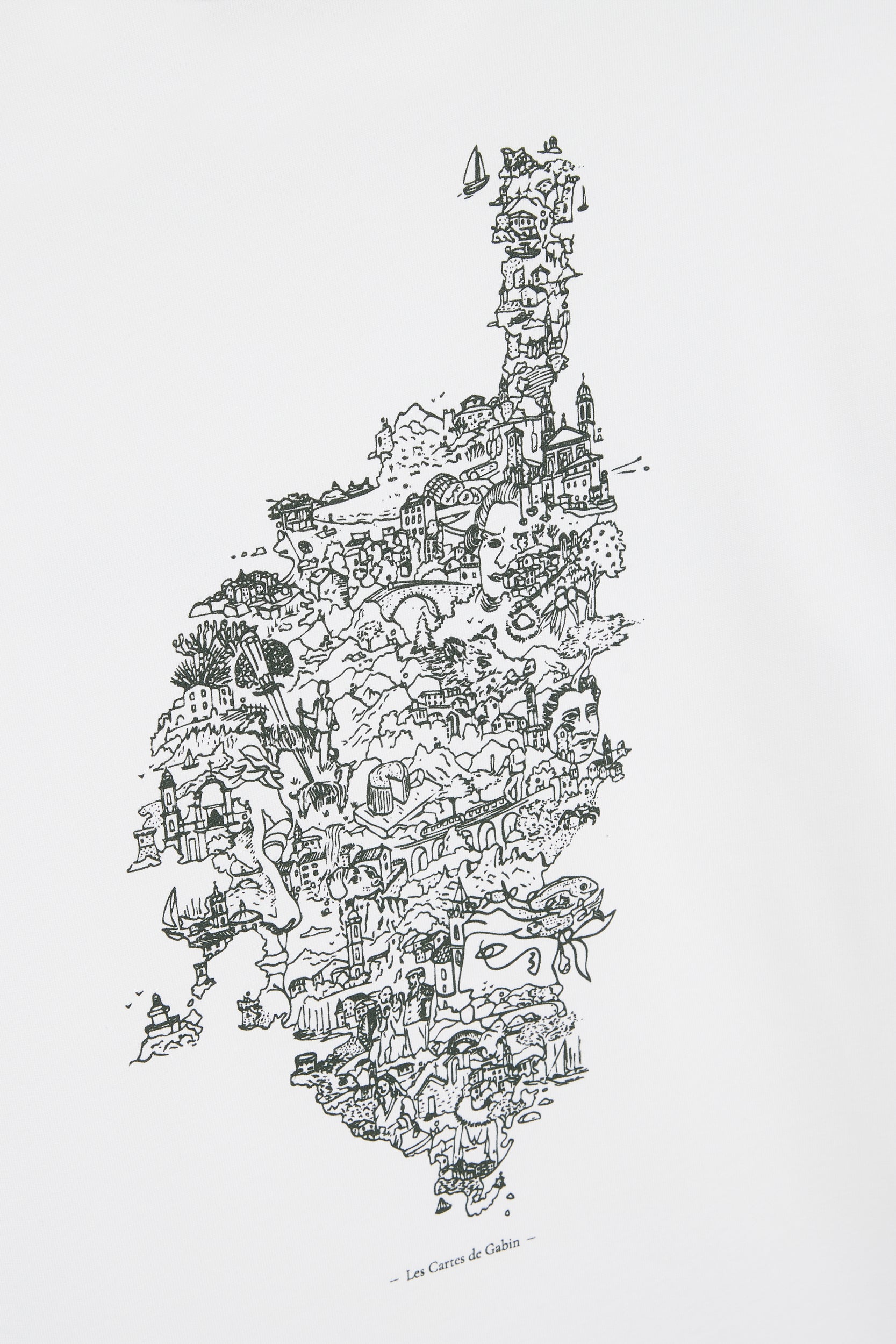
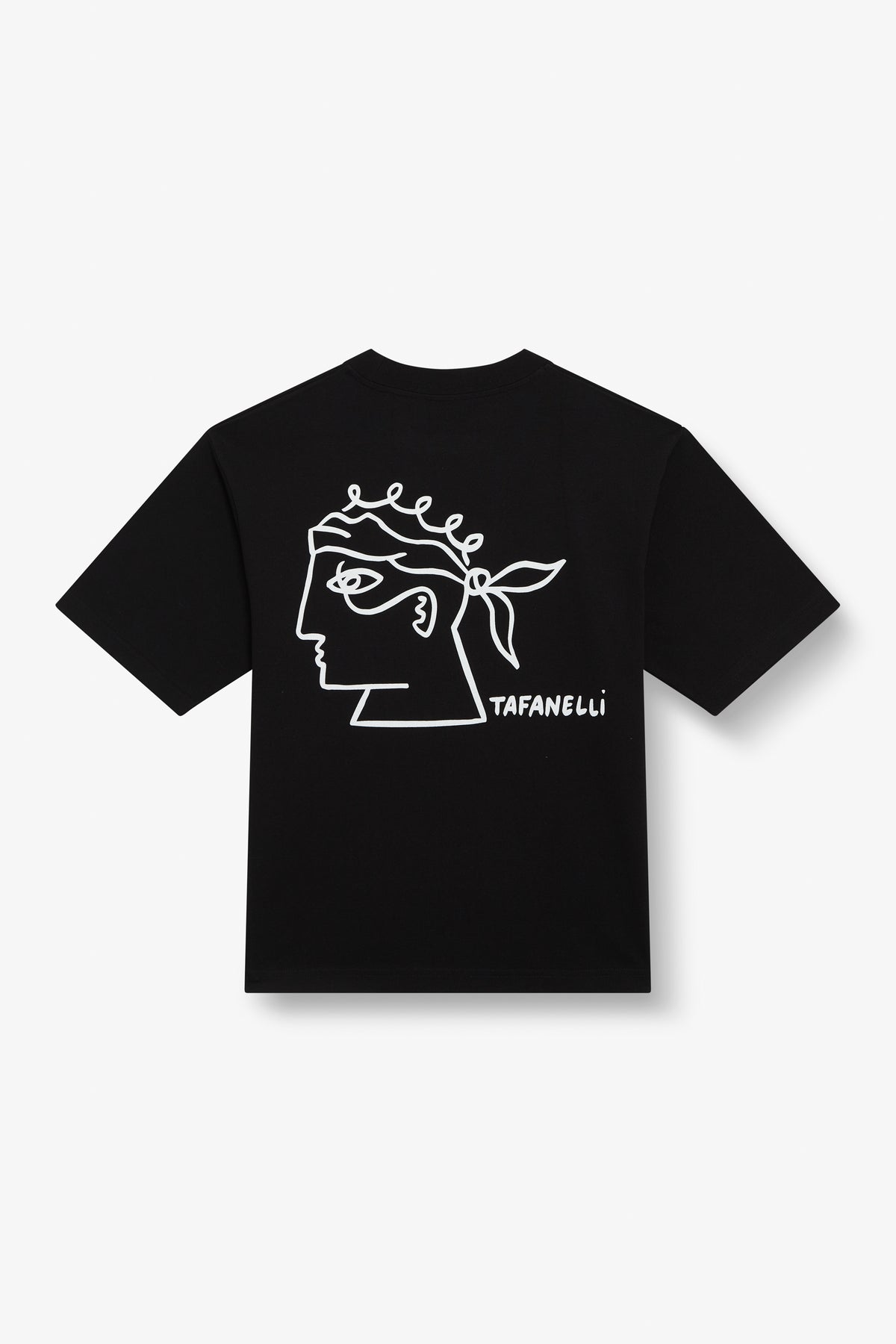
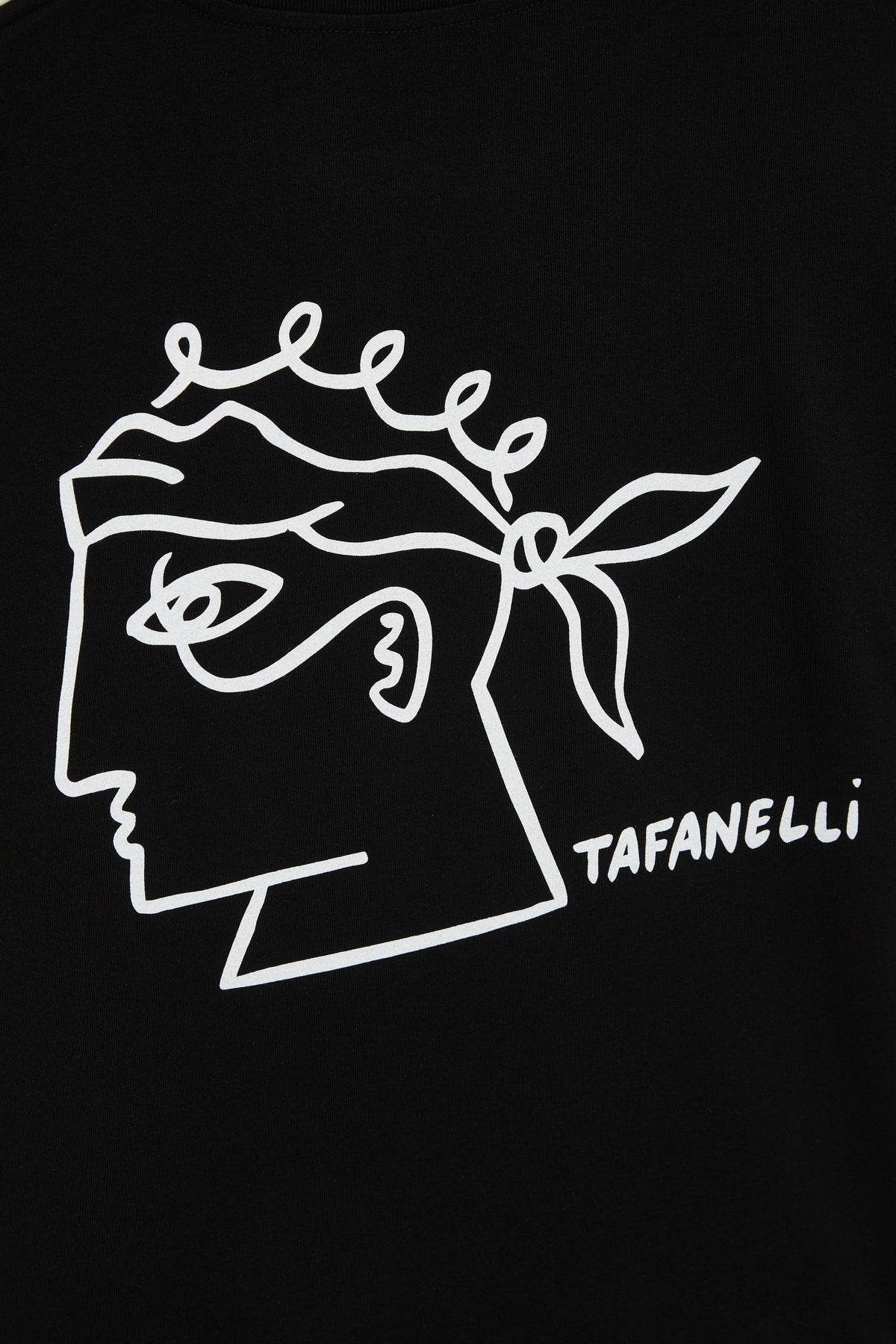
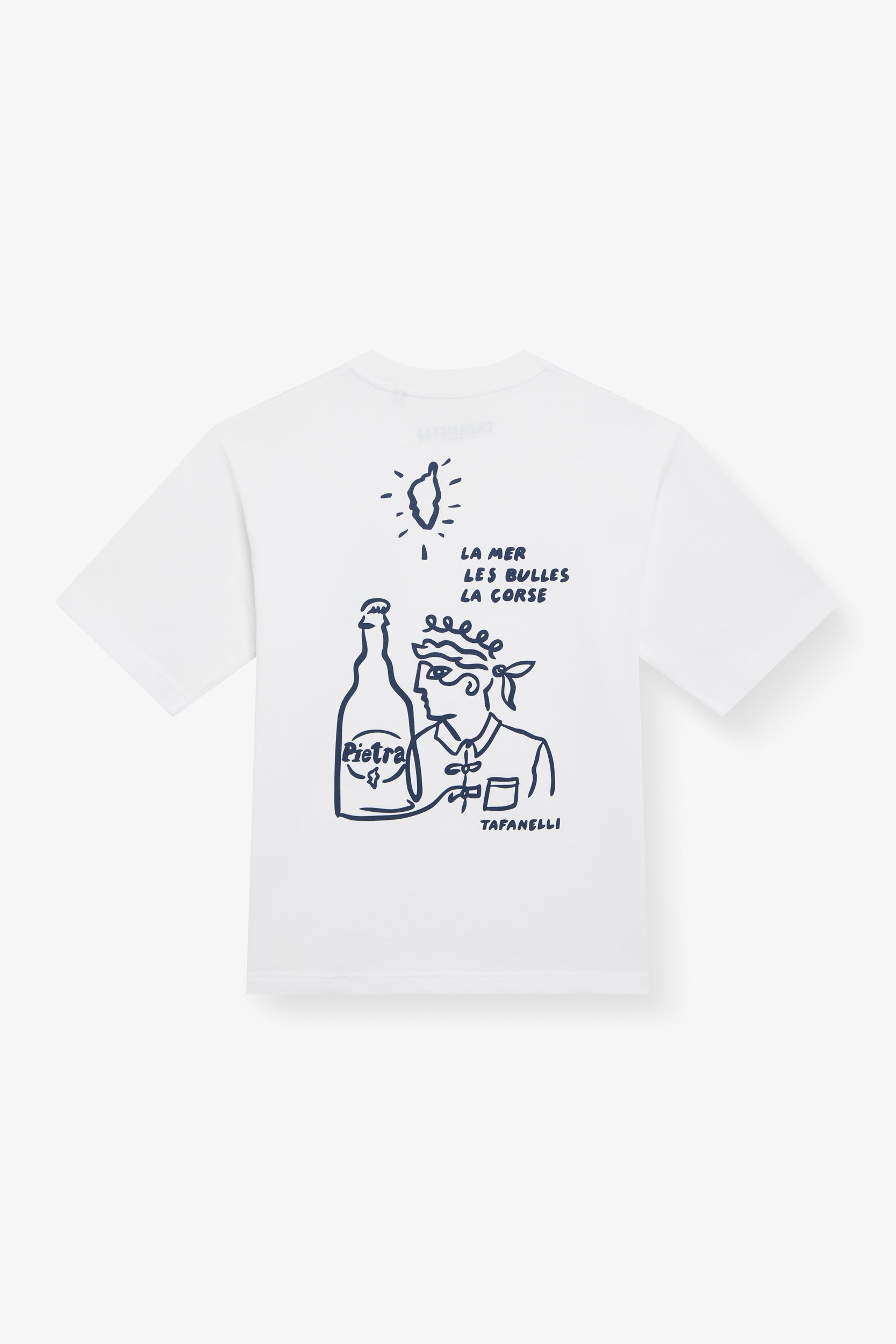
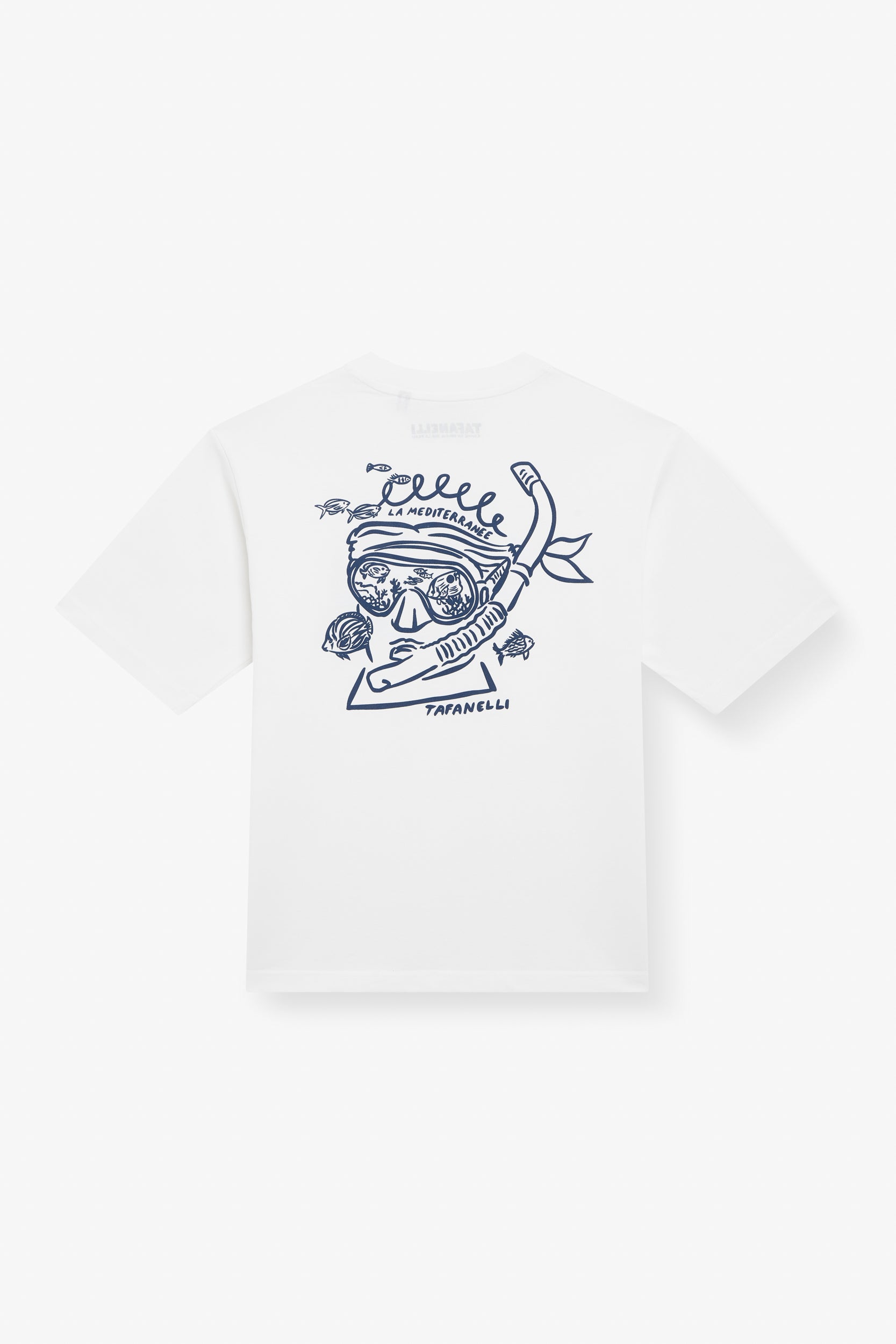
Our pieces are present in that very part of Balagne: Chez Tao in Calvi, Au Bout du Monde, U Nichjaretu, and the Hôtel U San Dume in Cateri. Four addresses within twenty minutes of Lumio, each with an exclusive piece unavailable elsewhere. The complete map is online.
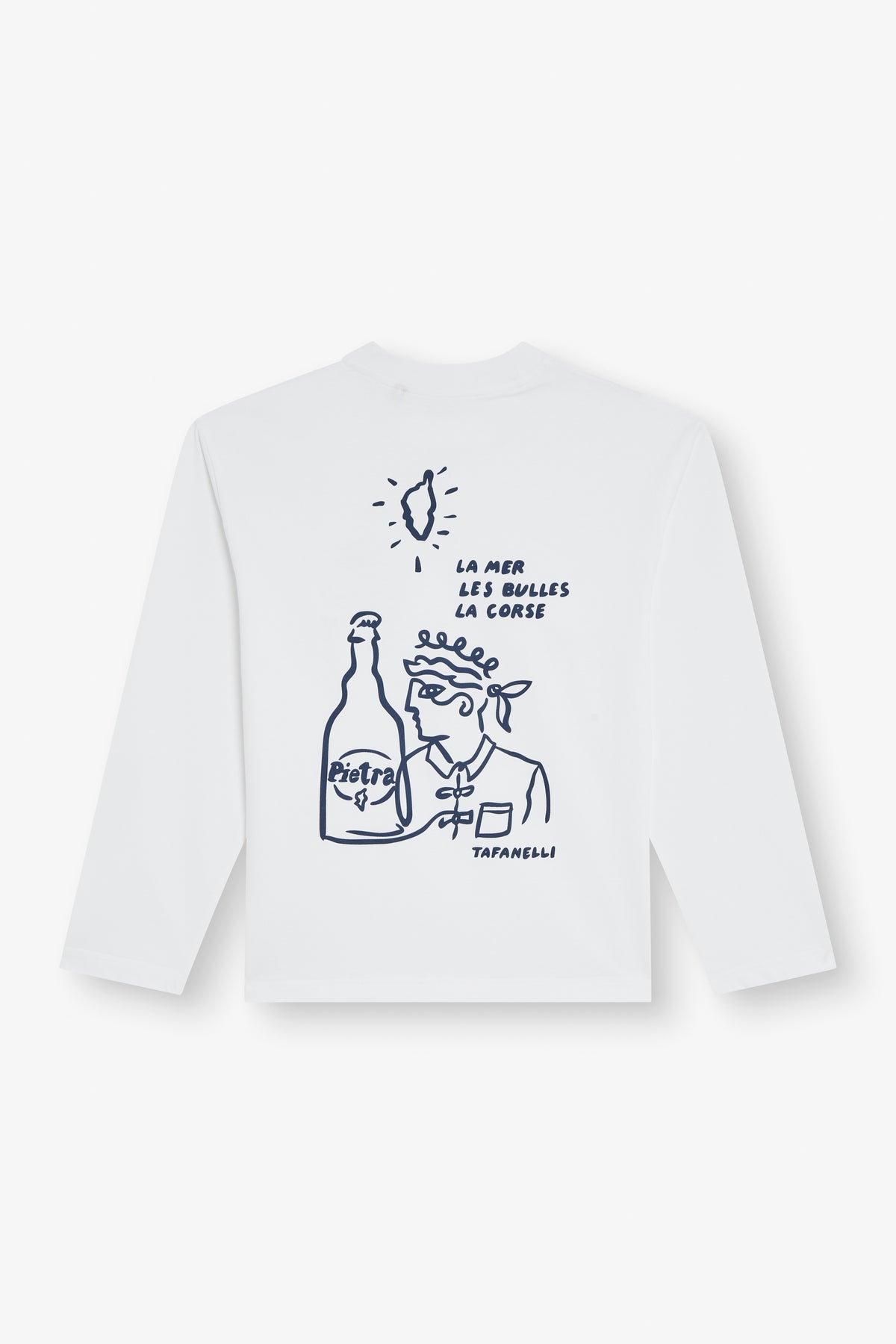
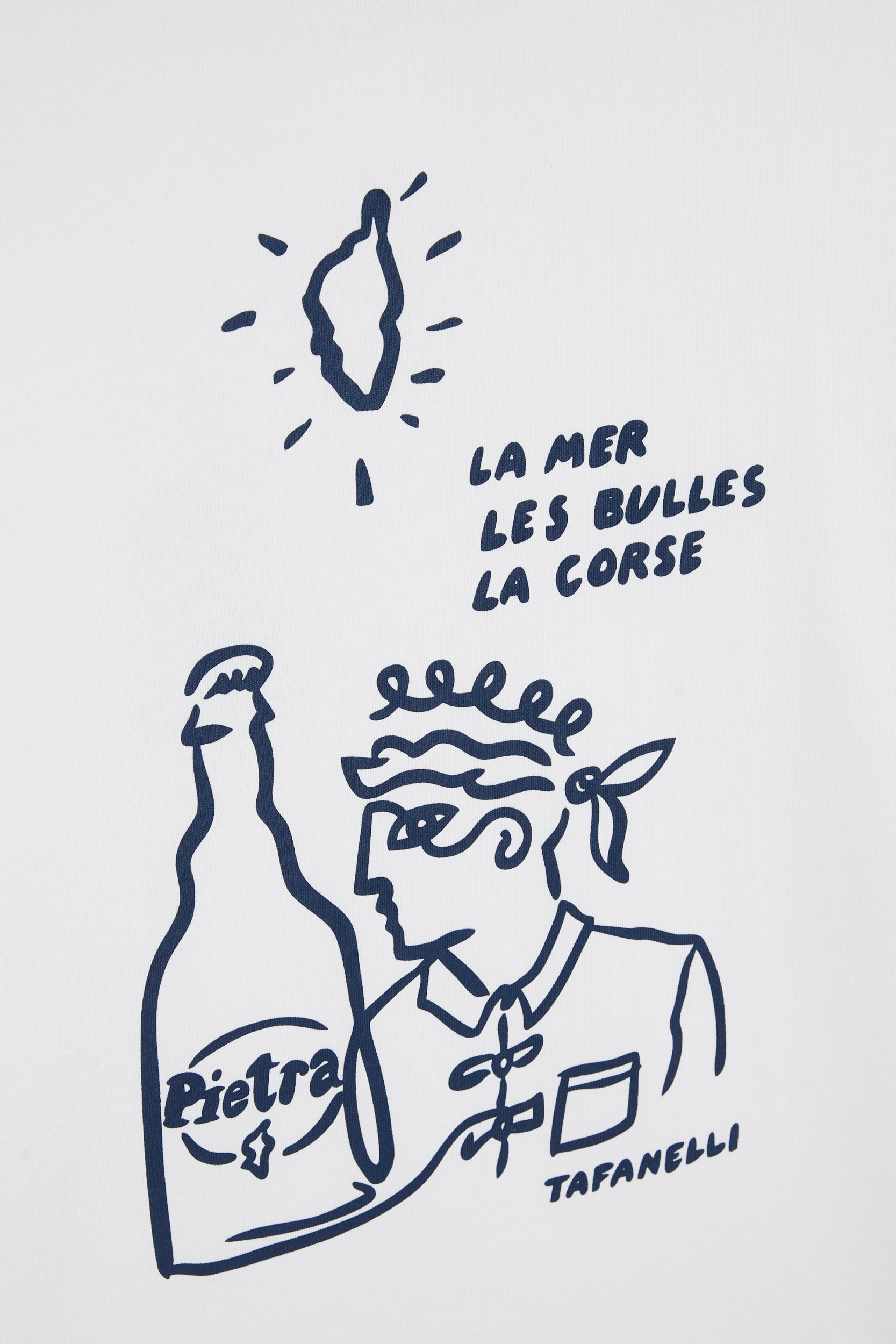
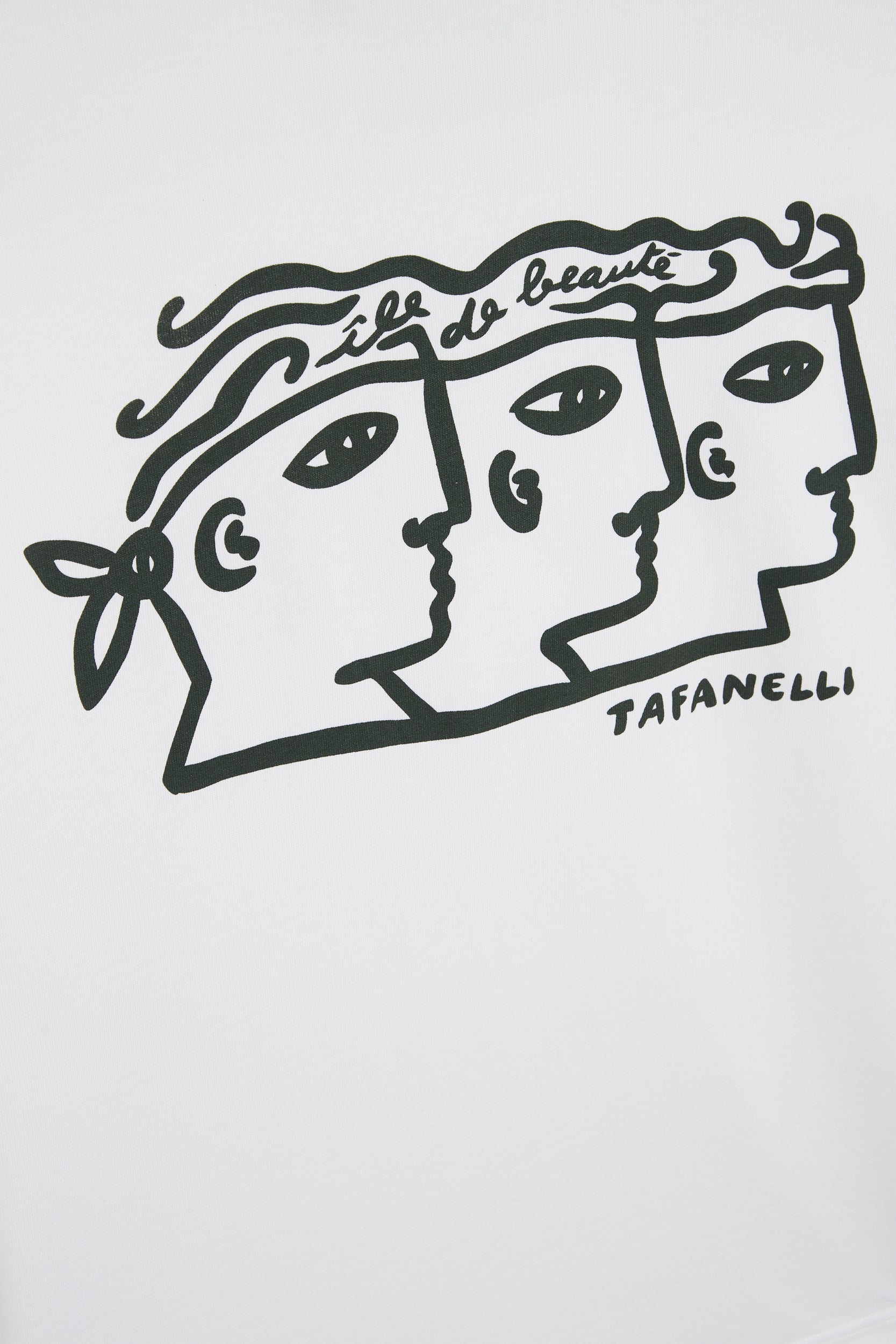
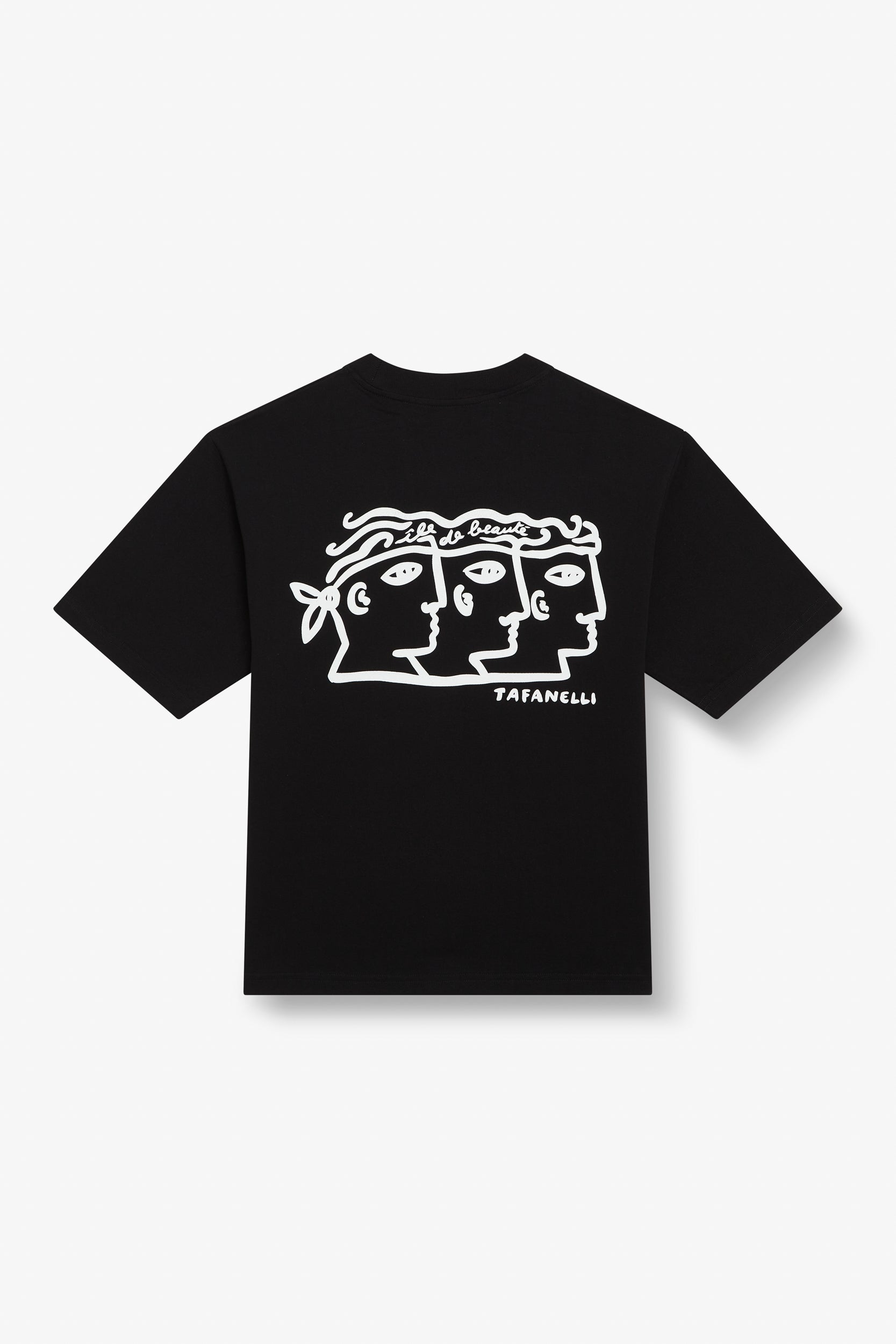
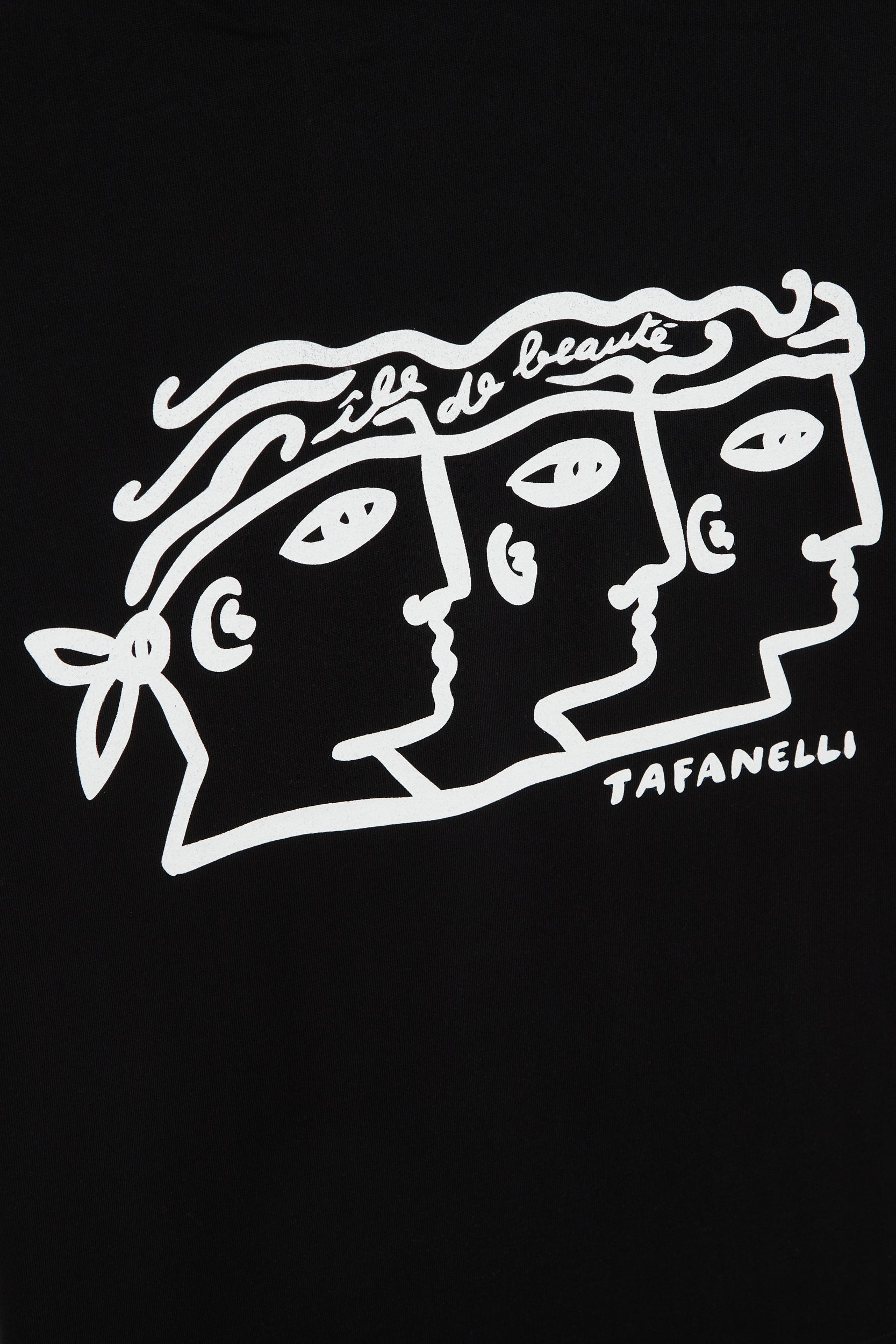
And our latest piece, La Trinità, bears the island's historic designation under three profiles turned toward the same horizon: sea, mountain, maquis. 280 g/m² cotton, hand-screenprinted.
To go further:
- Balagne, the 2026 complete guide
- Jacquemus in Corsica, the Pietra lighthouse show
- Women's Corsican clothing, the guide to island style
- Corsican brand: how to recognize the real thing
- Traditional Corsican costume
- Calvi, the complete guide
When passing through Corsica, the customer becomes a friend.
A DOPU,
TAFA