Secret beaches of Corsica: the 12 coves that Corsicans keep for themselves (2026 guide)
Ask a Corsican for their favorite beaches. You will get, at best, two or three obvious names: Palombaggia, Rondinara, Santa Giulia. Push a little, and you might stumble upon Saleccia or Roccapina. But their real beaches—the ones where they take their children on Sundays, where they have lunch with their family in September, where they fish early in the morning in May—those, they will never tell you about. Out of modesty. Out of loyalty. Out of a survival instinct. This article is a friendly betrayal of that silence. Here are the twelve coves that make up the island's true secret map, classified by region, with their access conditions, their particularities, and the dress codes they command.
Why Corsicans hide their beaches
Before sharing these twelve names, one must understand the cultural code that has protected them for decades. For a Corsican, a beach is not a tourist product. It is a place of life. An intimate land. A place where one grows up, where one brings one's children, where one symbolically buries one's dead while looking at the sea. To reveal a beach is to expose a fragment of childhood.
Added to this is a collective memory of the tourist saturation of the 1970s-1990s, which transformed Palombaggia or Pampelonne into crowded sites where the original beauty was lost under sun loungers. Corsicans have learned to protect what remained. They do not want to see their favorite coves become the next summer's overloaded Instagram sets.
What follows are known beaches, but ones that the vast majority of visitors ignore or avoid. None have a luxury beach club, none have organized parking; some require an hour of walking or a boat. That is precisely what preserves them. If you go, tread lightly, pick up your trash, speak softly, and do not share them too much on social media. The Corsicans who frequent them will be grateful.
Cap Corse: three coves for the true initiated
Cap Corse, that wild finger reaching north of Bastia, is home to some of the most preserved coves on the entire island. Three of them are worth the effort.
1. Tamarone Beach (Macinaggio)
Located at the northern tip of the Cap, accessible from the port of Macinaggio via a coastal path about a one-hour walk away, Tamarone is the first stop on the famous Customs Officers' Path. Golden sand, turquoise waters against a backdrop of granite rocks, view of the Finocchiarola islands. It is also near this beach that one of the most secret tables in Corsica, the restaurant U Paradisu, can be found, accessible only on foot or by sea.
2. Cala Genovese (Centuri)
A tiny cove, tucked between two rocky headlands in the west of Cap Corse, accessible by a steep path descending from the coastal road. Tiny transparent waters, fine pebble bottom, a feeling of being at the end of the world. A dozen people maximum frequent it at a time. Avoided by the general public as it is invisible from the road.
3. Barcaggio Beach
The extreme northern tip of Cap Corse, where Corsica fades into the blue. A beach of sand and pebbles, low dunes, view of the Giraglia island. Wild cows sometimes graze right up to the bathers' feet. The hamlet of Barcaggio has about ten houses and two modest tables. It is the northernmost inhabited place in Corsica, and it is precisely this extremity that makes it magical.
Agriates Desert: the wild trinity
Between Saint-Florent and Ostriconi lies one of the last great undeveloped areas in the Western Mediterranean: the Agriates Desert. Three beaches reveal themselves here to those willing to walk or take to the sea.
4. Saleccia Beach
The most famous of the three, and already internationally celebrated, Saleccia nevertheless remains preserved by its relative inaccessibility. No paved road gets you there. Either you take a boat shuttle from Saint-Florent, walk from the hamlet of Casta, or follow a 4x4 track for several kilometers. The result is one of the most beautiful white sand beaches in Europe, bordered by maritime pines, on waters of an unreal turquoise. The filming of the movie The Longest Day in 1962 set its scene here.
5. Lotu Beach
Neighbor to Saleccia, also accessible by boat shuttle from Saint-Florent or by walking from Saleccia (about an hour along the customs officers' path), Lotu offers the same visual perfection in a more intimate, more enclosed dimension. Shallow water, extremely fine sand, almost always deserted off-season.
6. Ghignu Beach
The wildest and least frequented of the three Agriates beaches. Accessible only via the customs officers' path, after several hours of walking from Saleccia. A tiny cove, framed by dark volcanic rocks, occasionally frequented only by shepherds and long-distance hikers. The reward for real effort.
Balagne: the three forgotten beaches
Balagne is known for its perched villages (Sant'Antonino, Pigna, Calenzana, Lumio), but it also harbors an exceptional coastline, punctuated by beaches that hurried visitors overlook.
7. Ostriconi Beach
At the mouth of the Ostriconi river, which marks the natural border between Balagne and the Agriates, this beach owes its singularity to the mixture of fresh and salt water, which creates a unique lagoon. Golden sand, low dunes, and a spectacular view of the Corsican mountains plunging into the sea. Accessible by a walk down from national road 197, about twenty minutes.
8. Bodri Beach (L'Île-Rousse)
A few kilometers west of Île-Rousse, accessible by a small road and then a short path, Bodri offers one of the most beautiful turquoise waters in all of Balagne. Bordered by olive and pine trees, with its small emerged white rocks, it remains preserved by the difficulty of parking and the near-absence of infrastructure. The residents of Lumio and Île-Rousse have made it their sanctuary.
9. Punta Spano (Calvi)
A rocky point west of Calvi, accessible by a winding path through the maquis. Not a sandy beach, but a series of small rocky coves where you have direct access to deep, crystal-clear waters, ideal for seasoned swimmers. A picnic spot for Calvi families for three generations.
South and southwest: raw luxury
The south of Corsica is world-famous for Palombaggia and Santa Giulia. But Southern Corsicans have their own, much more discreet addresses.
10. Roccapina Beach
Located beneath the famous Lion of Roccapina, a rock in the shape of a lying lion that dominates the southwest coast, this beach is one of the most visually iconic in all of Corsica. White sand, shallow turquoise waters, all dominated by this animal silhouette sculpted by erosion over millions of years. Accessible by a track descending from national road 196 between Sartène and Bonifacio.
11. Cupabia Beach
On the southwest coast, between Propriano and the Valinco gulf, Cupabia is a vast blonde sand beach bordered by dense maquis, frequented almost exclusively by locals. A dozen villas in the pine forest, no commercial beach installations, calm and warm waters perfect for children. It is the family Sunday beach for Corsicans from Propriano and Sartène.
12. Capo di Feno (Ajaccio)
About fifteen kilometers west of Ajaccio, after a winding road through the maquis, Capo di Feno is known to the Ajacciens as their weekend beach. Vast, wild, exposed to western winds and therefore sometimes suitable for surfing, it maintains a raw dimension that the more touristy beaches of the south have lost. A few simple beach huts serve charcuterie platters and white wine in summer.
West coast: inaccessible beauty
Beyond the twelve main beaches, let us mention three even less accessible places that are worth the effort for travelers who have the time.
Arone Beach
Near the calanques of Piana, moving slightly north, Arone is a vast bay of golden sand surrounded by red granite cliffs. The chromatic contrast with the turquoise water is striking. Accessible by a narrow and winding road, which discourages hurried tourist flows.
Bussaglia Beach
Neighbor to Arone, smaller and more intimate, Bussaglia is framed by the same red cliffs and offers an almost unreal setting for swimming at sunset.
Girolata Beach
A village accessible only on foot (about two hours of walking from the Croix pass) or by sea, Girolata houses a discreet beach facing the Scandola nature reserve. One of the most preserved places in the entire Mediterranean.
When to go to Corsica to experience the secret beaches
Corsican secret beaches cannot be experienced just any time. Here are the four windows that allow you to fully enjoy them.
Late May to mid-June
The water is already 19 to 21 degrees, the maquis is in full bloom (yellow immortelle, lavender, wild rosemary), the days are long, and the crowds have not yet arrived. This is arguably the best window to discover the island in its authentic intensity.
First half of July
Still acceptable on secret beaches, provided you arrive early in the morning (before 11 am) and avoid weekends. The temperatures are perfect (28 to 32 degrees), the water is 24 degrees, the maquis is dry but still fragrant.
September
The favorite time for Corsicans. The summer crowds have left, the waters are at their maximum temperature (25 to 26 degrees), the climate is still perfectly summery, and the light takes on that golden density that makes every beach photographically unreal. If you can, choose September.
First week of October
For true enthusiasts, the first week of October still offers magnificent swimming days, in near-total silence. The water remains around 23 degrees, and one often has an entire beach to oneself.
The ideal outfit for Corsican beaches
A Corsican beach is not experienced like a beach on the Côte d'Azur. The local dress code is rawer, more natural, more utilitarian. Here is the silhouette we recommend to embrace the spirit of the place.
For men
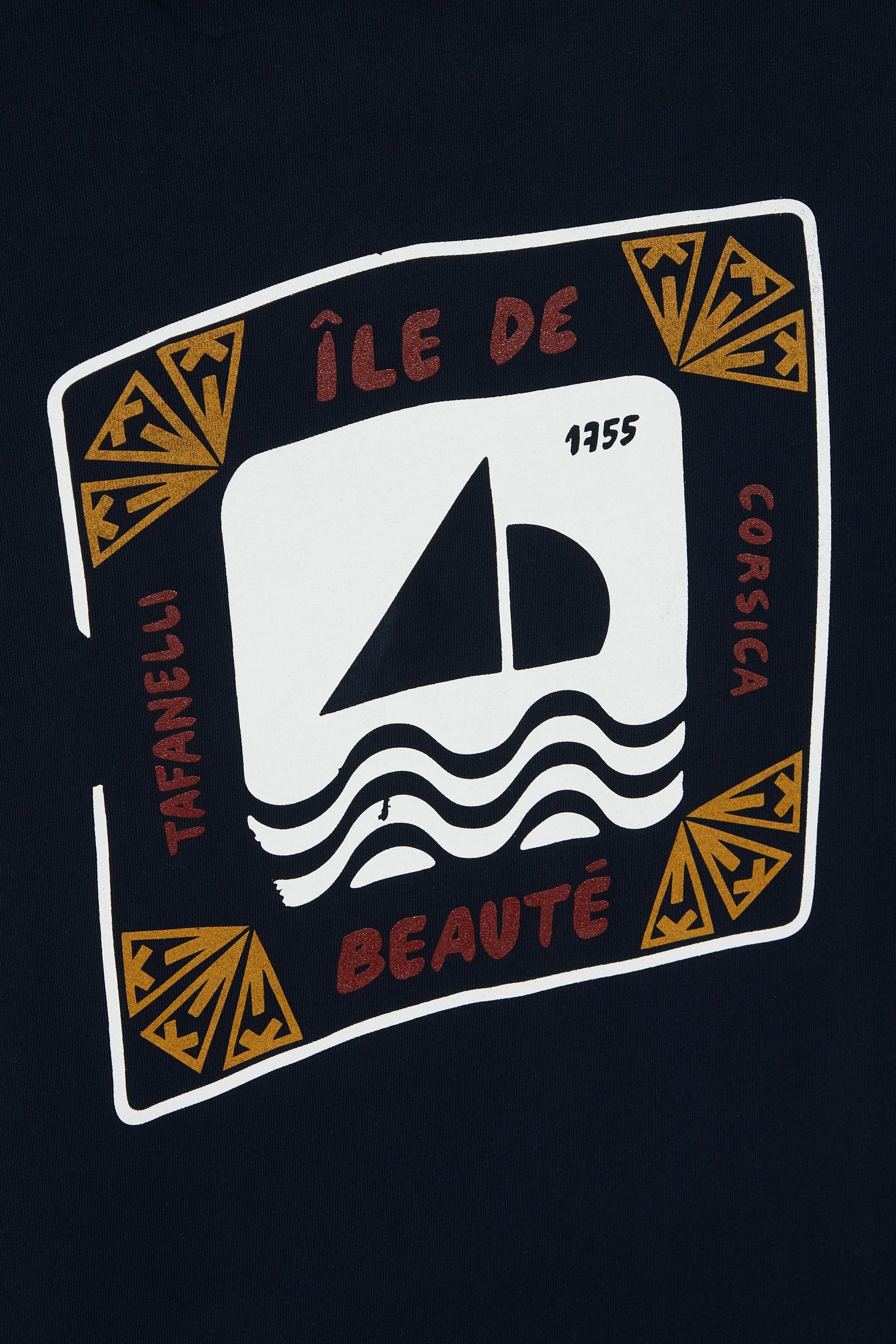
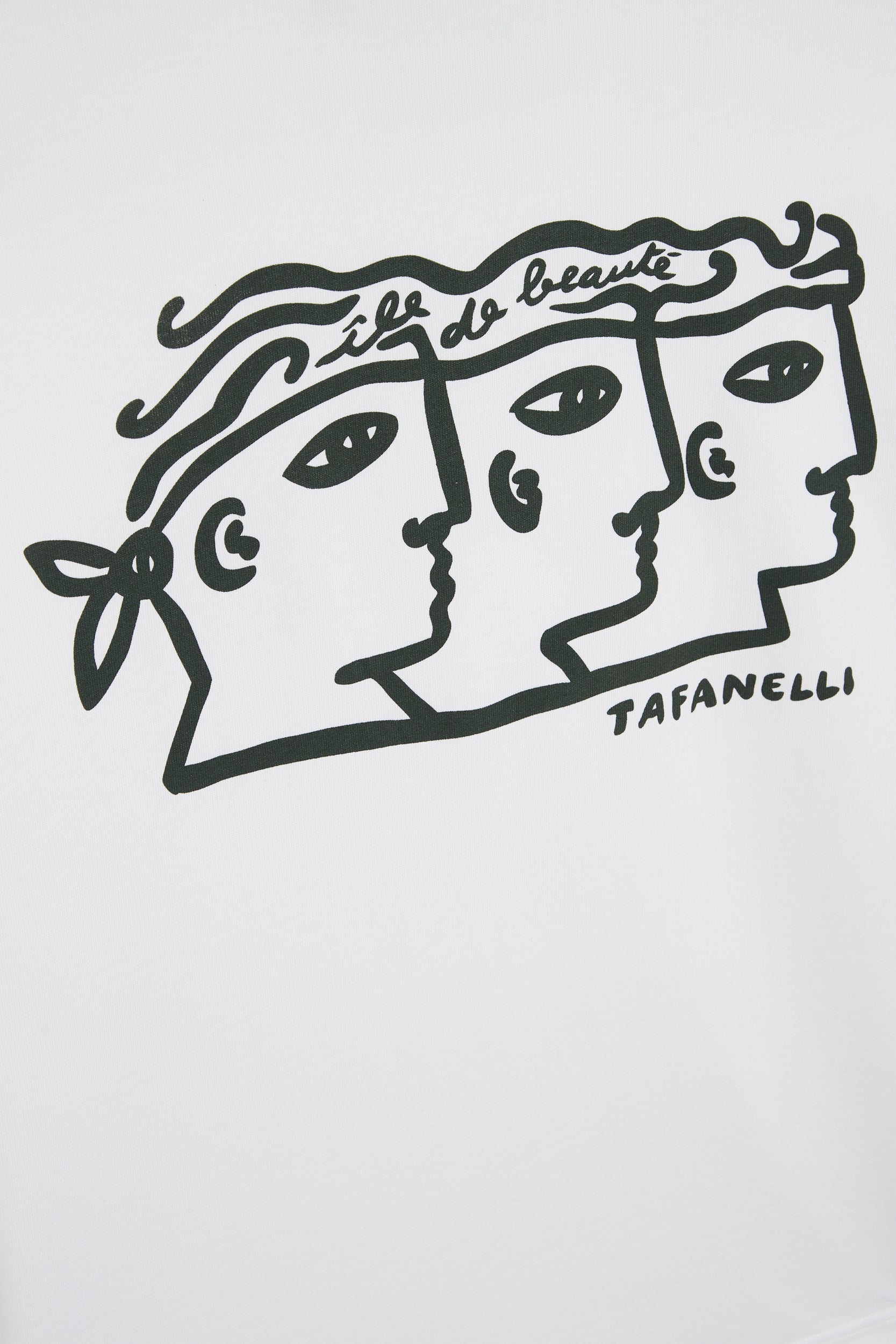
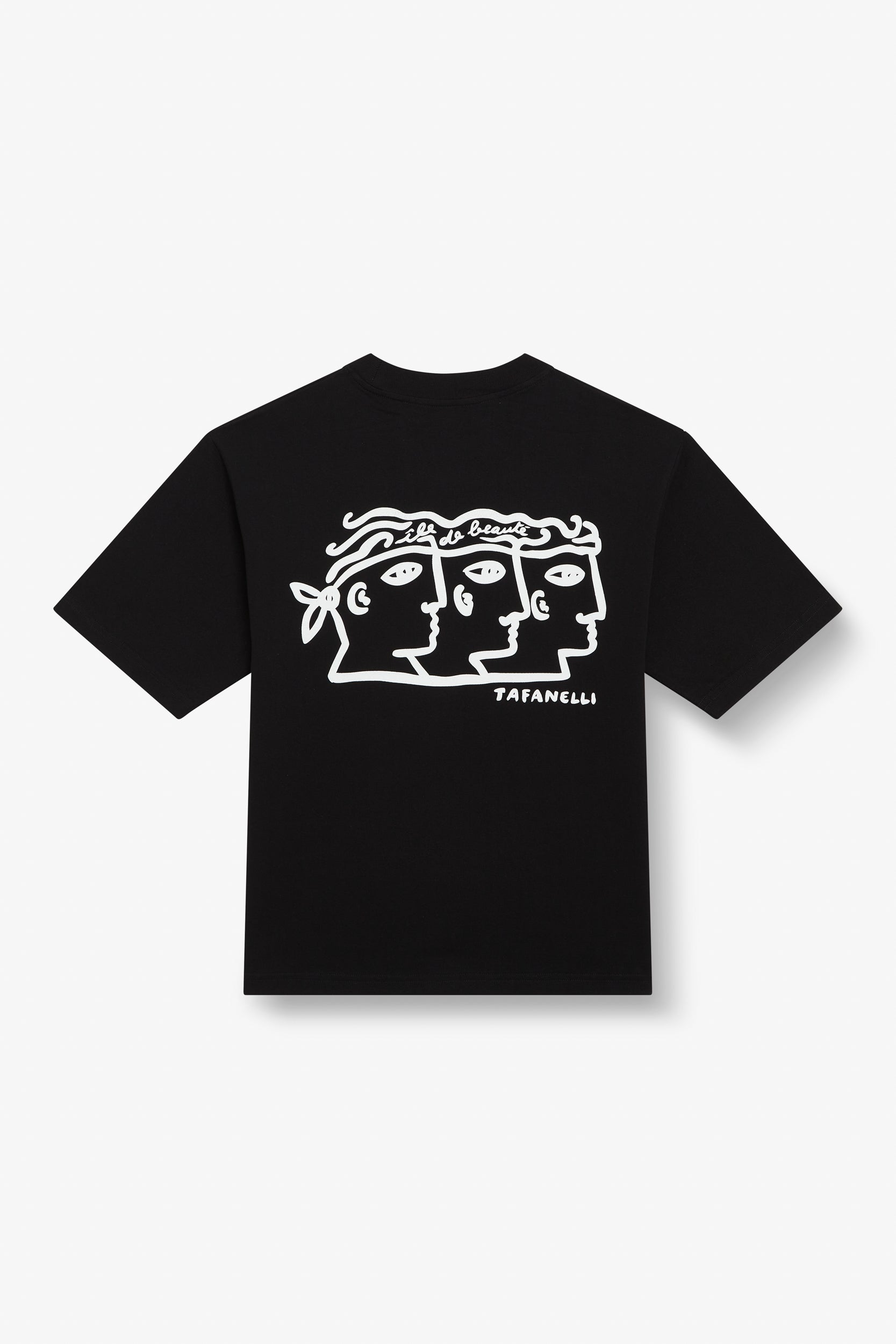
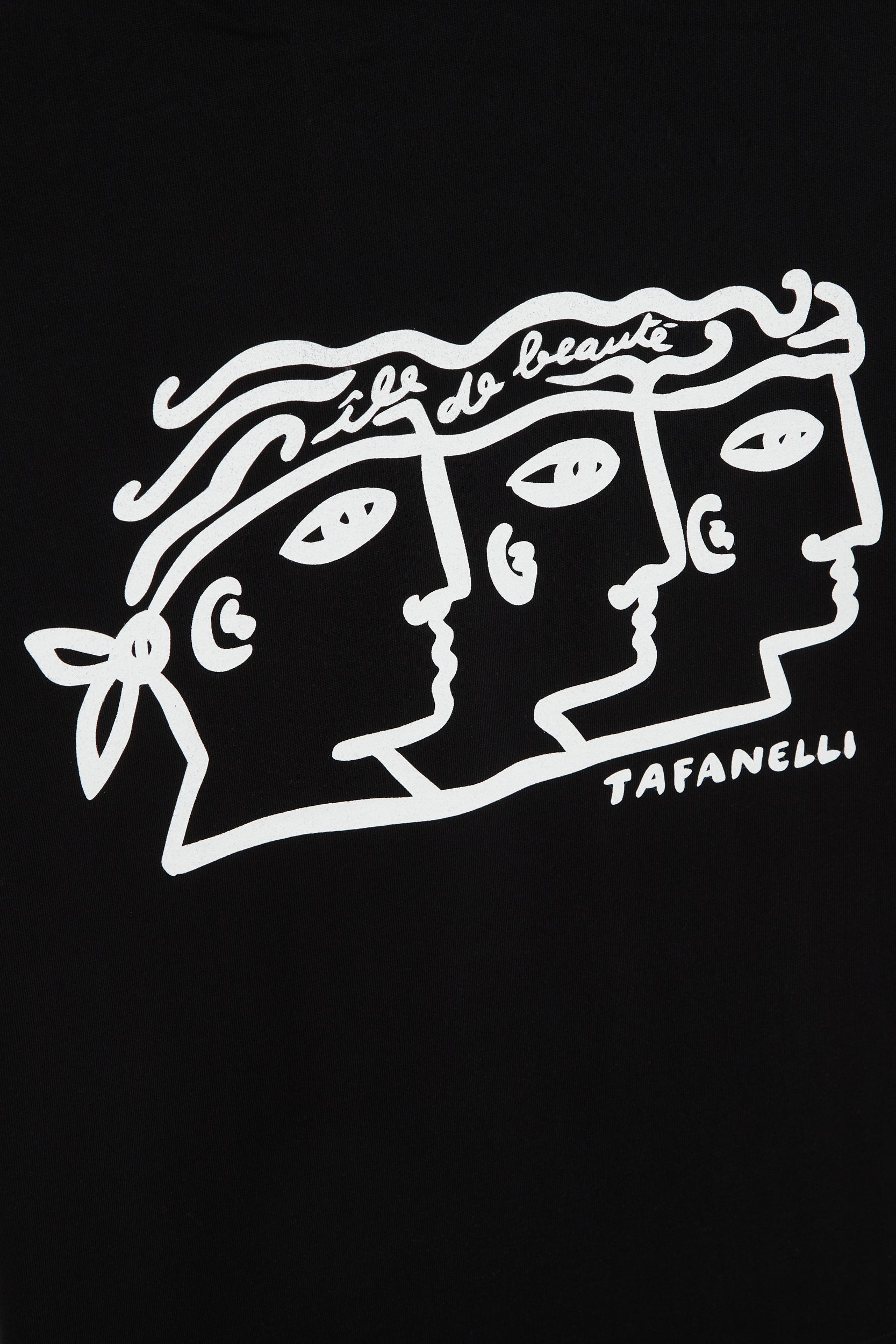
Retro-cut swim shorts in earthy tones (sand, navy, faded khaki). A white or sky-blue linen shirt, open at the collar, for walking to the beach and for lunch. A heavy 280g cotton t-shirt, ideally nautical (our Sportmer Navy or our Île de Beauté 1755), to absorb the evening light. Natural canvas espadrilles or bare feet. Navy cap for the sun. Persol or Ray-Ban Wayfarer glasses.
For women
A light dress in light linen or printed cotton, easily slipped over a swimsuit. A cotton Corsican bandana for the hair or around the neck. Simple leather sandals. Natural straw or raffia bag. One-piece swimsuit or sober bikini, ideally solid-colored, in earthy or navy tones.
Universal principles
- Natural materials only (cotton, linen, raffia, leather)
- Restricted palette (sand, ecru, navy, terracotta, khaki)
- No flashy logos, no gaudy patterns
- No ostentatious jewelry
- Loose, fluid cuts that withstand salt and sand
- Only one signature piece per silhouette (a beautiful t-shirt, or a beautiful dress, or beautiful shorts, never all three at once)
How to inhabit these places according to TAFANELLI
At TAFANELLI, we design each of our pieces thinking precisely of the places we have just mentioned. A day in Saleccia is not lived with the same clothing as a day in Saint-Tropez. The sand is heavier, the light is harsher, the maquis is drier, the salt is more present. You need materials that resist, cuts that breathe, and colors that patina instead of yellowing.
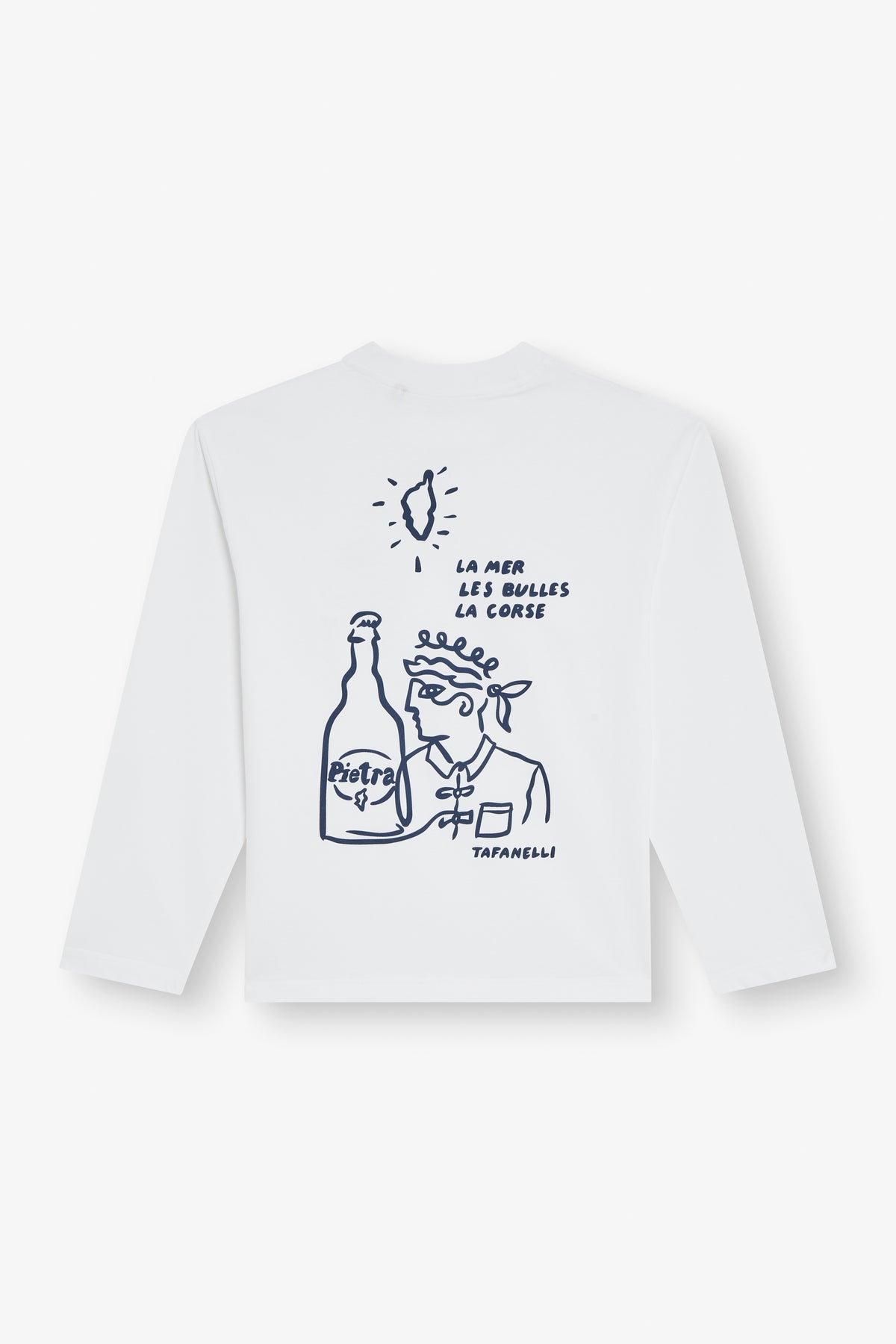
That is exactly what we manufacture. 280-gram-per-square-meter heavy cotton for our t-shirts. High-density screen printing applied by hand so that it fades gently over time instead of peeling. Boxy cuts that support movement, walking, swimming. Voluntarily limited print runs to preserve rarity.
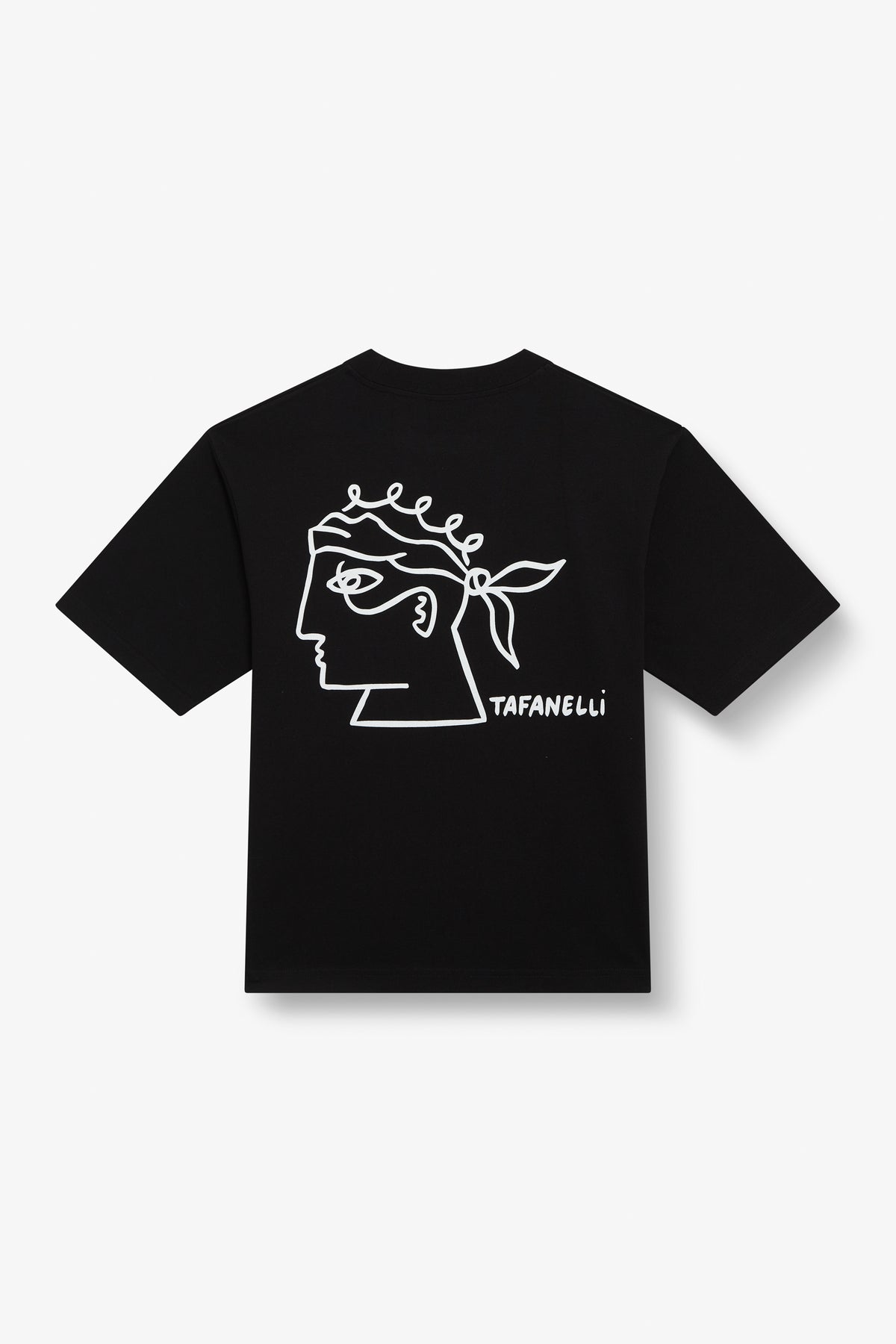
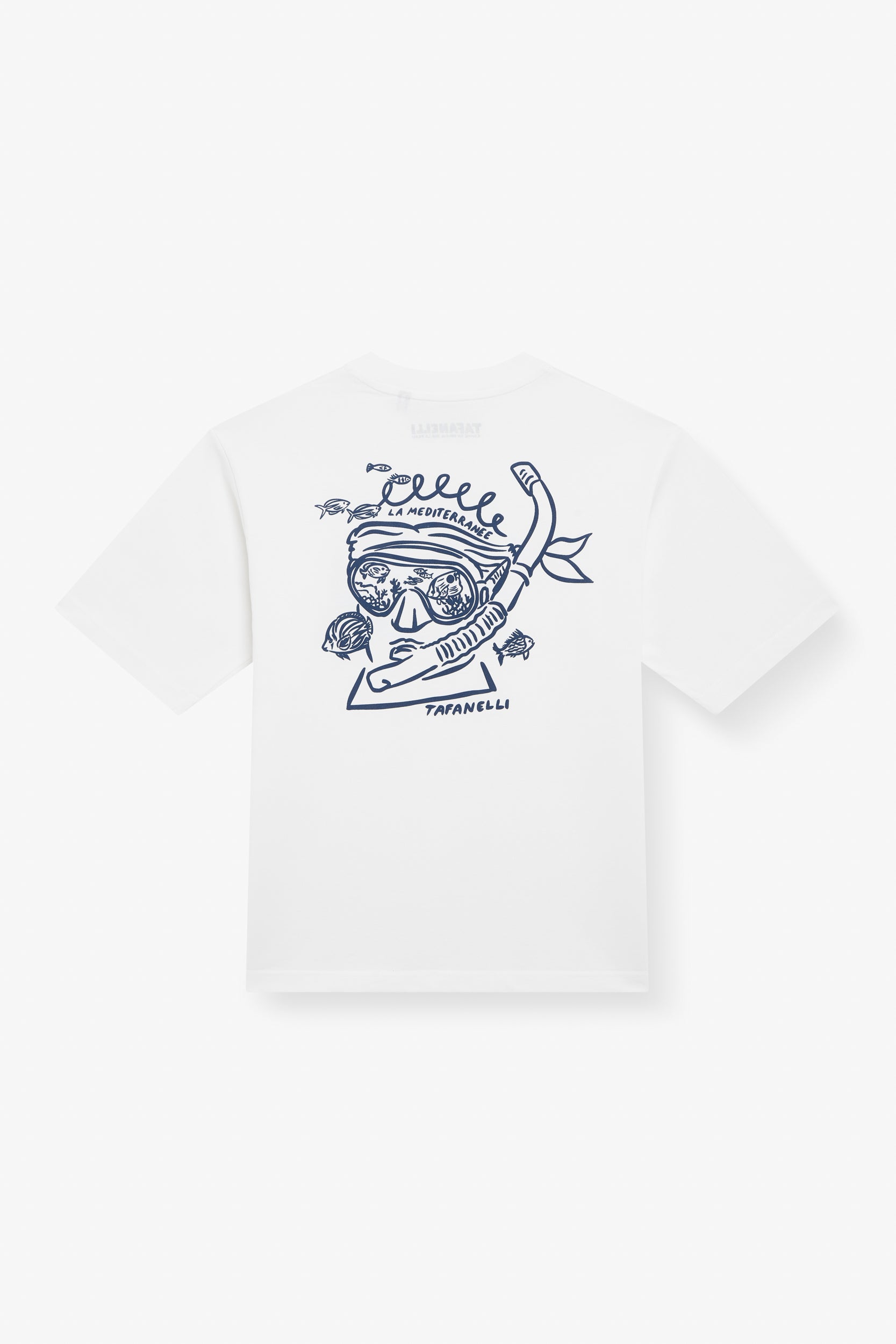
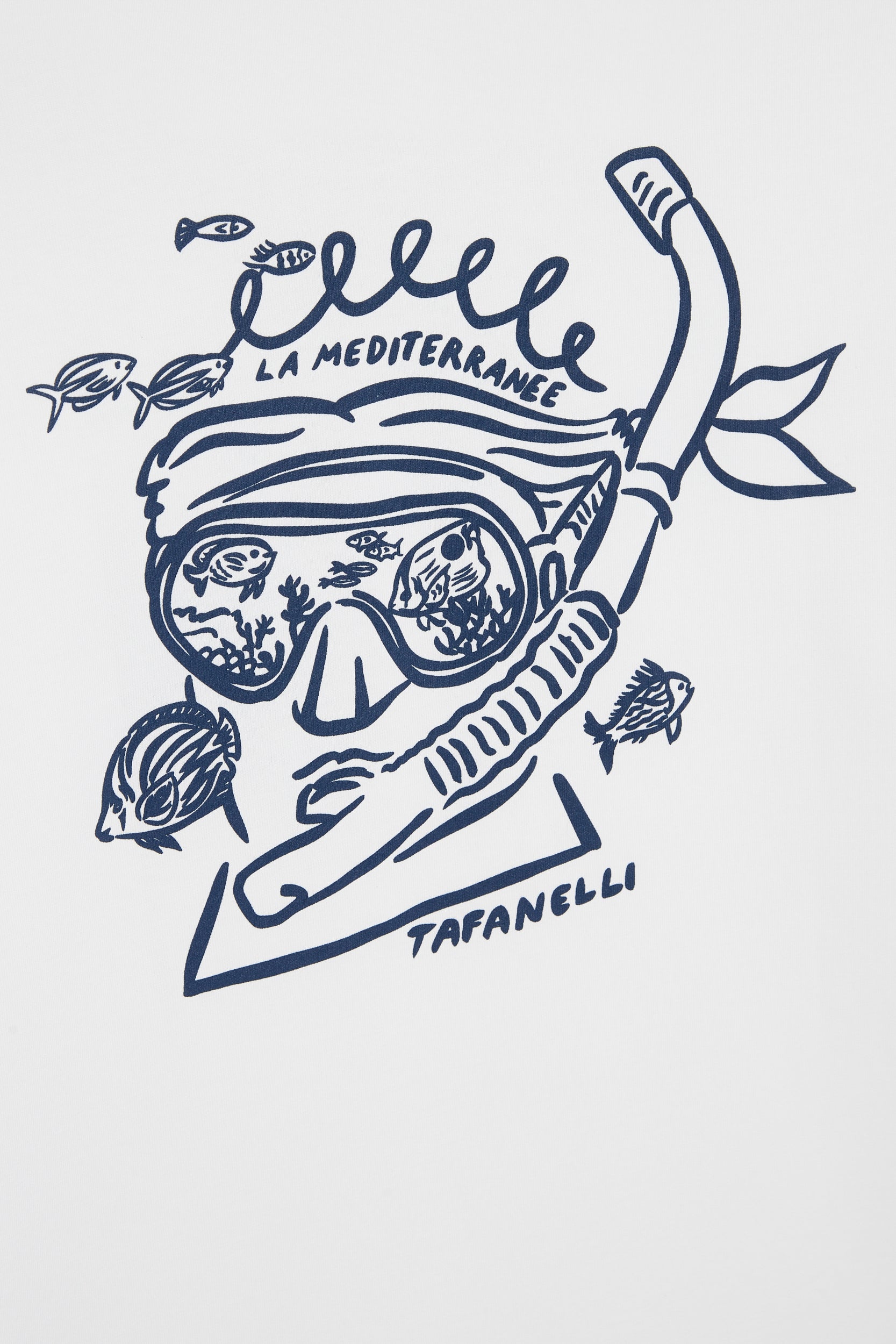
Our iconic references all evoke Corsican places or figures: The Calvi Diver, The Sea Urchin Hunt, The Mermaid Club, The Sportmer, The Island of Beauty 1755, The Roccapina. When you wear one of these pieces on a Corsican beach, you are not just wearing a garment. You are telling a part of this land you are treading upon.
This is also our way of saying thank you. Thank you for coming to Corsica with respect. Thank you for not confusing our island with a product. Thank you for understanding that these beaches we are talking about today are ours before they are yours, and that we are trusting you with them, hoping you will know how to honor them as we do.
Frequently asked questions
What are the most beautiful secret beaches in Corsica?
Among the most beautiful preserved beaches on the island are Tamarone and Cala Genovese in Cap Corse, Saleccia and Lotu in the Agriates Desert, Ostriconi and Bodri in Balagne, Roccapina and Cupabia in the south, Capo di Feno near Ajaccio. All share a common characteristic: they require an effort of access that discourages mass tourist flows and preserves their original beauty.
How to access the Agriates beaches?
The three iconic beaches of the Agriates (Saleccia, Lotu, Ghignu) are accessible in three ways: by boat shuttle from the port of Saint-Florent (the simplest and fastest solution), by 4x4 or off-road vehicle track from the hamlet of Casta (more adventurous), or by hiking along the customs officers' path from Casta as well (several hours of walking depending on the targeted beach).
When is it best to go to Corsica for the beach?
The best periods are late May to mid-June, and the entire month of September. The temperatures are perfect, the water is warm, and the secret beaches remain nearly deserted. September is particularly recommended: the water reaches its annual thermal maximum (25-26°C), the golden light is sublime, and the summer crowds have left. The first week of October still offers splendid swimming days for the true initiated.
Is a boat necessary to access the most beautiful Corsican beaches?
Not necessarily. Most secret Corsican beaches are accessible on foot, by car via tracks, or via coastal paths. However, some beaches, like Girolata, are accessible only on foot (two hours of walking) or by sea. Having access to a boat, even a small one, considerably multiplies the possibilities and allows you to discover coves that land routes never reveal.
What is the difference between Corsican beaches and Provençal beaches?
Corsican beaches are on average less developed, less commercialized, and less crowded than those of Provence or the Côte d'Azur. The sand is often whiter, the water more transparent, the maquis denser, and the silence more present. The absence of luxurious beach clubs on most secret beaches is precisely what makes them valuable. It is a rawer, more authentic experience that requires a little more effort but offers infinite rewards.
What to wear for a day at the beach in Corsica?
The ideal look consists of natural materials (linen, cotton) in a sober palette (sand, ecru, navy, faded khaki). For men: a simple swim trunk, a heavy cotton t-shirt, a linen shirt for lunch, espadrilles, or barefoot. For women: a light linen dress, a Corsican bandana, and simple leather sandals. Avoid synthetic materials, flashy logos, and loud patterns. The Corsican code is mineral and natural.
Which Corsican beaches should be avoided in high season?
In July and August, certain now-very-popular beaches become saturated and lose their magic: Palombaggia, Santa Giulia, Rondinara, Saleccia (on weekends). Instead, favor less exposed beaches like Bodri in Balagne, Cala Genovese in Cap Corse, Cupabia in the south, or beaches that are difficult to access, such as Ghignu. Also, prefer the early morning (before 11 am) or late afternoon (after 5 pm) to midday.
To delve deeper into the TAFANELLI world
If this article spoke to you, we invite you to discover our other stories, which together compose a true sensitive map of the island and the codes that define it:
- Île de Beauté or Corsica: the history of the two names of the most beautiful island in the Mediterranean
- The new Saint-Tropez is called Corsica: why 2026 is a pivotal year
- The Moor's Head: history and symbolism of the Corsican flag
- L'Île de Beauté 1755: the story of a vintage t-shirt
- U Paradisu at Tamarone: the secret table of Cap Corse
- Balagne: the complete guide to a unique region
- Calvi: the complete 2026 guide
- Bonifacio: the complete 2026 guide
- What to wear in Corsica in summer 2026
- Corsican wines: a complete guide to the nine AOCs
To discover our pieces, designed to inhabit these places with the right elegance, browse our complete collection.
And if you are lucky enough to set foot on one of the beaches whose names we have just entrusted to you, do so with the respect that this island deserves. The Corsicans who silently passed them on to you, through us, are counting on you.
A PRESTU,
TAFA