August 15th in Corsica: Assumption, Ferragosto and Village Traditions 2026
Every year, August 15th transforms Corsica. Villages fill up, processions make their way through narrow streets, fireworks illuminate the bay of Calvi and the old port of Bastia, and families gather around never-ending tables. The Assumption of the Virgin, a Catholic dogma, and Ferragosto, a Roman legacy that has become a Mediterranean tradition, combine in Corsica to create one of the most intense dates on the island's calendar. Here is the complete TAFANELLI guide to experiencing August 15th, 2026, in the best possible conditions.
The most intense date of the Corsican summer
There are dates that, on the Corsican calendar, are more than just public holidays. In a single day, they concentrate an entire way of living in relation to the territory, family, and collective memory. August 15th is one of those.
On the French mainland, August 15th is a vacation day, an opportunity for a barbecue, and a peak in the major summer migrations. In Corsica, it is much more than that. It is the time of year when the island is most like itself, when villages catch their collective breath, when those who emigrated return, and when families reunite around tables that sometimes stretch the entire length of a village square.
August 15th in Corsica is not just a Catholic feast or a summer break. It is a convergence: the Virgin and Ferragosto, the shadow of Christianity and the shadow of Rome, the evening procession and the midday meal, the church bell and the table, the sea and the mountains. Everything comes together on this day.
To understand this intensity, one must first unravel the two traditions that intertwine on the Corsican August 15th: the Christian Assumption on one side, and the Roman-origin Ferragosto on the other. Then, look at how these two threads are woven, city by city, village by village, in the contemporary Corsica of the summer of 2026.
The Assumption, Catholic dogma and Marian feast
In the Christian calendar, August 15th is the feast of the Assumption of the Virgin Mary. One of the great Marian feasts of the Catholic Church, celebrated in every parish across the Christian world.
A relatively recent dogma
Contrary to what one might imagine, the dogma of the Assumption was only proclaimed in 1950 by Pope Pius XII. It stipulates that Mary, at the end of her earthly life, was "assumed body and soul into heavenly glory." A dogma that crowns nearly two thousand years of popular Marian piety, which is particularly strong in Mediterranean countries.
Before 1950, August 15th was already widely celebrated as the Dormition or the Assumption in Catholic tradition. Corsican churches were dedicated to it long before the dogma was officialized. The 1950 proclamation merely consecrated a millennial popular practice.
Corsica, a Marian land par excellence
Corsica is a deeply Marian land. The Virgin Mary holds a place in island culture that few Catholic regions can match. More than 250 Corsican churches and chapels are dedicated to her, under various titles: Our Lady of Mercy, Our Lady of the Rosary, Our Lady of the Snows, Our Lady of Mount Carmel, Our Lady of the Serra, Our Lady of Santa Restituta, Our Lady of Lavasina.
This Marian devotion is rooted in several Corsican cultural dimensions. Maternal protection, which is essential in a society long marked by migration and separation. Proximity to the Italian Mediterranean world, where Marian piety is also strong. The intimate connection to home, village, and lineage—everything that the figure of the Mother symbolizes in island culture.
August 15th, the peak of the Marian year
For this reason, August 15th is the peak of the Corsican Marian year. Every parish, every village, every isolated chapel organizes a special celebration on that day. A solemn morning mass, an afternoon or evening procession, often illuminated by candles, with the statue of the Virgin carried through the narrow streets or along the coastline. A celebration that is both religious and communal, where even those who no longer practice the Catholic faith gather, out of attachment to family and village memory.
Ferragosto, a Roman legacy turned tradition
The second tradition that converges with the Christian Assumption is Ferragosto, a direct legacy of Ancient Rome that has traversed the centuries and persisted in all Mediterranean regions with strong Italian influence.
The Feriae Augusti of Ancient Rome
The word Ferragosto comes from the Latin Feriae Augusti, which means "August holidays." In 18 BC, Emperor Augustus instituted a period of rest and popular festivities in the month of August to mark the end of major agricultural work and allow slaves and farmers to catch their breath before the September grape harvest.
These Feriae Augusti were a time of collective conviviality: feasts, games, horse races, and banquets where masters and servants shared the same table for a day. A strong cultural and social break in the intense rhythm of the Roman summer.
Christian absorption
When Christianity became the official religion of the Roman Empire in the 4th and 5th centuries, these pagan festivals were gradually Christianized. The Church chose August 15th to celebrate the Virgin, intelligently absorbing the pagan tradition into a new religious framework. Ferragosto thus became both a Christian and a popular festival, without losing the millennial sense of Mediterranean conviviality.
Ferragosto in Italy and Corsica
In Italy, Ferragosto remains the quintessential summer festival today: a national holiday, a moment for family reunions, and a tradition of beach meals, gite fuori porta (countryside excursions), and village vigils. In Corsica, which has shared this common cultural foundation with Italy for centuries, the tradition has remained intact and blended with the island's specificity.
The Corsican August 15th is therefore, inseparably, Assumption and Ferragosto. Sacred and profane. Procession and feast. Devotion and conviviality. It is this dual nature that gives it its depth.
August 15th in Calvi: procession and fireworks
Among the most iconic celebrations of the Corsican August 15th, that of Calvi holds a special place. The city—an exceptional natural setting with its Genoese citadel rising on a promontory facing the bay and the Balagne mountains—offers the visitor a spectacular backdrop.
The procession of Our Lady of the Serra
In Calvi, the festivities traditionally begin with a procession in honor of Our Lady of the Serra, whose isolated chapel stands on the heights above the city. The faithful climb on foot from the citadel to the chapel in a reflective walk through the maquis. An authentic religious celebration, far from the city's typical tourist flows.
The solemn mass
The solemn mass is celebrated in the Cathedral of St. John the Baptist within the citadel, one of the most beautiful Baroque churches in Balagne. Sacred chants, a full ceremony, and a large turnout from Calvi families and visitors alike. An experience to have at least once, even for those who are not religious.
Fireworks over the bay
But the moment the general public awaits is the fireworks display launched from the sea facing the citadel, usually around 10:30 PM. An exceptional pyrotechnic show that illuminates the bay and the Genoese citadel in a choreography of light that few cities in Europe can offer.
The show attracts several thousand spectators each year, stationed on the ramparts, on the quays, on the beaches, and on boats anchored in the bay. A unique atmosphere, both festive and solemn, that stays with those who experience it.
Where to watch the fireworks
To best enjoy the Calvi fireworks:
- The citadel ramparts offer an unrivaled panoramic view, but the crowds are dense and you must arrive early (from 8:00 PM).
- Calvi Beach allows you to see the fireworks reflect off the water, with a more relaxed atmosphere.
- The terrace of a partner restaurant like Chez Tao in the citadel remains the most distinguished option: dining while facing the fireworks, an experience to be arranged several weeks in advance.
August 15th in Bastia: the night of the old port
In Bastia, August 15th takes on a different dimension—more urban, more intimate, carried by the unique atmosphere of the old port and the citadel. It is the second major Corsican celebration of this date after Calvi.
Mass at St. John the Baptist
The day begins with solemn mass at the Cathedral of St. John the Baptist, an imposing Baroque church whose two towers dominate the city. A celebration traditionally attended by local officials, representatives of religious confraternities (which are particularly present in Bastia), and a dense crowd of the faithful.
Confraternity processions
In the afternoon, several Bastia religious confraternities organize processions in the historic districts. These confraternities, heirs to a medieval tradition that is still alive in Bastia, wear traditional costumes and carry religious statues through the narrow streets of Terra Vecchia and Terra Nuova. A rare and moving spectacle to witness, at the crossroads of the sacred and the folkloric.
Fireworks over the old port
The highlight of the day remains the fireworks launched over the old port, usually around 10:00 PM or 10:30 PM. A spectacle that illuminates the fishing boats, the quay, the citadel, and the bay of Bastia. Perhaps less spectacular than Calvi's, but with a more urban character, closer to the spectator, and more rooted in the city.
Where to watch the festivities
- On the old port quays, for a direct view of the fireworks.
- On Place Saint-Nicolas, for the festive atmosphere and the stalls that traditionally set up there.
- On the heights of the citadel, for a panorama over the entire bay.
- On a Terrazza or in a restaurant in the old town to combine dinner and fireworks.
To continue your discovery of Bastia, our guide to the 15 must-see things in Bastia covers everything to see and do in the city in the summer of 2026.
August 15th in Bonifacio and Ajaccio
The two other major Corsican cities also offer remarkable August 15th celebrations, each with its own character.
Bonifacio: the Madonna on the cliffs
In Bonifacio, the August 15th celebration has a particularly spectacular character, driven by the city's exceptional geography: white limestone cliffs plunging into the sea, an upper town perched on its ramparts, and a deep port tucked into a rocky fault. The procession of the Virgin of the Madonetta, patron saint of the Bonifacian fishermen, travels through the upper town to reach the chapel of the same name on the edge of the cliffs. A celebration that plunges the visitor into the city's maritime history.
In the evening, fireworks are launched from the sea facing the upper town, illuminating the cliffs and ramparts. An unforgettable spectacle for those who have seen it.
Ajaccio: the Madunuccia and the Napoleonic spirit
In Ajaccio, the August 15th celebration coincides with the anniversary of the birth of Napoleon Bonaparte, who was born on August 15, 1769, in the family home in the city. This dual religious and imperial dimension gives the Ajaccio festivities a unique flavor in Europe.
Mass is celebrated in the Cathedral of Our Lady of the Assumption, which is dedicated precisely to the feast of the day. The statue of the Madunuccia, the city's historical protector since the plague of 1656, is carried in procession through the streets of the center. A highly attended procession in which municipal representatives and Ajaccio cultural associations participate.
In the evening, fireworks are launched over the Gulf of Ajaccio, often accompanied by an open-air concert on the square. To delve deeper into the context, our article on 10 locations in Corsica linked to Napoleon will accompany you.
Villages where the festivities are especially vibrant
Beyond the large cities, the true charm of the Corsican August 15th is expressed in the inland villages, where the festivities retain an intimate, family dimension, almost unchanged for centuries.
Sartène, the spirit of deep Corsica
Sartène, described by Prosper Mérimée as "the most Corsican of Corsican cities," celebrates the Assumption with a particularly authentic atmosphere. A reflective procession through the granite streets, intense participation from the locals, and a family dinner stretching late into the night. An experience to have for those seeking the traditional Corsica.
Cargèse, the Greek legacy
Cargèse offers a unique celebration, blending the Roman Catholic tradition and the Greek Orthodox heritage of the city, founded in the 17th century by refugees from the Peloponnese. The two churches, Catholic and Orthodox, each celebrate their own Assumption (the Orthodox celebrate the Dormition of the Virgin on the same date). A double celebration unique in France.
Cauro, Zicavu, Zonza, the inland villages
In the inland Corsican villages (Cauro, Zicavu, Zonza, Guagno, Palneca, Corte), August 15th remains that major collective moment that brings extended families together. Often there is a mass in the morning, a procession in the afternoon, a large village meal in the evening, possibly accompanied by a festa with traditional Corsican music and dancing. For curious visitors, these village celebrations offer an experience infinitely more authentic than the fireworks of the large cities.
Nonza and Cap Corse
In Cap Corse, several villages offer remarkable celebrations. In Nonza, a village perched above a beach of black pebbles, the procession in honor of Saint Julia (the village's patron saint) continues into a collective vigil in the square. In Erbalunga, the seaside atmosphere and the picturesque harbor provide a unique setting. In Centuri, the festival of the Virgin Mary is intertwined with the village's maritime vocation.
Dining on August 15th in Corsica
It is impossible to talk about August 15th in Corsica without dedicating a significant portion to its gastronomic dimension. The family or village meal on August 15th is perhaps the most faithful expression of Corsican culture in all its generosity.
The midday meal, a pivotal moment
The August 15th midday meal is traditionally the most important part of the day. After mass, families gather around tables that often stretch across shaded terraces, in the interior courtyards of village houses, or in common squares. The meal can last for several hours and bring together three or four generations.
Must-haves for the August 15th table
Every family has its own traditions, but certain dishes appear regularly on August 15th tables:
- Blackbird pâté or wild boar terrine for the appetizer, served with dried figatellu and coppa.
- Wild boar stew, a historic dish of Corsican cuisine, simmered for hours with wine and maquis herbs.
- Veal with olives or Corsican-style lamb, prepared with black olives and herbs.
- Canistrelli, fiadone made with brocciu, and castagnaccio for dessert.
- Patrimonio, Sartène, or Aléria wine, served chilled throughout the meal.
Booking your table in advance
For those who don't have a family invitation, Corsican restaurants offer special August 15th menus. Be warned: these menus are in extremely high demand, and the best tables are sometimes booked several months in advance. Our complete guide to 2026 AOC Corsican wines will help you choose which vintage to order to accompany your meal.
Practical tips for experiencing August 15th in Corsica
Here are some essential recommendations for experiencing August 15, 2026, in Corsica under the best conditions.
Booking your accommodation well in advance
August 15th is the peak of tourist traffic in Corsica. Hotels, guesthouses, and rentals are fully booked as early as March for this period. If you plan to be there, book now, or be prepared to settle for the rare last-minute availability at high rates.
Planning transportation
The ferries from Marseille-Toulon-Nice to Ajaccio-Bastia are saturated during this period. Book your crossing several months in advance, especially if you are bringing your vehicle. Flights to Ajaccio, Bastia, Calvi, and Figari are also expensive and fill up quickly. Consider comparing alternatives (Air Corsica, Air France, Volotea, Ryanair depending on the period).
Planning for fireworks early
If you want to attend the fireworks displays in Calvi or Bastia, arrive very early (at least two to three hours before the scheduled time). The best spots go quickly, and streets are closed to vehicle traffic in the surrounding areas.
Respecting religious celebrations
Whether you are a practitioner or not, if you attend processions, mass, or other August 15th religious celebrations in Corsica, keep in mind that these are important moments for the local communities. Dress decently (no beachwear), remain silent during prayers, and show respect. This attitude will be unanimously appreciated by the Corsican people.
Combining beach and festival
August 15th in Corsica can be a beach-and-festival combination. Spend the day on one of the 20 most beautiful wild beaches in Corsica, return in the late afternoon to your village, take in the procession and meal in the evening, and end with the fireworks. A busy but complete day.
What TAFANELLI wears for the holiday
August 15th is a day when people dress with care, both to respect the religious nature of the celebrations and to mark the solemnity of the family day. Here are the TAFANELLI pieces that pair well with this special date.
The Corsica 1755, for an affirmed identity
Our Le Corsica 1755 t-shirt, named after the year of Paoli's Constitution, is the ideal piece for proudly wearing your Corsican identity on August 15th. 280 g/m² cotton, Made in France, hand-screen printed, limited edition. A piece that makes a statement without demagoguery.
The Corsican bandana, the traditional accessory
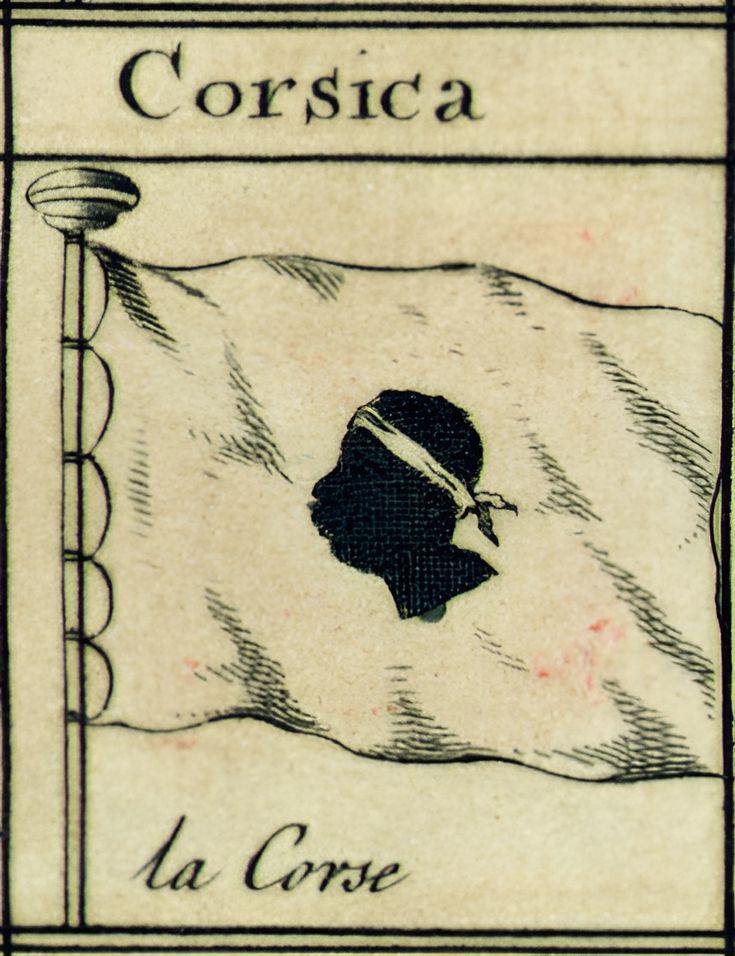
Our Corsican bandana with its Moor's Head is the perfect accessory for August 15th. Worn around the neck, it elevates an outfit in one gesture. Worn in the hair for young girls, it recalls an ancient tradition. Worn in a pocket, it finishes an ensemble with character.
The Roccapina, for cool evenings
Our Roccapina oiled jacket is perfect for the evening of August 15th, when it cools down after dark. A statutory piece for the evening procession, or for a restaurant terrace facing the fireworks.
The Mediterranean Diver, for the day
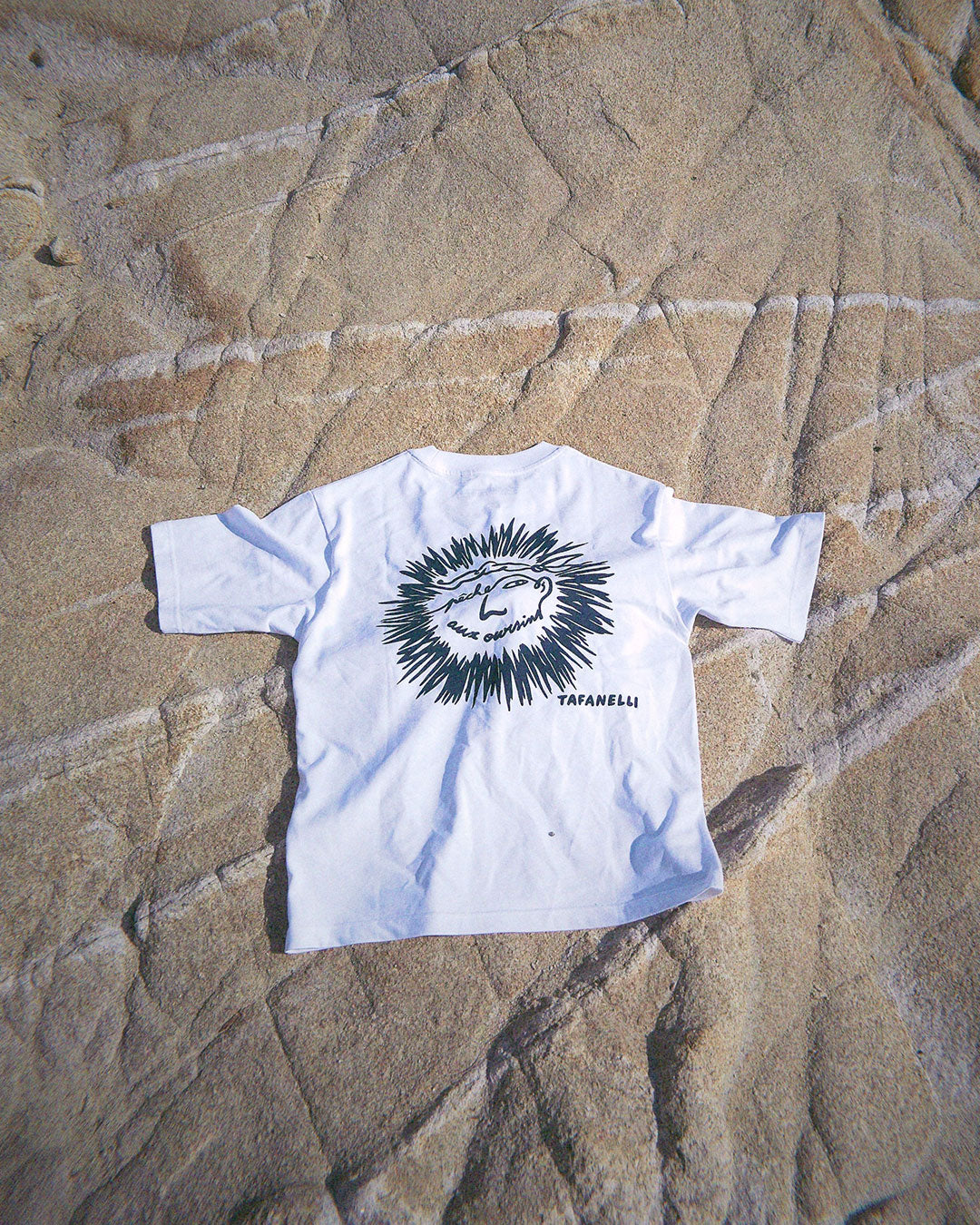
Our Le Plongeur Méditerranéen t-shirt is the ideal piece for the beach day preceding the festival. Straight cut, breathable cotton, iconic design. Wear it simply to assert your Mediterranean roots.
All our pieces are manufactured in France, hand-drawn by paid artists, and produced in limited editions. They honor the same cultural standards that traditional Corsica celebrates on August 15th: the value of work well done, loyalty to the territory, and a refusal to take the easy way out.
Continue exploring
To delve deeper into Corsican culture and further your preparations for summer 2026, here is a selection of TAFANELLI editorial articles that complement this one:
- The Corsican cultural agenda for summer 2026: festivals and holidays
- San Ghjuva in Bastia, the night of the Saint-Jean fire
- Patrimonio Guitar Nights 2026: the 35th edition
- The complete guide to 2026 AOC Corsican wines
- The 20 most beautiful wild beaches in Corsica 2026
- What to do in Bastia: 15 must-sees for July 2026
- Napoleon 2026: 10 places to visit in Corsica
- December 13th in Corsica: Saint Lucy's Day
August 15th in Corsica is much more than a public holiday. It is the climax of the insular summer, the moment when the island finds itself, when emigrants return, when families restore their unity, when processions traverse the narrow streets to the sound of bells, and when fireworks illuminate the bays. A day that encapsulates everything that is deepest, most generous, and most faithful to its memory in Corsica.
Whether you are Corsican by birth, Corsican at heart, or a curious visitor, this date is worth experiencing at least once in its fullness. Choose a village, a friendly family, a recommended restaurant. Attend the evening procession. Watch the fireworks from the ramparts. Drink a glass of Patrimonio with the locals. You will keep a special memory of it, that of an essential Corsica.
To find our entire current collection, head to tafanelli.fr. Free shipping in metropolitan France, same-day dispatch for all orders placed before 2 PM.
A PRESTU,
TAFA