The Agriates Desert: a complete guide to wild beaches (2026)
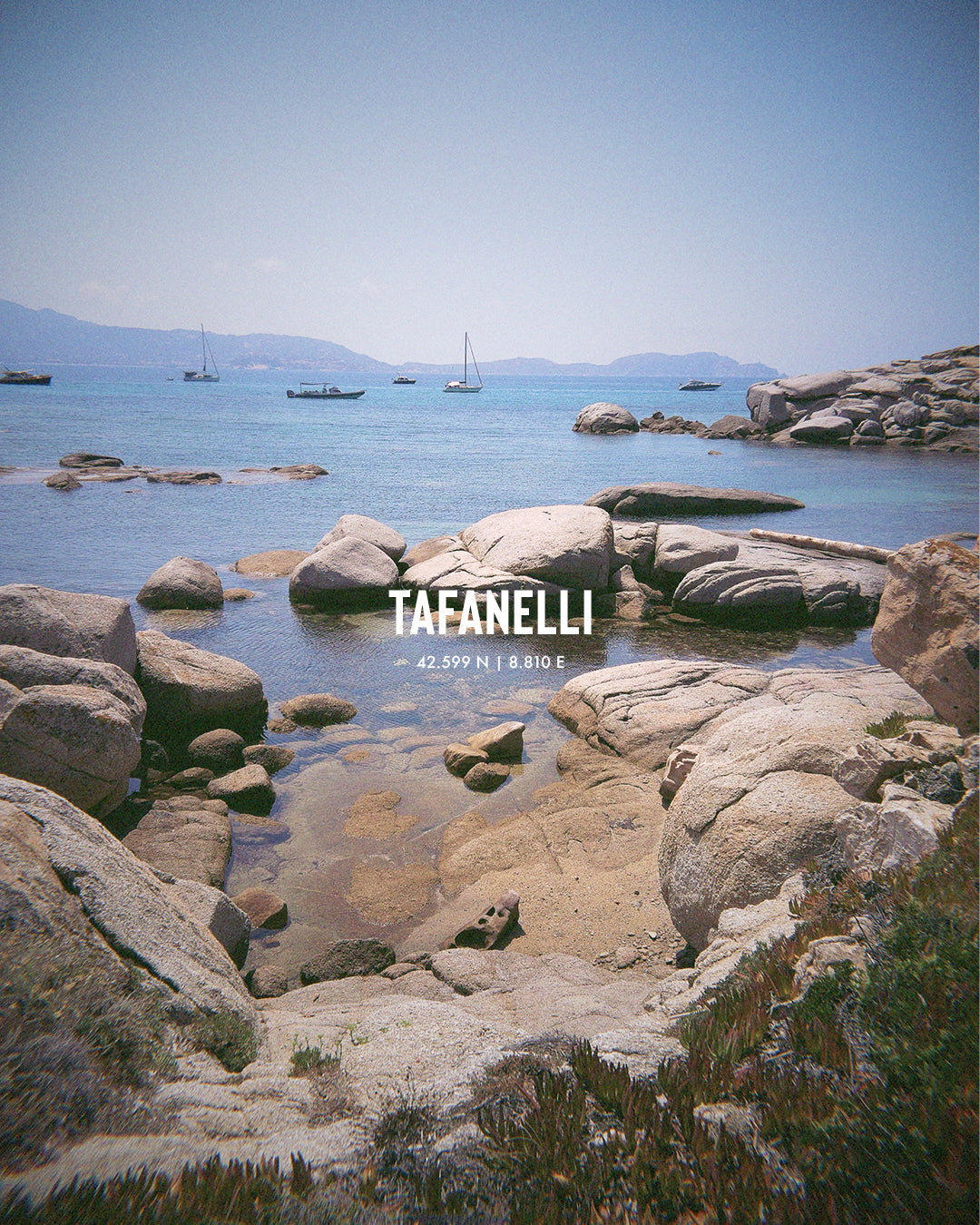
Between Saint-Florent and the mouth of the Ostriconi river, a vast wild expanse stretches across nearly 40 kilometers of coastline: the Agriates Desert. A 15,000-hectare territory preserved by the Conservatoire du Littoral, where you can find some of the most beautiful wild beaches in Europe (Saleccia, Lotu, Ghignu, Malfalcu), dense maquis shrubland, abandoned Genoese towers, a legendary hiking trail, and a millennia-old agricultural history. Today, it is one of the last great preserved natural spaces in the western Mediterranean, a place where one goes to find silence, turquoise water, and pristine seabed. Here is our complete TAFANELLI guide to the 2026 Agriates Desert.
One of the last great wild spaces in the Mediterranean
There is a territory in Corsica that, more than any other, embodies the word "wild." A territory where you can walk for hours without encountering a road, a house, or a billboard. A territory where the beaches, despite their exceptional beauty, remain difficult to access and are therefore preserved from over-tourism. This territory is the Agriates Desert.
Spanning nearly 15,000 hectares between Saint-Florent (to the east) and the mouth of the Ostriconi (to the west), the Agriates Desert is today one of the largest protected spaces on the French Mediterranean coastline. Since 1979, the Conservatoire du Littoral has made it one of its major sites, through a gradual acquisition process that has protected the territory from the urbanization that has affected the rest of Corsica.
The Agriates Desert is not a desert in the strict sense of the word. It is a protected territory, where dense maquis has reclaimed former abandoned agricultural lands. A place where, even in 2026, you can walk for an hour on a path without meeting another human being. A place that recalls what Corsica was like before the great tourism migrations of the 20th century.
The Agriates Desert is now famous mainly for its wild beaches, among the most beautiful in Europe: Saleccia and Lotu at the forefront, but also Ghignu, Malfalcu, Alga, and a few other more secret coves. These beaches, preserved from any tourist development, offer a Mediterranean experience in its purest form.
Where the Agriates Desert is located
A quick word on geography and administration.
Between Saint-Florent and Balagne
The Agriates Desert occupies the north-west part of Upper Corsica, between the Gulf of Saint-Florent to the east and the mouth of the Ostriconi river to the west. It is a region far from major road networks, which partly explains its preservation.
Administratively, it spans four municipalities: Palasca, San Gavinu di Tenda, Santo Pietro di Tenda, and Casta. A territory straddling the Balagne and the Nebbio, with no real equivalent elsewhere in Corsica.
Figures and geography
- Area: approximately 15,000 hectares.
- Coastline length: approximately 40 kilometers.
- Maximum altitude: approximately 400 meters (Monte Genova).
- Population: only a few dozen inhabitants in the rare, isolated hamlets.
Access points
The Agriates Desert is mainly accessible from two points:
- From Saint-Florent, to the east, by water taxi or by 4x4/walking from Casta.
- From Ostriconi, to the west, via the N1197 and then dirt tracks.
Saint-Florent is by far the most used access point, with several water taxi services that serve Saleccia and Lotu during the season.
An agricultural history turned wild
Contrary to what its name might suggest, the Agriates Desert has not always been a desert. Its history is one of a reversal between flourishing agriculture and a return to the wild.
The breadbasket of Corsica
For centuries, from the Middle Ages to the 19th century, the Agriates was the breadbasket of Corsica. The inhabitants of Cap Corse and Balagne would descend into the plain every autumn to cultivate wheat, barley, vines, and olive trees. The territory was covered with small agricultural plots, with paillers (temporary dry-stone shelters) where farmers lived during the harvest season.
The word "Agriates" actually comes from the Corsican agriati, which refers to cultivable land, in contrast to the uncultivated maquis. An etymology that clearly bears witness to the site's original agricultural vocation.
Gradual desertification
Starting in the 19th century, several combined factors would gradually empty the Agriates of human activity:
- The import of continental wheat competed with local production.
- The agricultural decline affected all of Corsica, along with the rural exodus.
- The lack of water and difficult access made the activity unprofitable.
- The world wars claimed a portion of the male workforce.
By the 1950s, the Agriates were almost completely abandoned. The maquis reclaimed the old plots, the paillers collapsed, and the paths grew over. The territory gradually became a wild space, almost impenetrable in places.
Protection by the Conservatoire du Littoral
Starting in 1979, the Conservatoire du Littoral began to gradually acquire the land in the Agriates to protect it from urbanization. Today, almost the entire territory is public property, managed with a long-term preservation strategy. It is this protection that allows the beaches to remain wild today and the paths to exist in their current form.
The desert’s iconic beaches
The Agriates Desert is world-renowned for its wild beaches, considered among the most beautiful in the European Mediterranean. Here is an overview of the main ones.
Saleccia, the queen of the Agriates
Saleccia is probably the most famous, and rightly so. A white sand beach over a kilometer long, bordered by turquoise water and a fragrant pine forest. A paradisiacal setting that has served as a backdrop for several films (notably The Longest Day).
Lotu, more intimate
Lotu beach, a few kilometers from Saleccia, is shorter but just as beautiful. Clear sand, turquoise water, and a preserved natural environment. It is particularly recommended for families due to its shallow depth.
Ghignu, the wild one
Ghignu, in the center of the desert, is a wilder beach, less frequented than Saleccia and Lotu. Accessible only on foot or by boat. Clear sand, crystal-clear water, and an intact natural setting.
Malfalcu, the confidential one
Malfalcu, further west, is even less known. A preserved beach for those seeking Mediterranean solitude.
Alga, the wild west
Alga, at the far west of the desert, near the mouth of the Ostriconi, offers a different experience: more golden sand, a dune-like atmosphere, and less frequented than Saleccia.
All these beaches are part of our selection in our dedicated article: The 20 most beautiful wild beaches in Corsica 2026, which puts them into perspective alongside the island's other exceptional beaches.
Saleccia beach, the absolute jewel
Let's dedicate a specific section to Saleccia, as it is so emblematic of the Agriates Desert and wild Corsica in general.
An exceptional beach
Saleccia is a beach one and a half kilometers long, made of particularly fine white sand, bordered by turquoise water with shades ranging from pale green to deep blue. The seabed slopes gradually, making it a beach suitable for children and experienced swimmers alike.
What distinguishes Saleccia from other spectacular beaches in Corsica is its background: a dense, fragrant pine forest rises immediately from the sand, offering shade and shelter during the hottest hours. A setting that recalls some beaches in Sardinia or the Balearic Islands, but with the unique light of Corsica.
The set of The Longest Day
A little bit of film trivia: Saleccia served as a filming location for the movie The Longest Day (1962), which reconstructs the Normandy landings. The directors chose the Corsican beach for its resemblance to the Normandy coast, while avoiding the filming constraints of the actual site.
What you need to know
- No tourist facilities: no permanent restaurant, no showers, no sun loungers.
- A small seasonal snack bar opens in July-August, but hours are irregular.
- Bring everything you need: water, food, umbrella.
- Bring all your trash back: there are no bins at Saleccia.
- No mobile coverage in some areas: let your loved ones know.
Lotu beach, a wild alternative
A few kilometers east of Saleccia is Lotu beach, a more intimate and often less crowded alternative.
An ideal family beach
Lotu is a light-sand beach about 500 meters long, with very shallow water that stays warm and calm. It is likely the most suitable beach for families with young children among those in the desert.
The Lotu pond
Behind the beach lies the Lotu pond, a protected wetland that hosts a large population of migratory birds (pink flamingos in winter, terns, herons). A walk around the pond early in the morning allows you to observe exceptional biodiversity in an intact natural setting.
Accessibility
Lotu benefits from more frequent water shuttles from Saint-Florent than Saleccia (shorter crossing time), making it a practical option for those who want to visit the Agriates Desert in a single day without embarking on a journey that is too long.
Ghignu, Malfalcu, Alga: the secret beaches
Beyond Saleccia and Lotu, which are the two iconic beaches of the Agriates Desert, several other lesser-known beaches deserve discovery for those seeking an even wilder experience.
Ghignu, preserved by its difficult access
Ghignu is located in the heart of the desert, on the north coast. Accessible only on foot (about a 3-hour walk from the main access points) or by private boat. This difficulty of access keeps it from being heavily visited. A beach particularly recommended for hikers and lovers of Mediterranean solitude.
Malfalcu, total silence
Malfalcu, west of Ghignu, offers an even more intimate experience. A small cove of light sand, protected by rocks on either side, generally with very few visitors. An ideal place for a swim in total silence.
Alga, the wild west
Alga, at the far west of the desert, near the mouth of the Ostriconi, has a more dune-like character. More golden sand, vegetated dunes, an atmosphere reminiscent of certain French Atlantic beaches. An alternative for those who want to vary their seaside landscapes.
The Agriates Coastal Trail
Beyond the beaches, the Agriates Desert offers one of the most spectacular coastal hiking trails in Corsica: the Customs Officer's Path (Sentier des Douaniers), also called Trans-Agriates.
A 39-kilometer route
The Agriates Customs Officer's Path stretches for about 39 kilometers along the coast, between Saint-Florent (to the east) and the mouth of the Ostriconi (to the west). It crosses all the iconic beaches of the desert and offers exceptional viewpoints over the sea and the Balagne mountains.
Hiking it over several days
The trail is generally covered in 3 to 4 days, with stages that correspond to beaches where you can bivouac (note: bivouacking is only authorized in specific locations). The classic stages:
- Saint-Florent - Saleccia: approx. 15 km, 6-7 hours of walking.
- Saleccia - Ghignu: approx. 8 km, 4-5 hours of walking.
- Ghignu - Alga: approx. 10 km, 5-6 hours of walking.
- Alga - Ostriconi: approx. 6 km, 3-4 hours of walking.
Practical advice
- Avoid summer: crushing heat on the exposed ridges.
- Best period: May-June or September-October.
- Bring plenty of water: very few water points on the route.
- Closed shoes are mandatory.
- Bivouac only in authorized areas.
- Leave no trace.
The desert’s Genoese towers
Along the Customs Officer's Path, you will encounter several Genoese towers that punctuate the landscape. These defensive structures, built between the 16th and 17th centuries, bear witness to the historical strategic importance of the Agriates coastline.
The Mortella tower
The Mortella Tower, the most famous in the desert, has a unique history: it inspired the design of the British Martello towers, a series of fortifications built by the British after they were impressed by the Corsican tower's resistance during the 1794 invasion. More than 100 Martello towers were built in Great Britain, Ireland, Canada, and Bermuda based on this model. A rare example of Corsican architectural influence on the British Empire.
The other towers
Several other towers line the route:
- Mortella Tower (the original).
- Fornali Tower, which is particularly well-preserved.
- Alga Tower, at the western end of the desert.
- Remains of several other towers along the path.
Along with the beaches, these towers are one of the main heritage attractions of the desert. They are accessible on foot from the marked trails.
How to reach the beaches: boat, 4x4, walking
Access to the Agriates Desert beaches is intentionally limited, which helps in their preservation. There are three main options.
Option 1: The water taxi from Saint-Florent
This is the simplest and most popular option. Several operators based in Saint-Florent offer boat shuttles to Saleccia and Lotu during the season (April to October).
- Crossing time: about 40 minutes to Lotu, 1 hour to Saleccia.
- Price: about €20-25 round trip per person.
- Frequency: several departures per day in high season.
- Recommendation: book the day before in July and August.
Option 2: 4x4 from La Casta
For those who prefer land travel, a dirt track runs through the desert from La Casta to Saleccia. Be aware: this track is very difficult, reserved for true 4x4s, and is particularly damaged after rain. Expect a journey of about 1 hour and 30 minutes for 12 kilometers. Several operators offer organized 4x4 excursions from Saint-Florent or L'Île-Rousse, which remains the safest option.
Option 3: Walking
For the more adventurous, walking is also an option. It takes about 3 to 4 hours from the official starting points on marked trails that cross the maquis. A physically demanding option, but one that offers the most authentic experience of the Agriates Desert.
For all visitors, set off early in the morning to avoid the hottest hours and bring enough water (at least 3 liters per person for the day).
Where to stay and eat around the desert
The Agriates Desert itself does not offer accommodation (except for permitted bivouacking). You must therefore stay in the neighboring towns or villages.
Saint-Florent, the ideal base in the east
Saint-Florent is by far the most practical base for exploring the desert. A small port town in the heart of a magnificent gulf, it offers a full range of accommodation (boutique hotels, guest houses, rentals, campsites). Our retailer Momento is located in Saint-Florent, should you wish to browse our world during your stay.
Recommended restaurants in Saint-Florent: La Voile, La Rascasse, La Gaffe, La Route du Sel.
L'Île-Rousse or Calvi, bases further west
L'Île-Rousse and Calvi, in Balagne, are alternative bases, particularly for those who want to combine Balagne and Agriates in the same trip. Our complete guide to Calvi and our guide to Balagne will assist you.
Casta, the starting hamlet
Casta, a small hamlet serving as a starting point for Saleccia, offers a few rustic guest houses for those who want a truly immersive experience.
Preserving a fragile site
The Agriates Desert is a fragile site, whose ecological balance depends in part on the respect shown by visitors.
Rules to follow
- Leave nothing behind: take all your waste with you, including cigarette butts.
- Do not light fires (strictly forbidden, extreme fire risk).
- Do not pick the flora, especially protected maquis species.
- Do not disturb the wildlife: the Agriates is home to several protected species.
- Do not stray from the marked trails.
- Bivouacking is only allowed in authorized areas.
- Do not anchor near seagrass meadows if you are arriving by private boat.
Contemporary threats
The site faces several contemporary threats:
- Summer overcrowding, which puts pressure on natural environments.
- Waste abandoned by some visitors.
- Forest fires, which are particularly dangerous in dense maquis.
- Climate change, which affects the ecosystems.
Every respectful visitor contributes to the long-term preservation of the site. It is a collective heritage whose beauty depends on our individual behavior.
What TAFANELLI wears to visit the Agriates
The Agriates Desert is a territory where your wardrobe counts: you must protect yourself from the sun, wind, and heat, while remaining comfortable for long days of walking and beach time.
The Requin Méditerranée Club cap
Our Requin Méditerranée Club cap is essential in the desert. The Customs Trail is completely exposed to the sun, with no trees for shelter for kilometers. Pre-washed cotton, soft structure, rigid visor.
The Corsican Bandana
Our Corsican bandana is your multi-use ally: on your forehead to absorb sweat, around your neck for sun protection, in your hair to protect against the wind, or as a pocket square for evening elegance.
The Corsica 1755, for grounding
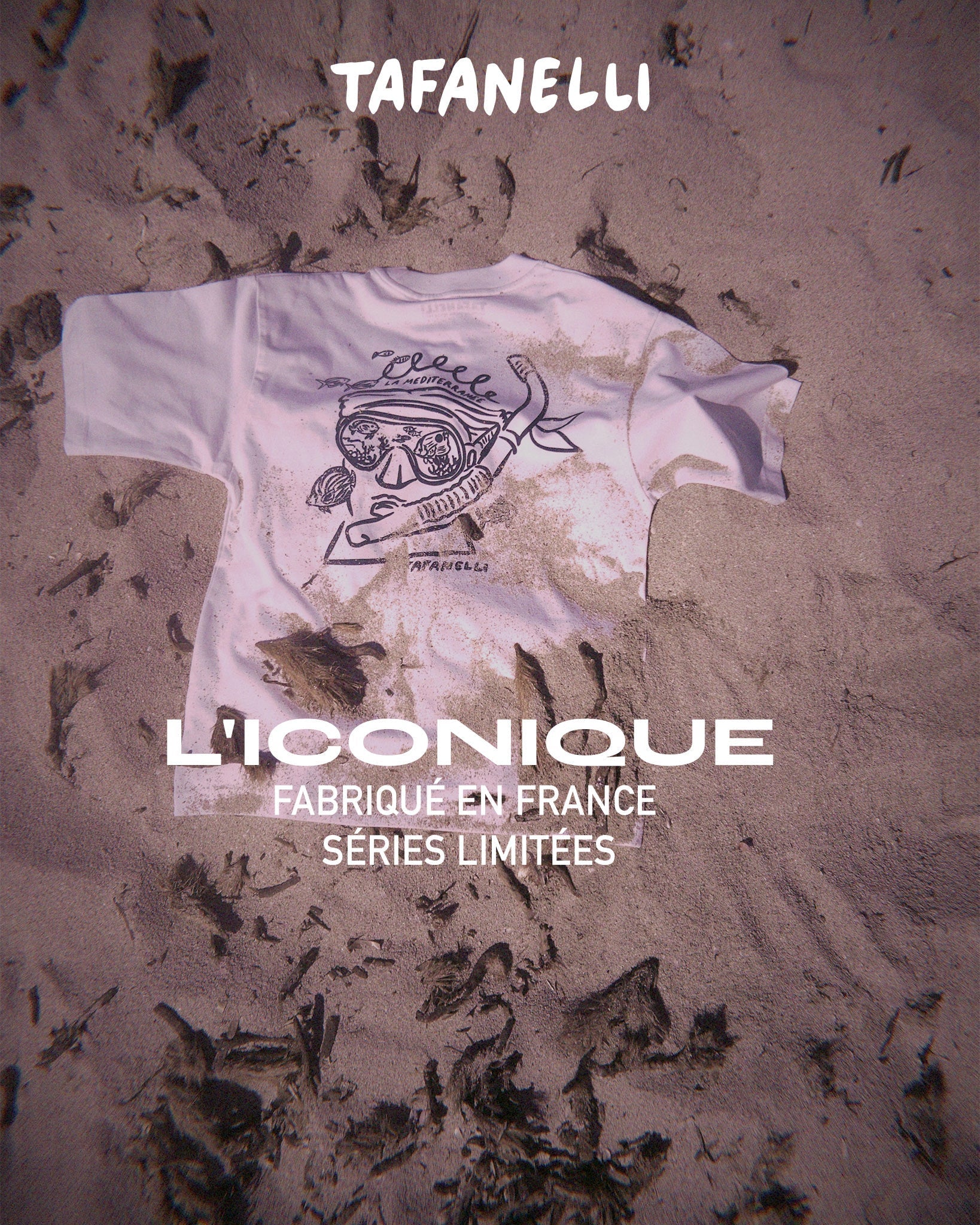
Our Corsica 1755 t-shirt is the signature piece to wear with pride in the Agriates. 280 g/m² cotton Made in France, hand screen-printed, limited edition.
The Roccapina, for the evenings
Our Roccapina oilskin jacket is perfect for evenings in Saint-Florent after a day in the desert. A statement piece for dinner facing the port.
Continuing the discovery
To further your exploration of Northern Corsica and protected natural sites, here is a selection of TAFANELLI editorial articles that complement this one:
- The 20 most beautiful wild beaches in Corsica 2026
- Cap Corse: the complete 2026 guide
- Punta di Spanu and the Sant'Ambroggio Marine
- Balagne: the complete 2026 guide
- The 10 most beautiful perched villages in Corsica
- The complete guide to Corsican AOC wines 2026
- Corsican charcuterie: coppa, lonzu, prisuttu, figatelli
- The Corsican cultural agenda for summer 2026
The Agriates Desert is not just another beautiful beach. It is a unique territory in the contemporary Corsican landscape, a place that reminds us what the Mediterranean was like before the great tourism migrations of the 20th century, a space where nature has reclaimed old agricultural lands and where silence is still possible for miles.
Whether you choose to go for a day at Saleccia beach, for a multi-day hike on the Customs Trail, or for a 4x4 exploration, take the time to experience the place rather than consume it. Bring back all your waste. Respect the silence. Take the time to contemplate. That is how this heritage will be preserved for future generations.
At TAFANELLI, we bring this same standard to every piece we create. Our clothing, like the Agriates, rejects the logic of mass production and upholds a commitment to quality that transcends trends.
To find our full current collection, head to tafanelli.fr. Free shipping in metropolitan France, same-day dispatch for all orders placed before 2:00 PM.
A PRESTU,
TAFA