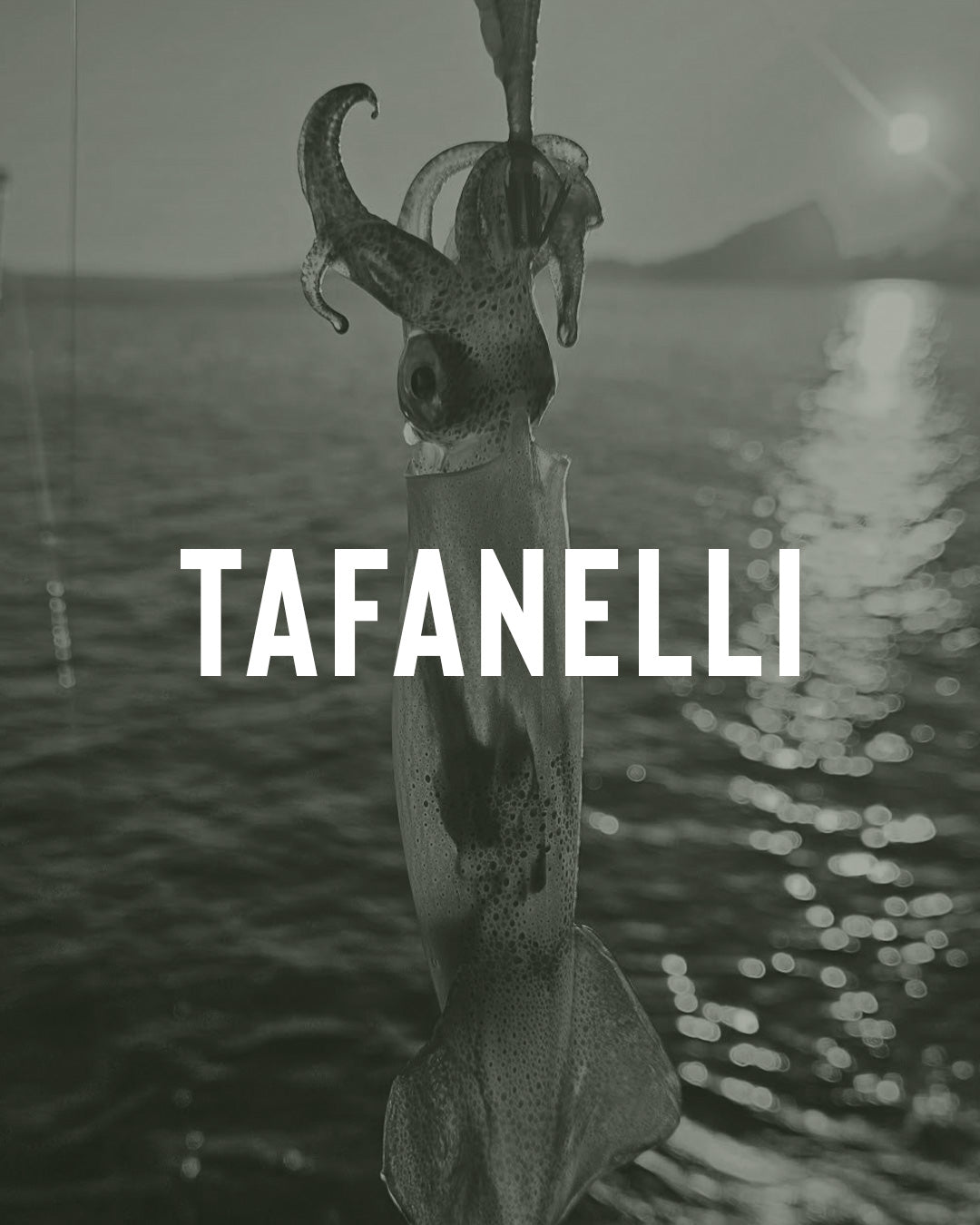
Night squid fishing in Corsica: season, technique, and the moves that make the difference
When the tourists have left, when the terraces close and the sea temperature drops below twenty degrees, a different Corsica begins. It is practiced standing on a pier at two in the morning, under a streetlamp, in the cold, with a light rod and a lot of patience. Squid fishing is probably the most beautiful thing one can do here between November and January. Here is how it really works.
Why at night, and not during the day
No need to go at noon. You won't find them.
Squid are open-water cephalopods that spend the day offshore and at depth. They move back toward the coast at twilight and during the night, at which point they hunt in only one to ten meters of water. It is this daily migration that makes this fishing accessible from a simple pier.
Two time slots dominate: dusk and dawn. In between, the pitch-black night remains good, provided you are in the right spot.
There is a second, more tactical reason. Squid are attracted to light, or more precisely to what the light gathers: plankton, then the small fish that come to eat it, then the squid that come to eat the small fish. This is why harbor lights are formidable spots.
You don't fish under the streetlamp for comfort. You fish under the streetlamp because the entire food chain has gathered there.
The season: from September to April
In the Mediterranean, the window opens in September and closes in April. Cephalopods move closer to the coasts as the water temperature drops.
But not all weeks are equal.
- September and October. The first squid arrive in shallow coastal waters. The specimens are often small. This is the season for learning.
- From November to the end of January. The heart of the season, and by far the best time. The fish are larger and more numerous.
- February to April. It still works, with irregular evenings.
In other words, this fishing begins exactly when the island empties out. It is one of the great arguments for Corsica off-season: the best things happen there after September 15th.
Where to fish: from the shore and by boat
From the shore
This is the most accessible version, and it requires almost nothing.
Harbor areas are the best spots: piers, seawalls, breakwaters, and especially illuminated sectors. Rocky jetties and points bordering posidonia beds also work well.
From the shore, you will mostly encounter European squid, which live closer to the coast.
Corsica has no shortage of playgrounds: the piers of Bastia, the port of Centuri at the tip of Cap Corse, Saint-Florent, L'Île-Rousse, Calvi, Ajaccio, Propriano, Porto-Vecchio, and Bonifacio.
By boat
Boat fishing opens up other zones and other fish. You look for depths of ten to thirty meters, on patches of sand and posidonia, which concentrate life.
This is where you mainly find red squid, which are deeper and often larger. Trolling is also practiced, with a rig of lures pulled slowly over a distance of ten to thirty meters behind the boat.
Reading a pier: the ink stains
Here is the trick that nobody tells beginners, and it is probably the most useful tip in this entire article.
Before you assemble your rod, look at the ground.
A squid pulled out of the water sprays its ink. The dark stains on the concrete of a pier, on a seawall, or on rocks are the signature of a productive spot. They tell you that other fishermen have been there, and above all, that they caught something.
A fresh stain is worth more than an hour of blind prospecting. It is the most honest treasure map there is: no one can fake it.
The "turlutte," the only lure that matters
The "turlutte" is a weighted lure shaped like a small shrimp, with one or two crowns of upward-facing needles at the back. There is no hook in the classic sense: the squid wraps the lure with its tentacles and gets caught in the needles.
It is the most suitable lure, regardless of the retrieval technique. Modern light jigging has a name from Japan, eging, and it has transformed this type of fishing over the last fifteen years.
Three parameters to set:
- Size. Expressed in inches, generally from 2.5 to 3.5. 3.0 is a good all-rounder.
- Sinking speed. A slow lure stays in the hunting zone longer. A fast lure covers more ground and works better in current.
- Color. A subject in itself, covered below.
There is a second approach, more rustic and formidably effective: the sardine. Attached to a cage or dedicated holder, it is very hard for a squid to refuse.
The action: the move that decides everything
This is where the difference between going home with five squid or going home with zero is made.
The principle is simple to state, but takes longer to master: you work the lure mid-water, using sharp pulls followed by a pause in freefall.
The typical sequence of a retrieve:
- Cast, then let the lure sink while counting the seconds. Count, really. This is how you will know at what depth the strike occurred.
- Two or three sharp, jerky pulls on the rod, which make the lure jump upward.
- The pause. The lure descends again while gliding, with the line semi-taut. It is almost always during this phase that the squid attacks.
- Recover the slack, then start over.
The strike is nothing like a shock. It is a heaviness, an inertia that wasn't there before, as if the lure had caught on cotton. At that moment, do not strike violently: maintain constant tension and reel in steadily, without jerking.
The squid is not hooked; it is clutched. A release of tension, and it lets go. This is the whole difficulty, and all the pleasure.
Colors, and why pink wins
Squid have a remarkable eye for contrast. This explains a fact that all fishermen observe: pink and orange provide the most consistent results, season after season.
Then adapt according to conditions:
- Clear water, night with moon. Natural tones, classic pink and orange.
- Turbid water, or moonless night. Switch to bright pink, yellow, or phosphorescent green. Contrast takes precedence over realism.
- Under a harbor light. Test both. Artificial light changes the game completely.
Bring at least three lures of three different color families. Changing color is often more effective than changing spots.
The moon, the wind, and the water
Three factors determine a good evening, and none of them are up to you.
- The moon. Moonless nights concentrate the fish around artificial light sources, making ports very effective. Full moon nights disperse them, but allow you to fish further away from the lights.
- The wind. A light ripple is your ally: it breaks the surface and makes the cephalopods feel safe. A strong wind, however, makes the action impossible and makes you lose contact with the lure.
- Water temperature. This dictates the season. The more the water cools down, the closer the squid move to the shore.
A piece of advice that applies to the entire Mediterranean: never judge a spot on a single outing. It takes three or four evenings in the same place to understand its potential.
The gear, without breaking the bank
This is one of the cheapest types of fishing to start.
- A light rod, 2.40 to 2.70 meters, fast action, low power. A so-called "eging" rod if you want a dedicated tool, but a versatile light rod gets the job done.
- A small reel, size 2000 to 2500.
- Thin braided line, which transmits the strikes, with a fluorocarbon leader.
- Three lures in different colors.
- A headlamp, essential, to be used as little as possible in the water to avoid scaring them.
- A landing net, if the pier is high.
- A bucket or cooler, and something to protect yourself from the ink.
And one thing that gear lists always forget: dress warmly. You will be staying motionless for several hours, at night, by the sea, in December. That is how the cold gets you.
Mistakes that send you home empty-handed
- Working the lure too fast. This is by far the number one mistake. The pause is more important than the pull.
- Shining a light into the water constantly. The headlamp is for untangling and unhooking, not for sweeping the surface.
- Striking as if it were a fish. You will rip off the tentacles and lose the catch.
- Staying an hour at an empty spot. If nothing happens in thirty minutes, move fifty meters.
- Not counting the sink rate. Without counting, you will never know how to replicate what worked.
- Stomping around a pier while talking loudly. In one meter of water, they hear you.
Rules to know before you head out
Recreational marine fishing in France does not require a license, but it is regulated. A few principles that allow no exceptions.
- Selling the product of recreational fishing is strictly prohibited. What you catch is for you, your family, and your friends.
- Minimum sizes and quotas vary by zone. Prefectural decrees and the regulations of marine protected areas take precedence over any general rule.
- Some species are subject to closed seasons. This is notably the case for octopus in several Mediterranean sectors.
- Reserves and marine parks have their own rules, sometimes much stricter, and Corsica has several.
Before your first outing, check the regulations in force in your specific area with the Maritime Directorate or the maritime prefecture. The rules change, and they are not the same from one gulf to another.
Finally, an unwritten rule that is worth all the others: only take what you are going to eat. A squid released back into the water quickly survives very well.
In the kitchen: Corsican recipes
This is the reward, and the island has several schools of thought.
- Stuffed squid Bastia-style. A stuffing of minced pork, garlic, parsley, eggs, salt, and pepper, slipped into the mantle and closed with a wooden toothpick.
- Stuffed squid Ajaccio-style. The tentacles minced with onion, sautéed in olive oil, then tomatoes, garlic, and parsley.
- The Cap Corse version. Stuffed with a risotto of panzetta and prisuttu, roasted, served with tomato purée.
- Stuffed squid with figatelli. The most Corsican land-and-sea pairing there is.
- The version that doesn't need to be written down. On the plancha with olive oil, garlic, parsley, and lemon, ten minutes after coming out of the water. This is what the fishermen make.
A preparation tip: squid is cooked either very quickly or for a very long time. In between, it becomes rubbery, and that is unfixable.
To accompany it, a white wine from the island. Our guide to Corsican wines details the appellations.
What this fishing says about the island
There is a Corsica that vacationers will never see, and it begins in October.
It is the one with deserted piers, ports returned to the locals, and evenings where you bump into three fishermen and no one else. It is also the season for sea urchin fishing, the other great winter affair on the island, and for red coral for the few coral hunters who have the right.
These three types of fishing have something in common: they are done when it is cold, they require patience, and they bring nothing to anyone other than the one who practices them.
That is exactly the idea we have of the island. Not the postcard of July, but the pier of December.
Our SEA URCHIN FISHING t-shirt was born from that Corsica. And if you are looking for what is behind a brand that talks about this rather than beaches, it is explained in our guide on what it means to be a Corsican brand.
Frequently asked questions
What is the best time to fish for squid in Corsica?
From September to April, with a very clear peak from November to late January. Cephalopods move closer to the coasts as the water cools, which makes shore fishing possible in the middle of winter.
Why do we fish for squid at night?
Because it spends the day offshore and in deep water, and moves back toward the coast at twilight to hunt between one and ten meters deep. The artificial light of the ports attracts plankton, then small fish, then squid.
What is a squid jig?
A weighted lure shaped like a small shrimp, equipped at the back with one or two crowns of upward-facing needles. There is no hook: the squid grips the lure with its tentacles and becomes snagged on the needles. Modern light jig fishing is called eging.
Which color of jig should you choose?
Pink and orange provide the most consistent results because the squid perceives contrasts very well. In murky water or on a moonless night, switch to bright pink, yellow, or phosphorescent green.
How do you work a squid jig?
Mid-water, using sharp, jerky pulls of the rod, followed by a pause in freefall. It is almost always during the descent that the squid strikes. Count the seconds of the descent so you can replicate what worked.
How do you recognize a bite?
It is not a shock but a heaviness, a sudden inertia. Do not strike violently: the squid is not hooked, it is clinging. Maintain constant tension and retrieve steadily, without jerking.
Do you need a permit to fish for squid in Corsica?
Recreational sea fishing does not require a permit in France, but it is regulated. Minimum sizes, quotas, and prohibited zones vary according to the sector and protected marine areas. Check the current prefectural decrees for your area before heading out. Selling the catch from recreational fishing is strictly prohibited.
Where can you fish for squid from the shore in Corsica?
Port areas are the best spots: quays, breakwaters, and piers, especially under the lights. Bastia, Centuri, Saint-Florent, L'Île-Rousse, Calvi, Ajaccio, Propriano, Porto-Vecchio, and Bonifacio all offer direct access.
How do you spot a good location?
Look at the ground before setting up your rod. Dried ink stains on the concrete of a quay or on the rocks indicate that a squid was pulled out of the water there. It is the most reliable sign that exists.
What is the difference between white squid and red squid?
The white squid lives closer to the coast and is the one caught mostly from the shore. The red squid stays further offshore and deeper, on seabeds of ten to thirty meters, and is mainly fished by boat.
How do you cook squid the Corsican way?
Stuffed, mainly: "Bastia style" with minced pork, garlic, and parsley; "Ajaccio style" with the tentacles, onion, and tomato; or with figatelli. Simply on the plancha with olive oil, garlic, and lemon for the freshest ones. Remember the rule: very quickly, or for a very long time, never in between.
To learn more
- Sea urchins in Corsica: tradition, winter fishing, and gastronomy
- Red coral of Corsica
- Centuri, the fishing port at the tip of Cap Corse
- Corsica in September and off-season
- Diving in Corsica
- Corsican wines: the complete guide
- Jellyfish in Corsica
To discover our Mediterranean wardrobe, browse the complete collection.
An empty quay, a lamp, a light rod, and three hours ahead of you. It's a small thing, and it is probably the best way to spend a December night on this island.
A DOPU,
TAFA
Passing through Corsica, the customer becomes a friend.
Sources: Nootica, Squid fishing. Peche.com, Squid, an autumn jig fishing trip and Getting started with squid and cuttlefish fishing. 1max2peche, How to fish for squid from the shore, the eging trend. Recreational sea fishing regulations, current prefectural decrees. Article written in September 2026, to be verified with the Direction de la Mer for any regulatory changes.