Nonza, Cap Corse: a complete guide to the perched village, its black pebble beach, and the natural rooftop of La Sassa
Suspended about a hundred meters above the sea, perched on a rocky outcrop that plunges into the Mediterranean, Nonza is one of the most spectacular villages in Corsica. Its square Genoese tower, its black pebble beach, and its iconic restaurant, La Sassa, make it an unmissable stop on the Cap Corse. And that black beach, the first thing everyone photographs, is not natural at all: it is a story of twentieth-century industry. Here is everything you need to know.
Nonza in brief: geography and identity
Nonza is a commune on the west coast of the Cap Corse, in Upper Corsica. The village is perched about a hundred meters above the sea, clinging to a steep rocky outcrop that drops directly into the Mediterranean.
Its approximate coordinates are: 42.78 N and 9.34 E. The permanent population is very small, numbering only a few dozen year-round inhabitants, which stands in stark contrast to the summer crowds generated by its exceptional setting.
The village is traversed by the D80 road, which circles the Cap Corse between Saint-Florent to the south and Centuri at the northern tip. Expect a journey of about twenty kilometers from Saint-Florent, or about thirty-five minutes on a winding road.
Nonza is one of the most recognizable silhouettes on the island, alongside other perched villages in Corsica.
The history of the perched village
The history of Nonza dates back to the Middle Ages. The village was formed at a time when its perched and difficult-to-access position offered natural protection against raids from the sea. Like most ancient Corsican villages, it is built of local stone, with houses packed closely together for both defense and insulation.
Over the centuries, Nonza lived off fishing, olive oil, wine, and citron—the iconic fruit of the Cap Corse used to make cedratine liqueur. Corsican citrus fruits have shaped the entire economy of this coast.
In the twentieth century, the village experienced a strong rural exodus, like the rest of the Cap Corse. Many families left for the mainland or for the Americas, particularly Puerto Rico, Cuba, and Venezuela, giving rise to the Corsican diaspora across the Atlantic. Today, Nonza survives primarily on summer tourism and rediscovers genuine village life in the off-season.
Casella, the man who held the tower all by himself
This is the most famous story of Nonza, and it deserves to be told.
In 1768, France had just acquired Corsica via the Treaty of Versailles, and its troops were advancing into the Cap Corse. The tower of Nonza was supposed to be defended by a garrison. According to the story passed down, only one man remained: Jacques Casella, a former officer who stayed behind after his companions had departed.
Rather than surrender the post, Casella allegedly staged a ruse: running from one embrasure to another, firing from every opening, he gave the attackers the impression of a full garrison. The French, believing they were facing an organized troop, negotiated an honorable surrender with full military honors. It was only when they saw a single man walk out that they realized the truth.
This tale belongs to tradition, and its exact historical accuracy is debated by historians. But it says something true about this place: a tower, a rocky outcrop, and the idea that a single well-positioned man can hold out against an army.
The square Genoese tower, the signature of Nonza
The tower of Nonza is one of the most remarkable architectural features of the Cap Corse. Built during the era of Genoese rule, it served to monitor the coast and alert villagers to Barbary incursions from North Africa.
Unlike the vast majority of Genoese towers in Corsica, which are round, the tower of Nonza is square. It is a singularity, and it is the first thing that strikes you when you discover it. It is positioned at the point of the outcrop, overlooking the sea and the beach directly below.
Today, it is freely accessible on foot from the village via a ten-minute path. The panorama from the top is exceptional: the Gulf of Saint-Florent, the coast of the Cap, and the long black strip of the beach far below.
To place Nonza within the island's overall defensive network, see our guide to the 10 most beautiful Genoese towers in Corsica.
The black pebble beach: why it is black
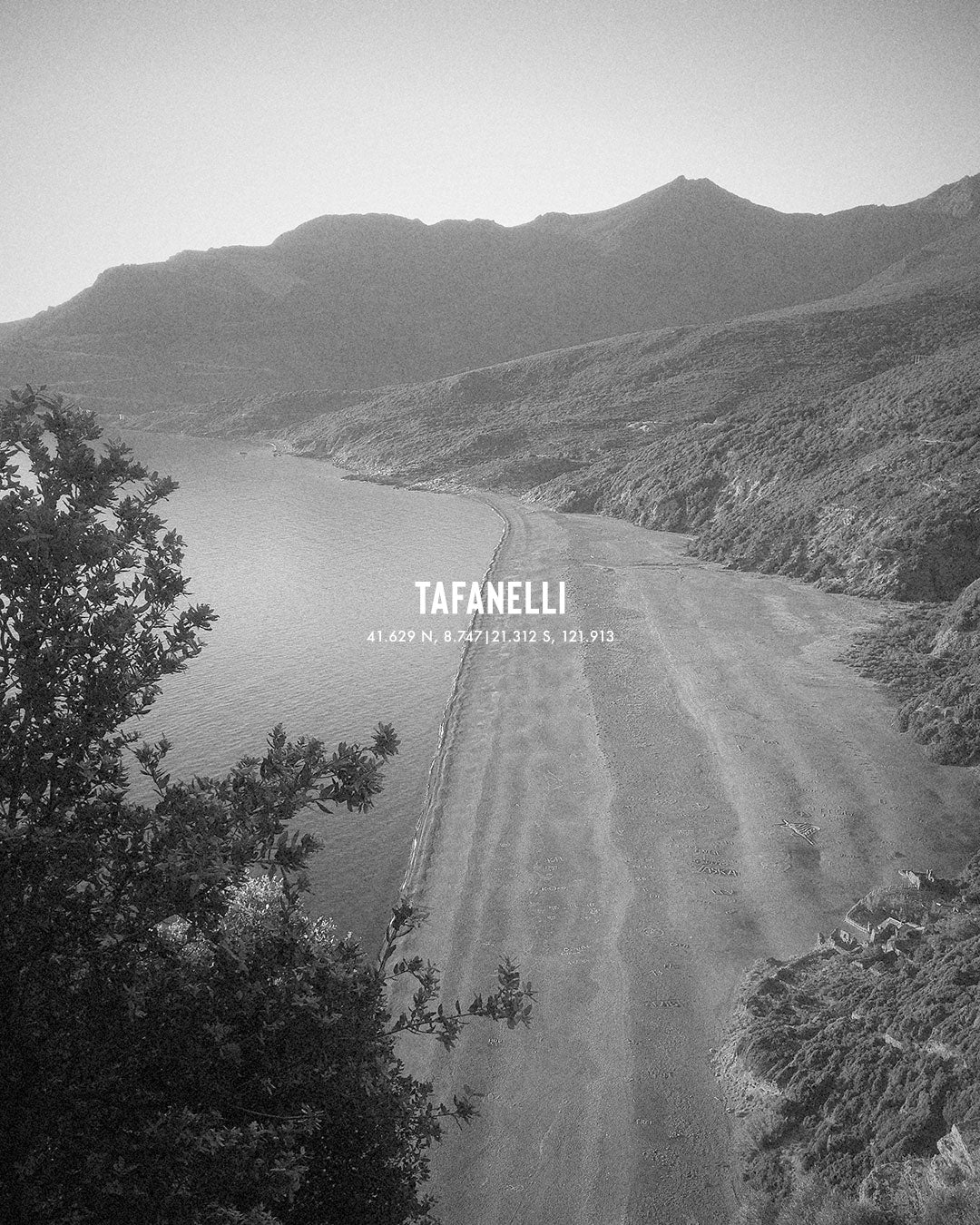
At the foot of the cliff stretches a truly unique beach: a long strip of entirely black pebbles, about one and a half kilometers long. It is one of the most photographed images of the Cap Corse.
And here is what almost no one knows when they arrive: this color is not natural at all. It is not volcanic sand; Corsica is not a volcanic island.
The beach is the result of a defunct industrial operation. The former asbestos factory of Canari, a few kilometers to the north, exploited the site from 1948 to 1965 and dumped its waste directly into the sea. Currents gradually transported and deposited these dark mineral residues along this portion of the coast, forming the beach as we know it today. What one walks upon in Nonza is, literally, the byproduct of a mine closed for sixty years.
The contrast between the deep black of the pebbles, the blue of the sea, and the Mediterranean light gives the place an almost surreal beauty. Few beaches tell such an unexpected story.
Access is via a staircase of about 200 steps carved into the rock, starting from the village. Allow a quarter of an hour for the descent, and longer for the climb back up.
La Sassa: the natural rooftop of the Cap Corse
At the top of the rocky outcrop, just before the tower, is La Sassa, the bar-restaurant that has become the iconic spot of Nonza over the years. The establishment defines itself as a natural restaurant and rooftop: a raised piece of land that offers one of the most spectacular views in the Mediterranean.
The result is striking: an open-air terrace set in the stone, overlooking the sea as far as the eye can see, with the black beach below and the coast of the Cap in the distance.
The cuisine highlights the island's produce: fish from the Cap, charcuterie from neighboring producers, cheeses, seasonal vegetables, and wines from the Cap Corse and Patrimonio.
Beyond the food, what defines La Sassa is the experience. The light changing throughout the hours, the wind rising from the sea in the late afternoon, the voices blending with the sound of the waves below. Many leave with the feeling of having lived an experience rather than simply having had dinner.
Reservations are highly recommended during the season, especially for evening service. The terrace has limited capacity.
LE SASSA (NONZA), our piece born here
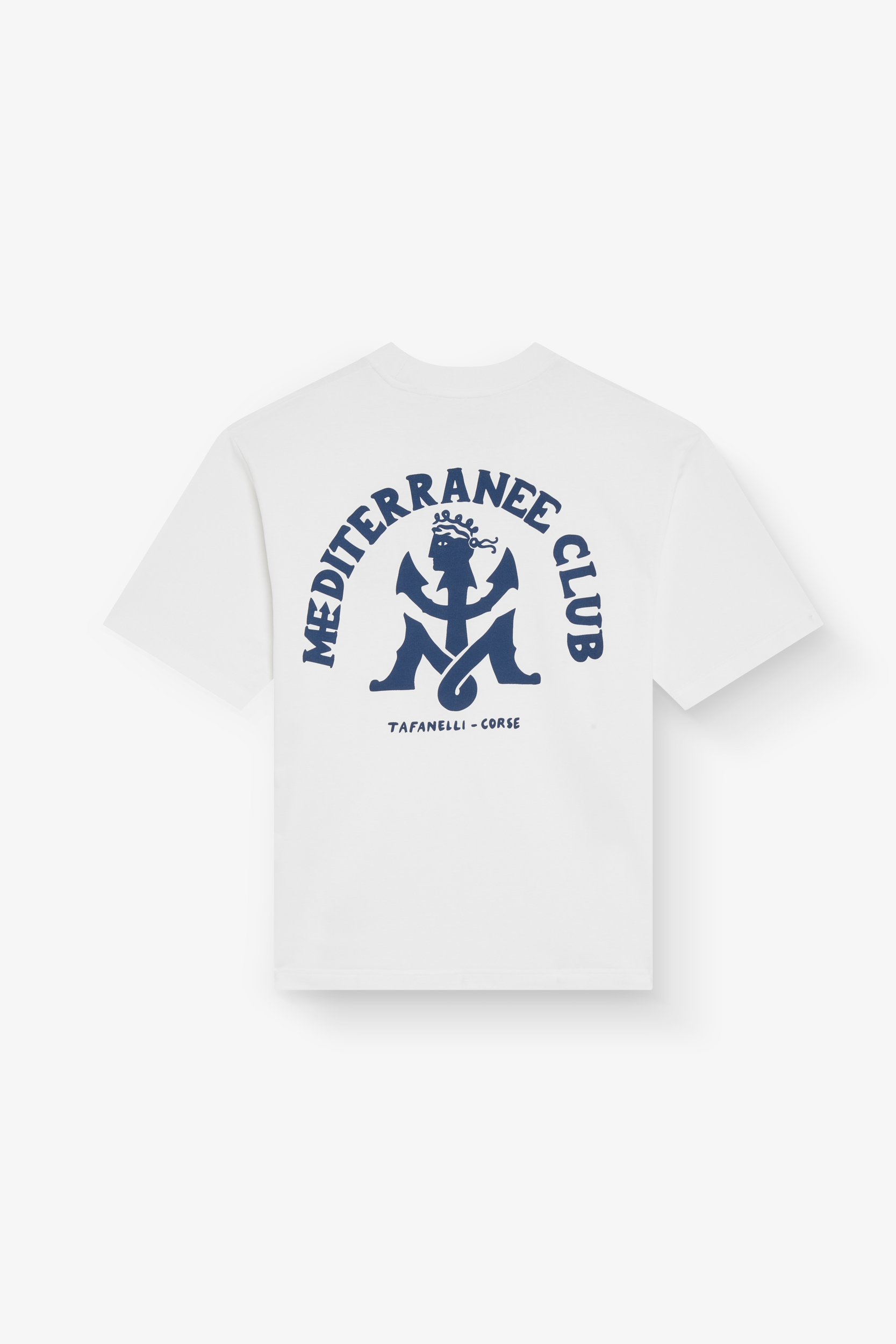
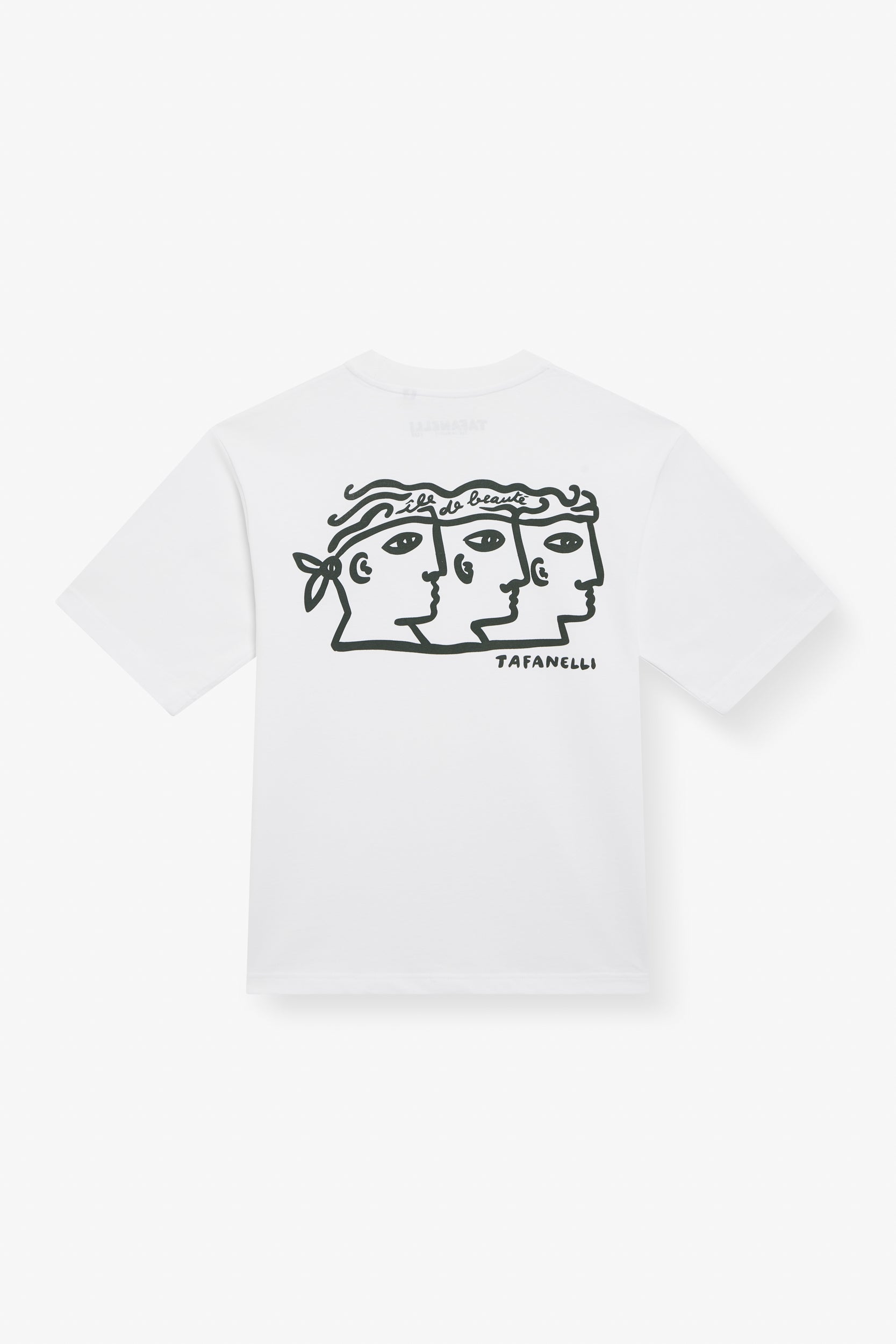
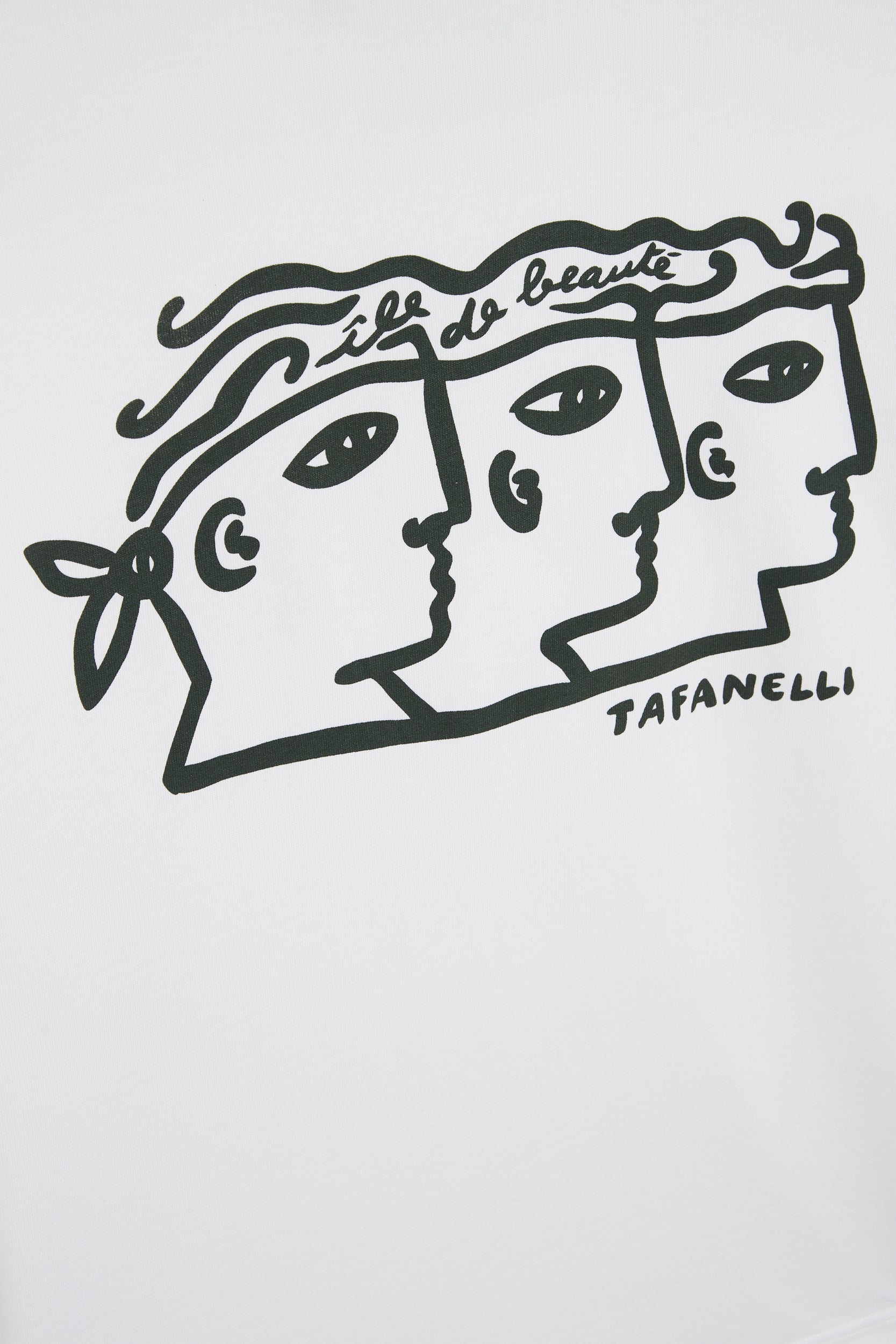
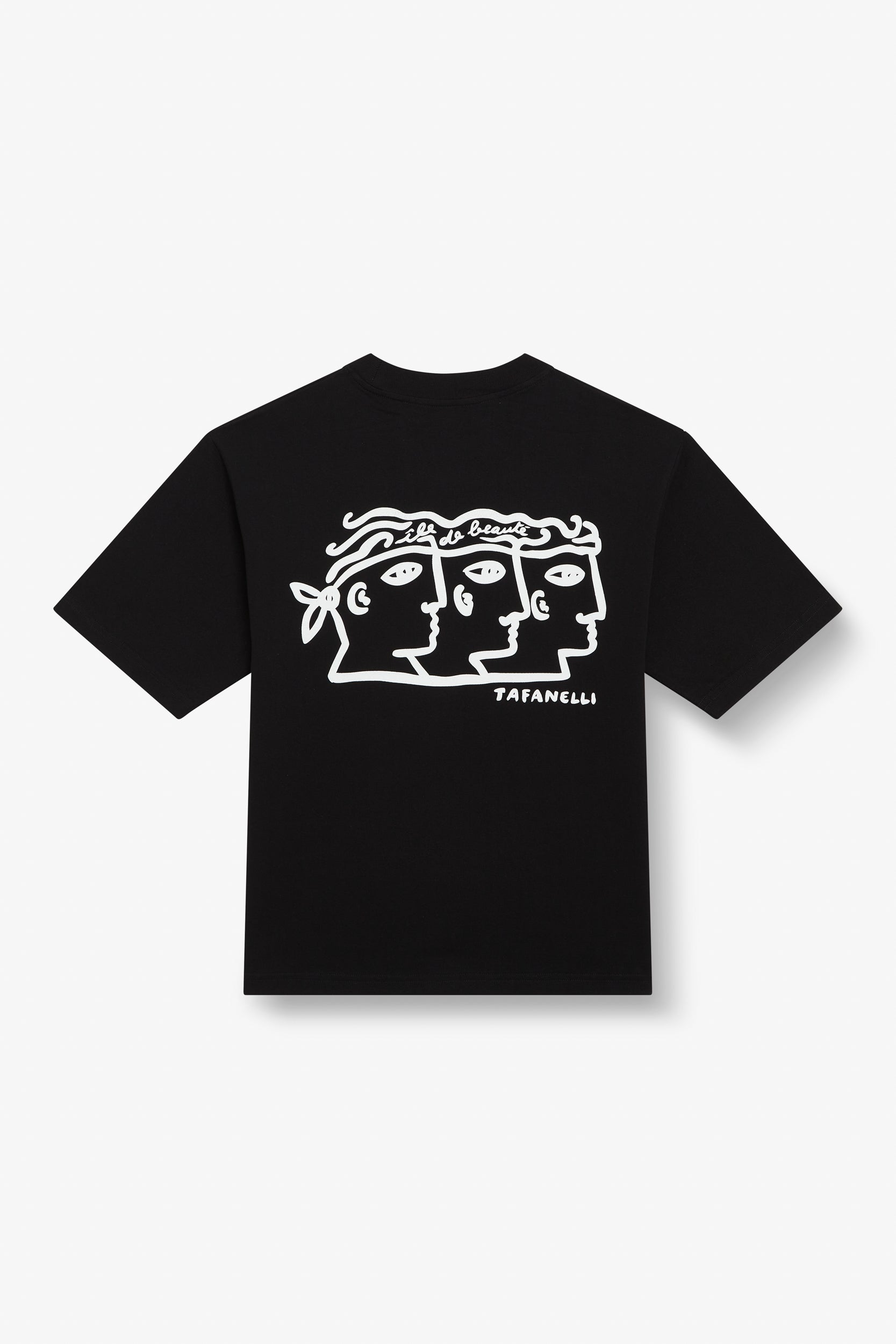
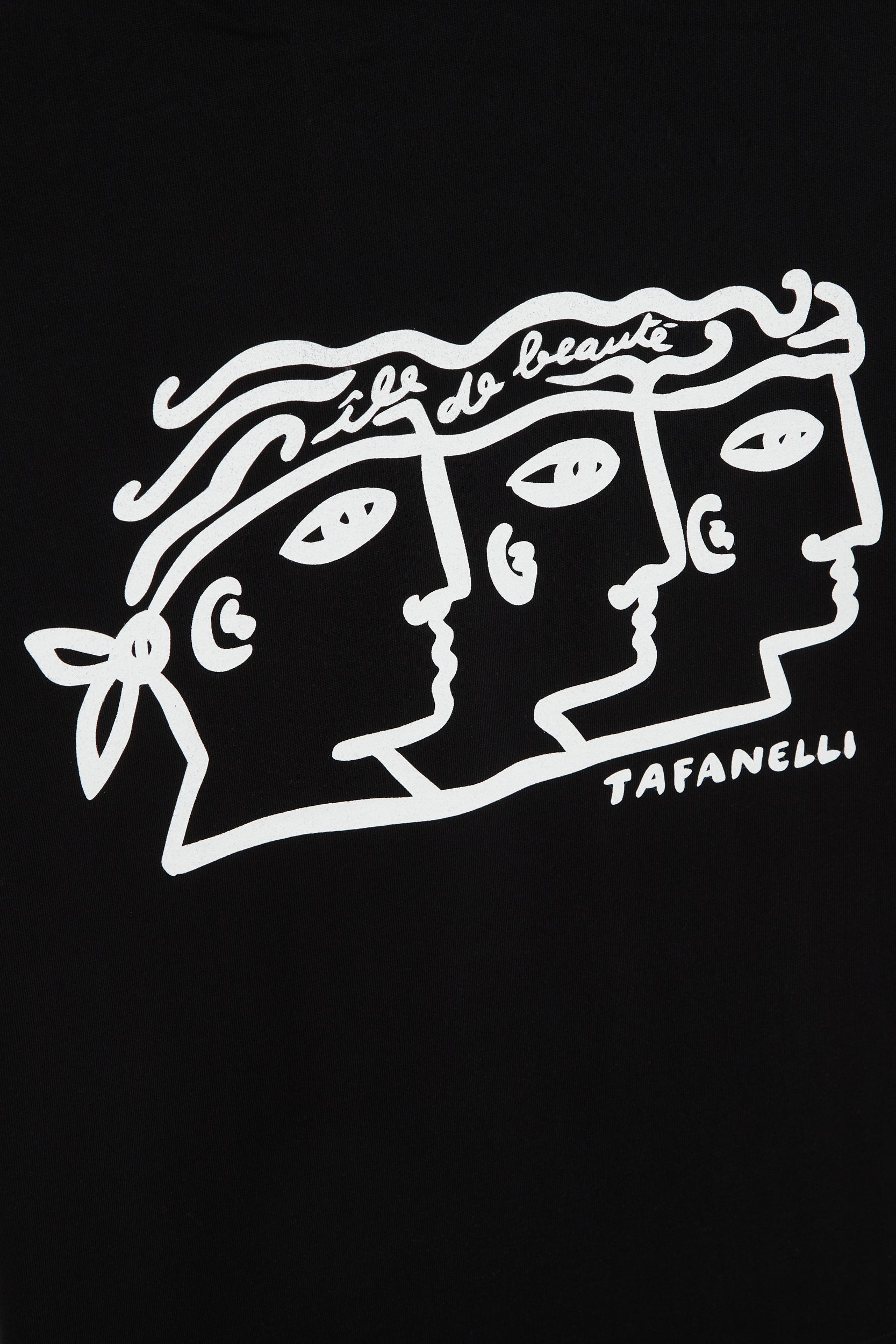
From this meeting between TAFANELLI and La Sassa was born a piece: LE SASSA (NONZA), produced in a limited run of thirty copies that will not be reissued in the same form.
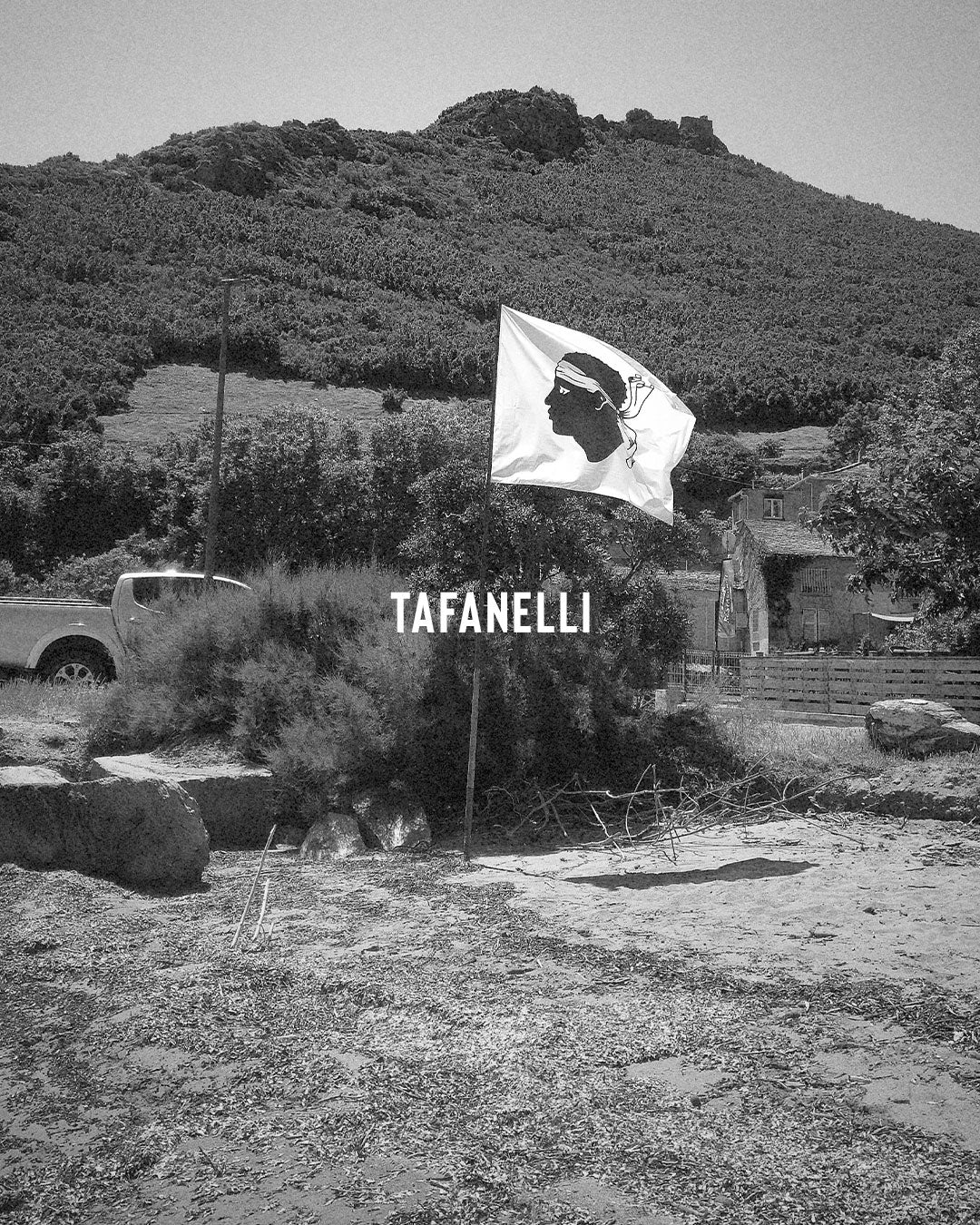
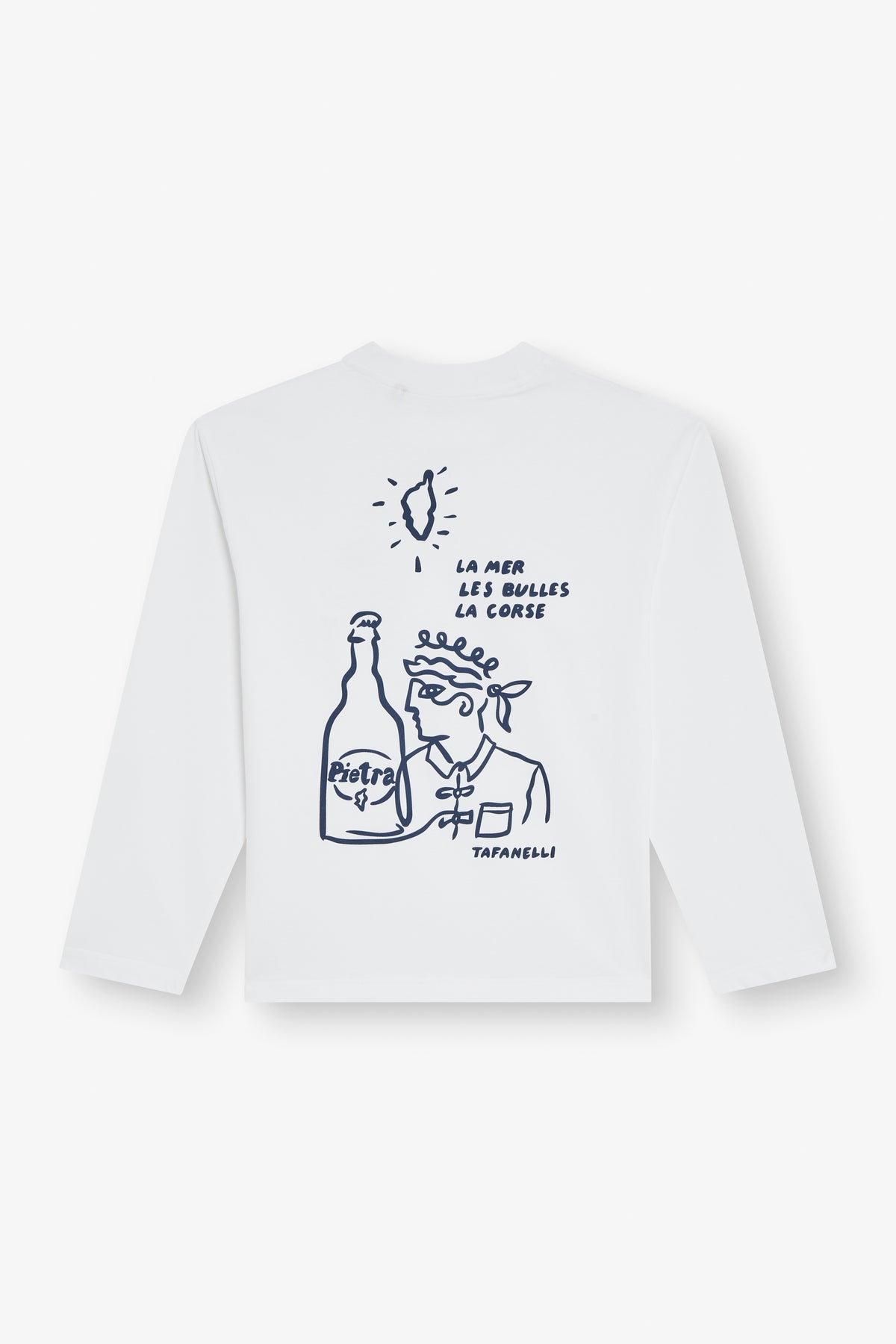
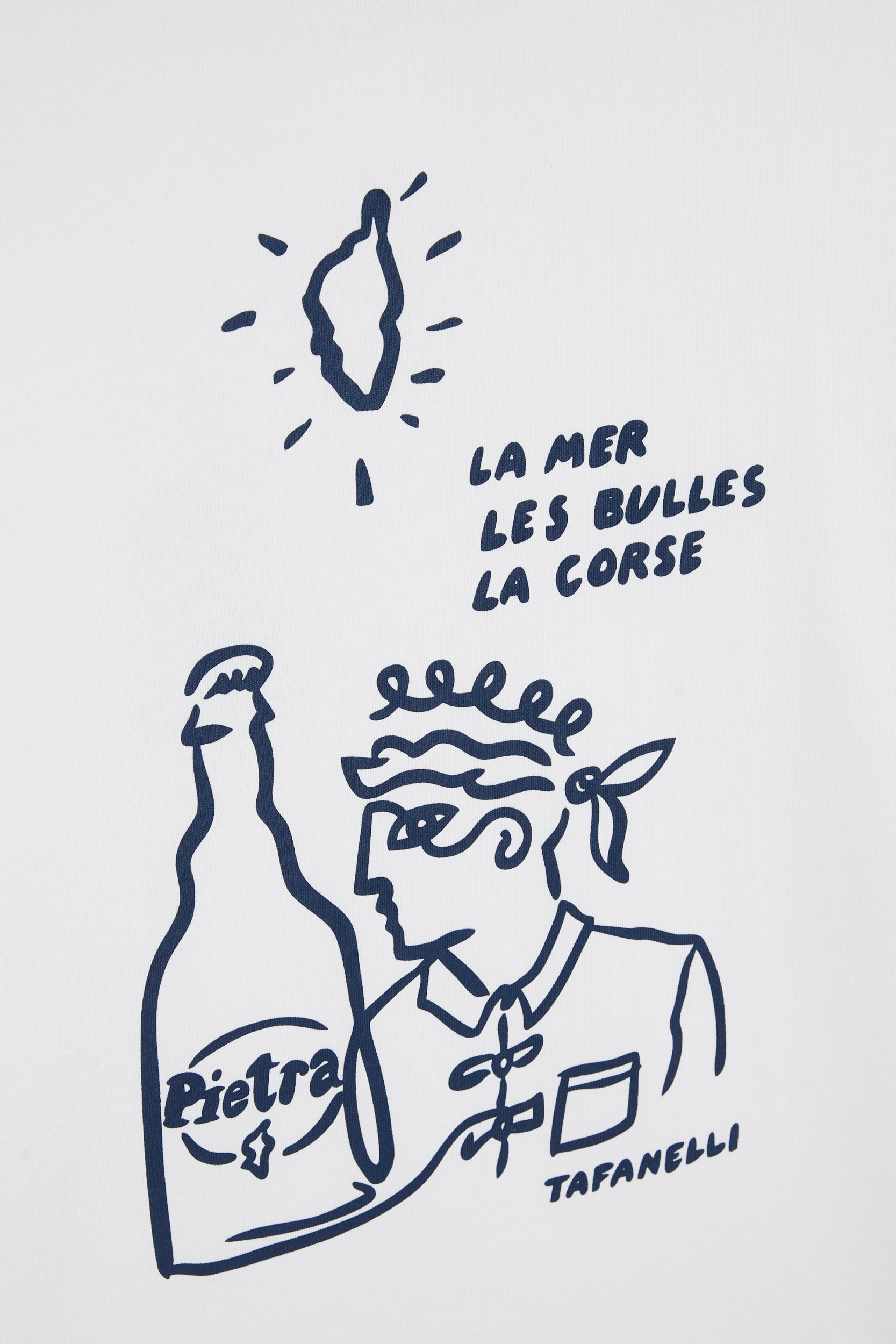
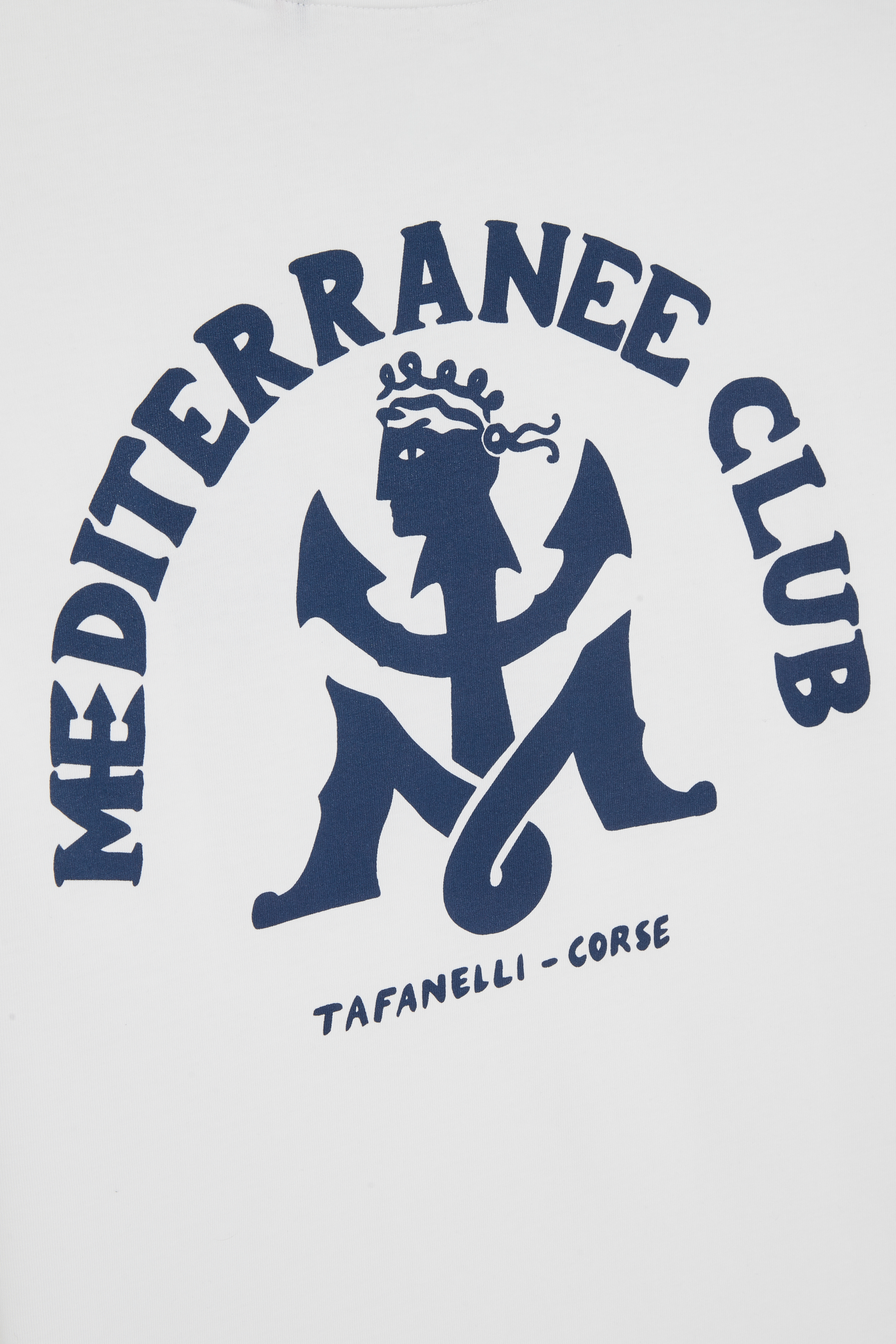
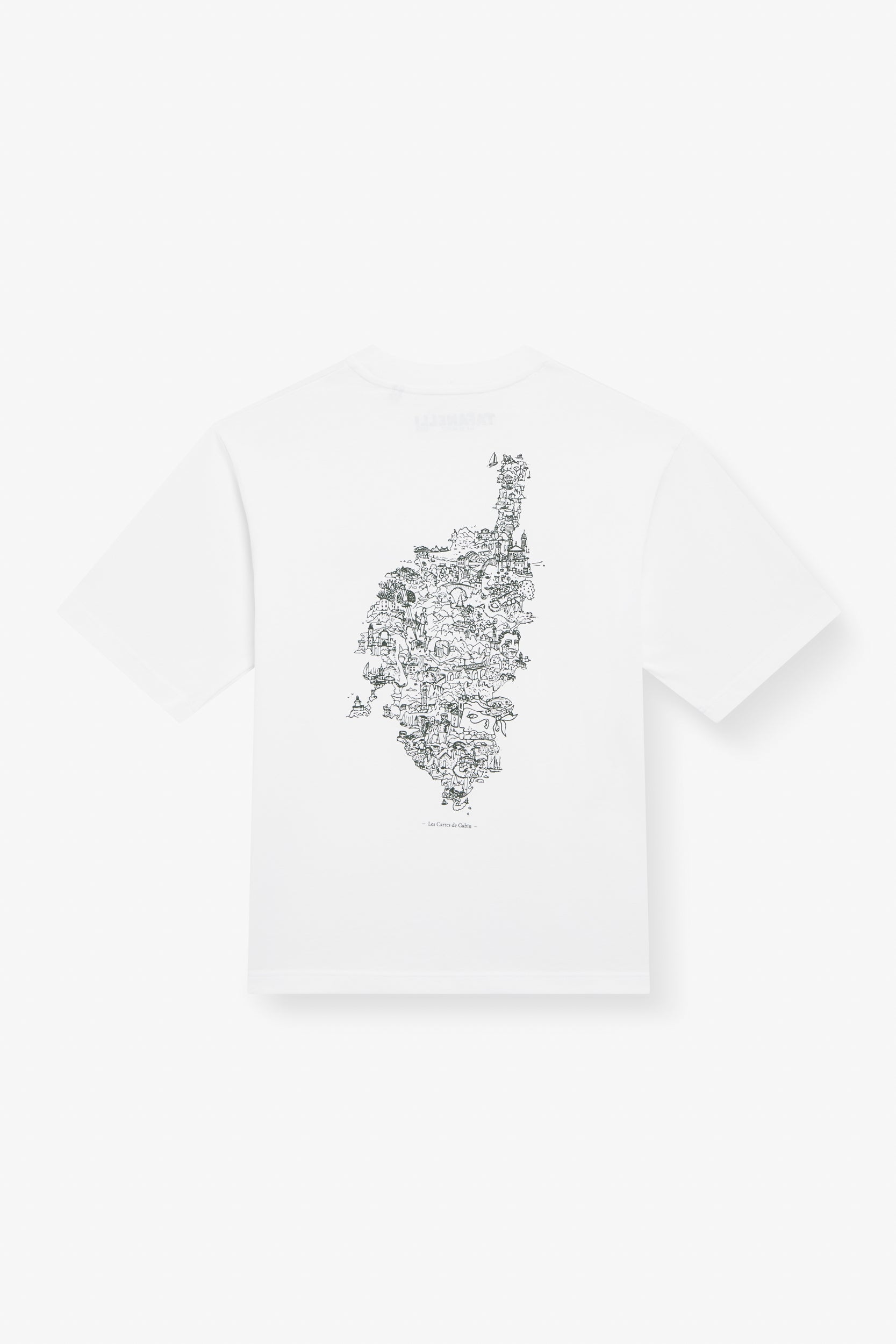
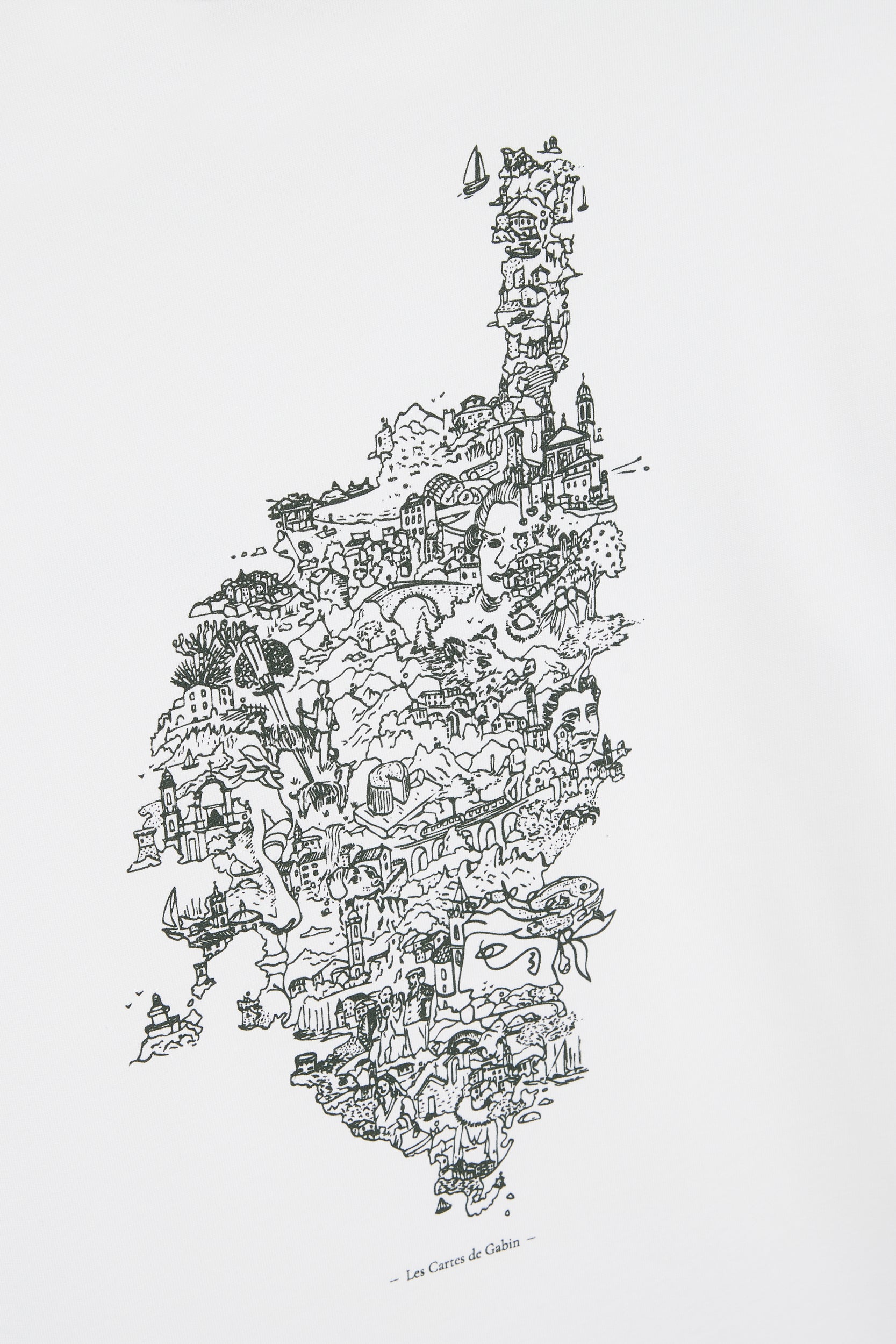
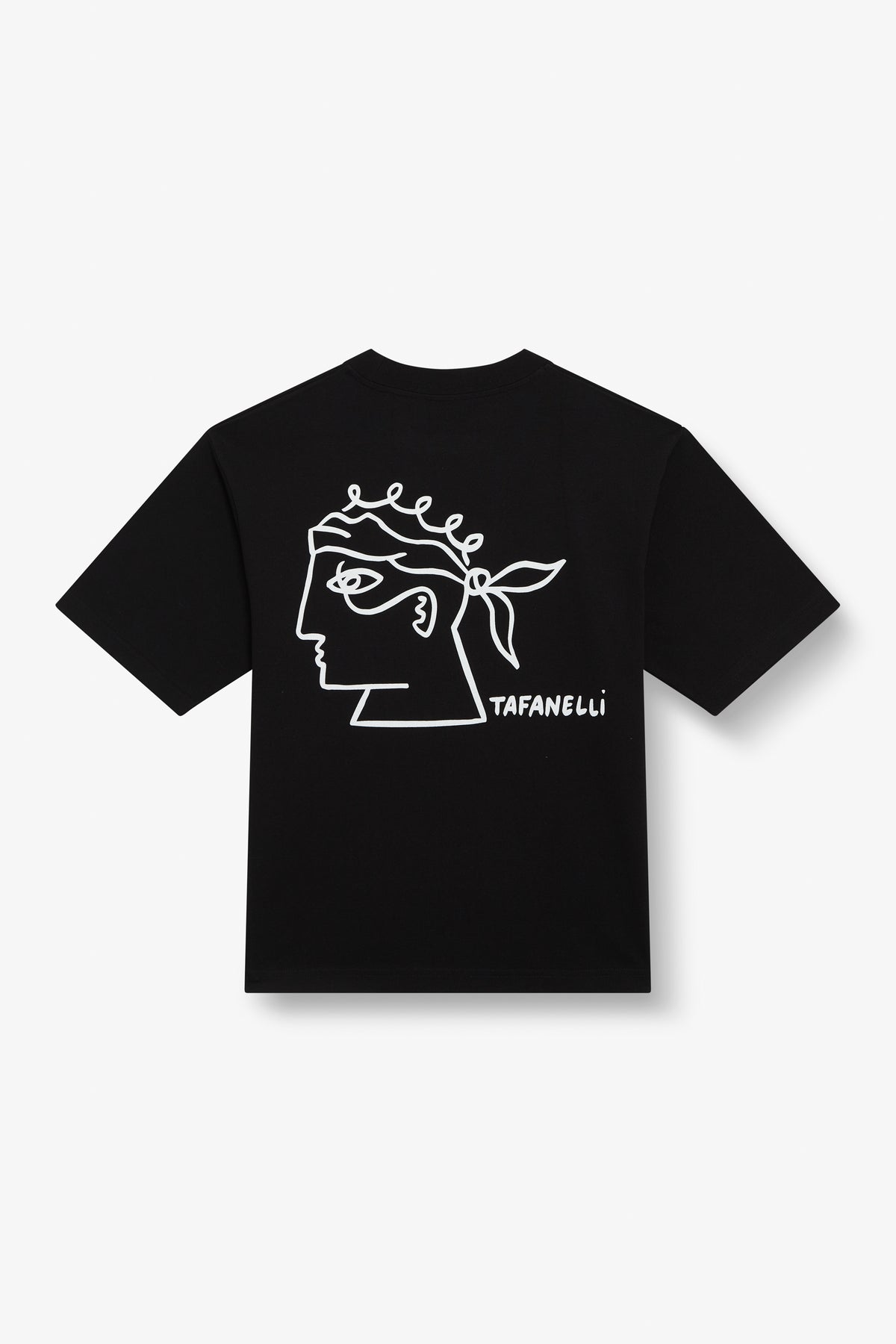
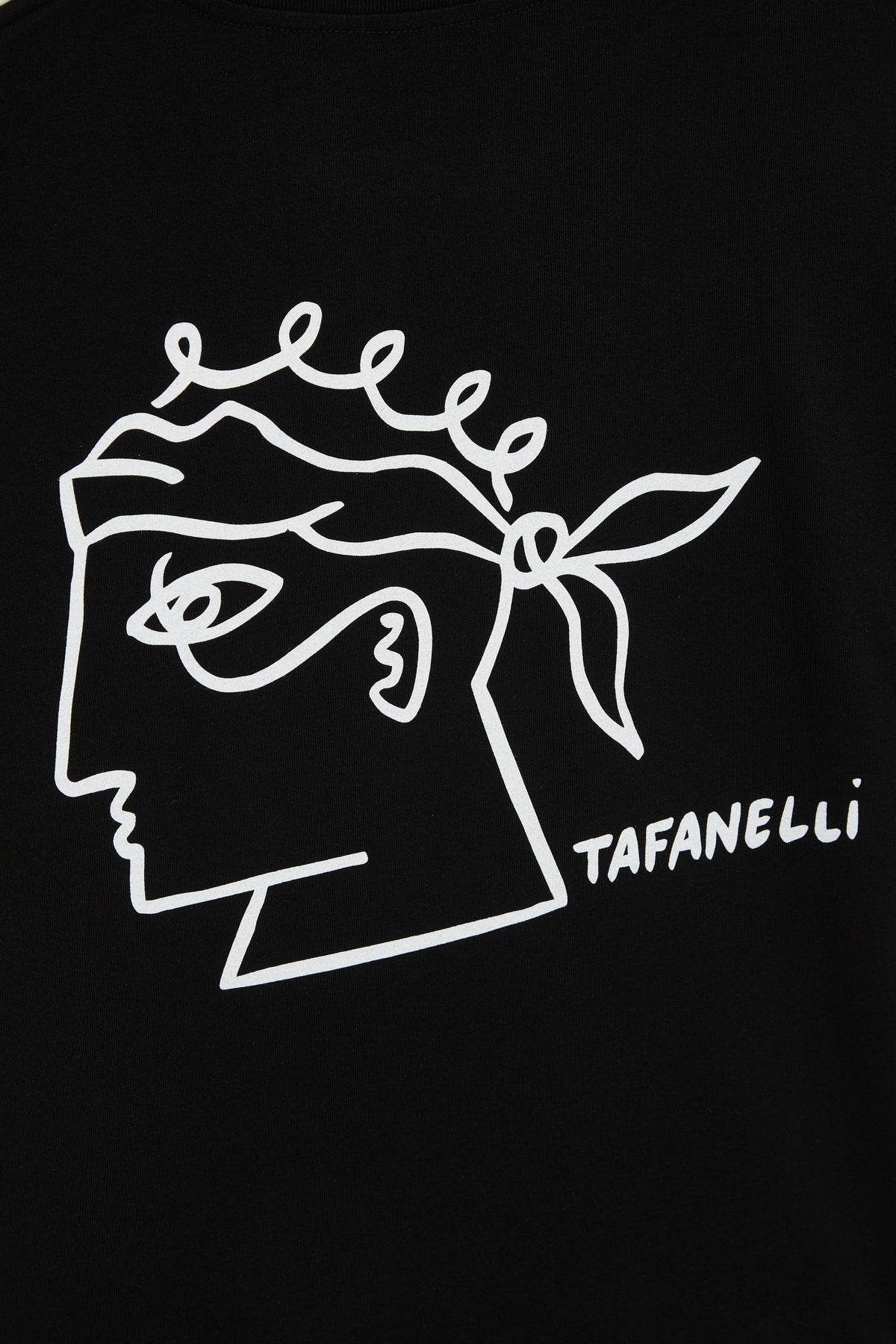
It is a navy blue heavy cotton t-shirt, and the design tells the exact story of where you are standing if you are reading these lines from the terrace. Our emblem, the Moor's Head, is entirely traced in the material of the place: the profile anchored in the stone, the headband undulating like sea foam, the crown drawn like a marine cairn. Nothing is decorative; everything comes from the landscape.
The vintage 1755 that accompanies it refers to the year when Pasquale Paoli proclaimed the Corsican Constitution in Corte, one of the first democratic constitutions in Europe. Twenty-one years before American independence.
It is also, for us, a personal piece: Nonza and its black pebble beach are places of childhood and sea. A subtle signature to these two presences that have shaped our attachment to this shore.
What's in the piece
- Heavy 280g/m² cotton, thick jersey
- Boxy cut, slightly off-shoulder
- High-density silk-screen printing applied by hand, piece by piece
- Heart, back, and inner label silk-screen prints
- Flat-stitched finishes, double hem, ribbed neckline
- Entirely manufactured in France
Deep navy blue only. Series of thirty pieces, few remain.
What to see and do in Nonza
Nonza can be visited in half a day to a full day depending on your pace. Here are the essentials.
The perched village
Stroll freely through the narrow alleys, heading toward the central square and then up to the tower. Each angle offers a different view of the sea or the hinterland. Stone houses, weathered shutters, bougainvillea: the scenery speaks for itself.
The Church of Santa Ghjulia
The village church is dedicated to Saint Julia of Corsica, patron saint of the island alongside Saint Devota. Its baroque facade and campanile dominate the square. The interior is freely accessible during opening hours.
The Fountain of Santa Ghjulia
According to tradition, a spring gushed forth at the place where the body of the saint, martyred on the island, was tortured. The fountain is located below the village and remains a place of local devotion. Saint Julia is traditionally dated to the early Middle Ages, and her cult is one of the oldest in Corsica.
The square Genoese tower
Accessible by a ten-minute path from the village. Full panorama at the top. The sunset from this point is one of the most beautiful spectacles in the Cap Corse.
The black pebble beach
Descent via the 200 steps. The beach is striking. Caution in mid-summer: the black pebbles absorb heat and become scorching for bare feet. Beach shoes are highly recommended.
A meal at La Sassa
If you are in Nonza, plan for it. It is what transforms the visit into a memory.
How to get to Nonza
By car
This is by far the simplest way. Nonza is located on the D80, which circles the Cap Corse. From Bastia, allow about an hour and fifteen minutes via the west coast. From Saint-Florent, about thirty-five minutes. Parking is below the village, followed by a few minutes of walking uphill.
The D80 is narrow and winding along the entire west coast of the Cap. Drive carefully, and plan your time: this is not a road where you can overtake.
By public transport
Bus service to the Cap Corse is limited and seasonal, and Nonza is not served directly. Without a car, you must combine a journey to Saint-Florent and then take a taxi. Check the current schedules before leaving; they change from one season to another.
By sea
In season, several companies offer excursions around the Cap Corse from Saint-Florent or Macinaggio, with views of the village from the sea. Landing at the foot of Nonza is not possible.
Around Nonza
Nonza is best combined with other stops on the Cap Corse over one or two days.
- Erbalunga, the artists' harbor on the east coast
- Centuri, the fishing port at the northern tip
- Tamarone Beach and the U Paradisu beach restaurant
- Saint-Florent and the Nebbiu, the southern gateway to the Cap
- The Agriates Desert, just across the way, on the other side of the gulf
To plan your entire route, our complete guide to the Cap Corse details the villages, the Customs Officers' Path, wines, and recommendations.
Frequently asked questions
Why is the beach at Nonza black?
It is not volcanic sand. The color comes from residues dumped into the sea by the former Canari asbestos factory, which operated from 1948 to 1965, a few kilometers to the north. Sea currents deposited them along this portion of the coast, gradually forming the current beach.
Can you swim at Nonza?
Swimming is practiced on the beach. Given the industrial history of the site, the question of environmental quality has been the subject of studies and monitoring by authorities: for the most current recommendations, it is safest to refer to official information from the commune and state services. A practical tip, however: the black pebbles become scorching in the sun, so bring shoes.
How long does it take to visit Nonza?
Expect two to three hours for the village, the tower, and the walk to the beach. With a meal at La Sassa, the visit easily takes up half a day to a full day.
How many steps are there down to the beach?
About 200 steps carved into the rock. Fifteen to twenty minutes for the descent, longer for the ascent. Bring water, especially in summer: there is no shade on the path.
Why is the tower of Nonza square?
The vast majority of Genoese towers in Corsica are round. Nonza is one of the rare square towers on the island, which makes it its immediate architectural signature.
What is the best time to visit Nonza?
May, June, September, and October offer the best conditions: mild temperatures, beautiful light, moderate crowds. July and August are busier, and the black pebble beach is difficult to walk on in the middle of the day.
Is it necessary to book at La Sassa?
Yes, highly recommended, especially in season and for evening service. Terrace capacity is limited.
Is Nonza accessible to people with reduced mobility?
The village is partially accessible up to the central square. However, the path to the tower and the 200 steps to the beach are not.
Is there a piece of clothing dedicated to Nonza and La Sassa?
Yes. LE SASSA (NONZA) was born from a collaboration between TAFANELLI and the restaurant perched in the village. It is a navy blue heavy cotton t-shirt, screen-printed by hand in France, featuring a design of the Moor's Head reimagined through the materials of the place: stone, sea foam, and the sea cairn. Limited edition of thirty pieces, not to be reissued in the same form.
Nonza and the TAFANELLI wardrobe
Nonza brings together everything that defines Cap Corse: the verticality of the village, the horizontality of the sea, the stone, and a memory that surfaces everywhere, even in the color of a beach.
It is this territory that we draw upon. La Sassa is one of the places where you can find our pieces, and Cap Corse inspires a large part of our wardrobe.
First, the piece born here:
- LE SASSA (NONZA) | edition of 30 pieces, navy blue
And the rest of the wardrobe, to wear in the Cape breeze:
To understand what it means to build a brand here rather than elsewhere, read what a true Corsican brand is. And to discover all of our pieces, browse the complete collection.
A PRESTU,
TAFA