Corsica in winter: what the island becomes when everyone else has left
In summer, Corsica hosts. In the off-season, it shares its story. But between December and February, it does something else: it finds itself. Five times fewer people than in August, villages returned to their inhabitants, snow on the Cintu, sea urchins in season, and ripening citrus fruits. This is the Corsica almost no one sees, and here is why it is worth the trip.
Why winter is the most authentic Corsica
One figure sums it all up. On the coastline of Cap Corse and the Agriate, the population is multiplied by five in summer. Which means that in winter, four out of every five people you crossed paths with in August are no longer there.
What remains are those who live here. The fishermen, the shepherds, the producers, the retirees, the children going to school, the shopkeepers who have closed their seaside stores to reopen their village ones. The island returns to its true scale.
It is not a Corsica in standby mode. It is a Corsica at work, and a Corsica that speaks to itself, in Corsican, without caring about being understood.
In winter, no one is trying to sell you the island. It is simply there, and you are simply in it.
If you have already read our guide to Corsica in September and autumn, consider this its sequel: where the off-season is mild, winter is raw. And that is what makes it precious.
WINTER WARDROBE
The Corsica Hoodie
Thick organic cotton, hand-screen printed, straight cut. The sweatshirt you put on in the morning at the port and keep on until the evening in the village.
See the sweatshirtsDecember, January, February: month by month
December, light and festivities
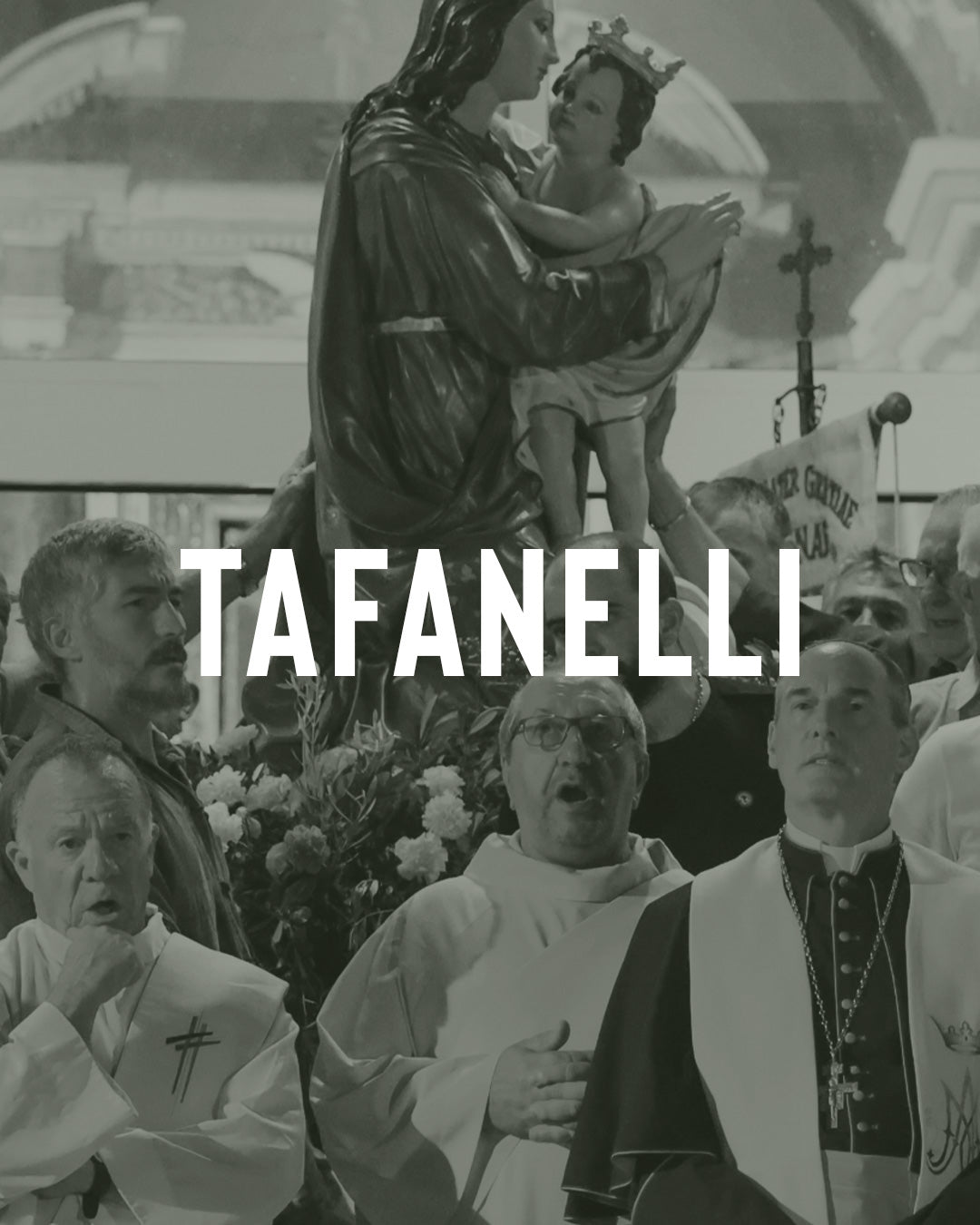
The most lively month of winter. It opens with Saint Lucy on December 13th, the festival of returning light, and closes on a very grounded Christmas: vigils, sung midnight masses, and the fire that must last all night long.
It is also the month of return. Those who live on the mainland come back, village houses light up again, and squares fill up in the evening. For a visitor, this is the time of year when the island is warmest, precisely because it isn't speaking to them.
And from mid-December onwards, the sea urchin season opens. We’ll talk about that more below.
January, the silence
The quietest, and least-known month. The coast slows down, while the interior lives its own life. The days are short but often surprisingly mild on the coast, 12 to 15 degrees in the sun, while the mountains are white.
It is the month of great winter tables: charcuterie is at the peak of its season, as are the cheeses, and sea urchins are on every seaside table.
If you want to understand what "off-season" truly means, come in January.
February, the first spring
The month when the island shifts. Almond trees blossom, as do mimosas, and on the coast, the light changes its nature. Snow still clings to the higher altitudes, providing a rare sight: the sea on one side, white peaks on the other, only forty minutes apart by car.
It is the ideal month for mid-mountain hikers and for those who want to see the island before it reopens.
What only exists in winter
There are things no summer visitor will ever see, because they only take place between December and March.
Sea urchins
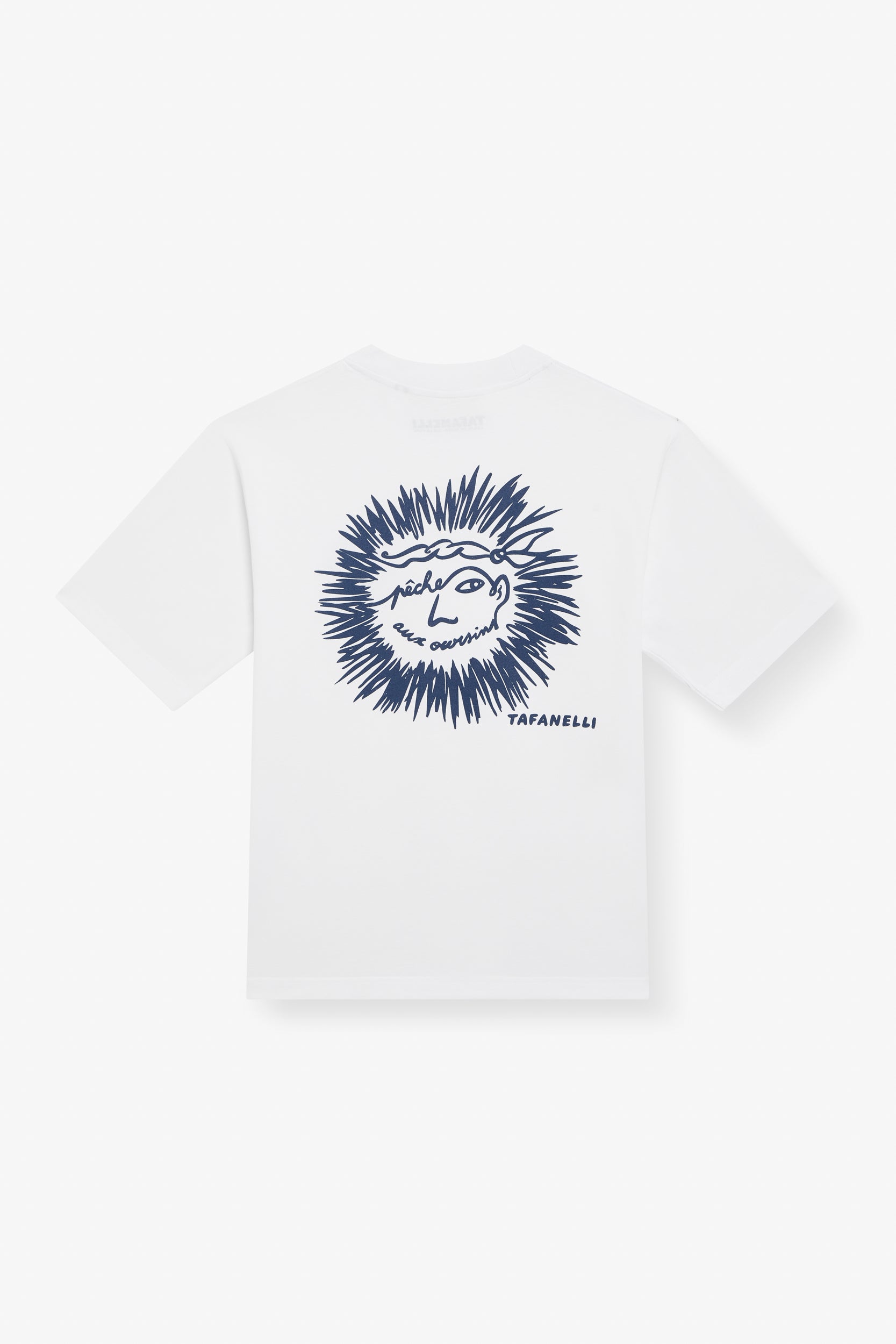
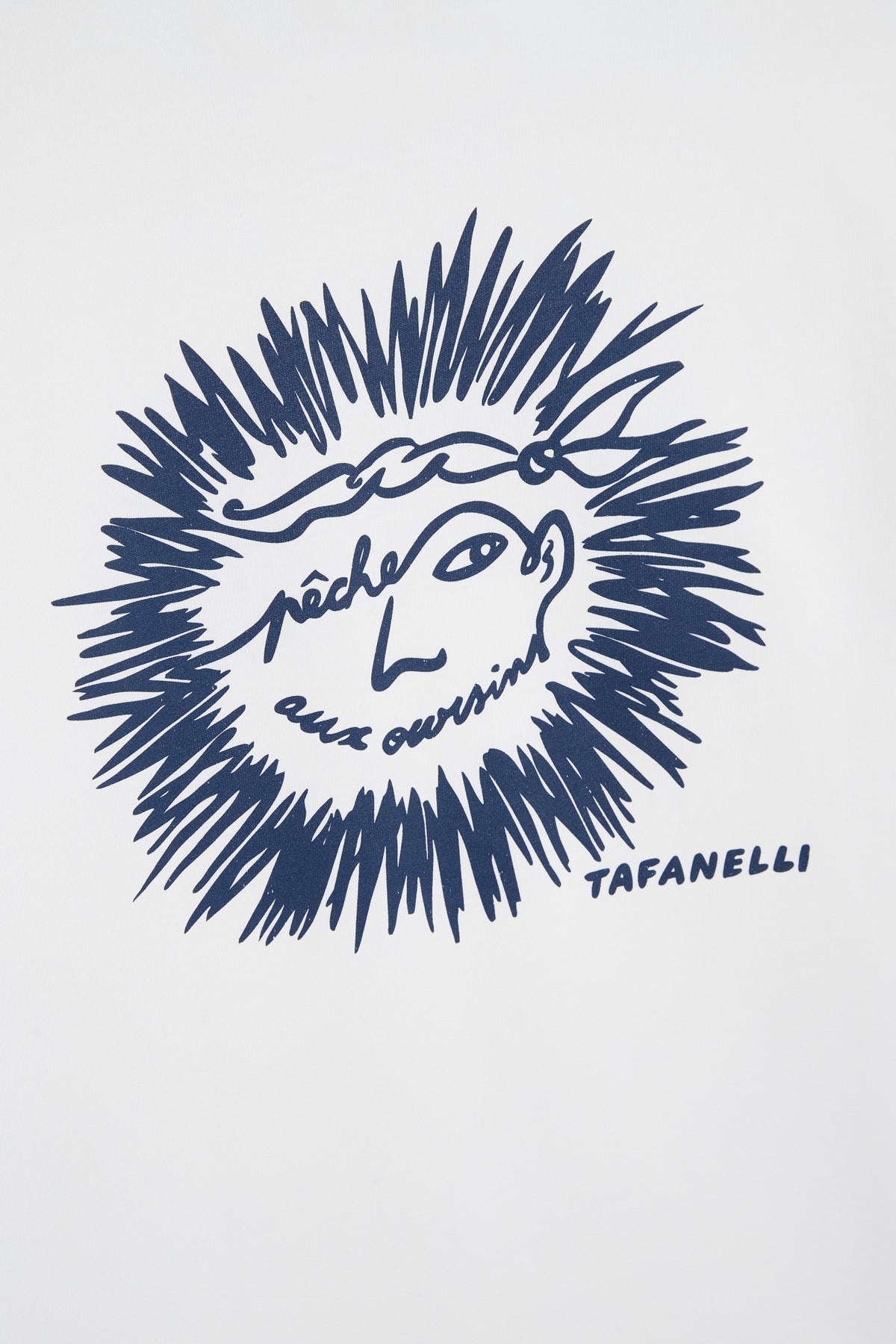
Sea urchin fishing is regulated and only opens in winter. It is one of the most Corsican rituals there is: they are gathered in the early morning, opened on the rocks or at the table, and eaten with a spoon, some bread, and a dry white wine. Our article on sea urchins tells this whole story, and our La Pêche aux Oursins t-shirt was born from it.
Citrus fruits
The Corsican clementine, the only French clementine with Protected Geographical Indication status, is harvested from November to January, with its leaves, on the eastern plains. Citrons from Cap Corse, pomelos, and oranges from Balagne follow. In winter, the island smells of citrus.
Snow
Monte Cintu peaks at 2,706 meters, and the interior of the island is white for several months a year. There are even a few small ski resorts, such as Val d'Ese above Bastelica or E Capanelle near Ghisoni. Nothing comparable to the Alps, but skiing in the morning and seeing the sea in the afternoon isn't something you can do everywhere.
The Libecciu
The south-westerly wind, the one that bends the trees of the Cap and makes the sea turn white. It blows all year round, but it is in winter that it shows its true strength. Seeing it arrive over Centuri or the Agriates is a spectacle in itself.
Night fishing
It is also the season for squid, fished with a lure (turlutte) at night from the ports. We dedicated an entire article to it, and it is one of the most beautiful images of the island in winter: a few lamps on a quay, in the dark, with no one else around.
What to do in Corsica in winter
- The villages, for real. In winter, a Corsican village is not a movie set. People live there, the bar is open for them, and you are welcomed as someone who has made the effort to come off-season, which is to say, welcomed well.
- Mid-mountain hiking. The high peaks are under snow, but the low and mid-altitude paths are superb and deserted. The Niolu, the Castagniccia, the Balagne ridges.
- The train. U Trinighellu crosses the island in winter just as in summer, but in winter you will have the carriage to yourself, and snow outside the window between Corte and Vizzavona.
- Winter gastronomy. This is the season for the products that define the island's reputation: charcuterie, cheeses, chestnuts, citrus, sea urchins. None of these are at their best in August.
- The winter sea. Not for swimming, but for watching. The beaches are empty, the coves too, and the low light of January turns every bay into a picture.
- The shepherds. In winter, the herds have returned from the mountains. It is the perfect time to understand transhumance by seeing the livestock on the plains.
- Coral and the deep sea. If you want to understand what the island hides underwater, the history of red coral is a great read by the fireside.
Bastia and Ajaccio, winter cities
Both cities never close, and it is in winter that they are most themselves.
Bastia rediscovers its old port, its cafés on the Place Saint-Nicolas, and its citadel alleyways without a tourist in sight. One eats well there all year round, and for us, that means eating at le Geppetto. It is also our city, the one we are writing to you from.
Ajaccio, further south and milder, has winters where you can have lunch outside in January. The market, the Cours Napoléon, the Sanguinaires road at sunset: the city in winter has a rhythm that summer forbids.
Between the two, Corte, the city of the interior, the only one that lives from its students and not its visitors. In winter, it is the most animated of the three.
Things to keep in mind
- The coast is partially closed. Many hotels, restaurants, and beach facilities close from November to March. The interior, cities, and villages remain open. Check before booking.
- Transport rotations are reduced. Ferries and flights are less frequent in winter, and some lines stop entirely. Book early, and allow for a buffer in case of storms: the libecciu can cancel crossings.
- Mountain passes may close. Vergio, Vizzavona, and several interior passes may be closed or require snow equipment. Check conditions that same morning.
- Days are short. Night falls around 5:30 PM in December. Plan your mountain driving accordingly.
- It can rain a lot. The Corsican winter is mild but humid, with intense episodes. Never camp near a river, and respect trail closures.
- A car remains essential. Public transport is even more reduced than in summer.
Frequently asked questions
Is it cold in Corsica in winter?
On the coast, no: expect 8 to 15 degrees Celsius during the day, often more in the sun. In the mountains, yes: it snows several months a year above 1,500 meters. Corsica in winter is both, forty minutes apart.
Can you visit Corsica in December?
Yes, and it is one of the best months to understand the island. The festivities, Saint Lucy, Christmas, the start of the sea urchin season, citrus: December is vibrant. Just anticipate that the touristy parts of the coast may be closed.
What to do in Corsica in January?
Villages, mid-mountain hiking, winter gastronomy, the train, watching the sea. January is the calmest month of the year and the time when the island belongs most to its inhabitants.
Is it cheaper in winter?
Much cheaper. Crossings, flights, car rentals, and accommodation are at their lowest rates. It is the best value for money for what you will experience.
Can you ski in Corsica?
Yes, modestly. Val d'Ese near Bastelica and E Capanelle near Ghisoni offer a few runs depending on snowfall. It is not a ski destination, but a curiosity worth a day trip.
What is the best time for the off-season?
September for the sea, October for the light, December for the festivities, January for the silence, February for the blossoms. There is no bad month in the off-season, just different versions of Corsica.
Winter and TAFANELLI
We said it in our manifesto: we are a Corsican brand, not a summer brand. Winter is actually the season that reflects us most. The season of sea urchins, coral, night-fished squid, and the return of the shepherds. The time when the island stops putting on a show.
Our winter wardrobe is small, and that is intentional.
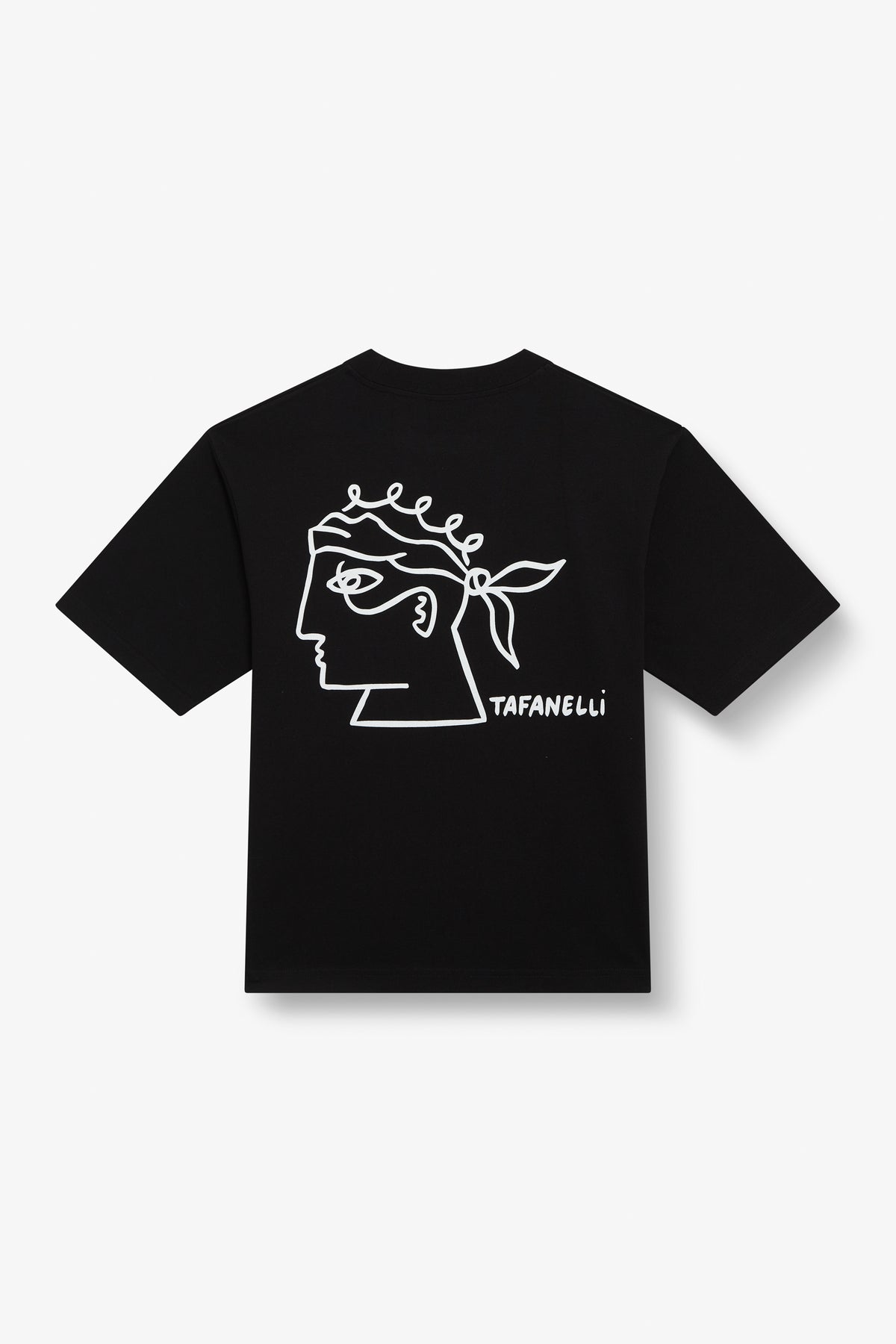
- The Corsica Hoodie, made of thick organic cotton, hand-screen printed. The winter essential.
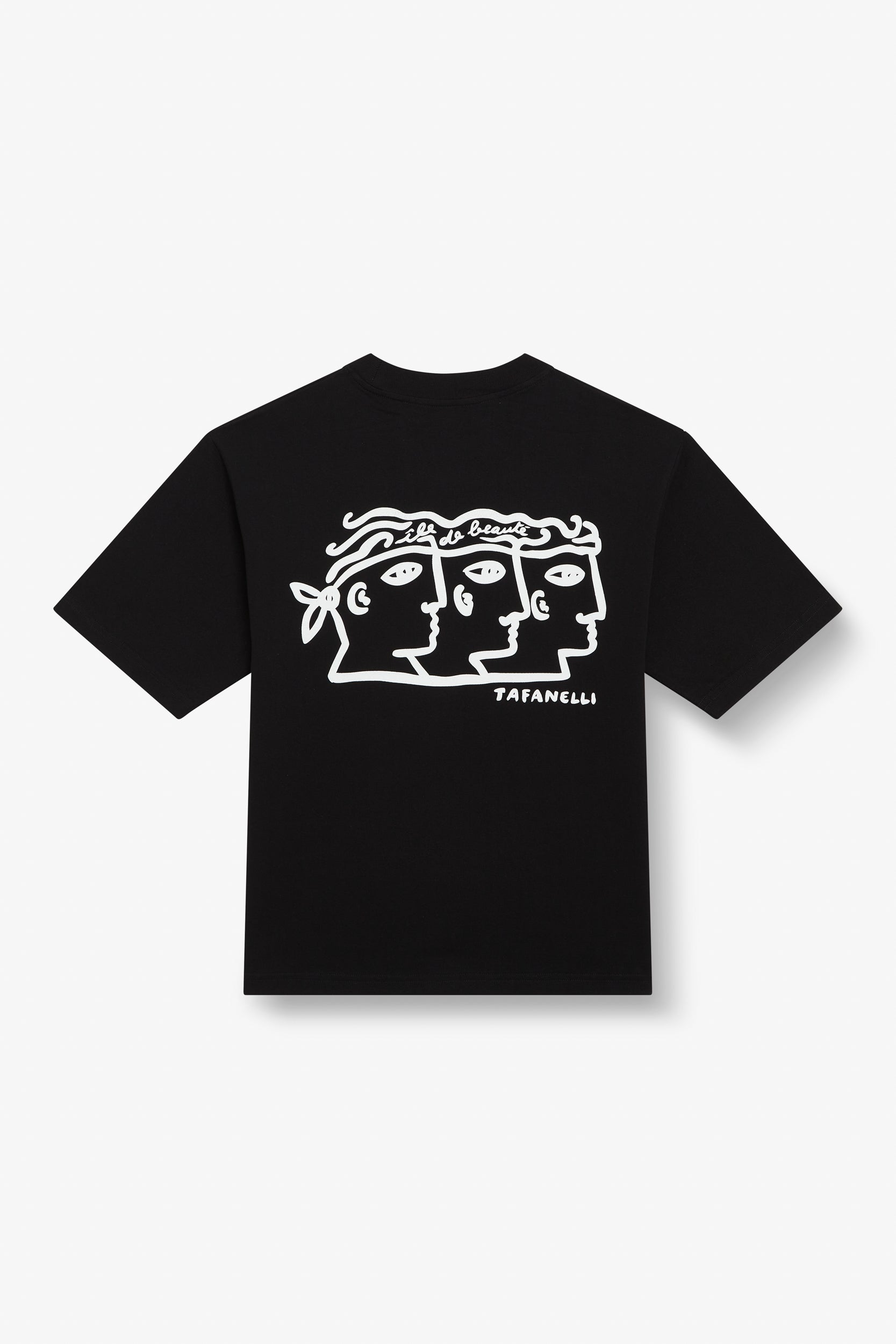
- The La Trinità t-shirt, as a layer under the sweatshirt. Mare, muntagna, machja.
- The Corsica 1755 t-shirt, the one you keep for ten years.
These are pieces made to last, and to be repaired if they ever need it. We explain how on our care and repair page.
And if you are in Paris instead of Corsica this winter, we look forward to seeing you in the Marais from December 3rd to 6th.
In winter, the island isn't waiting for you. That is exactly why you should go.
In passing through Corsica, a customer becomes a friend.
A DOPU,
TAFA